

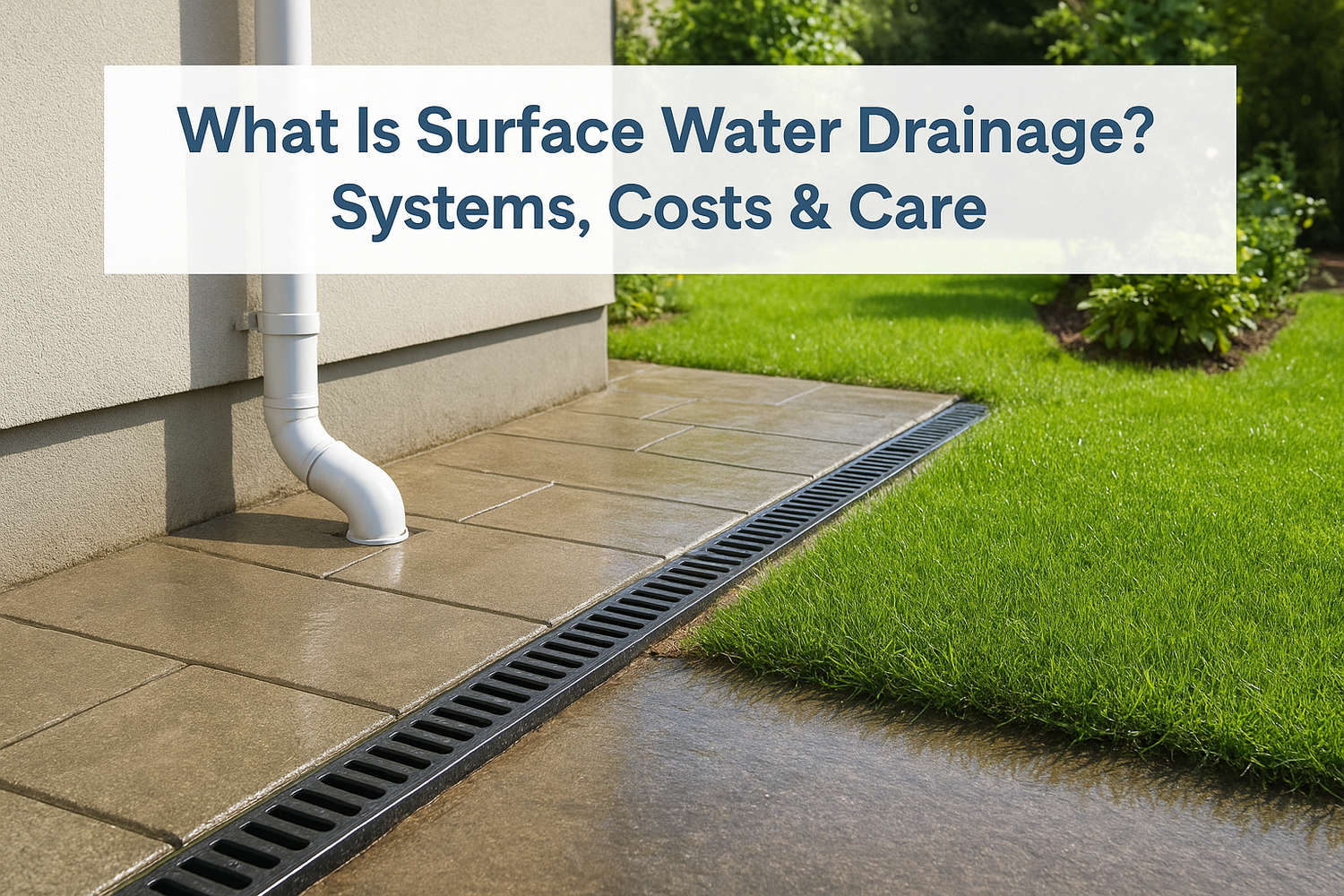
Every property in Malaysia deals with rainwater, whether it's a small front garden or a sprawling commercial compound. What is surface water drainage? Put simply, it's the system that collects and channels rainwater away from your property's hard surfaces, driveways, patios, rooftops, and paved areas, before it pools, floods, or causes structural damage. It sounds straightforward, but the details matter more than most property owners realize, especially in a country that sees heavy monsoon seasons twice a year.
At Konzept Garden, drainage is one of the first things we assess when designing any outdoor space. A beautiful garden that floods after every downpour isn't a well-designed garden, it's an expensive problem. That's why understanding how surface water drainage works, what it costs, and who's responsible for maintaining it sits at the foundation of smart landscape planning. Poor drainage erodes soil, kills plants, damages hardscaping, and can even affect your home's foundation over time. Getting it right from the start saves you money and protects your investment.
This article breaks down how surface water drainage systems work, the difference between surface water and foul water drainage, typical costs you should expect, and your responsibilities as a property owner. Whether you're planning a new garden design or troubleshooting standing water on an existing property, you'll walk away with a clear understanding of what's happening beneath and around your outdoor spaces, and what to do about it.
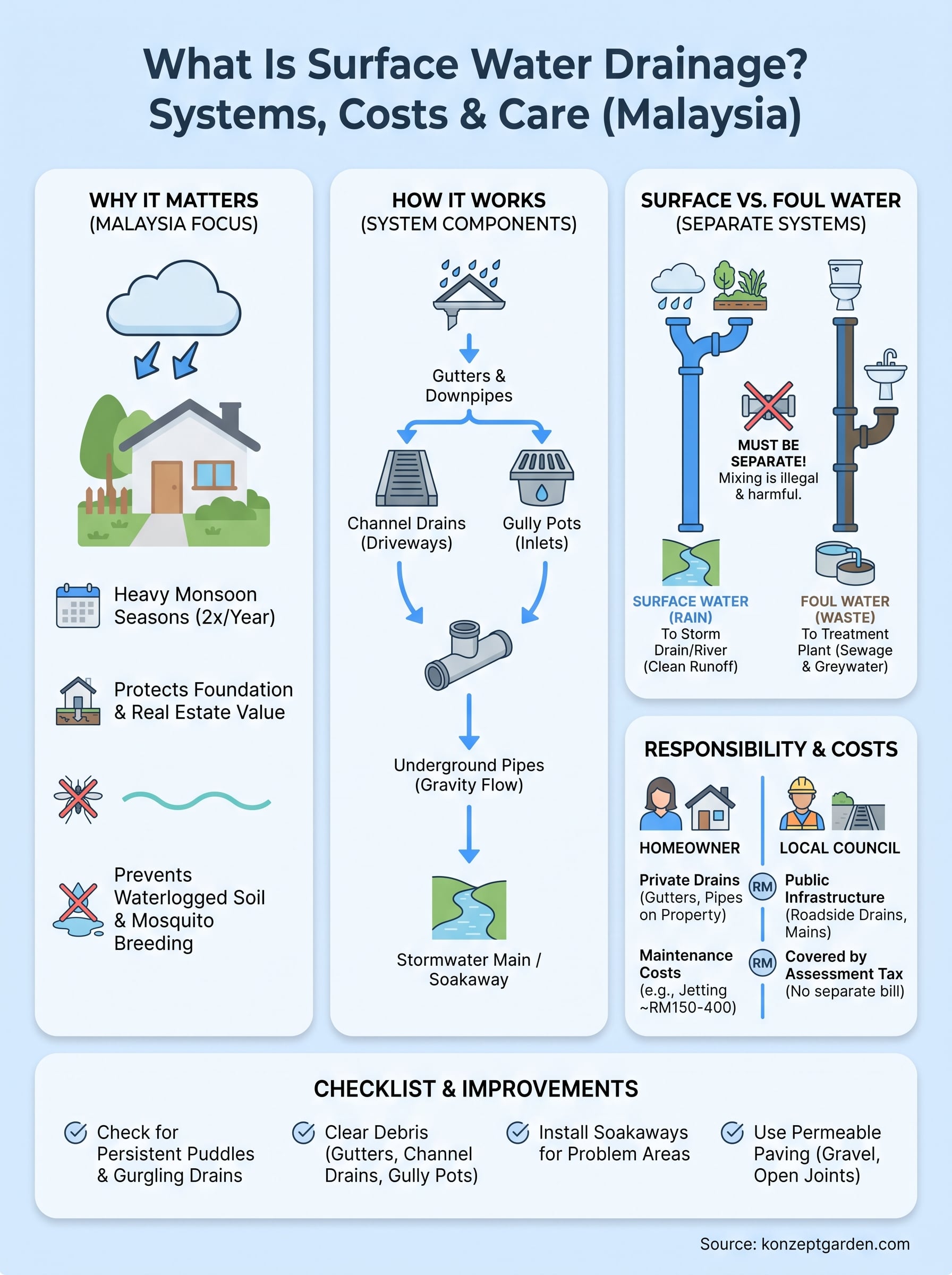
Why surface water drainage matters in Malaysia
Malaysia sits in one of the most rainfall-intensive regions in Southeast Asia. Two monsoon seasons hit the peninsula each year: the Northeast Monsoon from November to March and the Southwest Monsoon from May to September. Outside of those seasons, afternoon thunderstorms are a near-daily occurrence in most states. Your property isn't just dealing with rain occasionally; it's dealing with sustained, high-volume water events that test every surface and drainage channel on your land.
Malaysia's rainfall puts your property under real pressure
The national average rainfall in Malaysia is roughly 2,500 mm per year, but in states like Kelantan, Terengganu, and Pahang, that figure climbs significantly higher during peak monsoon months. Urban areas face an additional problem: impervious surfaces like concrete driveways, tiled patios, and rooftops prevent rainwater from soaking into the ground naturally. Instead, all that water needs somewhere to go fast. Without a well-designed surface water drainage system in place, the water goes where you don't want it: into your garden beds, under your foundation, and pooling across your outdoor spaces.
When impervious surfaces cover more than 30% of a site, runoff volume can increase by up to 50%, meaning even moderate rain events start to behave like heavy ones.
The consequences of poor drainage go beyond a wet lawn
Poor drainage creates a chain of problems that most property owners underestimate until the damage is done. Waterlogged soil suffocates plant roots within days, destroying plants and ground cover that took months to establish. Beyond the garden, standing water is a mosquito breeding ground, which is a serious public health concern in Malaysia given the ongoing risk of dengue. Water that repeatedly pools near your home's foundation will, over time, cause concrete to crack, walls to stain, and structural integrity to weaken.
Understanding what is surface water drainage and why it functions correctly on your property is not just a matter of aesthetics. For Malaysian homeowners, it's a matter of protecting real estate value and avoiding costly structural repairs that compound with every wet season. A properly drained garden stays healthier, looks better, and costs you far less to maintain over the long term than one where drainage was treated as an afterthought.
How surface water drainage systems work
Most surface water drainage systems rely on gravity to do the heavy lifting. Rainwater falls on your roof, driveway, or patio, runs across the surface, and gets directed toward a collection point, usually a drain inlet, channel drain, or gully. From there, underground pipes carry the water away from your property and connect to the wider stormwater network managed by your local authority.
The main components of a surface drainage system
Your system is made up of several interconnected parts that each play a specific role. Understanding what is surface water drainage at a component level helps you spot problems early before they turn into expensive repairs.
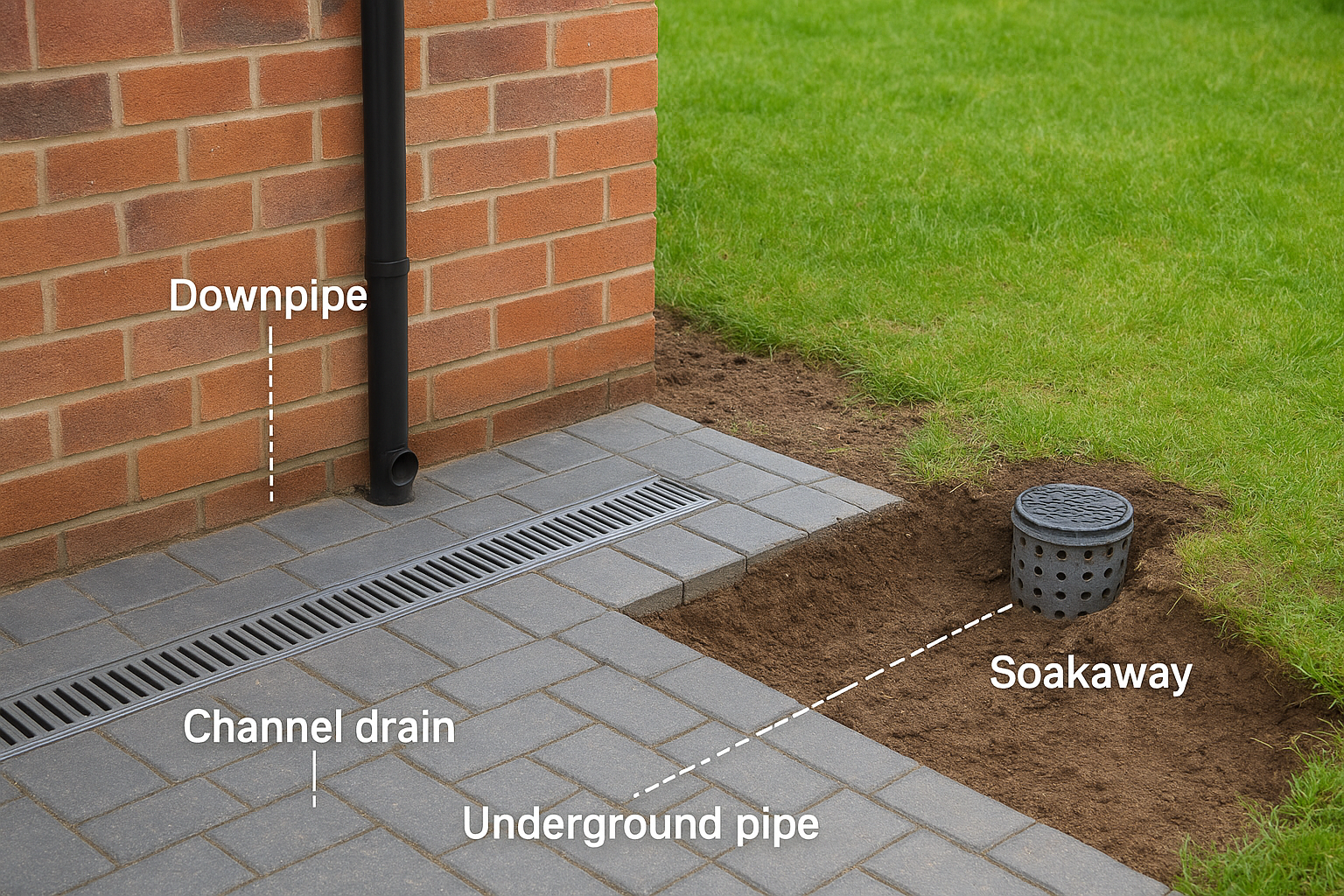
- Gutters and downpipes: Channel rainwater from your roof to ground level.
- Channel drains: Long, narrow grates set into driveways and patios that catch sheet runoff.
- Gully pots: Inlet points where surface water drops into the underground pipe network.
- Underground pipes: Carry collected water away at a gradient to prevent blockages.
- Soakaways or attenuation systems: Allow water to disperse safely into the ground or hold it for slow release.
How water moves from your property to the mains
Once water enters the pipe network, it travels downhill by gravity through pipes that connect to a stormwater main or a local drain, depending on your area. Most Malaysian residential properties discharge surface water into roadside drains maintained by the local council, which then flow into rivers or retention ponds.
If your underground pipes run at too shallow a gradient, debris builds up quickly and the system backs up during heavy rain.
Surface water vs foul water drains
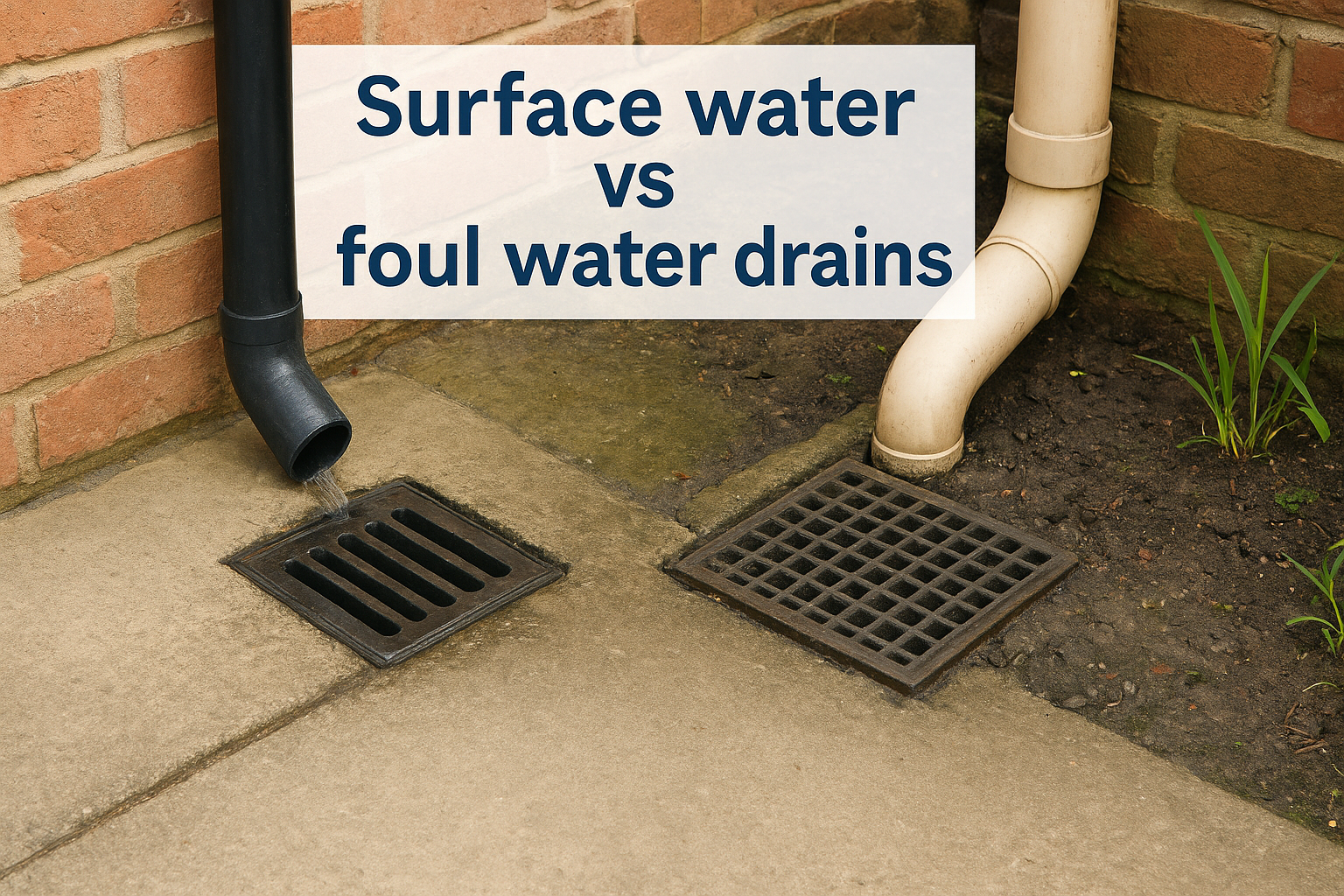
Many property owners assume all water that leaves their property goes down the same pipe. It doesn't. Surface water drains handle rainwater from roofs, driveways, and garden surfaces, while foul water drains carry wastewater from toilets, sinks, showers, and appliances. These two systems run separately, and mixing them up is both a code violation and a serious environmental hazard in Malaysia.
What each system carries
Surface water drainage collects clean rainwater runoff and channels it to stormwater mains, rivers, or retention ponds. Because this water hasn't been contaminated by household waste, it doesn't need treatment before discharge. Foul water, by contrast, carries sewage and greywater that must travel to a treatment facility before it can safely re-enter the environment. Contaminating a surface water drain with foul water sends untreated sewage directly into local waterways, which is both illegal under Malaysian environmental regulations and damaging to public health.
Connecting a foul water outlet to a surface water drain is one of the most common and costly mistakes made during home renovation projects.
Why the separation matters for your property
If you're planning a garden renovation or adding a new outdoor utility area, you need to identify which pipe does what before any groundwork begins. Connecting to the wrong drain creates blockages, foul odors, and potential fines from your local authority. A licensed drainage contractor can inspect and map your existing pipework before you start, which saves you far more than the cost of undoing a mistake. Understanding what is surface water drainage, and what it isn't, keeps your project compliant and your outdoor space functioning correctly.
Costs, bills, and who maintains what
Understanding what is surface water drainage also means understanding who owns what and who pays when something goes wrong. In Malaysia, the responsibility splits between you as the property owner and your local authority, and knowing where that boundary sits prevents expensive disputes.
Who pays for surface water drainage in Malaysia
Your local council or municipal authority maintains the public stormwater infrastructure: roadside drains, stormwater mains, and retention ponds that serve your neighborhood. You don't pay a separate surface water bill in Malaysia the way some countries charge utilities for drainage. Instead, drainage maintenance costs are folded into your local council assessments, the annual property tax you pay to your municipal authority. What you do pay out of pocket is any work needed on the private drainage systems within your own property boundary.
Once water crosses from your land into a public drain, responsibility shifts to your local authority. Everything upstream of that point is yours to maintain.
What you're responsible for maintaining
Your private drainage network includes gutters, downpipes, channel drains, gully pots, and underground pipes up to the point where they connect with the public system. Clearing blocked gutters, jetting blocked underground pipes, and repairing cracked channel drains all fall on you. Costs vary depending on the scope of work, but a basic drain jetting service from a licensed contractor in Malaysia typically runs between RM150 and RM400 per visit, while replacing a section of underground pipe can reach RM1,000 or more depending on depth and access. Keeping these components clear and functional is far cheaper than repairing flood damage after a monsoon season.
How to check and improve drainage at home
Knowing what is surface water drainage is useful, but spotting problems on your own property is where that knowledge becomes actionable. You don't need specialist equipment for a basic check. A heavy rainstorm is your best diagnostic tool: walk your property during or immediately after a downpour and note where water pools, how quickly it clears, and whether runoff is flowing toward your home's foundation rather than away from it.
Signs your drainage system needs attention
Several clear warning signs tell you your system is struggling. Persistent puddles that sit for more than 24 hours after rain, soil that stays soggy between wet days, and gurgling sounds from your drains all indicate restricted flow somewhere in your pipework. Check your gutters and downpipes for blockages too, since a blocked downpipe can redirect hundreds of liters of water directly against your walls during a single storm.
If water consistently pools in the same spot, that location likely sits at a low point with no outlet, and regrading the soil or installing a channel drain there will solve the problem permanently.
Simple improvements you can make
Many drainage issues on residential properties respond well to straightforward fixes that don't require major excavation. Clearing debris from channel drains and gully pots takes less than an hour and immediately improves flow capacity. Adding a soakaway in a problem area, which is a gravel-filled pit that disperses water into the subsoil, works well in gardens where rerouting pipes isn't practical.
Replacing impervious paving with permeable materials such as gravel, block paving with open joints, or planted ground cover gives rainwater somewhere to go before it becomes runoff. These changes also improve your garden's appearance and reduce heat absorption from hard surfaces during Malaysia's dry season.
Next steps for a drier property
Now that you understand what is surface water drainage and how it protects your property, the next step is putting that knowledge to work. Start by walking your property after the next heavy rain and mapping any spots where water pools or drains slowly. Those are your priority areas, and addressing them before the next monsoon season saves you from waterlogged soil, damaged hardscaping, and blocked pipes under pressure.
A well-designed outdoor space accounts for drainage from the very beginning, not as a fix after problems appear. If you're planning a garden renovation or starting from scratch, getting professional input on drainage and landscape design together makes the whole project more efficient and more durable. At Konzept Garden, we design outdoor spaces that handle Malaysia's heavy monsoon rainfall without sacrificing how the space looks or feels. Contact our team to get a free quotation and start planning a property that stays dry year-round.