

Whether you're planning a lush residential garden or maintaining a commercial landscape in Malaysia's tropical climate, water management plays a critical role in your project's long-term success. Understanding what is drip irrigation has become essential knowledge for anyone serious about creating sustainable outdoor spaces. This method has gained significant traction among homeowners and property developers who want to reduce water waste while keeping their plants healthy and thriving.
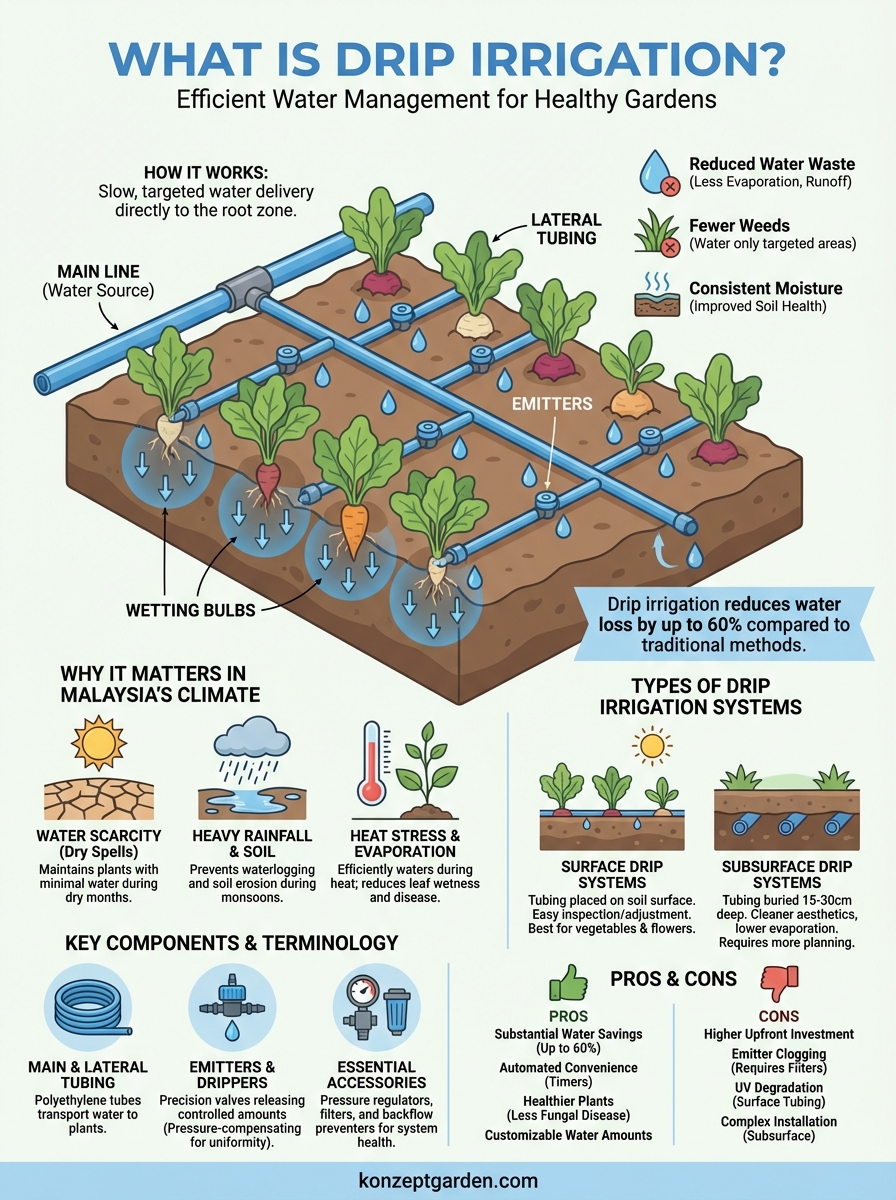
Drip irrigation works by delivering water slowly and directly to the root zone of each plant, rather than spraying it across an entire area. This targeted approach means less evaporation, fewer weeds, and more consistent moisture levels in the soil. For Malaysian gardens facing both intense heat and heavy monsoon seasons, having precise control over water delivery can make the difference between a flourishing landscape and a struggling one.
At Konzept Garden, we incorporate efficient irrigation solutions into our landscape designs because a beautiful garden depends on smart infrastructure beneath the surface. This guide explains how drip irrigation systems function, breaks down the advantages and disadvantages you should consider, and helps you determine whether this method suits your specific outdoor space and gardening goals.
Why drip irrigation matters in Malaysia's climate
Malaysia's tropical weather creates unique challenges that make efficient water management essential for any garden or landscape project. Your outdoor space experiences intense heat, heavy monsoon rainfall, and high humidity throughout the year, which means traditional watering methods often work against you rather than for you. The combination of prolonged dry spells between November and March in certain regions, followed by torrential downpours during monsoon seasons, demands a smarter approach to irrigation that adapts to these extreme fluctuations.
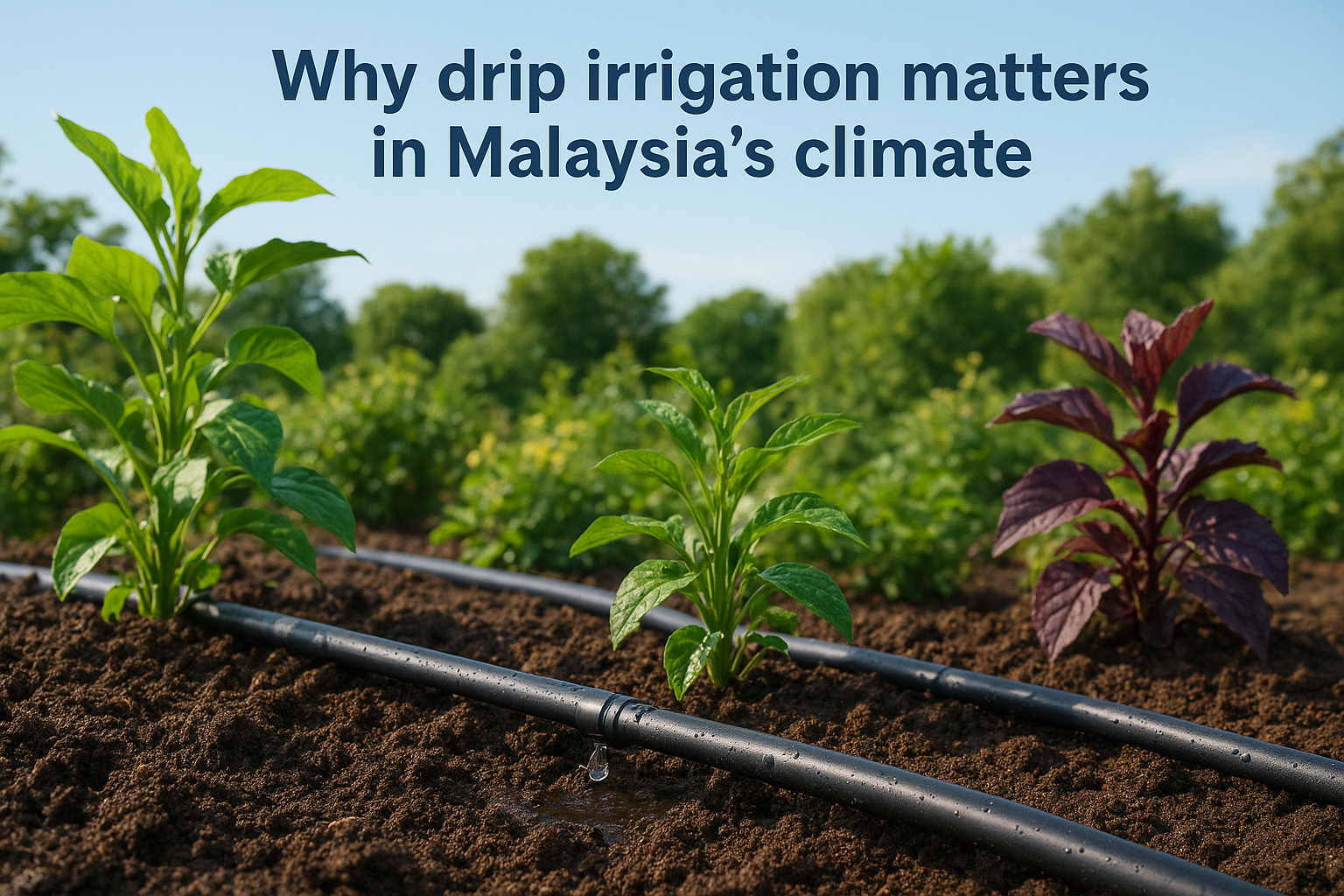
When you rely on conventional sprinkler systems or hand watering in Malaysia's heat, you lose up to 50% of applied water through evaporation before it even reaches your plant roots. This waste becomes particularly problematic during dry periods when water restrictions may apply in your area, and during the hot afternoons when surface watering simply evaporates within minutes. Understanding what is drip irrigation becomes relevant here because this system delivers moisture below the surface, where your plants actually need it.
Drip irrigation reduces water loss by up to 60% compared to traditional methods, making it the most practical solution for Malaysia's unpredictable climate patterns.
Water scarcity during dry spells
Your garden faces serious stress during Malaysia's dry months, especially if you live in areas affected by the southwest monsoon patterns. Many Malaysian states experience reduced rainfall from December through March, and some regions see water rationing during particularly harsh years. Drip irrigation helps you maintain your landscape with minimal water consumption because it targets only the root zones rather than saturating entire areas unnecessarily.
Plants in your garden still need consistent moisture even when rainfall disappears for weeks at a time. A properly designed drip system lets you stretch your water supply further while keeping your ornamental plants, vegetables, and lawn healthy. You avoid the guilt of wasting precious water during shortages while still maintaining the curb appeal and functionality of your outdoor space.
Heavy rainfall and soil management
Malaysia's monsoon seasons bring their own set of problems that many gardeners underestimate. When you water your garden with sprinklers right before an unexpected downpour, you create waterlogged soil conditions that encourage root rot and fungal diseases. Drip irrigation gives you precise control over moisture levels, which means you can reduce or pause watering when forecasts predict heavy rain.
Your soil structure benefits significantly from the steady, controlled water delivery that drip systems provide. Instead of experiencing the compaction and nutrient leaching caused by heavy overhead watering or intense rainfall, your garden soil maintains better aeration and fertility. This becomes especially important in Malaysian clay soils common in many residential areas, where poor drainage already presents challenges.
Heat stress and evaporation concerns
Malaysian gardens face daytime temperatures that regularly exceed 30°C, with direct sunlight intensifying the heat your plants experience. When you water overhead during these conditions, your plants receive minimal benefit from the moisture you apply because most of it evaporates before absorption occurs. Drip irrigation operates efficiently even during the hottest parts of the day, though early morning remains ideal for any irrigation method.
The reduced leaf wetness from drip systems also helps your plants stay healthier in Malaysia's humid environment. Wet foliage combined with high humidity creates perfect conditions for fungal diseases like powdery mildew and black spot, which plague many Malaysian gardens. By keeping water off the leaves and flowers, you prevent many common plant diseases before they start.
How drip irrigation works
Your drip irrigation system operates on a straightforward principle that makes it remarkably efficient despite its simplicity. Water flows through a network of tubes placed along your garden beds or around individual plants, and small devices called emitters release the water in controlled amounts directly onto the soil surface or slightly below it. The system connects to your outdoor tap or main water line, reducing the pressure to a level that allows for slow, steady water release rather than forceful spraying.
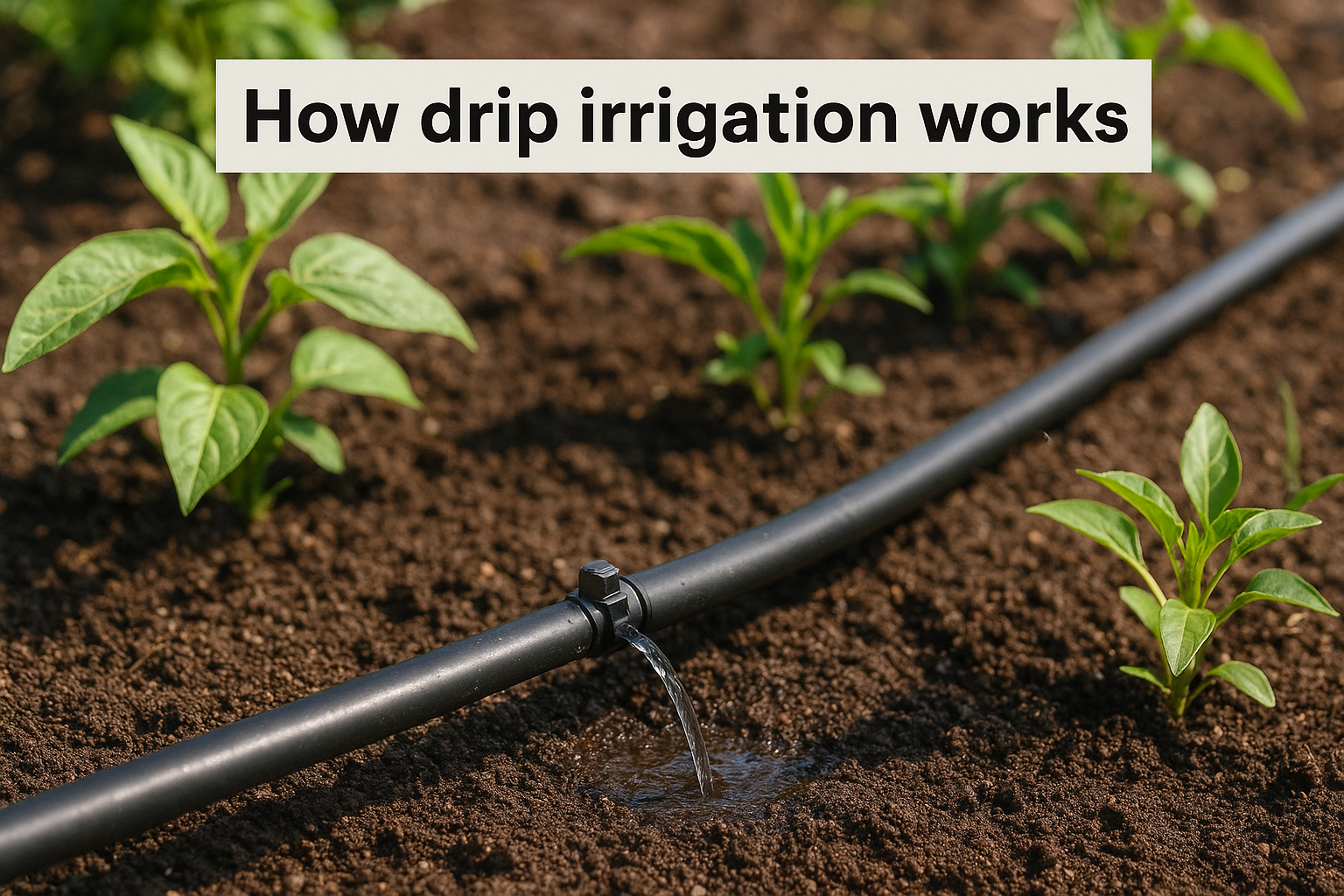
Understanding what is drip irrigation really means requires looking at how this targeted delivery prevents the waste you see with other methods. When you turn on your drip system, water moves through the mainline tubing (typically 13mm to 19mm in diameter) and branches out through smaller lateral lines that run alongside your plants. Emitters positioned at intervals along these lines discharge water at rates measured in liters per hour, usually between 2 to 8 liters depending on your plant needs and soil type.
Water delivery mechanism
Your emitters work as precision valves that maintain consistent flow rates regardless of slight pressure variations in your system. Pressure-compensating emitters ensure that plants at the beginning of your irrigation line receive the same amount of water as those at the far end, which solves the uneven watering problem common in Malaysian gardens with longer hose runs. These devices use internal diaphragms or flexible membranes that adjust their opening size based on incoming water pressure.
The water exits each emitter and spreads horizontally through your soil in a pattern called the wetting bulb. In sandy Malaysian soils, this bulb extends deeper and narrower, while clay soils create wider, shallower patterns. Your plants' roots grow toward these moisture zones, developing stronger root systems compared to shallow-rooted plants that depend on surface watering.
Pressure and flow control
Most drip systems operate at pressures between 0.7 to 1.4 bar, which is significantly lower than the 2 to 4 bar your standard garden hose delivers. You need a pressure regulator installed at the beginning of your drip system to reduce the incoming pressure and protect your emitters from damage or uneven water distribution. This component also helps prevent blowouts in the tubing connections common when Malaysian water pressure fluctuates during peak usage hours.
A properly regulated drip system delivers water at the rate your soil can absorb it, eliminating runoff and ensuring maximum efficiency.
Your system may also include a filter to remove sediment that could clog the small emitter openings. Malaysian water quality varies by location, and areas with older infrastructure often carry more particles that interfere with drip irrigation performance.
Root zone targeting
The placement of your emitters determines how effectively your plants receive moisture. You position them within the drip line of each plant, which corresponds to the outermost reach of the foliage where feeder roots concentrate. For established shrubs and trees in your Malaysian garden, you might need multiple emitters arranged in a circle around the trunk to create an even moisture pattern throughout the entire root zone.
This targeted approach means your system waters only productive areas while leaving pathways and bare spots dry. You waste no water on spaces between plants, and you avoid creating the damp conditions that encourage weed seed germination throughout your garden beds.
Drip irrigation vs sprinkler and hand watering
Your choice between irrigation methods significantly impacts your garden's health, water bills, and the time you spend maintaining your landscape. When comparing what is drip irrigation to traditional sprinklers or hand watering, you need to consider water efficiency, installation costs, and long-term maintenance requirements in Malaysia's tropical environment. Each method serves different purposes, and understanding their practical differences helps you make the right decision for your specific outdoor space.
Water efficiency comparison
Drip systems deliver 60% to 70% less water than overhead sprinklers for the same garden area because they minimize evaporation and runoff. Your sprinkler spreads water across entire zones including pathways, driveways, and bare soil, while drip irrigation targets only the root zones where plants actually absorb moisture. Hand watering sits somewhere in the middle, but your efficiency depends entirely on technique and consistency, which varies significantly from person to person.
Malaysian gardens lose substantial water through evaporation when you use sprinklers during daytime hours, especially in the hot months between March and October. The droplets evaporate in the air and off leaf surfaces before reaching the soil, reducing the actual moisture your plants receive. Drip systems avoid this problem by keeping water at ground level, protected from direct sun exposure.
Drip irrigation can reduce your monthly water consumption by up to 50% compared to traditional sprinkler systems, translating to significant savings on utility bills.
Cost and installation considerations
You face higher upfront investment with drip systems compared to buying a simple sprinkler or hose setup. A professional drip installation for a typical Malaysian residential garden might cost between RM2,000 to RM5,000 depending on garden size and complexity, while a basic sprinkler system runs RM500 to RM1,500. Hand watering requires only a hose and nozzle, making it the cheapest initial option at around RM100 to RM300.
Your long-term costs tell a different story. Drip systems pay for themselves through reduced water bills within two to three years, while sprinklers continue consuming more water throughout their lifespan. Hand watering costs you valuable time every day, which becomes particularly burdensome during Malaysia's hot seasons when plants need frequent moisture.
Labor and convenience factors
Drip irrigation operates automatically with a timer, freeing you from daily watering chores that consume 15 to 30 minutes in typical Malaysian gardens. Your plants receive consistent moisture even when you travel or work long hours, preventing the stress that occurs when hand watering schedules get disrupted. Sprinkler systems offer similar automation benefits but require more oversight during Malaysia's unpredictable rainfall patterns.
Hand watering gives you direct control and allows you to observe your plants closely during each session, helping you spot pest problems or nutrient deficiencies early. However, this method demands your physical presence and energy every single day, which becomes impractical for larger gardens or during Malaysia's extreme heat.
Key components and terminology
Your drip irrigation system consists of several essential parts that work together to deliver water efficiently throughout your Malaysian garden. Understanding these core components helps you troubleshoot problems, expand your system, and communicate effectively with suppliers or installers. The terminology might seem technical at first, but you only need to grasp a few basic concepts to manage what is drip irrigation in your outdoor space successfully. Each component serves a specific function that contributes to the precise water delivery that makes drip systems so effective in tropical climates.
Main line and lateral tubing
Your main line serves as the primary water supply route that runs from your water source to different zones in your garden. This tubing typically measures 13mm to 19mm in diameter and handles the full pressure from your tap before distribution begins. Malaysian drip systems use polyethylene tubing that resists UV degradation and maintains flexibility in hot weather, though the constant sun exposure in tropical gardens still requires periodic inspection for brittleness.
Lateral lines branch off from your main line and run directly along your plant rows or beds. These smaller diameter tubes (usually 6mm to 13mm) carry water to individual plants and contain the emitters that release moisture into your soil. You connect laterals to the main line using simple barbed fittings or compression connectors that require no special tools, making system expansion straightforward when you add new plants to your garden.
Emitters and drippers
Emitters are the precision devices that control water release rates at each plant location. Your system might use adjustable emitters that allow you to increase or decrease flow rates from 0 to 8 liters per hour, or fixed emitters that deliver consistent predetermined amounts. Malaysian gardens often benefit from pressure-compensating emitters because they maintain uniform water delivery even when your municipal water pressure fluctuates during peak usage times.
Pressure-compensating emitters ensure every plant receives equal water regardless of its position in your system, preventing the dry spots that plague simple drip setups.
Inline drippers come pre-installed inside the tubing at regular intervals, creating a streamlined appearance with no external components visible in your garden beds. Button drippers attach externally to punched holes in your lateral lines, offering flexibility to adjust spacing as your plants grow or when you rearrange your landscape design.
Essential accessories
Your complete system requires several supporting components beyond tubes and emitters. A pressure regulator reduces incoming water pressure to the 0.7 to 1.4 bar range that drip systems need, protecting your emitters from damage and ensuring consistent flow rates. Malaysian water supplies often deliver 2 to 4 bar pressure, making this component essential rather than optional for system longevity.
Backflow preventers stop contaminated water from flowing backward into your clean water supply, which becomes particularly important in gardens where you apply fertilizers through your irrigation system. Filters remove sediment and particles that could clog your small emitter openings, and you need to clean these monthly in areas with older water infrastructure. End caps seal the ends of your lateral lines, while flush valves let you periodically clear accumulated debris from the tubing by releasing water at high flow rates.
Types of drip irrigation systems
Your garden can benefit from several distinct drip irrigation configurations, each designed for specific landscape needs and plant types. When deciding what is drip irrigation best suited for your Malaysian outdoor space, you need to consider installation complexity, maintenance access, and the particular requirements of your plants. The system type you choose affects everything from initial setup costs to long-term performance in tropical conditions. Surface systems offer easy inspection and adjustment, while subsurface options provide cleaner aesthetics and reduced evaporation losses.
Surface drip systems
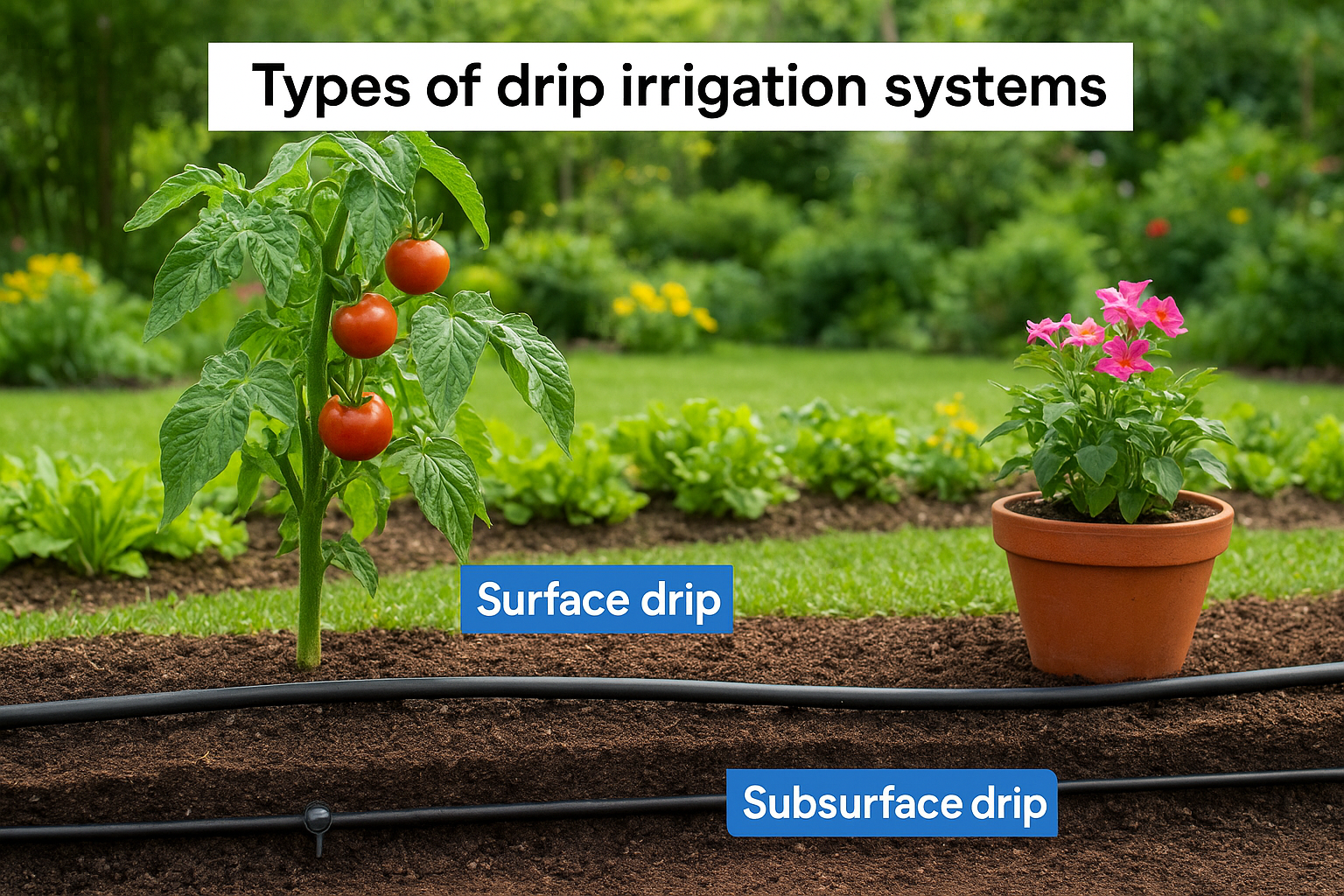
Surface drip irrigation places all tubing and emitters on top of your soil, making them fully visible throughout your garden beds. You see the lateral lines running alongside your plants, with emitters positioned near each root zone where water drips directly onto the soil surface. This configuration works exceptionally well for Malaysian vegetable gardens, flower beds, and container plants where you need frequent access to add new plants or adjust emitter locations as your landscape evolves.
Malaysian gardeners favor surface systems because they allow immediate problem identification when emitters clog or tubing develops leaks. You inspect your entire irrigation network during routine garden maintenance, spotting issues before they damage your plants through under-watering. The exposed tubing also makes system expansion straightforward when you add new garden sections or replace seasonal plants with different water requirements.
Surface drip systems give you complete control and visibility, making them the practical choice for Malaysian gardens that change with planting seasons.
Subsurface drip systems
Subsurface systems install tubing below your soil surface, typically 15cm to 30cm deep depending on your plant root zones and soil type. You see no irrigation components in your finished landscape, creating cleaner aesthetics that many Malaysian property developers prefer for commercial projects and upscale residential gardens. The buried lines deliver water directly to the root zone while protecting the system from UV degradation and accidental damage during garden maintenance activities.
Your subsurface installation requires more planning and professional expertise because adjusting emitter locations becomes difficult after burial. Malaysian clay soils benefit particularly from subsurface systems because the consistent underground moisture prevents surface crusting that blocks water penetration. These systems reduce evaporation losses by keeping water below ground where temperatures stay cooler, though you sacrifice the easy inspection capability that surface systems provide.
Pros and cons at a glance
Your decision about implementing drip irrigation depends on weighing its practical benefits against potential drawbacks in your specific Malaysian garden context. Understanding what is drip irrigation from both perspectives helps you set realistic expectations and prepare for the investment required versus the long-term returns you receive. This balanced overview covers the main factors you should consider before committing to a drip system, from initial costs to ongoing maintenance demands that affect your experience with this irrigation method.
Major advantages
Drip systems deliver substantial water savings that reduce your utility bills by 40% to 60% compared to traditional sprinkler irrigation. Your plants receive consistent moisture directly at their roots, which promotes stronger growth and higher yields in vegetable gardens while keeping ornamental plants healthier during Malaysia's dry spells. The targeted water delivery prevents weed growth in pathways and bare areas because you only moisten the soil around your desired plants.
You gain significant convenience through automated operation that eliminates daily watering chores. Your system runs on a timer even when you travel, maintaining your garden without requiring neighbors or helpers to manage watering schedules. Malaysian gardens benefit particularly from reduced leaf wetness, which minimizes fungal diseases that thrive in humid tropical conditions when overhead watering keeps foliage damp.
Drip irrigation cuts your garden maintenance time by eliminating daily watering while simultaneously improving plant health through consistent moisture delivery.
The flexibility of drip systems lets you customize water amounts for different plant types in the same garden bed. Your water-hungry vegetables receive more frequent irrigation through adjustable emitters, while drought-tolerant ornamentals get less, all from the same main line without creating separate zones.
Key disadvantages
Your initial setup costs run higher than traditional methods, with professional installations ranging from RM2,000 to RM5,000 for typical residential gardens. This upfront investment creates a barrier for budget-conscious homeowners, though the system pays for itself through water savings within two to three years in most Malaysian applications.
Emitter clogging remains the most common maintenance challenge you face with drip systems. Malaysian water quality varies significantly by area, and sediment accumulation requires monthly filter cleaning plus periodic emitter inspection. You need to flush your system quarterly to prevent buildup that reduces flow rates or blocks emitters completely.
Surface systems expose tubing to UV degradation and physical damage from garden tools, pets, or maintenance activities. Your tropical sun accelerates material breakdown, requiring tubing replacement every five to seven years depending on quality and exposure levels. Subsurface installations avoid these issues but make repairs and adjustments more difficult when problems occur underground.
Design, installation, and maintenance basics
Your success with drip irrigation depends on proper planning before you buy any components or start digging in your Malaysian garden. This section covers the fundamental steps you need to follow when setting up a new system and the routine care that keeps it functioning efficiently throughout the year. Understanding what is drip irrigation from a practical implementation standpoint helps you avoid common mistakes that lead to uneven watering, premature system failure, or wasted money on unnecessary components.
Planning your system layout
You start by mapping your garden on paper, marking each plant or plant group that needs irrigation. Measure the distance from your water source to the furthest plants because this determines your mainline length and helps you calculate pressure requirements. Malaysian gardens with multiple garden beds spread across large properties need careful zone planning to ensure adequate water pressure reaches every area without requiring additional pumps or pressure boosters.
Your plant groupings should reflect similar water needs rather than just physical proximity. Group thirsty vegetables and tropical flowering plants together in one zone, while drought-tolerant succulents and established shrubs share a different zone with less frequent watering schedules. This planning prevents you from overwatering hardy plants or underwatering moisture-loving species when they share the same irrigation line.
Calculate your total water demand by adding up the flow rates of all emitters you plan to install. Your household water supply delivers a finite amount per hour, typically around 30 to 50 liters per minute in Malaysian residential properties, which limits how many emitters you can run simultaneously.
Installation process
You begin installation by connecting a backflow preventer, pressure regulator, and filter to your outdoor tap in that specific order. Run your mainline tubing along the edges of garden beds or pathways where it stays protected from foot traffic and garden tools. Malaysian sun exposure requires you to secure surface tubing with landscape staples every 60cm to prevent the heat from causing sagging or movement.
Punch holes in your lateral lines using a specialized tool that creates clean openings without tearing the tubing. Insert emitters firmly into these holes, positioning them within the drip line of each plant where feeder roots concentrate. Test your system by turning on the water and checking every emitter for proper flow and any leaks at connection points before burying subsurface lines or adding mulch over surface installations.
Maintenance requirements
Your monthly tasks include cleaning the filter screen to remove accumulated sediment that reduces water pressure throughout your system. Inspect visible emitters for clogging or damage, and flush the entire system quarterly by removing end caps and letting water run at full pressure for several minutes. Malaysian water quality often carries minerals that build up inside emitters, requiring you to replace them every two to three years even with proper filtration.
Regular filter cleaning and quarterly system flushing prevent 90% of drip irrigation problems before they affect your plants.
Check your timer batteries twice yearly and adjust watering schedules seasonally to account for Malaysia's changing rainfall patterns. Your system needs more frequent operation during dry months and reduced schedules during monsoon seasons when natural rainfall supplements irrigation.
A simple plan to start
You now understand what is drip irrigation, how it functions in Malaysian gardens, and whether it matches your landscape needs. Your next step involves assessing your current garden layout and determining which plants need consistent moisture during Malaysia's unpredictable weather patterns. Start with a small test area rather than installing a complete system across your entire property, which lets you gain practical experience with emitter placement, timer programming, and maintenance routines before expanding.
Creating a truly sustainable landscape requires more than just efficient irrigation. At Konzept Garden, we design complete outdoor spaces where irrigation systems work seamlessly with plant selection, soil preparation, and hardscape elements. Whether you're considering a drip system for your existing garden or planning a new landscape from the ground up, our team helps you make decisions that save water while keeping your outdoor space beautiful. Contact our landscape design team to discuss how we can create a garden that thrives with minimal maintenance and maximum efficiency.