
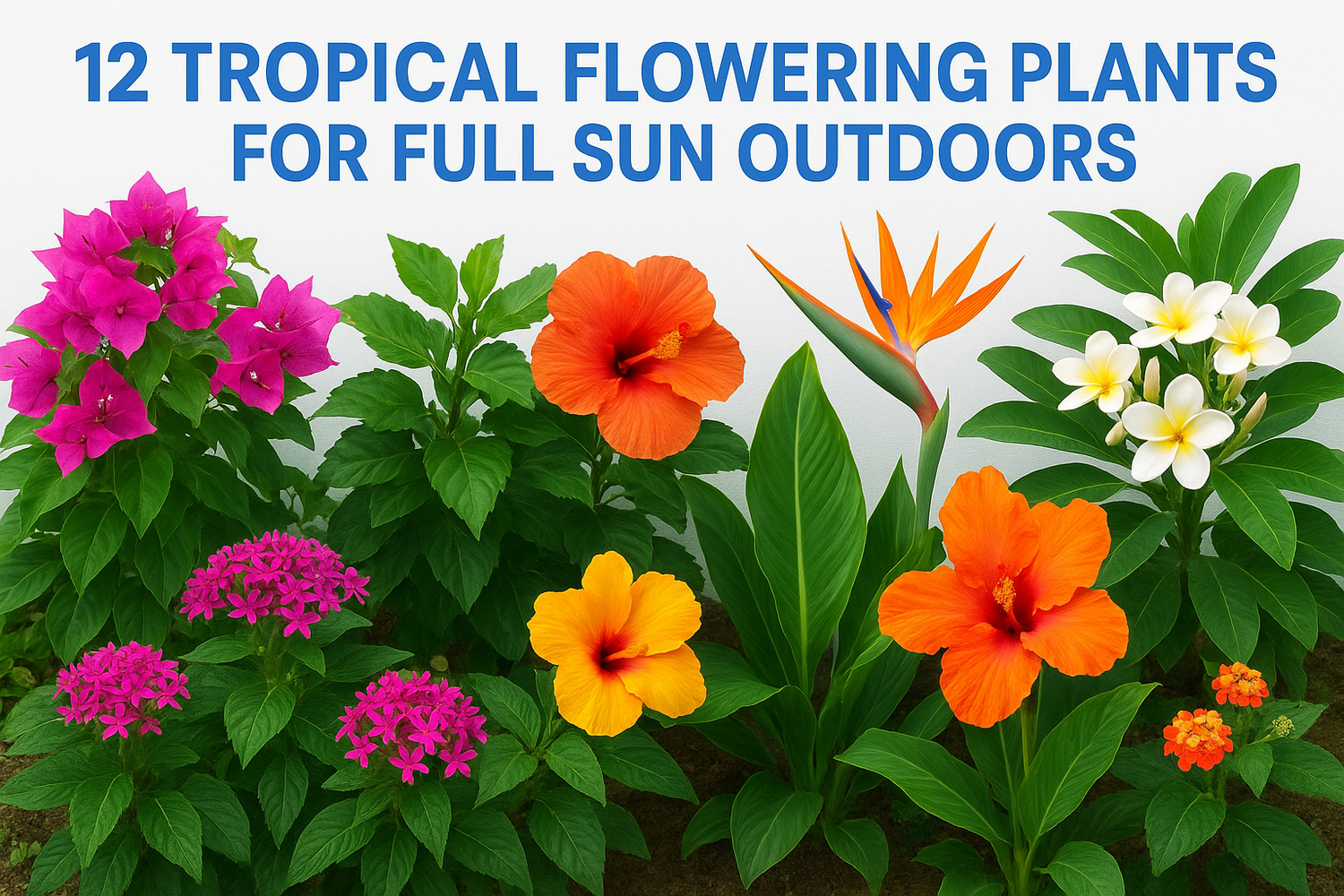
Malaysia's equatorial climate gives us something most gardeners elsewhere only dream about: year-round growing conditions with abundant sunlight. But not every flowering species can handle hours of direct, unfiltered sun without wilting, scorching, or refusing to bloom. Picking the right tropical flowering plants for full sun makes the difference between a garden that thrives and one that struggles through each dry spell.
At Konzept Garden, we've designed and planted gardens across Malaysia, from compact residential courtyards to sprawling commercial landscapes, and sun exposure is one of the first factors we assess during every project. The plants on this list aren't just textbook recommendations. They're species our team has worked with firsthand, chosen for their proven performance in full-sun Malaysian conditions.
Below, you'll find 12 tropical flowering plants that hold up under direct sunlight, each with practical notes on care, growth habits, and best uses in outdoor spaces. Whether you're planning a garden overhaul or adding color to a sun-drenched patio, this list will help you choose with confidence.
1. Konzept Garden full-sun planting plan
Choosing tropical flowering plants for full sun without a structured plan often results in mismatched heights, clashing colors, and species placed in spots they can't handle. Konzept Garden's full-sun planting plan removes that guesswork by matching the right plants to your specific site conditions before a single hole gets dug.
How it solves full-sun plant selection
Konzept Garden starts every project with a detailed site assessment covering sun hours, soil composition, drainage, and wind exposure. That data directly shapes which plants go where, so you avoid the costly cycle of buying, planting, and replacing species that weren't right for your conditions. Instead of relying on general advice, you get a plan grounded in the real conditions of your garden.
Getting site data before plant selection is what separates a thriving garden from one that needs constant rescuing after the first dry season.
Best fit projects in Malaysia
This service suits landed residential properties, bungalow gardens, commercial shopfront landscaping, resort grounds, and poolside planting areas particularly well. Any outdoor space with consistent open-sky sun exposure and room for layered planting is a strong candidate. Konzept Garden has delivered full-sun designs for clients across the Klang Valley, Johor Bahru, and Penang, adapting each plan to local microclimates and soil variation.
What you need to share for accurate plant picks
Before the team can finalize recommendations, they need a few specifics from you. Key details include your plot dimensions, the number of direct sun hours your space receives daily, your preferred maintenance level, and whether you want ground coverage, vertical interest, or a combination. Clear photos of your existing space from multiple angles speed up the process considerably and help the team flag issues like poor drainage or reflected heat from walls.
Design ideas for color, height, and shade layering
A strong full-sun planting scheme works in three tiers. Tall background plants like bird of paradise, bougainvillea, or frangipani anchor the rear and create structure. Mid-height bloomers such as hibiscus, canna lily, or allamanda fill the center zone with color. Low-growing options like portulaca or pentas cover the front edges and spill over borders naturally. This layering creates visual depth and ensures each plant receives adequate light without crowding its neighbors.
Budget factors and what changes the cost
Your total project cost depends on planting area size, the number of species selected, and whether you add a 3D visualization before implementation begins. Specialty plants, custom planters, and irrigation setup each affect the final figure. Konzept Garden provides free quotations, so you can review a clear scope before making any commitment.
2. Tropical hibiscus
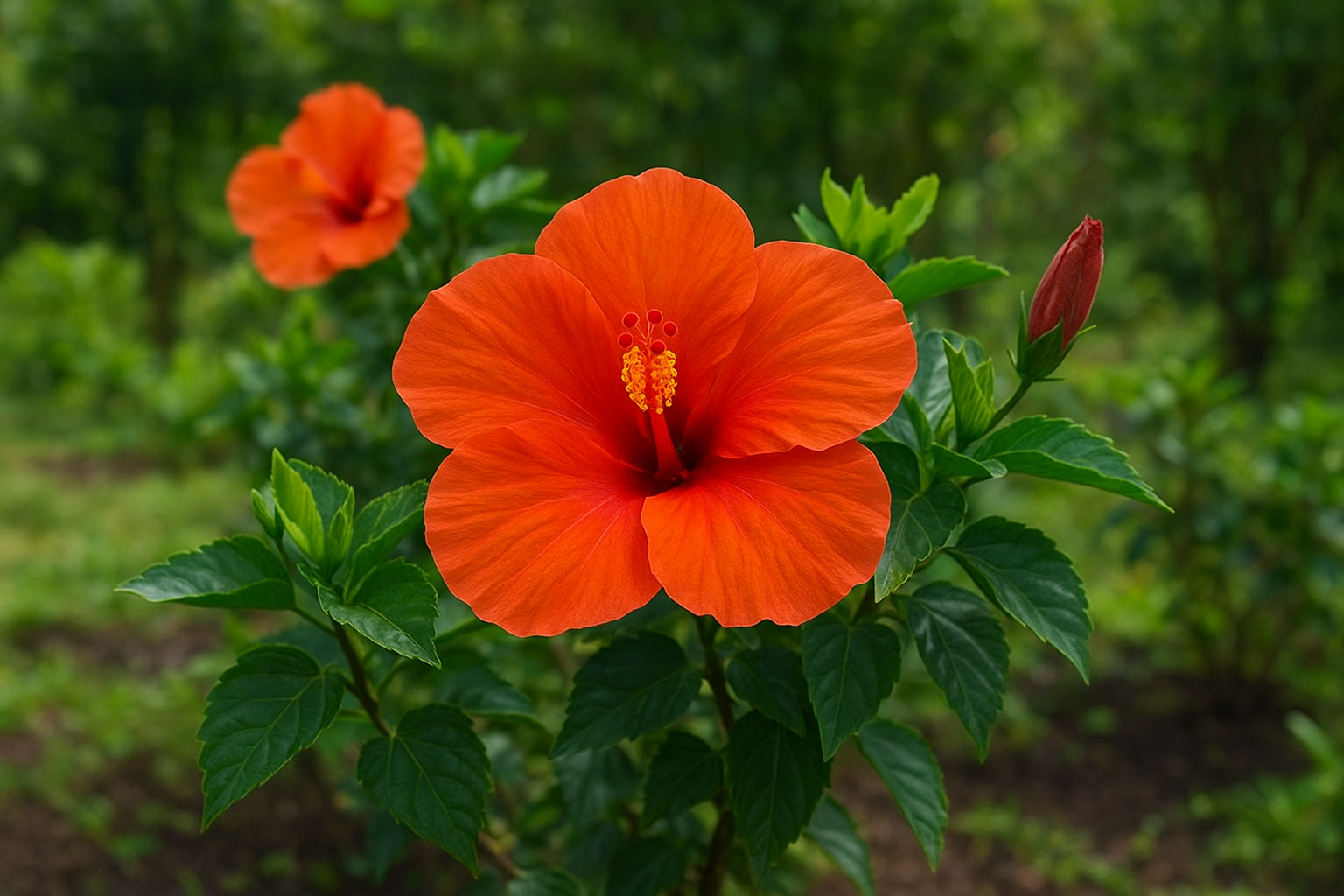
Tropical hibiscus (Hibiscus rosa-sinensis) is one of the most widely planted tropical flowering plants for full sun in Malaysian gardens, and for good reason. It produces bold, large blooms in nearly every color and responds well to the heat and humidity that other plants struggle with.
Sun, heat, and rainfall fit
In Malaysia's climate, hibiscus thrives with 6 to 8 hours of direct sunlight daily. The year-round heat actually boosts flowering, provided the plant gets consistent water. It handles heavy rain well but needs well-draining soil to prevent root rot during prolonged wet periods.
Flower color range and bloom habits
You'll find hibiscus in red, orange, yellow, pink, white, and bicolored varieties, with some double-petaled cultivars adding extra visual weight. Individual flowers last only one day, but a healthy, well-fed plant pushes out new blooms almost daily throughout the year.
A hibiscus that drops buds without opening is usually signaling inconsistent watering or a sudden temperature swing.
Planting, watering, and feeding basics
Plant hibiscus in loamy, well-draining soil with a slightly acidic pH between 6.0 and 6.5. Water deeply two to three times per week during dry spells, and apply a high-potassium fertilizer every four weeks to sustain continuous flowering.
Pruning for shape and more blooms
Cut back up to one-third of each branch after a heavy flush of blooms to encourage the next flowering cycle. Removing crossing branches improves airflow and keeps the overall plant shape compact and manageable without stressing the plant.
Common pests and quick fixes
Aphids and spider mites are the most frequent visitors on hibiscus in Malaysia. A strong water jet clears light infestations, while neem oil spray applied in the early morning handles more persistent problems without harming pollinators.
3. Bougainvillea
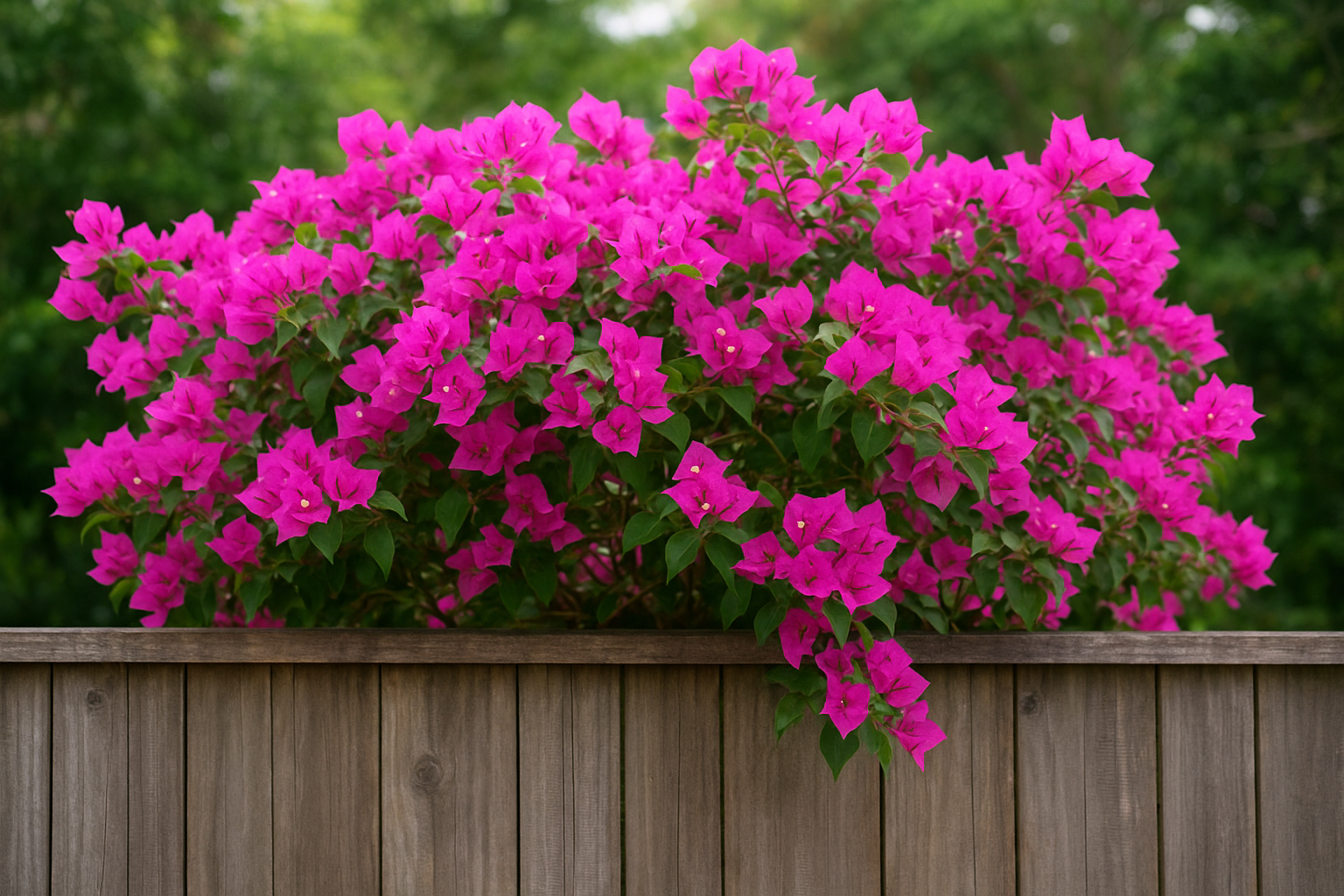
Bougainvillea ranks among the most rewarding tropical flowering plants for full sun you can plant in a Malaysian garden. Its papery bracts create intense color displays along fences, walls, and pergolas with relatively little effort once it's established in the right spot.
Sun needs and best microclimates
Full sun is non-negotiable for bougainvillea to bloom reliably. This plant needs at least 6 hours of direct sunlight daily, and south or west-facing positions give it the consistent exposure it needs. Reflected heat from concrete walls or paved areas works in its favor and often encourages even heavier flowering.
Bract colors and growth habit
The colorful bracts surrounding the small white flowers come in a wide range, including:
- Magenta, red, and orange for high-impact borders
- White, yellow, and pale pink for softer, layered schemes
- Purple and bi-color varieties for contrast planting
Most varieties push 2 to 5 meters in a single season when given adequate light and support.
Training on trellises, fences, and pergolas
Bougainvillea doesn't cling naturally, so tie new stems to your structure every two to three weeks during active growth. Light pruning of stems growing in the wrong direction keeps the plant neat without cutting back flowering wood that's already set buds.
A bougainvillea trained along a fence line creates one of the most impactful, low-maintenance color barriers available for a Malaysian property.
Watering rules to avoid "all leaves, no flowers"
Overwatering pushes bougainvillea toward lush leaf growth at the expense of flowers. Water deeply once or twice a week, then allow the soil to dry partially between sessions to trigger the stress response that encourages blooming.
Thorns, pests, and maintenance tips
Always wear thick gardening gloves when pruning or tying stems since the thorns cause serious scratches. Scale insects occasionally cluster on woody stems, and horticultural oil applied directly to affected areas clears them without damaging surrounding growth.
4. Frangipani
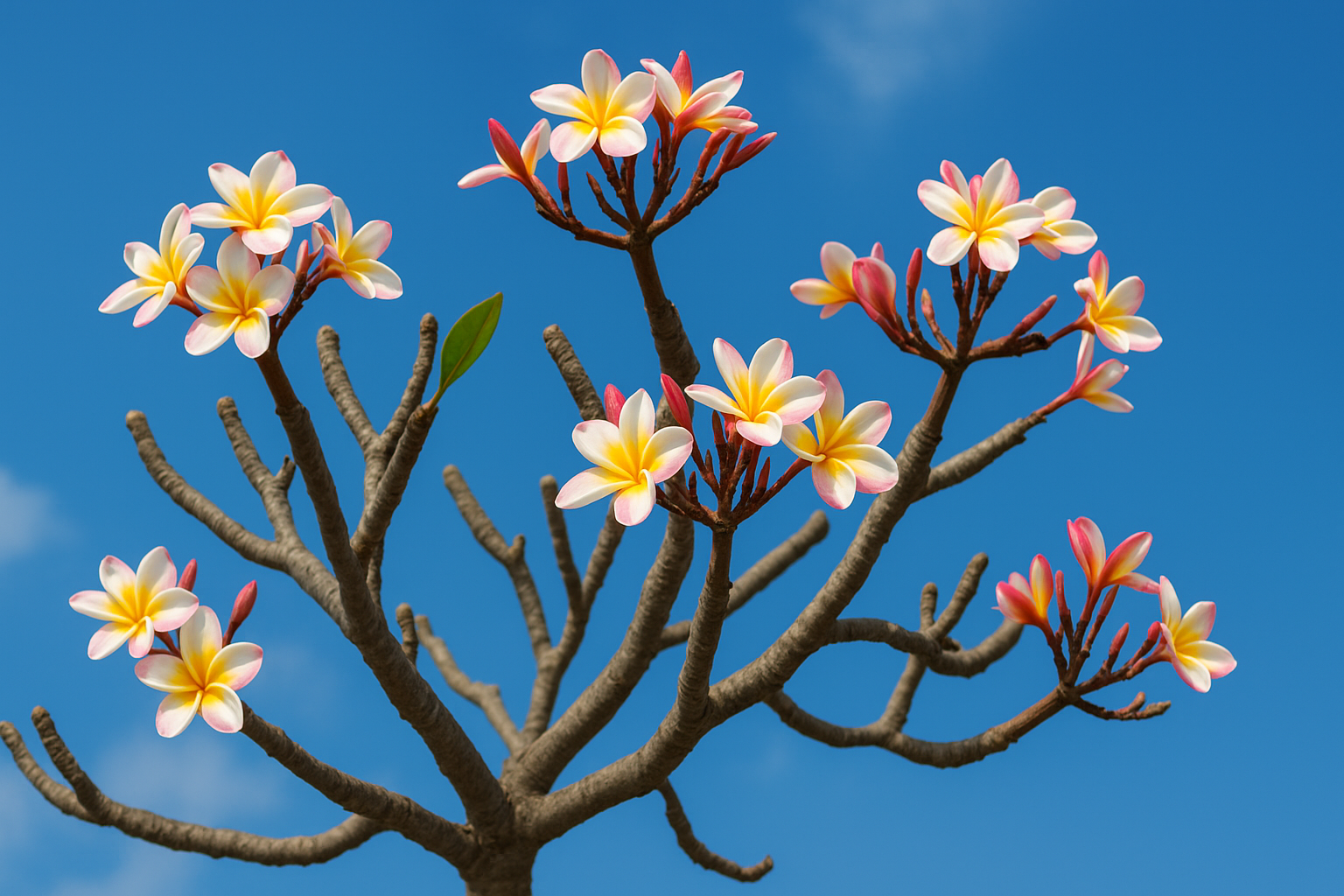
Frangipani (Plumeria spp.) is one of the most recognizable tropical flowering plants for full sun in Southeast Asia, and it earns that status by performing consistently in Malaysia's intense heat and humidity. Its waxy, fragrant flowers and sculptural bare branches make it a standout in any outdoor space where strong character matters.
Full-sun performance and site choice
Frangipani needs a minimum of 6 hours of direct sunlight daily to flower well. Choose an open, south-facing position away from overhanging structures or dense tree canopies that would cut its light hours short. Coastal and hillside locations across Malaysia suit frangipani particularly well since good air circulation prevents the fungal issues that come with poor ventilation.
Fragrance, flower colors, and seasonal rhythm
Flowers come in white, yellow, pink, red, and multicolored combinations, with most varieties releasing their strongest scent in the early morning and evening. Frangipani blooms heavily during the drier months and often drops its leaves during a brief resting phase, which is normal behavior rather than a sign of ill health.
A leafless frangipani in the dry season is resting, not dying. Resume regular watering and new growth will follow within weeks.
Planting in ground vs large pots
In-ground planting gives frangipani the root space it needs to reach full size, typically 3 to 6 meters. For smaller courtyards or rooftop gardens, a large pot of at least 50 liters with drainage holes works well for dwarf varieties.
Watering and fertilizer schedule for Malaysia
Water once every three to four days during dry spells and reduce frequency during heavy monsoon periods. Apply a phosphorus-rich fertilizer monthly from March through October to push continuous flower production.
Common problems and how to prevent them
Stem rot and frangipani rust are the two issues you'll encounter most in Malaysia's wet season. Both spread in stagnant, humid conditions, so ensure good drainage and space plants with enough room for air to circulate freely between them.
5. Ixora
Ixora (Ixora coccinea) is a compact, low-maintenance shrub that delivers consistent color in Malaysian full-sun gardens throughout the year. Its dense clusters of small tubular flowers make it one of the most reliable tropical flowering plants for full sun in both residential borders and commercial hedges.
Sun tolerance and ideal exposure
This shrub performs best with 5 to 8 hours of direct sunlight daily. Partial shade reduces flowering noticeably, so position plants along open borders or south-facing beds where sunlight reaches them for the bulk of the day without interruption from overhanging structures.
Bloom clusters and best varieties for color
The flowers grow in tight, rounded clusters called corymbs, with individual blooms appearing continuously when the plant receives adequate light and nutrients. Strong color options for Malaysian gardens include:
- Red and orange for high-contrast borders
- Yellow and pink for softer, mixed planting schemes
- Dwarf varieties like Ixora 'Siam' for compact hedging in tight spaces
Red and orange Ixora varieties tend to produce the heaviest flower clusters under full Malaysian sun conditions.
Soil pH, nutrients, and chlorosis prevention
Acidic soil with a pH between 5.0 and 6.0 is essential for Ixora to absorb nutrients properly. In Malaysia, where soil pH often sits higher than ideal, yellowing leaves signal iron chlorosis caused by nutrient lockout. Apply an acidifying fertilizer with iron and manganese every six weeks to correct this and restore healthy, dark green foliage.
Pruning and hedging without losing flowers
Trim only the tips of branches after each flowering flush rather than cutting deeply into woody stems. Heavy pruning removes the active flowering nodes and delays the next bloom cycle by several weeks.
Pests, diseases, and airflow tips
Scale insects and sooty mold are the most common issues on Ixora in Malaysia. Sooty mold grows on the honeydew that scale insects leave behind, so treating the infestation directly with horticultural oil clears both problems at once. Space plants at least 60 centimeters apart to maintain airflow and reduce the humidity buildup between stems that invites fungal problems.
6. Allamanda
Allamanda (Allamanda cathartica) stands out among tropical flowering plants for full sun with its vivid, trumpet-shaped blooms and vigorous growth habit. It handles Malaysia's heat and humidity without complaint and rewards consistent care with near-continuous flowering throughout the year.
Sun needs and where it grows best
Allamanda needs a minimum of 6 hours of direct sunlight daily to produce flowers reliably. Position it along south or west-facing walls, open fences, or sunny garden borders where light reaches it uninterrupted from mid-morning through the afternoon.
Flower look, color, and flowering cycle
The blooms are large, bright yellow trumpets measuring roughly 7 to 10 centimeters across, with some cultivars producing pink to purple variations (Allamanda blanchetii). Flowers appear in flushes throughout the year, with the heaviest cycles occurring during warmer, drier periods between monsoon seasons.
Allamanda plants sitting in shade for more than half the day will produce lush foliage but very few flowers.
Supporting it as a shrub or climber
You can grow allamanda as a freestanding rounded shrub with regular pruning to maintain shape, or train it along trellises, pergolas, and fence lines as a vigorous climber. Tie stems loosely every few weeks during active growth to guide its direction without restricting circulation.
Watering and feeding for nonstop blooms
Water two to three times per week during dry spells and allow the top layer of soil to dry slightly between sessions. Apply a balanced fertilizer with added phosphorus every four weeks to sustain continuous flower production without pushing excessive leaf growth.
Safety and handling notes for sap
Every part of allamanda contains toxic milky sap that irritates skin and eyes on contact. Always wear gloves and eye protection when pruning or propagating, and keep children and pets away from fresh cuttings and plant debris.
7. Mandevilla
Mandevilla is a fast-climbing vine that brings bold, trumpet-shaped blooms to fences, pergolas, and containers across Malaysian gardens. Its continuous flowering habit and glossy foliage make it one of the more versatile tropical flowering plants for full sun when you need quick vertical color with relatively low maintenance.
Full sun vs partial sun in hot, humid yards
Mandevilla performs best with 5 to 7 hours of direct sunlight daily. In Malaysia's humid climate, an east-facing wall that delivers strong morning sun and some afternoon protection can work well, though a fully open position produces noticeably more flowers. Avoid positioning this plant under overhanging structures that cut its daily light below four hours.
Flower colors and growth form
Most mandevilla varieties produce large, funnel-shaped flowers in red, deep pink, or white, with some bi-color cultivars showing a contrasting throat. The plant climbs by twining its stems around any nearby support, reaching 2 to 4 meters in a single growing season under good conditions.
Pinching the growing tips early in the season encourages branching and produces a fuller plant with more flowering stems.
Trellising and container success
Fix a sturdy trellis or wire frame before the plant starts climbing to avoid disturbing the root system later. Mandevilla also thrives in containers of at least 40 liters fitted with a central support stake, which makes it a practical choice for patios and rooftop gardens where ground planting isn't possible.
Watering, soil drainage, and fertilizing
Water two to three times per week and ensure the soil drains freely between sessions, since waterlogged roots cause rapid decline. Apply a phosphorus-rich fertilizer every three to four weeks to keep flowering cycles consistent throughout the year.
Pests and mildew prevention
Spider mites and mealybugs are the most frequent problems on mandevilla in Malaysia's humid conditions. Treat both with neem oil spray applied in the early morning, and maintain enough spacing between plants to allow airflow that reduces surface moisture and discourages powdery mildew from taking hold.
8. Canna lily
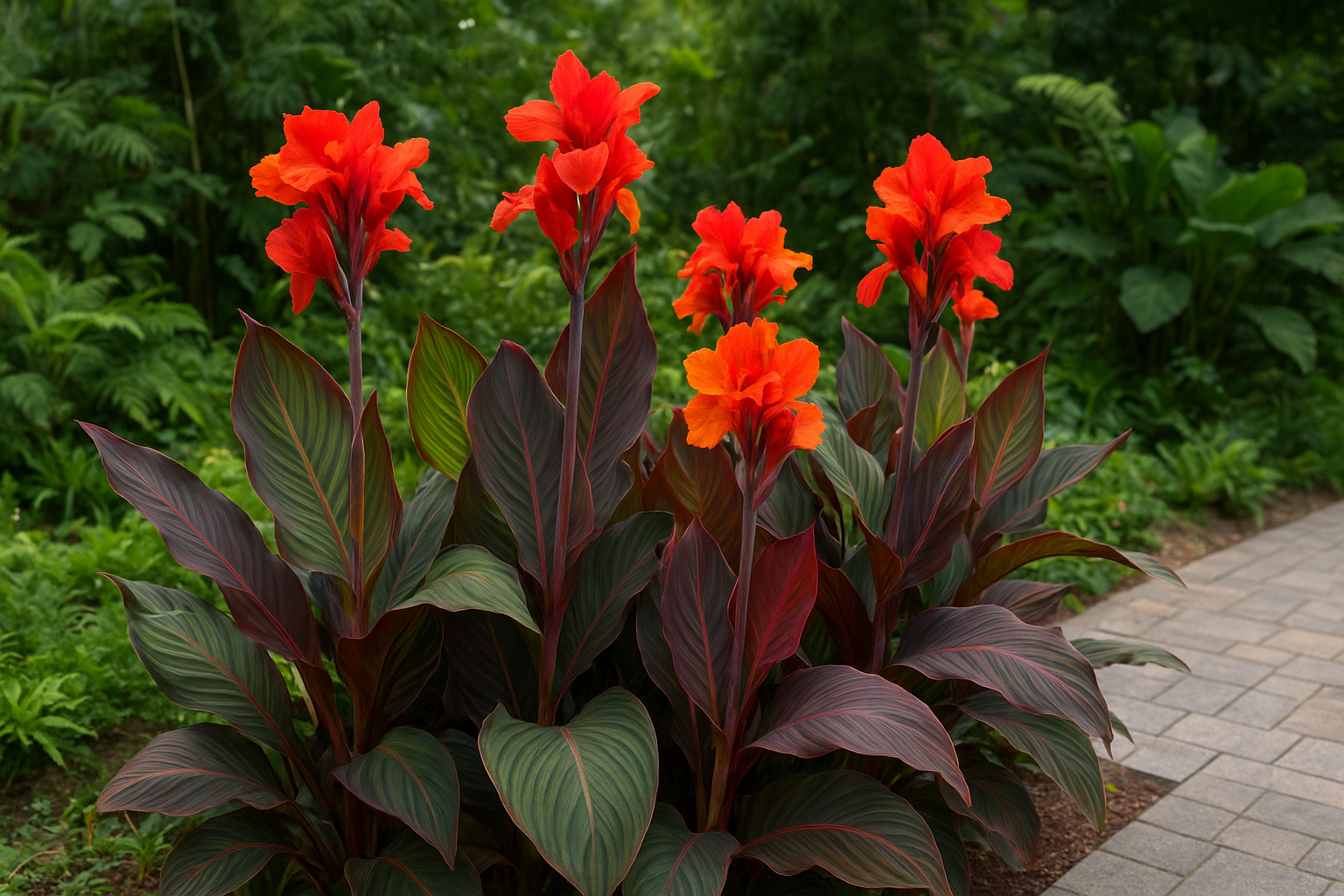
Canna lily (Canna spp.) delivers some of the most dramatic foliage and flower combinations available among tropical flowering plants for full sun. Its tall, upright form and bold color range make it a go-to choice for adding scale and structure to Malaysian garden borders and poolside planting areas.
Sun, moisture, and heat tolerance
Canna lily thrives with 6 to 8 hours of direct sunlight daily and handles Malaysia's year-round heat without stress. It tolerates consistently moist soil better than most flowering plants, making it a strong fit for garden beds near drainage paths or water features where other sun-loving species would struggle.
Flower colors and foliage impact
Flowers range across red, orange, yellow, pink, and salmon tones, often with spotted or streaked petals that add visual texture. Many cultivars also carry striking bronze, purple, or variegated foliage, which keeps the plant visually interesting even between flowering flushes.
Canna lily's foliage alone earns its place in a border, even when the plant isn't in active bloom.
Planting rhizomes and spacing for clumps
Plant rhizomes 10 to 15 centimeters deep in well-enriched, moisture-retentive soil. Space individual rhizomes 60 to 90 centimeters apart to allow each clump enough room to expand without crowding neighboring plants within two growing seasons.
Feeding, watering, and deadheading
Water three to four times per week during dry spells and apply a balanced fertilizer with added potassium every four weeks to sustain strong flowering. Remove spent flower stalks at the base promptly to redirect the plant's energy toward producing new flower spikes.
Containment, cleanup, and pest watch
Canna lily spreads aggressively through underground rhizomes, so install a root barrier or divide clumps every two years to keep them within their intended boundary. Watch for canna leaf rollers and grasshoppers, which damage both leaves and emerging flower buds. Remove affected leaves by hand and apply a mild insecticide spray if the infestation spreads beyond isolated stems.
9. Pentas
Pentas (Pentas lanceolata) is a compact, heat-loving perennial that earns its place among the best tropical flowering plants for full sun in Malaysian gardens. Its star-shaped flower clusters attract sunbirds and butterflies while thriving in conditions that would exhaust far less resilient species.
Sun needs and weather resilience
Pentas performs best with 5 to 8 hours of direct sunlight daily and handles both Malaysia's intense heat and heavy monsoon rains better than many comparable flowering shrubs. The plant bounces back quickly after heavy downpours, provided the soil drains freely and water doesn't pool around the root zone for extended periods.
Flower colors and pollinator value
Flower clusters appear continuously throughout the year in a practical range of colors, including:
- Red and deep pink for high-impact border planting
- White and lavender for softer, mixed schemes
- Bicolor varieties for added visual texture in mass plantings
Pentas draws butterflies and sunbirds consistently, making it one of the more ecologically useful plants you can add to a Malaysian outdoor space.
If attracting pollinators is a priority in your garden design, a mass planting of red or pink pentas delivers the most reliable results.
Planting for borders and mass color blocks
Space pentas 30 to 45 centimeters apart in well-draining, fertile soil for a structured border or bold color block. Group at least five plants together in a single tone to create unified, impactful blocks that read clearly from a distance rather than appearing scattered across the bed.
Watering and fertilizing for steady bloom
Water two to three times per week during dry spells and apply a balanced slow-release fertilizer every six weeks to maintain consistent flower production without pushing excessive leafy growth at the expense of blooms.
Pruning and replacement strategy
Trim spent flower heads and leggy stems back by one-third every four to six weeks to encourage fresh branching and continuous color. After 18 to 24 months, replace older plants with fresh cuttings, since pentas becomes increasingly woody and far less productive as it matures past that point.
10. Lantana
Lantana (Lantana camara) is one of the toughest tropical flowering plants for full sun you can plant in a Malaysian garden. Its multi-colored flower clusters and relentless blooming habit make it a practical choice for high-heat borders and slopes where more delicate species fail to establish.
Heat and full-sun toughness
Lantana tolerates full-day direct sun exposure that would scorch many comparable flowering plants. It handles Malaysia's intense midday heat without wilting and continues flowering through dry spells that reduce other species to bare stems. Sandy, well-draining soils suit it particularly well, though it adapts to most ground conditions once established.
Flower color shifts and growth habit
Each flower cluster opens in a mix of yellow, orange, red, and pink, with individual florets shifting color as they age. This creates a naturally layered, multi-tone appearance within a single plant. Lantana spreads 1 to 2 meters wide when left unpruned, with a mounding form that fills open ground efficiently.
The color-shifting flowers give lantana a visual complexity that few single-species plantings can match at its price point.
Where it works best in landscape design
Lantana works well along sunny embankments, low boundary borders, and dry roadside plantings where soil moisture is inconsistent and maintenance time is limited. It also performs well in large containers on sun-exposed terraces with minimal intervention once established.
Watering and pruning for nonstop flowers
Water once or twice per week during dry periods and cut stems back by one-third every six to eight weeks to stimulate fresh flowering wood and prevent the plant from becoming overly woody and unproductive.
Invasiveness risk and responsible planting
Lantana seeds spread via birds, and unchecked plants can colonize surrounding areas beyond your garden boundary. Remove spent flower heads before they set fruit to control spread and keep the plant contained within its intended planting zone.
11. Portulaca moss rose
Portulaca (Portulaca grandiflora) earns its place among the most heat-tolerant tropical flowering plants for full sun in Malaysia. Its low-growing, spreading habit and relentless color output make it one of the few plants that actually improves under the harshest conditions your garden can deliver.
Full sun and drought tolerance
Portulaca needs at least 6 hours of direct sunlight daily, and more is better. This plant stores water in its succulent stems and leaves, allowing it to push through dry spells that would leave most flowering plants wilted and unproductive. It suits exposed, dry, rocky slopes or sun-baked container arrangements where other species refuse to establish.
Portulaca placed in shade for more than two hours per day will close its flowers and reduce blooming significantly within a single week.
Flower colors and daily bloom pattern
The flowers open in a wide range, including red, orange, yellow, pink, white, and magenta. One behavior you should know before planting: portulaca blooms open in bright sunlight and close on cloudy days and in the evening. This makes it best suited to south or west-facing beds with consistent, uninterrupted sun exposure throughout the morning and midday hours.
Soil and drainage rules for success
Plant portulaca in sandy, fast-draining soil with low to moderate fertility. Rich, moisture-retentive soil encourages excessive leaf growth and root rot rather than flowers, so avoid heavy compost amendments in beds where this plant will grow.
Watering, trimming, and easy propagation
Water once per week during dry spells and skip watering entirely during rainy periods. Trim leggy stems back by half every four to six weeks to maintain a dense, compact shape. Stem cuttings root easily in moist sand within ten days.
Common issues in wet spells
Extended monsoon periods cause root rot and fungal stem collapse on portulaca when drainage is poor. Raise beds by at least 10 centimeters or mix coarse sand into your existing soil before planting to keep the root zone draining freely through Malaysia's wettest months.
12. Bird of paradise
Bird of paradise (Strelitzia reginae) is one of the most architectural tropical flowering plants for full sun in Malaysia, delivering its signature crane-like blooms on long, sturdy stems that rise well above the foliage. Its striking orange and blue flower heads make it a clear focal point in any sunny garden bed, poolside arrangement, or commercial landscape.
Sun needs and wind protection
Bird of paradise needs a minimum of 6 hours of direct sunlight daily to produce flowers consistently. Position the plant away from narrow corridors or exposed rooftop edges where sustained wind causes the large leaf blades to shred, since damaged foliage significantly reduces the plant's visual impact even when it's flowering well.
Shredded leaves on bird of paradise almost always trace back to a high-wind location rather than a pest or disease problem.
Flower shape, color, and bloom timing
The flowers emerge from a horizontal green and purple bract that holds multiple orange petals and electric blue tongue-shaped structures. Blooms appear mainly during cooler, drier months between June and September in Malaysia, though well-established plants often produce flowers outside this window.
Spacing, soil, and planting depth
Space bird of paradise plants 1.5 to 2 meters apart in loamy, well-draining soil enriched with organic matter. Plant the crown at ground level, never deeper, since burying the growing point delays flowering by months.
Watering and feeding for strong flowering
Water twice per week during dry periods and apply a potassium-rich fertilizer every six weeks from late dry season through early monsoon to encourage consistent flower stem production.
Splitting clumps and troubleshooting no blooms
Divide established clumps every four to five years using a sharp spade to separate rhizomes cleanly. If your plant produces no flowers despite good sun, the most likely cause is a root-bound container, an overcrowded clump, or a nitrogen-heavy fertilizer pushing leaf growth at the expense of blooms.
Next steps for a sun-loving garden
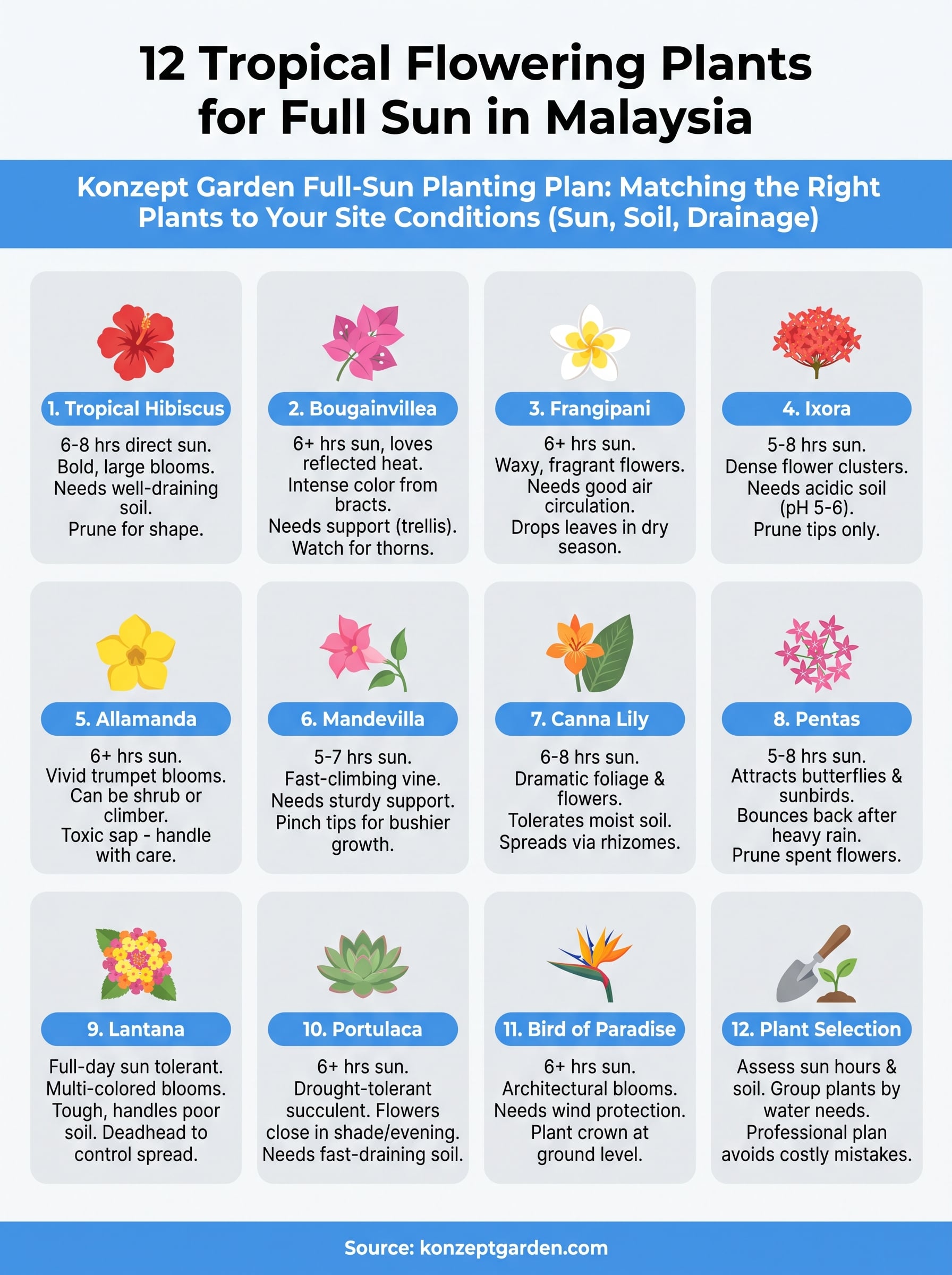
The 12 tropical flowering plants for full sun covered in this list give you a strong starting point, but selecting the right combination for your specific space still requires knowing your soil type, sun hours, and how each species interacts with the plants around it. A single poor placement decision can set back an entire border by a full growing season, so getting the details right from the start matters.
Your best next move is to bring in a professional who can assess your site and match the right plants to the right positions before you spend time and money on species that won't perform where you need them. Konzept Garden has delivered full-sun planting plans across Malaysia for residential and commercial properties of all sizes. Contact our design team to request a free quotation and get your sun-loving garden planned properly from day one.