
Malaysia's climate is a gift for anyone who wants a garden that feels alive. Year-round warmth, generous rainfall, and rich soil give you the perfect foundation for tropical garden design ideas that actually thrive, not just survive. The challenge isn't growing things here. It's knowing what to plant, where to place it, and how to bring it all together into a space that looks intentional.
Whether you're working with a compact courtyard or a sprawling backyard, the right design turns an ordinary yard into something you genuinely want to spend time in. At Konzept Garden, we've designed and built tropical gardens across Malaysia for over a decade, and we've seen firsthand which ideas hold up and which ones fall flat.
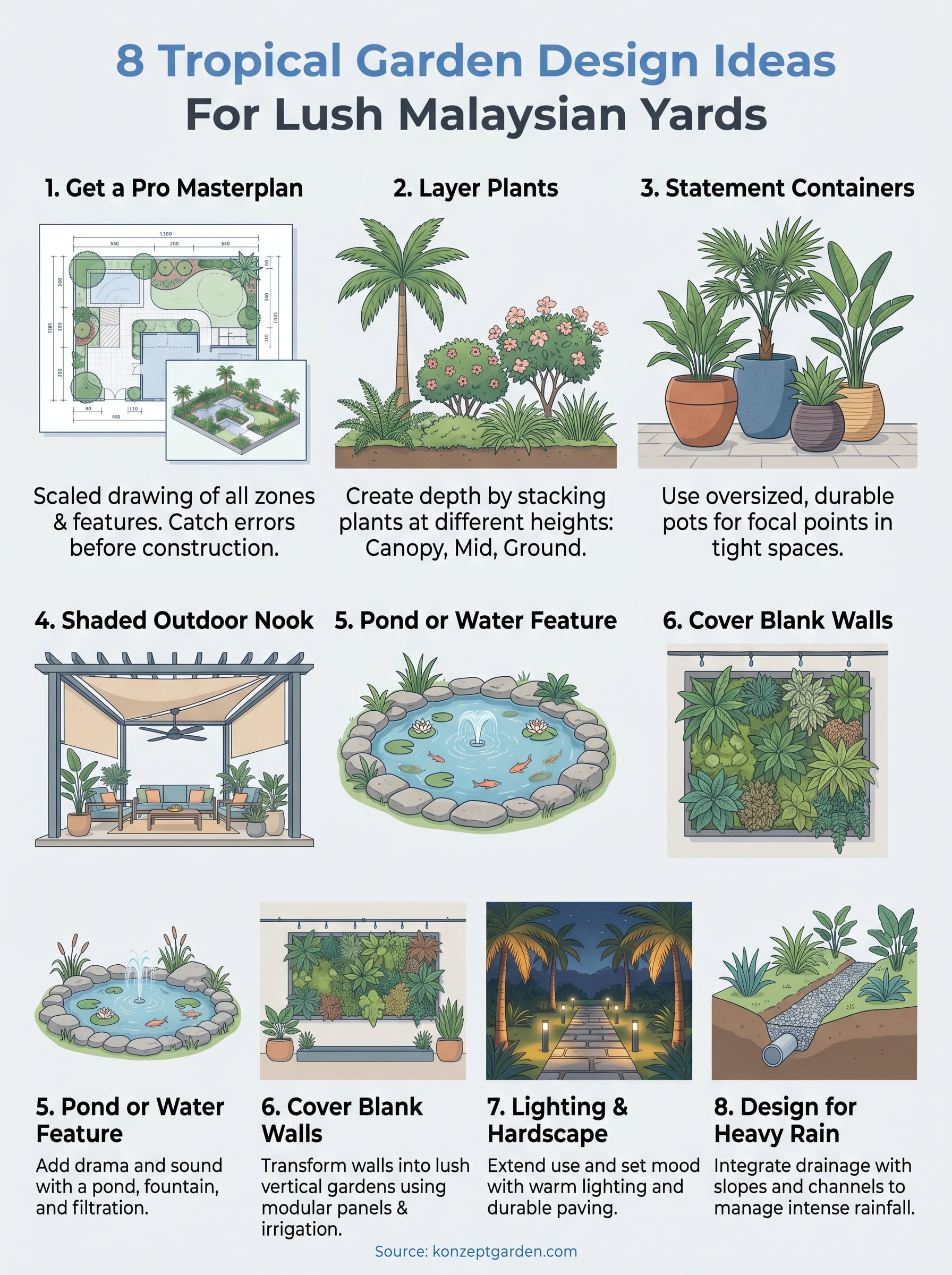
This article breaks down eight proven design approaches, from layered planting beds to water features and statement palms, so you can start shaping a lush, tropical yard that fits your space, budget, and lifestyle.
1. Get a pro tropical garden masterplan
A professional masterplan is the single best investment you can make before breaking ground on your garden. Without one, tropical garden design ideas stay as inspiration on a mood board instead of becoming a real, buildable outdoor space. A solid masterplan lays out every zone, pathway, and planting bed in a scaled drawing, so contractors build exactly what you envisioned and nothing important gets missed during execution.
What it looks like
Your masterplan typically comes as a top-down scaled drawing of your entire outdoor space, complete with dimensions, material callouts, and planting zones. Your designer uses it to map out where large canopy trees will sit, where groundcover will fill gaps, and how foot traffic will flow through the garden. Some firms also produce a 3D visualization alongside the flat plan, which lets you see the space from eye level before a single hole is dug.
Getting a 3D visualization alongside your masterplan removes guesswork and helps you catch layout problems before construction starts.
Key materials and features
The plan covers more than just plants. It documents hardscape elements like pathways, retaining walls, decking, and drainage channels, so the build team has clear direction from day one.
A strong masterplan typically includes:
- Pathway materials (natural stone, gravel, timber decking)
- Irrigation and drainage routes
- Lighting positions
- Seating and shade structure placements
- Plant species, spacing, and mature heights
Malaysia-ready plant picks
Your designer will specify plants suited to high humidity and either full sun or dappled shade, which cover the two main conditions in a typical Malaysian yard. Common anchor plants at the planning stage include Heliconia, Traveller's Palm (Ravenala madagascariensis), and Torch Ginger (Etlingera elatior), all of which establish quickly and give the overall scheme a strong tropical character from the start.
Upkeep tips and common pitfalls
Once your plan is ready, keep a digital and printed copy available to every contractor working on site. The most common mistake is letting builders deviate from the plan without checking with your designer first, which creates problems that cost more to fix than the original build. Schedule a design review session three months after completion to catch any plants that failed to establish before the rest of the garden fills in around them.
2. Layer plants for a true jungle look
Layering is the technique that separates a flat, uninteresting garden from one that feels genuinely lush and immersive. When you stack plants at different heights, from groundcovers up to mid-level shrubs and into the canopy, the result is a dense, living backdrop that captures the spirit of a Malaysian rainforest in your own yard.
What it looks like
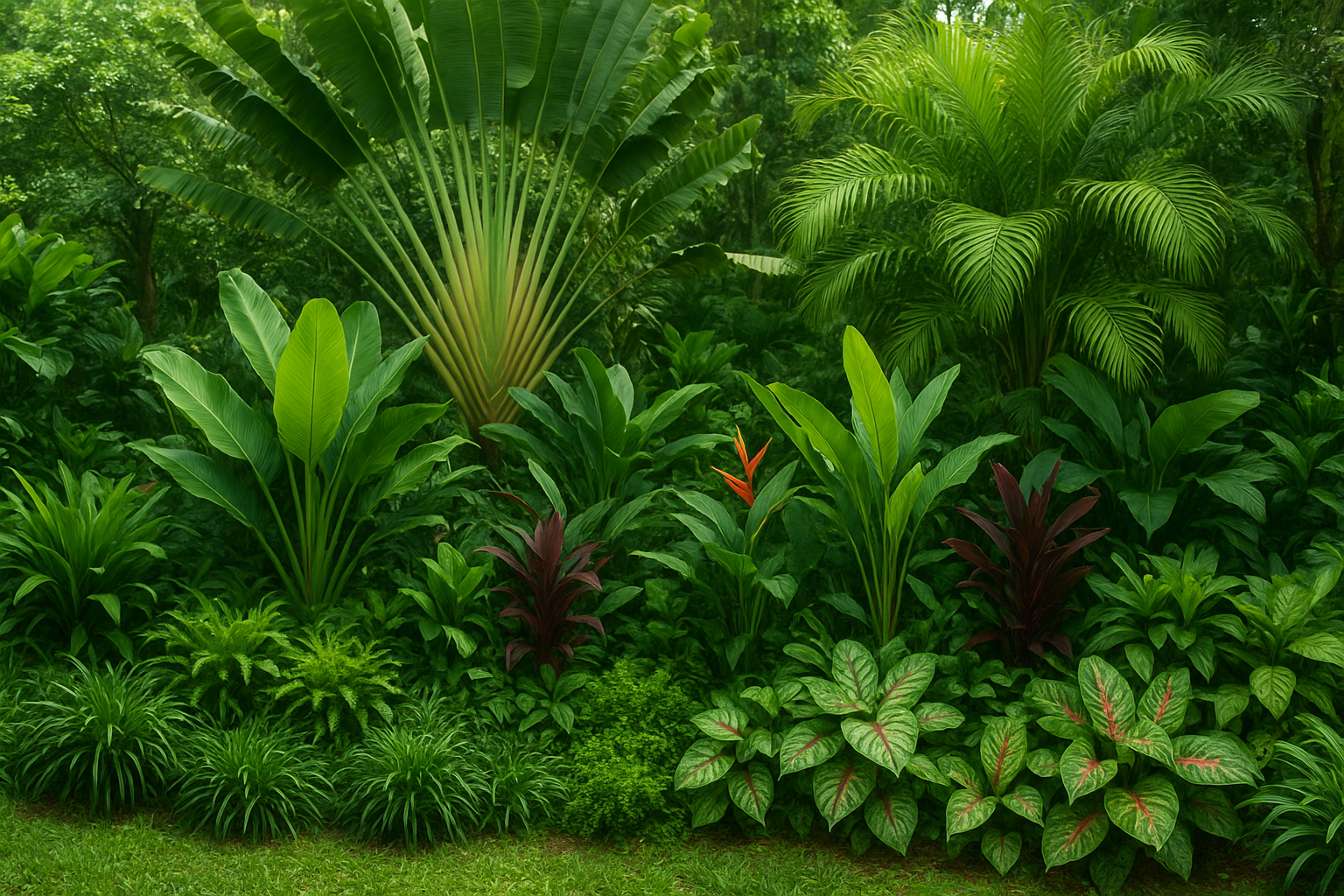
A layered planting scheme fills every vertical zone in your garden. Tall canopy trees anchor the top, mid-height shrubs and palms fill the middle, and low groundcovers or ferns spread across the base. This stacking effect eliminates bare soil and creates the kind of rich visual depth that makes tropical garden design ideas come to life.
Key materials and features
Good layering relies on contrasting leaf textures and shapes rather than just size. Mix broad tropical leaves with fine-textured grasses and combine bold colors with deeper greens to keep the eye moving through the space.
Using plants with different leaf sizes at each layer amplifies the jungle effect and makes the garden feel much larger than it actually is.
Malaysia-ready plant picks
- Canopy: Traveller's Palm, Golden Cane Palm
- Mid layer: Heliconia, Bird of Paradise, Cordyline
- Ground layer: Mondo Grass, Selaginella, Caladium
Upkeep tips and common pitfalls
Trim fast-growing mid-layer plants every six to eight weeks or they will crowd out the smaller groundcovers below. Check that shade-tolerant groundcovers receive enough light as the upper layers mature and start blocking more sun over time.
3. Go big with statement containers
Statement containers let you bring bold tropical garden design ideas into tight spaces where ground planting isn't possible. A single oversized pot with the right plant commands attention and gives any paved courtyard, balcony, or entrance a strong visual anchor without requiring a full landscape overhaul.
What it looks like
Large containers work best when you treat them as focal points rather than afterthoughts. A cluster of two or three pots in varying heights, placed at a corner or entry point, creates a layered effect that mirrors the depth of a full garden bed. Scale is everything here: undersized pots with small plants disappear against walls, while bold specimens in large planters draw the eye immediately.
Key materials and features
Choose containers made from fiberglass or concrete, both of which handle Malaysia's humidity and UV exposure without cracking or fading. Ensure every pot has adequate drainage holes to prevent waterlogging during heavy rain.
Pairing a tall, narrow container beside a wide, low one at the same spot adds visual variety and stops the arrangement from looking too uniform.
Malaysia-ready plant picks
- Canopy-level: Areca Palm, Fishtail Palm
- Mid-height: Bird of Paradise, Dracaena
- Trailing accents: Tradescantia, String of Pearls
Upkeep tips and common pitfalls
Containers dry out faster than ground beds, so water them more frequently during dry spells. Check the roots every twelve months, and repot any plant that has outgrown its container before it becomes root-bound and stops producing new growth.
4. Build a shaded outdoor living nook
Malaysia's heat makes shade non-negotiable. A shaded outdoor living nook gives you a cool, functional retreat within your garden where you can actually sit, eat, or relax without retreating indoors. It also anchors your tropical garden design ideas around a purpose-built destination, not just a planting scheme you admire from the inside.
What it looks like
Think of this nook as an outdoor room without walls. A pergola or tensile shade sail overhead defines the ceiling, while planting on two or three sides creates a sense of enclosure. The floor typically features natural timber decking or textured stone pavers, making the transition from garden to living space feel seamless.
Key materials and features
Choose powder-coated steel or treated hardwood for your overhead structure, both of which hold up against Malaysia's humidity and heavy rainfall. Add outdoor-rated cushions and a ceiling fan to make the space usable even during the hottest part of the day.
A ceiling fan mounted under a pergola can drop the perceived temperature by several degrees and dramatically extends how long you actually use the space.
Malaysia-ready plant picks
- Backdrop screening: Bamboo, Areca Palm
- Climbing shade: Thunbergia grandiflora, Bougainvillea
- Potted accents: Peace Lily, Philodendron
Upkeep tips and common pitfalls
Check your overhead structure every six months for rust spots or timber rot. Keep climbing plants trimmed so they frame the nook without blocking airflow, which can make the space feel humid and uncomfortable.
5. Add a pond or water feature
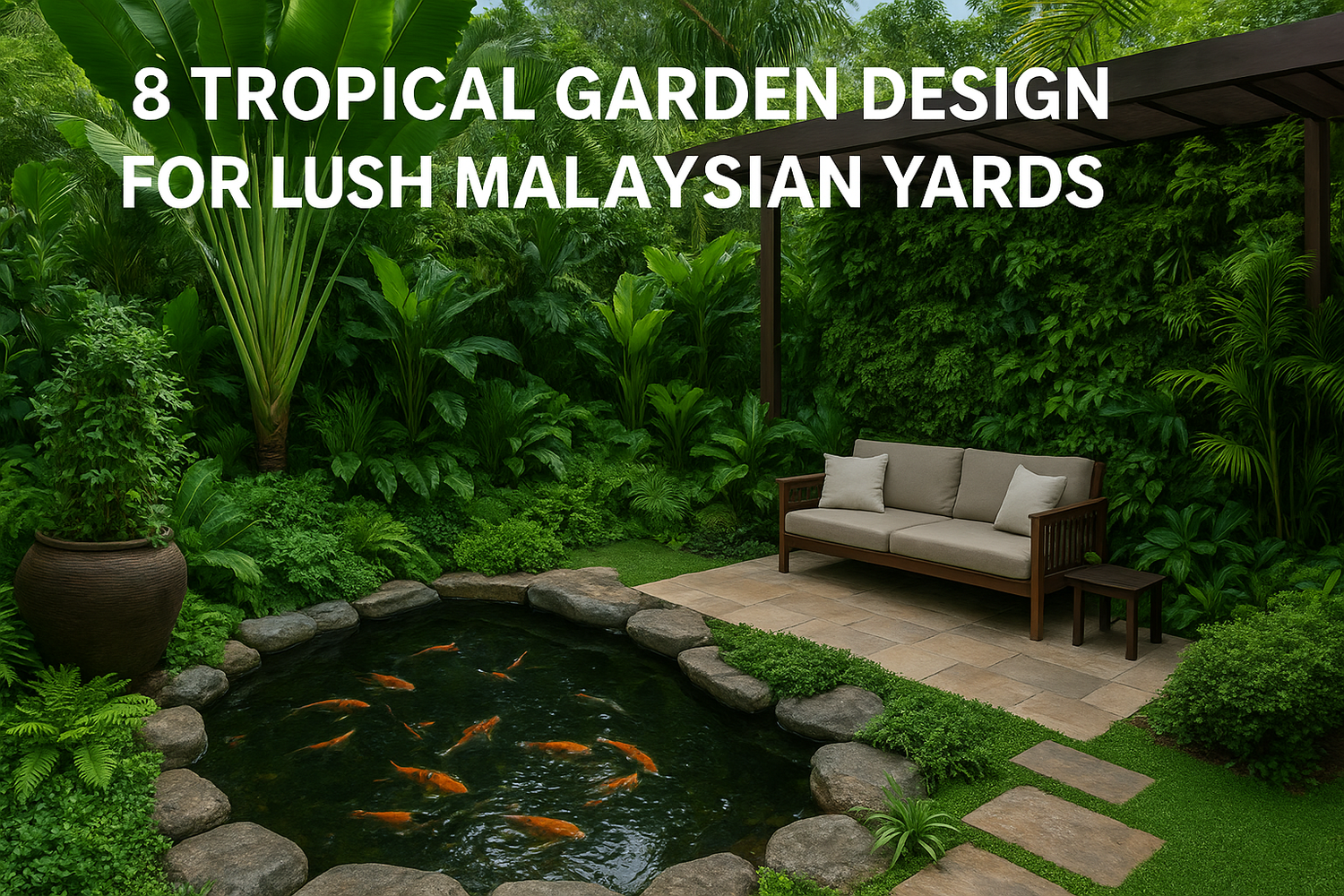
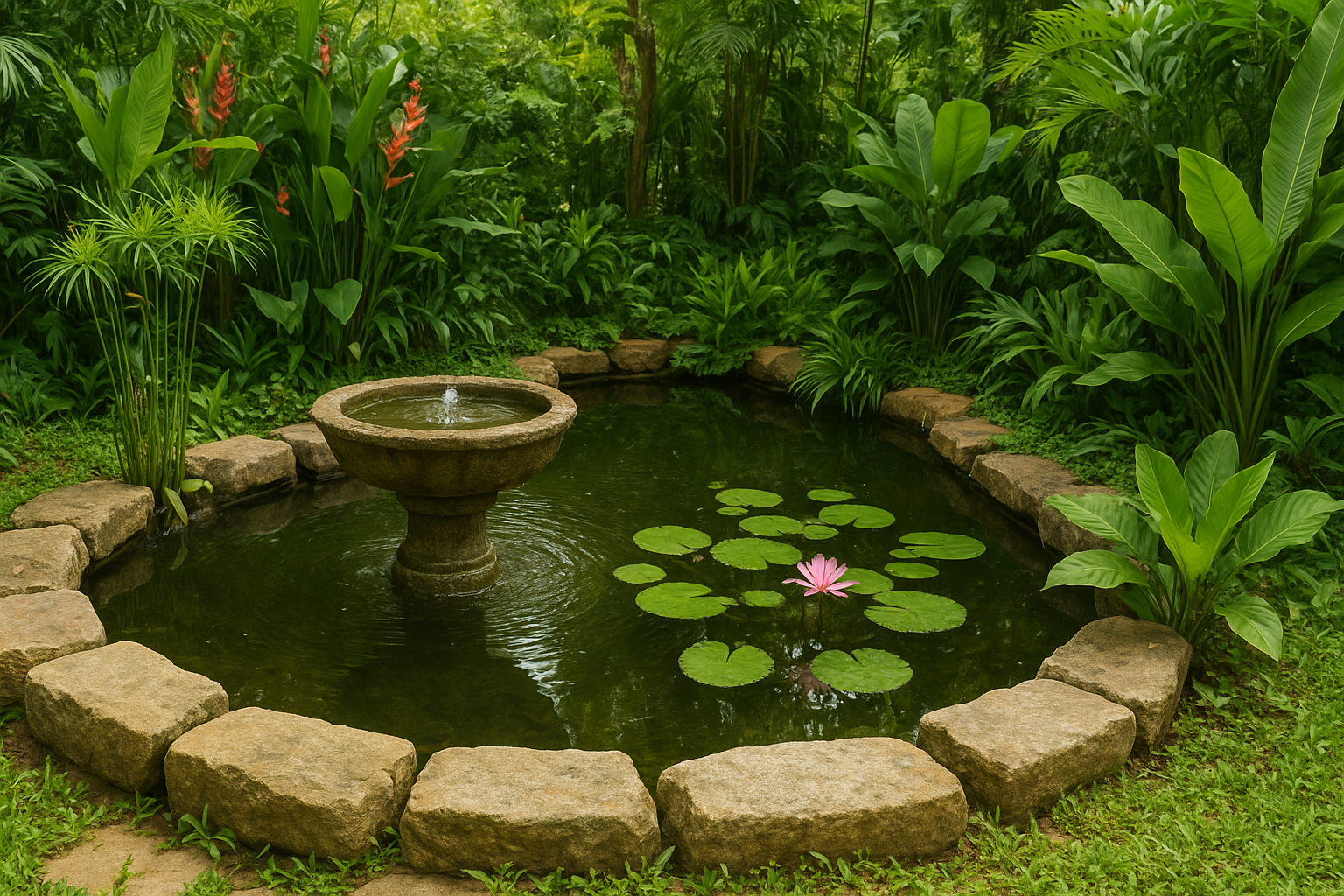
A pond or water feature does two things at once: it adds visual drama and brings natural ambient sound into your yard. The steady movement of water through a koi pond or stone fountain grounds the entire space and gives tropical garden design ideas a sensory dimension that plants alone cannot deliver.
What it looks like
Water features in a tropical yard range from a small recirculating fountain on a deck to a full koi pond with surrounding boulders and aquatic planting. The most cohesive versions use natural stone edging with lush planting around the perimeter to blend the feature into the broader garden rather than leaving it as an isolated centrepiece.
Key materials and features
Use granite or sandstone for pond edging, as both materials handle Malaysia's wet conditions without deteriorating quickly. A reliable submersible pump and filtration system keeps the water circulating, prevents stagnation, and reduces the risk of mosquito breeding during dry spells.
A filter matched correctly to your pond volume saves you hours of manual cleaning every month and keeps fish healthy year-round.
Malaysia-ready plant picks
- Floating cover: Lotus, Water Hyacinth
- Edge planting: Papyrus, Canna Lily
- Background screening: Heliconia, Bamboo Palm
Upkeep tips and common pitfalls
Clean your pump filter every two to four weeks to prevent clogging. Avoid positioning your pond directly under large trees, because decomposing leaf litter breaks down fast in warm water and accelerates algae growth that clouds the pond and stresses fish.
6. Cover blank walls with a green wall
A green wall transforms a bare fence or concrete boundary into a living feature that adds instant visual density to your outdoor space. For compact Malaysian yards where ground space runs out fast, this approach delivers some of the best tropical garden design ideas without consuming any floor area at all.
What it looks like
A vertical garden covers a wall surface with plants arranged in modular panels or individual planting pockets. The result is a textured, layered backdrop that pulls the eye upward and makes even a small yard feel far more enclosed and lush than its actual footprint suggests.
Key materials and features
Most green wall systems use modular panel frames mounted onto a waterproof backing board. Each module holds a growing medium, and a drip irrigation line runs along the top to feed every plant consistently without requiring daily manual watering.
Pairing your green wall with a timer-controlled drip system reduces maintenance significantly and keeps plants evenly hydrated during dry spells.
Malaysia-ready plant picks
- Groundcover fillers: Fittonia, Selaginella
- Bold accents: Bird's Nest Fern, Philodendron
- Trailing edges: Pothos, String of Hearts
Upkeep tips and common pitfalls
Check your irrigation nozzles monthly, because clogged drippers cause dry patches that kill plants fast in Malaysia's heat. Remove any dead plant pockets immediately and replace them before gaps spread across the panel and undermine the wall's uniform appearance.
7. Use lighting and hardscape to set mood
Lighting and hardscape are the elements that determine how your garden looks and feels after dark. A well-lit tropical yard extends your outdoor living hours well into the evening and makes every plant, texture, and water feature worth experiencing beyond daylight.
What it looks like
Think of warm amber uplighting aimed at tall palms and feature plants, combined with low pathway lights that guide movement through the garden. The hardscape, meaning stone paths, timber decking, and retaining walls, frames the planting and gives the overall space a polished, finished quality that bare soil and mulch alone cannot achieve.
Uplighting a single statement palm from below creates a dramatic focal point at night and costs very little to install.
Key materials and features
Use IP65-rated outdoor fixtures rated for constant humidity exposure, as standard indoor fittings corrode quickly in Malaysia's climate. For hardscape, natural stone or porcelain pavers hold up best against heat, rain, and foot traffic without requiring frequent resealing.
Malaysia-ready plant picks
- Uplighting targets: Traveller's Palm, Golden Cane Palm, Heliconia
- Path edge planting: Mondo Grass, Liriope
- Texture accents: Tree Fern, Philodendron Xanadu
Upkeep tips and common pitfalls
Check light fittings every three months for water ingress or corroded connectors, both of which are common in a high-humidity environment. Sweep and rinse hardscape pavers regularly to prevent moss and algae buildup, which makes surfaces slippery and detracts from your tropical garden design ideas.
8. Design for heavy rain and fast drainage
Malaysia receives heavy, concentrated rainfall that can dump several inches of water in under an hour. Any tropical garden design ideas that ignore drainage end up with waterlogged beds, eroded topsoil, and root rot that kills even the most established plants fast. Building drainage into your design from the start saves you far more time and money than trying to fix a poorly draining yard after the fact.
What it looks like
A drainage-conscious yard uses gentle slope gradients to direct water away from structures and toward designated collection or dispersal points. Swales, French drains, and gravel-filled channels are often integrated directly into the planting design so the drainage infrastructure blends into the overall aesthetic rather than standing out as an afterthought.
Grading your soil so it slopes at least 1 to 2 percent away from your home's foundation prevents pooling and protects both the garden and the structure behind it.
Key materials and features
Use coarse gravel or crushed stone beneath planting beds to improve permeability. Slotted drainage pipes connected to a soak pit or roadside drain give excess water a clear path out of the garden quickly.
Malaysia-ready plant picks
- Waterlogged-tolerant: Papyrus, Canna Lily, Elephant Ear
- Well-drained bed anchors: Traveller's Palm, Heliconia
- Slope stabilizers: Mondo Grass, Liriope
Upkeep tips and common pitfalls
Clear drainage channels and soak pits every three to four months, especially before the monsoon season, to prevent blockages from leaf litter and sediment buildup.
Next steps for your tropical yard
You now have eight proven tropical garden design ideas to work from, each one tested against Malaysia's climate, rainfall, and growing conditions. The gap between a yard that looks inspiring on a mood board and one that actually delivers comes down to planning and execution, not just plant selection. Pick one or two ideas that fit your space and budget, then build from there rather than trying to tackle everything at once.
Your best starting point is a conversation with a professional who understands the local conditions. A landscape designer can assess your soil, drainage, and sun exposure before recommending the right combination of planting, hardscape, and water features for your specific yard. If a koi pond is on your list, take a look at the Zen Bio Koi Pond to see what a well-designed water feature looks like in practice. When you are ready to move forward, reach out to the Konzept Garden team for a free consultation.