
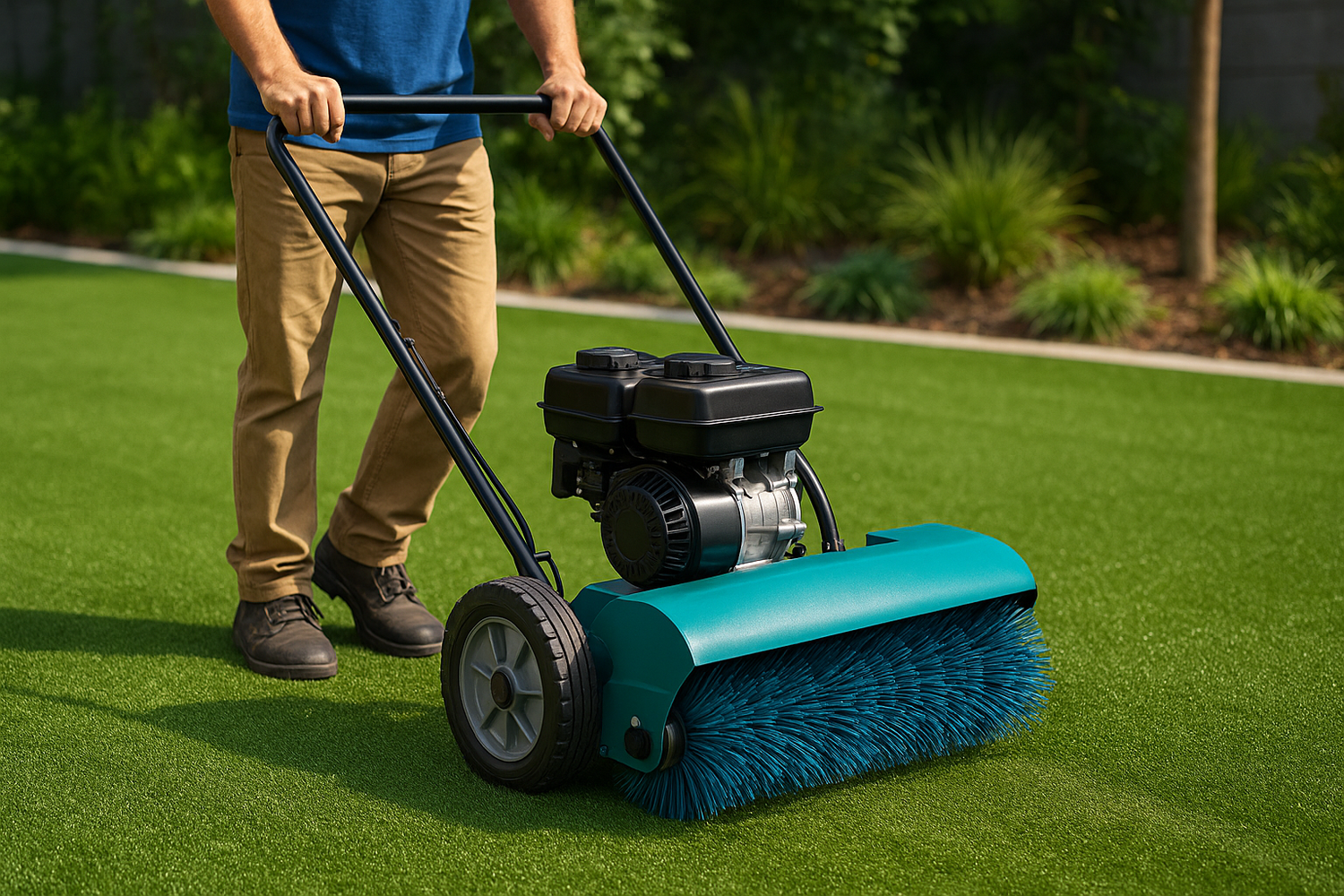
Artificial turf looks great right after installation, but without regular maintenance, those fibers start to flatten, trap debris, and lose the lush appearance you paid for. A power broom for artificial turf is one of the most effective tools for keeping synthetic grass upright, clean, and looking like it was just laid down. Yet many turf owners either don't know these machines exist or aren't sure which type suits their needs.
At Konzept Garden, we install and supply Noble Grass synthetic turf across residential and commercial projects in Malaysia. Through years of hands-on work with artificial grass, we've seen firsthand how the right maintenance equipment extends the life and appearance of a turf investment, and how the wrong approach can cause unnecessary wear.
This article breaks down what a power broom actually does, how to use one properly on synthetic turf, and what to look for when choosing or renting one. Whether you're maintaining a small backyard lawn or a large commercial installation, you'll walk away with clear, practical guidance to make the right call.
Why a power broom matters for artificial turf
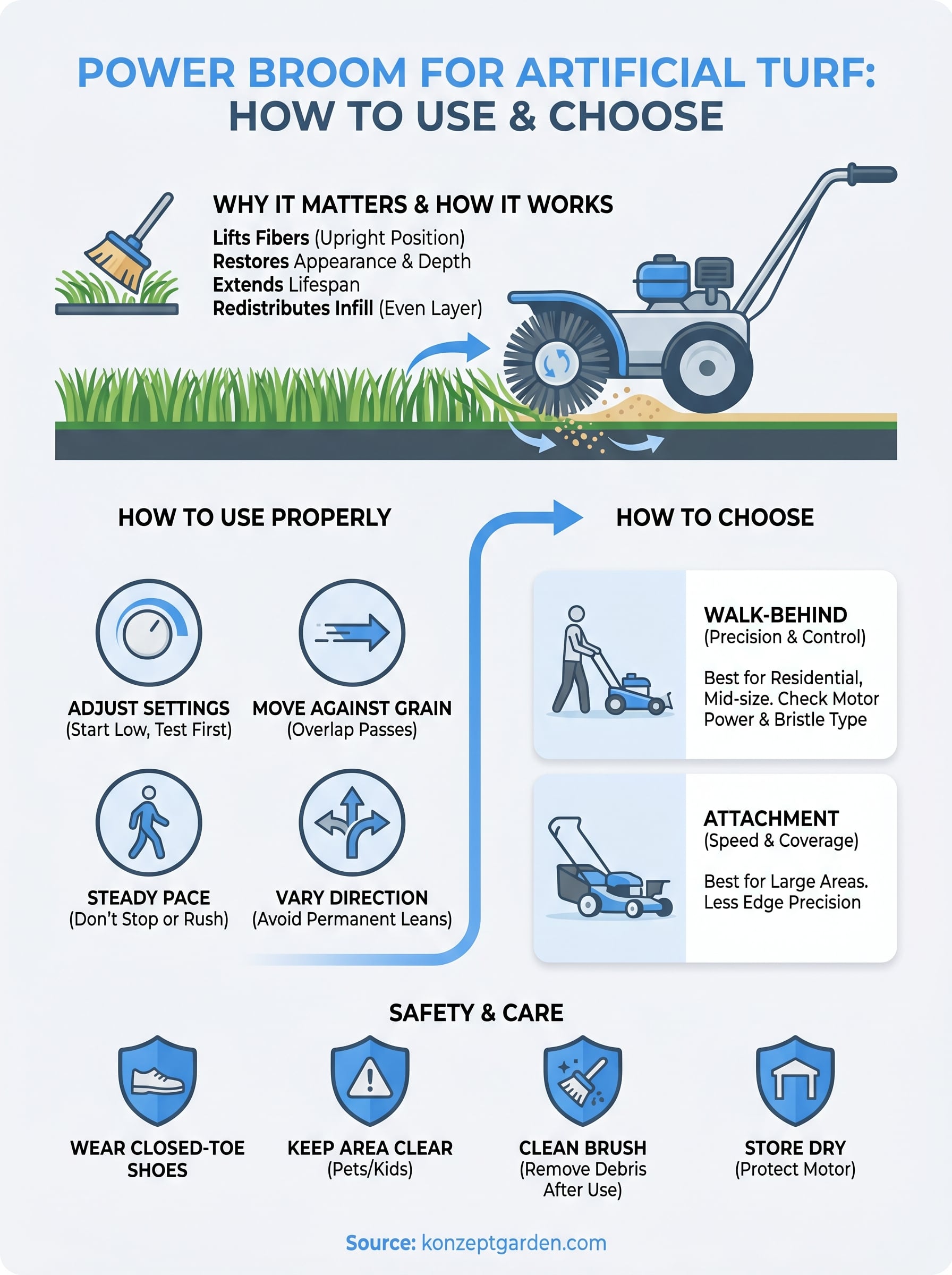
Artificial turf doesn't maintain itself. Over time, foot traffic, pets, and weather press the fibers downward until they stay that way. A power broom for artificial turf counteracts this by mechanically lifting fibers back to their original upright position, which restores the visual depth and softness that make synthetic grass worth installing in the first place.
Regular grooming with a power broom can extend the lifespan of your synthetic turf by several years.
The real cost of skipping turf maintenance
Neglecting your turf doesn't just affect appearance. Flattened fibers trap heat more readily, making the surface hotter underfoot, which is already a concern in Malaysia's climate. On top of that, compacted infill material loses its cushioning function over time, increasing the risk of joint stress during play or exercise on the surface.
Replacing turf prematurely costs far more than maintaining it consistently. A quality synthetic grass installation represents a significant investment, and routine power brooming is one of the simplest ways to protect that investment without spending much time or money on upkeep.
How turf behaves under heavy use
High-traffic zones, such as pathways, play areas, and pet runs, suffer the most wear. In those spots, fibers flatten faster and infill migrates away from where it's needed. Without intervention, those sections start to look thin and worn while the rest of the turf stays full and lush.
Consistent power brooming redistributes infill and lifts fibers evenly across the surface, preventing uneven wear patterns from becoming permanent. Your entire turf stays uniform in appearance and performance, whether it covers a small residential garden or a large commercial landscape.
What a power broom does to turf fibers and infill
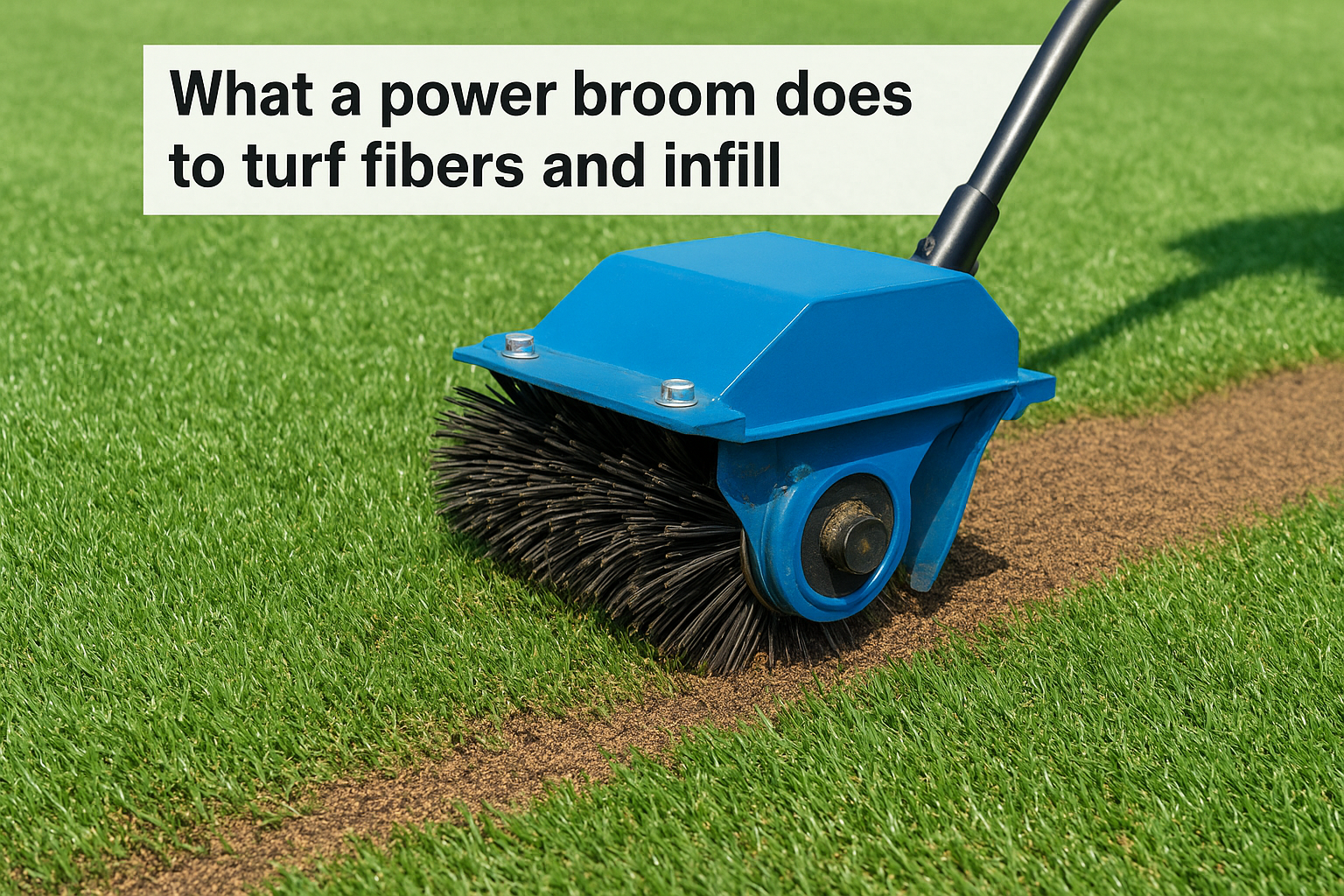
A power broom for artificial turf works by spinning stiff bristles or paddles across the surface at high speed. This mechanical action lifts each fiber from its flattened position and returns it to a more vertical orientation, much the way a stiff brush works on carpet, but across a much larger area in far less time.
Fiber restoration under the bristles
The rotating heads apply consistent, directional force to individual turf fibers as the machine moves forward. Unlike manual raking, this process reaches fibers that are deeply matted and restores their original texture and height far more efficiently. You end up with a surface that looks fuller and feels noticeably softer underfoot.
A single power broom pass over a high-traffic zone can restore fiber height that would take 30 minutes of hand raking to achieve.
Infill redistribution across the surface
Infill materials shift and compact under foot traffic, leaving some areas thin and others overloaded. The power broom's rotation pushes infill back into an even layer across the surface, restoring the cushioning and stability your turf needs to perform well. Common infill types the machine helps redistribute include:
- Silica sand
- Crumb rubber
- Organic cork
How to use a power broom without damaging turf
Using a power broom for artificial turf incorrectly can do more harm than good. Setting the machine too aggressively or moving it in the wrong direction puts unnecessary stress on fiber roots and can pull turf away from seams or edges faster than normal wear would.
Start with the right settings
Before you switch the machine on, lower the bristle height to a gentle setting and test it on a small, low-visibility section. If the fibers lift without resistance and no material tears loose, you can work across the full surface. On most rotary power brooms, a mid-range RPM setting gives you enough action to restore fibers without shredding them.
Always start at the lowest aggression setting and increase gradually, rather than starting high and correcting after damage occurs.
Move in the right direction
Work against the grain of the turf fibers to lift them most effectively, using slow, overlapping passes. Rushing across the surface reduces contact time and leaves fibers partially flattened. Keep the machine moving at a steady walking pace, and avoid stopping in one spot with the bristles running, since concentrated spinning can scorch or distort fibers quickly.
How to choose the right power broom
Not every power broom for artificial turf suits every installation. Turf pile height and intended use both determine which machine performs well in your space, so check the key specs carefully before you commit to a purchase or rental.
Brush type and motor power
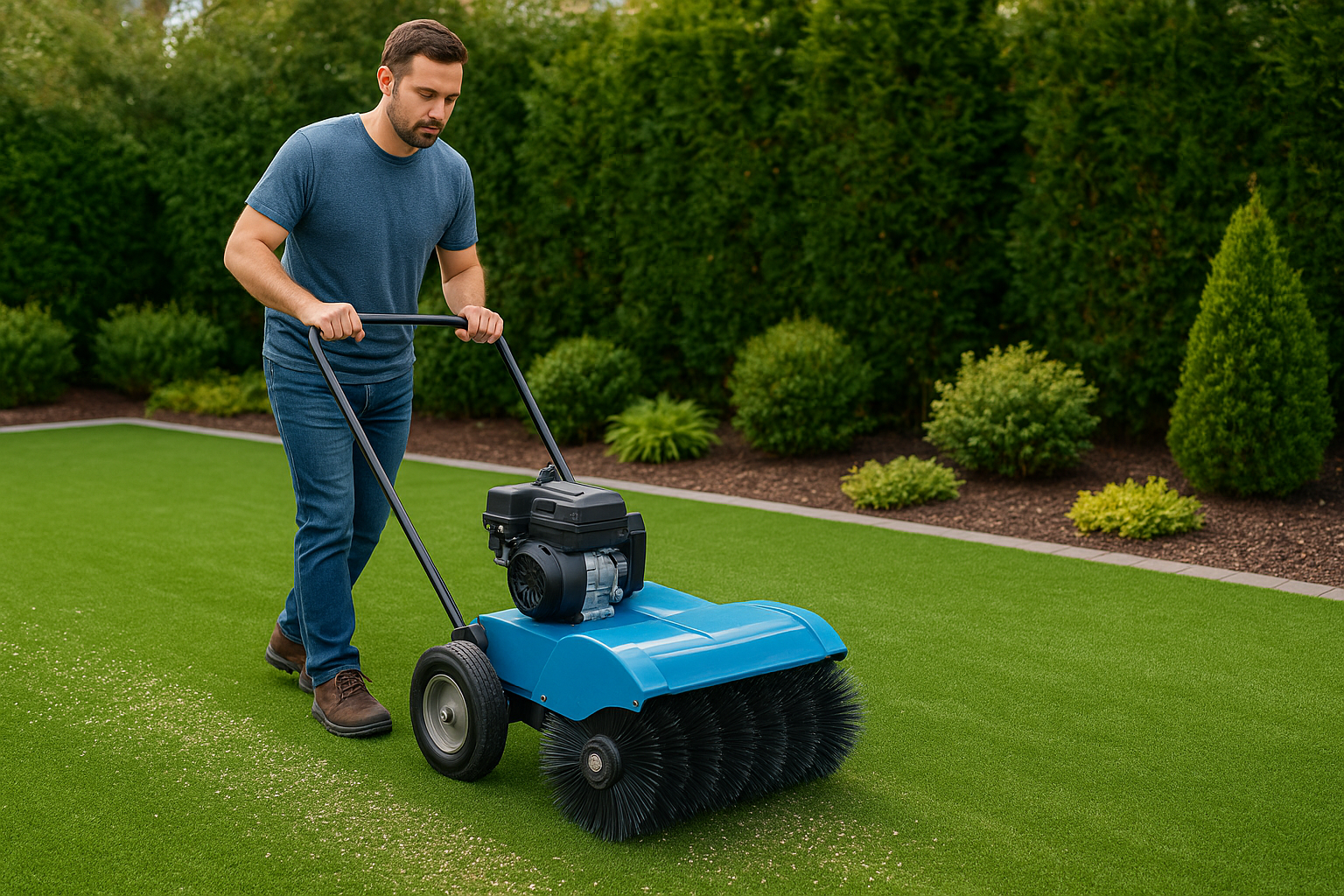
Rotary brush heads work best on standard residential turf with mid-range pile heights, while paddle-style attachments suit thicker, longer-pile grass used in commercial or sports settings. Check that the motor output is strong enough to spin consistently without stalling over dense or compacted infill.
A motor that bogs down over packed infill will leave your turf worse off than when you started.
Key factors to compare:
- Bristle stiffness matched to your specific pile type
- Adjustable brush height to protect fiber roots
- Motor wattage rated for continuous outdoor use
Walk-behind versus attachment models
Walk-behind power brooms give you independent control and steady pressure, making them the better choice for most residential gardens and mid-size commercial turf projects. Attachment models that connect to a ride-on mower cover larger areas faster, but they sacrifice precision near edges and seams where turf is most vulnerable. Match your choice to the overall footprint of your installation and how much detailed maneuvering the layout demands.
Common mistakes, safety, and care
Even experienced users make avoidable errors when running a power broom for artificial turf. Skipping a pre-inspection of the surface before you start is one of the most common, since loose seams, exposed stakes, or embedded debris can catch the bristles and cause real damage to both the machine and the turf itself.
Errors that wear turf down faster
Brooming in the same direction every single session is a mistake that compounds over time. Repeating the same angle trains fibers to lean permanently rather than standing upright. Vary your brooming direction between sessions to encourage even fiber recovery across the full surface instead.
Alternating your brooming direction each session is one of the simplest habits that extends the life of your turf noticeably.
Safety and machine care
Wear closed-toe shoes and keep bystanders, especially children and pets, clear of the work area while the bristles are spinning. After each session, remove debris from the brush head before you store the machine to prevent buildup that dulls performance over time. Check the bristle condition every few months and replace worn heads before they start scratching the turf backing rather than lifting fibers cleanly. Storing the machine in a dry, covered space also protects the motor from Malaysia's humidity.
Quick recap and what to do next
A power broom for artificial turf lifts flattened fibers, redistributes infill, and extends the lifespan of your synthetic grass installation. The sections above covered why regular grooming matters, how the machine works on fibers and infill, and what settings and techniques protect your turf rather than wear it down. Choosing between walk-behind and attachment models, matching bristle stiffness to your pile type, and varying your brooming direction each session are the practical steps that separate well-maintained turf from a surface that fades in a year or two.
Your turf is only as good as the care behind it. If you're planning a new synthetic grass installation or want to upgrade the quality of your current outdoor space, Konzept Garden can help. Our team designs and installs Noble Grass across residential and commercial projects throughout Malaysia. Get in touch with our team to request a free quotation or book a consultation today.