
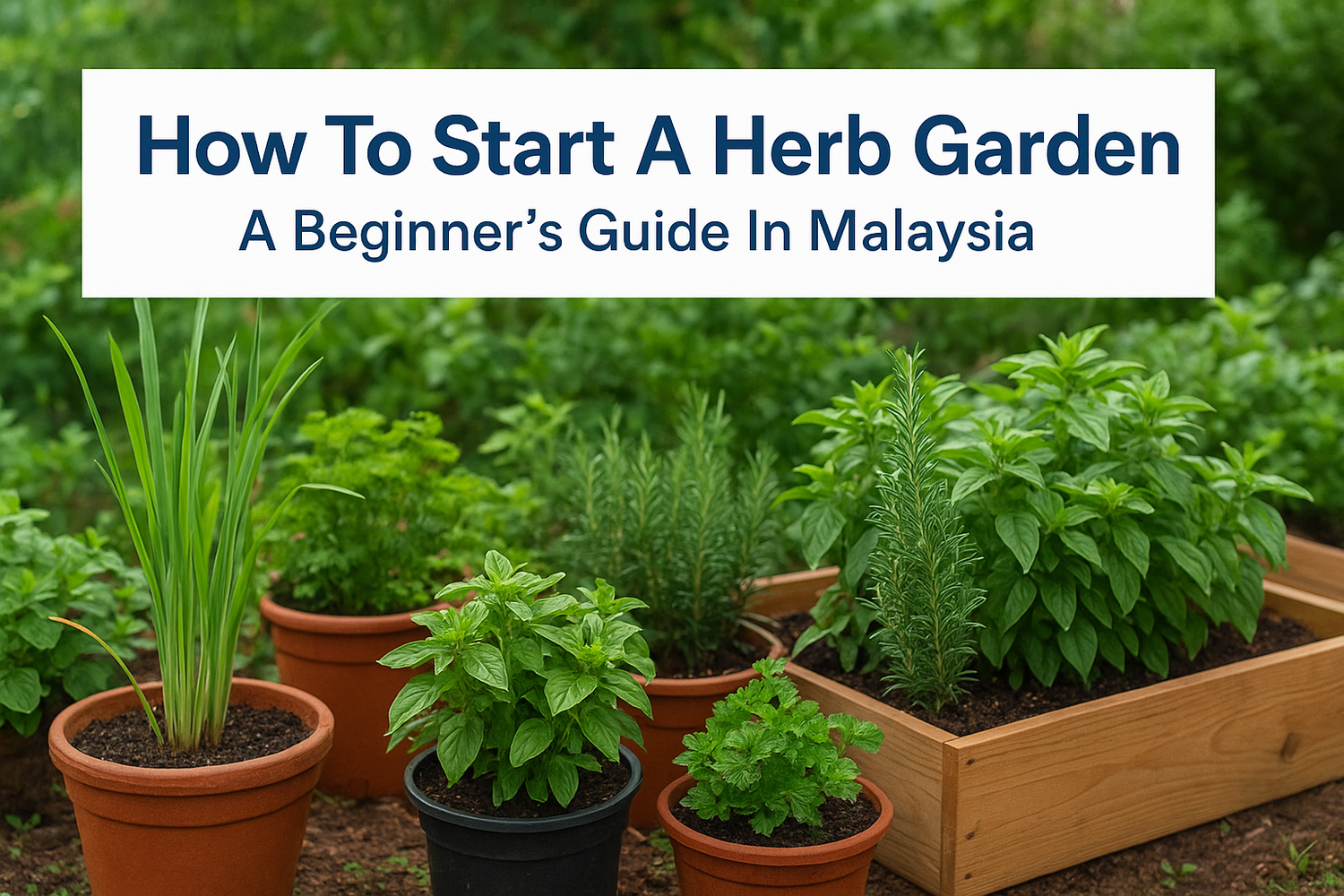
Growing your own herbs is one of the most rewarding ways to connect with your garden, and in Malaysia's tropical climate, the conditions are already in your favor. Whether you've got a spacious backyard or just a sunny balcony, learning how to start a herb garden gives you fresh flavors at arm's reach while adding life and character to your outdoor space.
But getting started can feel a little overwhelming. Which herbs actually thrive in Malaysian heat and humidity? Should you plant in the ground, in pots, or on a vertical wall? How much sunlight is enough, and what kind of soil do herbs prefer? These are the exact questions we hear from homeowners every day at Konzept Garden, where our landscape design work often includes integrating functional herb and edible gardens into beautiful outdoor spaces.
This guide breaks it all down step by step, from picking the right herbs and choosing your setup, to planting, watering, and keeping everything healthy. No guesswork, no fluff. By the end, you'll have a clear plan to grow herbs that actually work for your space and lifestyle here in Malaysia.
What to know before you start in Malaysia
Malaysia sits close to the equator, which means you get warm temperatures year-round and heavy rainfall in most regions. That's helpful for growing plants, but it also means you're working with conditions very different from temperate climates where most gardening guides are written. Before you figure out how to start a herb garden here, you need to understand what your local climate does to plants on a daily basis.
Malaysia's tropical climate: what it means for your herbs
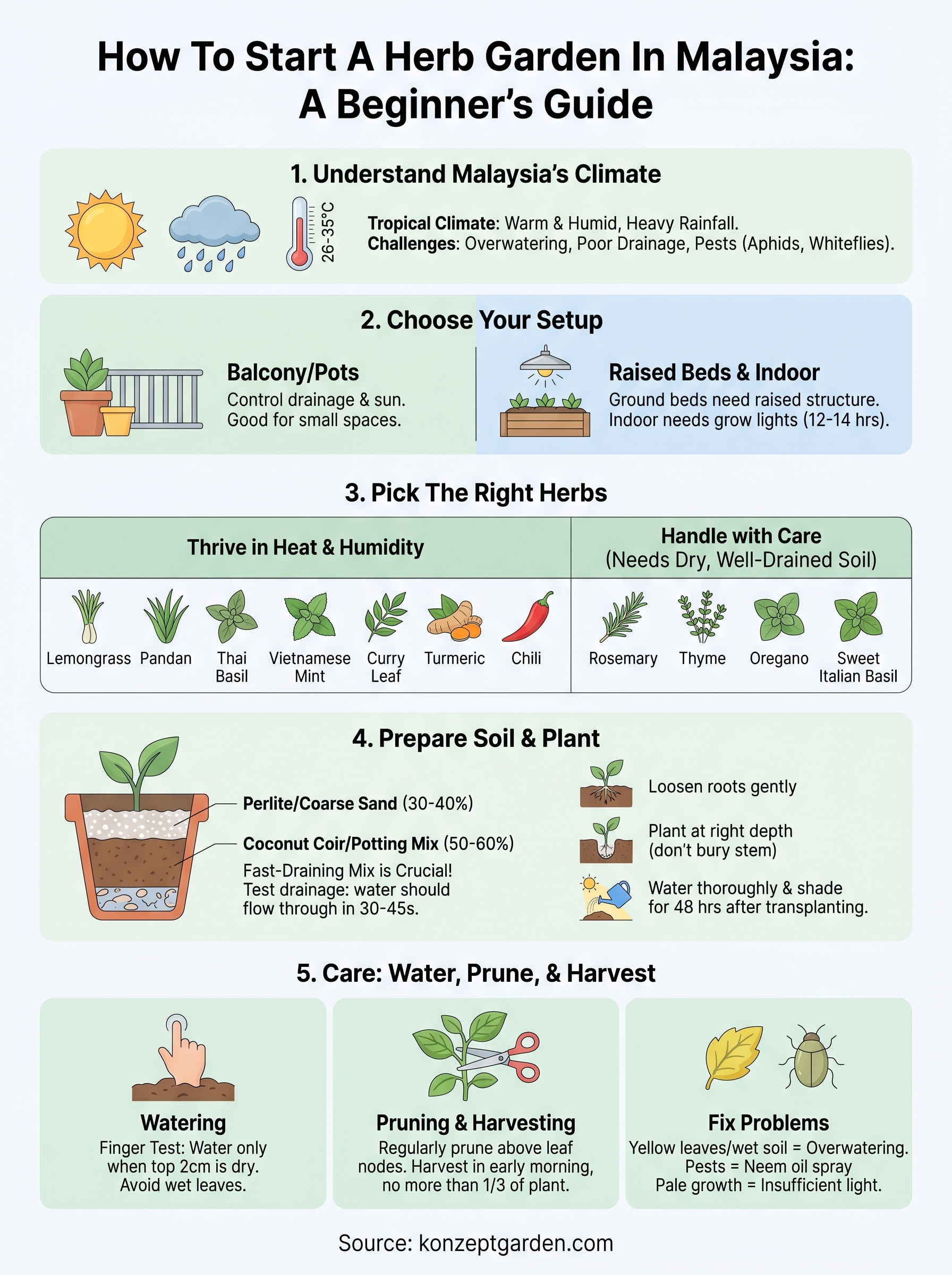
The average temperature in Malaysia hovers between 26°C and 35°C throughout the year, and humidity regularly sits above 80%. Most herbs originally come from the Mediterranean or tropical Asia, so they respond very differently to these conditions. Mediterranean herbs like rosemary and thyme struggle in high humidity because they evolved in dry, well-ventilated environments. On the other hand, lemongrass, pandan, and turmeric thrive here because they match the climate naturally.
Your herb selection in Malaysia should start with climate compatibility, not recipe preference. Choosing the wrong herbs for the local conditions is the single most common reason beginners give up early.
Rainfall is another factor to plan around carefully. Peninsular Malaysia typically receives between 2,000mm and 2,500mm of rain per year, and East Malaysia can get even more. Heavy downpours waterlog containers and soil quickly, which leads to root rot in herbs that prefer drier roots. Knowing your region's wet season patterns helps you adjust your watering schedule and choose appropriate containers before you plant your first seed.
The two biggest challenges in Malaysian herb gardens
Overwatering and poor drainage cause more herb deaths in Malaysia than anything else. The combination of heavy rain, high ambient humidity, and enthusiastic watering from new gardeners creates conditions where roots sit in water far too long. Herbs like mint are fairly forgiving, but basil and parsley will yellow and collapse within a week of waterlogged roots.
Pests are the second major challenge you need to prepare for. Aphids, whiteflies, and fungus gnats are extremely active in Malaysia's warm, humid environment and can move quickly through a small herb garden. You don't need to reach for chemical sprays immediately, but you do need to inspect your plants at least twice a week and act early when you spot an infestation.
Choosing between indoor, outdoor, and container setups
Your available space shapes your setup more than anything else. Apartment dwellers and condo owners typically do best with containers on a balcony or windowsill, where they can control drainage, move plants out of heavy rain, and position them toward available sunlight. Ground beds in a garden give herbs more root space and tend to need less intervention, but they require raised beds or amended soil to handle drainage in Malaysia's clay-heavy ground.
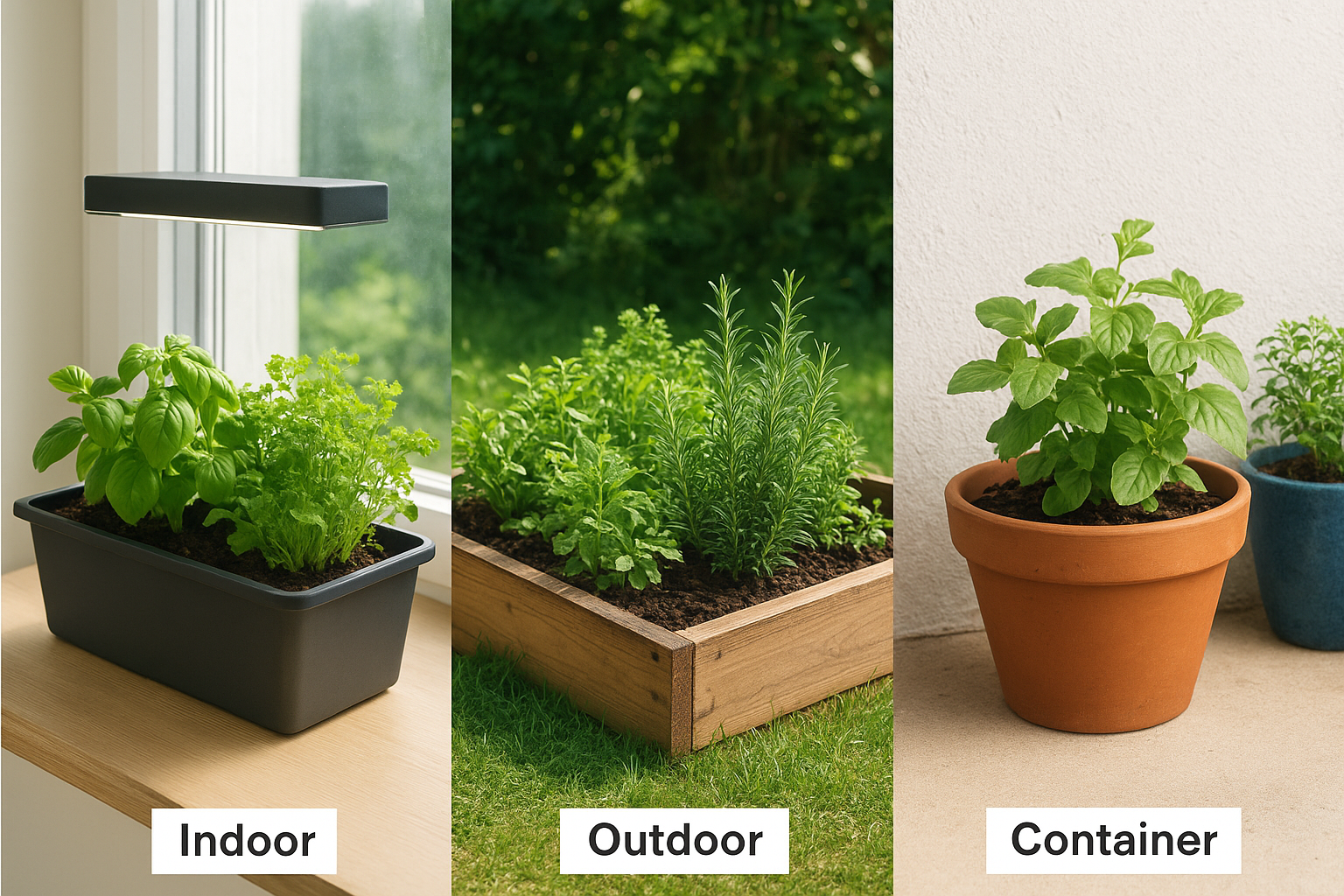
Indoor herb growing is possible, but it requires supplemental lighting in most Malaysian homes because interior spaces rarely receive the six or more hours of direct sunlight that most herbs need daily. A grow light placed 20 to 30 centimeters above your plants for 12 to 14 hours daily can replace natural light if your layout doesn't allow for a sun-facing spot. Decide on your setup before you buy anything, so your container size, soil type, and herb selection all work together from the start rather than creating problems later.
Step 1. Choose the right spot and sunlight
Location is the foundation of every successful herb garden, and getting it right before you plant anything saves you from replacing dead herbs repeatedly. In Malaysia's climate, sunlight intensity and wind exposure determine whether your herbs thrive or struggle within their first two weeks. Walk around your space at different times of day and note where direct sun lands and for how long, because a spot that looks bright in the morning might be fully shaded by noon.
How much sunlight herbs actually need
Most culinary herbs require a minimum of six hours of direct sunlight daily to grow vigorously and produce strong flavor compounds. In Malaysia, the sun is intense enough that some herbs actually benefit from light afternoon shade between 1pm and 3pm, when temperatures peak and direct exposure can scorch delicate leaves. A spot that receives full morning sun from 7am to 1pm and filtered light in the afternoon is close to ideal for most herb varieties you'll grow here.
Use this quick reference to match your available sunlight to the right herbs:
| Daily Direct Sunlight | Suitable Herbs |
|---|---|
| 6+ hours | Basil, lemongrass, rosemary, chili, turmeric |
| 4 to 6 hours | Mint, parsley, coriander, curry leaf |
| 2 to 4 hours | Vietnamese mint, perilla, ginger |
Measuring your sunlight honestly before you buy herbs is the single most effective step you can take in learning how to start a herb garden that actually survives past the first month.
What to do when natural light is limited
Balconies facing north or spaces blocked by neighboring buildings often receive far less sun than they appear to. If your only available spot gets fewer than four hours of direct light daily, grow-light panels are a practical fix that costs less than you might expect. Position a full-spectrum LED grow light 20 to 30 centimeters above your herb containers and run it for 12 to 14 hours each day to compensate for what natural light you're missing.
Reflective surfaces also help in tight spaces. Painting a nearby wall white or placing a light-colored tray beneath your containers bounces available light back onto the lower leaves, improving growth without adding any ongoing cost. Prioritize your sunniest available spot first, then use supplemental lighting to fill the gap rather than starting indoors from the beginning and relying entirely on artificial light.
Step 2. Pick herbs that grow well in Malaysia
Choosing the right herbs is where learning how to start a herb garden in Malaysia gets much more specific than generic guides suggest. Many commonly sold herb seedlings at local nurseries come from tropical Asian varieties, while others are adapted from Mediterranean or temperate climates and will struggle here without extra care. Matching your herb selection to what Malaysia's climate naturally supports gives you a garden that grows steadily instead of one you constantly have to rescue.
Herbs that thrive in Malaysia's heat and humidity
The best starting herbs for Malaysian conditions are ones that prefer warm, humid air and tolerate heavy rain when drainage is properly in place. These varieties establish quickly, produce leaves fast, and recover well after harvesting, which keeps your garden productive throughout the year.
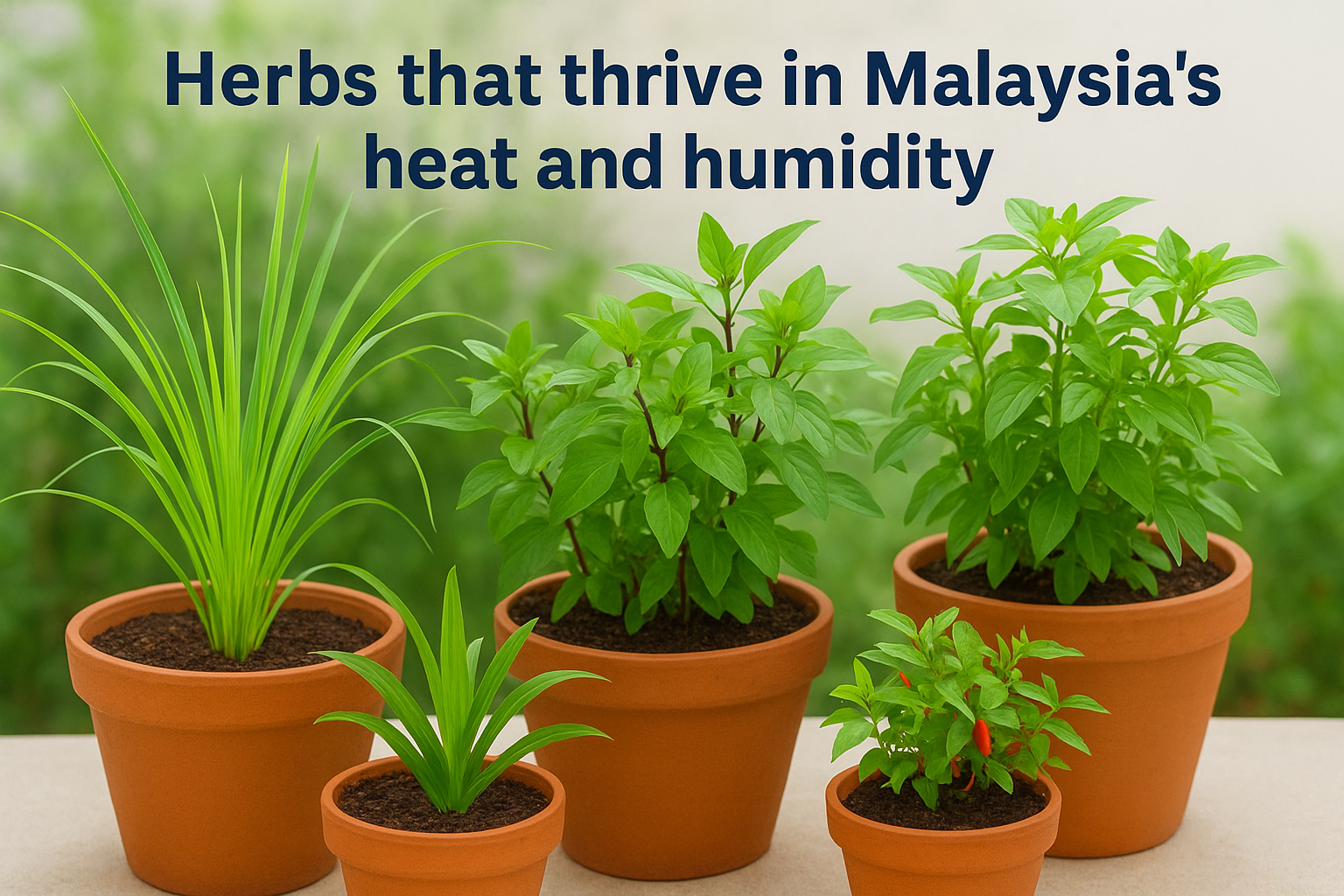
Starting with locally adapted herbs gives you early wins that build your confidence and teach you what healthy herb growth actually looks like before you move on to more demanding varieties.
| Herb | Growth Rate | Best Use | Notes |
|---|---|---|---|
| Lemongrass | Fast | Soups, teas, marinades | Grows large; plant in ground or deep pots |
| Pandan | Fast | Desserts, rice, drinks | Tolerates shade; very low maintenance |
| Thai basil | Moderate | Stir-fries, curries | Pinch flowers often to extend leaf production |
| Vietnamese mint | Fast | Salads, laksa | Spreads quickly; keep in containers |
| Curry leaf | Moderate | Malaysian and Indian cooking | Needs full sun; slow to establish at first |
| Turmeric | Moderate | Cooking, herbal use | Grows from rhizomes; needs deep, loose soil |
| Chili | Moderate | Everyday cooking | Extremely heat-tolerant; easy to maintain |
Herbs to approach with care in this climate
Mediterranean herbs like rosemary, thyme, and oregano are available at many Malaysian nurseries, but they require specific conditions to survive here. These herbs evolved in dry, well-drained, low-humidity environments, which is the opposite of what Malaysia provides naturally. You can grow them successfully by placing them in terracotta pots with very fast-draining soil, positioning them somewhere with strong air circulation, and watering only when the soil is completely dry.
Basil is worth adding to your list, but sweet Italian basil needs careful placement out of intense midday sun and consistent moisture without waterlogging. Holy basil and Thai basil both handle Malaysian conditions far better and serve most of the same cooking purposes.
Step 3. Plan containers, beds, and spacing
Your setup structure shapes how manageable your herb garden becomes over time. Before you buy pots or materials, sketch out your available space and decide how much of it you're dedicating to herbs. Planning this upfront stops you from overcrowding plants into too little room, which cuts airflow between leaves and creates the kind of warm, stagnant conditions that invite fungal problems fast in Malaysia's climate.
Picking the right containers
Containers give you the most flexibility when you're figuring out how to start a herb garden in a compact space like a balcony or covered walkway. The most important feature to check before using any pot is whether it has adequate drainage holes at the bottom, because without them, water pools at the root zone and kills herbs within days in Malaysia's humid conditions.
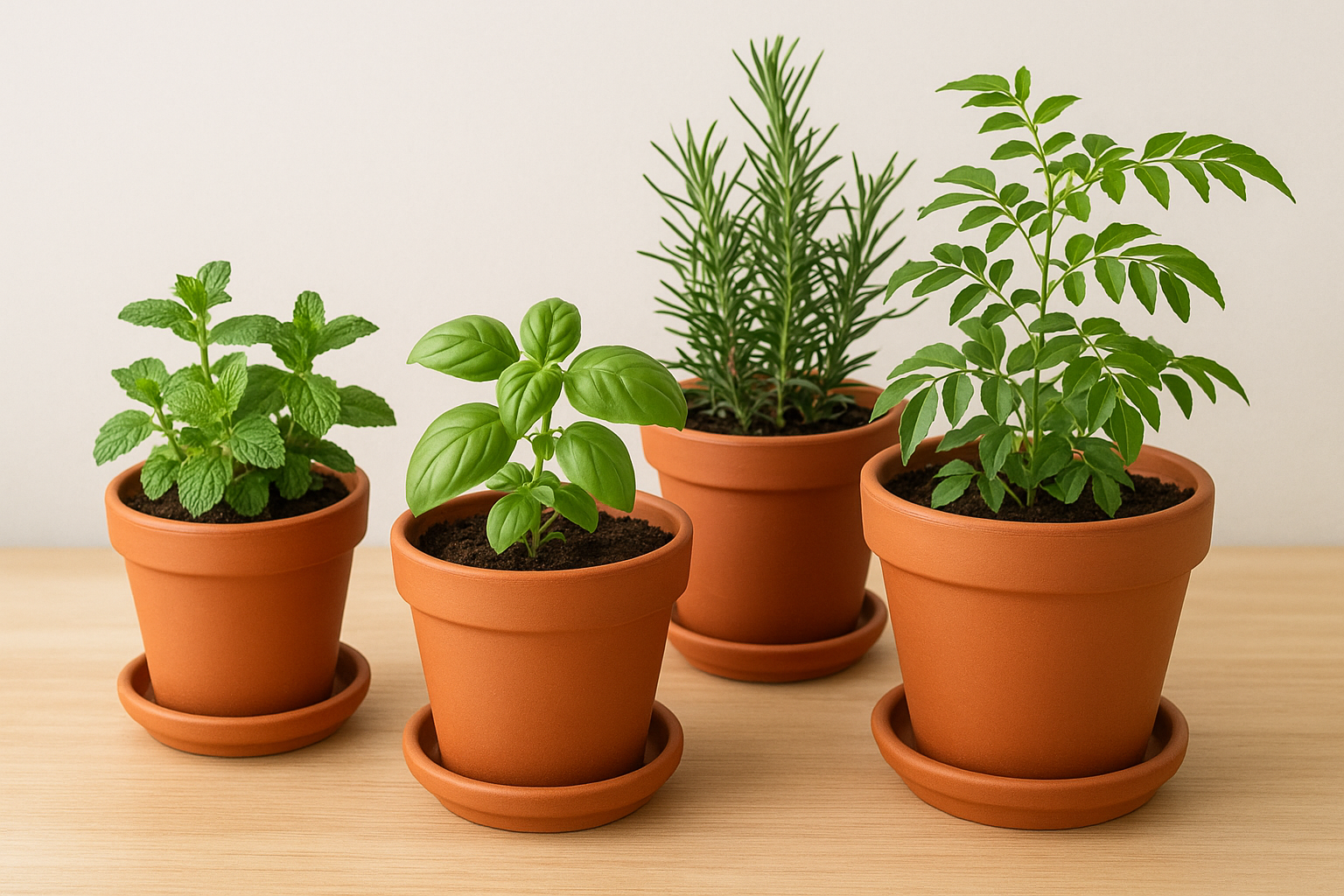
Use this table to match container size to your herb type:
| Container Size | Depth | Best For |
|---|---|---|
| Small (15-20 cm) | 15 cm | Mint, Vietnamese mint, parsley |
| Medium (25-30 cm) | 20 cm | Basil, coriander, curry leaf |
| Large (35+ cm) | 30 cm | Lemongrass, turmeric, chili |
Terracotta pots outperform plastic in Malaysia's climate because they allow moisture to evaporate through the walls, which reduces the risk of waterlogged roots significantly.
Raised beds versus open ground
Raised beds with a minimum depth of 30 centimeters give herbs far better drainage than planting directly into Malaysia's clay-heavy native ground. Position the bed where rainwater can run off freely, and fill it with a prepared mix rather than scooping in surrounding soil.
Open ground planting works well for large, robust herbs like lemongrass and turmeric, which develop deep root systems and handle wetter conditions better than smaller leafy varieties. Avoid any low-lying spots in your garden that collect puddles after a heavy downpour, since standing water damages roots within 24 to 48 hours.
Spacing rules that matter in Malaysian heat
Crowding herbs together cuts airflow between plants, which accelerates fungal growth in humid conditions. Leave at least 20 to 25 centimeters between most herb plants, and give lemongrass and curry leaf closer to 40 to 50 centimeters because they spread substantially wider as they mature. Getting spacing right reduces your pest and disease problems without requiring any extra products or ongoing treatments.
Step 4. Set up soil that drains fast
Getting the soil right is arguably the most critical preparation step when learning how to start a herb garden in Malaysia. Standard potting mix bought from a local nursery holds too much moisture for most herbs, and Malaysia's frequent heavy downpours make that problem significantly worse. The right soil drains water through quickly while still holding enough nutrients to feed your plants between watering sessions.
Build a soil mix that works in Malaysia's climate
Most commercial mixes sold in Malaysian garden centers are based on peat or coconut coir, which retains moisture well but compacts over time and loses drainage capacity within a few weeks of heavy use. You get much better long-term performance by blending your own mix using materials that are widely available at local nurseries here rather than relying on a single bag of store-bought mix.
Use this base recipe for your herb containers and raised beds:
| Component | Ratio | Purpose |
|---|---|---|
| Coconut coir or potting mix | 50% | Base moisture retention and structure |
| Perlite | 30% | Improves drainage and prevents compaction |
| Coarse sand | 20% | Adds weight and additional drainage |
Mix these components thoroughly before filling your containers or beds. For Mediterranean herbs like rosemary and thyme, increase your perlite ratio to 40% and reduce the coir component to 40% to create an even faster-draining environment that closer matches their natural habitat.
The single most effective upgrade you can make to any herb container in Malaysia is adding perlite, because it keeps the root zone from staying saturated between rain events.
Test your drainage before you plant anything
Pour water directly into your prepared container or bed and watch how quickly it drains through. A well-prepared mix should drain completely within 30 to 45 seconds for a standard 25 cm pot. If water pools on the surface or sits in the bottom after two minutes, your mix needs more perlite or your drainage holes need clearing.
Check the base of each container after a heavy rain by lifting it slightly. Excess water dripping freely from the drainage holes is a positive sign, but a pot that feels noticeably heavier than before the rain suggests water is trapped inside near the root zone. Fix this immediately by repotting into a faster-draining mix rather than waiting to see how the plants respond over the following days.
Step 5. Plant and transplant the right way
Planting correctly from the beginning sets your herb garden up to grow without setbacks. In Malaysia's climate, how you handle roots during planting and how deep you set each herb directly affects whether it establishes quickly or stalls for weeks. Rushing this step is a common mistake, but it's also one of the easiest to avoid with a clear process.
Starting from seeds versus buying seedlings
Both options work in Malaysia, but they suit different situations. Seeds cost less and give you access to more variety, but they take longer to establish and need protection from heavy rain during germination. Seedlings from a local nursery let you skip the most fragile stage and get herbs into your containers or beds faster, which is a better choice if you want visible results within a few weeks.
Use this comparison to decide which route fits your situation:
| Approach | Best For | Time to First Harvest |
|---|---|---|
| Seeds | Budget-conscious growers, rare varieties | 6 to 10 weeks |
| Seedlings | Beginners, fast results | 2 to 4 weeks |
| Rhizomes (turmeric, ginger) | Ground or deep bed planting | 8 to 12 weeks |
How to plant correctly from the start
Before placing any seedling into a container or bed, loosen the root ball gently with your fingers to separate any circling roots. Circling roots restrict water uptake and slow establishment, so taking 20 to 30 seconds to loosen them before planting makes a noticeable difference in early growth.
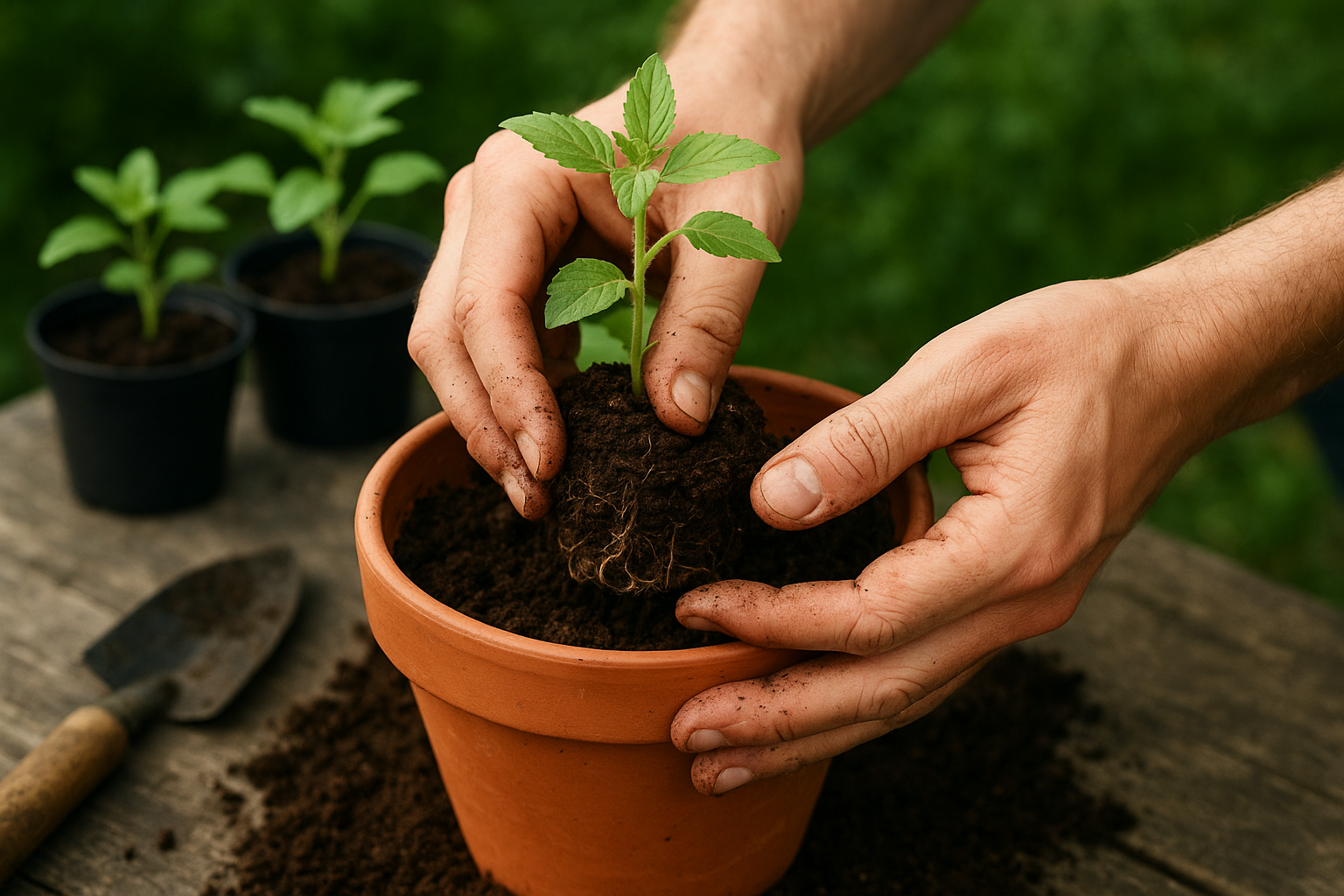
Planting at the right depth matters as much as loosening roots. Set each herb so the base of its stem sits at the same level it occupied in its nursery pot, never deeper, since burying the stem too far invites rot in Malaysia's humid conditions.
Transplanting without shocking your herbs
Moving an established herb from one container to a larger one, or from a seedling tray to a bed, causes temporary stress that slows growth for a few days. Water the plant thoroughly one hour before transplanting so the roots are fully hydrated going into the move. This reduces the shock of root disturbance significantly.
After transplanting, place your herb in a shaded spot for 48 hours before returning it to its normal sun position. Direct sun immediately after a transplant pulls moisture from leaves faster than damaged roots can replace it, which causes wilting even when the soil is wet. This two-day recovery window is a simple but effective part of learning how to start a herb garden that grows strong from the beginning.
Step 6. Water and fertilize without overdoing it
Overwatering kills more herb gardens in Malaysia than any pest or disease, and it's easy to do without realizing it. Malaysia's frequent rainfall already delivers significant moisture to your plants, so adding a daily watering schedule on top of that quickly saturates the root zone and triggers rot. Understanding when your herbs genuinely need water, and how much fertilizer actually helps rather than harms, is a core part of learning how to start a herb garden that stays productive long-term.
How to water herbs in Malaysia's wet climate
The most reliable method for testing whether your herbs need water is the finger test: push your index finger about two centimeters into the soil, and water only if it feels dry at that depth. If the soil feels cool or damp, skip watering entirely and check again the following day. This takes less than ten seconds and prevents the most common mistake beginners make here.
Your watering frequency will change week to week depending on rainfall, so treat a fixed daily schedule as a starting point to adjust rather than a rule to follow without question.
Use this guide to match your watering frequency to the current season:
| Condition | Watering Frequency |
|---|---|
| Dry season, full sun | Every 1 to 2 days |
| Wet season, frequent rain | Every 3 to 5 days or skip entirely |
| After heavy downpour | Skip next 2 to 3 watering cycles |
| Mediterranean herbs (rosemary, thyme) | Only when soil is completely dry |
Water at the base of each plant, not over the leaves, and do it early in the morning so any moisture that lands on foliage dries before midday. Wet leaves in afternoon heat create the right conditions for fungal spots to develop quickly.
Choosing and applying fertilizer correctly
Herbs in containers deplete soil nutrients faster than ground-planted herbs because each watering cycle flushes nutrients out through the drainage holes. A balanced liquid fertilizer with an NPK ratio around 10-10-10 or 14-14-14 applied every two to three weeks keeps nutrients replenished without pushing excessive leafy growth at the expense of flavor.
Avoid high-nitrogen fertilizers that stimulate fast, soft growth, because that type of growth attracts aphids and whiteflies more readily than compact, steady growth does. For a simple organic option, diluted fish emulsion or compost tea applied fortnightly works well in Malaysian conditions and improves soil structure in containers over time.
Step 7. Prune and harvest for nonstop growth
Pruning and harvesting are not separate tasks in a healthy herb garden. Every time you cut a stem correctly, you trigger the plant to produce two or more new growth points from below the cut, which multiplies your yield over time. Skipping this step is one of the main reasons herb gardens slow down and become woody or leggy within a month or two, so building a regular pruning habit into your routine is a practical part of learning how to start a herb garden that keeps producing continuously.
How to prune herbs so they grow back stronger
Pruning works by removing the growing tip of a stem, which shifts the plant's energy from vertical growth toward lateral branching. Use clean, sharp scissors or small pruning shears rather than pulling or pinching with your nails, because clean cuts heal faster and reduce entry points for fungal infection in Malaysia's humid air.
Follow these pruning rules for the most common herbs grown in Malaysia:
| Herb | Where to Cut | How Often |
|---|---|---|
| Thai basil | Just above a leaf node, remove flower buds immediately | Every 1 to 2 weeks |
| Mint | Cut back to one-third of total height | Every 2 to 3 weeks |
| Lemongrass | Remove outer stalks at the base when thick enough | Every 3 to 4 weeks |
| Curry leaf | Trim branch tips to encourage bushy shape | Monthly |
| Vietnamese mint | Cut long runners back to two leaf nodes | Every 1 to 2 weeks |
Removing flower buds from basil the moment you spot them is the single most effective way to extend your harvest season, because once a plant flowers, leaf production drops off sharply.
When and how to harvest correctly
Harvest in the early morning after any surface moisture has dried from the leaves but before midday heat builds up. Oils that give herbs their flavor concentrate in the leaves during cooler morning hours, so the same amount of herb tastes noticeably stronger when cut at this time compared to an afternoon harvest.
Never remove more than one-third of the plant at a single harvest, regardless of how much growth has accumulated. Taking too much in one session stresses the root system and slows recovery significantly in Malaysia's heat. Harvest lightly and frequently rather than heavily and occasionally, and your plants will stay in active production throughout the year without extended recovery periods between cuts.
Step 8. Fix common herb garden problems
Problems in a herb garden rarely appear without warning signs if you know what to look for. Catching issues early is far easier than recovering a plant that has been struggling for two weeks without attention. Most of what goes wrong when learning how to start a herb garden in Malaysia comes down to a handful of recurring conditions, all of which have straightforward fixes when you act quickly.
Diagnose yellowing leaves and root rot
Yellowing leaves are the most common symptom beginners encounter, and the cause is almost always overwatering or waterlogged soil rather than nutrient deficiency. Lift your pot and check whether it feels unusually heavy after rain. If it does, remove the plant from its container, inspect the roots, and trim away any black or mushy sections with clean scissors before repotting into fresh, faster-draining mix.
If the roots smell sour or look brown and soft rather than firm and white, root rot has already set in and you need to act the same day to save the plant.
Use this quick reference to match symptoms to their most likely causes:
| Symptom | Most Likely Cause | Fix |
|---|---|---|
| Yellow leaves, wet soil | Overwatering or poor drainage | Reduce watering, add perlite to mix |
| Yellow leaves, dry soil | Nutrient deficiency | Apply balanced liquid fertilizer |
| Brown leaf tips | Inconsistent watering or salt buildup | Flush soil thoroughly, water more evenly |
| Wilting despite wet soil | Root rot | Trim roots, repot into dry fresh mix |
| Pale, stretched growth | Insufficient sunlight | Move to a brighter spot or add a grow light |
Deal with pests before they spread
Aphids and whiteflies are the most persistent pests in Malaysian herb gardens, and they multiply fast in humid conditions. Check the undersides of leaves during your twice-weekly inspections because pests cluster there first. A diluted neem oil spray mixed at two milliliters per liter of water applied in the early morning controls most infestations without harming the plant or leaving residue on edible leaves.
Fungus gnats appear when soil stays consistently wet near the surface. Allowing the top two centimeters of soil to dry out completely between watering sessions removes the moist layer where gnats lay their eggs, which breaks their reproduction cycle within a week or two without requiring any chemical treatment.
Keep your herb garden thriving
Now you have everything you need to know about how to start a herb garden in Malaysia, from choosing your spot and picking the right herbs, to planting, watering, and fixing problems before they get out of hand. The key is consistency over perfection: check your plants twice a week, harvest regularly, and adjust your watering based on the weather rather than a fixed schedule. Small habits done repeatedly produce far better results than occasional intensive effort.
Your herb garden will grow alongside your confidence, and most issues you encounter in the first few months teach you more than any guide can. If you want to take your outdoor space further and integrate herbs into a professionally designed garden that genuinely suits your home and lifestyle in Malaysia, the team at Konzept Garden is ready to help. Talk to our landscape design team and get started with a free consultation today.