
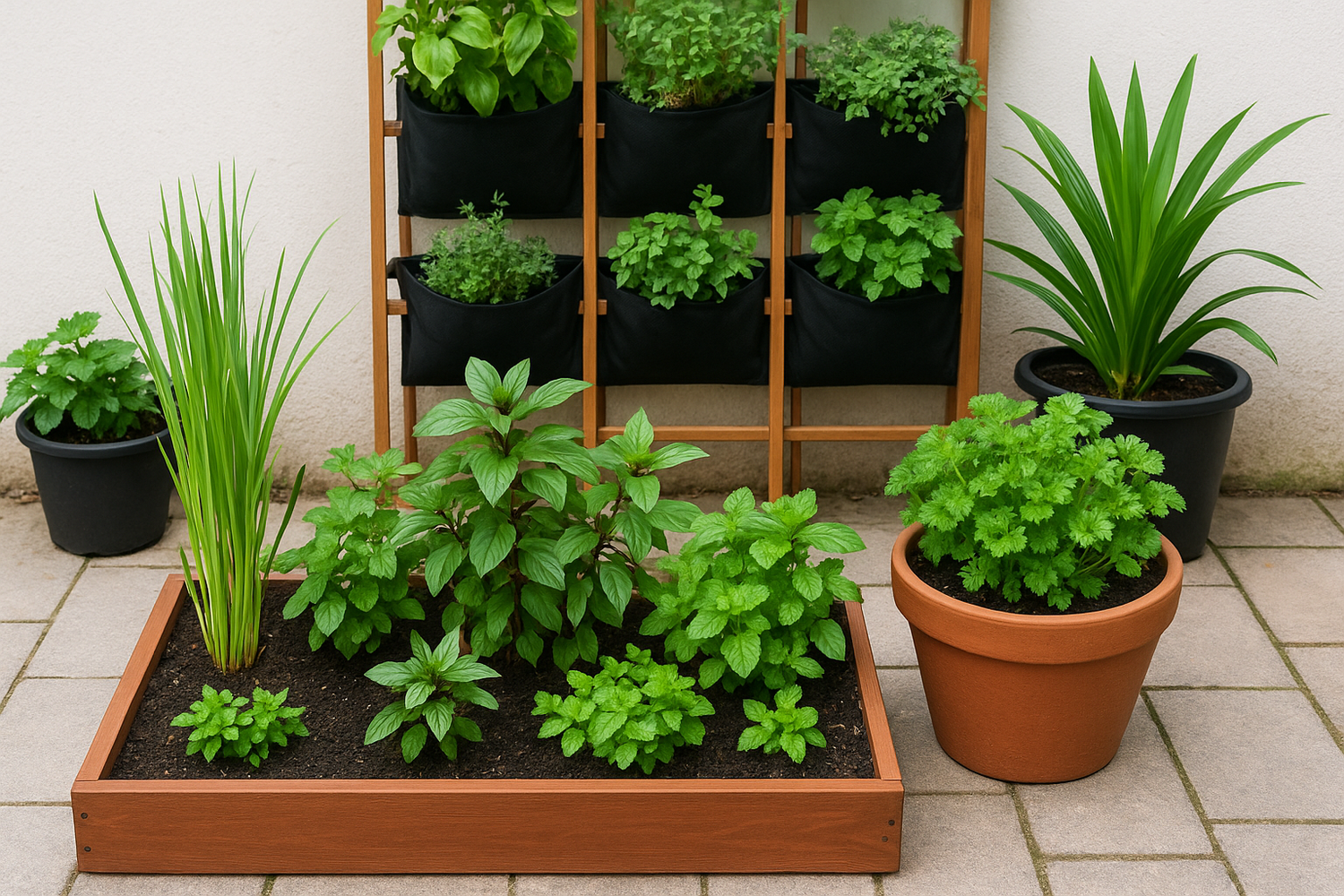
You don't need a sprawling backyard to grow fresh basil, rosemary, or lemongrass right outside your kitchen door. With the right herb garden layout ideas, even a narrow balcony, a compact patio, or a single raised bed can become a productive and beautiful growing space. The key is working with what you have, and being intentional about how you arrange your plants.
At Konzept Garden, we design outdoor spaces across Malaysia that blend function with character, and herb gardens are one of the most rewarding features we help clients plan. Whether it's a dedicated planting bed within a larger landscape or a simple container setup on a condo terrace, a well-thought-out herb garden adds daily value to your home. We've seen it firsthand in dozens of residential projects.
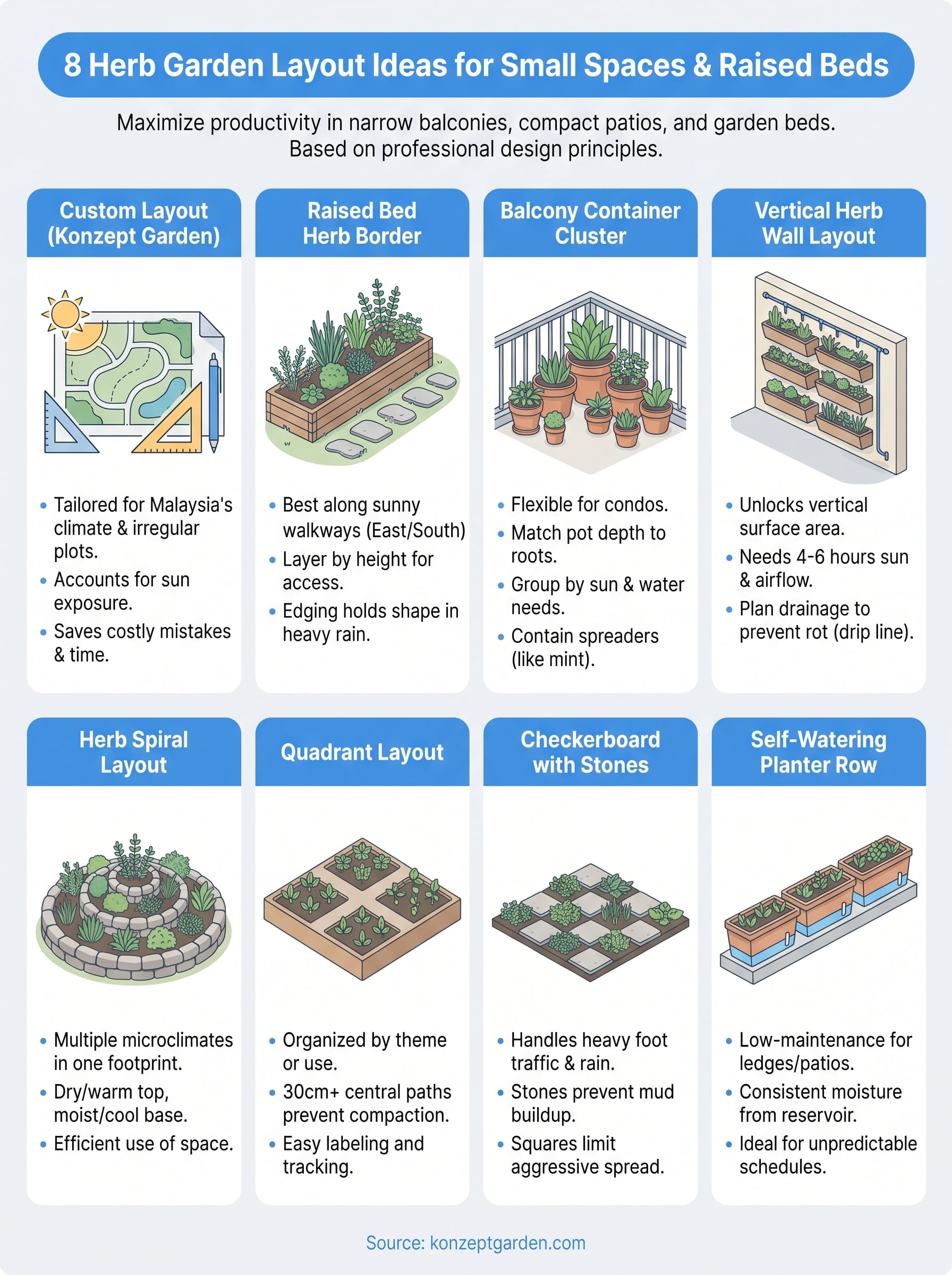
Below, we break down eight practical layouts suited to small spaces and raised beds, with tips on what works, what to plant where, and how to make the most of every square foot. Pick one that fits your space, or combine a few to create something entirely your own.
1. Custom herb garden layout from Konzept Garden
Most herb garden layout ideas you find online assume temperate climates, flat ground, and generous space. Malaysia's conditions are different, and a custom-designed layout from Konzept Garden accounts for that reality from the start rather than forcing you to adapt foreign advice to a local context.
When a custom plan beats a DIY layout
A DIY layout works well when your space is simple and your herb list is short. But if you're dealing with irregular plot shapes, multiple sun exposures, or a mix of cooking and ornamental herbs, a professional plan saves you from costly mistakes and time-consuming restarts.
A custom layout isn't an extravagance; it's a direct shortcut to getting the garden right the first time.
What you need to decide before the first consult
Before your first conversation with the Konzept Garden team, think about which herbs you actually cook with and how often you plan to harvest. Knowing whether you want a low-maintenance setup or a more hands-on growing space helps the designer match the layout to your real daily routine rather than an idealized version of it.
Layout options for balconies, patios, and landed homes
Konzept Garden designs herb layouts across all property types in Malaysia. Balcony projects typically use vertical or container cluster arrangements to maximize limited floor space. Patios allow for raised beds and border plantings, while landed homes open up more options, including in-ground beds, herb spirals, and fully dedicated kitchen garden zones built into the broader landscape.
Planting strategy for Malaysia heat and heavy rain
Malaysia's tropical climate brings intense sun, high humidity, and heavy monsoon rainfall that can overwhelm herbs not placed correctly. The design team selects heat-tolerant species like lemongrass, Thai basil, and pandan, and positions more sensitive herbs in partial shade or raised beds with proper drainage built in from the ground up.
Implementation options and what to expect on site
Konzept Garden handles the full process, from soil preparation and bed construction to planting and a site walkthrough once the work is complete. You can choose a design-only package if you plan to build it yourself, or hand the entire project to the team for a turnkey installation that's ready to harvest from day one.
2. Raised bed herb border along a walkway
A raised bed running along a walkway or garden path is one of the most practical herb garden layout ideas for landed homes and larger patios. It turns an underused strip of space into a productive planting zone you brush past every day.
Best spot and orientation for daily harvesting
Position the bed on the sunniest side of your walkway, ideally facing east or south to catch morning light. This makes harvesting a quick, natural habit rather than a dedicated task.
The closer your herb bed is to your kitchen door, the more often you'll actually use it.
Simple bed dimensions that stay reachable
Keep your bed no wider than 60 cm so you can reach the center from either side without stepping in. A length of 2 to 3 meters gives you enough planting area without creating a maintenance burden.
How to layer herbs by height for easy picking
Place tall herbs like lemongrass and Thai basil at the back, medium growers like mint and rosemary in the middle, and low spreaders like thyme at the front edge. This keeps every plant accessible without one blocking another.
Herb groupings by water needs to prevent root rot
Group thirsty herbs like mint and pandan together in one section and drought-tolerant types like rosemary in another. This prevents overwatering sensitive roots when you water the whole bed.
Edging, paths, and weed control that hold up in rain
Use solid brick or stone edging to hold the bed shape during heavy rain. A layer of mulch inside the bed slows weed growth and protects soil structure between downpours.
3. Balcony container cluster layout
A balcony container cluster is one of the most flexible herb garden layout ideas for condo and apartment dwellers. You arrange individual pots in a deliberate grouping that mirrors a garden bed without needing any ground space at all.
Container sizes that match common herb root systems
Match pot depth to root depth. Shallow-rooted herbs like thyme and basil grow well in pots 15 to 20 cm deep, while mint and lemongrass need at least 25 to 30 cm to spread without becoming root-bound.
A smart way to group pots by sun and watering needs
Place your sun-loving herbs like rosemary and Thai basil closest to the railing where they receive direct light. Keep shade-tolerant herbs like mint and pandan further back where the wall provides afternoon cover.
Grouping pots by watering needs cuts your maintenance time in half and keeps plants from suffering under the wrong care routine.
How to keep aggressive herbs contained
Mint spreads fast and will invade neighboring pots if left unchecked. Keep aggressive spreaders like mint and lemongrass in their own separate containers, never sharing a pot with other herbs.
Soil mix and drainage setup for humid climates
Use a well-draining potting mix with added perlite to prevent waterlogging during heavy rain. Every container needs drainage holes at the base and should sit on risers so water exits freely.
A compact plant list that covers most home cooking
A six-pot cluster handles the majority of Malaysian home cooking without overcrowding your balcony. Consider this core starter selection:
- Thai basil
- Mint
- Lemongrass
- Pandan
- Chili
- Kaffir lime leaves
4. Vertical herb wall layout for tight spaces
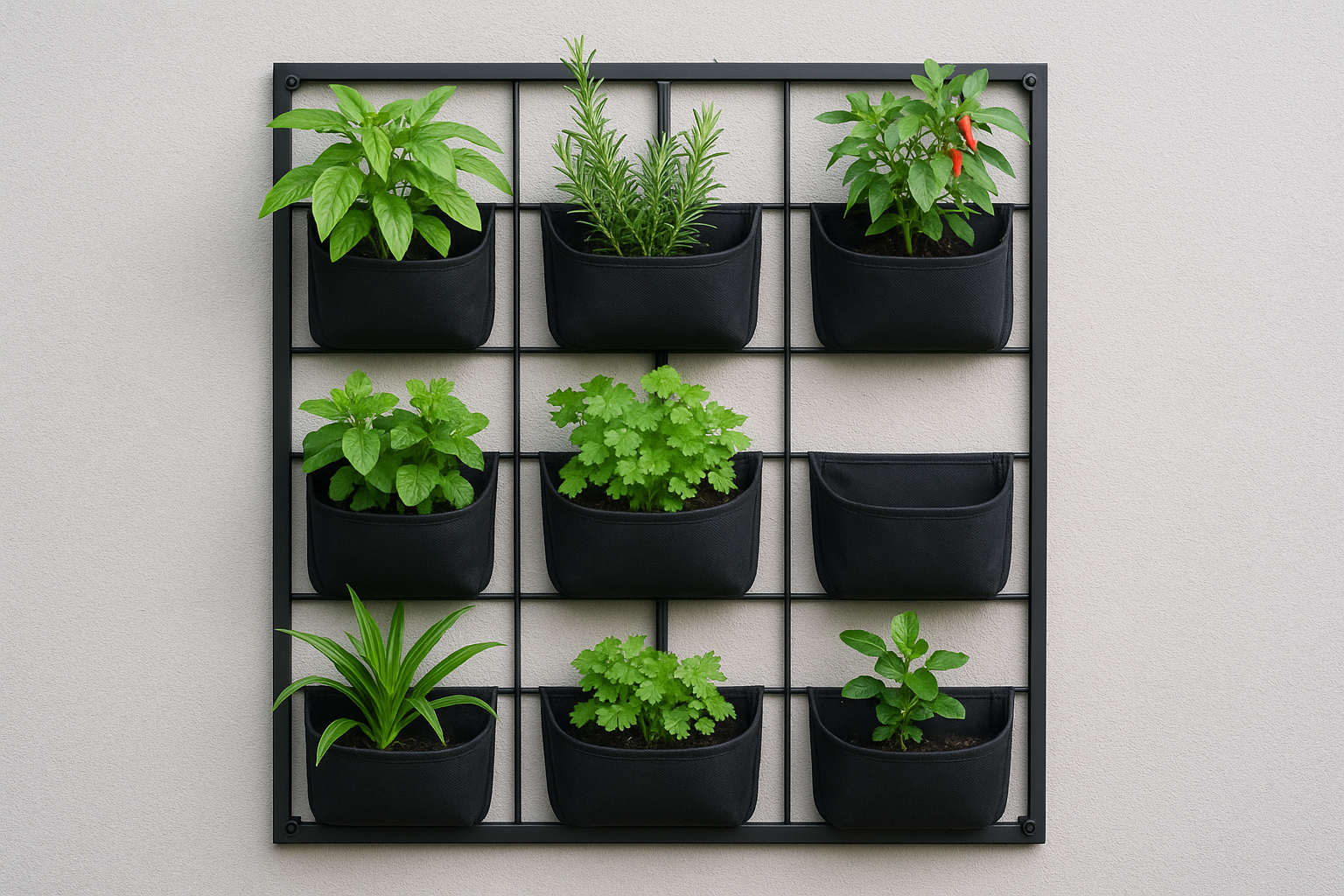
A vertical herb wall moves your herb garden layout ideas off the floor and onto a wall or fence, unlocking unused vertical surface area on narrow balconies, tight side passages, and walled garden edges.
Where vertical gardens work best and where they fail
Vertical setups thrive on walls with at least four to six hours of direct sun and consistent airflow around the plants. They work best when the structure and drainage are planned from the start, not added as an afterthought.
Avoid positions with deep shade, sealed concrete walls that trap heat overnight, or spots where drainage pulls water back onto the surface and causes rot over time.
Pocket, rail, and trellis layouts that stay maintainable
Pocket planters mounted on a frame give each herb its own contained space, so replacing one dead plant doesn't disturb the rest. Rail-mounted systems suit balcony railings.
Trellis setups work well for sprawling herbs like mint that need horizontal room. Keep each layout accessible for pruning without moving furniture or reaching past other plants.
Light planning for high-rise shade and reflected heat
High-rise buildings create patchy light patterns where half a wall stays shaded most of the day. Observe your wall through morning and afternoon before committing, because misplacing sun-hungry herbs in a shaded tier kills them quickly.
Watering approach that avoids drips and algae
Run a drip line along the top tier so water feeds downward evenly rather than soaking one section and skipping the rest.
Hand-watering a vertical wall unevenly leads to dry lower pockets and algae buildup on damp upper surfaces. A gravity-fed drip setup prevents both problems without daily attention.
What to plant on top, middle, and bottom rows
Place herbs based on light demand, which drops as you move down the wall. Matching plants to the right tier prevents weak growth and keeps harvesting consistent.
- Top: Thai basil, rosemary, chili
- Middle: Mint, coriander
- Bottom: Pandan, kaffir lime (young plants)
5. Herb spiral layout for maximum variety in one bed
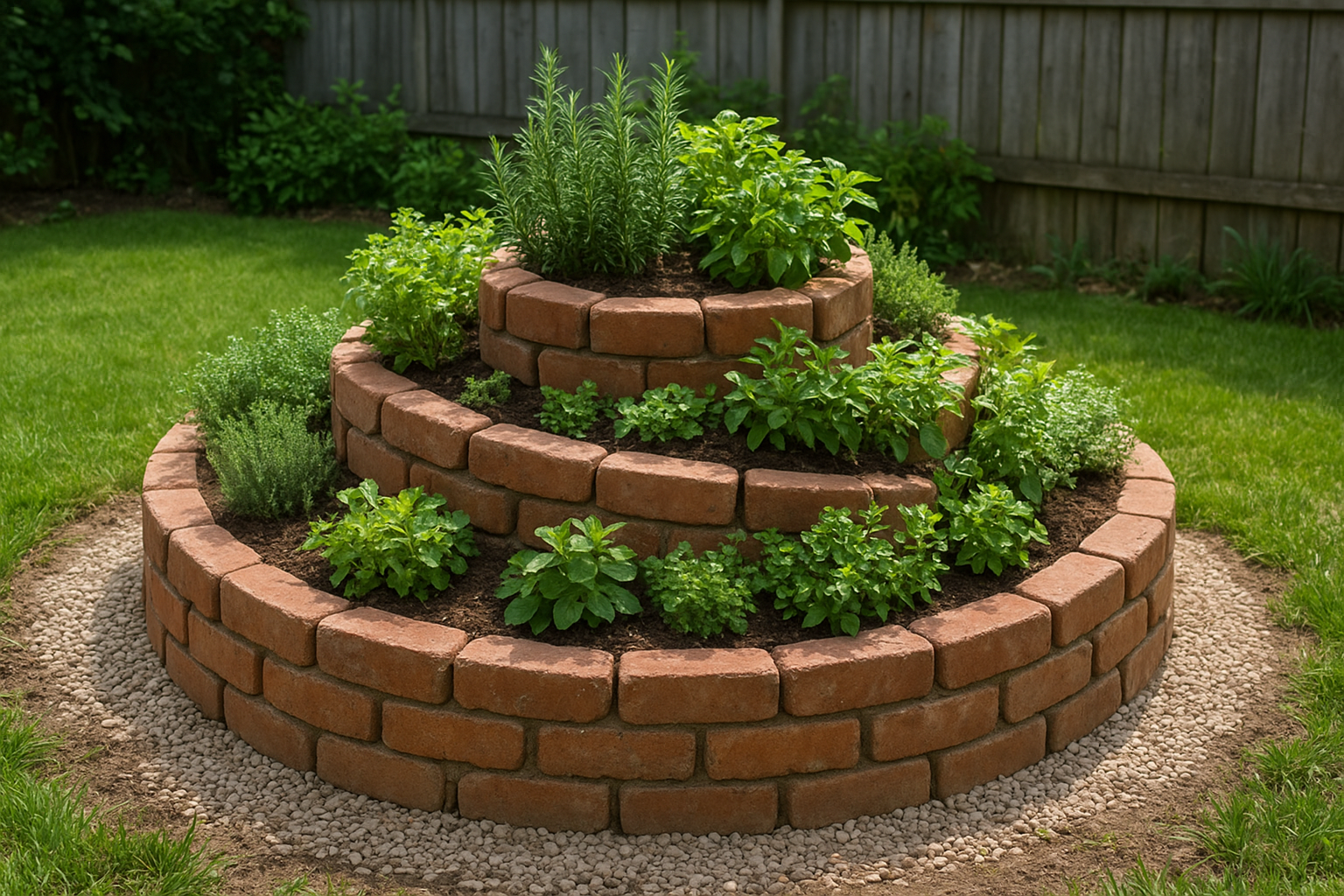
A herb spiral is one of the most efficient herb garden layout ideas for landed homes with limited planting area. It packs multiple growing environments into a single raised structure by using height and orientation to create distinct zones within one compact footprint.
How the spiral creates dry and moist zones
The spiral rises toward the center, so the top and south-facing sides stay drier and warmer, while the lower outer edges stay cooler and retain more moisture. This single structure supports both drought-tolerant and water-hungry herbs without any complex irrigation dividing them.
One spiral bed replaces what would otherwise need three or four separate beds with different soil and watering setups.
Recommended size and materials for small yards
Build your spiral 1.5 to 2 meters in diameter with the center peak reaching about 70 to 90 cm high. Use brick, stone, or concrete blocks for the outer wall, as these hold their shape through heavy rain better than timber in Malaysia's humid conditions.
Plant placement plan from top to bottom
Place rosemary and Thai basil at the top, where heat and drainage match their needs. Move coriander and mint toward the lower outer edges where moisture stays consistent longer after rain.
Drainage details for monsoon season performance
Layer coarse gravel at the spiral base before adding soil to prevent waterlogging during heavy downpours. The elevated center naturally sheds excess water outward, so the gravel layer handles overflow before it reaches root level.
Harvest and pruning approach to keep the spiral shaped
Trim each plant back by one-third after harvesting to maintain the stepped profile. Regular light pruning keeps aggressive growers from spilling over the wall edges and shadowing the herbs planted on lower tiers.
6. Quadrant herb garden layout for organized planting
A quadrant layout divides your bed into four equal sections, giving you a clear system for grouping herbs by use, water needs, or growth habit. This is one of the most practical herb garden layout ideas for gardeners who want a tidy, easy-to-manage planting space.
How to divide quadrants by use or growing needs
Split your bed based on how you cook or how the plants behave. Grouping culinary herbs separately from ornamental ones keeps harvesting straightforward and prevents aggressive growers from crowding out more delicate species.
Path width and access rules that prevent soil compaction
Leave a central cross-path at least 30 cm wide between quadrants so you can reach every section without stepping on the soil. Compacted beds drain poorly, which causes root problems during heavy rain.
Wider paths feel like wasted space until the first time heavy rain turns your soil into packed clay.
Suggested quadrant themes for Malaysian kitchens
Organize each quadrant around a cooking tradition or dish type. Consider dedicating sections to Southeast Asian herbs like pandan and lemongrass, Mediterranean herbs like rosemary and thyme, leafy herbs like mint and coriander, and spicy or aromatic plants like chili and kaffir lime.
Crop rotation idea for annual herbs in small beds
Rotate short-lived herbs like coriander and basil through different quadrants each season to prevent soil depletion and reduce pest buildup in one spot.
Labeling and tracking system that stays simple
Use weatherproof plant markers at each quadrant corner and keep a basic handwritten log of what you planted and when. This takes five minutes and saves significant guesswork at harvest time.
7. Checkerboard layout with stepping stones
A checkerboard layout alternates planted squares with flat stepping stones, creating a structured, grid-based design that handles both heavy foot traffic and Malaysia's frequent downpours better than most other herb garden layout ideas.
Why this layout helps with maintenance and mud control
Stepping stones give you solid ground to stand on while weeding, harvesting, or replanting, so you never compress the soil in your growing squares. Mud buildup between beds is a common problem in Malaysian gardens, and the stone grid solves it directly by covering those exposed strips entirely.
Dry feet and loose soil in the same garden bed is a combination worth planning for from the start.
Stone spacing and bed sizing that feel comfortable
Use stones measuring 40 x 40 cm and planting squares of the same size for a clean, even grid. This spacing keeps every planted square reachable from at least two sides without stretching.
Planting squares that limit spread and shading
Each isolated square acts as a natural boundary for aggressive herbs like mint, preventing root spread into neighboring sections. Keep tall herbs like lemongrass or basil toward the back rows so they don't block sunlight from shorter plants in front.
Micro-drip or hand-watering plan for even coverage
Run a simple drip line underneath the stones connecting each planted square, or water each square individually by hand in one pass. Either method delivers consistent moisture without flooding the gaps between stones.
How to keep it looking neat without constant trimming
Trim each square independently on a two-week rotation rather than tackling the entire grid at once. This keeps the checkerboard pattern sharp with minimal time invested per session.
8. Self-watering planter box row layout
A row of self-watering planter boxes is one of the most low-maintenance herb garden layout ideas available for condo ledges and covered patios. Each box holds a water reservoir at the base, feeding roots from below and reducing how often you need to water manually.
When self-watering boxes make the most sense
Self-watering boxes work best when your schedule is unpredictable and you can't commit to daily watering. They suit anyone with a narrow ledge, balcony railing wall, or covered patio where floor space is limited but a consistent growing setup matters.
How to plan a row layout for patios and condo ledges
Line your boxes end to end along the longest wall or ledge you have available, leaving at least 15 cm between each box for airflow. Stagger box heights using simple risers or tiered shelving so taller herbs in back don't shade shorter ones in front.
A straight row along one wall keeps the layout clean without eating into the usable floor area you actually need.
What herbs thrive with steady moisture
Herbs that prefer consistent soil moisture perform best in self-watering setups. Good choices include mint, Vietnamese coriander, and pandan, all of which struggle in containers that dry out quickly between waterings.
How to avoid overwatering in rainy weeks
During heavy rain, cover the reservoir inlet or move boxes under an overhang to prevent overflow. Check the water level indicator weekly rather than on a fixed schedule during wet months.
Cleaning, refilling, and seasonal reset routine
Flush the reservoir completely every three months to prevent algae buildup. Replace the potting mix annually and use the old soil as compost rather than letting it accumulate salt and nutrient depletion over multiple growing seasons.
Next steps for your herb garden
Every herb garden layout idea in this list works, but the one that delivers results is the one you actually build for your specific space, climate, and cooking habits. Start by picking a single layout that fits your available footprint and commit to setting it up before expanding further. A small, well-planned herb bed you maintain consistently beats an ambitious layout that falls apart after the first monsoon.
If your space involves awkward dimensions, tricky sun exposure, or you want the garden built properly from day one, getting a professional plan makes the entire process significantly easier. Konzept Garden designs herb gardens and full landscape layouts across Malaysia, handling everything from soil preparation to final planting. Whether you have a condo balcony or a landed property, the team can help you turn the right layout into a finished garden. Get in touch with Konzept Garden to start planning your space today.