
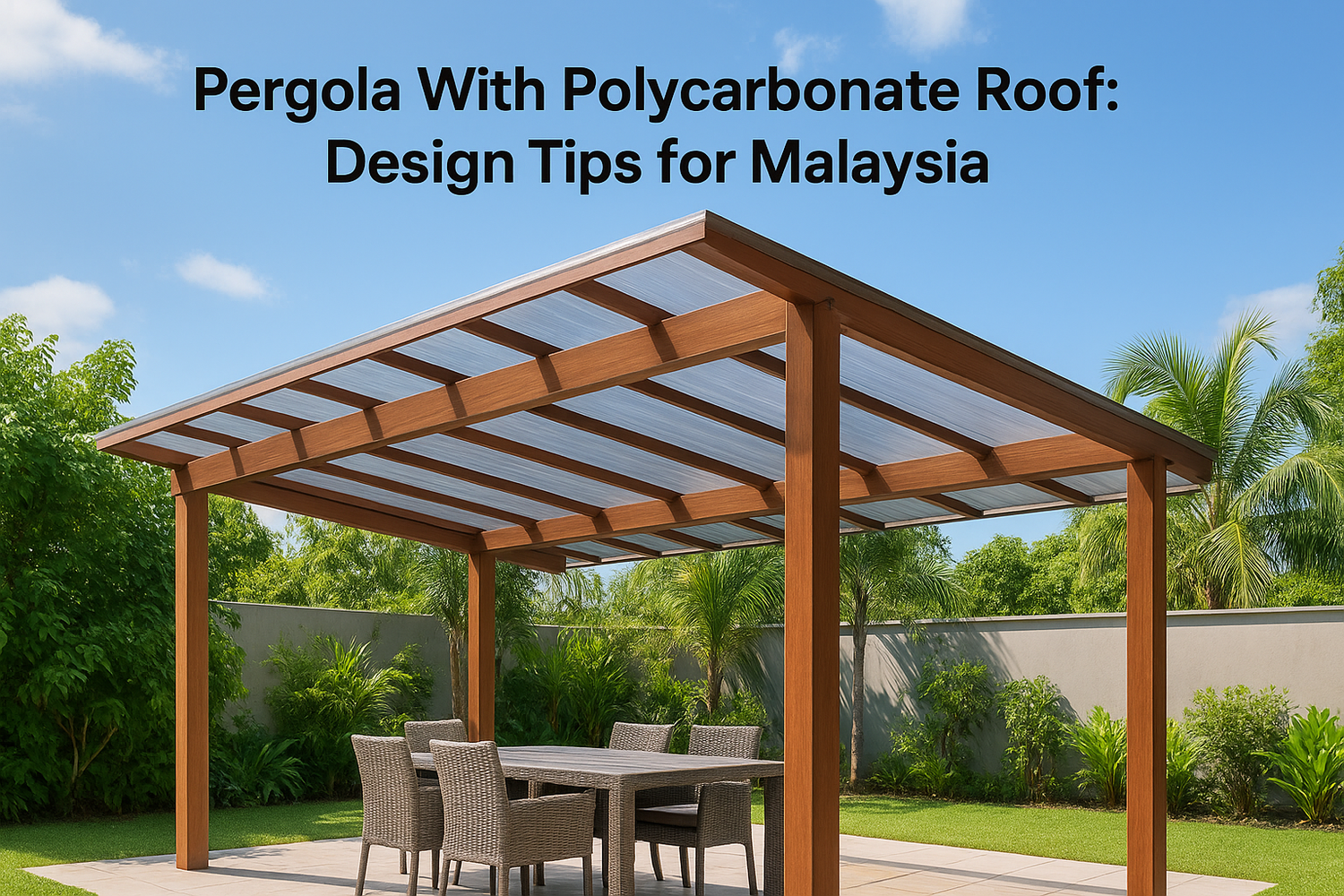
A pergola transforms your outdoor space into a functional living area, but Malaysia's tropical climate demands more than just an open lattice structure. That's where a pergola with polycarbonate roof comes in, offering protection from harsh sun and sudden downpours while still allowing natural light to filter through.
Choosing the right roofing material affects everything from durability to maintenance costs and overall aesthetics. Polycarbonate has become a popular choice among Malaysian homeowners for good reason: it's lightweight, weather-resistant, and available in various tints to control heat and glare. But getting the design right requires understanding local conditions and proper installation techniques.
At Konzept Garden, we've designed and built countless outdoor structures across Malaysia, from residential gardens to commercial landscapes. This guide shares practical design tips we've learned from years of hands-on experience, helping you create a pergola that looks great, performs well, and stands up to our unique climate.
Why polycarbonate roofs suit Malaysia
Malaysia's tropical climate throws everything at your outdoor structures: intense UV radiation, sudden heavy downpours, and temperatures that can soar above 35°C. You need a roofing material that handles all these challenges without constant repairs or replacements. Polycarbonate sheets tick these boxes while offering flexibility in design and installation that traditional materials can't match.
Handles extreme UV and heat
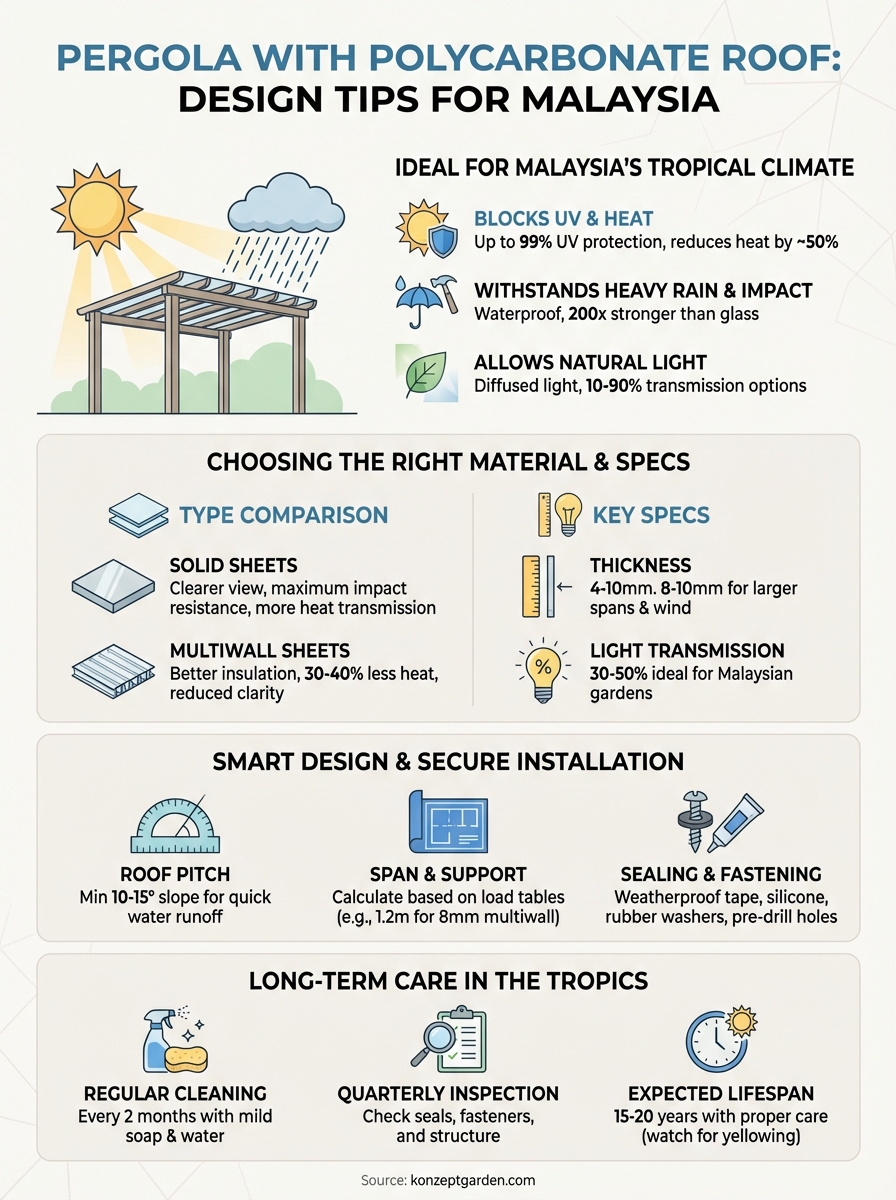
Malaysian gardens face direct sunlight for most of the year, with UV levels reaching extreme ratings during midday hours. Polycarbonate roofs come with built-in UV-resistant coatings that block up to 99% of harmful rays, protecting both you and your furniture from sun damage. This coating doesn't just sit on the surface; manufacturers bond it directly to the material during production, ensuring it won't peel or wear off over time.
Heat management becomes crucial when you're designing outdoor spaces in our climate. Quality polycarbonate sheets reduce heat transmission by up to 50% compared to clear glass, keeping your pergola area noticeably cooler. The material achieves this through specialized tinting and coatings that reflect infrared radiation while still allowing visible light through.
Survives heavy tropical rain
When monsoon season hits, your pergola with polycarbonate roof needs to handle sustained heavy rainfall without developing leaks or water damage. Polycarbonate's natural waterproof properties mean water simply runs off the surface, and the material doesn't absorb moisture that could lead to warping or degradation. Steel or timber structures might rust or rot over time, but polycarbonate maintains its structural integrity regardless of how much rain it sees.
Polycarbonate is 200 times more impact-resistant than glass, making it virtually unbreakable even during severe tropical storms with flying debris.
Allows natural light while blocking heat
You want your outdoor space to feel open and connected to nature, not like sitting under a dark, oppressive roof. Polycarbonate sheets let you control light transmission levels from 10% to 90%, depending on the tint you choose. This flexibility means you can create bright, airy spaces that still provide adequate shade and cooling for comfortable use throughout the day.
The material's translucent quality creates a softer, more diffused light compared to clear glass or plastic alternatives. Your plants benefit from this gentle filtered sunlight, and you avoid the harsh glare that makes reading or relaxing uncomfortable during peak sun hours.
Polycarbonate roof types and specs to know
Walking into a supplier's showroom, you'll face shelves stacked with different polycarbonate sheet types, each claiming to be perfect for your pergola with polycarbonate roof. Understanding the core differences between these options helps you make informed decisions that affect long-term performance, not just upfront cost. The specs that matter most in Malaysia's climate include thickness, light transmission levels, and whether the sheet has a single or multi-layered structure.
Solid versus multiwall sheets
Solid polycarbonate sheets resemble thick plastic panels with a continuous structure throughout, offering maximum clarity and impact resistance. These work best when you want clear views of the sky while maintaining protection, though they transmit more heat than their counterparts. Multiwall sheets, on the other hand, contain hollow chambers or cellular structures that trap air between layers, creating natural insulation that blocks heat more effectively.
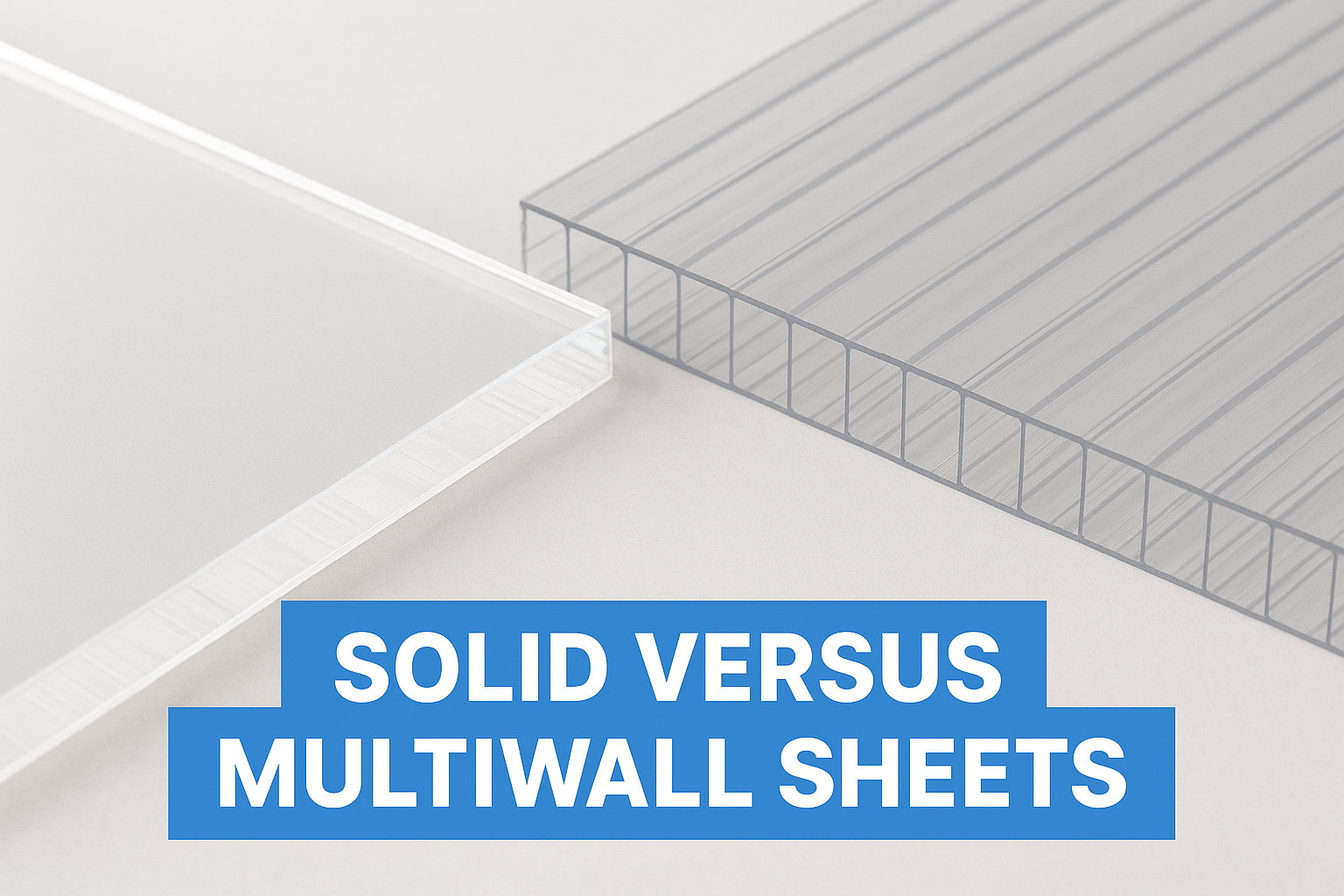
Multiwall options typically reduce heat transmission by 30-40% compared to solid sheets of the same thickness. This makes them the smarter choice for Malaysian pergolas where temperature control matters more than crystal-clear transparency. You'll sacrifice some optical clarity, but the trade-off in comfort and cooling makes it worthwhile for daily use.
Thickness and light transmission ratings
Sheet thickness ranges from 4mm to 10mm for residential pergolas, with each millimeter adding strength and insulation. Thinner 4-6mm sheets suit small structures or areas with minimal exposure to branches and debris, while 8-10mm sheets handle larger spans and higher wind loads common in coastal or exposed locations.
Light transmission ratings between 30-50% provide the ideal balance for Malaysian gardens, blocking enough heat while maintaining a bright, welcoming atmosphere underneath.
Match your thickness choice to your pergola's span and local wind conditions, not just your budget.
How to design a pergola roof that works
Your pergola with polycarbonate roof needs proper planning from the start, not adjustments after installation reveals problems. Design choices made on paper determine whether your outdoor space stays comfortable during scorching afternoons or becomes unusable when temperatures climb. Getting the roof pitch, dimensions, and structural support right means fewer headaches and lower costs down the line.
Set the right roof pitch
Minimum slope requirements for polycarbonate roofs sit at 5 degrees, but Malaysian rainfall patterns demand steeper angles for effective drainage. Aim for 10 to 15 degrees to ensure water runs off quickly during heavy downpours, preventing pooling that adds weight and stress to your structure. Steeper pitches also reduce the amount of debris and leaf buildup between cleaning sessions.
A 15-degree pitch provides the optimal balance between water runoff and maintaining comfortable headroom underneath your pergola.
Calculate span and support spacing
Polycarbonate sheets span different distances depending on thickness and local wind loads, with 8mm multiwall sheets typically supporting spans up to 1.2 meters between rafters. You'll need closer spacing for thinner materials or exposed locations that face stronger winds. Calculate your support beam placement based on the manufacturer's load tables rather than guessing or copying designs you've seen elsewhere.
Your pergola's overall dimensions should account for furniture placement and movement paths, with a minimum 2.4 meters of clearance at the lowest roof point for comfortable walking space.
Installation details that prevent leaks and noise
Poor installation turns even the best polycarbonate sheets into sources of constant frustration. Water seepage and annoying drumming sounds during rain stem from shortcuts taken during setup, not from material defects. Malaysian installers often rush through projects without proper sealing or fastening, leaving homeowners with problems that surface only after the first heavy downpour hits your pergola with polycarbonate roof.
Seal every overlap and penetration
Your polycarbonate sheets need weatherproof sealing tape applied along all overlapping edges before securing them to the frame. This tape prevents water from creeping between panels during horizontal rain, a common occurrence when winds push moisture sideways into gaps. Apply aluminum H-profiles or polycarbonate jointing bars at sheet connections to create waterproof channels that guide water downward instead of allowing it to pool or seep through joints.
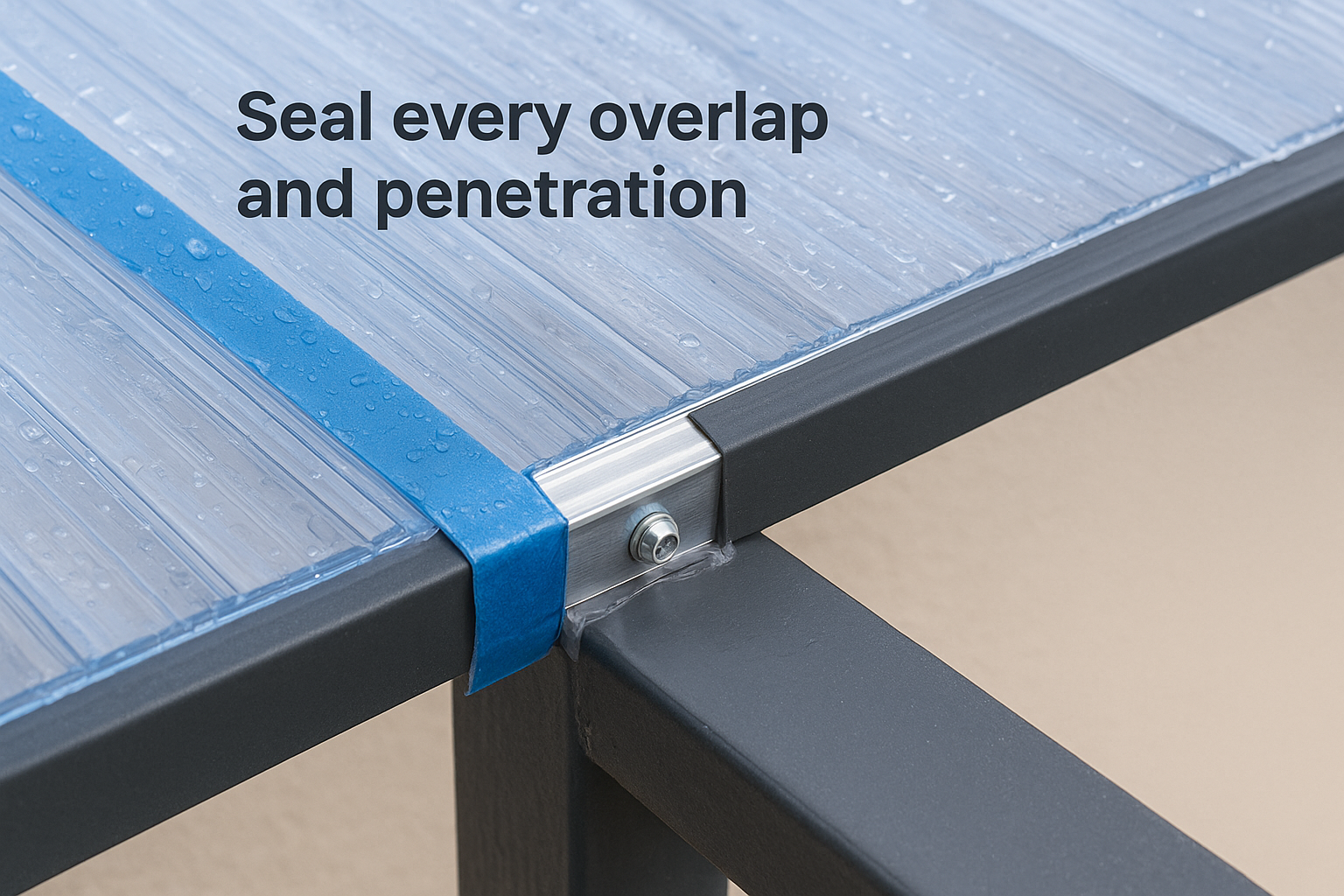
Pay special attention to where sheets meet posts or walls, areas installers frequently neglect. Silicone sealant rated for outdoor use fills these gaps effectively, but you must ensure the sealant bonds to both the polycarbonate and mounting surface. Clean all surfaces with isopropyl alcohol before applying sealant for proper adhesion that lasts through years of tropical weather.
Use rubber washers and correct fasteners
Self-drilling screws with rubber washers prevent both leaks and the loud banging noise that occurs when sheets expand and contract with temperature changes. The rubber creates a cushion that allows thermal movement while maintaining a watertight seal around each penetration point. Space fasteners 30-40cm apart along purlins, avoiding overtightening that compresses the rubber and creates stress points where cracks develop over time.
Drill pilot holes 2mm wider than your screw diameter to accommodate thermal expansion without creating gaps that let water through during heavy rain.
Cleaning, maintenance, and lifespan in the tropics
Your pergola with polycarbonate roof faces constant assault from tropical elements, including algae growth, bird droppings, and dust buildup that reduces light transmission over time. Malaysian humidity accelerates biological growth on surfaces, while afternoon heat bakes debris onto sheets if you leave cleaning too long. Regular maintenance extends your roof's lifespan from 10 years to potentially 20 years or more, protecting your investment through simple preventive care.
Regular cleaning schedule for Malaysian conditions
Rinse your polycarbonate sheets every two months using a garden hose and mild dish soap solution, avoiding abrasive cleaners or rough sponges that scratch the UV-protective coating. The scratches appear minor at first but accelerate yellowing and degradation by allowing UV rays to penetrate deeper into the material. During monsoon season, check weekly for leaf accumulation in roof valleys where organic matter traps moisture against the surface.
Clean early morning or late evening when sheets are cool, as applying cold water to sun-heated polycarbonate can cause thermal shock and cracking.
Inspection and preventive maintenance
Walk around your pergola quarterly to check sealant joints, fastener washers, and sheet edges for wear or separation. Replace deteriorated rubber washers immediately since failed seals allow water infiltration that damages the underlying structure before you notice external problems. Malaysian termites sometimes nest in nearby timber posts, so inspect wooden support elements during your polycarbonate checks.
Expected lifespan and replacement signs
Quality polycarbonate roofs last 15 to 20 years in Malaysian conditions when properly maintained, with UV coatings gradually degrading rather than failing suddenly. You'll notice yellowing, brittleness, or reduced transparency as primary replacement indicators, typically appearing first on sections receiving maximum sun exposure throughout the day.
Next steps for your pergola
Your pergola with polycarbonate roof combines Malaysian weather protection with the outdoor living experience you want from your garden space. You've learned about material specs, design considerations, and maintenance requirements that separate successful installations from problematic ones. Now comes the practical implementation of turning these insights into a structure that serves your family for years.
Start by measuring your available space and determining your primary use case, whether that's dining, entertaining, or simply creating a shaded retreat from afternoon heat. Document your local wind exposure and sun patterns to inform thickness and tint choices that match your specific conditions rather than generic recommendations.
Professional design brings these elements together into a cohesive plan that accounts for drainage, structural support, and integration with your existing landscape. Contact our design team to discuss your pergola project and explore how we create outdoor spaces that handle Malaysia's tropical climate while reflecting your personal style.