

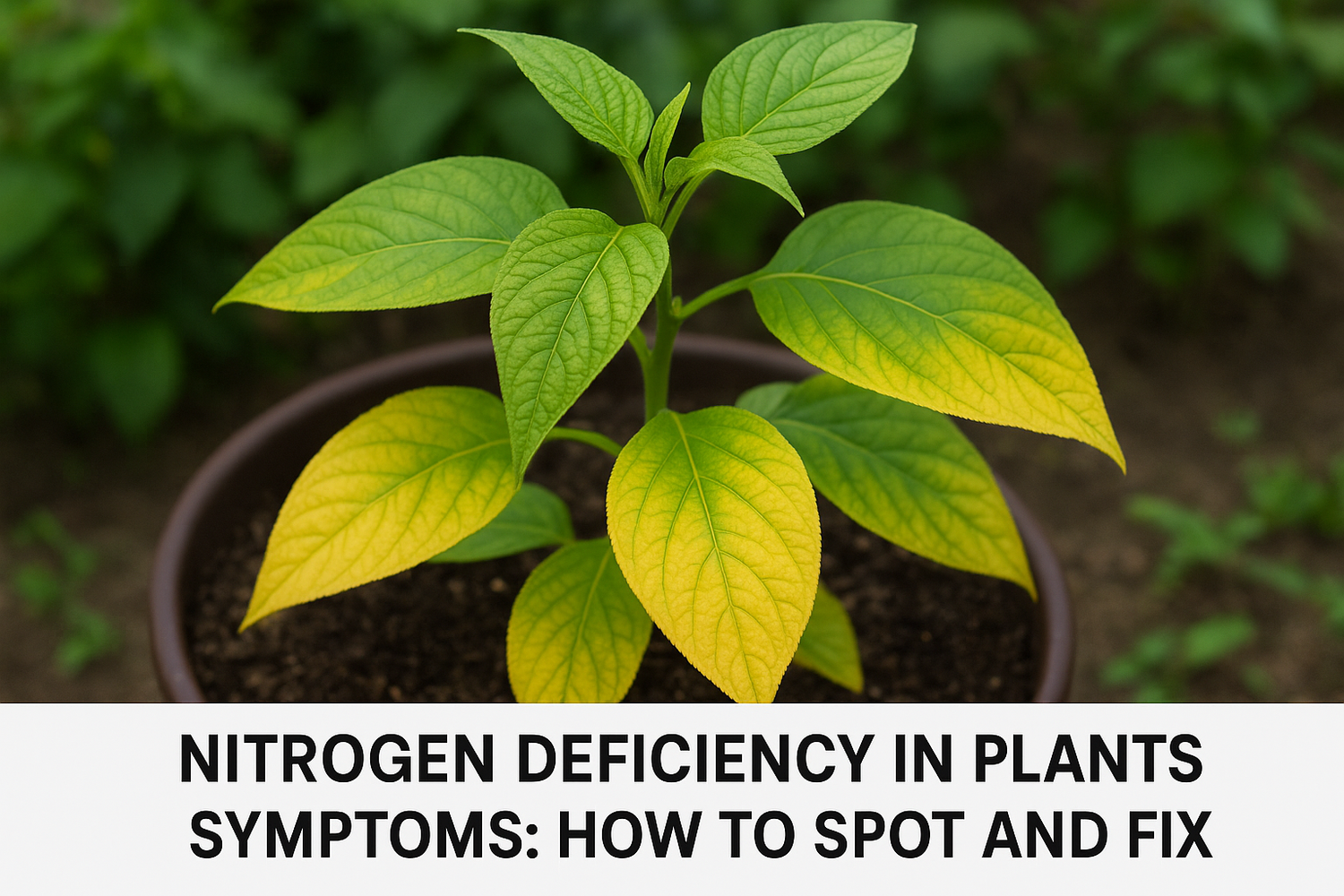
Your plants are telling you something. Those pale, yellowing leaves starting from the bottom of the plant and working their way up? That's one of the most common signs of nitrogen deficiency in plants symptoms that gardeners in Malaysia encounter, especially during heavy rain seasons when nitrogen leaches quickly from the soil.
Nitrogen is the nutrient most responsible for leafy, green growth. Without enough of it, plants stall. They lose color, drop leaves early, and produce fewer flowers or fruit. The tricky part is that these symptoms overlap with other deficiencies, which makes accurate identification critical before you reach for any fertilizer.
At Konzept Garden, we've seen nitrogen issues show up across residential gardens, commercial landscapes, and planter systems throughout Malaysia. Soil health is a major factor in every garden design and planting plan we develop. This article breaks down exactly how to identify nitrogen deficiency in your plants, what causes it, and practical steps to fix and prevent it, so your garden stays green, healthy, and growing strong.
Why nitrogen matters for plant growth
Nitrogen is one of the three primary macronutrients that plants need, alongside phosphorus and potassium. It makes up a large share of amino acids, the building blocks of every protein your plant produces. Without a steady supply of nitrogen, your plant cannot build the cellular structures it needs to grow new tissue, defend against disease, or produce flowers and fruit. Think of nitrogen as the raw material for nearly every construction project happening inside your plant at any given moment.
Nitrogen's role in chlorophyll and photosynthesis
The most direct connection between nitrogen and plant health is chlorophyll production. Chlorophyll is the green pigment responsible for capturing sunlight, and nitrogen is a core part of its molecular structure. When your plant has enough nitrogen, leaves hold a deep, rich green color and photosynthesis operates at full capacity, converting sunlight into the carbohydrates that power every biological function from root development to seed formation.
A plant that cannot produce enough chlorophyll cannot run photosynthesis efficiently, which means it cannot generate the energy it needs for sustained growth, flowering, or fruit production.
Beyond chlorophyll, nitrogen is also central to enzyme synthesis. Enzymes regulate nutrient uptake, cellular repair, and tissue division. A well-supplied plant produces these enzymes at the speed growth demands. When nitrogen drops below a critical threshold, enzyme production slows down, cellular division stalls, and the visible effects start to appear quickly across leaves, stems, and overall plant structure.
How nitrogen moves through the plant
Nitrogen behaves as a mobile nutrient inside your plant. When the overall supply runs low, your plant actively pulls nitrogen out of older, lower leaves and redirects it toward younger, actively growing tissue at the shoot tips and new leaf nodes. The result is that nitrogen deficiency in plants symptoms show up first in the older foliage rather than at the growing tips, which is one of the clearest diagnostic clues available to you.
Recognizing this pattern changes how you read your plant. Those yellowing lower leaves are not simply old or dying; they are being stripped of nitrogen by the plant itself to keep new growth alive. Understanding this redistribution mechanism helps you avoid misdiagnosis and points you directly toward the right solution rather than treating the wrong problem.
What happens when supply runs short
When nitrogen availability drops, growth slows in visible, measurable ways. Stems remain thin and weak, internode spacing tightens, and the plant looks stunted relative to its age and size. Flowering plants produce fewer buds, and fruiting plants yield smaller, fewer fruits because the plant cannot allocate resources toward reproduction when basic structural needs are unmet.
In Malaysia's tropical climate, nitrogen depletion can happen faster than in temperate regions. Heavy monsoon rains leach nitrogen from topsoil quickly, and high year-round temperatures speed up organic matter breakdown in ways that do not always replenish the soil at the rate your plants consume it. Container plants face the steepest challenge because they have no access to a broader soil system and depend entirely on what you add directly to their growing medium.
Nitrogen deficiency symptoms you can spot fast
Spotting nitrogen deficiency in plants symptoms early gives you the best chance to correct the problem before lasting damage sets in. The symptoms follow a predictable pattern that, once you know what to look for, becomes straightforward to identify in both garden beds and container plants.
Yellowing leaves that move upward
The most reliable sign you will see is chlorotic yellowing that begins on the oldest, lowest leaves first and progresses upward toward newer growth. Because nitrogen is a mobile nutrient, your plant pulls it out of older tissue and redirects it to the growing tips, leaving lower leaves pale, yellow, or light green while the newest growth at the top may still look relatively normal.
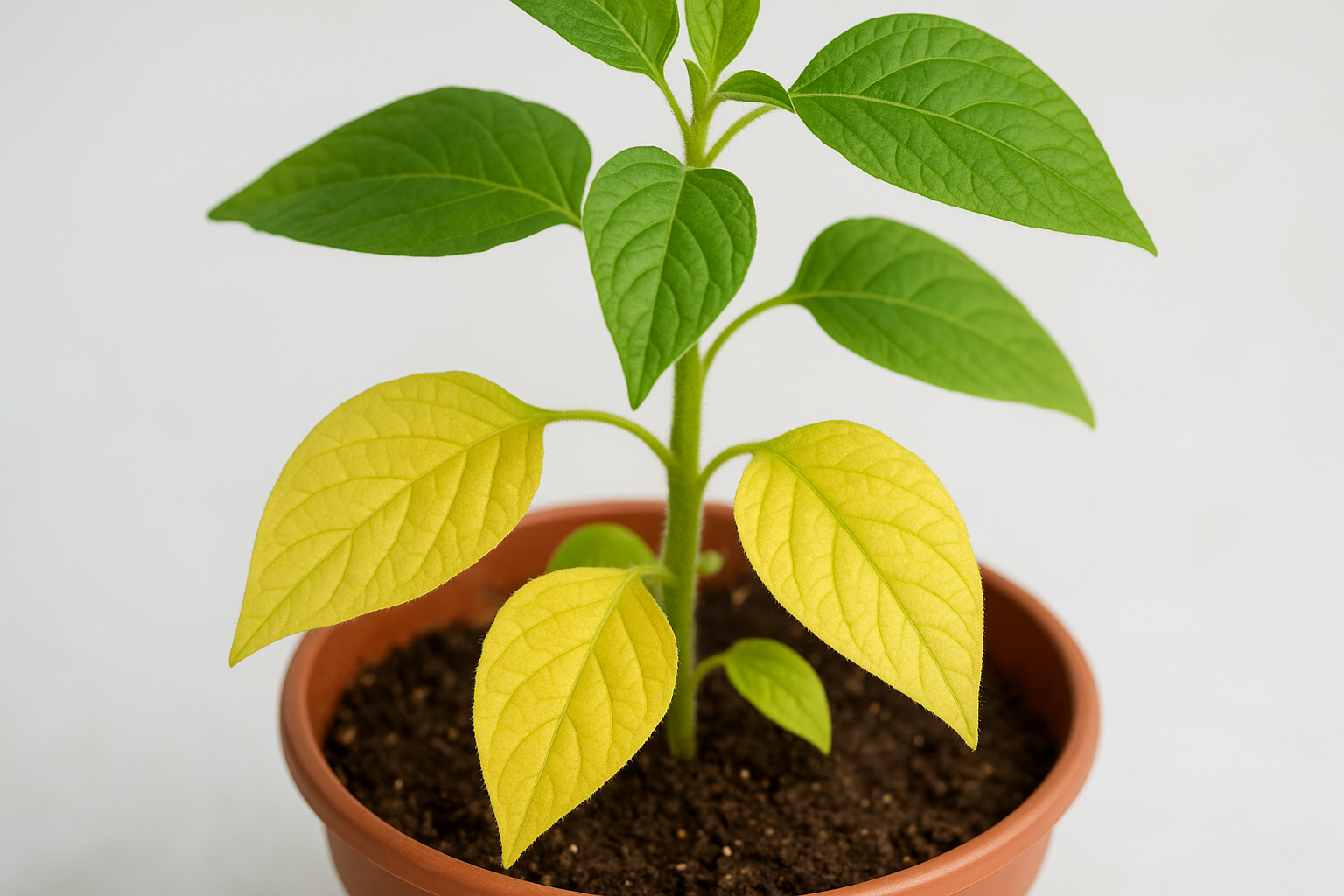
If you see yellowing starting at the bottom of the plant and moving upward, nitrogen deficiency is the most likely cause, not overwatering or root rot, which tend to produce very different patterns.
This discoloration is usually uniform across the whole leaf blade rather than appearing as spots or patches between veins. That uniform spread distinguishes nitrogen deficiency from iron or magnesium deficiency, which typically produce interveinal chlorosis where veins stay green while surrounding tissue yellows.
Stunted growth and weak stems
Beyond leaf color, your plant will show noticeably reduced growth rates. New leaves come in smaller than normal, stems stay thin and lack the firmness of a well-fed plant, and the overall structure looks underdeveloped relative to the plant's age. Internode spacing, the distance between leaf nodes along the stem, often shortens as growth stalls.
Flowering and fruiting plants show additional signs. You will notice fewer flower buds forming, and any fruit that does set tends to be smaller and lighter than expected. In tropical Malaysian gardens where plants grow actively year-round, this slowdown stands out clearly because well-nourished plants in a warm climate grow fast and consistently.
Early leaf drop
A nitrogen-starved plant may begin shedding its lower leaves before they finish their natural life cycle. Leaves yellow quickly and then drop, leaving the lower stems bare while the plant concentrates its limited nitrogen supply on keeping new growth at the tips alive.
Common causes in Malaysian gardens and containers
Understanding why nitrogen deficiency in plants symptoms appear in the first place helps you prevent the problem from recurring. In Malaysia, several specific environmental and management factors make nitrogen loss a regular challenge for both garden beds and container setups.
Heavy rainfall and nutrient leaching
Malaysia's monsoon seasons create conditions where nitrogen drains out of topsoil faster than most gardeners expect. Nitrogen in the form of nitrate is highly soluble, which means water moves it downward through the soil profile and out of reach of your plant's root zone. After a prolonged wet period, even well-amended garden beds can end up nitrogen-depleted within weeks.
If your plants look healthy entering the rainy season but start showing pale, yellowing lower leaves shortly after, leaching is likely the first cause to investigate.
The high year-round temperatures in Malaysia also accelerate organic matter decomposition, which temporarily ties up nitrogen in microbial activity rather than releasing it into the soil in a form your plants can use directly.
Compacted or poorly structured soil
Soil that is dense and compacted limits root penetration and reduces the microbial activity that drives nitrogen cycling. When roots cannot spread through the soil freely, they access a smaller volume of nutrients overall. In many Malaysian residential gardens, especially those with clay-heavy or construction-disturbed soil, this compaction is a hidden but consistent driver of nitrogen deficiency.
Poor drainage compounds the issue. Waterlogged soil shifts to anaerobic conditions, where nitrogen-cycling bacteria become less active and nutrient availability drops further.
Container and planter limitations
Container plants face the most concentrated nitrogen challenge because the growing medium is finite. Every watering event pushes soluble nitrogen toward the drainage holes, and the plant has no access to a wider soil system to compensate. High-quality potting mixes start with adequate nitrogen, but regular plants in active growth can deplete that supply within a few weeks without consistent fertilization.
Self-watering planters like the Ziant Hydro Planter reduce water stress, but you still need to replenish nitrogen regularly through liquid or slow-release fertilizers to keep container plants growing at their best.
How to confirm nitrogen deficiency vs lookalikes
Before you apply any fertilizer, you need to be confident in your diagnosis. Several other conditions produce yellowing leaves and slow growth, and treating the wrong problem wastes time and risks making things worse. A systematic approach to ruling out lookalike conditions gets you to the right answer quickly.
Compare the yellowing pattern
The single most useful diagnostic tool you have is where the yellowing starts and how it spreads. Nitrogen deficiency always begins on older, lower leaves and moves upward because nitrogen is mobile inside the plant. Iron deficiency, by contrast, shows interveinal chlorosis on the youngest leaves first, with veins staying green while tissue between them turns yellow. Magnesium deficiency can also show interveinal yellowing on older leaves, but the pattern between veins is distinct rather than the uniform pale yellowing that nitrogen produces across the entire leaf blade.
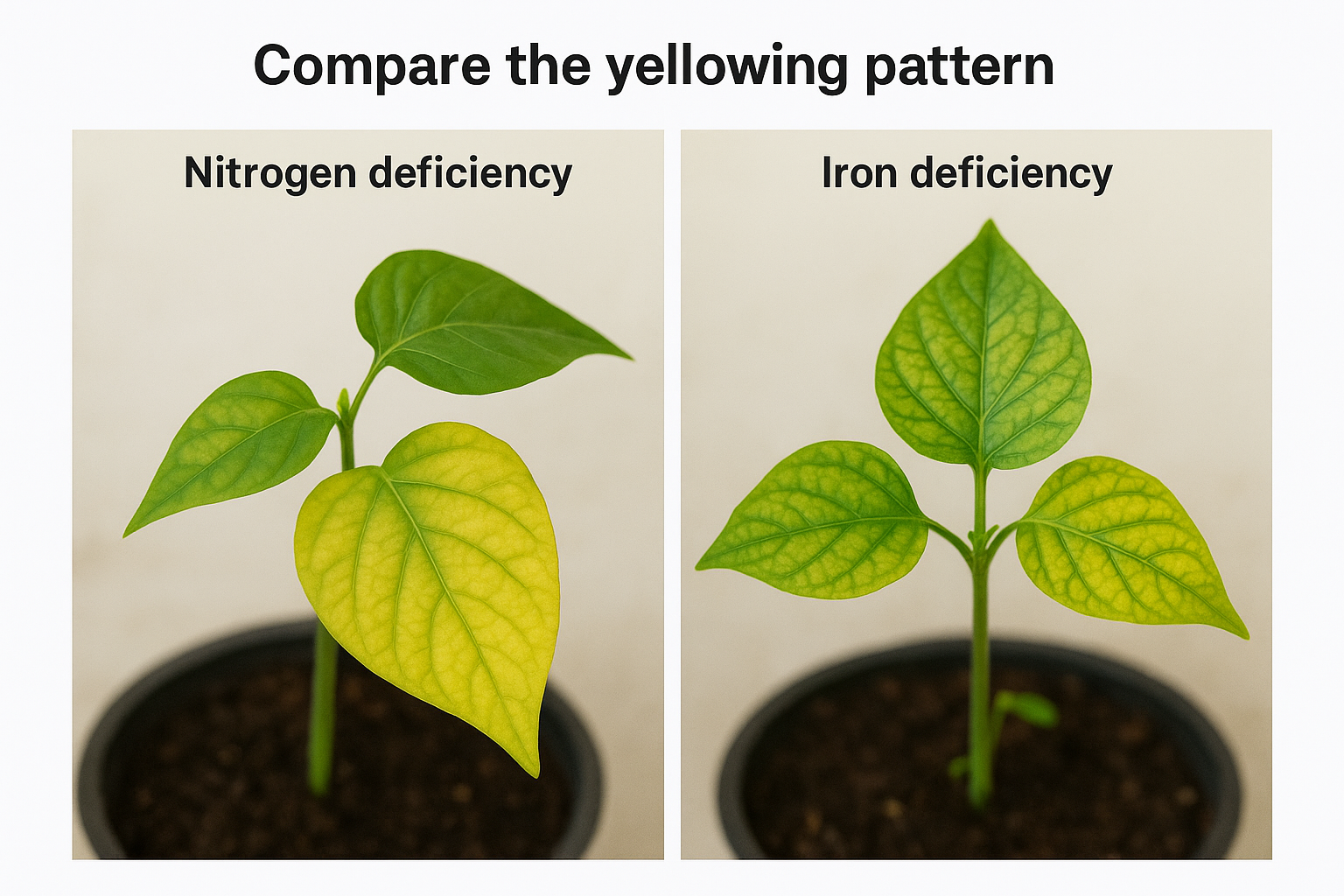
If the yellowing is uniform across whole leaves starting at the bottom of the plant, nitrogen deficiency is your most likely diagnosis rather than iron or magnesium issues.
Check soil and watering history
Context matters as much as visual symptoms when confirming nitrogen deficiency in plants symptoms. Ask yourself whether your plants have received consistent fertilization in the past four to six weeks. If the answer is no, and you have also experienced heavy rain or frequent watering, nitrogen leaching is a strong candidate. A simple soil pH test is also worth doing, because nitrogen availability drops sharply in highly acidic or highly alkaline conditions even when nitrogen is physically present in the soil.
| Factor | Points to nitrogen deficiency | Points elsewhere |
|---|---|---|
| Yellowing starts on lower leaves | Yes | No |
| Uniform yellow across whole leaf blade | Yes | No |
| New growth affected first | No | Yes, points to iron deficiency |
| No fertilizer applied recently | Yes | Less likely |
| Soil pH below 5.5 or above 7.5 | Possible lockout | Check other nutrient availability |
Working through this checklist before reaching for fertilizer keeps your diagnosis accurate and your plants better off in the long run.
How to fix nitrogen deficiency safely
Once you confirm nitrogen deficiency in plants symptoms, the correction is straightforward, but your approach needs to match your specific setup. Applying the wrong fertilizer type or rate can burn roots, create nutrient imbalances, or flush straight through a container without reaching your plant at all. Getting the product and timing right puts your plants back on track without introducing new problems.
Choose the right fertilizer type
Liquid fertilizers work fastest for plants already showing deficiency symptoms because they deliver nitrogen in a soluble form that roots absorb within days. A liquid fertilizer with a high first number in the N-P-K ratio, such as 20-10-10 or similar, applied at the manufacturer's recommended rate, produces visible improvement in leaf color within one to two weeks in Malaysia's warm, active growing conditions.
For container plants, liquid fertilizer applied during regular watering gives you the fastest and most controllable nitrogen correction without runoff accumulation.
Slow-release granular fertilizers suit established garden beds where you want steady nitrogen supply over several months rather than an immediate correction. Scatter them evenly around the plant's drip line, water them in thoroughly, and they continue feeding through each rain cycle without requiring repeated applications.
Adjust your fertilization schedule going forward
Fixing a single deficiency solves only part of the problem. Regular fertilization, applied every four to six weeks for most tropical plants in Malaysia, keeps nitrogen levels stable and stops deficiency from returning after heavy monsoon rains wash nutrients out of your soil. For container plants growing in products like the Ziant Hydro Planter, build fertilization into your weekly or fortnightly care routine because the limited growing medium depletes far faster than an open garden bed.
Checking your soil pH before applying fertilizer is also worth the effort, since nitrogen availability locks out at pH levels below 5.5. Correcting acidic soil with agricultural lime before you fertilize makes every application more effective and gives your plants the best conditions to recover and hold that recovery long term.
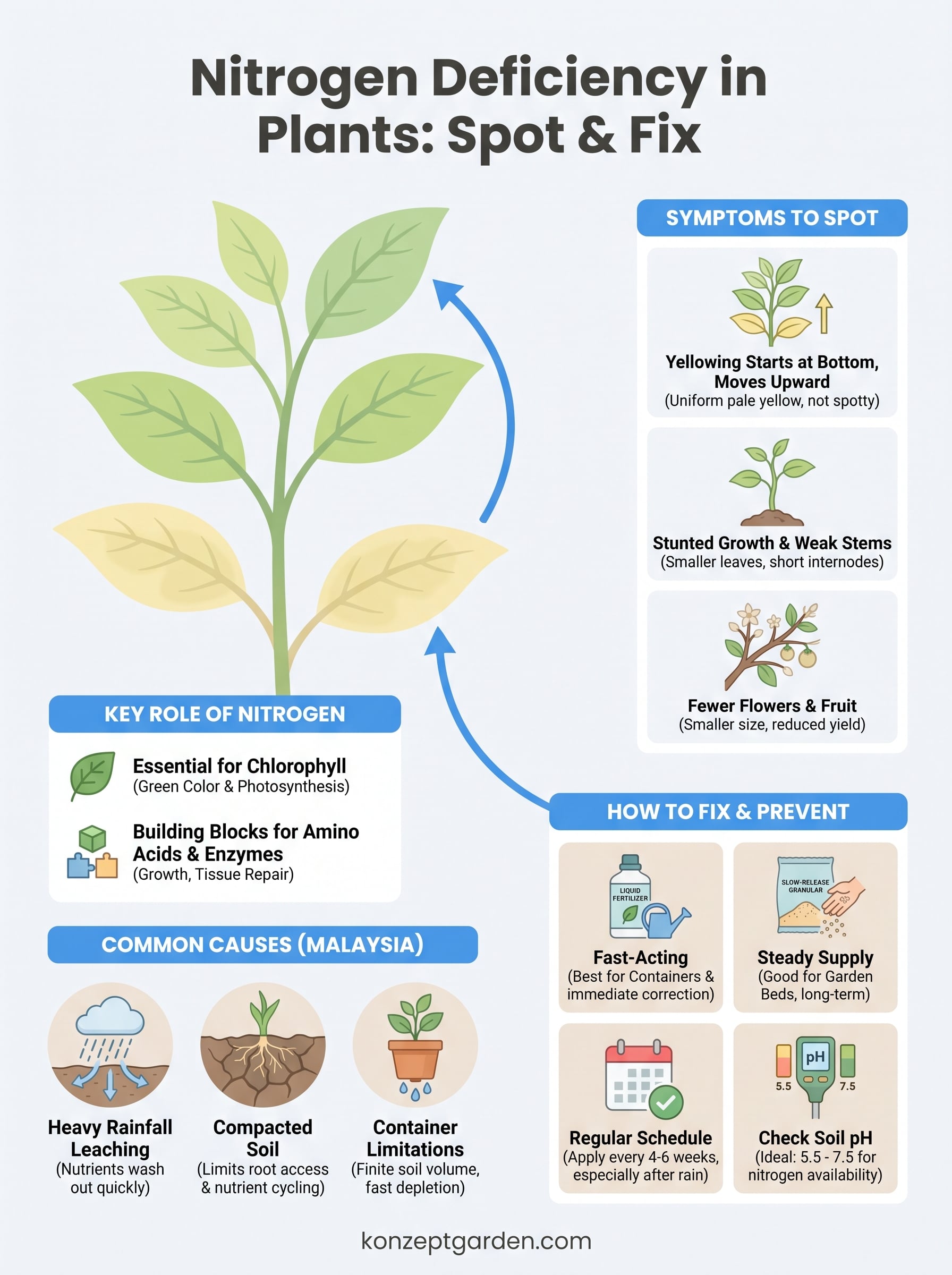
Next steps
Catching nitrogen deficiency in plants symptoms early and responding with the right fertilizer gives your plants a real chance to recover quickly, often within two weeks in Malaysia's warm climate. The key is working through the pattern systematically: check where yellowing starts, review your fertilization history, confirm your soil pH, and choose a product that matches your setup, whether that is a liquid feed for containers or a slow-release granular for open garden beds.
Consistent soil management separates gardens that struggle every rainy season from those that stay green and productive year-round. Building a regular fertilization schedule into your care routine is the single most reliable way to prevent deficiency from returning after monsoon rains strip nitrogen from your topsoil. If you want professional guidance on building healthier soil into your garden design from the start, get in touch with the Konzept Garden team for a consultation tailored to your outdoor space.