

The best low maintenance outdoor plants for Malaysia are the ones that match your spot's light and survive heavy rain without special soil or regular pruning. For sunny beds, bougainvillea, ixora, hibiscus and frangipani give you tropical flowers with little effort. For shade, bird's nest fern, lady palm and Philodendron Xanadu stay green on their own. Snake plants are the safest choice for sheltered porches and pots, and areca palm builds a privacy screen faster than most.
Most "easy plant" lists skip the real problem. In Malaysia, heat, humidity and monsoon downpours kill outdoor plants through root rot, leaf scorch and pests far more often than neglect does. A plant that looks fine in a nursery shade house can struggle on an open patio at 1 pm. You need plants chosen for those conditions, not just for being forgiving.
Konzept Garden designs gardens and sells plants in Malaysia, so the picks below reflect what homeowners here actually plant. Each entry covers light, watering, common problems and what to check when buying. A comparison table near the end helps you match each plant to your own spot.
1. Snake plant
Snake plant (Dracaena trifasciata, still sold as Sansevieria trifasciata) is the most forgiving pick for shaded porches, covered patios and pots. It tolerates skipped waterings, humidity and low light, and it only asks you to avoid soggy soil.
Why it suits Malaysian gardens
Stiff, upright leaves hold up against rain and wind, and the plant stores water in its leaves, so a missed week does no harm. Outdoors it prefers bright shade or filtered light. Move an indoor plant outside gradually, because direct midday sun scorches leaves that grew up indoors.
- Light: shade to bright indirect light, some morning sun is fine
- Water: only when the mix is fully dry
- Size: compact rosettes up to leaves a meter or more tall, depending on variety
- Best for: porches, entrances, pots, dry corners under eaves
Care routine and problems
Water only when the top few centimeters of mix are completely dry. That means roughly once a week in dry spells and every two weeks or less in wet months. Use a gritty, free-draining mix, a pot with drainage holes, and tip out saucers after rain. A weak feed once or twice a year is plenty.
Root rot is the only real killer. Yellow, mushy leaves at the base mean you are watering too often, so stop and let the mix dry out. Mealybugs occasionally hide between leaves, and a cloth with soapy water removes them. The leaves are mildly toxic if chewed, so keep pots out of reach of pets.
Snake plants fail from too much attention, so water late rather than early.
What to look for when buying
Konzept Garden sells Snake Plant Golden Hahnii and Snake Plant Superba Laurentii, each supplied with a pot at RM79.90 and available in black, brown, grey or white. Golden Hahnii is the compact form, while Superba Laurentii grows taller with yellow-edged leaves. You can browse both in the Plants collection.
For a worked example, three plants for a porch corner cost 3 × RM79.90 = RM239.70, pots included. Whatever you buy, pick plants with firm, upright leaves and no soft or dark patches at the base.
2. Bougainvillea
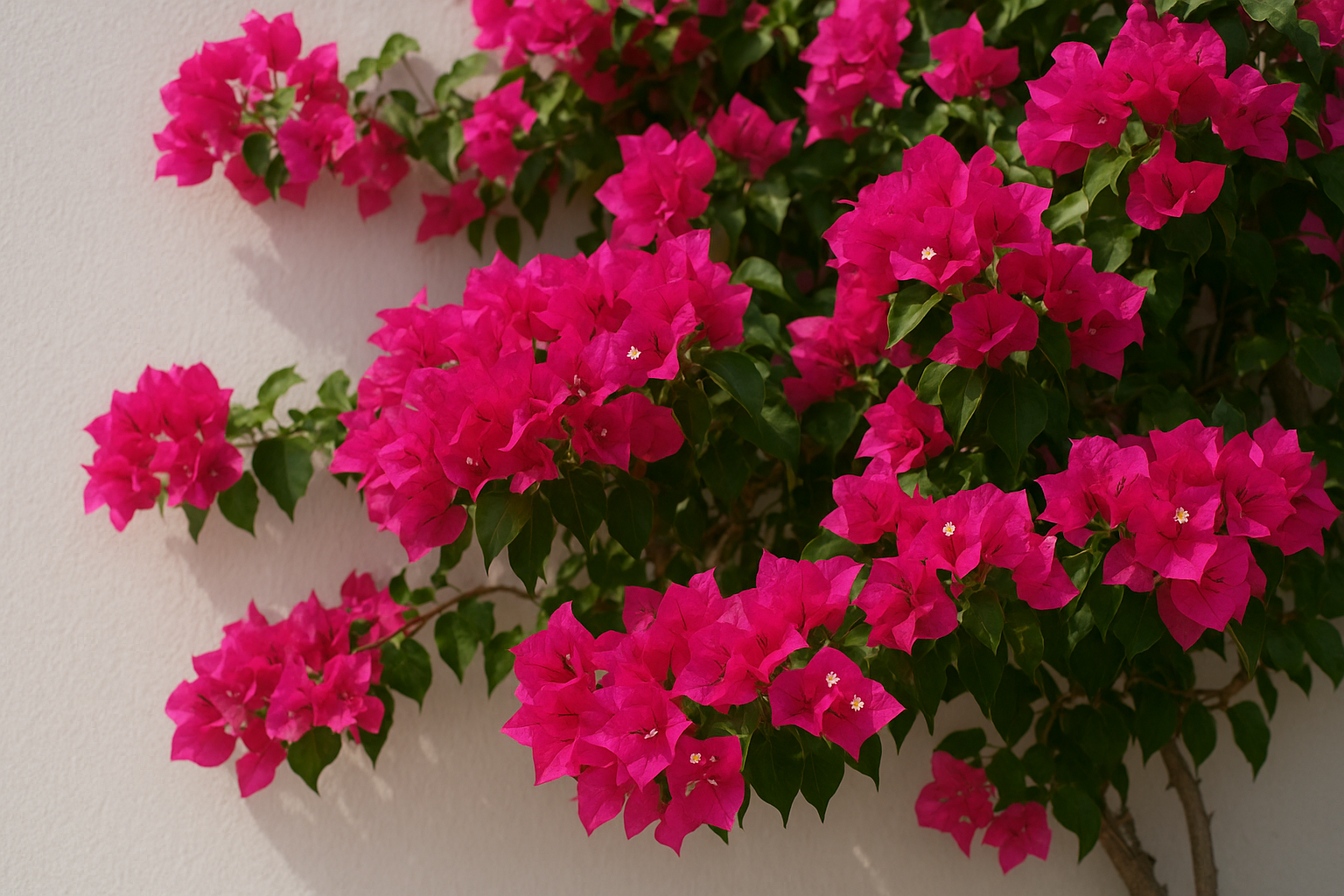
Bougainvillea (bunga kertas) is the best choice for a sunny, exposed spot where you want months of color with almost no care. It loves heat, tolerates drought, and flowers hardest when it is slightly neglected.
Why it suits Malaysian gardens
The color comes from papery bracts rather than true flowers, in magenta, pink, orange, red and white. Bracts hold up in rain better than delicate petals do. You can train the plant as a wall climber, a fence cover, a shrub or a pot specimen.
- Light: full sun, six hours or more
- Water: deeply, then let the soil dry
- Size: 1 to 2 m as a pruned shrub, several meters as a climber
- Best for: boundary walls, fences, sunny entrances, large pots
Care routine and problems
Water once or twice a week in dry spells and let rainfall cover the wet months. Holding back water between sessions pushes the plant to bloom. Feed lightly with a low-nitrogen fertilizer, because too much nitrogen gives you leaves instead of bracts. Prune after each flush of color, and wear thick gloves because of the thorns.
Bougainvillea resents root disturbance, so plant it with the root ball intact and never tease the roots apart. Caterpillars chew leaves and aphids gather on new tips. Hand-pick the first and rinse off the second with a hose. Flowering often pauses during long wet spells, which is normal.
Give bougainvillea full sun and a little less water than you think it wants.
What to look for when buying
Buy a plant that is already showing colored bracts, so you know the shade you are getting. Several named varieties exist, and unlabeled seedlings can disappoint.
Choose a well-branched plant with healthy, undamaged roots in a sturdy pot. If you want a climber, buy one already tied to a stake or small trellis and move it to a wall frame when you plant.
3. Hibiscus
Hibiscus (bunga raya), Malaysia's national flower, is the easiest big-bloom shrub for a sunny bed or boundary. It grows fast in heat and rain, and it flowers for much of the year with sun and an occasional feed.
Why it suits Malaysian gardens
Each bloom lasts about a day, but a healthy shrub keeps producing new ones, so the display never really stops. Flowers come in red, orange, yellow, pink and white. It is thirstier than bougainvillea, but still undemanding once established.
- Light: full sun
- Water: regular, more in dry weather
- Size: 1 to 3 m depending on variety and pruning
- Best for: hedges, boundary planting, poolside beds, large pots
Care routine and problems
Water two or three times a week during dry weather and mulch the base to hold moisture. Apply a balanced slow-release fertilizer every two to three months. Prune by about a third once or twice a year to keep the shrub dense, since flowers form on new growth.
Aphids, mealybugs and whiteflies cluster on new tips and buds. Rinse them off with a hose or spray soapy water, and watch for ants marching up the stems, which usually signal sap-sucking pests. Buds that drop before opening mean the plant is either stressed by dry soil or under pest attack.
Hibiscus needs sun, a deep soak in dry weeks, and a trim twice a year.
What to look for when buying
Choose a bushy plant with buds and glossy leaves, not a tall, leggy one. Turn a few leaves over and check the undersides for white flies, sticky residue or tiny insects, because pests often arrive from the nursery.
Buy by flower color if you can. Plants in bloom tell you exactly what you are getting. For a hedge, plant several 60 to 90 cm apart and let them knit together.
4. Ixora
Ixora is the pick for a low, colorful hedge or border in full sun. It produces clusters of small flowers in red, orange, yellow and pink for most of the year, and it takes heat and trimming well.
Why it suits Malaysian gardens
The dense, glossy evergreen leaves look tidy even when the plant is not flowering. Dwarf forms stay compact, so you rarely need heavy pruning. Ixora is a staple of Malaysian landscapes because it handles heat, humidity and heavy rain together.
- Light: full sun to light shade
- Water: moderate
- Size: dwarf types 0.5 to 1 m, taller types up to about 2 m
- Best for: low hedges, borders, foundation beds, mass planting
Care routine and problems
Water two or three times a week in dry spells and mulch the soil. Ixora prefers slightly acidic soil, so feed with a balanced fertilizer every three months and avoid piling lime or concrete rubble near the roots. Trim lightly after a flush of flowers to keep the hedge dense.
New leaves turning yellow while the veins stay green point to iron deficiency, usually from alkaline soil, not thirst. An acidifying fertilizer or chelated iron fixes it within weeks. Aphids and scale insects appear occasionally and are easy to wipe or rinse away.
Yellow leaves with green veins on an ixora mean soil chemistry, not a thirsty plant.
What to look for when buying
Pick plants with deep green, glossy leaves and several branches from the base. Pale or yellowing foliage in the nursery often means the plant has sat in poor soil too long.
For a hedge, buy several small plants rather than one large one. A 10 m border at 50 cm spacing needs 20 plants (10 ÷ 0.5), and the gaps close within a year or so.
5. Adenium (desert rose)
Adenium is the right choice for a pot on a hot, sunny balcony or patio where you can shelter it from the heaviest rain. It stores water in a swollen base and flowers freely in strong sun.
Why it suits Malaysian gardens
The thick, bottle-shaped base (the caudex) makes it a natural drought survivor, and bright trumpet flowers in pink, red and white sit above glossy leaves. In Malaysia the danger is too much rain, not too little sun. That makes it better suited to pots than to open ground.
- Light: full sun, six hours or more
- Water: only when the mix is fully dry
- Size: 0.5 to 1.5 m in a pot
- Best for: sunny balconies, patios, rooftops, container displays
Care routine and problems
Use a fast-draining, cactus-style mix and water only once it has dried out. Cut back further in the wet months. Feed every few weeks in the growing season with a low-nitrogen fertilizer to support flowers rather than leaves.
Base rot from waterlogged pots is the main failure. Raise the pot on feet and move it under an eave during long rainy spells. The sap is toxic, so wear gloves when pruning and keep the plant away from children and pets. Mealybugs and spider mites are the usual pests, and some leaf drop in dormancy is normal.
In Malaysia, rain kills adenium more often than drought, so give it shelter and drainage.
What to look for when buying
Choose a plant with a thick, firm caudex and no soft or darkened patches. A squeezed base should feel solid like a turnip, never spongy.
Buy it in a pot with drainage holes, and keep the base of the stem above the soil line when you repot. Grafted plants can carry several flower colors on one stem, but they usually cost more than plants grown from seed.
6. Areca palm
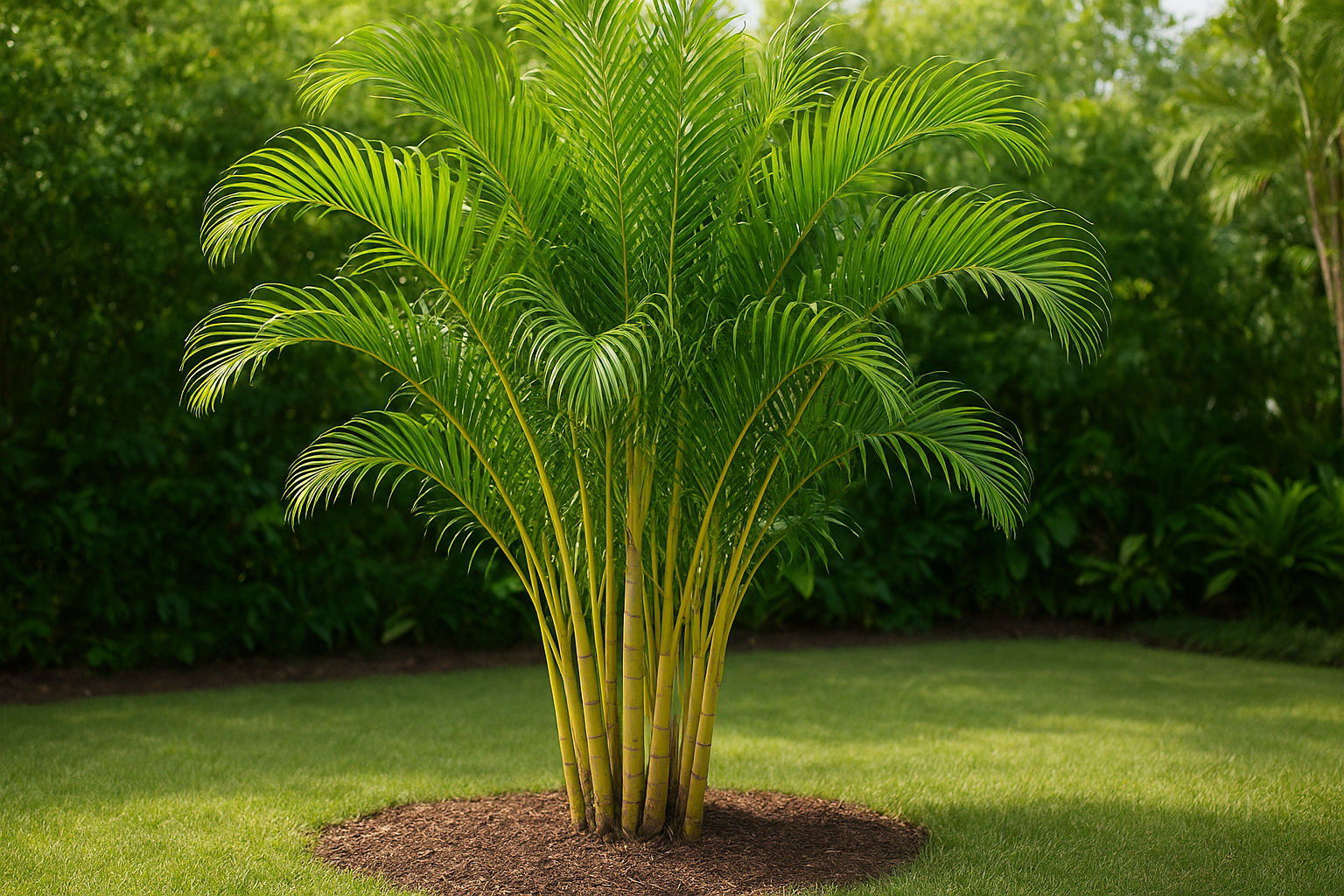
Areca palm (Dypsis lutescens) is the easiest way to get height and privacy in a sunny Malaysian garden. It grows in clumps, thrives in heat and humidity, and needs little beyond water and feeding.
Why it suits Malaysian gardens
Arching, feathery fronds on yellow-green canes give an instant resort look. Because it forms multi-stemmed clumps, a row works as a soft screen along a boundary without a fence. It copes with both open sun and partial shade.
- Light: full sun to partial shade
- Water: regular, keep evenly moist
- Size: several meters tall over time
- Best for: privacy screens, garden corners, pool surrounds, big pots
Care routine and problems
Water two or three times a week in dry weather and rely on rain in the wet months. Feed twice a year with a slow-release fertilizer, ideally a palm formula with magnesium and trace elements, because areca palms commonly show deficiencies. Mulch the base to keep roots cool.
Trim yellow lower fronds at the base to keep the clump tidy. Fronds that go uniformly yellow often point to too much sun in a pot or a nutrient shortage. Spider mites and scale can build up in dry spells, so rinse the fronds regularly with a hose.
A palm-specific fertilizer twice a year does more for areca than any amount of fussing.
What to look for when buying
Buy multi-stem clumps in the height you want. A 1 to 2 m clump gives you an immediate screen. Check that canes are firm and fronds are free from brown spotting or fine webbing.
Ask whether the plant was grown in full sun. Palms raised under shade cloth can scorch when planted in the open, so harden them gradually or plant them in morning sun first. Space clumps about a meter apart for a continuous screen.
7. Lady palm
Lady palm (Rhapis excelsa) is the best palm for shady corners, narrow side gardens and large pots. It grows slowly, stays tidy, and rarely needs pruning.
Why it suits Malaysian gardens
Glossy, fan-shaped leaves sit on slender, bamboo-like canes in a dense clump. It handles low light better than most palms, which makes it useful beside walls and under eaves where other plants sulk. Its neat form suits Balinese, Japanese and modern tropical layouts.
- Light: bright shade to filtered light
- Water: moderate, evenly moist
- Size: usually 1.5 to 3 m, slow growing
- Best for: shaded side gardens, courtyards, entrances, containers
Care routine and problems
Keep it out of strong afternoon sun, which scorches the leaf tips. Water two or three times a week in dry spells and ease off when rain arrives. A slow-release fertilizer every three to six months keeps the leaves dark green.
Brown leaf tips come from too much sun, dry air or salt buildup, and you can simply trim them off. In sheltered spots with little airflow, spider mites and scale may appear on the leaf undersides. Wipe the leaves and remove old, bare canes at the base once a year.
Lady palm wants shade and patience, so buy a bigger plant instead of waiting for a small one.
What to look for when buying
Expect to pay more for a large plant, because slow growth means nurseries invest years in each size. Buy the height you want now rather than hoping a small plant will catch up.
Look for uniform dark green leaves, no brown tips and no webbing under the foliage. Plant it at the same depth as in the pot, and do not expect it to fill in quickly the way areca palm does.
8. Bird's nest fern
Bird's nest fern (Asplenium nidus) is the best pick for dense shade under trees or beside walls. It grows naturally on tropical forest trunks, so Malaysian humidity suits it, and it needs almost no pruning.
Why it suits Malaysian gardens
Bright green, wavy, undivided fronds spread from a central crown like an open nest. The bold texture softens hard edges and fills shaded beds where grass and flowers will not grow. It also looks good mounted on a tree trunk or placed in a large pot on a covered patio.
- Light: shade to filtered light
- Water: keep evenly moist
- Size: about 60 cm to 1 m wide
- Best for: shaded beds under trees, covered patios, trunk mounting
Care routine and problems
Water the soil or growing medium around the plant, never into the central crown, where trapped water causes rot. Water two or three times a week in dry spells, and less in humid, shaded sites. A light feed a few times a year is enough.
Direct sun browns the frond edges quickly, so protect it from afternoon rays. Snails and slugs chew new fronds, and scale or mealybugs sometimes settle along the undersides. Leave the brown fuzzy center alone, because that is where new fronds emerge.
Water around the crown, never into it, and a bird's nest fern largely looks after itself.
What to look for when buying
Choose a symmetrical rosette with unbroken fronds and an undamaged center. Fronds tear easily in transport, so check for splits and brown crisped edges before you buy.
Carry the plant by its pot, not its fronds. If it has been grown in a shade house, keep it in shade for the first few weeks so the leaves do not burn.
9. Philodendron Xanadu
Philodendron Xanadu (Thaumatophyllum xanadu) is the easiest compact foliage plant for partial shade. It forms a tidy mound of glossy, lobed leaves around a meter tall, so it fills beds and big pots without pruning.
Why it suits Malaysian gardens
The deeply cut leaves give a lush, tropical look all year and contrast well with the broad, plain fronds of bird's nest fern. It prefers the dappled light under trees, pergolas and eaves. It is a good ground-level filler in shaded borders.
- Light: partial shade, filtered light
- Water: regular, moist but not soggy
- Size: about 1 m tall and as wide or wider
- Best for: shaded beds, borders, entrance pots, under pergolas
Care routine and problems
Water two or three times a week in dry weather in a loose, organic-rich soil that drains freely. Feed lightly every few months. Remove old lower leaves when they yellow naturally.
Yellow leaves almost always mean overwatering or poor drainage. Pale, bleached leaves point to too much sun. Scale insects sometimes sit on leaf backs, and a monthly check with a wipe of soapy water keeps them in check. The sap irritates skin and mouths, so wear gloves and keep pets from chewing.
Xanadu forgives most mistakes except standing water and afternoon sun.
What to look for when buying
Pick a plant that is full and wider than it is tall, with glossy leaves and short, sturdy stems. A leggy plant with long bare stems has been grown in too little light.
For mass planting, buy several and space them about 60 cm apart. Small plants fill in at a steady pace, so you do not need to pay for the largest size.
10. Frangipani
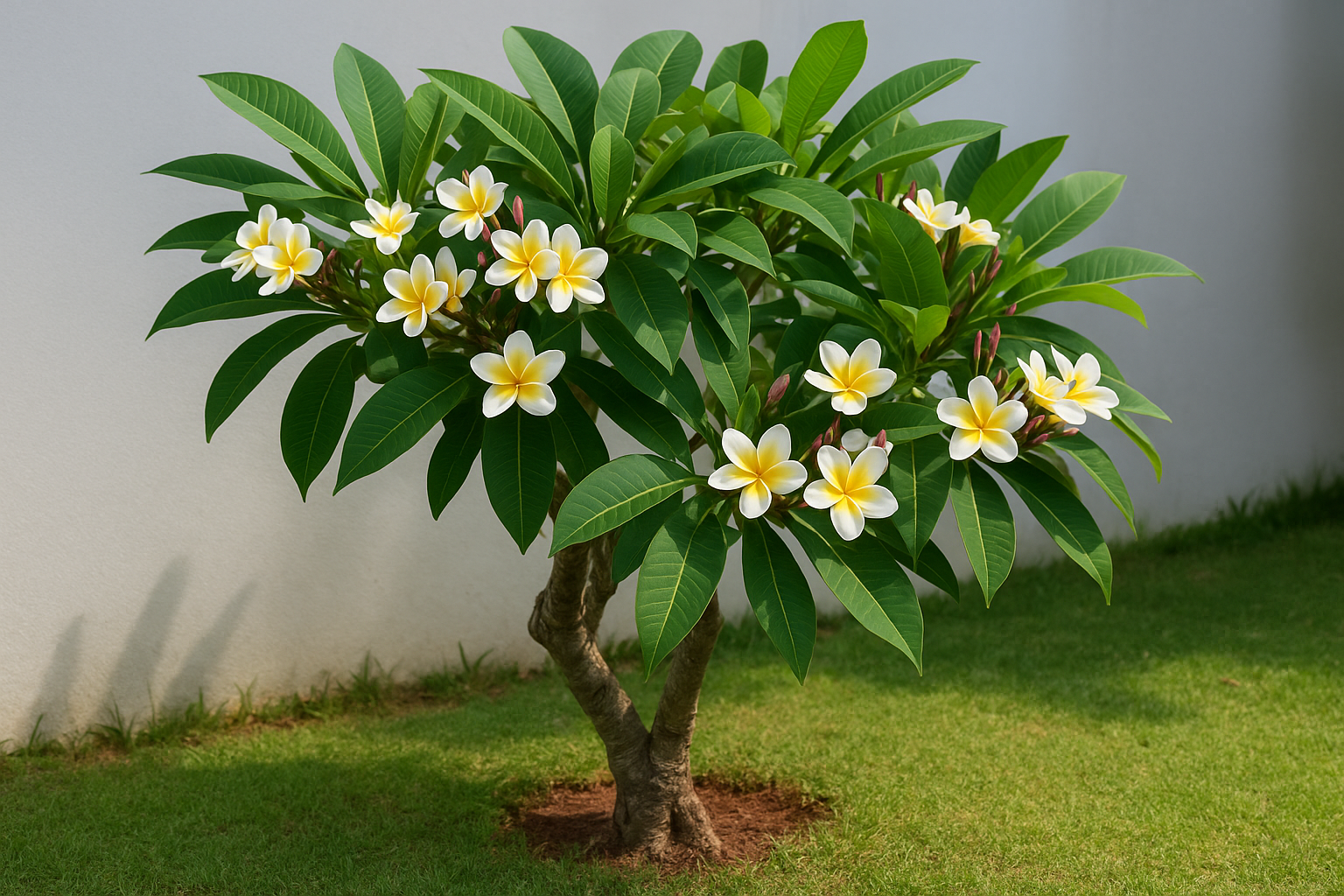
Frangipani (Plumeria, known locally as kemboja) is the best choice for fragrance and flowers in a sunny, well-drained spot. It is a drought-tolerant tree that thrives on neglect and flowers for much of the year.
Why it suits Malaysian gardens
Waxy, sweetly scented flowers come in white, yellow, pink and red on thick, blunt branches. The tree grows to about 3 to 5 m, with smaller dwarf forms for pots. It drops leaves in dry spells, which is normal. It suits entrances, lawns and sunny corners where you want a feature tree.
- Light: full sun, six hours or more
- Water: little, with excellent drainage
- Size: 3 to 5 m, smaller for dwarf types
- Best for: entrances, lawn specimens, sunny corners, large pots
Care routine and problems
Water once a week in dry months and cut back during rainy periods. Feed every three months with a bloom-boosting fertilizer rather than a high-nitrogen one, which gives leaves instead of flowers. Plant on a mound or raised bed if your soil is clay.
Waterlogged roots rot quickly, so drainage matters more than watering. Frangipani rust shows up as orange powder under the leaves. Pick off and bin the affected leaves and improve airflow around the tree. Caterpillars can strip leaves, and the milky sap irritates skin, so wear gloves when pruning.
Frangipani wants sun and drainage first, and water and fertilizer a distant second.
What to look for when buying
Buy a named variety, ideally in flower, so you know the color and scent. Seedlings vary and can take years to bloom, while grafted plants or rooted cuttings flower sooner.
Some families associate kemboja with cemeteries, so check with your household before planting one near the front door. If that is a concern, a sunny side corner or a pot near a seating area works just as well.
How to choose the right plant for your spot
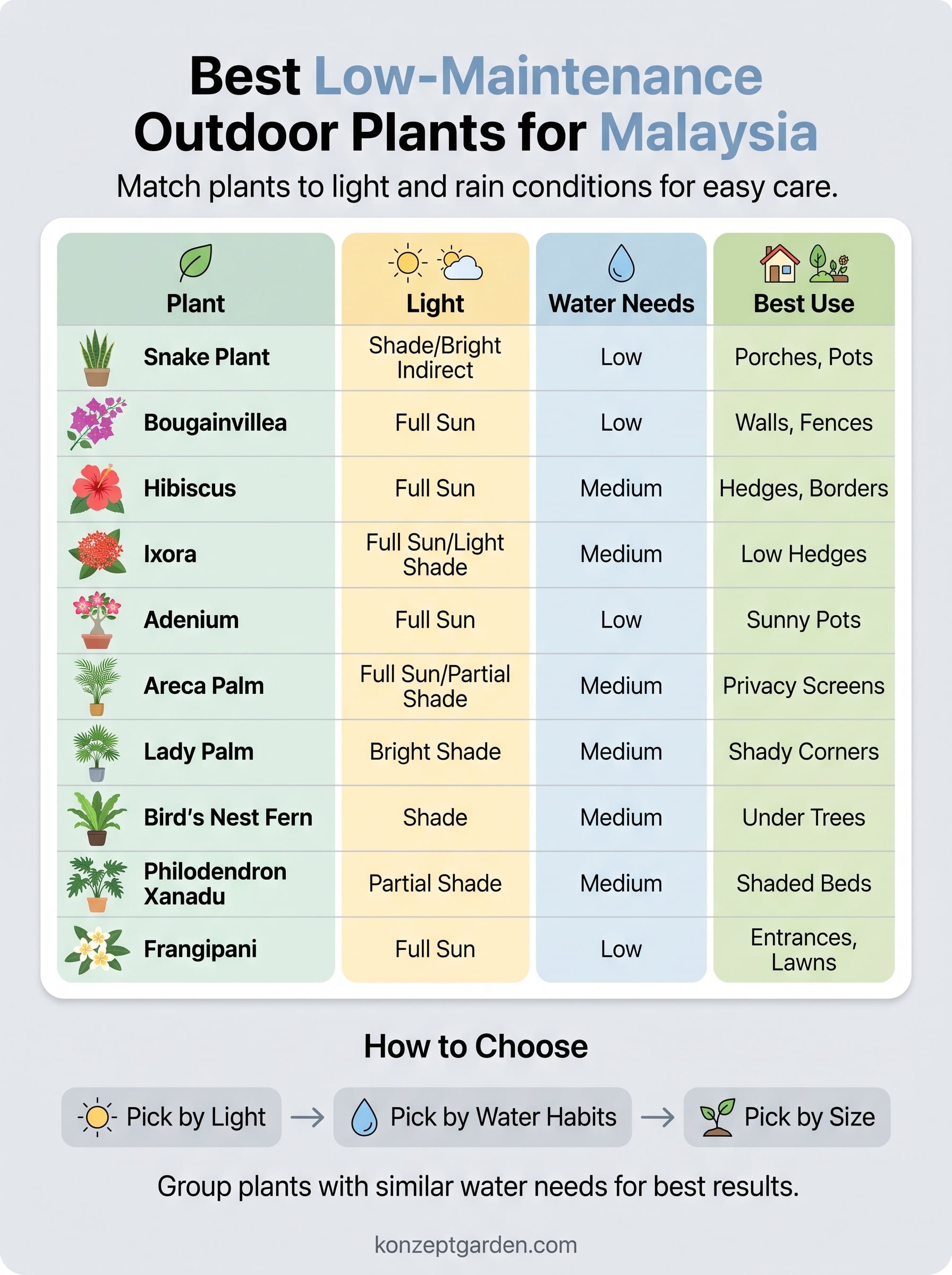
Pick by light first, then by how much time you have to water, then by size. Light decides which plants survive, and watering habits decide which ones stay healthy.
Side-by-side comparison
The table puts the ten plants together so you can match them to your garden.
| Plant | Light | Water needs | Mature size | Best use |
|---|---|---|---|---|
| Snake plant | Shade to bright indirect | Low | Up to about 1 m or more | Porches, pots |
| Bougainvillea | Full sun | Low | 1 to 2 m shrub, taller as a climber | Walls, fences |
| Hibiscus | Full sun | Medium | 1 to 3 m | Hedges, borders |
| Ixora | Full sun to light shade | Medium | 0.5 to 2 m | Low hedges |
| Adenium | Full sun | Low | 0.5 to 1.5 m | Sunny pots |
| Areca palm | Full sun to partial shade | Medium | Several meters | Privacy screens |
| Lady palm | Bright shade | Medium | 1.5 to 3 m | Shady corners |
| Bird's nest fern | Shade | Medium | 0.6 to 1 m wide | Under trees |
| Philodendron Xanadu | Partial shade | Medium | About 1 m | Shaded beds |
| Frangipani | Full sun | Low | 3 to 5 m | Entrances, lawns |
Matching plants to your light, rain and time
Group plants with similar water needs in the same bed. Bougainvillea, adenium and frangipani like to dry out, while hibiscus, ixora and the palms prefer steady moisture. Mixing them in one bed means one group always suffers. Watch your site for a day first, because a spot that feels shady at 9 am may take full sun by 2 pm.
If you travel often, containers give you control. You can move an adenium under cover when the monsoon arrives. A self-watering planter such as the Ziant Hydro Planter, which keeps plants hydrated for up to two weeks, suits plants that like even moisture, like lady palm or Xanadu. Avoid it for adenium, which wants to dry out.
Match plants to your light and rain first, and the maintenance takes care of itself.
Start with your light, then choose
Low maintenance outdoor plants in Malaysia work when the plant suits the spot, not when it is simply tough. Sun lovers such as bougainvillea, hibiscus, ixora, adenium and frangipani reward you with color. Areca palm gives height. Snake plant, lady palm, bird's nest fern and Xanadu keep shade looking lush. Watch drainage and rain, and most of the work disappears.
If you would rather have a plan than a shopping list, talk to Konzept Garden's team. We ask for photos and measurements of your site to prepare a quotation, and our botanist consultations can help you match plants to the light and drainage you actually have.