
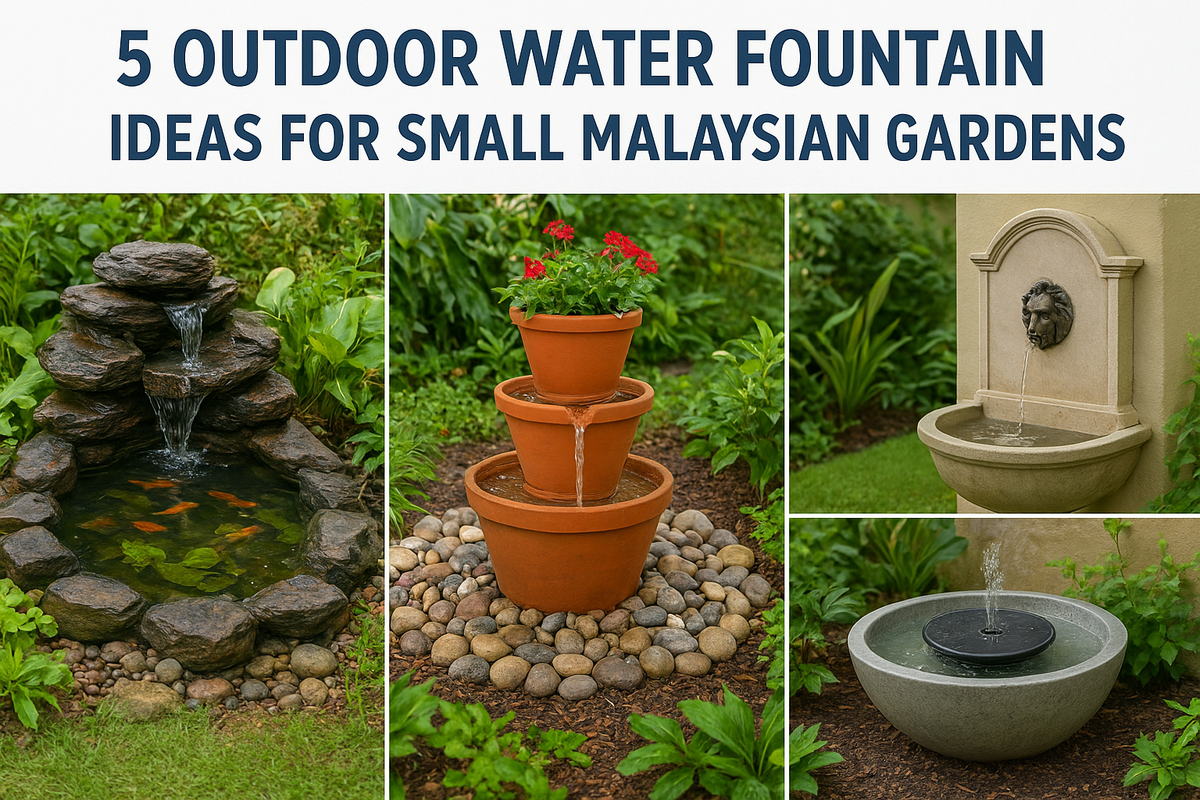
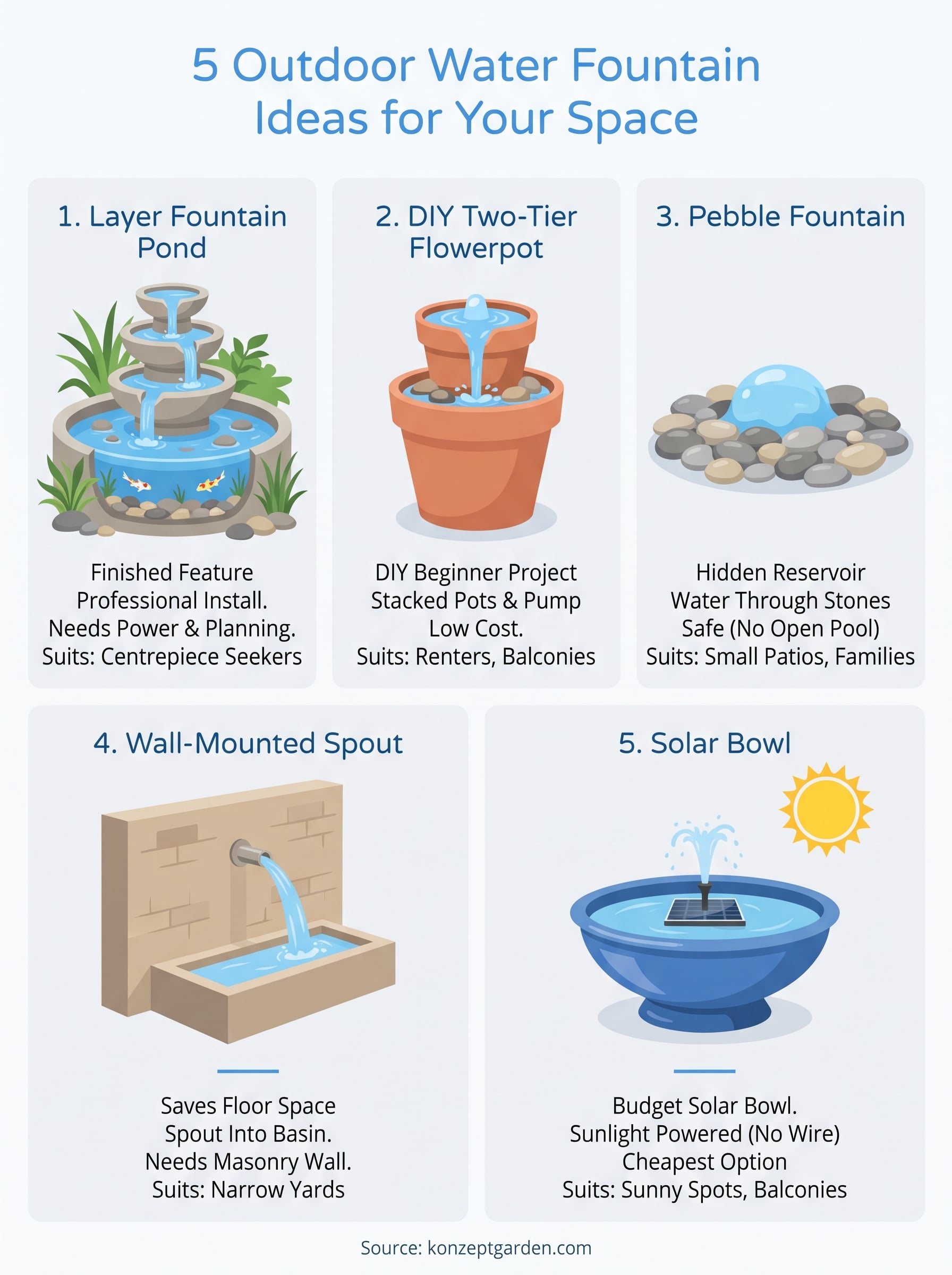
The best outdoor water fountain ideas match the fountain to your space, your power supply and the upkeep you will actually do. In Malaysia's heat and heavy rain, that means choosing a design that keeps water moving and is easy to clean. A layer fountain pond suits you if you want a finished feature installed for you. A DIY flowerpot fountain suits a beginner with one free weekend. A pebble fountain suits a tiny patio where safety matters. A wall spout fits a narrow terrace yard, and a solar bowl suits a tight budget with no wiring.
Most fountain galleries show you dozens of photos and leave out the hard parts. They rarely tell you how much room a design needs, where the pump goes, or what happens when a tropical downpour fills the basin. They also skip the mosquito risk that comes with still water. Choosing from pictures alone is how people end up with a green, silent fountain after two months.
This article gives you five ideas that work in a Malaysian garden, patio or small backyard. Each one explains how it works, who it suits, what it costs and what upkeep to expect. Konzept Garden designs and builds outdoor spaces here, so the advice reflects local conditions rather than a generic catalogue.
1. Layer fountain pond for a finished feature
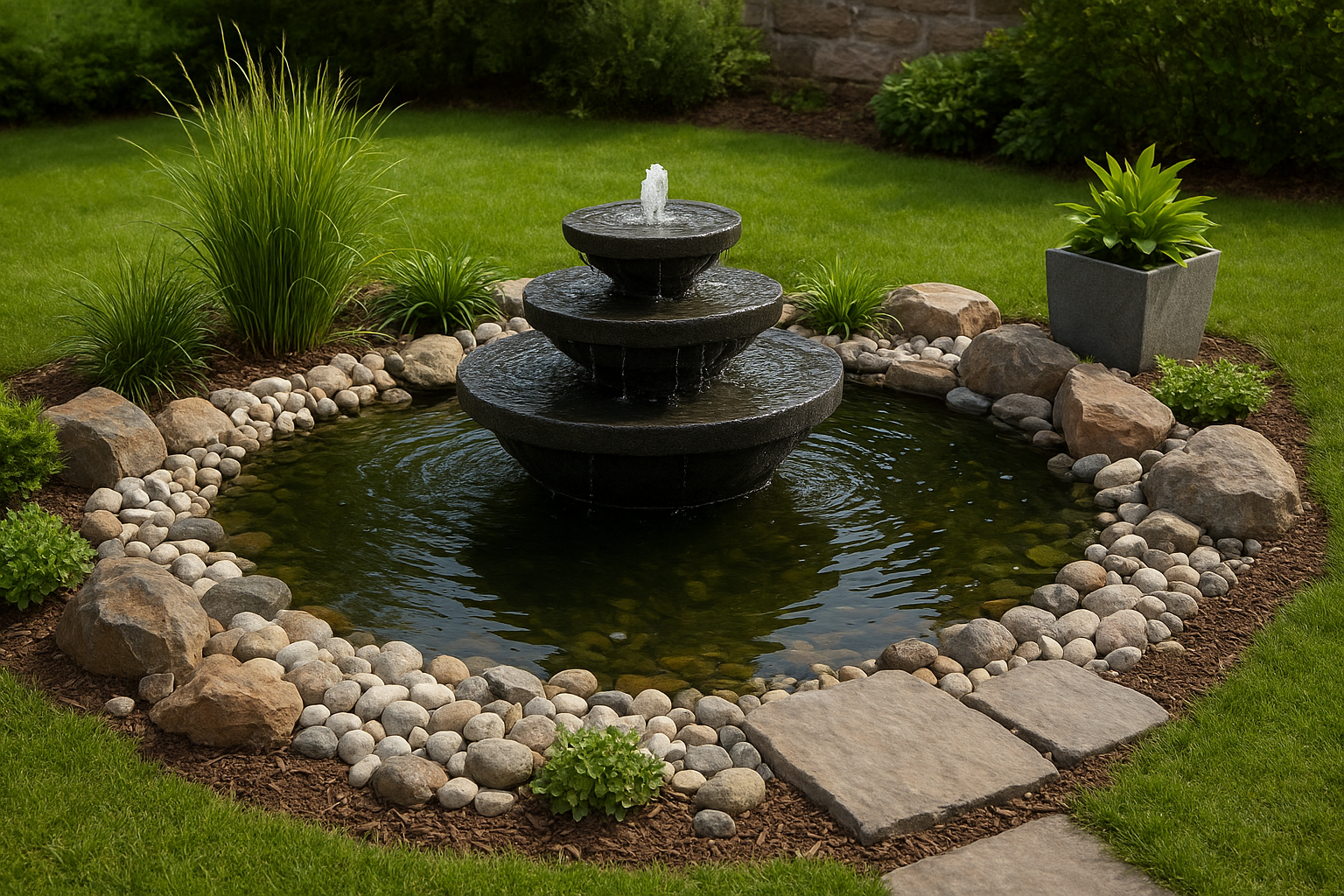
A layer fountain pond pairs a shallow pond with a tiered fountain that spills water into the basin below. It is the most complete idea on this list because the pump, filter and landscaping are planned together.
How it works and what you need
A pump pulls water from the pond and pushes it up through stacked layers. The water falls back into the pond, and a pond filter system keeps it clear. Pebbles and plants hide the hardware.
Konzept Garden's Himalaya Rock Fish Pond Mini is built this way. It measures 162 x 101 x 30 cm and costs RM5,350. The price includes:
- One layer fountain, one filter and one pump
- Stepping stone, white and grey pebbles, a planter box and good bacteria
- Installation, with no hacking required
- Two plug points, which you need to have ready
Plan for a footprint of at least 9' x 6.5' (about 2.7 x 2 m) without landscaping, or 10' x 7.5' (about 3 x 2.3 m) with it.
A layer fountain looks effortless only when the pump, filter and plug points are planned before the first stone goes down.
Who it suits and what it costs
This idea suits homeowners with a patch of lawn or paving who want a centrepiece and do not want to build it themselves. Take the minimum footprint above and add walking space. A 3 x 2.3 m footprint is a realistic area to set aside for the mini pond with its landscaping.
Budget about RM5,350 for this size, with larger Zen Bio ponds running up to RM12,950 for the goldfish pond. Konzept Garden charges a RM200 site visit fee, deducted from the final quotation if you proceed. Send photos and measurements of your space first. A proposal usually follows within 4 to 5 days of the visit. Because it is a fish pond, you will need to check the filter and top up the water regularly.
2. DIY two-tier flowerpot fountain
A two-tier flowerpot fountain is the best DIY outdoor water fountain idea for beginners. You stack two ceramic pots, hide a pump in the lower one and let water bubble over the rocks. It takes about one weekend.
How it works and what you need
The large lower pot is the reservoir. You seal its drain holes with stoppers and clear silicone, then let the caulk cure overnight. A plastic saucer sits inside the pot's rim as the second tier, with a hole drilled for the pump tube. The smaller pot sits on top of that.
A typical build uses these parts:
- A 15.2-inch (about 39 cm) ceramic planter and a 9.8-inch (about 25 cm) one
- A bubbler kit with pump and a 7 to 8-inch (18 to 20 cm) plastic pot to prop the pump up
- A plastic saucer, drain stoppers, clear silicone and a 1-1/8-inch (about 29 mm) spade bit
- Washed river stones
Rinse the stones before use. Rocks straight from the bag put grit in the water and clog the pump filter.
Seal every drain hole properly and let the silicone cure overnight, because a leaking lower pot is the one failure that ruins this build.
Who it suits and what it costs
It suits renters, balcony owners and anyone who wants a first project with low risk. The main costs are the pump kit and the two pots. Prices vary by shop, so total them before you buy. If you already have pots, the build gets very cheap.
Fill the lower pot to about 1 inch (2.5 cm) below the rim. Malaysian downpours can overfill it, so put it under a roof edge or leave extra headroom. Every few weeks, clean the pump filter in warm soapy water to keep the flow steady.
3. Pebble fountain with a hidden reservoir
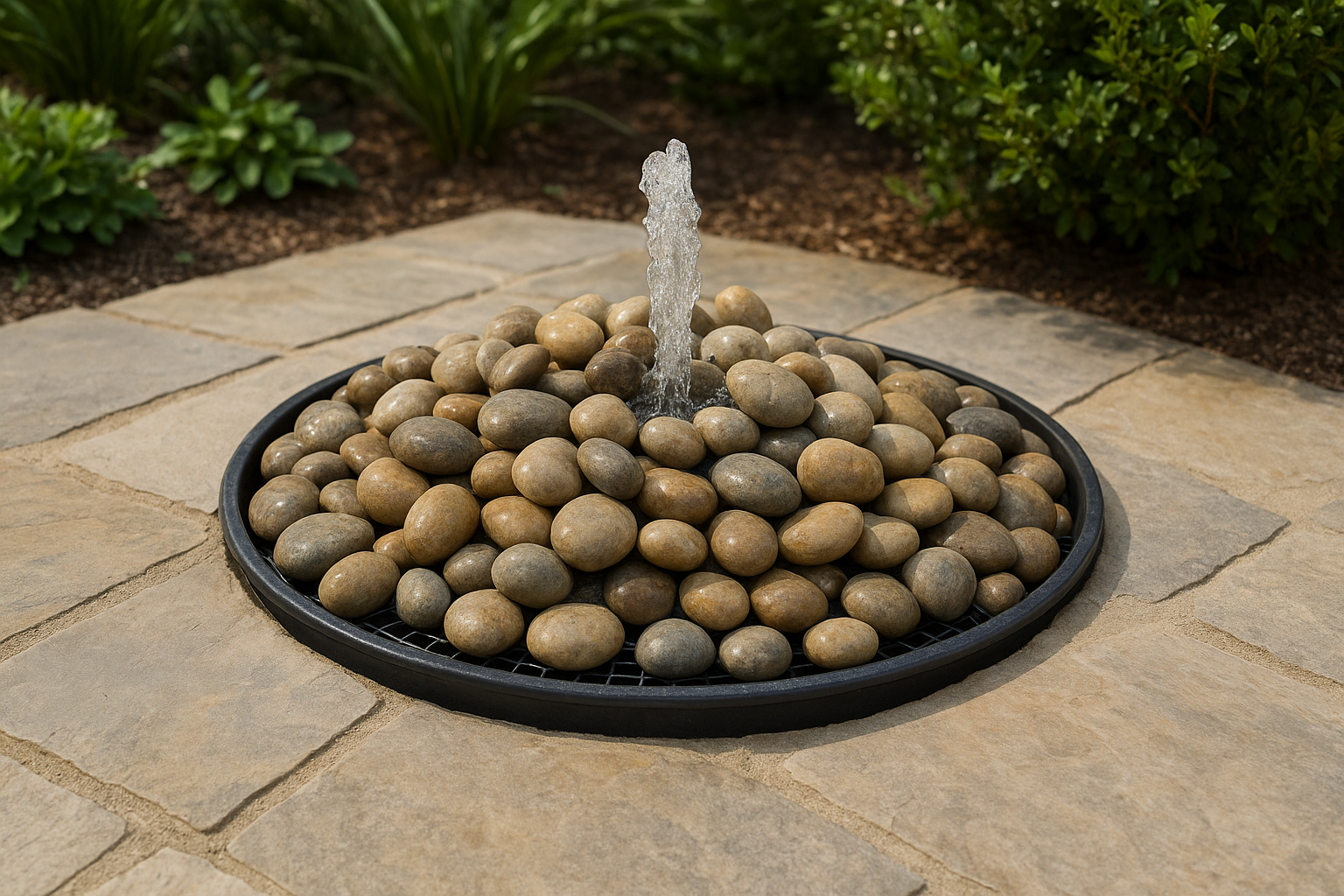
A pebble fountain hides the water under a layer of stones. A bubbler pushes water up through the pebbles, and it drains back into a buried reservoir. You see and hear moving water, with no open pool.
How it works and what you need
You sink a waterproof basin or tub into the ground, or set it flush into a paved area. A submersible pump sits inside with a bubbler on top. A sturdy stainless grate or mesh spans the opening, and pebbles go over it. Choose pebbles larger than the grate openings so nothing falls through.
You will need:
- A watertight basin large enough to hold the pump with room for water
- A pump with an adjustable flow, so you can set the bubble height
- A grate or mesh that carries the weight of the stones
- Washed pebbles and an outdoor socket with RCD protection fitted by a qualified electrician
With the water hidden beneath stones, a pebble fountain gives you sound and movement with far less splash, mess and open water.
Who it suits and what it costs
This idea suits small patios, courtyards and homes with young children or pets. There is no open pool, so it is safer than a pond. You also give mosquitoes much less open surface to breed on.
Costs stay modest because you buy only a basin, pump, grate and stones. The reservoir is still water, so top it up often, since hot days evaporate more than you expect. Place it in partial shade to slow algae growth, and rinse the pebbles once in a while.
4. Wall-mounted spout fountain for narrow yards
A wall spout fountain sends a stream from a fixed spout into a basin below. It uses the vertical surface instead of floor space, which makes it a strong outdoor water fountain idea for a narrow terrace-house yard.
How it works and what you need
The pump sits in the basin and pushes water up a tube hidden behind the wall or a freestanding panel. The water falls from the spout back into the basin. A short drop of about 20 to 30 cm keeps the sound pleasant and limits splash.
Key points to plan:
- A solid masonry or stone surface that takes the weight and the water, since painted plaster will stain
- A basin wider than the stream's reach, so water does not splash outside it
- A pump with an adjustable flow, and tubing hidden behind the wall
- A nearby outdoor socket with RCD protection
Size the basin by how far the water splashes, not by how the spout looks, or the ground around it will always be wet.
Who it suits and what it costs
It suits homes with a plain boundary wall, a feature wall or an entrance courtyard. You can pair it with planting around the base to soften the edges. It also gives a small yard a focal point at eye level, which helps it feel larger.
Cost depends on the spout and basin you choose, so compare a few before buying. Over time, mineral marks will build up on the wall below the spout, so wipe them regularly. Clean the basin and pump every few weeks, and drain the basin if you leave home for a long trip.
5. Solar bowl fountain on a budget
A solar bowl fountain is the cheapest way to add moving water. You float a small solar pump in a wide glazed bowl or urn, and sunlight powers it. There is no wiring and no electrician.
How it works and what you need
A floating solar pump has a small panel that powers a spray nozzle. Place the bowl in direct sun, and the water bubbles or sprays while the sun is out. It stops at night and slows under heavy cloud.
All you need is:
- A wide, watertight bowl or urn
- A floating solar pump kit
- A few pebbles or a flat stone so birds can perch
- A spot that gets several hours of direct sun
If you own a bowl already, a solar pump is often the only thing you need to buy, which makes this the lowest-cost idea here.
Who it suits and what it costs
It suits balconies, rented homes and anyone who wants to test whether they enjoy a fountain before spending more. A small pump kit is usually the only purchase when you already own a suitable bowl.
The trade-off is reliability. The pump only runs in daylight, and the stream is gentle. Since the water is shallow and still when the pump stops, empty and scrub the bowl at least once a week to stop mosquito breeding. Wipe the panel now and then so dust does not weaken the flow.
Choosing your first fountain
Pick the idea that fits your space and your patience. A layer fountain pond gives you a finished centrepiece, a flowerpot fountain gives you a cheap weekend project, and a pebble fountain keeps water hidden and safe. A wall spout saves floor space, and a solar bowl costs the least. In Malaysia, favour moving water, some shade and regular cleaning.
If you want help planning a fountain or pond that fits your garden, talk to Konzept Garden's team. Send photos and measurements of your space to get a quotation started.