
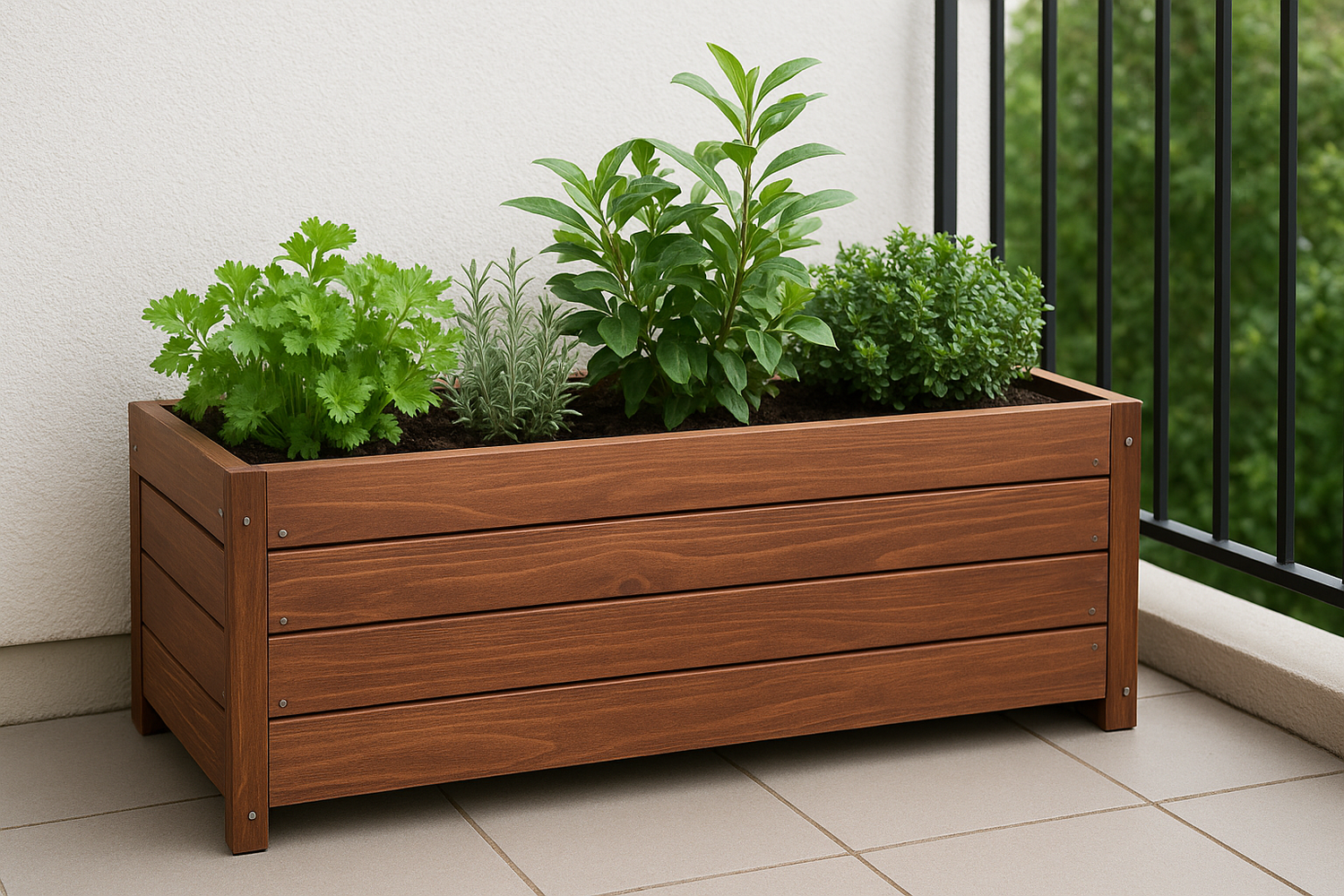
So, what is a planter box, exactly? It sounds simple enough, a container you put plants in. But there's more to it than that, and understanding the details can save you from picking the wrong setup for your space. A planter box is a self-contained structure designed to hold soil and plants in a defined area, whether that's on a balcony, a patio, along a driveway, or inside a commercial building lobby.
At Konzept Garden, we work with planter boxes daily, from integrating them into full landscape designs to offering our own Ziant Hydro Planter self-watering systems. We've seen firsthand how the right planter box choice shapes a garden's look, function, and long-term health. The wrong choice? That usually means drainage problems, root damage, or wasted money.
This article breaks down what a planter box actually is, what it's used for, why it benefits your plants, and, just as important, how it differs from raised garden beds and retaining walls. Whether you're planning a small herb setup or a full outdoor redesign, these distinctions matter before you commit to a design or purchase.
Why people use planter boxes
People reach for planter boxes for a wide range of practical reasons. Whether you're working with a compact apartment balcony or a sprawling commercial courtyard, a planter box gives you a defined, manageable growing space without the commitment of digging into the ground. They work well for anyone who wants greenery without the mess or permanence of in-ground planting.
Space and flexibility
One of the biggest draws is how well planter boxes work in tight or unconventional spaces. If your outdoor area is paved, tiled, or sits on an elevated surface like a rooftop terrace, you simply can't plant directly into the ground. A planter box solves that problem immediately. You can position, cluster, or rearrange them to suit your layout as your needs change, which is something you can't do once plants are in the ground.
Planter boxes are one of the few garden solutions that give you full placement control without any permanent changes to your property.
For commercial spaces in Malaysia, this flexibility matters even more. Property managers often rotate seasonal plants or brand-aligned greenery to keep a lobby or courtyard looking fresh, and planter boxes make that process simple. In residential settings, you can also shift boxes to follow changing sun patterns or rearrange your outdoor space without starting from scratch.
Control over growing conditions
Understanding what is a planter box also means recognizing what it gives you direct control over. When you plant directly in the ground, you work with whatever soil conditions your site has, whether that's compacted clay, sandy fill, or nutrient-poor subsoil. A planter box lets you start with a custom soil mix suited to your specific plants, which directly affects how well they grow and how long they thrive.
Your control extends to drainage, depth, and moisture retention as well. If your plants need well-draining, loamy soil but your property sits on heavy clay, a planter box bypasses that problem entirely. This makes planter boxes especially valuable for growing herbs, vegetables, or specialty plants with precise soil or pH requirements.
What makes a planter box different
People often mix up these terms, but planter boxes, raised garden beds, and retaining walls are three distinct structures. Knowing the difference helps you make the right call for your space before you commit to a purchase or design.
Planter boxes vs. raised garden beds
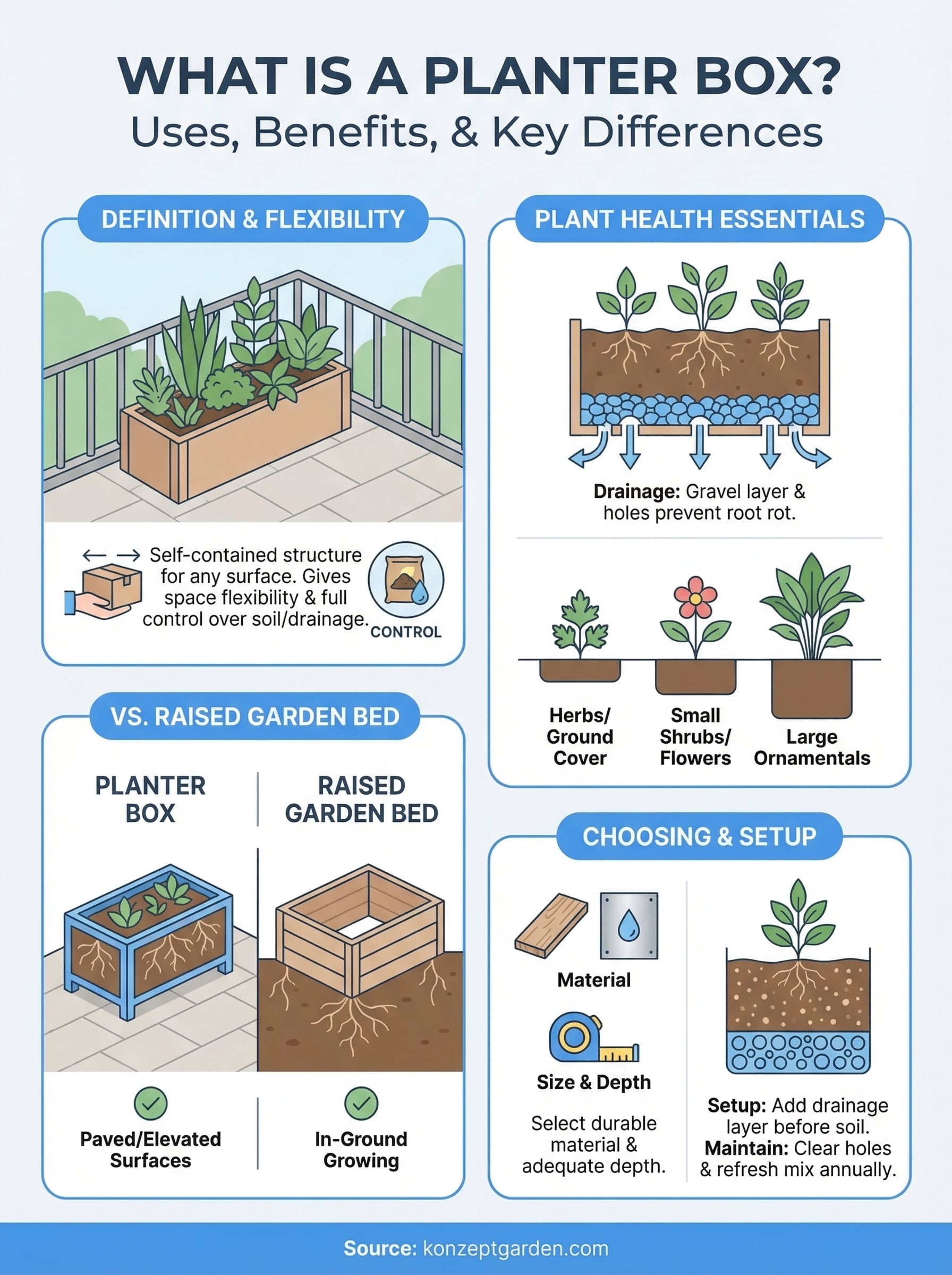
A planter box is a fully enclosed container with a solid base and built-in drainage. It sits on any surface and holds soil independently from the ground below. A raised garden bed is typically an open-bottomed frame placed directly on soil, letting roots reach into the native ground. That difference makes raised beds better for in-ground growing, while planter boxes work anywhere you lack direct soil access.
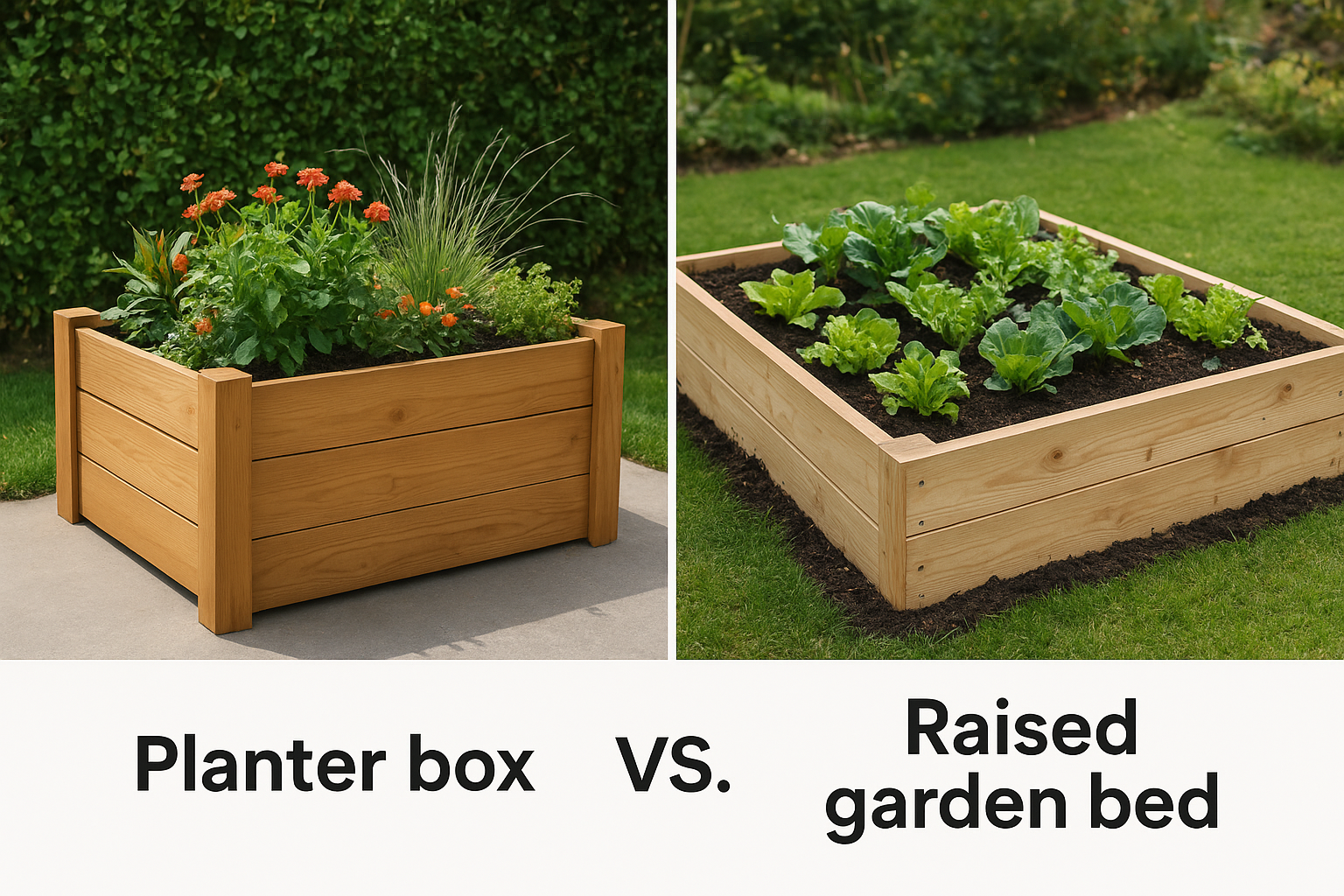
If your surface is paved or elevated, a planter box is the only enclosed option that actually works.
Planter boxes vs. retaining walls
Understanding what is a planter box also means separating it from retaining wall structures. Retaining walls hold back soil on slopes to prevent erosion; their primary function is structural, not horticultural. Some retaining walls include planting pockets, but the wall itself exists to manage terrain, not grow plants. A planter box exists purely to support plant growth in a controlled, contained environment, making it a gardening tool first and an aesthetic element second.
How planter boxes work for healthy plants
Understanding what is a planter box means recognizing why it supports plant health so effectively. The enclosed structure gives you direct control over soil quality, drainage, and root space, which are the three factors that matter most for plants growing in containers.
Drainage keeps roots alive
Waterlogged roots kill container plants faster than almost any other issue. A proper planter box has drainage holes at the base that let excess water escape before it saturates the root zone. Adding a thin gravel layer beneath your soil mix improves this further.
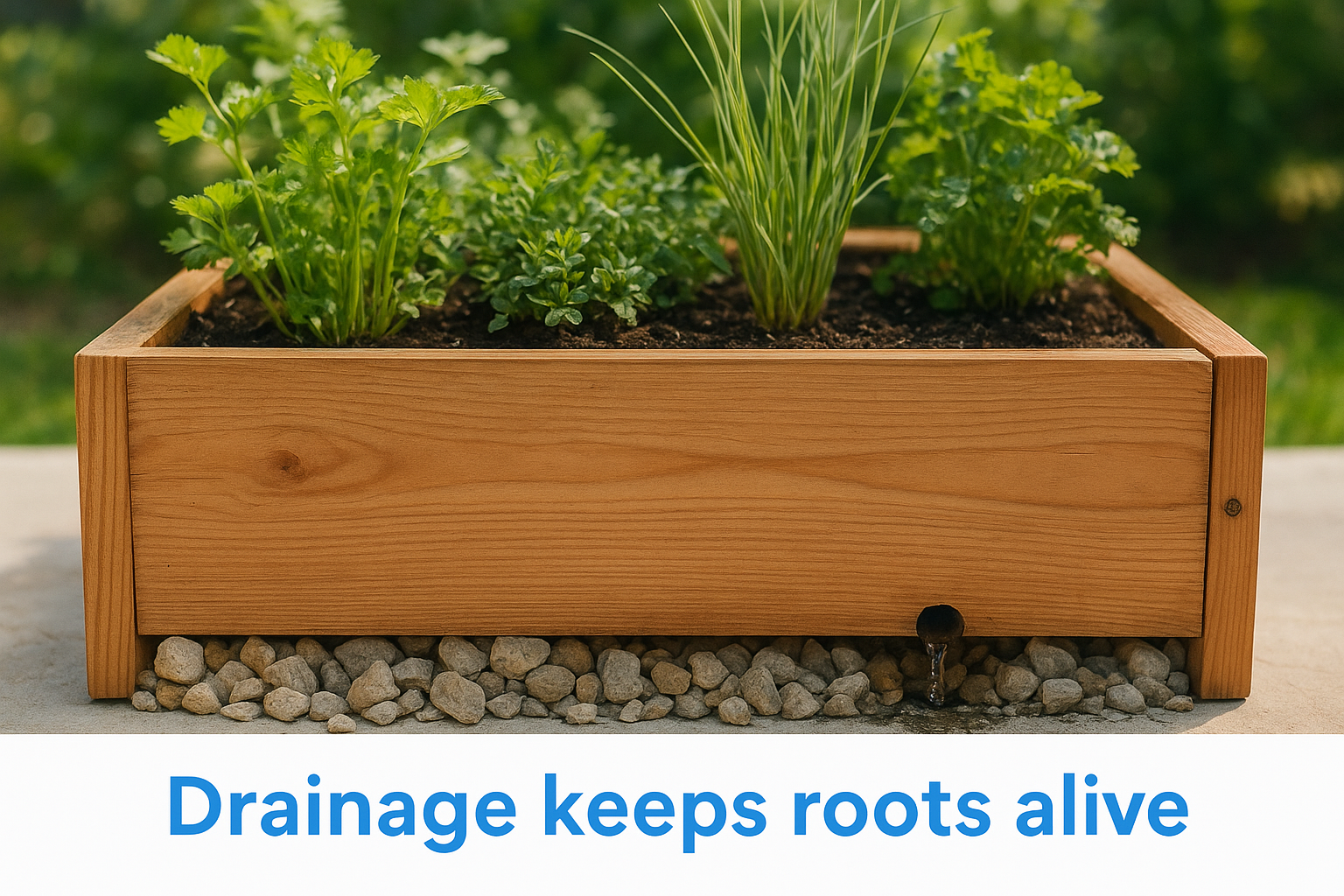
Good drainage separates a healthy planter box from a struggling one before a single plant goes in.
- Place a 3 to 5 cm gravel layer at the base before adding soil
- Use a well-draining potting mix suited to your specific plants
- Clear drainage holes regularly to keep water moving freely
Soil depth and root space
Root depth determines how well plants establish and perform over time. Shallow boxes suit herbs and ground covers, but larger shrubs and ornamentals need at least 30 to 45 centimeters of depth to build a strong root system.
Matching your box depth to your plant's actual requirements reduces watering frequency and prevents root stress. Your plants grow more steadily when they have adequate space without competing for room inside the container.
How to choose the right planter box
Picking the right planter box comes down to three things: material, size, and intended use. Getting these right from the start saves you from replacing boxes prematurely or dealing with plants that never quite thrive. Think about your outdoor environment, what you plan to grow, and how much upkeep you're willing to handle before you commit to a purchase.
Material matters
Your material choice affects durability, weight, and thermal performance in ways that directly impact your plants. Timber looks natural and fits well in garden settings, but it needs proper treatment to resist Malaysia's humidity and heavy rainfall. Fiberglass and powder-coated metal hold up better in harsh outdoor conditions and require less maintenance over time. Self-watering options, like the Ziant Hydro Planter, add a built-in reservoir that reduces how often you need to water.
The material you pick determines how long your planter box performs before it needs replacing or significant upkeep.
Size and depth
Plant size and root depth should drive your size decision more than aesthetics alone. Part of understanding what is a planter box is recognizing that containers need to match the mature root requirements of what you're growing. Use this as a quick guide:
- Herbs and ground covers: 15 to 20 cm depth
- Flowering plants and small shrubs: 25 to 35 cm depth
- Large ornamentals: 40 cm or deeper
How to set up and maintain a planter box
Setting up a planter box correctly from the start prevents most of the problems you'll encounter down the line. Position your box where it matches your plant's light requirements before you add any soil. Once you understand what is a planter box structurally, the actual setup takes far less time than most people expect, and doing it right the first time means fewer fixes later.
Getting the setup right
Start with drainage material at the base, typically a 3 to 5 cm layer of gravel or perlite, before filling with your potting mix. Fill the box to about 2 to 3 cm below the rim to leave space for watering without overflow. Press the soil lightly around each plant's root ball to remove air pockets, which dry out roots and slow establishment significantly in the first few weeks.
A solid setup takes under 30 minutes but prevents months of troubleshooting later.
Keeping your planter box in good shape
Routine maintenance keeps your planter box performing well through each season. Check drainage holes monthly to confirm they haven't clogged with compacted soil or root growth. Refresh your potting mix every 12 months, since nutrients deplete and soil structure breaks down over time. In Malaysia's humid climate, also watch for mold or algae buildup on box walls, which usually signals poor airflow or consistent overwatering that needs correcting quickly.
Wrap-up and what to do next
Now you know what is a planter box and how it differs from a raised garden bed or retaining wall. It's a fully enclosed, self-contained container that gives you direct control over soil quality, drainage, and root space, no matter what surface you're working with. You've also seen how material, depth, and proper setup determine whether your planter box performs well over the long term or becomes a maintenance headache.
The right planter box makes a real difference to both plant health and your outdoor space's overall look. Whether you're setting up a compact balcony garden or designing a commercial courtyard, matching your container to your plants and environment is the step most people skip. If you want expert guidance on choosing and integrating planter boxes into your outdoor space, talk to our landscape design team and get a free consultation today.


