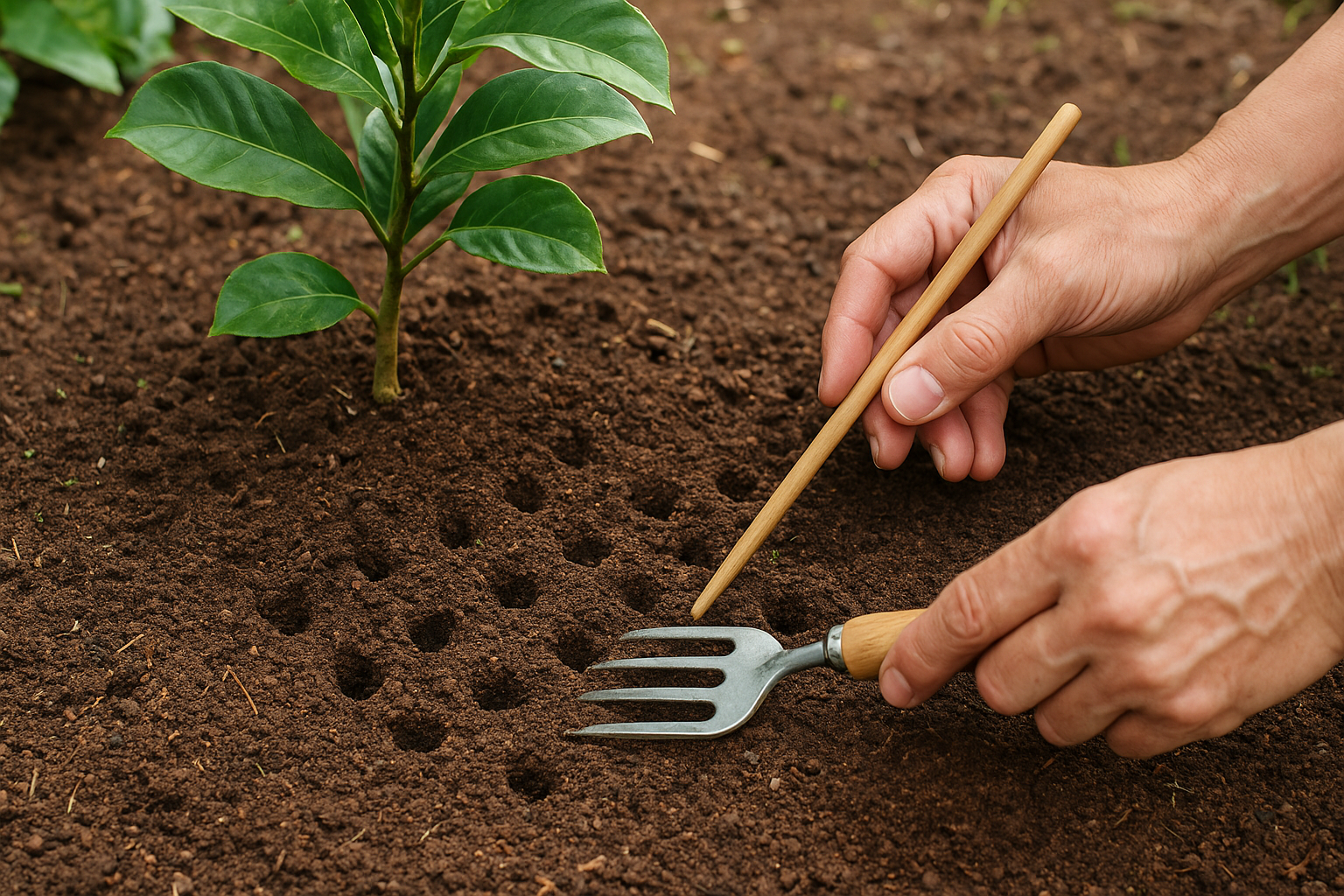

If your garden soil feels hard and compacted, water pools on the surface instead of soaking in, and your plants seem to struggle no matter what you do, the root cause is often poor aeration. Understanding soil aeration meaning starts with a simple idea: your soil needs to breathe. Specifically, air must reach the root zone so that roots, microorganisms, and organic matter can function the way they should.
At Konzept Garden, we deal with soil conditions across Malaysian residential and commercial landscapes every day. Heavy tropical rain, foot traffic, and clay-heavy soils make compaction one of the most common problems we encounter during site assessments. It's also one of the most fixable, once you know what to look for and how to respond.
This article breaks down exactly what soil aeration is, why it matters for plant health and soil biology, how to spot the signs that your soil needs it, and the practical methods you can use to fix it. Whether you're maintaining a home garden or planning a larger landscape project, this knowledge will save you time and keep your plants thriving.
What soil aeration means
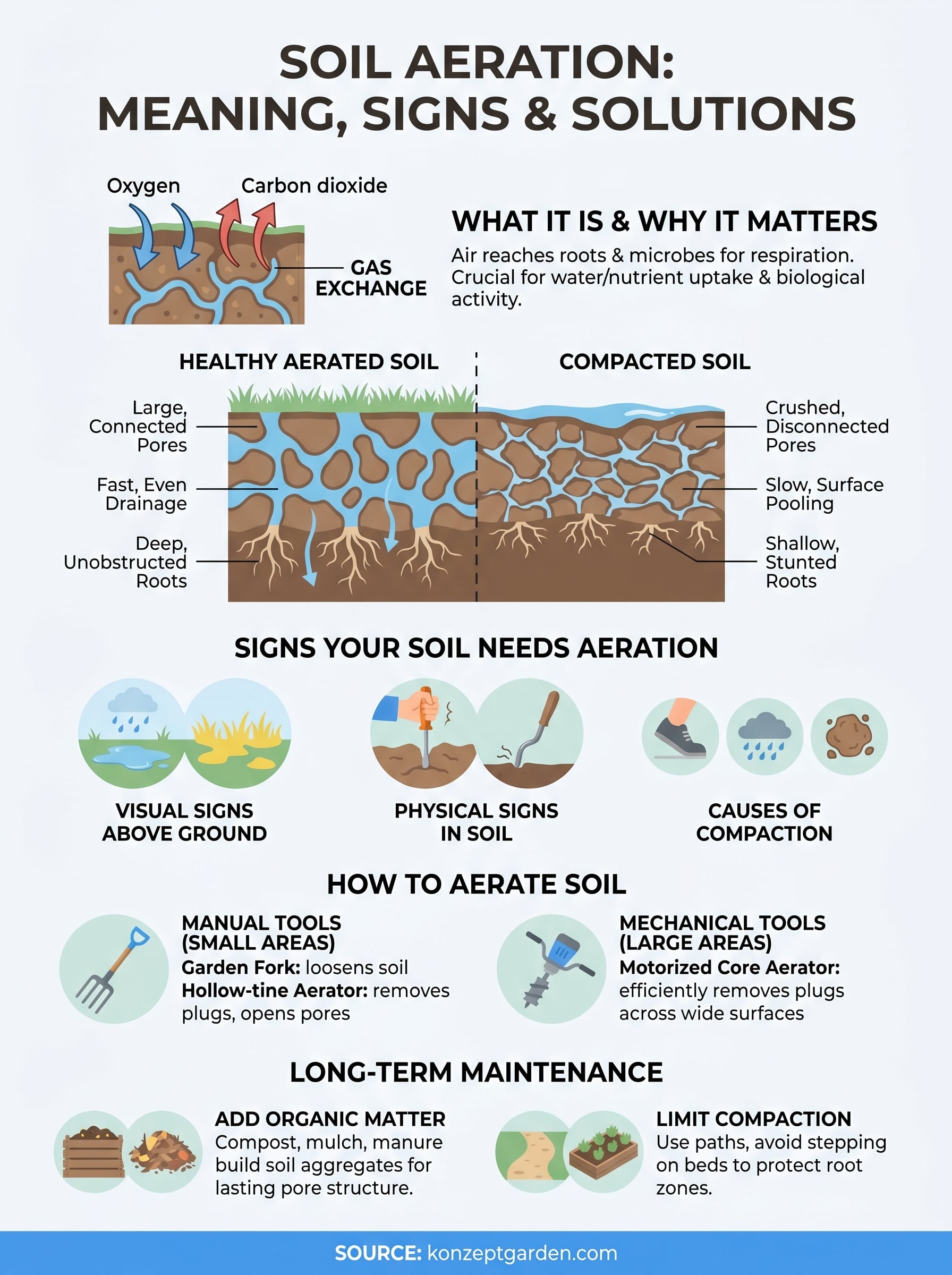
Soil aeration refers to the exchange of gases between soil and the atmosphere. Oxygen moves into the soil while carbon dioxide moves out. Roots and soil microorganisms consume oxygen as they work and release carbon dioxide as a byproduct. Without a constant supply of fresh air reaching the root zone, this gas exchange stalls, and plant health deteriorates quickly. The full soil aeration meaning, then, is not just about loosening compacted ground. It is about maintaining the conditions that allow biological activity underground to keep functioning properly.
The role of air pockets in soil
Healthy soil is roughly 50% solid material (minerals and organic matter) and 50% pore space. That pore space is shared between water and air. These tiny gaps, called soil pores, give oxygen a pathway to reach roots and give carbon dioxide a route out. When those pores are large and well-connected, water drains properly after rain, roots extend easily through the soil, and beneficial microbes stay active. The size and distribution of these pores determine how well your soil breathes.
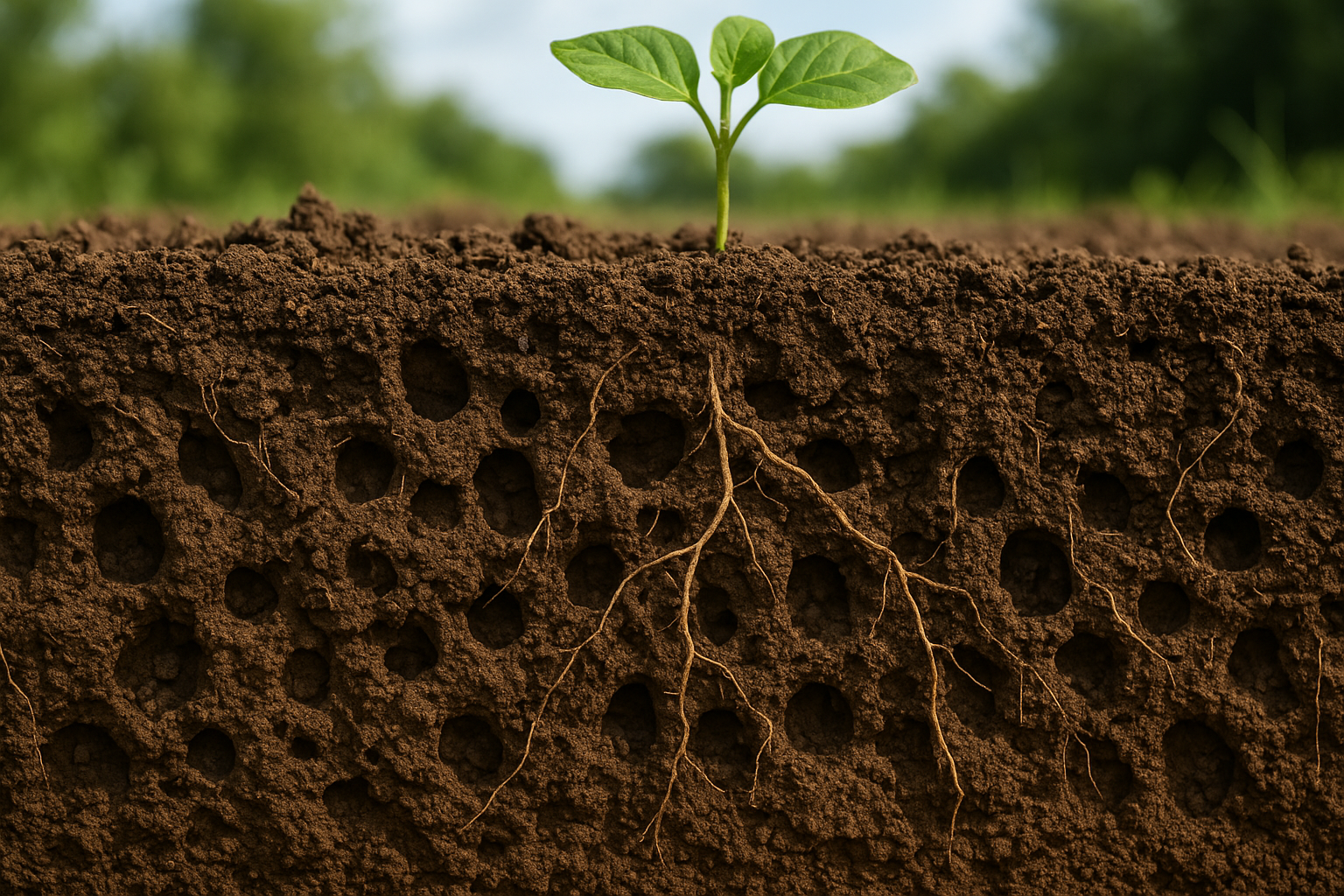
When pore space collapses, everything downstream suffers: drainage, root growth, microbial activity, and ultimately the plants you are trying to grow.
Here is a quick comparison of pore characteristics in healthy versus compacted soil:
| Soil Condition | Pore Structure | Water Drainage | Root Penetration |
|---|---|---|---|
| Healthy, aerated | Large, connected pores | Fast and even | Deep and unobstructed |
| Compacted, low aeration | Crushed, disconnected pores | Slow, pooling on surface | Shallow and stunted |
How compaction blocks airflow
Compaction happens when soil particles are pressed together under repeated pressure, such as foot traffic, heavy machinery, or even the force of intense tropical rain hitting bare soil. When particles compact, pore space collapses. Air can no longer move freely through the soil profile, and water sits on the surface instead of draining downward. Your plants end up in an environment that is simultaneously too wet and too oxygen-deprived at the root level.
Clay-heavy soils, which are common across many parts of Malaysia, are especially vulnerable to this. Clay particles are flat and fine, and they pack together tightly. Even without heavy traffic, Malaysian clay soils can become dense enough to restrict root growth and air movement after a prolonged wet season. Recognizing this helps explain why aeration is not a one-time fix but a regular part of good soil management.
Why soil aeration matters
The soil aeration meaning goes beyond just loosening dirt. Aeration directly determines whether your plants can access water, nutrients, and oxygen at the root level. When soil pores stay open and connected, everything your plants need moves freely through the soil profile. When those pores close off, even the best fertilizer or irrigation schedule cannot compensate for what roots cannot reach.
How aeration supports root health
Roots need oxygen to carry out cellular respiration, which is the process that gives them the energy to absorb water and nutrients from the surrounding soil. Without adequate airflow, roots become starved of oxygen and start to deteriorate. You will often see this show up above ground as yellowing leaves, stunted growth, or a plant that simply looks weak despite regular watering.
Shallow rooting is another consequence. When the soil below is too compacted to penetrate, roots stay near the surface where they are far more vulnerable to heat, drought, and physical disturbance. Deep, well-anchored root systems only develop in soil that allows roots to push downward without resistance.
Healthy root systems are built underground first, and that starts with giving them the air and space they need to grow.
The connection to soil biology
Soil is not inert material. It hosts billions of microorganisms per gram, including bacteria, fungi, and other organisms that break down organic matter into the nutrients your plants use. These microbes are aerobic, meaning they require oxygen to survive and function. Poor aeration reduces microbial populations, slows decomposition, and leaves nutrients locked in forms your plants cannot absorb. Keeping your soil aerated keeps this underground ecosystem working in your favor.
Signs your soil needs aeration
Knowing the soil aeration meaning is only useful if you can recognize when your soil actually needs help. Fortunately, compacted and poorly aerated soil gives you clear signals both above and below the surface before serious plant damage sets in.
Visual signs above ground
Water pooling on the surface after rain is one of the most obvious indicators of poor aeration. When pore space is too compressed to allow drainage, water has nowhere to go. You will also notice patchy, thin, or yellowing growth across your lawn or garden beds, even when you are watering and fertilizing regularly. This happens because roots cannot access nutrients and oxygen through compacted soil.
If water consistently sits on your garden soil for more than an hour after rain, treat it as a direct signal that aeration is overdue.
Moss or algae appearing in shaded lawn patches is another visual clue. Moss thrives in compacted, poorly drained areas where grass struggles to compete, and spotting it is a reliable sign that the soil beneath needs attention.
Physical signs in the soil
You can test your soil by pressing a screwdriver or garden fork into the ground. Healthy, well-aerated soil should let the tool sink in with minimal effort. If you need significant force to push it past the first few centimeters, your soil is too compacted for healthy root growth. This simple test takes seconds and gives you a clear reading.
Shallow root systems are another physical sign worth checking. When you pull up a struggling plant, check how deep the roots actually went. Roots that stay near the surface rather than pushing downward indicate that the soil below is too dense to penetrate.
How to aerate soil in gardens and lawns
Once you identify that your soil needs aeration, the next step is choosing the right method. The approach that works best depends on the size of your garden, the severity of compaction, and what tools you have available. Most home gardeners in Malaysia can address moderate compaction with basic equipment, while larger lawns or heavily impacted ground may benefit from more thorough methods.
Manual aeration tools
For small garden beds and patches of lawn, manual aeration tools give you direct control over where you focus your effort. A garden fork is the simplest option: push it into the soil every 10 to 15 centimeters across the affected area and rock it gently to open up the ground. Hollow-tine aerators, which remove small plugs of soil rather than just piercing the surface, are more effective at relieving deep compaction because they create actual channels for air and water to move through.
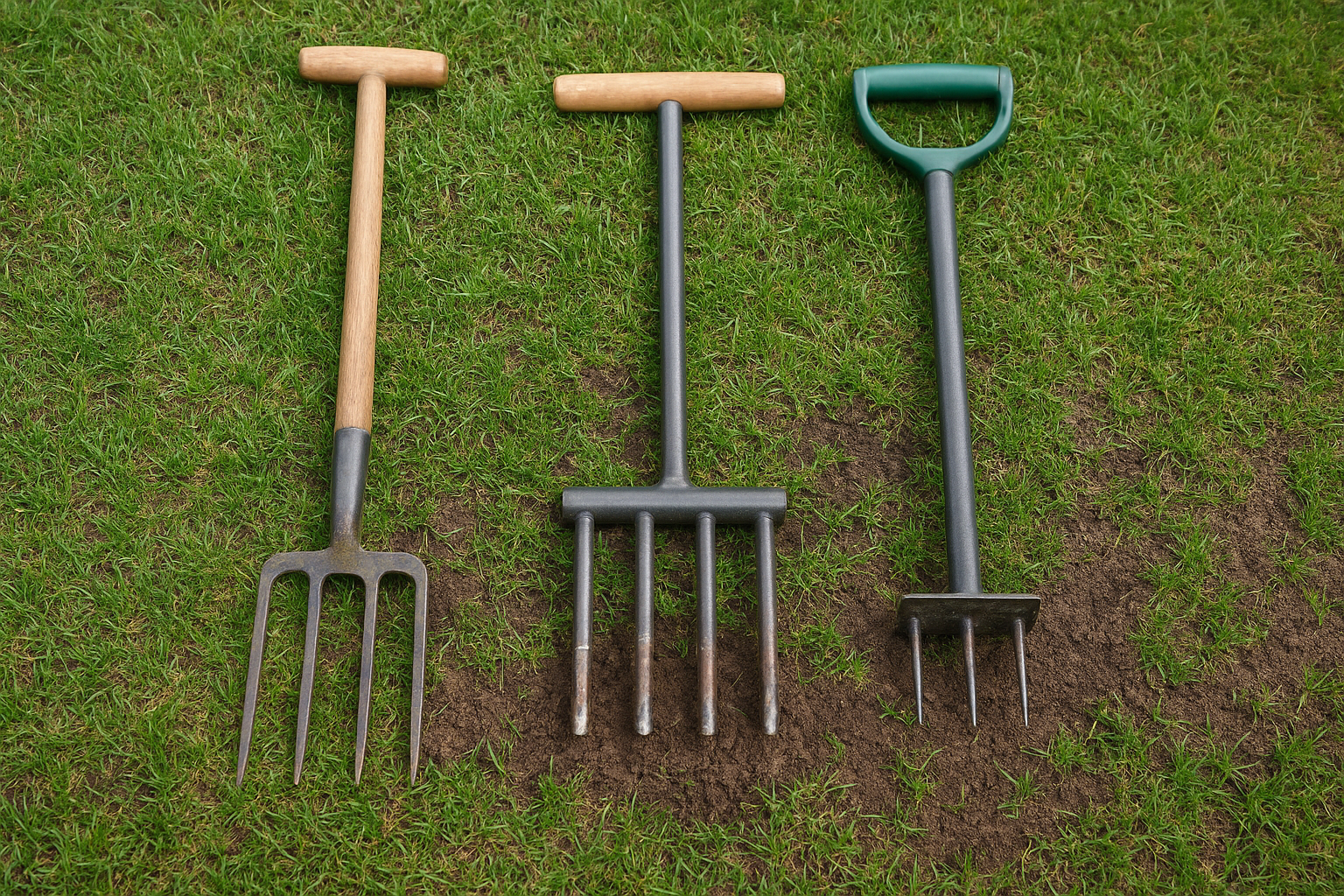
Here are the most practical manual tools for home use:
- Garden fork: Best for loosening small beds and border areas
- Hollow-tine aerator: Removes soil plugs to open up genuine pore space
- Spike aerator: Suitable for light surface compaction on lawns
Hollow-tine aeration removes soil rather than just displacing it, which means you are genuinely creating new pore space rather than compressing the surrounding soil further.
Mechanical aeration for larger areas
If you are working with a large lawn or a heavily compacted site, a motorized core aerator covers ground far more efficiently than manual tools. These machines pull cylindrical plugs from the soil at regular intervals across the entire surface. Applying this method is where the full soil aeration meaning becomes practical: you are physically restoring the pore structure that compaction destroyed, giving roots, water, and air the connected pathways they need to function properly again.
How to keep soil aerated long term
Aeration is not a single event you do once and forget. Soil compaction returns over time, especially in Malaysian gardens where heavy rainfall and warm temperatures accelerate organic matter breakdown and crust formation. Keeping the full soil aeration meaning in practice means building habits that protect your pore structure season after season.
Add organic matter to your soil regularly
Organic matter is the most effective long-term defense against compaction. Compost, leaf mulch, and well-rotted manure bind with mineral particles to form aggregates, which are clusters of soil that create stable pore channels between them. These aggregates resist compression better than bare soil and give your root zone the consistent airflow and drainage it needs year-round. Work a layer of compost into your beds at least once a year, or spread mulch across the surface to let it break down gradually.
A 5 to 8 centimeter layer of organic mulch reduces surface crusting, retains moisture, and feeds soil biology all at once.
- Compost: Adds aggregates and feeds microbes
- Bark mulch: Protects surface structure and slows evaporation
- Leaf litter: Breaks down slowly to supply steady organic input
Limit compaction at the source
Preventing compaction is more efficient than correcting it repeatedly. Designate fixed paths through your garden so foot traffic concentrates in one area rather than spreading across your planting beds. Raised beds with defined borders let you tend plants without ever stepping on the root zone, which keeps pore structure intact between aeration sessions. Even shifting how you move through your garden can make a measurable difference in how long your soil stays open and healthy.
Final thoughts
The soil aeration meaning comes down to one core idea: your soil needs open, connected pore space to support roots, microbes, and drainage. When compaction closes those pathways, every other effort you make in your garden becomes less effective, from watering to fertilizing. Recognizing the signs early and responding with the right tools puts you ahead of the problem before your plants start visibly struggling.
Keeping soil aerated long term takes consistent habits rather than occasional fixes. Regular organic matter additions, defined paths, and periodic deep aeration give your soil the structure it needs to stay productive through Malaysia's heavy rain seasons and warm growing conditions. These are not complicated practices, but they make a measurable difference in plant health year after year.
If you want professional support designing an outdoor space with healthy, well-prepared soil from the start, get in touch with the Konzept Garden team to discuss your project.