

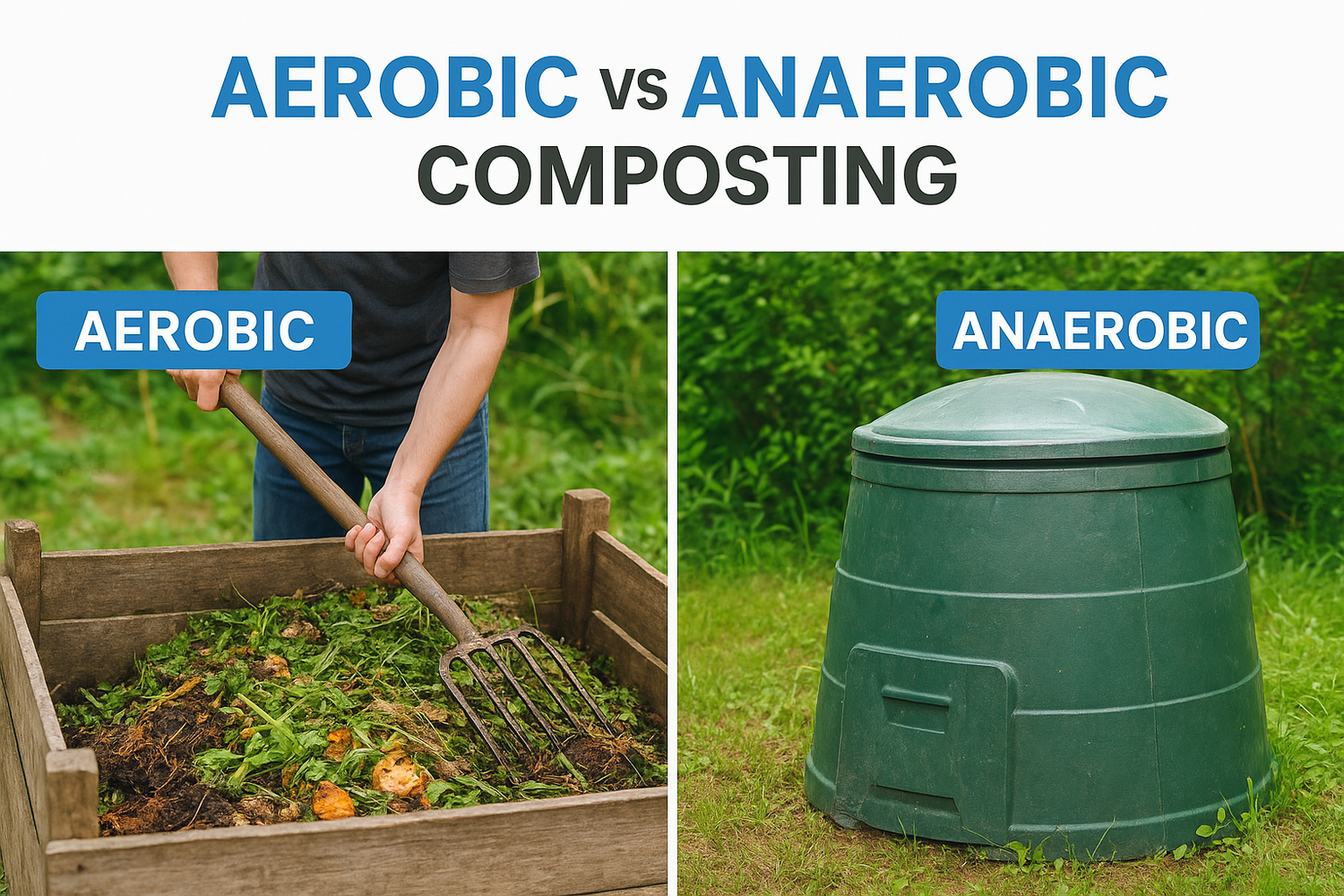
Composting turns organic waste into nutrient-rich material your garden can actually use, but the method you choose shapes everything from the smell to the speed of decomposition. The debate around aerobic vs anaerobic composting comes down to one critical factor: oxygen. One method thrives on it, the other works without it, and each produces very different results for your soil and plants.
At Konzept Garden, we design and build gardens across Malaysia that are meant to last. That means healthy soil is non-negotiable, it's the foundation of every planting plan we create. Whether we're installing a residential garden in KL or advising on a commercial landscape project, composting method matters because it directly affects plant health and long-term sustainability.
This article breaks down how both composting methods work, their pros and cons, environmental impact, and which one makes the most sense for your specific setup. By the end, you'll have a clear understanding of each process and enough practical detail to choose the right approach for your garden or waste management goals.
Why composting method matters in Malaysia
Malaysia's hot and humid climate creates conditions that speed up organic decomposition much faster than in temperate countries. That same heat and moisture can also turn a poorly managed compost pile into a breeding ground for pests and pathogens if you choose the wrong method or skip key steps. Understanding the difference between aerobic vs anaerobic composting isn't just academic here; it has real consequences for your garden, your neighbors, and your local environment.
The composting method you pick will determine how fast you get finished compost, how much it smells, and whether it's safe to use directly on your plants.
Malaysia's climate creates unique composting conditions
Sitting just above the equator, Malaysia experiences high temperatures year-round and significant rainfall across most regions. These conditions accelerate microbial activity in any compost system, which creates a double-edged advantage. On one hand, decomposition happens faster than in cooler climates. On the other hand, if oxygen levels drop inside a pile, anaerobic bacteria take over quickly and produce hydrogen sulfide and methane, both of which create strong odors and become a serious issue in densely populated areas like Kuala Lumpur or Petaling Jaya.
Residential gardens in Malaysia are often compact, which means your composting setup needs to fit within tight spatial constraints and a practical daily routine. The method you choose affects how much space you need, how frequently you manage the pile, and whether the system actually suits your property and schedule.
Organic waste volumes and garden health
Malaysian households generate a significant amount of food and garden waste every day. Fruit peels, vegetable scraps, grass clippings, and pruned plant material all add up quickly, especially if you maintain an active garden. The right composting method lets you convert that waste into a usable soil amendment rather than sending it to a landfill.
Your soil quality depends directly on what you put back into it. Whether you grow ornamental plants, maintain a lawn, or manage a landscaped commercial property, the nutrient content and microbial diversity of your soil will determine how well your plants perform over time. Picking a composting method that fits your waste volume and space constraints is one of the most direct ways to improve long-term soil health.
Aerobic composting explained
Aerobic composting relies on oxygen-breathing microorganisms to break down organic material. You maintain this process by turning the pile regularly, which keeps fresh air moving through the material and supports the bacteria, fungi, and other organisms doing the actual work. In the aerobic vs anaerobic composting comparison, this method is the one most home gardeners and landscapers start with because it produces finished compost faster and with far less odor.
How the process works
You build an aerobic compost pile by layering carbon-rich "brown" materials like dried leaves, cardboard, and wood chips with nitrogen-rich "green" materials like food scraps and fresh grass clippings. The microbial activity generates heat, which you can feel when you push your hand into the center of an active pile. Turning the pile every few days introduces fresh oxygen and distributes that heat evenly, which speeds up decomposition and helps kill off weed seeds and pathogens.
A well-managed aerobic compost pile in Malaysia's climate can produce finished compost in as little as four to six weeks, compared to several months in cooler regions.
Benefits and limitations
Aerobic composting gives you nutrient-dense finished compost that you can apply directly to garden beds, lawn areas, and planting containers without any safety concerns. The process produces carbon dioxide as a byproduct rather than methane, which makes it the more environmentally responsible choice for garden waste management.
The main limitation is the hands-on maintenance it requires. You need to turn the pile consistently, monitor moisture levels, and maintain a proper carbon-to-nitrogen ratio to keep the aerobic process running efficiently.
Anaerobic composting explained
Anaerobic composting breaks down organic material without any oxygen involved. You seal waste inside a contained environment, like a covered bin, a bucket, or a trench, and let microorganisms that work without air do the decomposing. In the aerobic vs anaerobic composting comparison, this approach is more hands-off, but it comes with real trade-offs you need to weigh before committing to it.
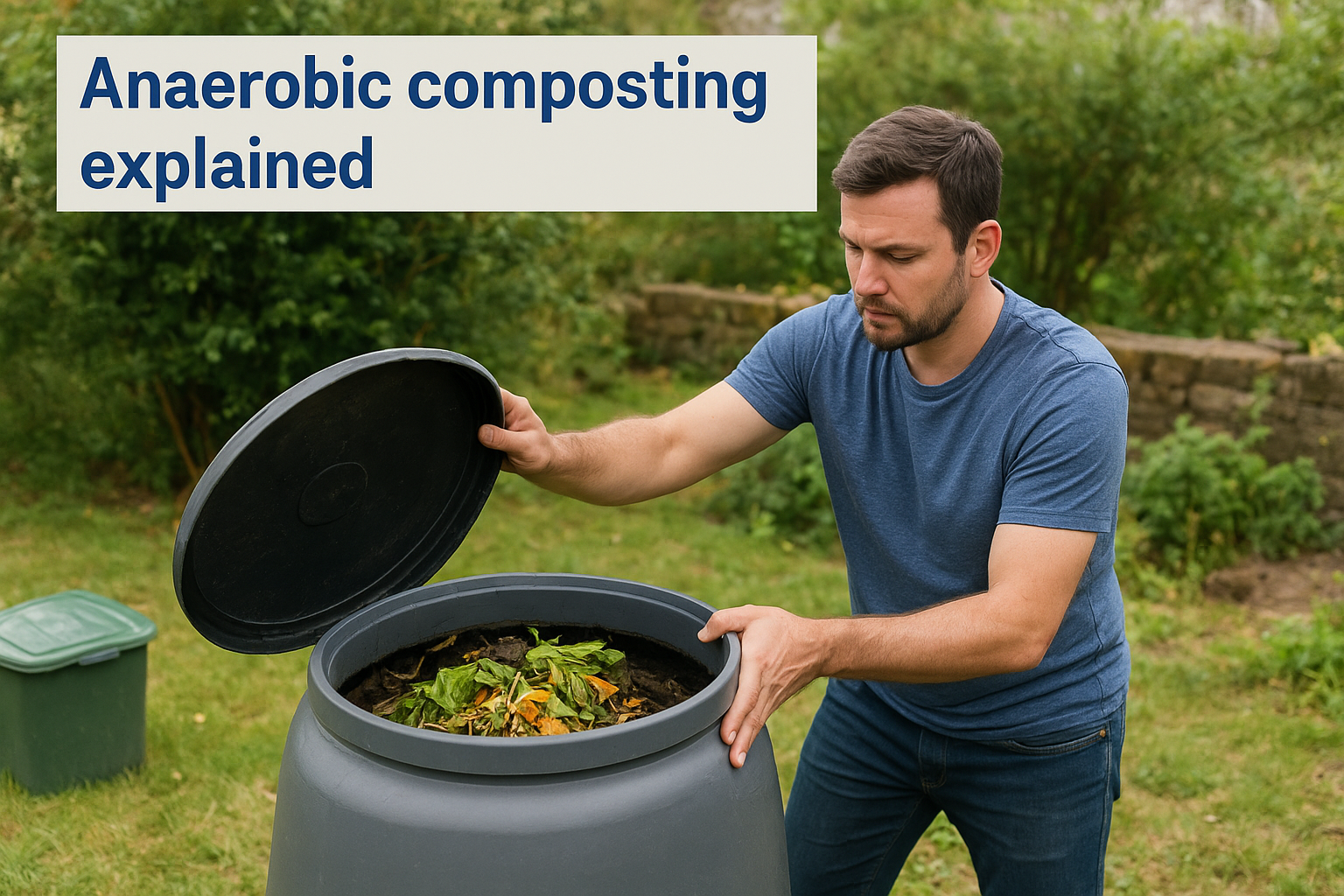
Large-scale anaerobic systems can capture the methane produced during decomposition and convert it into a renewable energy source, though this is not practical at a residential garden scale.
How the process works
When organic waste is packed tightly with little airflow, anaerobic bacteria take over and begin breaking it down. These bacteria produce hydrogen sulfide and methane as byproducts, which explains the strong, unpleasant odor most people associate with sealed bins or neglected piles.
Common setups include trench composting, sealed bokashi fermentation buckets, or covered bins left without turning. The timeline runs slow, typically several months to over a year, before the finished material is ready to apply in the garden.
Benefits and limitations
One real advantage of anaerobic composting is that it demands almost no ongoing maintenance once set up. You add material, seal it, and wait, which works well when you have limited time or restricted physical access to tend a pile on a regular schedule.
The main drawbacks are the strong smell, the slow decomposition rate, and the risk that finished compost carries higher pathogen levels than well-managed aerobic compost. In Malaysia's compact residential gardens, odor becomes a genuine practical issue without proper containment and planning.
Key differences at a glance
When you stack aerobic vs anaerobic composting side by side, the contrast becomes immediately clear. One method demands your active involvement and rewards you with faster results and cleaner output, while the other runs quietly in the background but moves slowly and creates odor issues you'll need to manage carefully.
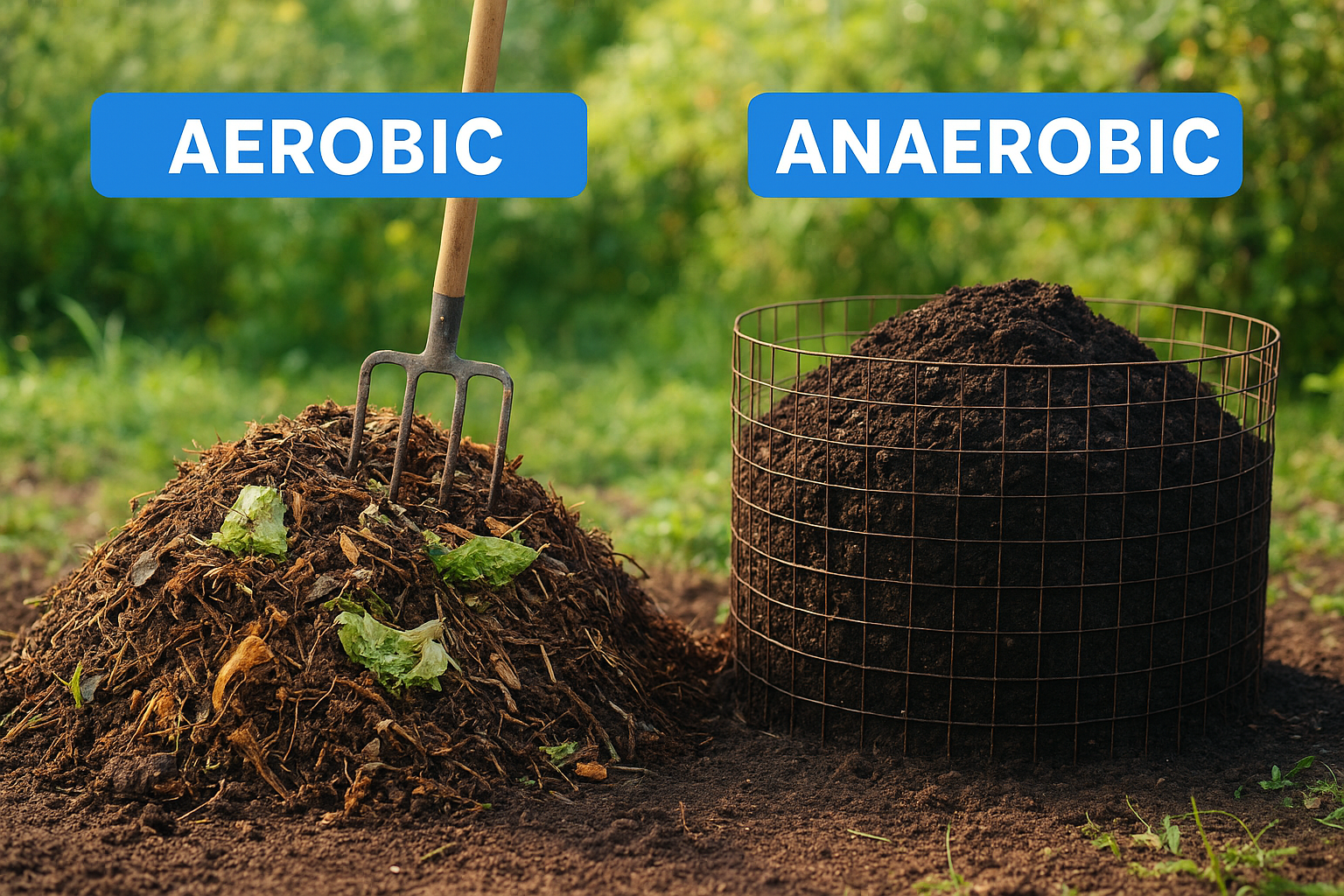
The single biggest practical difference between the two methods is not speed or smell alone, it's how much hands-on time each one actually demands from you.
Process and time requirements
The table below outlines the core differences so you can see them clearly without reading through blocks of text.
| Factor | Aerobic Composting | Anaerobic Composting |
|---|---|---|
| Oxygen required | Yes | No |
| Odor level | Low | High |
| Time to finish | 4 to 12 weeks | 3 to 12 months |
| Maintenance effort | Regular turning needed | Minimal once sealed |
| Pathogen risk | Low | Higher |
| Methane produced | No | Yes |
Output quality and environmental impact
Aerobic composting produces a finished product that is safe to apply directly to your garden beds, planting areas, and lawn surfaces. The heat generated during the process kills most pathogens and weed seeds, giving you consistent and reliable compost quality without any extra processing steps.
Anaerobic systems, by contrast, often require you to cure the output further before applying it near plants. The material can carry residual pathogens and may still off-gas odors even after the main decomposition phase ends. For most residential garden setups in Malaysia, this extra handling adds time and effort that aerobic composting simply avoids.
How to choose the right composting method
Choosing between aerobic vs anaerobic composting comes down to three practical factors: how much space you have, how much time you can commit, and what type of waste you're managing. There is no single right answer for every garden, but asking the right questions about your specific situation will point you clearly in one direction.
Match the method to your schedule
If you can commit to turning a pile two or three times a week and monitoring moisture levels, aerobic composting will give you faster results and better-quality finished compost. Most homeowners with active gardens and a consistent routine find it the more rewarding option because the turnaround time is short and the output is immediately usable on planting beds and lawn areas.
If your schedule is unpredictable or your composting area sits in an enclosed space near your home, anaerobic methods need serious containment planning before you commit.
When you have very limited time and cannot maintain a regular turning schedule, a sealed anaerobic bin may suit you better, provided you manage the odor carefully and plan to cure the output before applying it to your garden.
Factor in your garden size and waste volume
Smaller residential gardens in Malaysia often lack the open space to run a proper aerobic pile with adequate airflow and turning access. In those cases, a compact sealed system handles daily food scraps and green waste without taking over your yard.
Larger gardens or commercial landscape projects generate higher volumes of organic material that benefit from the speed and output quality of an active aerobic system, making it the more practical and scalable long-term choice.
Final takeaways
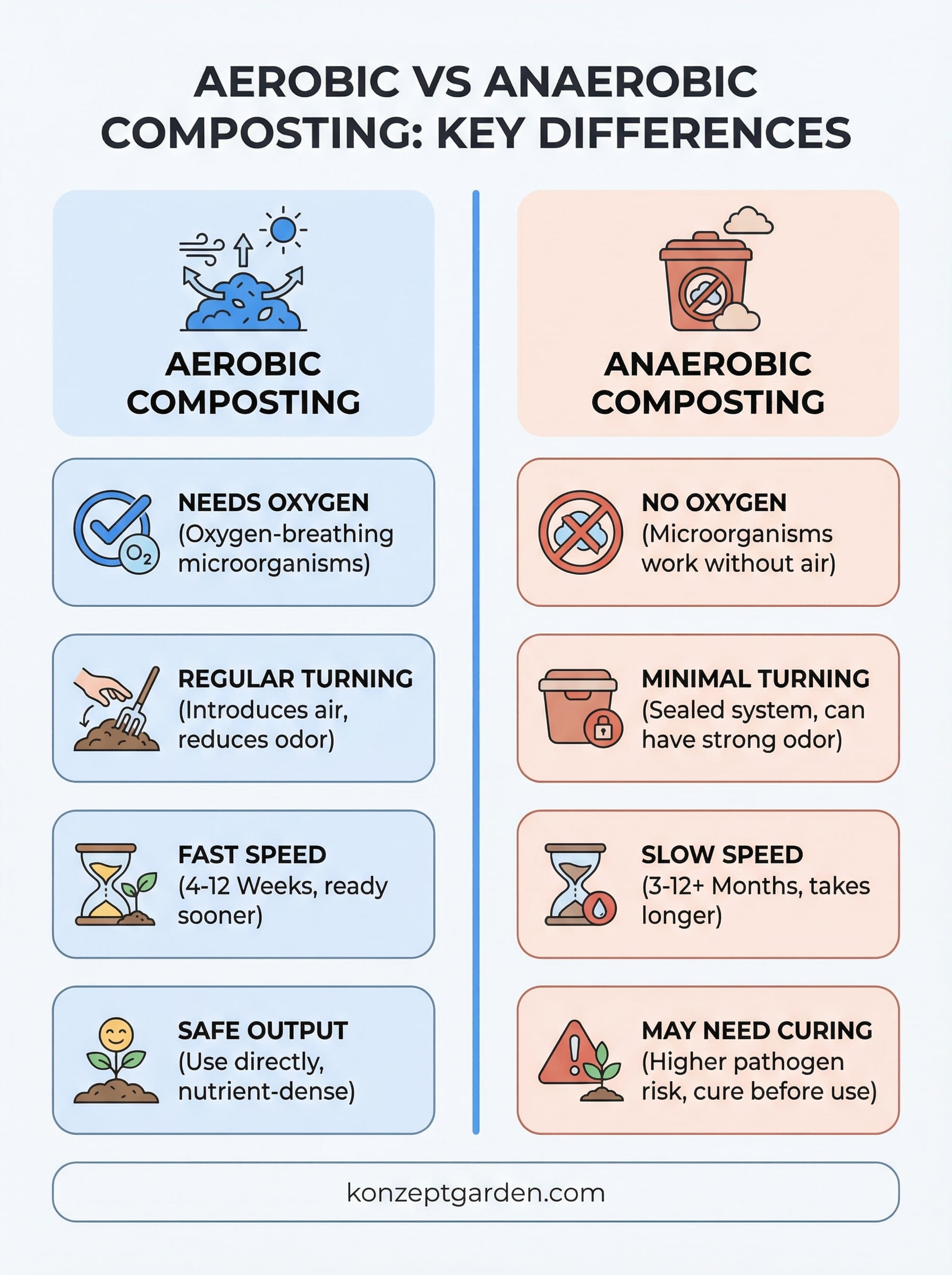
The core distinction in aerobic vs anaerobic composting is straightforward: oxygen determines which microorganisms do the work, and that single factor drives every other difference you'll experience, from processing speed and odor levels to the safety and quality of your finished compost.
Aerobic composting gives you faster results and cleaner output if you commit to regular maintenance. Anaerobic composting suits a hands-off approach but demands careful odor management and longer wait times before the material is safe to apply. Your available space, schedule, and waste volume will point you toward the right choice for your specific situation. Neither method works well by default; both require you to understand the conditions your garden actually operates in.
Healthy soil starts with the right inputs, and every garden in Malaysia benefits from getting that foundation right. If you want expert guidance on building an outdoor space designed for long-term growth, talk to the Konzept Garden team to get started.