

Accurate kew gardens plant identification starts with knowing where to look. The Royal Botanic Gardens, Kew, home to one of the largest botanical collections on Earth, maintains a suite of databases, guides, and training programs that professional designers and plant enthusiasts rely on daily. Whether you're verifying a species name for a planting plan or confirming a cultivar's origin, Kew's resources set the global standard for botanical accuracy.
At Konzept Garden, our botanist consultations and garden planting plans depend on trustworthy taxonomic data. We use tools like Kew's Plants of the World Online (POWO) regularly when designing landscapes across Malaysia, because getting the plant right matters, for aesthetics, for growing conditions, and for long-term garden health. That hands-on experience is exactly why we put this guide together.
Below, you'll find a practical breakdown of Kew's official identification tools, from free online databases to professional-level courses and printed handbooks, organized so you can find exactly what fits your needs.
Why Kew Gardens sources matter for plant ID
When you work with plants professionally, a wrong name creates real problems. You might source the wrong species, plant something that won't survive your climate, or give a client inaccurate care advice. Kew Gardens holds over 1.25 million plant specimens in its collections, and its taxonomic records serve as the authoritative baseline for plant naming that scientists, horticulturists, and landscape designers worldwide rely on.
The scope of Kew's botanical data
Kew's records span over 350 years of scientific documentation, making it one of the most comprehensive botanical references available. When you use kew gardens plant identification resources, you pull from verified, peer-reviewed data rather than community-sourced guesses, and that distinction matters when you're specifying plants for a design project or advising a client on a mystery specimen in their garden.
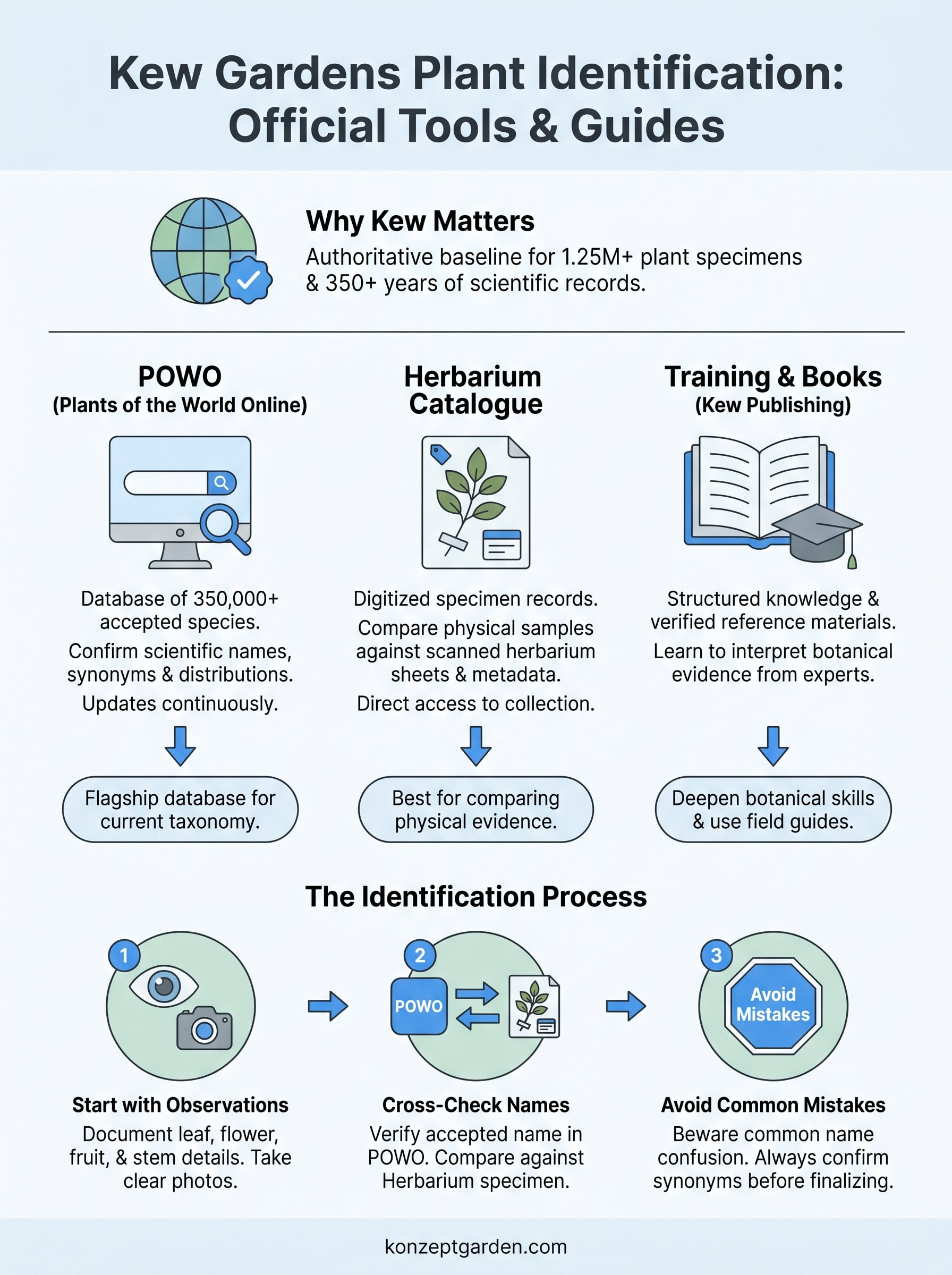
Kew's Plants of the World Online tracks over 350,000 accepted plant species, updated continuously as new taxonomic research is published.
The database also covers synonyms, distribution data, and nomenclature history, so you can trace a plant's correct identity even when it's sold under an outdated or regional name. That level of cross-referencing is something a casual online search cannot reliably provide.
Accuracy you can rely on
Most plant identification errors happen because people depend on visually similar photos or unverified common names. Kew links every database entry to herbarium specimens, published research, and verified geographic records, so when you confirm a plant through their systems, you're matching it against physical evidence held in their collection.
For landscape designers, this precision directly shapes plant selection and long-term maintenance planning. A species misidentified at the design stage can produce a plant that underperforms or outgrows its space, which costs both you and your client time and money to correct.
Official Kew tools for plant identification
Kew provides several free, publicly accessible tools that cover different stages of the identification process. Knowing which resource to use for a specific task saves you time and produces more reliable results than relying on a single source alone.
Plants of the World Online (POWO)
Plants of the World Online is Kew's flagship database for kew gardens plant identification. It holds accepted names, synonyms, distribution maps, and taxonomic notes for over 350,000 species. When you enter a plant name, POWO returns the currently accepted scientific name, any recorded synonyms, and the regions where that species naturally grows, giving you a complete taxonomic picture in one place.
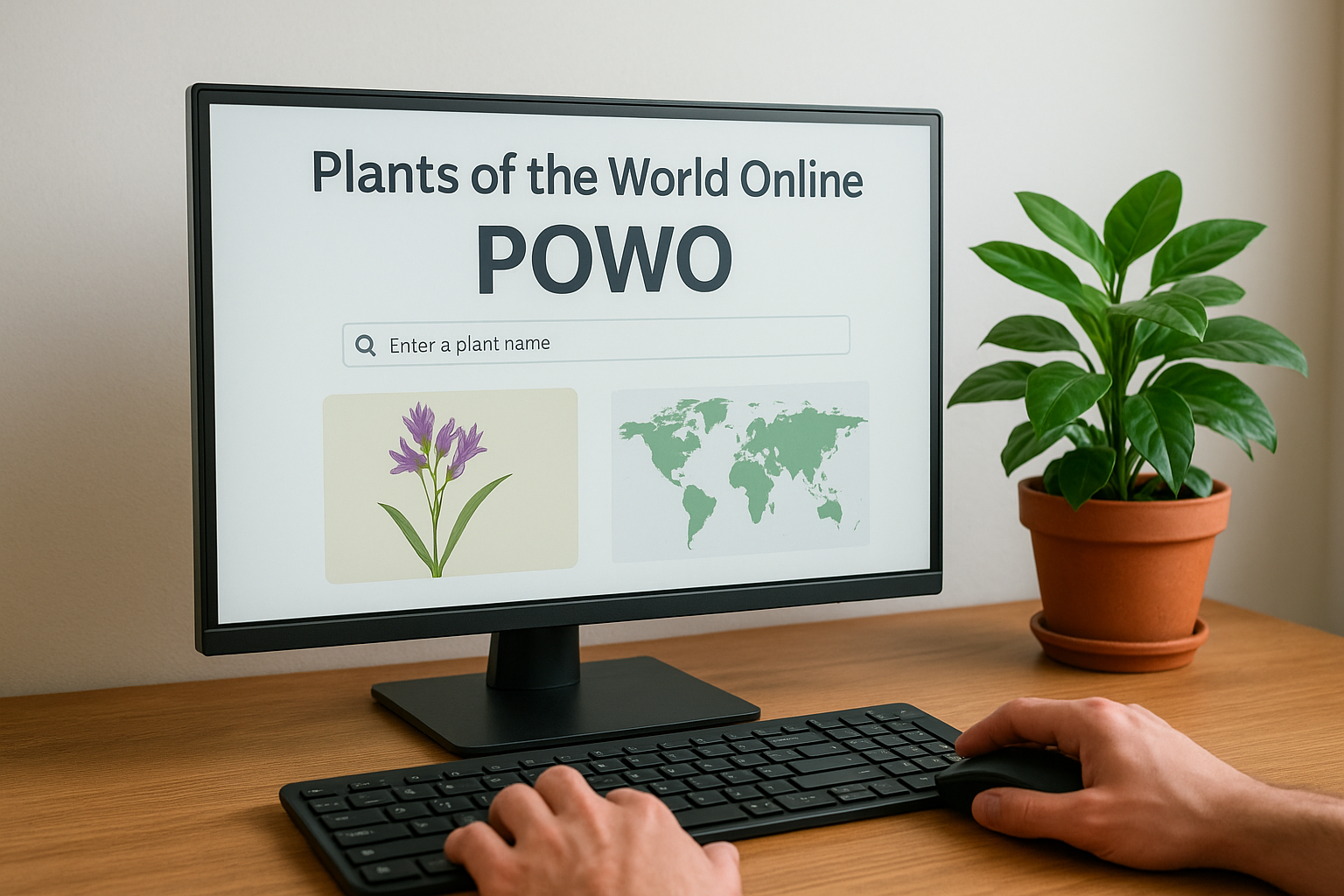
POWO updates continuously as Kew's scientists publish new research, so the names you find there reflect current taxonomic consensus rather than outdated records.
Kew's Herbarium Catalogue
The Herbarium Catalogue gives you direct access to digitized specimen records from Kew's physical collection. Each entry links to scanned herbarium sheets, collection metadata, and georeferenced location data, so you can compare your specimen against documented examples held under controlled conditions. This tool proves most useful when you have a physical sample and need a verified reference point that goes beyond a photograph or a database entry alone.
How to identify a plant using Kew resources
Using kew gardens plant identification tools effectively means following a structured process rather than jumping straight to a search bar. You'll get better results when you gather clear observations first and then layer in the database checks, rather than relying on a single lookup alone.
Start with what you can observe
Before you open POWO or the Herbarium Catalogue, document your specimen carefully. Note the leaf shape, margin type, and arrangement on the stem, along with any flower color, fruit form, or bark texture you can see. Photographs taken from multiple angles, including close-ups of leaves, flowers, and seeds, give you the reference material you'll need to compare accurately against Kew's documented specimens.

Observations to record before you search:
- Leaf shape, size, and surface texture
- Flower color and structure
- Fruit or seed type
- Stem and bark characteristics
Cross-check names across both databases
Once you have a candidate name, run it through POWO to confirm it's the accepted scientific name, not a synonym or an outdated classification. Then check the Herbarium Catalogue to compare your specimen against a verified physical record. This two-step confirmation proves most useful when a plant carries multiple common names or has been reclassified recently.
Confirming a name across two Kew databases takes under ten minutes and reduces the risk of a costly misidentification.
Training and books backed by Kew expertise
Kew Gardens supports plant identification beyond databases through formal training programs and published references that build the skills to use botanical evidence correctly. Whether you're a landscape designer or a curious gardener, these resources give you structured knowledge that databases alone cannot provide.
Kew's professional training courses
Through its Gardens and Horticulture training programs, Kew offers courses covering botanical illustration, plant identification, and taxonomy, all taught by their own scientists. The content reflects the same standards used in their research collections, which means you learn to interpret botanical evidence the same way Kew's experts do.
Kew's online programs are open to international participants, making them accessible from Malaysia.
Course formats available include:
- Short online modules on plant taxonomy and identification
- In-person programs at Kew Gardens in London
Key reference books from Kew Publishing
Kew Publishing produces botanical handbooks, field guides, and taxonomic monographs written by their own researchers. These titles give you verified species descriptions and distribution records that complement POWO, especially for tropical and Asian flora.
Applying kew gardens plant identification through a physical reference adds a layer of confirmation that screen-based searches alone cannot match. A printed Kew field guide lets you cross-reference morphological details directly against documented specimens without needing an internet connection.
How to confirm names and avoid common ID mistakes
Even with good databases available, confirmation mistakes happen when you rely on a single source. The most reliable approach to kew gardens plant identification treats name verification as a two-step process: check physical observations first, then confirm the taxonomy before making any final decisions.
Watch out for common name confusion
Common names vary by region, making them unreliable as primary identifiers. The same plant might carry entirely different names across Malaysia, the UK, and the US, while its scientific name stays consistent globally. Always convert a common name to a Latin binomial before searching any database.
Two checks to run before you commit to a name:
- Confirm the common name maps to exactly one Latin binomial in POWO
- Verify the species distribution includes your target climate zone
A single common name can apply to entirely different species across countries, making scientific names the only safe reference point.
Verify synonyms before finalizing
Taxonomy updates regularly as researchers reclassify species using new genetic evidence. A name accepted five years ago might now be listed as a synonym. Before you finalize any plant specification, check POWO's synonym field to confirm the name reflects current classification rather than an outdated record.
Skipping this step costs time and money. If you order plants using a deprecated name, your supplier might deliver the wrong species entirely. A synonym check before finalizing protects your project timeline and your client's expectations.
Next steps
Accurate kew gardens plant identification gives every garden project a stronger foundation. When you verify species names through POWO, cross-check them against the Herbarium Catalogue, and confirm synonyms before finalizing your plant list, you eliminate the guesswork that leads to costly substitutions and underperforming gardens. The process takes minutes but protects months of design and installation work.
Start by bookmarking POWO and the Herbarium Catalogue so they become a standard part of your workflow rather than an occasional reference. If you handle complex planting plans regularly, consider one of Kew's training courses to deepen your ability to read botanical evidence directly rather than relying on database entries alone.
At Konzept Garden, our botanist consultations apply this same rigorous approach to every planting plan we create for clients across Malaysia. If you want expert guidance on your outdoor space, talk to our garden design team and we'll help you get it right from the start.