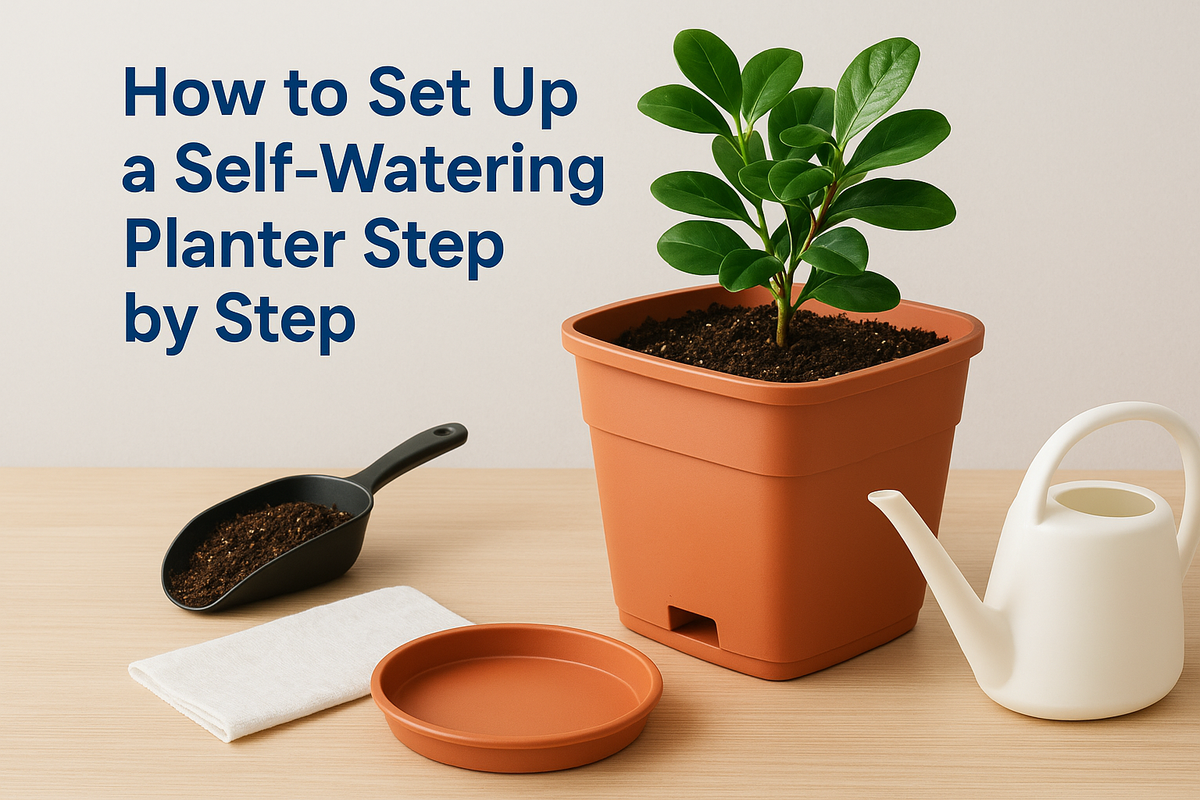
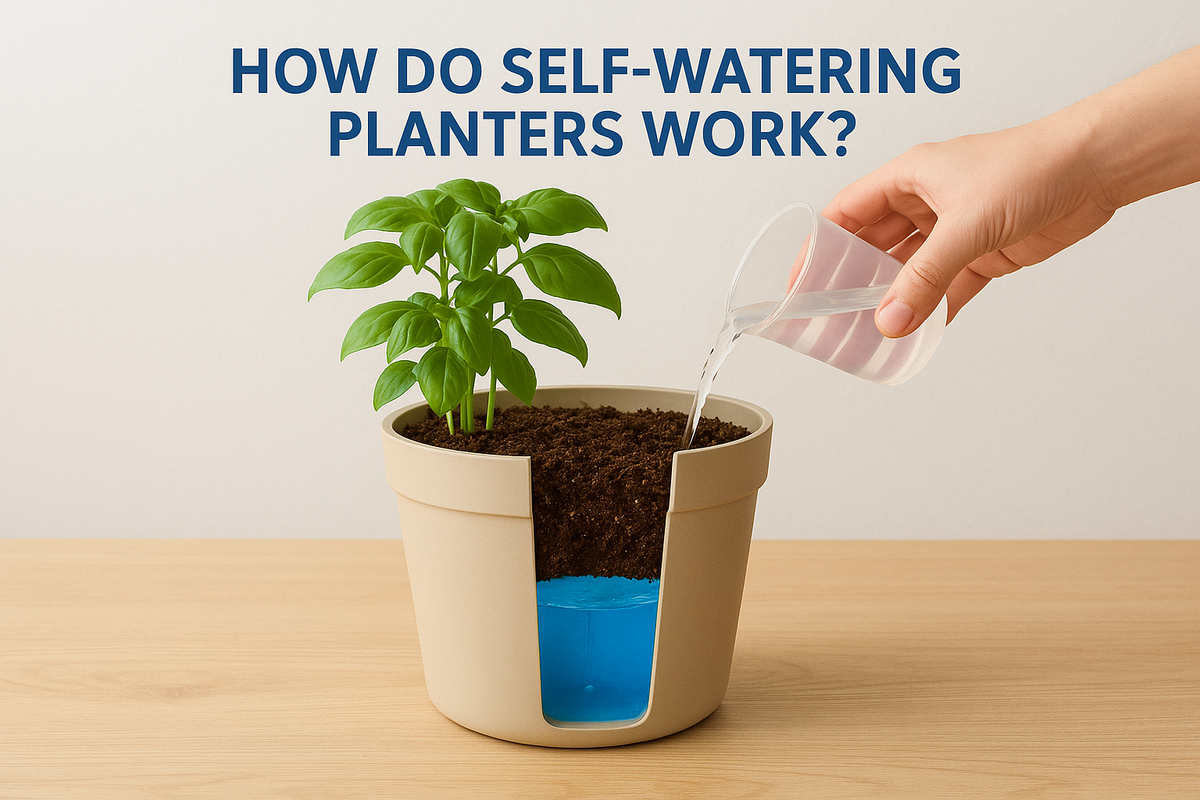
A self-watering planter is a pot with a hidden water tank under the soil. So, how do self-watering planters work? Water sits in a reservoir at the bottom, and the soil or a wick pulls it upward by capillary action. The roots take what they need, and the rest stays in the tank. You still water by hand, but you fill the reservoir instead of the soil, and you do it far less often.
This article covers why the mechanism matters, what sits inside the planter, the main types, and how to use one in a hot, humid climate like Malaysia's. It also shows where these planters fall short, so you can decide whether one is worth buying.
At Konzept Garden we design gardens and sell the Ziant Hydro Planter range. We see both the cases where a self-watering planter solves a problem and the cases where it creates one.
Why self-watering planters are worth understanding
Knowing the mechanism tells you which plants suit a self-watering planter and why the system fails when it is used wrongly. Most disappointments come from a mismatch between plant and planter, not from a faulty pot.
Who benefits most
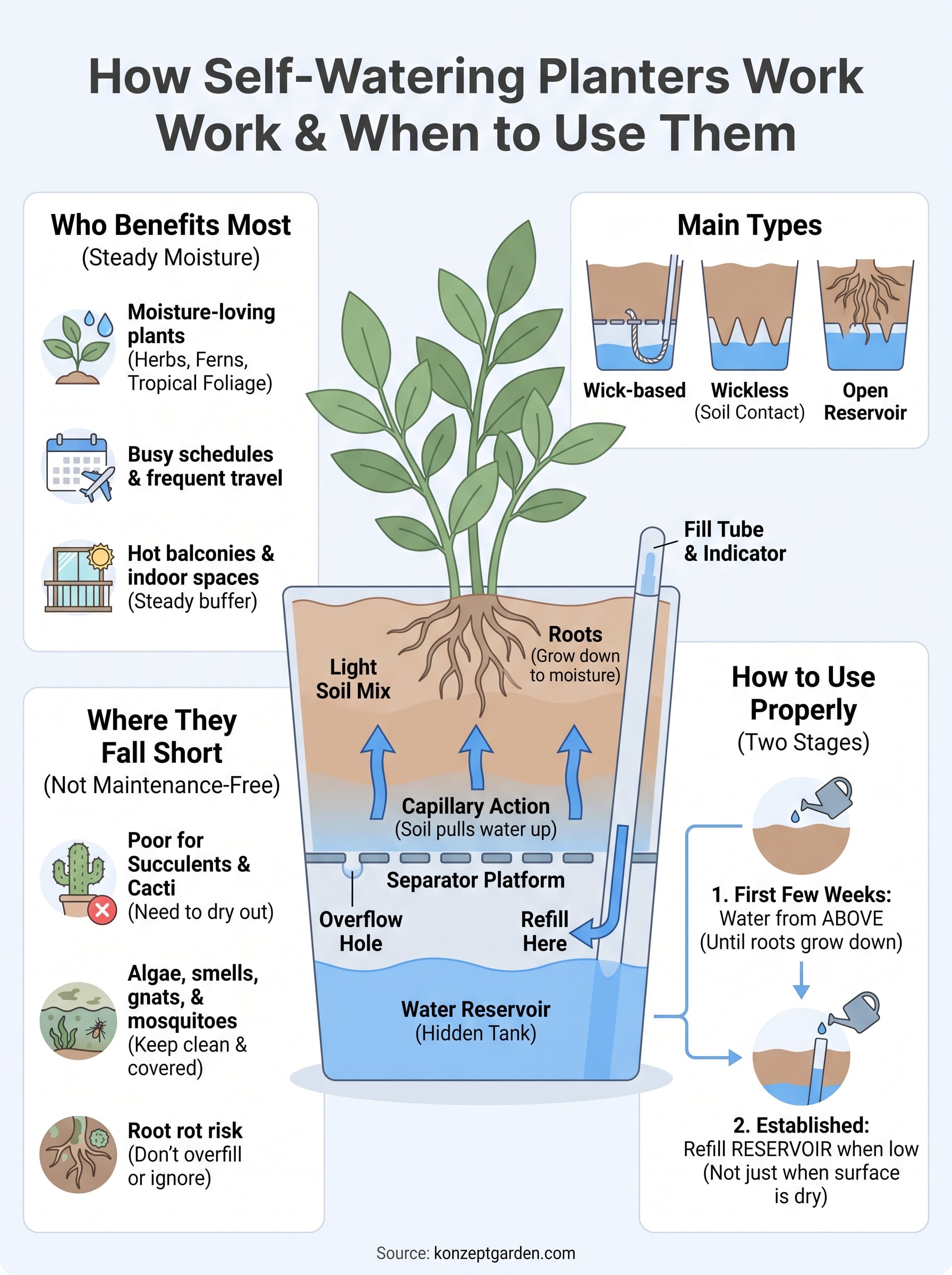
Self-watering planters suit moisture-loving plants and people who cannot water on a fixed schedule. In Malaysian heat, a small pot of ordinary soil can dry out within a day or two. A reservoir gives you a buffer, and the soil moisture stays steady instead of swinging between soggy and bone dry. Our Ziant Hydro Planter collection is built around this idea, with self-watering for up to two weeks while you travel.
- Good fits: herbs, ferns, peace lilies, leafy vegetables, tomatoes, and most tropical foliage plants.
- Poor fits: succulents, cacti, and other plants that want the soil to dry out fully between waterings.
- Good situations: frequent travel, busy weeks, indoor spaces where spills are a nuisance, and balconies that bake in the afternoon sun.
A self-watering planter gives steady moisture, so it only helps plants that want steady moisture.
Where they fall short
They are not maintenance-free. Algae can grow in the reservoir, and stale water can smell or attract gnats. In Malaysia you should also keep the fill hole covered, because standing water is where mosquitoes breed.
Cost and complacency are the other drawbacks. A good self-watering planter costs more than a plain pot. Overfilling the tank, using dense soil, or ignoring the plant can still lead to root rot. The system reduces how often you water. It does not remove the need to look at your plants.
How self-watering planters work inside
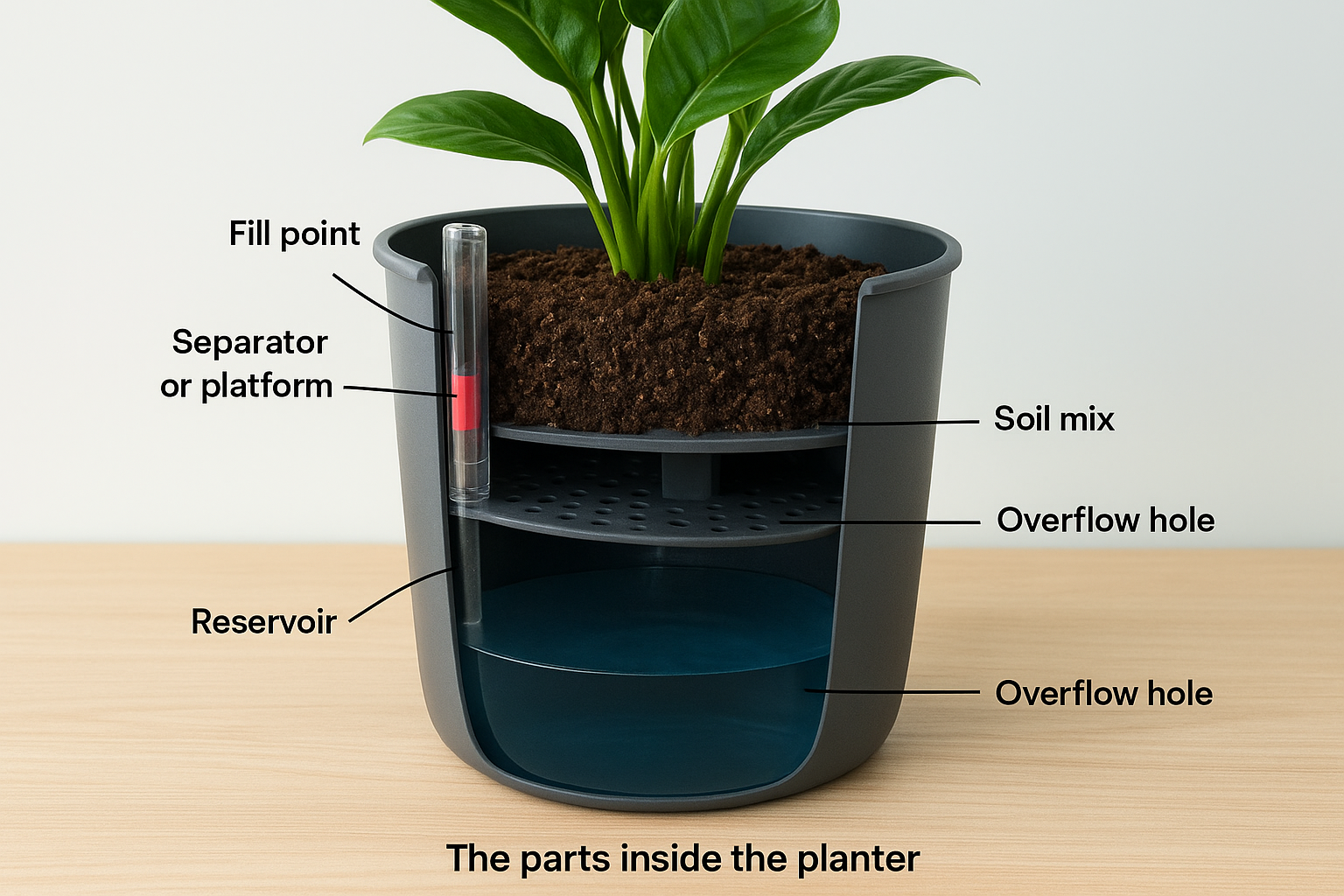
A self-watering planter separates a water reservoir from the planting area, and capillary action carries water up through the soil to the roots. Everything else in the design exists to control how much water gets there.
The parts inside the planter
- Reservoir: the lower chamber that stores water between refills.
- Separator or platform: holds the soil above the water so the root zone keeps air.
- Fill point and indicator: the tube or opening you pour into, often with a gauge showing the water level.
- Overflow hole: lets excess water leave, which matters most outdoors during heavy rain.
- Soil mix: a light, free-draining mix that wicks moisture upward without packing down.
How water travels from the tank to the roots
Capillary action is the same effect that pulls water up a paper towel dipped in a glass. Water clings to soil particles and creeps through the tiny gaps between them. Soil that touches the reservoir, or a wick that dips into it, stays damp from the bottom. That is why the surface can look dry while the lower soil is still moist. A dry top layer is normal and not a signal to pour more water on.
The roots then do their part. They absorb water from the damp soil around them, and in many designs they grow downward toward the moisture. Some designs let roots reach the reservoir itself. This is why a new planting still needs watering from above for the first weeks. Until the roots reach the moist zone, they cannot use the tank.
Water climbs through the soil by capillary action, and the roots only drink from it once they have grown down to meet it.
Main types of self-watering planters
Most self-watering planters fall into three types, and they differ in how the water leaves the reservoir. The right one depends on plant size, location, and how much upkeep you will tolerate.
Wick-based, wickless, and open-reservoir designs
| Type | How water reaches the roots | Best for | Watch out for |
|---|---|---|---|
| Wick-based | A rope or fabric strip links the reservoir to the soil and carries water up | Indoor pots, small to medium plants | Wick placement, and wicks that clog or wear out over time |
| Wickless (soil contact) | Soil sits in contact with the lower chamber, and capillary action moves the water | Larger planters, outdoor boxes, herbs, vegetables | Needs the right soil mix and a working overflow point |
| Open reservoir | Roots grow down toward or into the stored water | Thirsty plants once established | Needs an air gap, or the roots stay too wet |
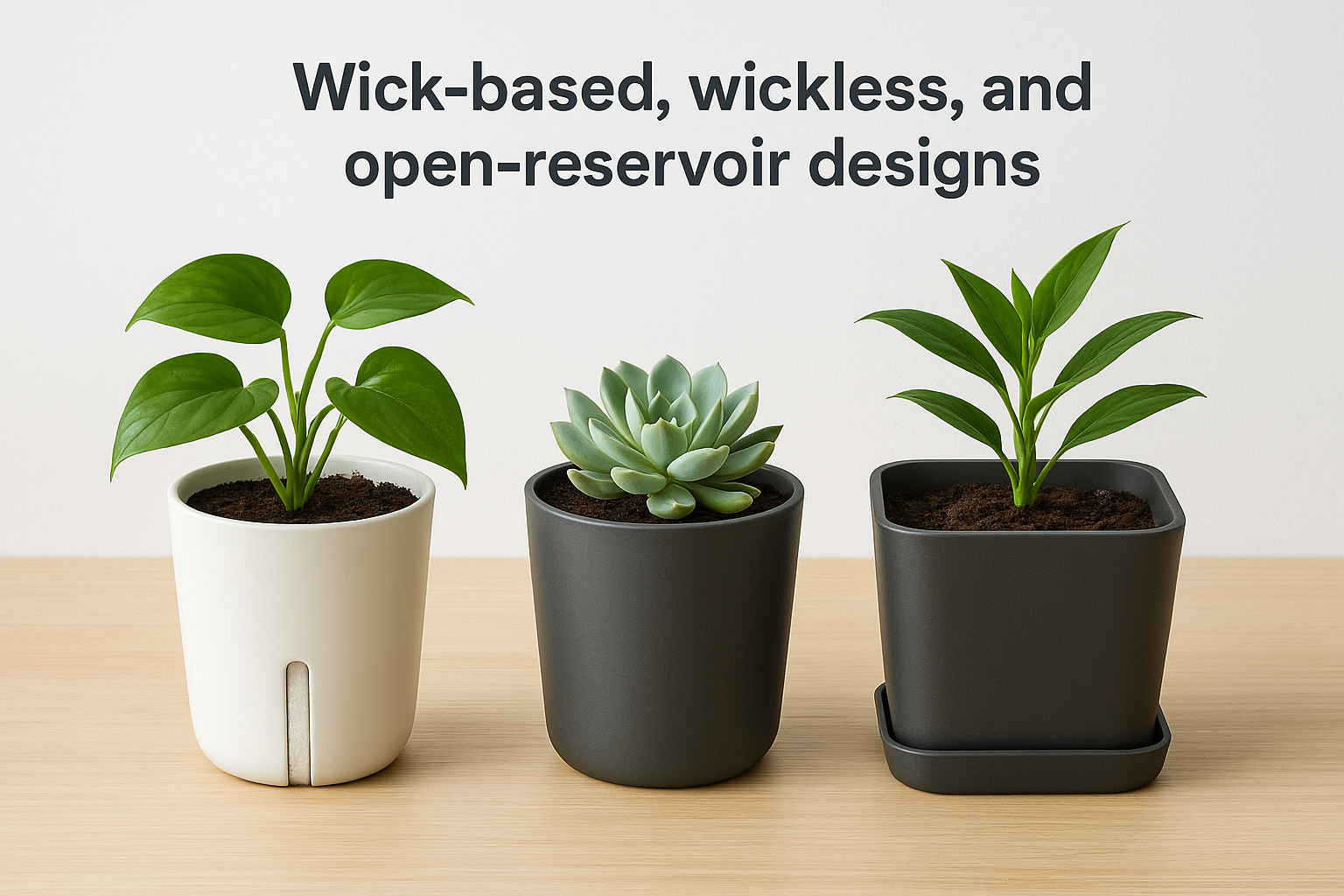
Wick systems make the water path easy to see and to repair. Wickless systems have fewer parts to replace, but they depend more on the soil mix and the separator.
Choosing a type for your space
For a desk or shelf, a small wick-based or wickless pot, such as a mini self-watering desk plant, is enough. For a balcony or patio, choose a design with a reliable overflow, because tropical downpours can fill a reservoir faster than the plant can use it. For tall or heavy plants, size matters more than the type, because a bigger reservoir means longer gaps between refills.
If you are comparing products, the Ziant Hydro Planter comes in S, M, and L sizes at RM145, RM215, and RM325, in black, brown, grey, and white. The planter boxes ship with Nutrisoil, Hydrostone, and geotextile. Check each product page for the exact specifications of the model you want.
How to use a self-watering planter properly
The method is simple: water from above at first, then let the reservoir take over once the roots have grown down. Most failures come from skipping that first stage or from refilling too eagerly.
Setting up and the first weeks
- Fill the planter with a light potting mix and make sure the soil touches the water zone, as the manufacturer describes.
- Plant, then water from above until water reaches the reservoir.
- Keep watering from above for the first two weeks or so, and longer for large plants.
- Once the plant is established, refill the reservoir when the indicator or the tank is low.
- Do not refill just because the soil surface looks dry.
Refilling and upkeep in a hot climate
Heat, sun, wind, and active growth all make the reservoir empty faster. As an illustration, a 4 litre reservoir and a plant drinking about 300 ml a day in hot weather lasts roughly 13 days. A bigger plant or a sunnier spot shortens that. Watch the first refill cycle, then adjust.
Keep the system clean. Empty and rinse the reservoir when the water smells stale or algae appears, and clear the overflow hole before the rainy months. Keep the fill hole covered so mosquitoes cannot use it. Drain the tank if you will leave the planter unused for a long time.
Refill the tank when it runs low, not when the soil surface looks dry.
The bottom line on self-watering planters
A self-watering planter stores water below the soil and lets capillary action and the roots draw it up, which gives steady moisture with far fewer waterings. It suits thirsty plants and busy owners. It does not suit succulents, and it still needs a clean reservoir and a quick check on your plants.
If you want help choosing the right size and plants for your balcony, patio, or garden, talk to the Konzept Garden team.