
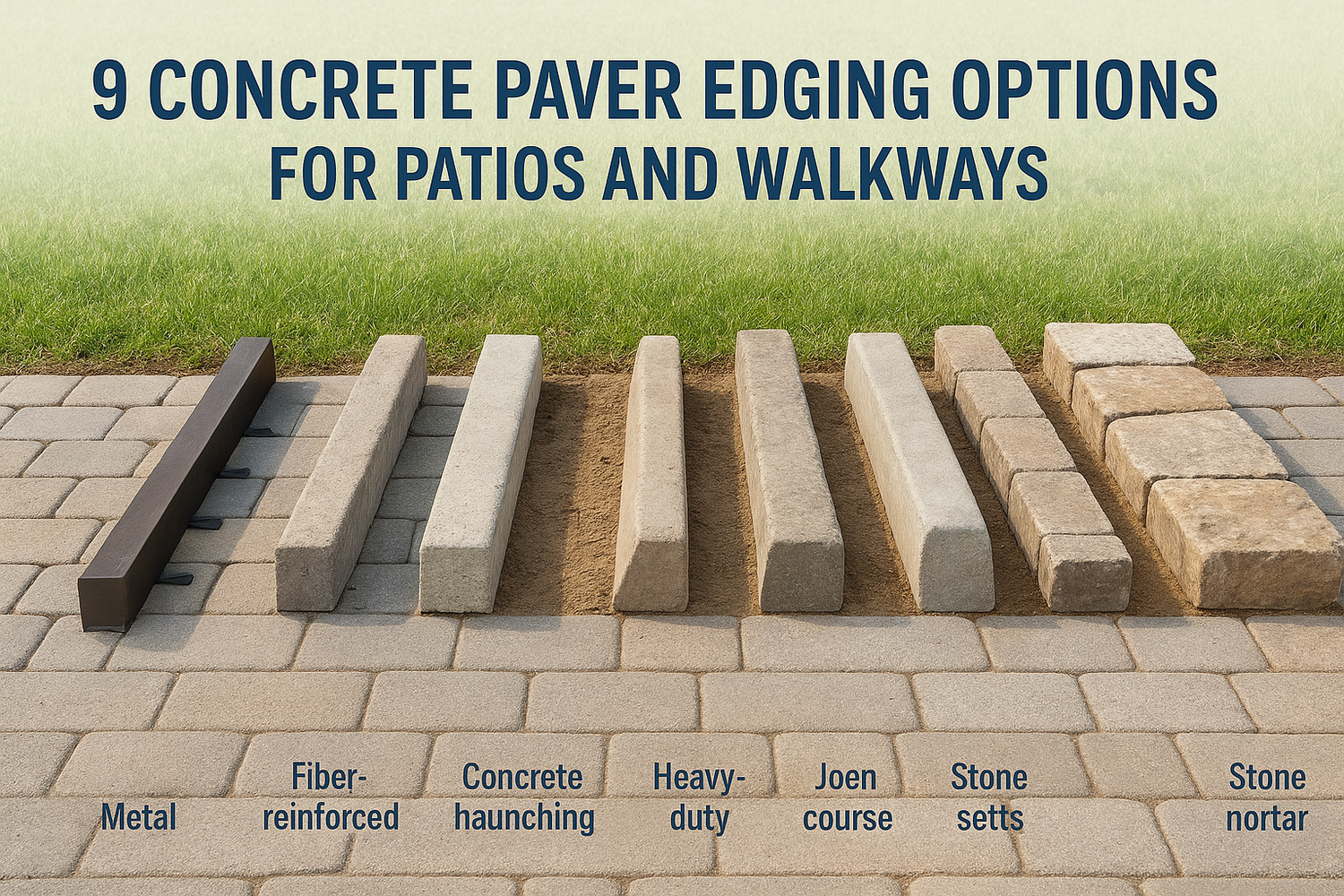
A beautifully laid paver patio or walkway can lose its shape within months if the edges aren't properly secured. That's where choosing the right concrete paver edging options becomes just as important as selecting the pavers themselves. Without solid edging, pavers shift, gaps widen, and what started as a clean design turns into an uneven, frustrating mess.
At Konzept Garden, we've designed and built enough patios and walkways across Malaysia to know that edging isn't an afterthought, it's a structural necessity and a design opportunity. The right border holds everything in place while giving your outdoor space a polished, intentional look. The wrong one (or worse, none at all) quietly undermines the entire project. As an award-winning landscape design company, we've tested and installed a wide range of edging solutions for residential and commercial properties alike.
In this guide, we break down nine proven edging options, covering different materials, styles, and installation approaches, so you can pick the one that fits your design goals and keeps your pavers locked tight for years. Whether you're planning a backyard patio or a front walkway, you'll walk away with clear, practical direction on what works and why.
1. Custom Edging Plan by Konzept Garden
When you hire Konzept Garden to design your patio or walkway, edging is built into the overall landscape plan from day one. That means your borders are designed to work with your materials, drainage, and site conditions rather than being added as a fix after the fact.
What you get
With a custom edging plan, you get a site-assessed design that accounts for your soil type, slope, existing structures, and the paver pattern you've chosen. Our team selects edging materials and installation depths that match the load your surface will carry, whether that's foot traffic, vehicle access, or heavy garden features.
Best for
A custom plan works best for mid- to large-scale residential projects, commercial landscaping, and any job where the site has irregular shapes, level changes, or drainage challenges. If your outdoor space has a slope that shifts soil after heavy rain or an irregular boundary, standard off-the-shelf edging won't perform reliably over time.
Pros and trade-offs
The biggest advantage of a custom edging plan is that it's designed around your specific site conditions, not a generic template. You get materials and methods chosen for your exact situation. The trade-off is upfront cost and planning time. Custom design takes longer to finalize, and you'll pay more than you would for a simple plastic edge restraint.
A custom edging plan isn't a luxury add-on for larger projects - it's often the reason the pavers still sit level five years later.
Key design decisions to lock in early
You need to confirm edging material, installation depth, and drainage direction before a single paver goes down. Changing these decisions mid-project adds both cost and delays. Also settle on whether your edging sits flush with the paver surface, slightly proud, or acts as a visible design border from the start.
Typical cost range in Malaysia
Custom edging as part of a full Konzept Garden landscape package typically falls within RM 15 to RM 50 per linear meter, depending on materials and site complexity. Projects with stone setts, kerbstones, or reinforced concrete borders sit at the higher end, while simpler mortar-set soldier courses cost less.
2. Plastic Edge Restraints with Spikes
Plastic edge restraints are one of the most widely used concrete paver edging options on the market. They consist of a flexible or rigid PVC strip that runs along the outer perimeter of your paver area and is anchored into the ground with steel spikes.
What it is
Plastic edging typically comes in 10-foot interlocking lengths that you connect end-to-end along the paver border. Steel spikes, usually 200 to 300mm long, are driven through molded holes in the strip and into the compacted base below to hold everything in position.
Best for
This option suits flat residential walkways and small patios where the ground is relatively stable and traffic is limited to foot use. It works well in straight-line layouts, though flexible versions can handle gentle curves.
Pros and cons in Malaysia
Plastic edging is low cost and quick to install, which makes it popular for DIY projects. The downside in Malaysia's climate is that sustained heat and UV exposure cause some lower-grade PVC to warp and crack within two to three years, allowing pavers to shift outward.
Choosing UV-stabilized PVC strips adds a small upfront cost but extends service life significantly in Malaysia's tropical conditions.
Installation notes that prevent edge creep
You need to drive spikes every 300mm along the strip, not every 600mm as some guides suggest. Wider spacing allows the restraint to bow outward under lateral paver pressure.
Typical cost range in Malaysia
Expect to pay RM 8 to RM 18 per linear meter for materials, with lower costs for basic PVC and higher costs for reinforced UV-stabilized versions.
3. Metal Edging in Steel or Aluminum
Metal edging gives you a rigid, durable border that outlasts plastic by a wide margin. Both steel and aluminum versions are popular concrete paver edging options where a thin profile and long-term holding power matter most.
What it is
Both steel and aluminum strips come as thin flat sections, typically 3 to 6mm thick and 100 to 150mm tall, pinned into the ground with steel stakes through pre-drilled holes. Steel versions are heavier and stronger, while aluminum is lighter, rust-resistant, and easier to bend into curves without cutting.
Best for
This edging suits projects that need a sharp architectural edge line capable of resisting lateral paver pressure over time. Strong applications include:
- Formal garden paths and driveways with light vehicle use
- Commercial walkways with consistent foot traffic
- Designs where a crisp geometric border defines the space
Pros and cons in Malaysia
Steel edging is extremely strong and holds its shape under heavy use, but it will rust in Malaysia's humidity unless it's galvanized or powder-coated. Aluminum edging avoids the rust problem and weighs less, though it can bend under point loads if stakes are spaced too far apart.
Galvanized or powder-coated steel costs more upfront but prevents rust-related failure within the first few years in Malaysia's wet climate.
Installation notes for straight runs and curves
For straight runs, drive stakes every 450 to 600mm. Curves need tighter stake spacing at 200 to 300mm to stop the strip from springing back out of alignment after installation.
Typical cost range in Malaysia
Metal edging typically runs RM 20 to RM 45 per linear meter, with standard mild steel at the lower end and powder-coated aluminum options sitting toward the higher end.
4. Concrete Haunching or Trowel Edge Restraint
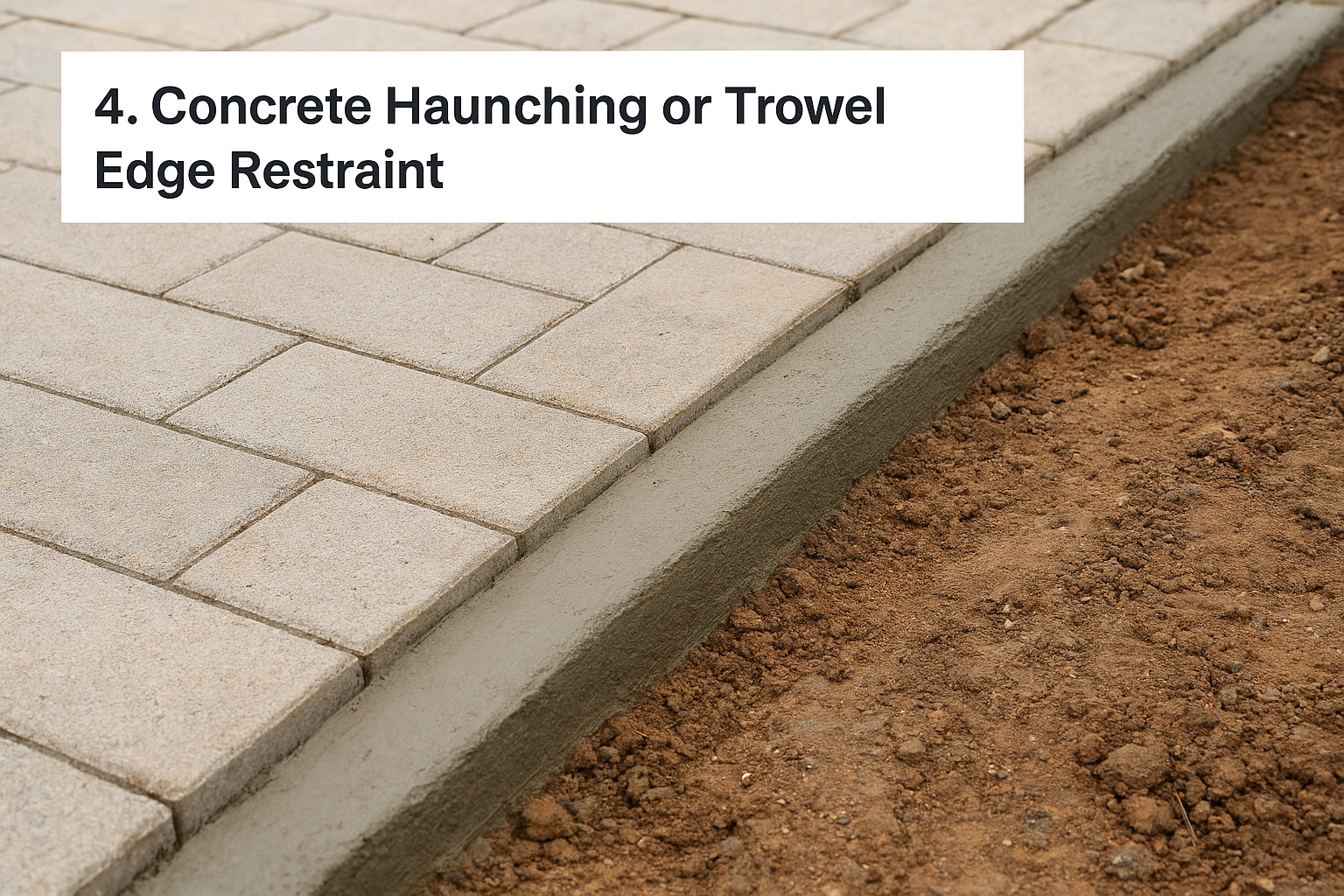
Concrete haunching is one of the oldest and most reliable concrete paver edging options still in active use. It involves placing a narrow strip of wet concrete along the outer edge of your paver installation to lock the border course in position.
What it is
Haunching uses site-mixed or bagged concrete troweled along the outer face and underneath the edge pavers. Once cured, this concrete collar grips the paver base and prevents lateral movement without adding any visible border above the surface.
Best for
This method suits driveways and heavy-use patios where sideways pressure from vehicles or loaded garden trolleys would push standard restraints out of alignment. It also works well on sloped ground where gravity pulls pavers downhill over time.
Pros and cons in Malaysia
Haunching is extremely strong and permanent, which makes it ideal for high-load areas. The downside is that it's difficult to remove if you ever want to relay or reconfigure the pavers. In Malaysia's wet season, poor drainage behind the haunch can trap water and weaken the base layer over time.
Slope your haunch slightly away from the paver surface to direct rainwater outward rather than pooling against the base.
Installation notes for crack control and drainage
Keep the haunch width to 150mm maximum to reduce shrinkage cracking as the concrete cures. Add a drainage outlet or gap every two meters to prevent water from building up behind the concrete collar.
Typical cost range in Malaysia
Expect to pay RM 12 to RM 28 per linear meter, depending on mix quality and labor rates in your area.
5. Fiber-Reinforced Concrete Edge Restraint
Fiber-reinforced concrete edge restraint is a step up from standard concrete haunching. It uses polypropylene or steel fibers mixed directly into the concrete, which reduces cracking and gives the restraint greater tensile strength without needing rebar or wire mesh.
What it is
This method uses fiber-additive concrete poured along the outer edge of your paver installation, the same basic position as haunching, but with significantly better crack resistance built into the mix itself. The fibers distribute stress across the concrete rather than concentrating it at weak points where shrinkage cracks typically form.
Best for
Fiber-reinforced restraint suits driveways, commercial courtyards, and any paved area with heavy or repeated load cycles. It also performs well on sites with expansive clay soils, which shift more aggressively during Malaysia's wet and dry seasonal transitions.
Pros and cons in Malaysia
This is one of the most durable concrete paver edging options available for high-traffic applications. It resists cracking, handles thermal movement better than plain concrete, and requires very little maintenance once cured. The main drawback is higher material cost compared to standard haunching, since fiber additives add to the mix price.
Fiber-reinforced concrete is worth the extra cost on any project where the edge restraint will carry vehicle loads or sit on clay-heavy ground.
Installation notes for strength and longevity
Keep your fiber dosage between 600g and 900g per 100kg of cement. Undershooting the dosage reduces crack resistance noticeably. Cure the concrete slowly by keeping it damp for at least 48 hours after pouring.
Typical cost range in Malaysia
Expect to pay RM 18 to RM 35 per linear meter, with the higher end reflecting professional mixing and placement on complex site conditions.
6. Poured Concrete Curb Edging
Poured concrete curb edging creates a visible, raised border along the outer perimeter of your paver installation. Unlike haunching, which sits mostly below the surface, a curb sits proud of the paving plane and acts as both a structural restraint and a defined visual boundary.
What it is
A poured concrete curb uses formwork to shape wet concrete into a continuous raised strip along your paver edge. Once cured, the curb locks the border pavers in place laterally while also creating a clear separation between your paved surface and adjacent soil, lawn, or garden beds.
Best for
This is one of the most permanent concrete paver edging options for driveways, entry courtyards, and paths that border planted areas. It works especially well where you need to stop mulch and soil from migrating onto your paved surface after heavy rain.
Pros and cons in Malaysia
Poured curbing is highly durable and weather-resistant when properly mixed and cured. In Malaysia's frequent heavy downpours, a raised curb also helps direct surface runoff away from the paved area. The main limitation is that once poured, the curb is permanent and difficult to reposition without breaking it out entirely.
Raise your curb at least 50mm above the paver surface to prevent soil wash from garden beds during Malaysia's monsoon season.
Installation notes for height, falls, and runoff
Set your curb height consistently along the full run and confirm the slope directs water away from structures before the concrete sets. Keep the curb base at least 100mm wide to reduce cracking under seasonal ground movement.
Typical cost range in Malaysia
Poured concrete curb edging typically costs RM 20 to RM 40 per linear meter, depending on curb height and formwork complexity.
7. Soldier-Course Paver Border with Mortar
A soldier-course border uses pavers stood on their long edge, set vertically in a continuous line along the outer perimeter of your installation. This is one of the most visually cohesive concrete paver edging options because the border material matches your field pavers exactly, giving the finished surface a clean, unified look.
What it is
A soldier course involves setting border pavers upright in a mortar bed, either flush with or slightly proud of the main paving plane. The pavers run in a single continuous line with tight mortar joints between each unit, creating a rigid, load-bearing edge that resists lateral pressure from the interior field.
Best for
This edging suits formal patios, courtyards, and garden paths where a defined border is part of the design intent. It works best when your field pavers and border pavers come from the same batch and manufacturer to guarantee a consistent color match over time.
Pros and cons in Malaysia
A properly mortared soldier course is extremely durable and stable in high-humidity conditions. The limitation is that mortar joints can crack if the base layer shifts or settles unevenly, which happens more often on poorly compacted fill sites.
Lay your soldier course only after your base has been fully compacted and allowed to settle, especially on newly filled ground.
Installation notes to stop rocking and loosening
Bed each paver in at least 25mm of fresh mortar and fill all vertical joints fully before the mortar skins over. Thin or hollow joints are the main reason soldier-course borders rock loose within the first year.
Typical cost range in Malaysia
Expect to pay RM 22 to RM 45 per linear meter, with cost varying based on paver size, mortar type, and labor rates in your area.
8. Brick or Stone Sett Border in Mortar
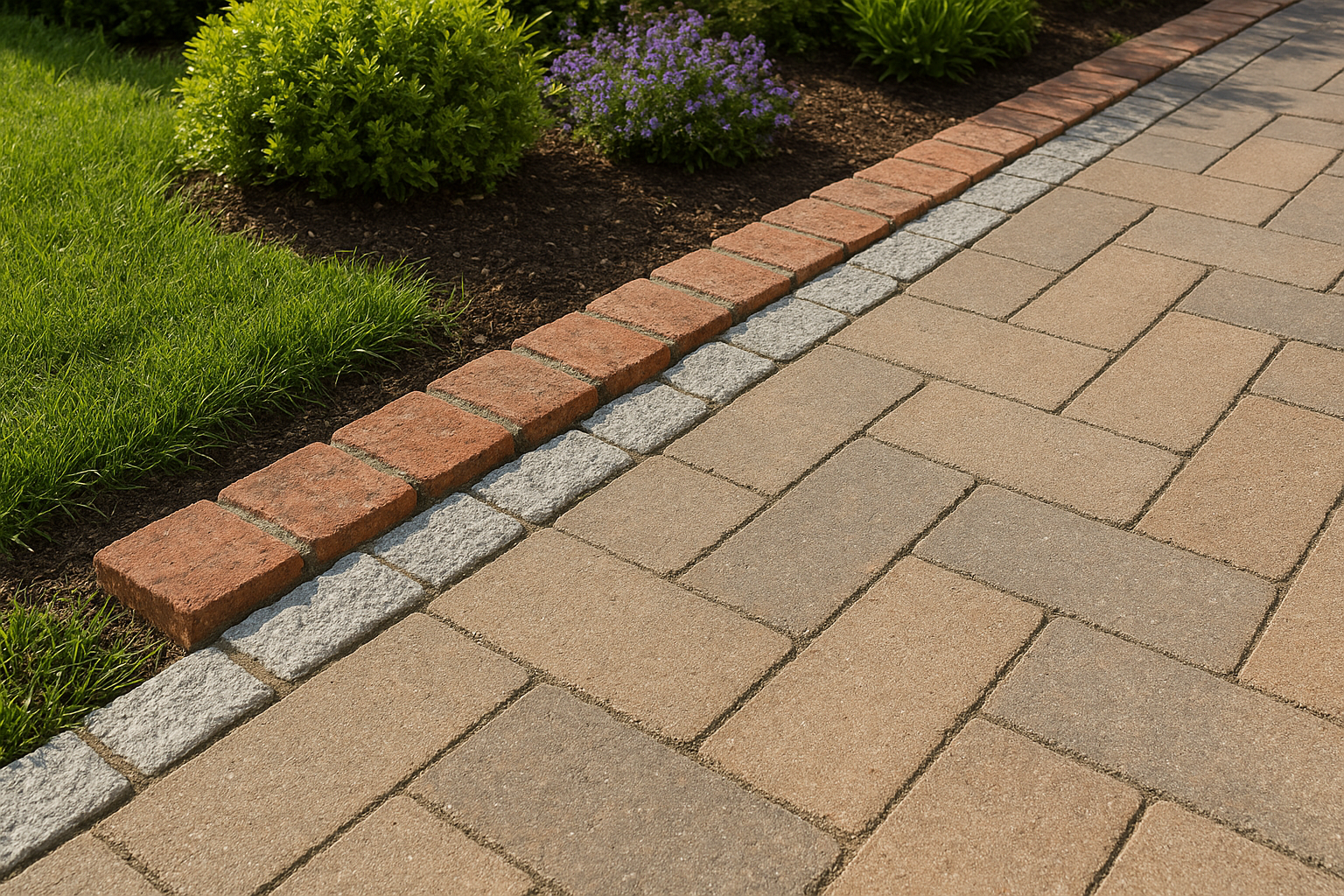
Brick and stone sett borders add natural texture and visual weight to your paved perimeter that most other edging materials cannot match. These rank among the most visually distinctive concrete paver edging options available, combining solid structural holding power with a premium finish that suits both traditional and contemporary garden styles in Malaysia.
What it is
A brick or stone sett border uses full bricks or hand-cut granite setts set in a mortar bed along your paver perimeter. Unlike a soldier course that uses matching field pavers, this option introduces a contrasting material that deliberately frames the paved surface as a clear design statement.
Best for
This edging works best for formal garden paths, heritage-style courtyards, and high-visibility entry areas where the border itself contributes to the overall aesthetic. Choose it when you want the edge to draw the eye rather than disappear into the field.
Pros and cons in Malaysia
Brick and stone sett borders are extremely durable and handle Malaysia's wet season without degrading. Natural granite setts resist heat, UV, and moisture particularly well. The main drawback is higher material and labor cost compared to most other edging methods, since hand-setting each unit takes considerably more time.
Stone setts develop a natural patina over time, which means they often look better after a few years than they did on the day of installation.
Installation notes for clean lines and stable joints
Set each unit in a full mortar bed at least 25mm deep and press firmly to eliminate voids beneath. Fill all joints completely before the mortar stiffens to prevent water from pooling in gaps and undermining the base.
Typical cost range in Malaysia
Brick or stone sett borders typically cost RM 30 to RM 60 per linear meter, with natural granite setts sitting at the higher end due to material sourcing and hand-cutting requirements.
9. Kerbstones or Low Retaining Wall Edging
Kerbstones and low retaining wall edging bring serious structural weight to your paver perimeter. These are the heaviest-duty concrete paver edging options in this list, built to hold back soil, manage grade changes, and contain your paved surface under conditions that would overwhelm lighter restraints.
What it is
Kerbstones are precast concrete or natural stone units set upright in a mortar bed along your paver edge, typically standing 100 to 200mm above the finished surface. A low retaining wall achieves the same result using stacked masonry or concrete block, giving you additional height where grade differences require it.
Best for
This edging suits sloped sites, raised patios, and areas where garden soil borders the paved surface directly. It also works well where tree roots or heavy seasonal rainfall create constant lateral pressure against the paver perimeter.
Pros and cons in Malaysia
Kerbstone edging is extremely durable and nearly impossible to shift once properly set. In Malaysia's wet season, it does an excellent job preventing soil wash across your paved surface. The main drawback is higher installation cost and weight, which requires more labor to position and bed correctly.
On sloped residential sites, kerbstones consistently outperform all lighter edging types when heavy monsoon rain puts lateral pressure on the paver border.
Installation notes for movement, roots, and soil wash
Set each kerbstone in a full mortar bed at least 30mm deep and back-fill firmly to prevent rocking. Leave 10mm expansion gaps every 3 meters to allow for thermal movement without cracking the mortar joints.
Typical cost range in Malaysia
Kerbstone edging typically costs RM 35 to RM 70 per linear meter, with natural stone kerbstones sitting at the higher end due to material and handling requirements.
A Simple Way to Choose
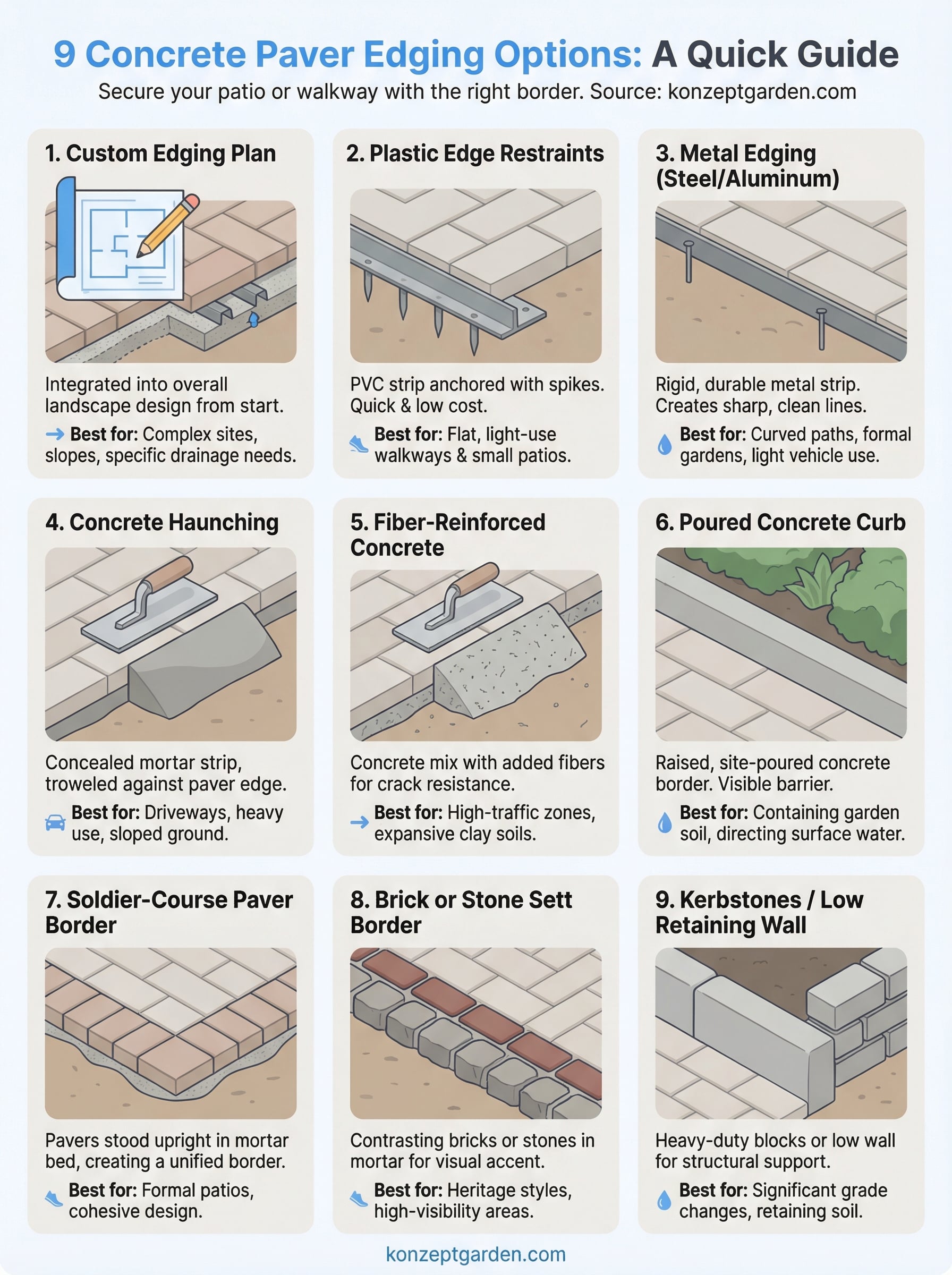
Picking between the nine concrete paver edging options in this guide comes down to three questions: How much traffic will the surface carry? What does your site look like? And how much do you want the border to show? For light foot traffic on flat ground, plastic or metal edging handles the job at the lowest cost. For driveways, slopes, or heavy-use areas, haunching, fiber-reinforced concrete, kerbstones, or a mortar-set soldier course will hold up far better over time.
Your budget and design goals settle the rest. A brick or stone sett border costs more but adds real visual character that cheaper options cannot match. A flush plastic restraint disappears cleanly if you want the pavers to read as an uninterrupted surface. Once you know your traffic load, site conditions, and design intent, the right choice becomes straightforward. If you want a professional assessment before committing, talk to a Konzept Garden landscape specialist and get a free quotation for your project.


