
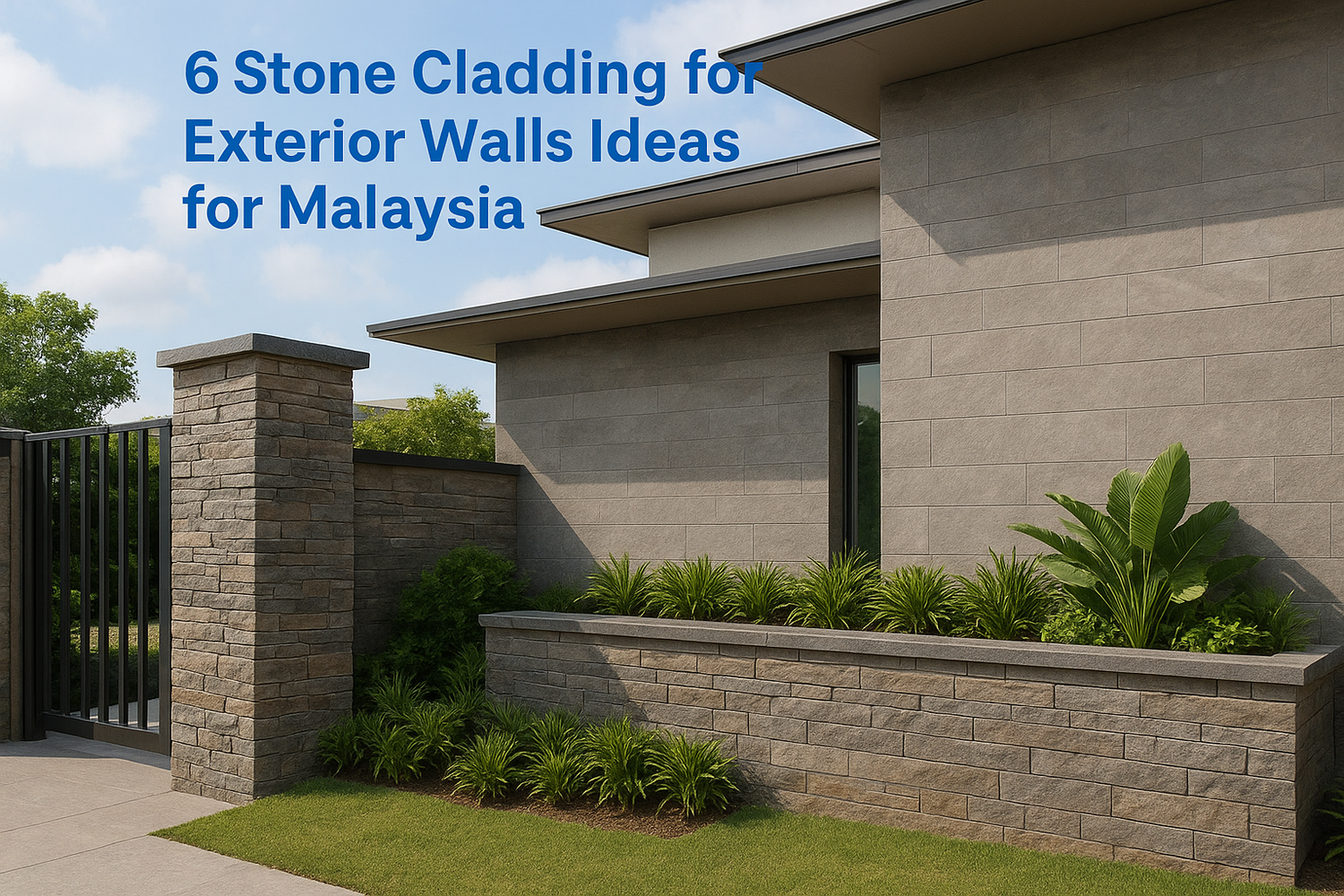
If you're building or renovating a home in Malaysia, stone cladding for exterior walls is one of the most effective ways to add texture, depth, and lasting character to your facade. It's a material choice that does real work, protecting walls from heat and moisture while giving the exterior a look that paint or render simply can't match. Whether your style leans toward modern minimalist or tropical contemporary, there's a stone cladding option that fits.
But with so many materials on the market, natural stone, manufactured panels, stacked slate, limestone, choosing the right one isn't always straightforward. Factors like Malaysia's humid tropical climate, UV exposure, and maintenance requirements all play a role. You also want something that complements your overall landscape and outdoor design, not just the building itself. That's where making an informed choice early saves time, money, and regret.
At Konzept Garden, we design outdoor spaces that work as a complete picture, from garden layouts and planting plans to hardscape elements like walls, pathways, and facades. Stone cladding is something we regularly incorporate into our landscape design projects across Malaysia because it bridges architecture and nature in a way few other materials can. In this article, we'll walk you through six stone cladding ideas for exterior walls suited to Malaysian homes, covering style, practicality, and what to consider before you commit.
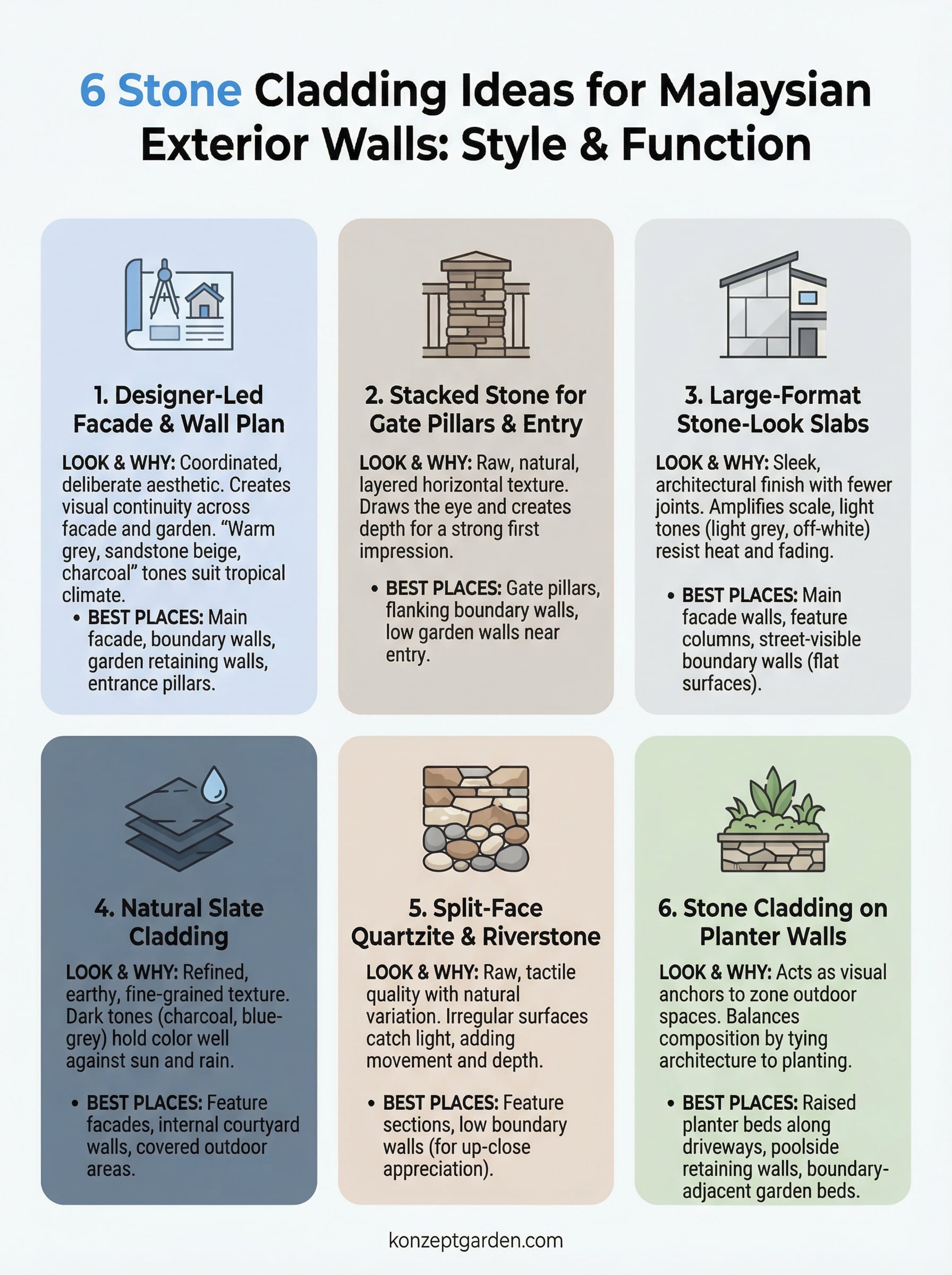
1. Designer-led facade and wall cladding plan
When a landscape designer specifies stone cladding as part of a coordinated exterior plan, the result looks deliberate and considered rather than added on. Tying your facade material to garden walls and paving creates visual continuity that individual product choices alone rarely achieve. This also means your material selection accounts for tropical weather from the start.
The look and why it works in Malaysia
A coordinated plan typically uses one dominant stone tone repeated across the facade and surrounding outdoor elements. In Malaysia, warm grey, sandstone beige, and charcoal perform reliably because they handle algae growth and UV discolouration better than pale finishes do. The result is a facade that looks consistent across seasons, not just when it's freshly installed.
When you work with a designer before choosing your stone, the selection is driven by your site's orientation, light conditions, and surrounding planting, not just what looked appealing in a showroom.
Best places to use it
This approach works best when you treat the exterior as one connected space rather than isolated zones. The locations where coordinated stone cladding for exterior walls delivers the strongest visual impact include:
- Main facade surfaces between windows and at ground level
- Boundary and perimeter walls facing the street
- Garden retaining walls and planter box exteriors
- Entrance pillar and column facings
Material choices that match a landscape plan
Natural limestone and sandstone work well in coordinated exterior schemes because their colour range is broad and they pair naturally with tropical planting. For lower-maintenance results, engineered stone panels that replicate natural textures deliver consistent sizing and thickness, which simplifies installation across large wall areas.
Your designer will also consider grout colour and joint width, since both affect how much shadow and depth the finished wall shows. Getting those details locked in at the planning stage avoids corrections after installation.
Cost and installation pointers
Budget planning is more reliable when you start from a full design brief. Professional installation in Malaysia typically ranges from RM 80 to RM 180 per square foot depending on stone type and wall complexity. Substrate preparation and fixing method are the two variables most likely to push costs upward, so confirm both are scoped in your quote before work begins.
2. Stacked stone cladding for gate pillars and entry walls
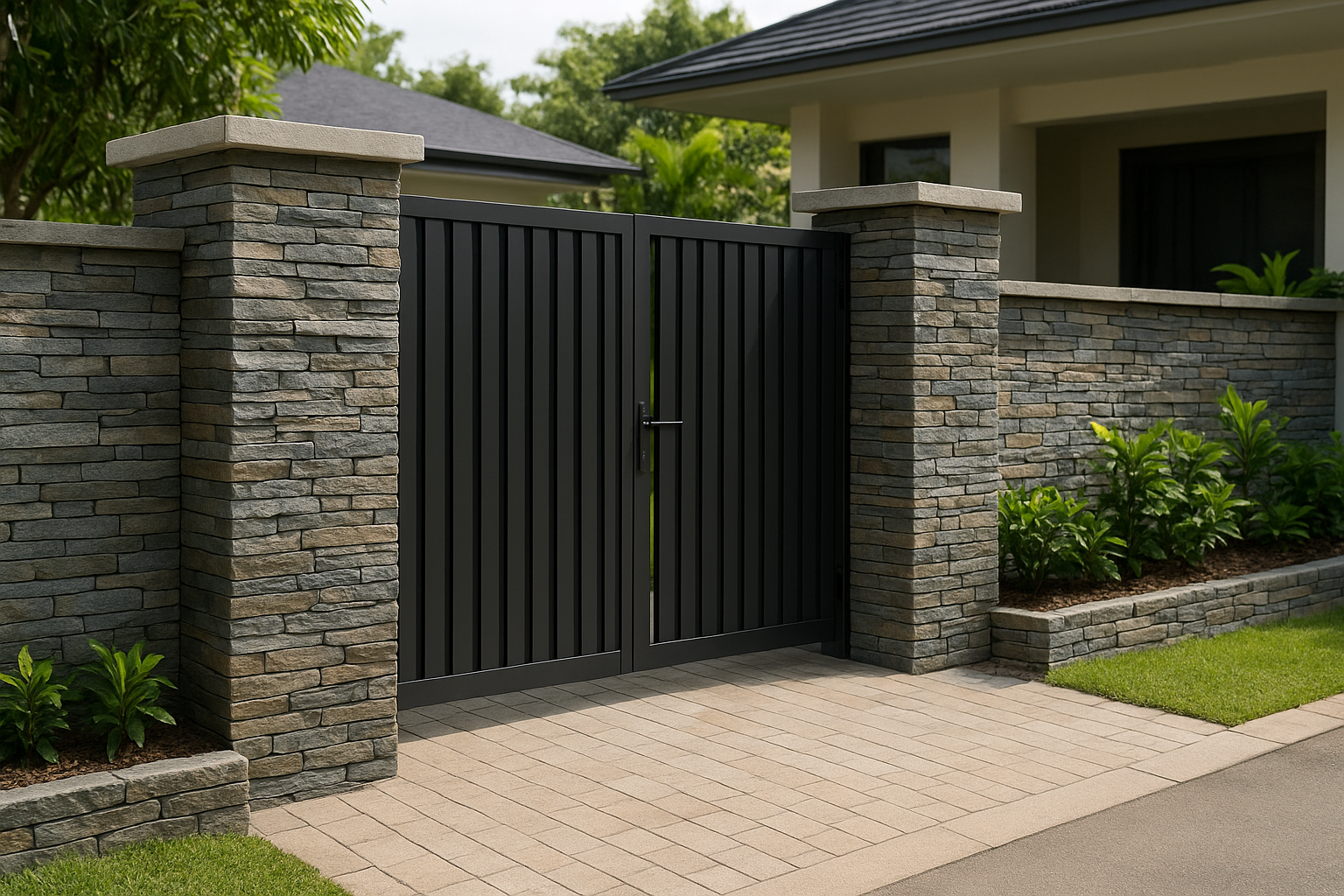
Stacked stone on gate pillars and entry walls creates a strong first impression without overwhelming the rest of your exterior. The layered, horizontal texture draws the eye and signals quality craftsmanship before anyone steps through the gate.
The look and overall vibe
Stacked stone cladding delivers a raw, natural look that suits both contemporary and heritage-inspired Malaysian homes. The irregular horizontal layers catch light differently throughout the day, giving your entry wall visible depth and character that flat render cannot replicate.
The entry point sets the tone for everything beyond it, so a well-clad gate pillar shapes how visitors read the entire property.
Best places to use it
Gate pillars and flanking boundary walls are the strongest applications for stacked stone. You can also carry the finish onto low garden walls directly adjacent to the entrance to extend the effect without inflating your material budget.
Material and maintenance notes
Split-face slate and quartzite are common choices for stacked applications in Malaysia because both handle rainfall and humidity well. Seal the surface annually to limit algae buildup, and rinse with low-pressure water during the dry season to keep the joints clear.
Cost and installation pointers
Labour costs for stacked stone run higher than flat panel options because each piece requires individual placement. Expect to budget RM 120 to RM 200 per square foot for supply and skilled installation in Malaysia.
3. Large-format stone-look slabs for a modern facade
Large-format stone-look slabs give a contemporary Malaysian home a clean, uncluttered exterior that suits the minimalist direction many new builds are taking. These panels replicate the appearance of natural stone at a much larger scale, reducing the number of visible joints and producing a sleek, architectural finish that reads well from the street.
The look and how it changes curb appeal
Fewer joints mean the eye travels across the wall surface without interruption, which amplifies the sense of scale on any facade. In Malaysia, light grey and off-white tones with subtle stone veining are popular because they stay cooler under direct sun and resist visible UV fading over time.
A single large-format slab panel covers more surface area than several smaller tiles, so the visual impact arrives faster with less material complexity.
Best places to use it
This style suits main facade walls, feature columns, and boundary walls visible from the street. Avoid using it on highly irregular or curved surfaces, as the rigid panel format works best on flat, straight wall runs.
Joint lines, edges, and water-shedding details
Tight joints and recessed edges are critical to prevent water ingress in Malaysia's heavy rainfall. Specify a waterproof tile adhesive and grout rated for exterior tropical use, and ensure all exposed top edges are finished with a proper drip profile.
Cost and installation pointers
Supply and installation for large-format stone cladding for exterior walls typically ranges from RM 100 to RM 180 per square foot in Malaysia, depending on panel size and substrate conditions.
4. Natural slate cladding for tropical modern homes
Natural slate brings a refined, earthy texture to contemporary Malaysian homes that manufactured panels rarely replicate. Its fine-grained, layered surface creates a subtle variation in tone and depth that suits the clean lines of tropical modern architecture without competing with them.
The look and how it handles sun and rain
Slate's dark tonal range, covering charcoal, blue-grey, and deep green-grey, absorbs and holds colour even under prolonged sun exposure. Unlike lighter materials, it doesn't wash out or yellow over time. Malaysia's heavy monsoon rainfall actually helps clean the surface naturally, though proper sealing ensures water sheds cleanly rather than penetrating the stone.
Slate's natural layering means each panel looks slightly different, giving your facade a handcrafted quality that uniform tiles cannot deliver.
Best places to use it
Use natural slate as stone cladding for exterior walls on feature facades, internal courtyard walls, and covered outdoor areas where direct weather exposure is partially managed. It also suits low boundary walls where the texture can be appreciated up close.
Sealing, algae risk, and cleaning routine
Apply a penetrating stone sealer every 12 to 18 months to limit moisture absorption and reduce algae growth in shaded sections. A soft brush and diluted stone cleaner handles surface algae without damaging the cleft finish.
Cost and installation pointers
Supply and installation for natural slate typically falls between RM 110 and RM 190 per square foot in Malaysia, depending on panel thickness and wall access.
5. Split-face quartzite and riverstone for texture
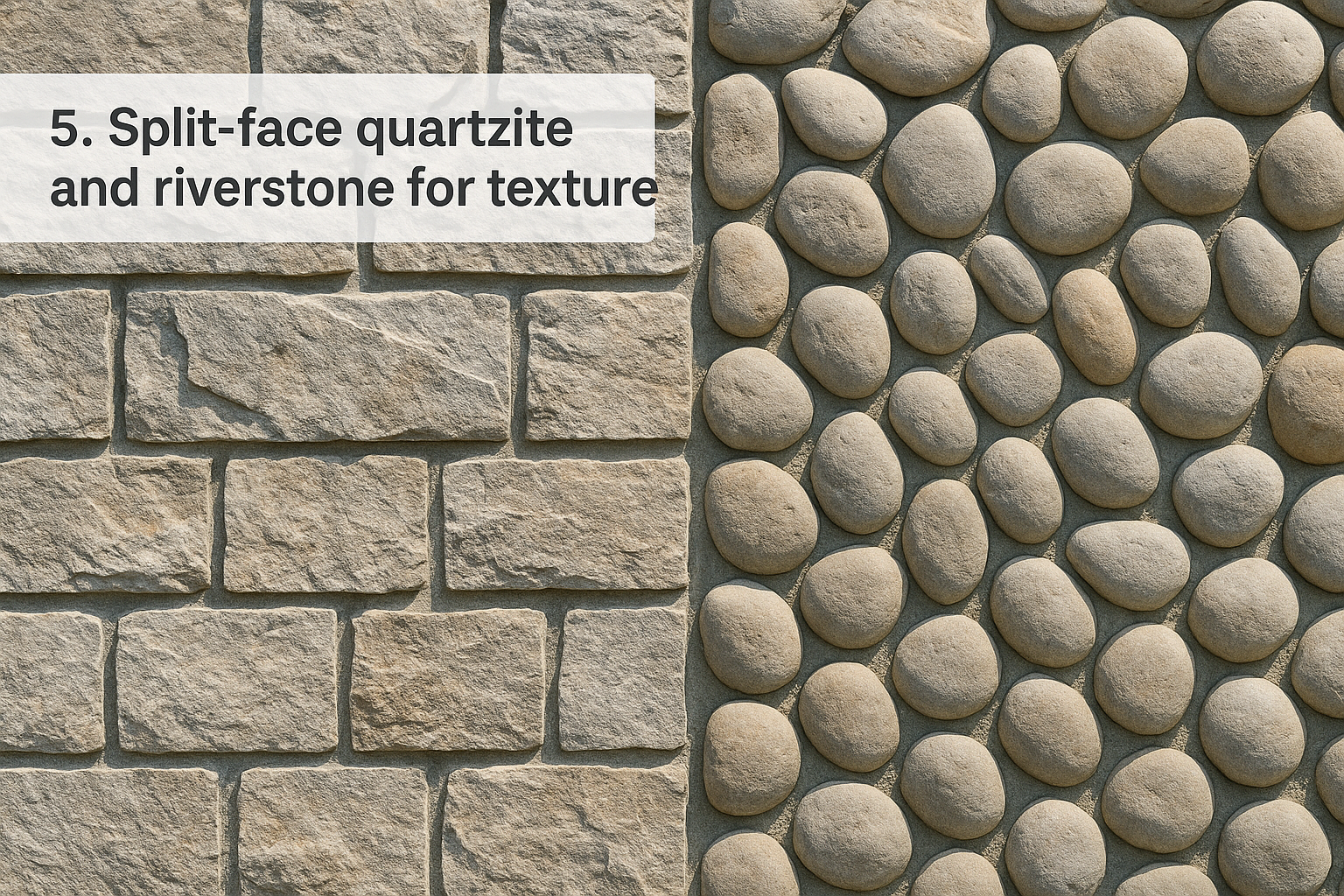
Split-face quartzite and rounded riverstone bring a raw, tactile quality to exterior walls that polished or flat-faced materials simply cannot match. The irregular surfaces catch shadow and light throughout the day, giving your walls a sense of movement and depth that works particularly well in Malaysia's bright tropical light.
The look and how it adds depth
Both materials rely on natural surface variation to create their visual impact. Split-face quartzite fractures along natural fault lines, exposing a jagged, crystalline face that reflects light at multiple angles. Riverstone's smooth, rounded profile contrasts well against it, and the two are often combined in feature walls for a layered, organic result.
Using two complementary textures together on the same wall plane creates far more visual interest than repeating a single material across the entire surface.
Best places to use it
Both textures work best as stone cladding for exterior walls on feature sections and low boundary walls where the detail can be appreciated up close. Avoid applying them across full upper-storey facades where the surface variation is lost from street level.
Grout, staining, and long-term upkeep
Use a stain-resistant grout and apply a penetrating sealer after installation to reduce water absorption and limit moss growth in shaded areas. Clean annually with a soft brush and stone-safe cleaner to prevent long-term discolouration in the joints.
Cost and installation pointers
Labour-intensive individual placement means split-face and riverstone options typically cost RM 130 to RM 210 per square foot for supply and installation in Malaysia, depending on wall complexity and stone sourcing.
6. Stone cladding on planter walls and raised beds
Using stone cladding for exterior walls extends naturally to planter walls and raised garden beds, bringing the same material language down to ground level where architecture and planting work together rather than sitting as disconnected elements.
The look and how it zones outdoor spaces
Clad planter walls act as visual anchors within a garden, separating outdoor zones without the heaviness of solid masonry. The texture draws the eye inward toward planting rather than upward toward the building, which balances the overall exterior composition and gives your garden a structured, intentional feel.
Repeating your facade stone on planter walls ties the entire exterior together in a way that painted or rendered beds rarely achieve.
Best places to use it
Raised planter beds along driveways, poolside retaining walls, and boundary-adjacent garden beds are the strongest applications. Even a low 400mm planter wall clad in matching stone reads as part of your overall exterior design rather than an afterthought.
Drainage, waterproofing, and efflorescence prevention
Apply a waterproof membrane behind the cladding on all planter walls before installation, as retained soil moisture drives efflorescence and accelerates stone deterioration. Ensure adequate drainage outlets at the base and apply a breathable sealer on the stone face annually.
Cost and installation pointers
Planter wall cladding typically costs RM 90 to RM 160 per square foot in Malaysia, as wall heights are lower and access is simpler than on upper facades. Confirm that your contractor scopes the waterproofing layer separately, as this is often excluded from base quotes.
Next steps
Stone cladding for exterior walls does more than improve how your home looks from the street. The right material, installed correctly and tied to your broader outdoor design, adds long-term durability and visual consistency that holds up through Malaysia's heat, humidity, and monsoon seasons.
Choosing which option fits your project comes down to your wall location, maintenance appetite, and design goals. Whether you're cladding a full facade, gate pillars, or garden planter walls, starting with a clear design brief prevents costly material mismatches and installation rework later.
At Konzept Garden, we help homeowners across Malaysia plan and implement outdoor spaces where every element works together. If you're ready to move forward, get in touch with our team to discuss your project, request a quotation, and get professional guidance on stone selection that suits your property and budget.