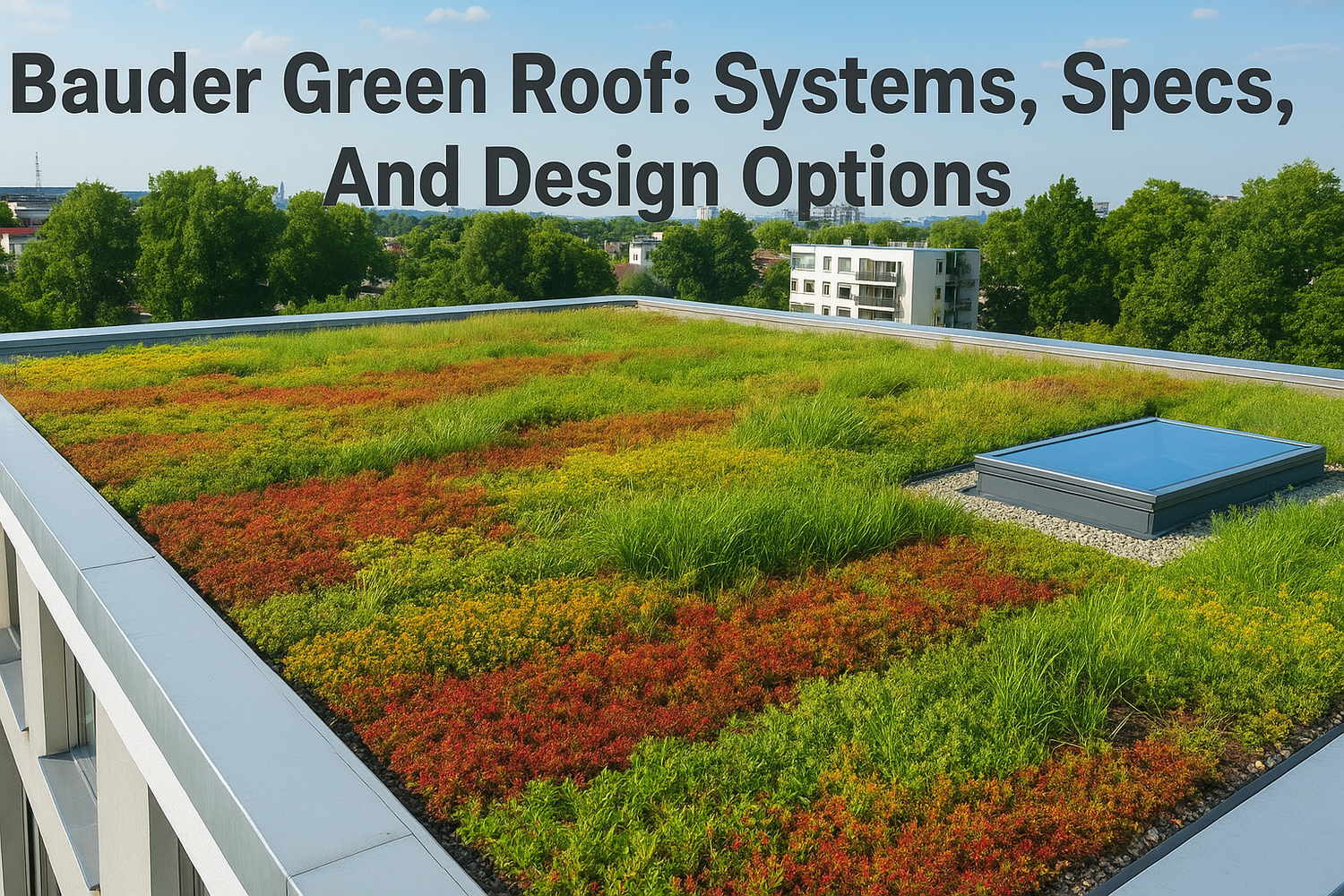
Green roofs have moved from architectural novelty to practical necessity, especially for commercial and residential projects seeking sustainable building solutions. If you're researching Bauder green roof systems, you're likely after the specifics, product options, technical data, and how these systems perform in real-world applications. Bauder has built a reputation in Europe and beyond for engineered roofing solutions that balance durability with environmental performance.
At Konzept Garden, we work with clients across Malaysia who want to integrate sustainable features into their landscape designs. Green roofs often come up in conversations about maximizing space, reducing heat absorption, and creating living architecture that serves both aesthetic and functional purposes. Understanding what Bauder offers helps property owners and developers make informed decisions about their roofing investments.
This article breaks down Bauder's green roof systems, from extensive to intensive options, along with their specifications and design flexibility. Whether you're an architect drafting plans, a developer weighing options, or a homeowner exploring possibilities, you'll find the technical details and practical insights you need to evaluate if Bauder's systems fit your project requirements.
Why Bauder green roofs matter
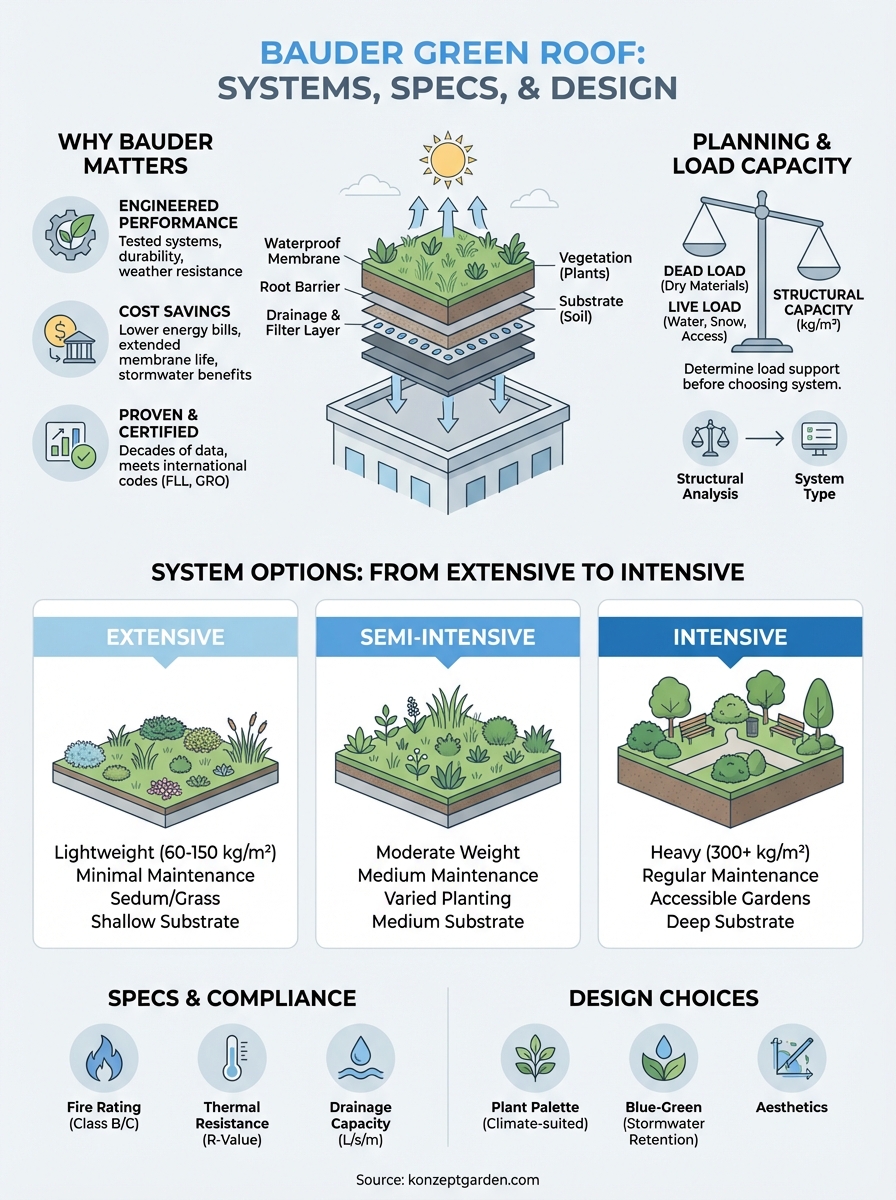
Your roofing choice affects energy costs, building lifespan, and environmental impact for decades. Bauder green roof systems deliver measurable performance across all three areas, which is why architects and developers across Europe and Asia trust them for projects ranging from single-family homes to large commercial complexes. These aren't cosmetic additions; they're engineered layers that manage water, insulate buildings, and extend membrane life by protecting it from UV degradation and thermal cycling.
Performance backed by decades of engineering
Bauder has refined its systems through real-world installations since the 1970s, accumulating data on how green roofs perform across climate zones, structural loads, and maintenance regimes. You get access to technical specifications that cover everything from drainage rates to root barrier performance, which means you can model outcomes rather than guess. Their systems meet European standards like FLL guidelines and UK GRO codes, giving you third-party validation of performance claims. Each component, from waterproofing membranes to drainage layers, undergoes testing that simulates years of weather exposure and structural stress.
Choosing a system with decades of field data reduces project risk and simplifies approval processes.
Cost savings beyond the install
A Bauder green roof cuts cooling costs by reducing heat island effects and adding thermal mass. Buildings with properly designed green roofs see HVAC load reductions of 20 to 40 percent during hot months, depending on substrate depth and plant coverage. The membrane itself lasts longer because vegetation shields it from temperature swings that cause expansion and contraction damage. You're looking at longer replacement cycles and lower maintenance costs compared to conventional roofing, which translates to better return on investment over a 30-year period. Stormwater management benefits also matter in urban areas where drainage fees and flood mitigation requirements push developers toward green infrastructure solutions that earn credits or reduce regulatory burden.
How to plan a Bauder green roof build-up
Planning starts with your building's structural capacity because every green roof adds weight. A Bauder green roof system includes multiple layers, each contributing to the total load, from waterproofing membranes to substrate and saturated vegetation. You need to work with a structural engineer to confirm your roof can handle the dead load (materials when dry) plus the live load (water saturation, maintenance access, snow where applicable). This calculation determines whether you can proceed with an extensive system, an intensive garden, or need to reinforce the structure first.
Load capacity sets your system type
Your structural analysis reveals the maximum kilograms per square meter your roof supports, which directly dictates system depth and plant options. Extensive systems typically require 60 to 150 kg/m² when saturated, while intensive builds can exceed 300 kg/m² depending on substrate depth and hardscape features. Calculate loads at saturation, not dry weight, because drainage layers hold water during heavy rainfall. Existing buildings often need reinforcement or column support if you're upgrading from conventional roofing to a green system with deeper substrate layers.
Skipping proper load calculations risks structural failure and invalidates warranties.
Layer sequence follows tested protocols
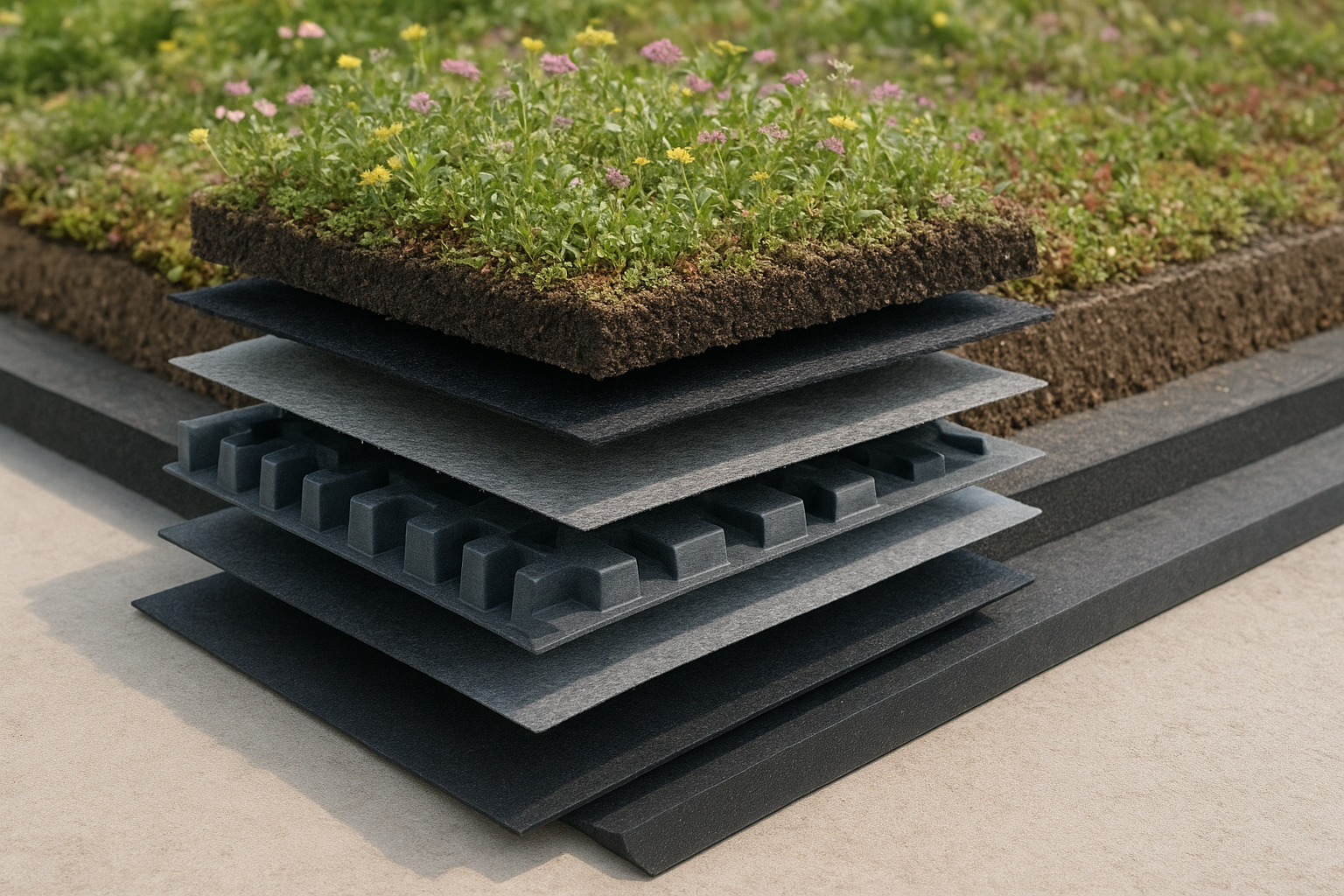
Bauder systems follow a specific stacking order that prevents root penetration, manages drainage, and protects waterproofing. You start with the waterproof membrane, add a root barrier if needed, then place the drainage layer, filter fabric, and substrate. Each component serves a function that the next layer depends on, so substituting materials or changing the sequence compromises system performance.
Bauder system options: extensive to intensive
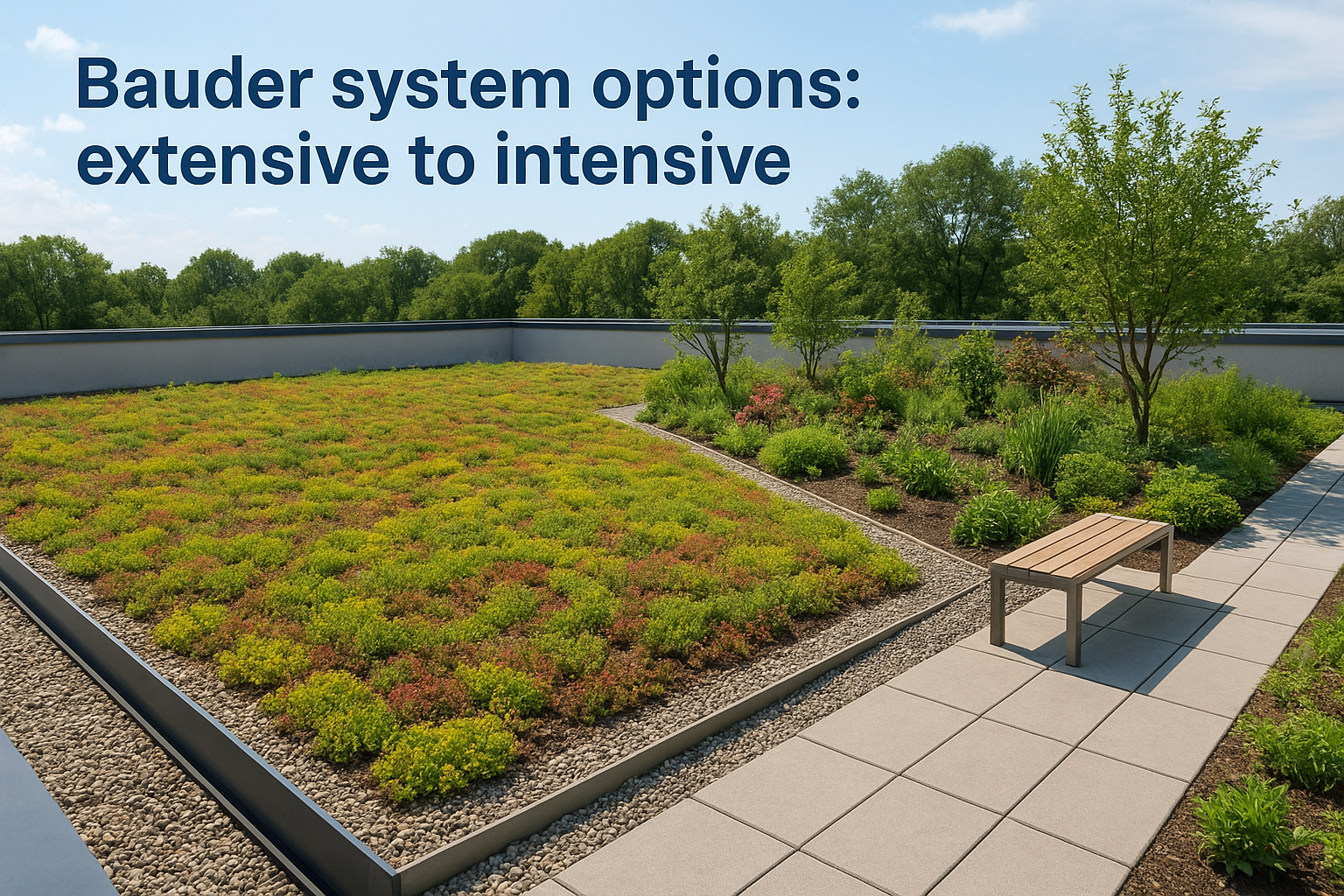
Bauder categorizes its green roof systems by substrate depth and maintenance intensity, giving you three main options that fit different structural capacities and usage goals. Extensive systems suit roofs where weight matters most and maintenance access is limited, while intensive builds create rooftop gardens with deeper soil that supports larger plants and regular foot traffic. Semi-intensive systems split the difference, offering more planting variety than extensive without the full weight of intensive designs.
Extensive systems for minimal maintenance
Your extensive Bauder green roof uses substrate depths between 60 and 150 millimeters, supporting sedum species and drought-tolerant grasses that survive with minimal irrigation. These systems weigh 60 to 150 kg/m² when saturated, making them suitable for most existing structures without reinforcement. You'll see annual maintenance requirements of one to two visits for weeding and nutrient top-up. Installation costs run lower than intensive options because you need less substrate, simpler irrigation, and fewer structural modifications.
Extensive systems deliver environmental benefits with the lowest structural demand.
Intensive systems for accessible gardens
Intensive builds use substrate depths exceeding 200 millimeters, which lets you plant shrubs, small trees, and perennials alongside hardscape features like pathways and seating areas. These systems function as usable outdoor spaces rather than just environmental layers, requiring regular irrigation, fertilization, and maintenance similar to ground-level gardens. Weight loads exceed 300 kg/m² at saturation, so you need structural confirmation before proceeding with design.
Specs that drive performance and compliance
Your project approvals depend on meeting building codes and performance standards that govern fire safety, water management, and structural integrity. A Bauder green roof comes with documented specifications that address these requirements, giving your architect and building inspector the data they need to sign off on permits. You'll reference metrics like fire resistance ratings, water retention capacity, root barrier thickness, and membrane compatibility when submitting plans or demonstrating compliance with local regulations.
Fire ratings and thermal resistance
Building codes require specific fire performance classifications for roofing assemblies, particularly on commercial structures where occupancy loads and escape routes matter. Bauder systems carry ratings that indicate how they respond to external fire exposure, typically meeting Class B or C requirements depending on component selection and substrate depth. Your thermal resistance values (R-values or U-values) also appear in spec sheets, helping you calculate energy performance for green building certifications like LEED or local sustainability programs. These numbers matter when you're chasing tax credits or regulatory incentives tied to building efficiency.
Verified fire ratings prevent project delays and satisfy insurance underwriters.
Drainage capacity and root protection
Your drainage layer specifications indicate maximum flow rates measured in liters per second per meter, which determines if the system handles peak rainfall without ponding or overloading downspouts. Bauder publishes these figures alongside root barrier penetration resistance data that confirms the membrane stays intact under plant growth pressure over decades.
Design choices: plants, drainage, blue-green
Your design decisions shape how your Bauder green roof performs and looks over its lifespan. You choose from plant palettes suited to your climate and maintenance budget, configure drainage layers that match rainfall patterns, and decide whether to integrate blue roof components that temporarily store stormwater. These choices affect everything from water retention capacity to aesthetic impact and long-term maintenance costs.
Plant palette selection
Your substrate depth determines which species survive on your roof. Sedum varieties dominate extensive systems because they tolerate shallow soil and drought conditions, while intensive builds support perennials, grasses, and small shrubs that need deeper root zones. You'll match plants to your local climate and sun exposure, choosing species that handle wind, temperature swings, and irrigation availability. Native plants often perform better than imported varieties because they've adapted to regional rainfall patterns and temperature extremes.
Blue-green integration
Combining green and blue roof elements gives you temporary water storage beneath the drainage layer, releasing it slowly after storms rather than immediately overwhelming municipal systems. You add retention boards or reservoir layers that hold water for 24 to 48 hours, feeding plants while reducing peak discharge rates. This hybrid approach earns stormwater credits in many jurisdictions and supports vegetation during dry periods.
Blue-green systems deliver flood mitigation and irrigation benefits simultaneously.
What to do next
Your Bauder green roof evaluation now has the technical foundation you need to move forward with confidence. You've reviewed system types, load requirements, drainage specifications, and design variables that determine whether an extensive, semi-intensive, or intensive build matches your project parameters. Armed with this knowledge, you can have informed conversations with architects, structural engineers, and roofing contractors about feasibility, costs, and timelines.
Malaysian climate conditions present unique challenges and opportunities for green roof installations, from managing heavy monsoon rainfall to reducing heat gain in tropical conditions. At Konzept Garden, we design sustainable outdoor spaces that integrate natural systems with practical functionality, whether you're planning a residential rooftop garden or exploring commercial landscape solutions. Our team understands how living architecture fits into broader landscape design strategies that maximize space and environmental performance. Contact our design team to discuss how green infrastructure can transform your property's outdoor areas.