
If you are searching for artificial grass installation near me, the fastest route is four steps. Measure your area, get written quotes from installers who visit your site, make sure the base is built properly, and have the turf laid, cut and fixed at the edges. You can also do the job yourself on a small, flat area. Either way, the base underneath decides whether the lawn still looks good in five years.
The problem is that quotes vary widely and the key work is hidden. Once the grass is down, nobody can see whether the base was compacted or whether water has anywhere to go. In Malaysia, with heavy afternoon rain and strong sun, a weak base shows up quickly as puddles, ripples and lifting edges.
This guide helps you decide between hiring and DIY, then takes you through four steps in order, with a worked 20 m² example. It draws on how Konzept Garden supplies and installs NobleGrass, so you will know what a proper quote and a proper installation should include.
Installer or DIY: decide before you buy
Hire a local installer for gardens above roughly 20 m² or any ground that needs digging. Do it yourself only on balconies, rooftops, flat concrete or small patches. That split follows the work, not the price. Digging, compacting and cutting are physical and unforgiving, and a mistake in the base is expensive to redo.
What the installation involves
Every installation, whoever does it, has the same four jobs. You measure and choose the grass, prepare the base, lay and cut the turf, and fix the edges. The grass itself is the easy part. Most of the time and skill goes into the base, which is why the steps below spend the most space there.
On a balcony or a flat concrete slab nothing needs digging. The job shrinks to cleaning the surface, checking that it falls towards the drain, and laying the grass.
Installer or DIY at a glance
| Factor | Local installer | DIY |
|---|---|---|
| Best for | Gardens over 20 m², sloped or soft ground | Balconies, rooftops, flat concrete, small patches |
| You pay for | Materials and labour, with base work included | Materials, tools and your own time |
| Skill needed | None from you | Measuring, compacting, cutting |
| Main risk | Choosing a poor installer | Ripples, puddles, wasted offcuts |
| Warranty | Material warranty, sometimes workmanship too | Material warranty only |
A lawn is only as good as the base under it.
Step 1. Measure the site and choose your grass
Multiply length by width for every area to get square metres, then photograph the site from two angles before you contact anyone. These numbers drive every quote and every purchase, so do them first.
Measure and photograph
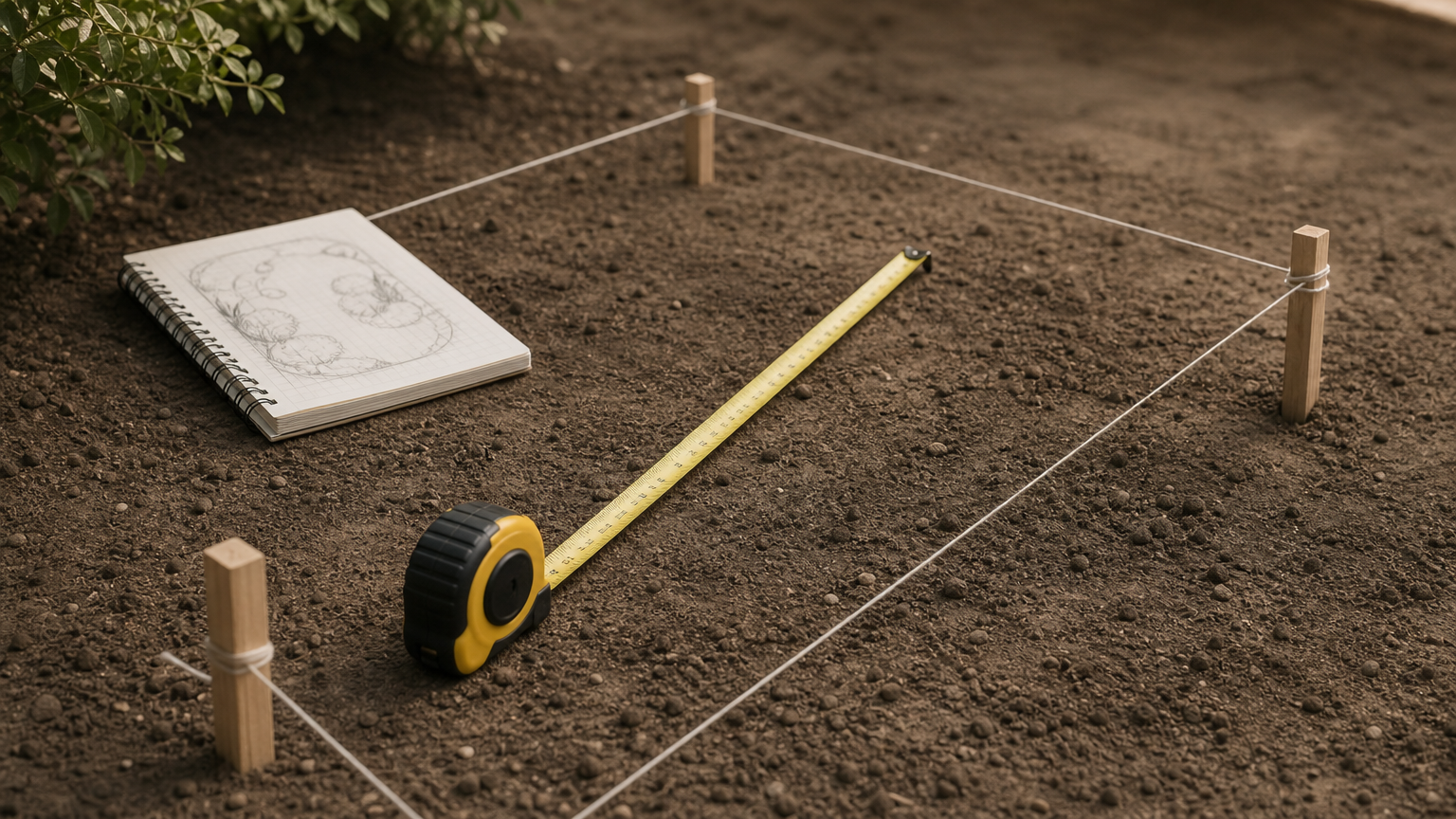
Sketch the area on paper. Split odd shapes into rectangles and triangles, measure each, and add them up. Note trees, drains, water points, slopes and how materials will reach the site. Photos and measurements are what installers need to quote, and Konzept Garden asks for exactly these to prepare a proposal.
For roll grass, allow 5 to 10 percent extra for cut waste. Drain cell tiles come in modular 50 cm x 50 cm pieces, so waste is lower.
Pick a grade and work out the material cost
NobleGrass comes in three grades. The table shows the price of one set of drain cell tiles, which covers 1 m², and the material cost for a 4 m x 5 m lawn of 20 m². These are DIY material prices, not installed prices, and they exclude base materials.
| Grade | Price per 1 m² set | 20 m² total |
|---|---|---|
| Valu 30 | RM99 | RM1,980 |
| Cruz 30 | RM139 | RM2,780 |
| Premium 35 | RM165 | RM3,300 |
Choose Valu 30 for light use and a tight budget, and step up for heavy foot traffic or a softer look. For installed prices per sq ft, check the NobleGrass collection page, which carries them.
Measure first, because every price you compare depends on your square metres.
Step 2. Get quotes from installers near you
Search for installers in your own area, ask each for a site visit, and compare written quotes line by line instead of by headline price. A cheap quote often leaves out the base, which is the part that matters most.
Where to look and what to expect
Search "artificial grass installer" plus your town on Google Maps, then ask neighbours who have fake grass what they would change. Check each company's finished projects for jobs like yours. If you can, visit a showroom to feel the samples, since photos hide pile softness and colour.
Expect a site visit. At Konzept Garden, you send photos and measurements by WhatsApp. A site visit costs RM200, which is deducted from your final quotation if the project goes ahead. A proposal typically follows within 4 to 5 days after the visit. If you are near Petaling Jaya, the showroom is at Taman Sains Selangor.
Questions to ask every installer
Put the same questions to each company, so you compare like with like:
- Is the quote priced per m², with base, edging and soil disposal listed separately?
- How deep is the base, and what material is it made of?
- Which grade of grass is it, and what is the material warranty? NobleGrass, for example, has an 8-year original warranty against UV discoloration and pile tear out, plus a 2-year extension.
- Does the installer also guarantee the workmanship?
- When can the work start, and how many days will it take?
Compare what is in each quote, not what it costs at the bottom.
Step 3. Prepare the base
Remove the old surface, dig out about 70 mm, lay and compact roughly 50 mm of crushed stone, then level with 20 mm of sand or stone dust. If you hire an installer, this is the stage to ask about and, if possible, watch.
Clear, dig and set the fall
Strip existing grass, weeds and roots. Dig to about 70 mm below your finished level. On a 20 m² lawn, that means removing about 1.4 m³ of soil. Lay a weed membrane over the soil, then shape the ground so it falls 1 to 2 cm per metre away from the house. Water needs somewhere to go during a downpour.
Compact and level the base
Follow these steps in order:
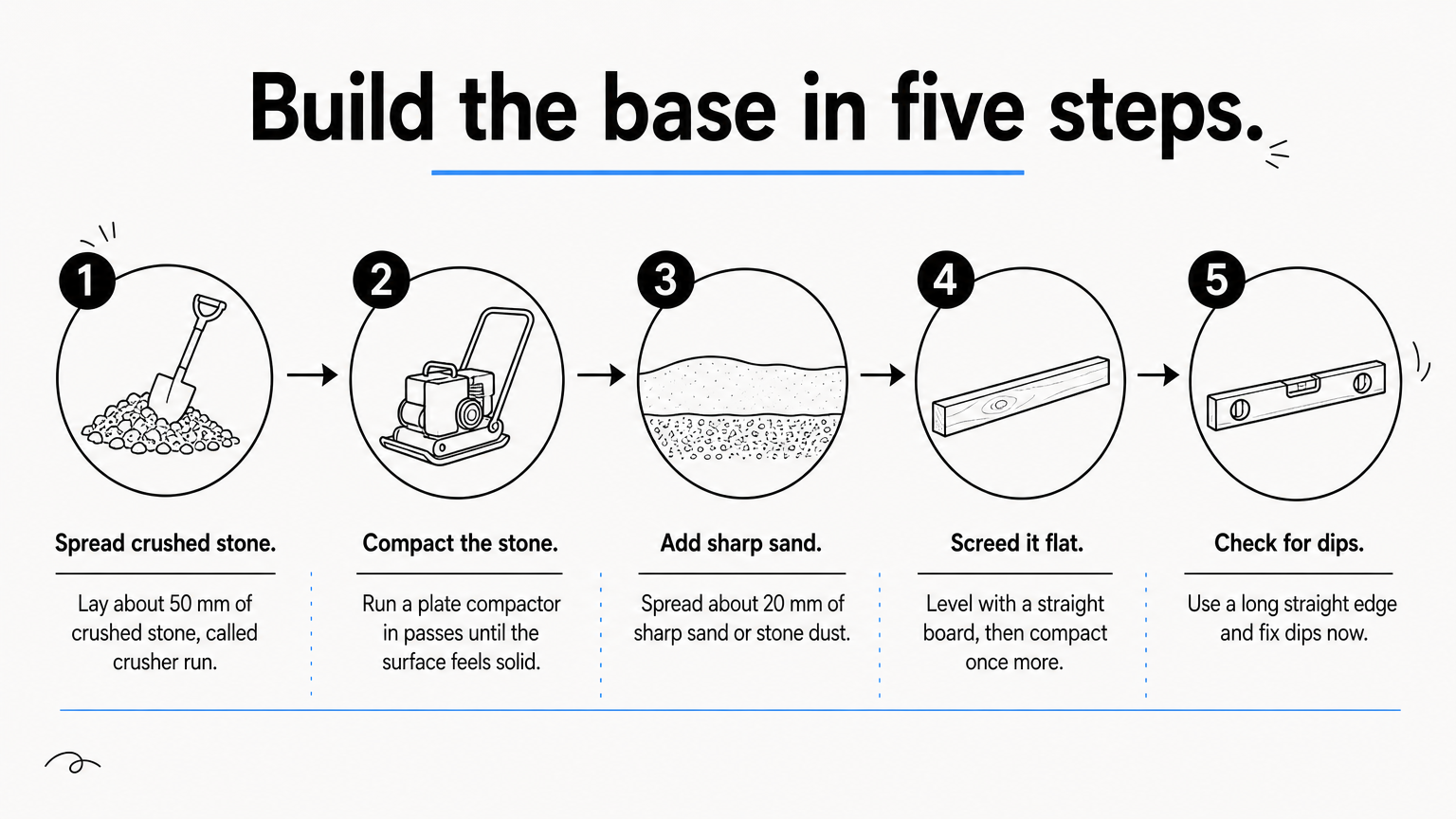
- Spread about 50 mm of crushed stone, often sold as crusher run. For 20 m², this is roughly 1 m³.
- Compact it with a plate compactor, working in passes until the surface feels solid.
- Spread about 20 mm of sharp sand or stone dust, about 0.4 m³ for 20 m².
- Screed it flat with a straight board and compact once more.
- Check for dips with a long straight edge and fix them now.
For a balcony or rooftop, skip the digging. Clean the slab, sweep away grit and confirm water reaches the drain.
Water that cannot leave the base will show up as a puddle on your lawn.
Step 4. Lay, cut and fix the grass
Roll the grass over the finished base, let it relax, cut from the back, then secure the edges every 10 to 15 cm and brush the pile. A small lawn is realistically a weekend job for two people once the base is ready.
Lay and cut the turf
Unroll the grass and leave it for a few hours in the sun so creases drop out. Point the pile in the same direction on every piece, usually towards the main viewing spot. Cut from the back with a sharp utility knife, changing blades often. Where two pieces meet, use joining tape and outdoor adhesive, and press the seam tight so no gap shows.
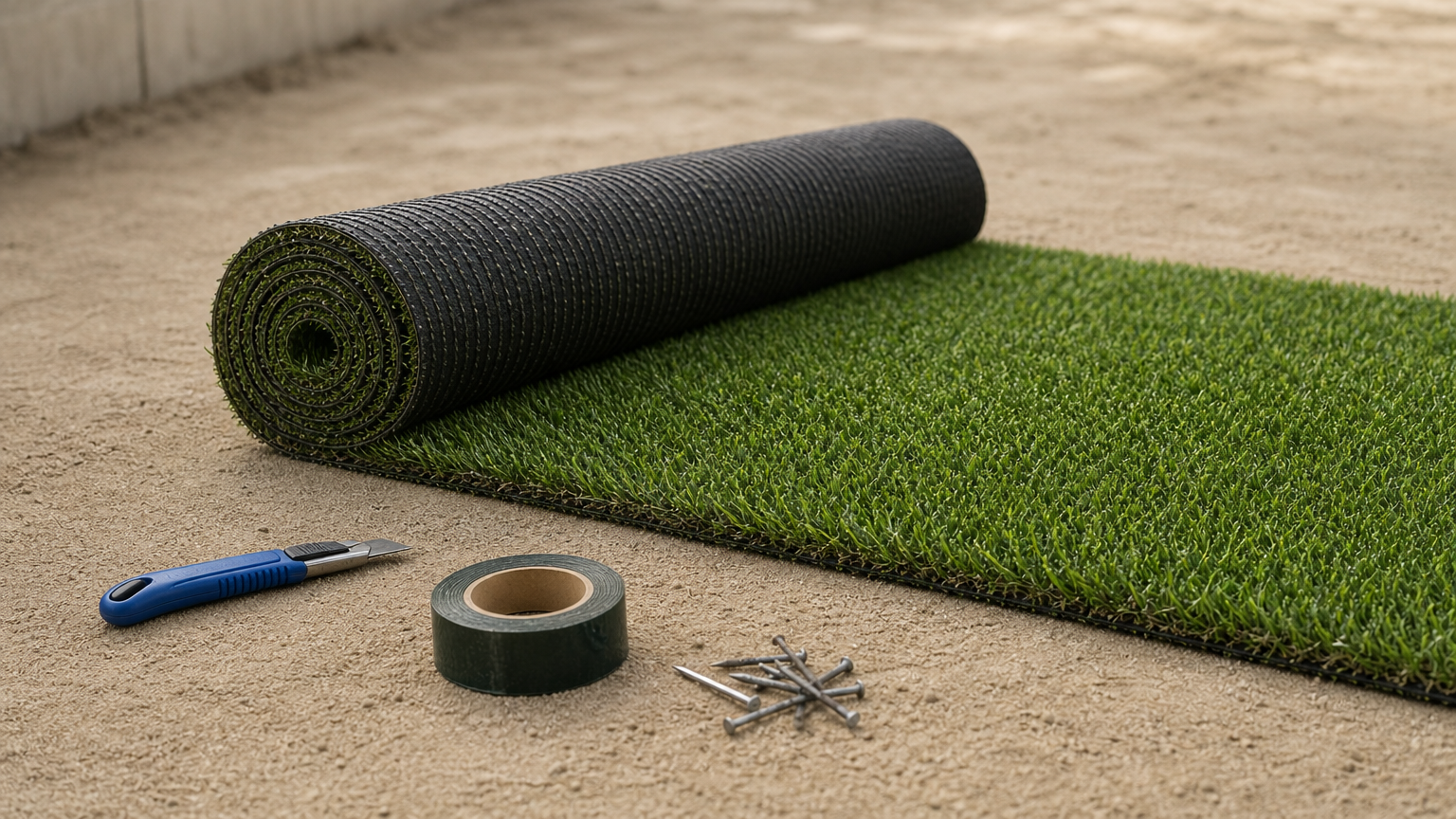
If you buy DIY drain cell sets from Konzept Garden, installation is not included. Step-by-step video guides for installing and cutting are provided, so you can follow along.
Fix the edges and finish
Fix the perimeter with galvanised nails or pegs every 10 to 15 cm. Where the grass meets a garden bed or path, a flexible edging gives a neat border. Our 10-metre edging pack costs RM175 and includes 30 spikes. A 4 m x 5 m lawn has an 18 m perimeter, so with all sides open you need two packs, RM350. Walls and paving may need none.
Finish by brushing the pile upright against its lay and rinsing off dust. Then check the drainage by running a hose across the surface.
Secure the edges properly, because that is where lawns lift first.
Start with your measurements
The steps run in a fixed order. Measure the site, get comparable written quotes, build a compacted and draining base, and only then lay and fix the grass. Hire out anything large, sloped or soft, and keep DIY for balconies, rooftops and small flat areas. Whatever you choose, never skip the base.
If you want help from people who supply and install NobleGrass, send your photos and measurements to Konzept Garden and ask for a proposal for your site.