
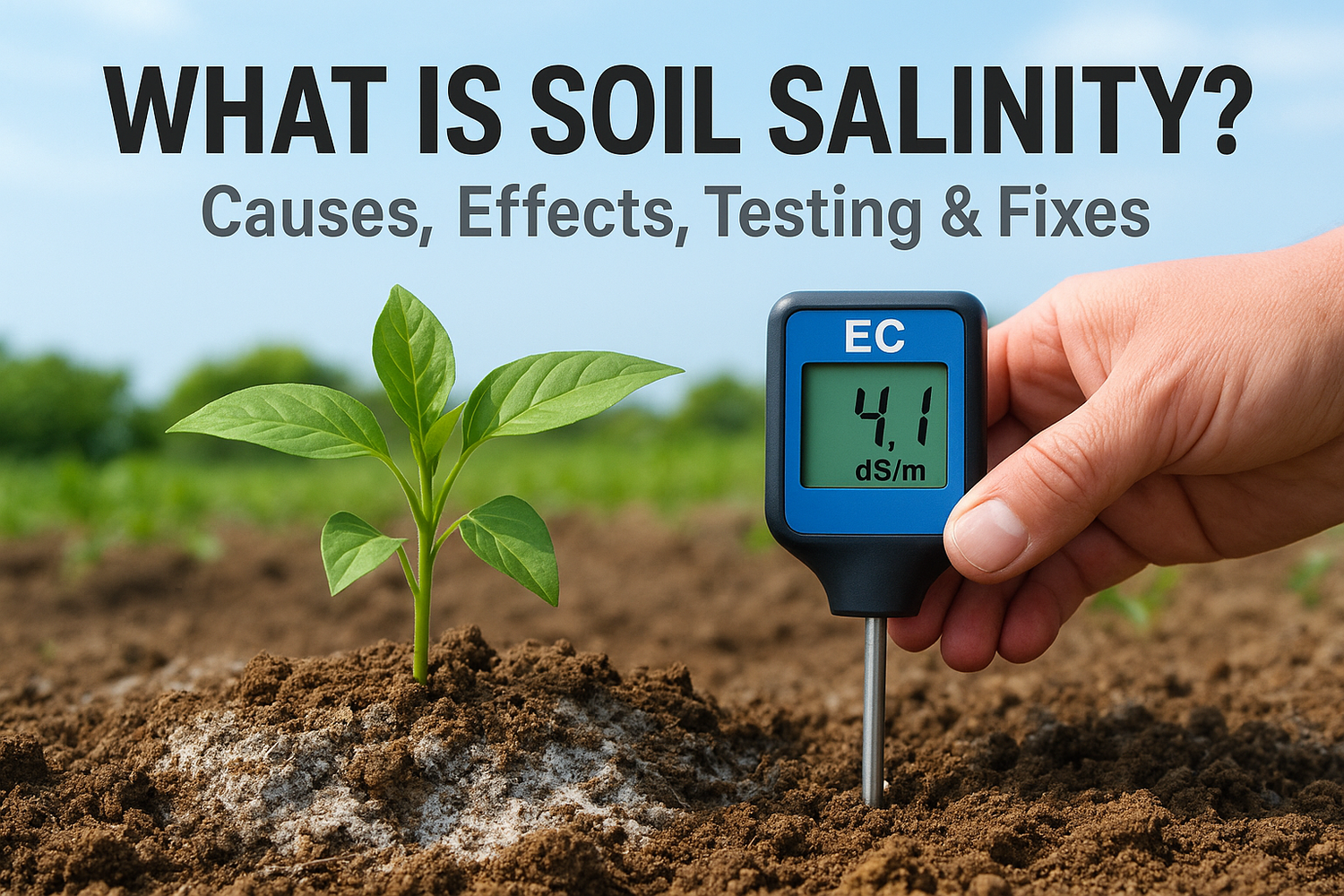
Salt in your soil is a silent problem. You might not see it right away, but your plants will show the signs, stunted growth, yellowing leaves, and patches of ground where nothing seems to thrive. Understanding what is soil salinity is the first step toward protecting your garden or landscape from long-term damage that's difficult to reverse once it takes hold.
In Malaysia's tropical climate, factors like poor drainage, irrigation practices, and certain fertilizers can push salt levels in soil higher than most plants can tolerate. Whether you're maintaining a home garden or managing a larger commercial property, salt accumulation affects everything from root health to the overall look of your outdoor space. At Konzept Garden, we've seen firsthand how undiagnosed salinity issues can undermine even the best landscape designs.
This article breaks down the causes of soil salinity, how it affects plant growth, and, most importantly, what you can do about it. We'll cover testing methods you can use yourself, practical fixes that work in our local conditions, and when professional intervention makes sense.
Why soil salinity matters in Malaysian gardens
Malaysia's heat and humidity might seem like they'd wash salts away with frequent rainfall, but the reality is more complicated. High evaporation rates during dry spells concentrate salts at the soil surface faster than most gardeners expect. When you add irrigation habits and fertilizer use on top of that, the conditions for salt accumulation become very real, even in a tropical environment. Ignoring this issue leads to declining plant health that can be expensive to reverse.
How Malaysia's climate accelerates the problem
The wet-dry cycles that define Malaysian seasons play a direct role in soil salinity. During dry periods, water evaporates from the soil surface and pulls dissolved salts upward, leaving deposits behind. When the rains return, those salts don't always flush out completely, especially in compacted or poorly drained soils common in urban gardens and residential properties built on reclaimed or heavily graded land.
Repeated wet-dry cycles in tropical climates can concentrate salts near the root zone faster than in temperate regions, making salinity a more urgent concern for Malaysian gardeners than many realize.
Coastal areas and low-lying plots carry an additional layer of risk. Saltwater intrusion from nearby water sources can raise soil salt levels significantly, and properties on reclaimed land often start with higher baseline salinity than their owners know about before any planting begins.
What high salinity actually does to your plants
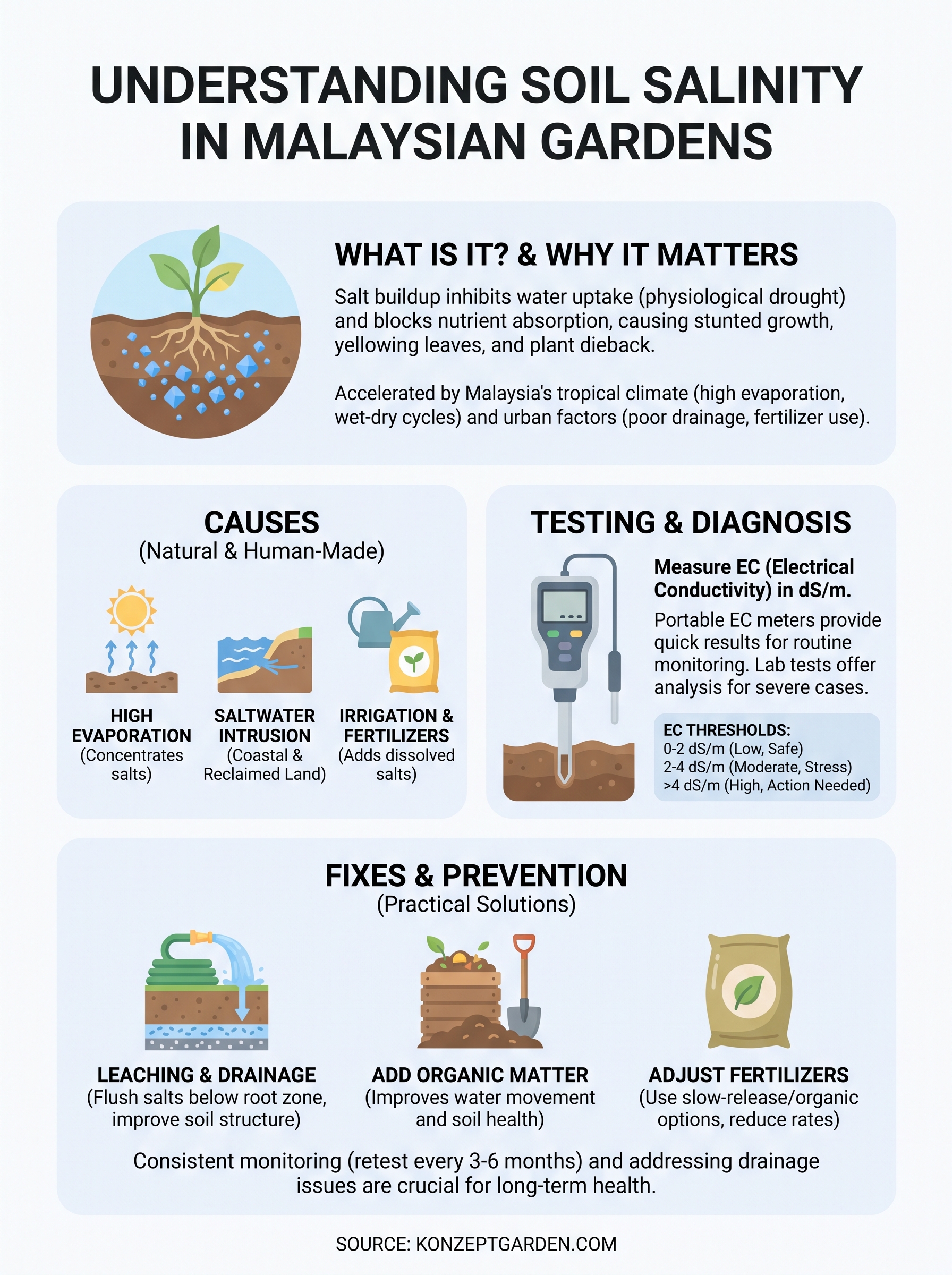
Knowing what is soil salinity helps you understand exactly why it causes so much damage. Salt in soil draws water away from plant roots through osmosis, so your plants struggle to absorb moisture even when the soil feels wet. Gardeners often call this "physiological drought," which is why salt-stressed plants wilt and yellow even after you've watered them thoroughly.
Beyond water uptake, excess sodium ions block nutrient absorption, specifically potassium, calcium, and magnesium. Over time, your plants show stunted growth, poor flowering, and in severe cases, complete dieback. The damage builds quietly over months, and by the time you spot widespread symptoms across your garden, the salinity problem has usually been developing far longer than you'd expect.
What causes soil salinity
Understanding what is soil salinity starts with knowing where the salt actually comes from. Salt enters soil through multiple pathways, both natural and human-made, and in Malaysian gardens, the two often combine to push levels beyond what plants can handle.
Natural sources of salt in soil
Mineral weathering releases salts as rocks break down over time, gradually depositing them into surrounding soil. In coastal areas of Malaysia, saltwater intrusion from nearby seas or tidal rivers adds sodium chloride directly to the root zone, sometimes without any visible warning signs until your plants start struggling.
Common natural salt sources include:
- Weathering of salt-bearing rock formations
- Tidal and coastal water intrusion
- High water tables carrying dissolved minerals upward
Coastal and low-lying properties in Malaysia are particularly vulnerable to saltwater intrusion, which can raise baseline soil salinity well before any gardening activity begins.
How garden and irrigation practices add salt
Your fertilizer choices play a bigger role than most homeowners expect. Many common fertilizers contain sodium, chloride, or other salt-forming compounds that accumulate with each application. Irrigation water quality is another major factor: water from certain urban or semi-treated sources carries dissolved minerals that deposit in your soil every time you water.
Poor drainage then traps those accumulated salts near the root zone instead of letting them flush through. Repeated fertilizing and watering without adequate drainage creates salt buildups that grow harder to correct with each passing season.
How to test soil salinity and read results
Testing gives you concrete numbers instead of guesswork, and once you understand what is soil salinity in measurable terms, you can act on real data rather than waiting for plant symptoms to worsen. The most widely used measurement is electrical conductivity (EC), expressed in decisiemens per meter (dS/m), which reflects how much dissolved salt your soil solution is carrying.
Testing methods you can use
Several options suit different budgets and levels of detail. Portable EC meters are the most practical choice for homeowners: mix a soil sample with distilled water, dip the probe in, and you get a reading within seconds. For a more complete picture, laboratory soil analysis through local agricultural services identifies which specific ions are elevated, not just overall salt levels. Common approaches include:
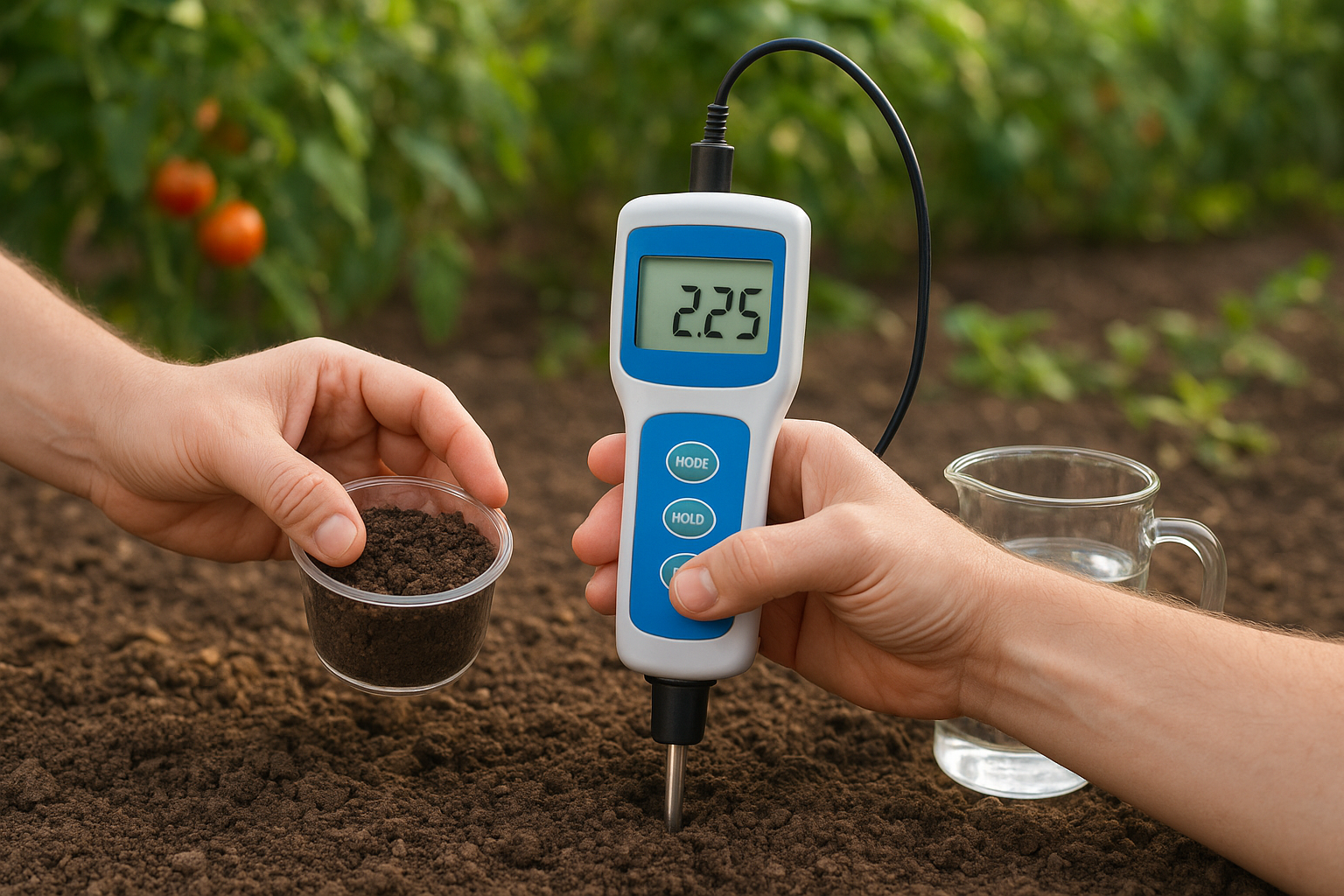
- Portable EC meter: fast, affordable, good for routine monitoring
- Laboratory soil test: detailed ion breakdown, best for severe or persistent cases
- Basic test kits: quick initial screening, less precise than EC meters
Collecting samples from several different spots across your garden rather than a single location gives you a far more accurate picture of where salinity is concentrated.
How to read your EC results
Once you have a reading, you need to know what it means for your plants. The table below shows standard EC thresholds and the level of concern each range signals:
| EC Level (dS/m) | Salinity Rating | What It Means for Your Garden |
|---|---|---|
| 0-2 | Low | Safe for most plant species |
| 2-4 | Moderate | Sensitive plants show stress |
| Above 4 | High | Immediate corrective action needed |
Readings above 4 dS/m require you to act before planting or replanting anything, as most common garden species cannot establish healthy roots at those concentrations.
How to fix and prevent soil salinity
Once you understand what is soil salinity and confirm elevated levels in your garden, you need a clear plan to bring those salt concentrations down. The good news is that most moderate salinity problems respond well to consistent, targeted treatment, especially when you address both the immediate buildup and the practices that caused it.
Leaching and improving drainage
Leaching is the most direct way to reduce salt in your soil: you apply large volumes of clean, low-salt water to push accumulated salts below the root zone. For this to work, your soil needs adequate drainage pathways so water actually moves through rather than pooling on the surface. If your garden drains poorly, break up compacted layers first, or add coarse organic matter to improve water movement before you attempt any leaching.
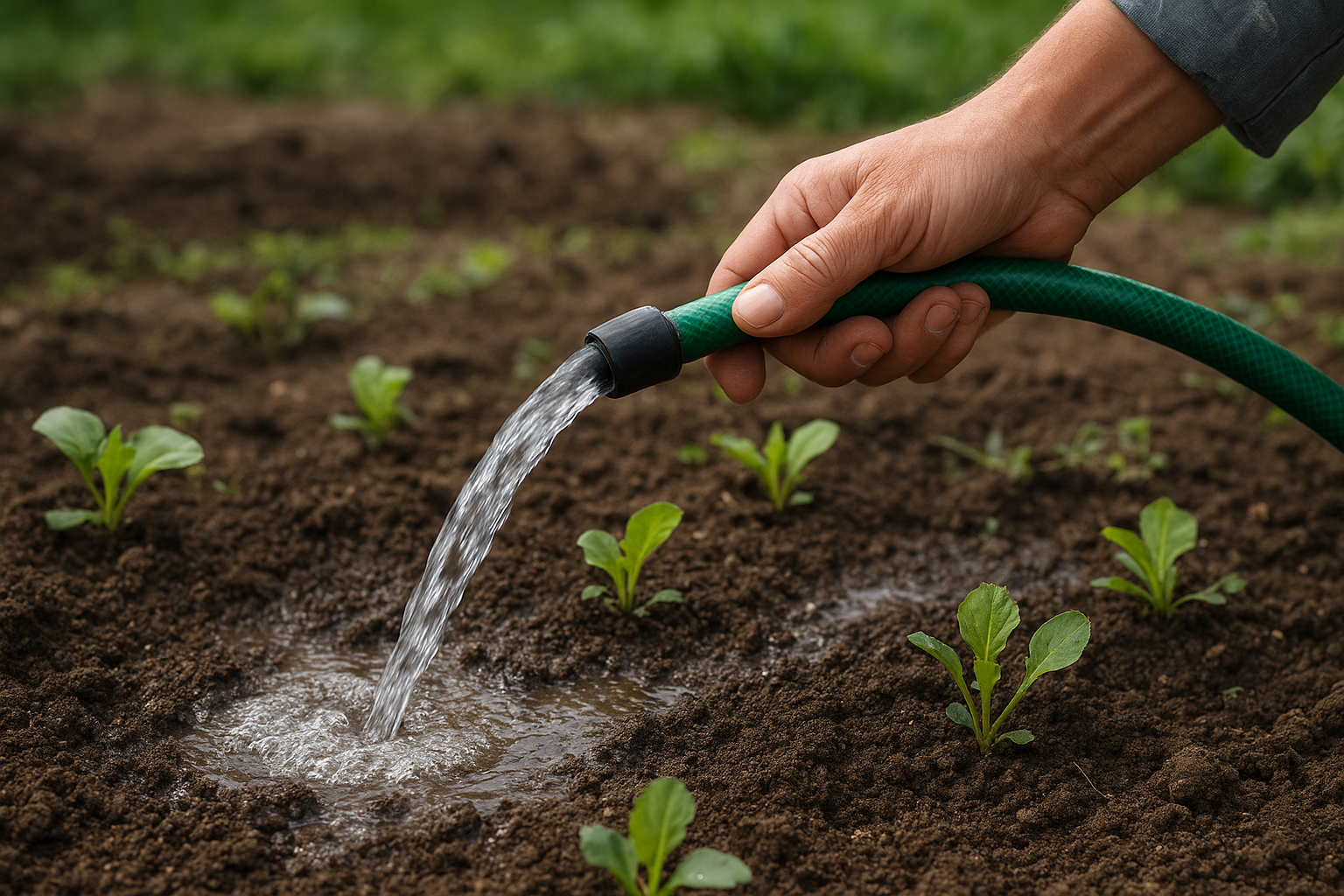
Deep, infrequent watering sessions are far more effective at flushing salts out of the root zone than frequent shallow watering.
Adjusting fertilizer and soil amendments
Reducing fertilizer application rates makes a meaningful difference over time, since fertilizer salts are one of the most controllable contributors to buildup in home gardens. Switch to slow-release or organic fertilizers, which introduce far fewer soluble salts per application cycle. Adding well-composted organic matter also improves soil structure, helping salts move out of the root zone more efficiently with each watering session throughout the growing season.
Soil salinity FAQs for homeowners
If you're still working out what is soil salinity and how it applies to your specific garden, these common questions cover the gaps that most guides skip over. Malaysian homeowners tend to face a similar set of concerns, so the answers here reflect local conditions rather than general advice aimed at other climates.
Can I fix soil salinity without professional help?
Mild to moderate salinity responds well to the leaching and amendment methods covered earlier in this article. If your EC readings stay below 4 dS/m, consistent flushing, reduced fertilizer use, and added organic matter will bring levels down over one to two growing seasons without requiring outside help.
Severe salinity above 4 dS/m, especially on reclaimed or coastal land, often needs a professional soil assessment to identify the underlying causes before any surface treatment will hold.
How long does it take to lower soil salinity?
The timeline depends on your drainage quality and starting EC level. Most gardens with moderate salinity see measurable improvement within three to six months of consistent leaching and adjusted fertilizer practices. Heavily compacted or poorly drained soils take longer because water moves through them slowly, so improving soil structure first shortens the overall recovery time significantly.
Will rainfall alone fix the problem?
Malaysia's rainy seasons help flush some surface salts, but rainfall alone rarely resolves established salinity. Surface runoff in compacted urban gardens carries water away before it penetrates deeply enough to move salts out of the root zone where your plants actually absorb water.
Next steps for healthier soil
Now that you understand what is soil salinity and how it affects your garden, the path forward is straightforward. Start with a soil test to get a baseline EC reading before you change anything else. That number tells you exactly how serious the problem is and which fixes to prioritize first, whether that's leaching, adjusting your fertilizer routine, or improving drainage across your property.
Consistent monitoring matters as much as the initial fix. Retesting every three to six months lets you track whether your adjustments are working and catch any new buildup before it reaches damaging levels. Small, regular corrections are far easier to manage than a severe salinity crisis that has built up over years of unnoticed accumulation in compacted or poorly drained soil.
Your outdoor space deserves a design that accounts for soil health from the start. If your garden needs a full redesign with drainage and plant selection built around your actual conditions, speak with a landscape design specialist at Konzept Garden to get a free consultation.