

If you own property on hilly or uneven terrain in Malaysia, you've probably noticed how heavy monsoon rains can wash away soil, crack retaining walls, or slowly shift the ground beneath your garden. Understanding what is slope stabilization is the first step toward protecting both your property and the people on it. At its core, it's a set of engineering, mechanical, and biological techniques designed to prevent soil movement on inclined land, and it's far more relevant to Malaysian homeowners and developers than most realize.
Slope failure doesn't just happen on mountainsides or construction sites. It happens in backyards, along driveways, and at the edges of terraced gardens. Left unaddressed, an unstable slope can lead to costly structural damage, dangerous landslides, and the gradual loss of usable outdoor space. The tropical climate here, with its intense rainfall and moisture-rich soil, makes slope-related issues especially common across residential and commercial properties.
At Konzept Garden, we deal with slope challenges regularly as part of our landscape design and implementation work. From grading and terracing to selecting the right deep-rooting plants for natural slope reinforcement, stabilization is often a critical piece of creating safe, lasting outdoor spaces. This article breaks down the main methods used for slope stabilization, the benefits of acting early, and what you can expect to invest when securing unstable ground on your property.
Why slope stabilization matters
Malaysia receives some of the highest annual rainfall totals in Southeast Asia, with certain regions seeing over 2,500mm of rain per year. That volume of water, absorbed repeatedly into sloped terrain, creates relentless pressure on soil layers. Understanding what is slope stabilization and why it matters here is not an academic exercise; it's a practical concern for anyone who owns sloped residential or commercial land.
Slope failure rarely announces itself in advance. By the time visible cracks or soil movement appear, the underlying problem has often been building for months or years.
The real-world consequences of slope failure
When a slope gives way, the damage extends well beyond the immediate collapse. Structural foundations near the failure zone can shift, crack, or sink, leading to repair bills that dwarf the cost of stabilization work done upfront. Garden walls, drainage systems, fencing, and planted areas can all be destroyed in a single event triggered by one unusually heavy downpour. In Malaysia, where intense monsoon rainfall can deliver weeks' worth of rain in just a few hours, that risk is not theoretical.
Beyond property damage, there is a direct safety risk to anyone using the outdoor space. Soil movement can happen suddenly, especially on slopes that have been undercut by water infiltration or weakened by tree root removal. In a residential setting, that risk extends to children, guests, and workers on site.
How an unstable slope drains your investment
A sloped garden or landscape project that lacks proper ground stabilization loses value over time. Plants struggle to establish on shifting soil, hardscaping cracks and separates, and maintenance costs climb steadily. Retaining walls installed without accounting for soil pressure behind them are a common failure point, and what looked polished at completion begins to look neglected within a few seasons.
Stabilization work done early in a project's life protects every other investment you make in your outdoor space. Terracing, planting beds, water features, and paved pathways all depend on stable ground beneath them. Addressing slope conditions before laying out a full landscape design is the most cost-effective sequence, and it's one reason why soil assessment is a core part of how Konzept Garden approaches new projects.
What makes a slope unstable
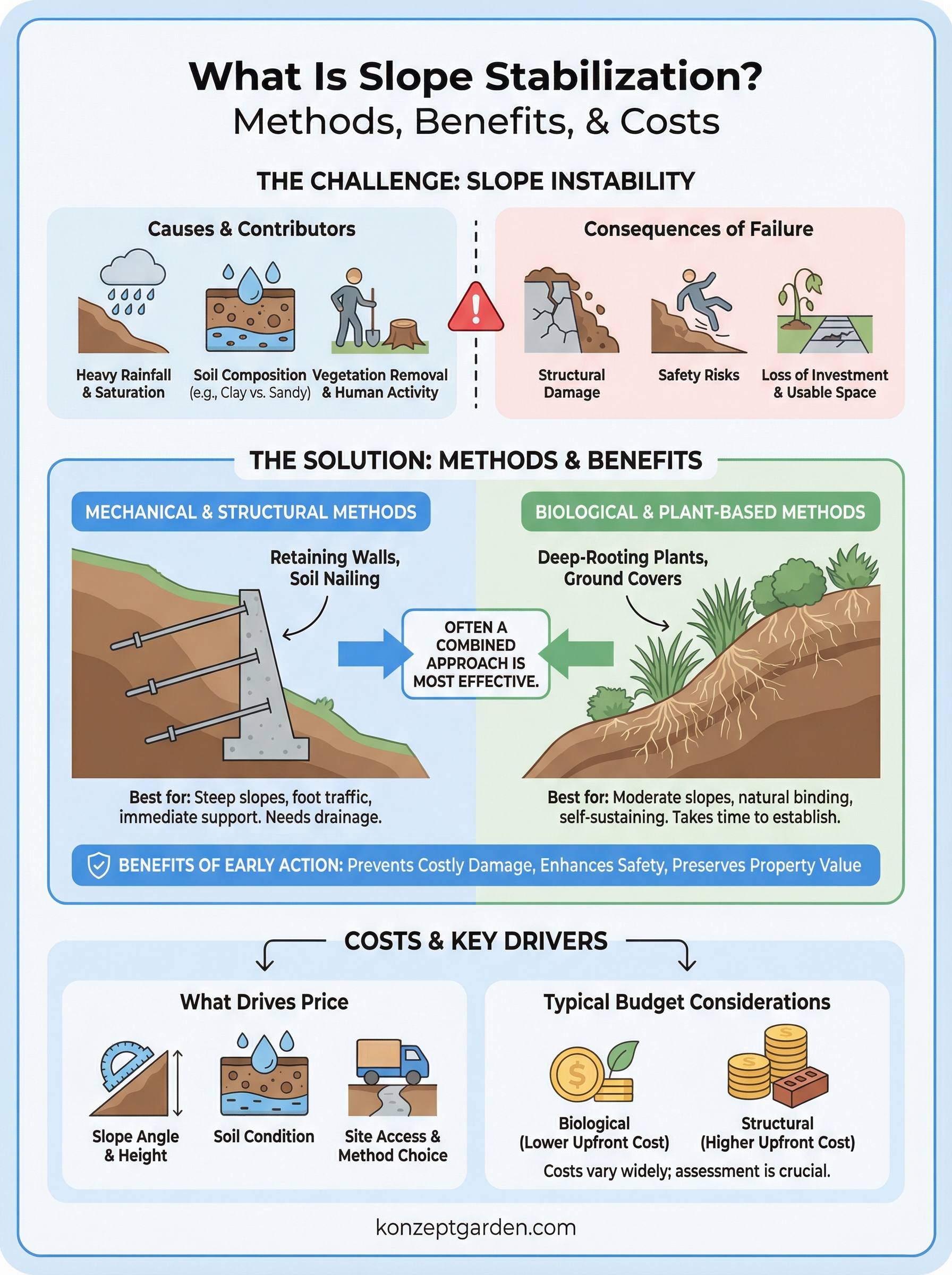
Not every sloped piece of land carries the same risk. Several contributing factors determine whether a slope holds firm or begins to shift, and recognizing them on your property gives you a clearer picture of what intervention is actually needed. In many cases, multiple factors combine to create instability that would not occur from any single cause alone.
Soil composition and water saturation
The type of soil beneath your slope plays a large role in how stable it is. Clay-heavy soils absorb water and expand, then shrink as they dry out, creating repeated stress cycles that weaken internal cohesion over time. Sandy or loose soils drain faster but offer less natural binding, making them prone to surface erosion when exposed to direct rainfall. Once water saturates a soil layer fully, it effectively acts as a lubricant between layers, and gravity takes over.
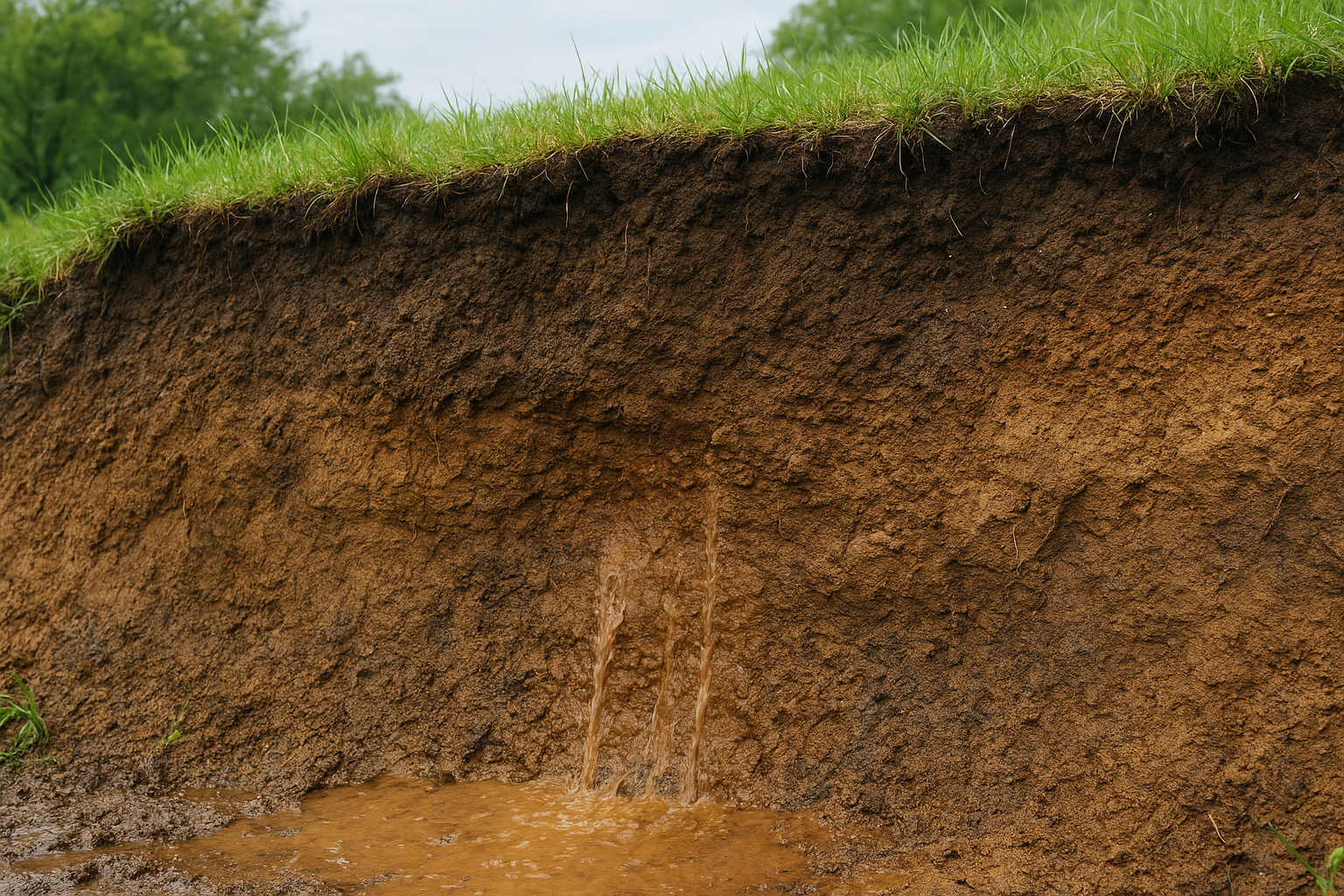
When topsoil loses cohesion after prolonged rain, even a mild slope angle can be enough to trigger movement.
Vegetation removal and human activity
Removing plants from a sloped area strips away root systems that bind soil together at depth. Without those roots, the surface layer has little resistance to water runoff or lateral movement. Understanding what is slope stabilization becomes more urgent once vegetation has been cleared from your site.
Excavation, grading, and construction work near a slope can alter the natural load distribution, cutting into stable ground or adding weight at points the slope was not designed to handle. Both human activity and natural root loss can push an otherwise manageable slope toward failure.
Slope stabilization methods and when to use them
Knowing what is slope stabilization is useful, but knowing which method fits your specific site is what moves a project forward. The right approach depends on your slope angle, soil type, and how the space will be used. In practice, most projects combine more than one technique to address both the immediate structural risk and the longer-term surface stability.
Mechanical and structural methods
These methods use physical structures to hold soil in place and redirect water pressure. Retaining walls built from concrete, masonry, or timber are the most common solution on steeper slopes, providing a hard barrier against lateral soil movement. Soil nailing and ground anchors are used on higher-risk slopes, driving steel rods into the hillside to lock unstable layers together. Proper drainage channels installed alongside these structures are essential, since trapped water behind a wall is one of the leading causes of failure.
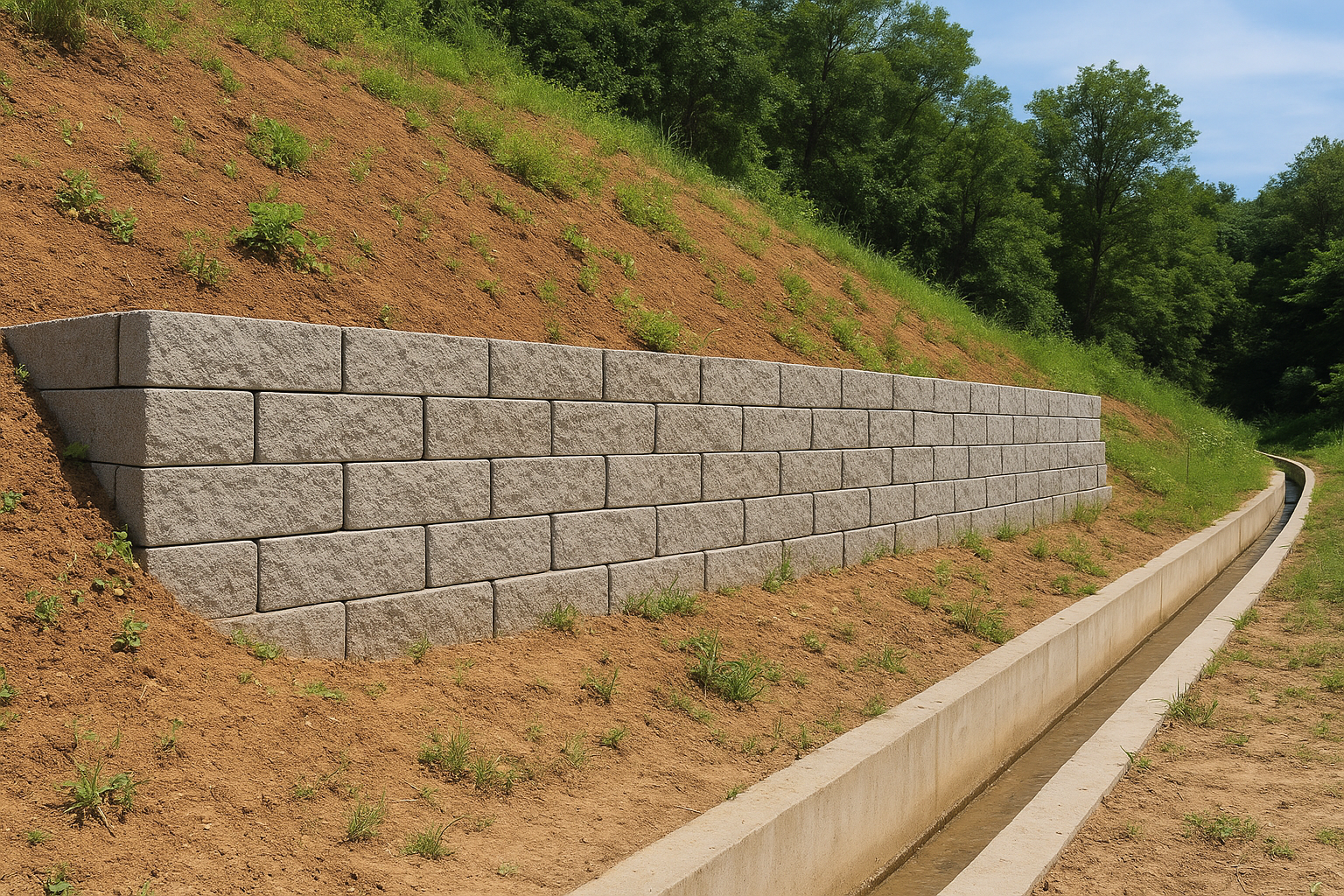
Structural methods address the symptom quickly, but pairing them with biological reinforcement gives long-term, self-sustaining results.
Biological and plant-based methods
Plant-based stabilization uses deep-rooting species to bind soil layers naturally over time. Vetiver grass is widely used across Southeast Asia for this purpose because its roots can reach depths of three meters or more, creating a dense underground network that resists erosion. Ground covers, shrubs, and native species with fibrous root systems also work well on gentler slopes. Biological methods tend to cost less than structural ones, but they require time to establish and are better suited to moderate slope gradients.
How to choose the right approach
Choosing the right stabilization method starts with understanding your specific site conditions, not with defaulting to the most expensive or most visible option. What is slope stabilization really about, at its core, is matching the right technique to the right problem, and that requires an honest look at your terrain, your budget, and how you intend to use the space once the work is done.
Assess slope angle and soil first
Slope angle and soil composition are the two variables that narrow your options fastest. Slopes below 30 degrees can often be managed effectively with plant-based solutions alone, using deep-rooting species like vetiver to build natural resistance over a single growing season. Steeper gradients typically require structural support before any biological method can do its job.
Trying to plant your way out of a high-angle slope failure without structural backing will usually result in repeated loss of both plants and soil.
Match the method to how you will use the space
If your sloped area will support foot traffic, seating, or hardscape features like steps and pathways, structural methods need to come first because biological solutions alone cannot carry that load. For areas that remain planted and largely undisturbed, a combined approach of light structural grading with dense ground cover often delivers the best long-term outcome at a lower overall cost.
Working with a landscape professional who assesses your site before recommending a method saves both time and money in the long run.
What slope stabilization costs and what drives price
Understanding what is slope stabilization is one part of the picture; knowing what it costs helps you plan realistically. Stabilization costs in Malaysia vary widely depending on the site, the method, and the scope of work. A small residential slope with gentle gradients treated with vetiver and basic grading will cost a fraction of what a steep commercial embankment requiring retaining walls and soil nailing demands.
Key factors that affect your quote
Slope angle and height have the biggest impact on price. The steeper and taller the slope, the more material, labor, and engineering input the project requires. Soil condition also matters significantly, since loose, heavily saturated, or previously disturbed soil often needs preparation before any treatment can hold effectively.
Getting a proper site assessment before requesting quotes prevents surprise costs mid-project.
Site access, proximity to existing structures, and the chosen combination of methods all feed directly into your final number. Biological solutions alone tend to cost less upfront but take longer to deliver full protection.
What to budget for common treatments
Plant-based treatments like vetiver grass installation on a standard residential slope typically range from RM 15 to RM 40 per square meter, depending on planting density and site preparation required. Structural options such as modular retaining walls or concrete block systems start from around RM 180 to RM 450 per square meter, and costs climb quickly on steeper terrain or where drainage engineering is part of the scope.
Next steps for your site
Now that you understand what is slope stabilization and the methods available, the clearest next step is assessing whether your own property has conditions that need attention. Sloped terrain in Malaysia is under constant pressure from rain, humidity, and seasonal weather shifts, and the cost of acting early is almost always lower than repairing damage after a failure. If your garden sits on uneven ground, borders a hillside, or has already shown signs of soil movement, that is your signal to get a professional assessment done before the problem compounds.
Konzept Garden works with homeowners and developers across Malaysia to evaluate slope conditions and design landscapes that hold their form long-term. Whether your site needs plant-based reinforcement, structural grading, or a combination of both, the right plan starts with understanding your specific terrain. Get in touch with our team to request a consultation and free quotation for your project.