


Cities across Malaysia and Southeast Asia are growing fast, and green space is often the first thing sacrificed. But the best-designed cities don't treat nature as an afterthought. They build around it. Understanding urban landscape design principles gives planners, developers, and property owners the tools to create outdoor environments that actually work for people, not just look good on a master plan rendering.
At Konzept Garden, we've spent years designing landscapes for both residential and commercial projects throughout Malaysia. That hands-on experience has shown us what happens when foundational design principles get ignored, and how dramatically things improve when they're applied with intention. Whether it's a courtyard in Kuala Lumpur or a shared garden in a mixed-use development, the same core ideas hold true.
This article breaks down eight principles that shape greener, more livable cities. We cover everything from scale and proportion to sustainability strategies and human-centric planning. If you're a homeowner, developer, or anyone involved in shaping outdoor spaces, these principles will give you a clear framework for making better design decisions.
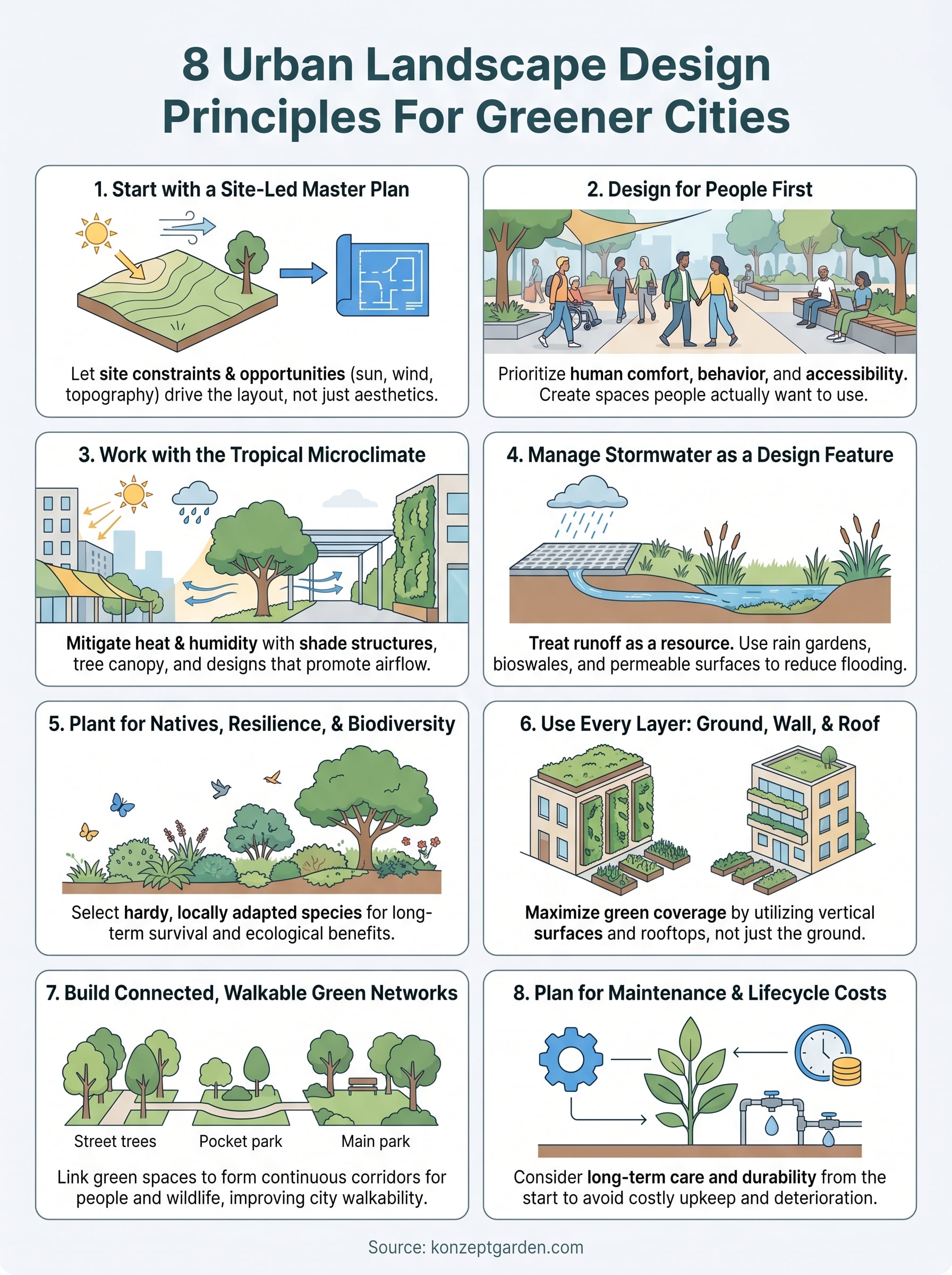
1. Start with a site-led master plan
Every good outdoor project begins with the land itself, not with mood boards or plant lists. A site-led master plan grounds your decisions in real conditions, so what gets built actually functions once it's done. Skipping this step is one of the most common reasons urban landscapes fail before they even open.
What this principle means
A site-led master plan starts by reading what the land is already telling you. Topography, drainage patterns, sun angles, wind direction, and existing vegetation all shape what will and won't work in a given space. Instead of forcing a generic design onto a site, you let the site's constraints and opportunities drive the layout.
The best urban landscape design principles treat the site analysis as the design itself, not just background research.
What to measure on an urban site in Malaysia
Malaysia's equatorial climate introduces specific site factors that designers in cooler countries rarely consider. You need to document solar exposure throughout the day, not just at one point, because intense afternoon sun on the west side of a building creates very different conditions than morning light. Beyond sun, measure surface drainage paths after rain, identify shading cast by adjacent structures, check soil compaction levels, and note where utility lines run underground.
A basic site audit for a Malaysian urban plot should cover:
- Sun and shade mapping across morning, midday, and afternoon
- Slope and natural drainage flow direction
- Soil type and permeability, especially in clay-heavy areas
- Existing trees and structures worth retaining
- Utility easements and access points
How to turn constraints into a workable layout
Constraints are not problems to eliminate. They are inputs that shape the design. A shaded corner becomes a fern garden. A low-lying area prone to pooling becomes a rain garden feature. When you reframe limitations this way, the layout gains a logic and authenticity that a purely aesthetic approach never achieves.
When to bring in a landscape designer like Konzept Garden
If your site has complex drainage, significant level changes, or multiple use zones, a professional review saves you from costly mistakes. Konzept Garden's design process starts with a thorough site assessment before any concept work begins, which means the final design is built around your actual conditions, not assumptions about them.
2. Design for people first, not just for looks
A beautiful landscape that nobody uses is a failed landscape. Urban landscape design principles consistently put human behavior at the center of every decision, because the measure of a good outdoor space is how much people actually spend time in it.
What this principle means
Designing for people means understanding how users move through, pause in, and interact with a space before you place a single plant or paving stone. Activity patterns, sightlines, and social dynamics all shape where paths should go, where seating belongs, and how much open space versus enclosure feels right.
Comfort and accessibility basics for urban users
Shade and seating are the two most immediate needs in a Malaysian outdoor environment, and both are commonly underdelivered. You need covered rest areas close to main circulation routes, level or gently graded paths that don't require extra effort to navigate, and surfaces that stay non-slip even during heavy rain.
If someone has to struggle to get through your space, they will stop coming back.
Designing for different ages and abilities
Children, elderly users, and people with mobility limitations each interact with outdoor spaces differently, and your design should account for all three without creating segregated zones. Low barriers, varied seating heights, and tactile paving at key transitions let everyone share the same space comfortably.
Mistakes that make public spaces feel unusable
Placing benches in full sun, designing paths that end without destination, and prioritizing dramatic visual features over practical flow all make a space look impressive in photos but frustrating in daily use. Your users will tell you what works by voting with their feet.
3. Work with the tropical microclimate
Urban landscape design principles developed in temperate climates often fail in Malaysia because they ignore what heat, humidity, and intense rainfall do to outdoor spaces. Every design decision you make needs to account for the tropical microclimate, not work against it.
What this principle means
Working with the microclimate means treating temperature, sun exposure, airflow, and moisture levels as primary design variables rather than secondary concerns. Before you finalize any layout, you should map how your specific site behaves across different times of day and seasons, because conditions shift dramatically between a shaded interior courtyard and an open rooftop just one floor above it.
Shade, heat, glare, and wind in dense areas
Dense urban environments trap heat through hard surfaces, reduced airflow, and heat-radiating building facades. West-facing walls absorb and re-emit heat well into the evening, while reflective glass and light-colored concrete create glare that makes spaces uncomfortable. You can counter this by positioning shade structures and tree canopy to intercept afternoon sun directly, reducing surface temperatures at ground level.
The difference between a usable outdoor space and an empty one in Malaysia often comes down to whether you addressed afternoon sun and airflow at the design stage.
Planting and materials that reduce heat stress
Broad-canopy trees like Angsana or Rain Tree provide shade faster than structures and cool the surrounding air through transpiration. Permeable paving materials absorb less heat than solid concrete, and light-toned, textured surfaces reduce glare without requiring costly coverings.
Mistakes that trap heat and create hot spots
Covering large areas with dark asphalt or dense concrete paving without shade or planting creates heat islands that drive users away. Removing existing mature trees to simplify construction is another costly error, since established canopy takes years to replace and your space suffers in the gap.
4. Manage stormwater as a design feature
Most urban landscapes treat rainfall as a problem to remove as fast as possible. One of the core urban landscape design principles that gets overlooked is that stormwater is a resource and a design opportunity, something you can direct through your site in ways that reduce flooding, support planting, and create visual interest.
What this principle means
Managing stormwater by design means shaping the land and selecting materials so water moves where you want it, at a speed the site can handle. Rather than routing everything into drains immediately, you slow water down, let it absorb where possible, and move surplus safely to appropriate outlets.
Where urban runoff comes from and where it should go
Roofs, paved paths, driveways, and compacted soil all generate runoff during Malaysia's heavy rain events. That water needs somewhere to go besides your neighbor's property or the nearest drain channel. Directing it toward planted beds, bioswales, or permeable zones reduces peak flow and keeps your landscape healthier between rain events.
When you plan where water goes before you design any path or planting bed, you avoid most of the drainage problems that appear later.
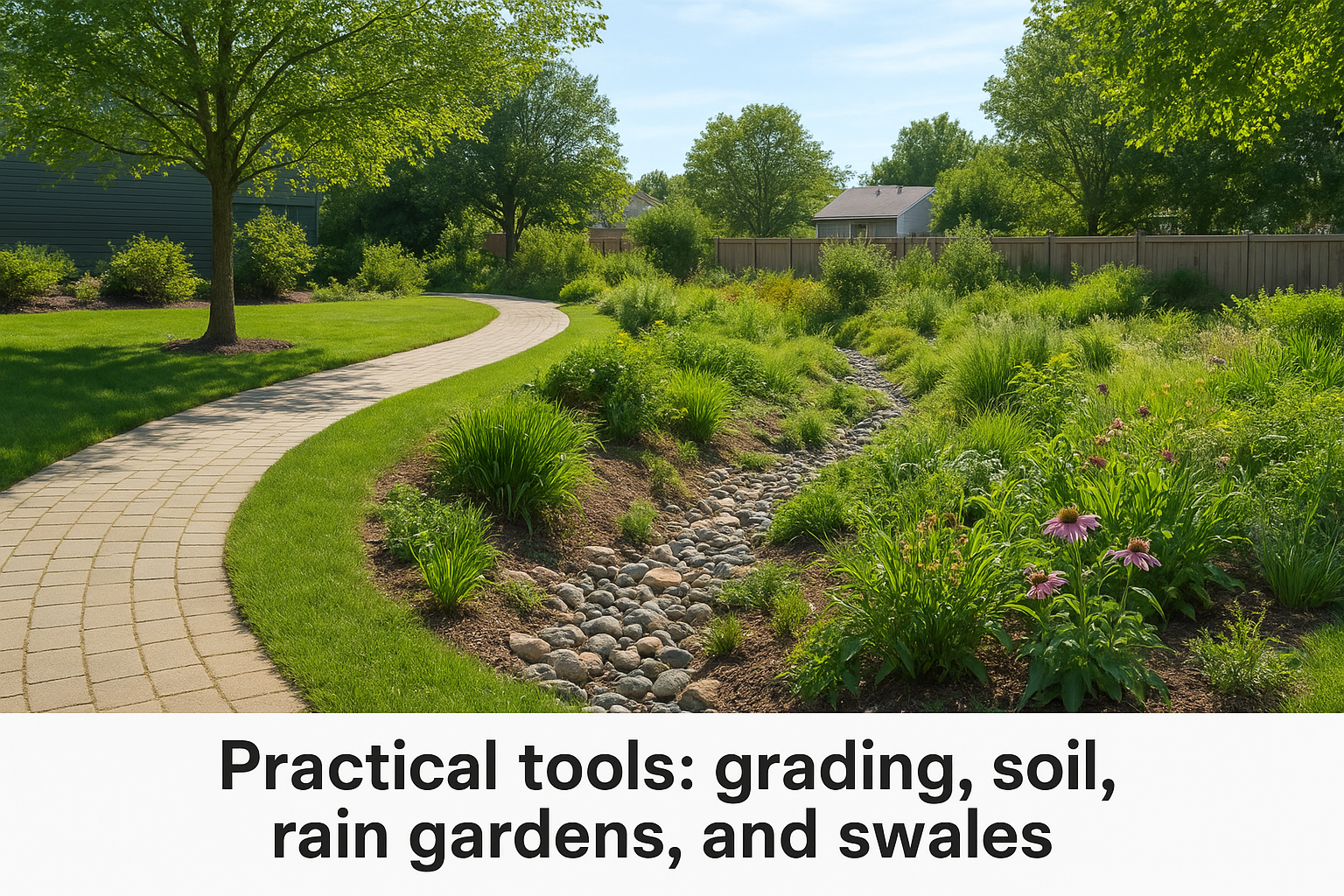
Practical tools: grading, soil, rain gardens, and swales
Grading directs surface flow, while improved soil structure increases absorption rates in compacted urban plots. Rain gardens collect and filter runoff from hard surfaces. Swales channel water across slopes without erosion. Combining these tools lets you manage significant rainfall volumes without expensive underground infrastructure.
Mistakes that cause pooling, erosion, and slippery paths
Flat paving without cross-fall and planting beds with no overflow outlet are the most common culprits. Both concentrate water in spots that become muddy, slippery, or structurally damaged after repeated rain cycles.
5. Plant for natives, resilience, and biodiversity
Plant selection is where many urban landscapes quietly fail. Imported ornamentals and monoculture planting schemes look striking at installation but struggle within a season or two, leaving gaps that require constant replacement. Applying urban landscape design principles to your plant palette means choosing species that actively support the environment they grow in.
What this principle means
Planting for resilience means selecting species based on long-term survival and ecological contribution, not just immediate visual appeal. Native and locally adapted plants already understand Malaysia's rainfall patterns, soil conditions, and pest pressures, which means they need far less intervention to thrive once established.
A plant that survives without constant inputs is always a better design choice than one that looks perfect on delivery day.
How to choose plants for urban stressors
Urban sites expose plants to compacted soil, reflected heat, pollution, and irregular watering, all of which eliminate species that would perform well in suburban gardens. Prioritize plants with proven tolerance for heat, drought cycles, and root restriction, such as Bougainvillea, Heliconia, and Ixora for exposed positions, and Monstera or Philodendron varieties for shaded vertical surfaces.
Layering for habitat, screening, and year-round structure
Combining canopy trees, mid-level shrubs, and ground covers creates a layered planting scheme that supports insects, birds, and soil health simultaneously. Each layer also serves a functional role in your design, with canopy providing shade, shrubs offering screening, and ground covers controlling erosion and suppressing weeds.
Mistakes that increase pests, failures, and upkeep
Planting a single species across a large area creates monoculture vulnerability, where one pest or disease wipes out an entire section. Choosing fast-growing but shallow-rooted species near paving also leads to surface lifting and drainage blockages within a few years of establishment.
6. Use every layer: ground, wall, and roof
Urban environments rarely have spare horizontal space, which makes vertical and overhead planting one of the most valuable moves in dense city design. Applying urban landscape design principles to all three layers, ground, wall, and roof, multiplies your green coverage without requiring a larger footprint.
What this principle means
Layered planting strategy treats every available surface as a potential growing zone. Ground-level planting handles the foundation, while wall-mounted systems and rooftop gardens extend green coverage upward into space that would otherwise stay bare and heat-absorptive.
Vertical greenery, rooftop gardens, and balcony planting
Vertical garden systems like EcoWall allow you to introduce planting onto facades, boundary walls, and interior partitions where floor space is restricted. Rooftop gardens add insulation and manage stormwater at the same time.
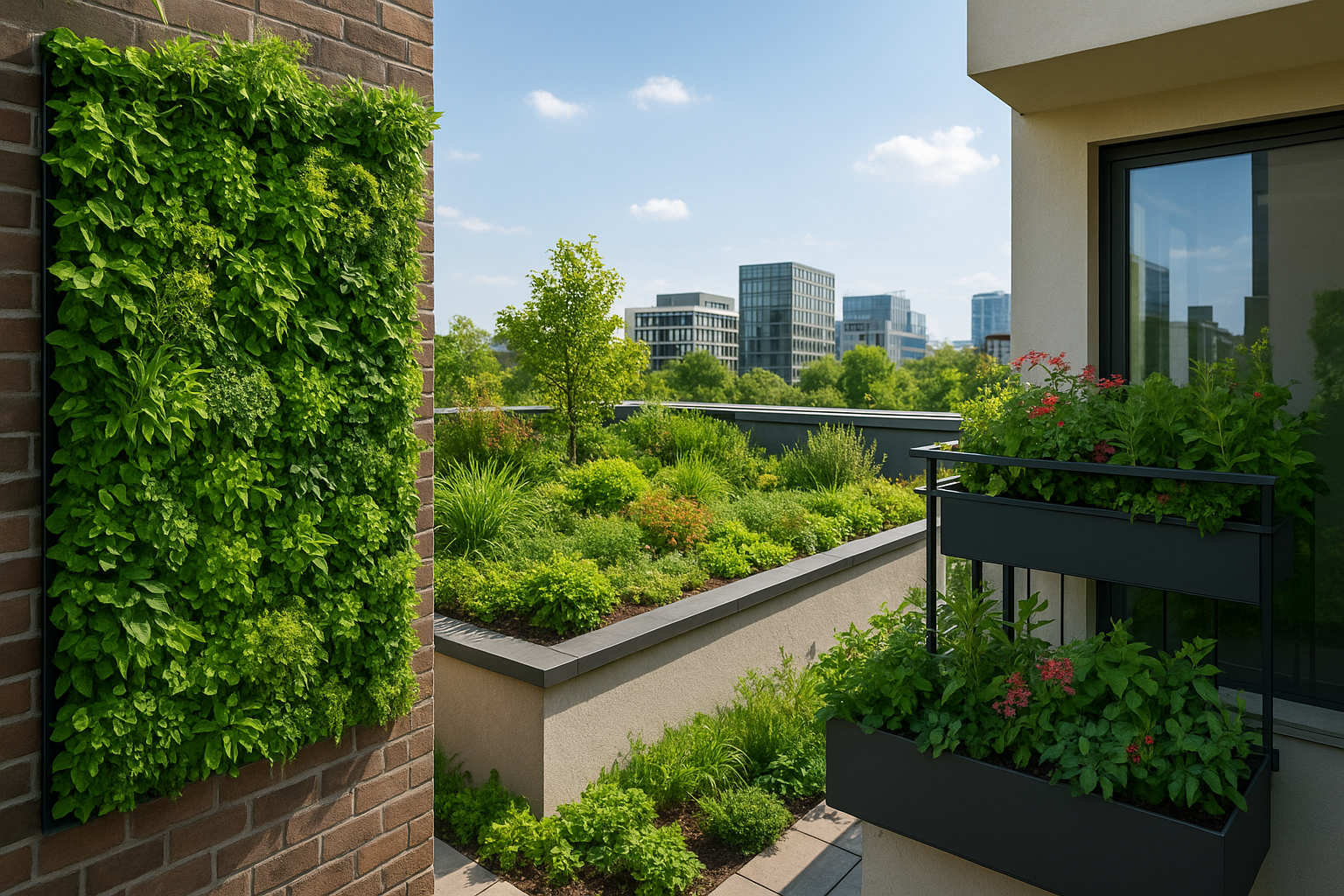
Using every available layer is one of the fastest ways to increase green coverage in space-limited urban plots.
Balcony planters with self-watering systems, such as the Ziant Hydro Planter, extend this approach to residential settings where individual unit holders can contribute to a building's overall green presence without relying on communal maintenance schedules.
Structural, irrigation, and drainage considerations
Load-bearing capacity is your first checkpoint before specifying any wall or roof planting system. Lightweight growing media and modular mounting frames keep weight manageable while maintaining adequate root volume for long-term plant health. Drip irrigation reduces water waste on vertical surfaces where standard coverage fails to reach evenly.
Mistakes that lead to leaks, root issues, and poor survival
Placing heavy planters on roofs without a structural assessment is the most common and costly error. Choosing the wrong waterproofing membrane beneath rooftop soil leads to leaks that are difficult to locate and expensive to repair. Poorly anchored wall systems fail under Malaysia's wind and rain loads, damaging both plants and the structure behind them.
7. Build connected, walkable green networks
Isolated green spaces deliver a fraction of their potential value. When parks, street plantings, and pocket gardens connect into a continuous network, they move people through the city on foot, support wildlife corridors, and make neighborhoods feel genuinely livable rather than just well-maintained.
What this principle means
One of the core urban landscape design principles is that green space works best as a system, not a collection of separate features. Connectivity between spaces encourages people to walk longer distances, reduces reliance on vehicles, and gives urban ecosystems the continuity they need to support birds and pollinators across a city.
Your design should treat every planted edge, pedestrian path, and streetscape tree row as part of a larger network, even when you're only responsible for one small piece of it.
Linking parks, streetscapes, and pocket spaces
Street trees and planted medians form the connective tissue between larger parks and smaller pocket gardens. Even a narrow planting strip along a commercial frontage contributes to the network if it aligns with adjoining green corridors and provides consistent canopy overhead.
Designing safe, legible routes with clear edges
Well-defined path edges using low planting, kerb changes, or material shifts tell users where to walk without requiring signs. Routes that feel safe stay naturally lit and overlooked from nearby buildings, which keeps them used during evening hours.
A green route that people avoid after dark has failed its core purpose, regardless of how well it is planted.
Mistakes that create disconnected, underused green space
Placing planted areas between destinations without considering how people move between them produces spaces that get bypassed rather than crossed. Poor lighting, abrupt dead ends, and inconsistent surface materials break the sense of a continuous route and send users back to hard-paved alternatives.
8. Plan for maintenance and lifecycle costs
A landscape that looks great at handover but deteriorates within two years reflects poor planning, not bad luck. Maintenance requirements and lifecycle costs belong in your design decisions from the start, because the choices you make at concept stage determine how much time and money your site consumes for the next decade.
What this principle means
One of the most underestimated urban landscape design principles is that every design decision creates a future maintenance commitment. Plant species, irrigation systems, surface materials, and access paths all have ongoing costs attached to them, and those costs compound quickly in Malaysia's growing season, where plants expand fast and hard surfaces degrade under UV and rain exposure.
Designing for low-maintenance without looking bare
Choosing low-maintenance planting does not mean choosing sparse or monotonous planting. Dense ground covers suppress weeds while requiring minimal trimming, and slow-growing shrubs with structural form hold their shape longer between maintenance visits. A well-layered planting scheme actually reduces upkeep compared to a simple lawn that demands weekly mowing.
Designing for low maintenance is a skill, not a compromise, and it produces landscapes that look intentional rather than neglected.
Irrigation strategy, access, and replacement planning
Drip irrigation systems reduce water waste and lower your ongoing operating costs compared to overhead sprinklers, particularly on vertical and roof installations. Build clear access routes to every planted zone so maintenance teams can reach, trim, and replace without damaging surrounding areas.
Mistakes that make landscapes expensive to keep alive
Specifying high-maintenance exotic species without accounting for specialist care costs, and installing irrigation without a filter or pressure regulator, both drive up your annual spend significantly. Planting trees too close to hard infrastructure like paving or drainage channels guarantees expensive remediation within five to ten years.
Bringing it all together
These eight urban landscape design principles are not separate rules to apply one at a time. They work together, and the strength of any outdoor project comes from how well each principle reinforces the others. Site analysis informs planting decisions, maintenance planning shapes material choices, and human-centered design holds every other consideration accountable to the people who will actually use the space.
If you are planning a landscape project in Malaysia, whether it is a residential garden, a commercial courtyard, or a shared development space, applying these principles from the start saves you time, money, and rework later. The difference between a space that thrives and one that slowly deteriorates usually comes down to decisions made at the concept stage, not at the maintenance stage.
Contact the Konzept Garden team to start your project with a proper site assessment and a design process built around principles that last.