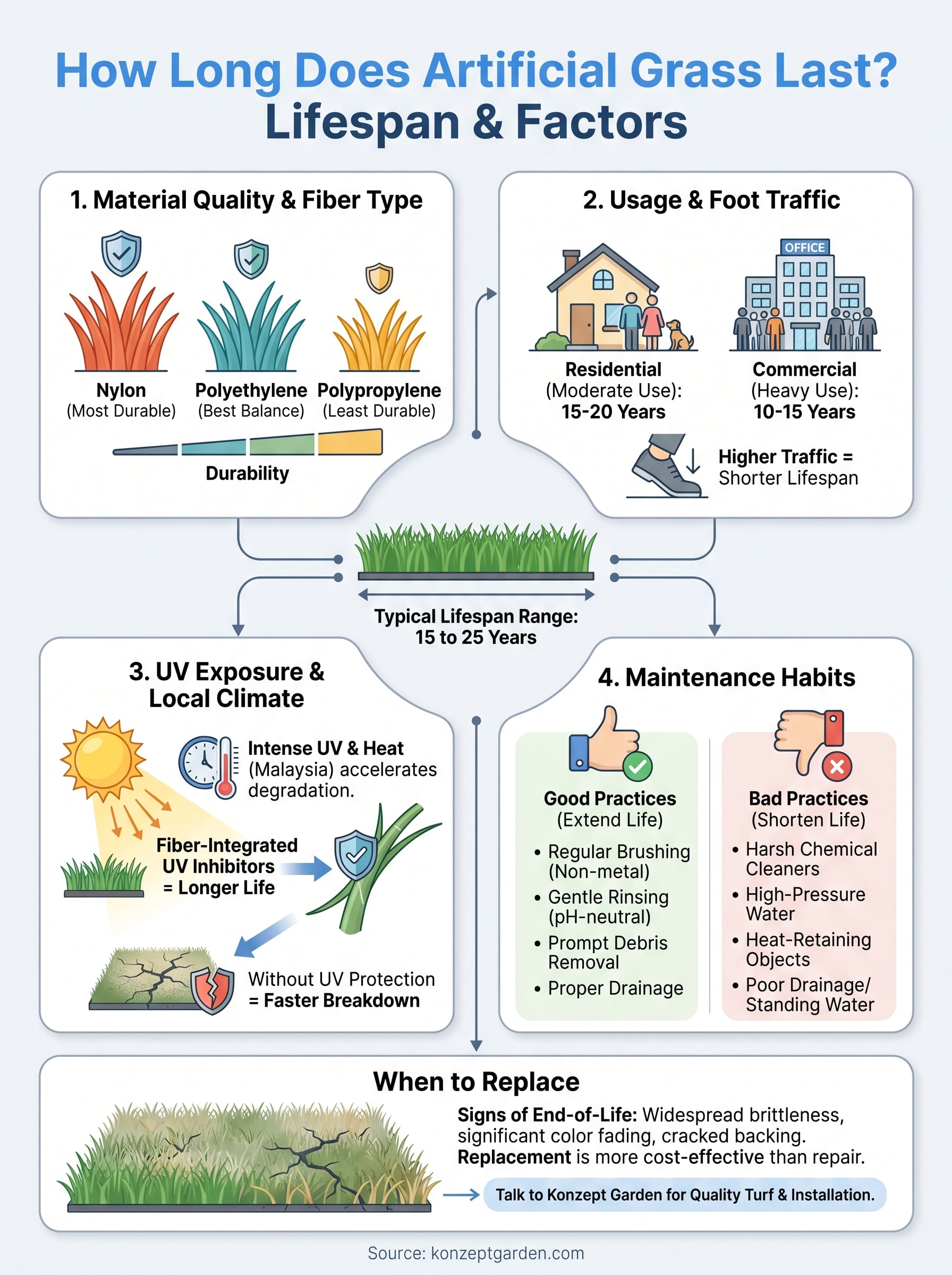
If you're considering synthetic turf for your home or commercial space, one of the first questions you'll ask is how long does artificial grass last. It's a fair question, you're making an investment, and you want to know what kind of return you're getting in terms of years. The short answer: quality artificial grass typically lasts between 15 and 25 years, but that range depends on several key variables.
At Konzept Garden, we've installed artificial turf across residential and commercial projects throughout Malaysia, including our own Noble Grass product line. Through years of hands-on experience, we've seen firsthand what makes synthetic grass hold up, and what causes it to break down faster than expected.
This article covers the realistic lifespan you can expect from artificial grass, the specific factors that shorten or extend it, and how to tell when replacement is due. No guesswork, just practical information based on what we've observed across real installations in Malaysian conditions.
Why artificial grass lifespan varies so much
When people ask how long does artificial grass last, they expect a single clean number. The reality is that two lawns installed the same year can end up looking completely different five years later, and the gap comes down to a handful of controllable variables. Understanding these factors helps you make smarter decisions before you buy.
Material quality and fiber type
The biggest variable is what the grass is actually made of. Synthetic turf fibers are typically manufactured from nylon, polyethylene, or polypropylene. Nylon is the most durable and handles heavy foot traffic well, but it costs more. Polyethylene is the most common choice for residential gardens because it balances softness, durability, and price. Polypropylene is the least expensive option, but it degrades faster and suits low-traffic decorative uses better.
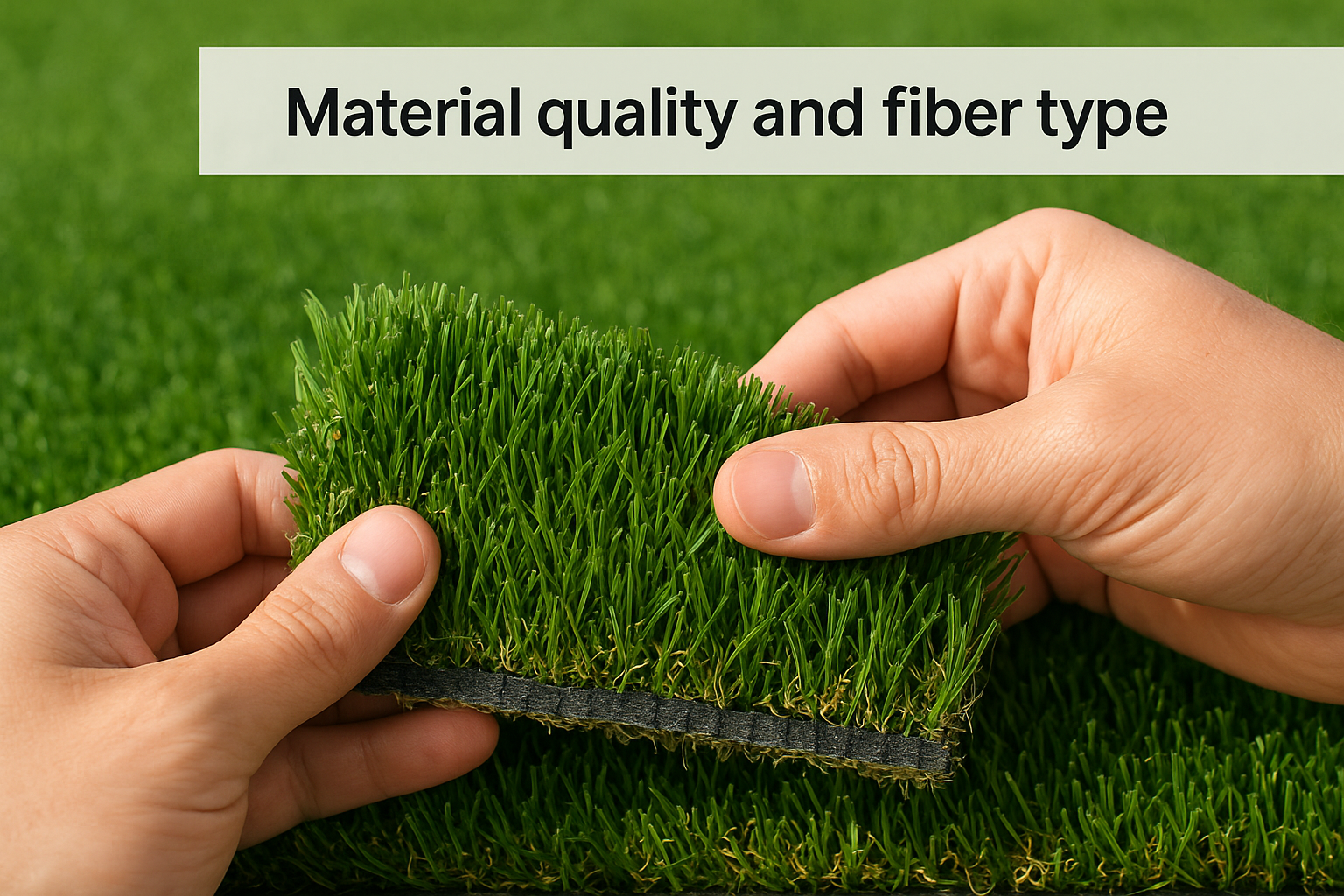
Beyond fiber type, yarn density and pile height also play a significant role. A denser turf with tightly packed fibers holds its shape longer under repeated pressure. Thin, loosely packed grass mats down quickly and loses its appearance within a few years.
The infill material used beneath the fibers also affects durability, as a stable base prevents fiber root movement and keeps the surface even over time.
UV exposure and local climate
Malaysia's climate creates specific challenges you won't find in temperate countries. Year-round intense sunlight and consistent heat accelerate UV degradation in lower-grade synthetic turf. Fibers without proper UV stabilization become brittle, fade in color, and eventually crack under prolonged exposure.
High-quality turf products include UV inhibitors built directly into the fiber during manufacturing, not as a surface coating applied afterward. This distinction matters because a coating wears off with cleaning and rain, while fiber-integrated UV protection holds up across the full lifespan of the product. When evaluating any artificial grass product, always confirm the UV rating and ask specifically how that protection is delivered.
How long artificial grass lasts in real homes
Real-world performance gives you a clearer picture than manufacturer claims alone. In typical residential gardens with moderate foot traffic, well-installed artificial turf lasts 15 to 20 years before showing significant wear.
Residential gardens and play areas
For standard home gardens in Malaysia, most homeowners see 15 to 20 years of reliable performance from quality synthetic turf. Areas with children or pets experience more wear, particularly in concentrated zones like pathways or play spots, where fiber flattening and infill displacement happen faster than in low-traffic sections.
If you're asking how long does artificial grass last in a family garden with kids and pets, expect the lower end of that range unless you rotate activity zones and brush the turf regularly.
In lightly used decorative areas, such as balconies or ornamental side gardens, the same product can comfortably reach 20 to 25 years with minimal intervention. The fibers simply face less mechanical stress in those settings.
Commercial and high-traffic spaces
Commercial installations carry heavier daily loads, which compresses the expected lifespan to roughly 10 to 15 years depending on foot traffic volume and maintenance consistency. Hospitality venues, office courtyards, and retail spaces fall into this category.
Selecting a higher-density turf with reinforced backing is the practical response for commercial use, as it resists compaction and maintains a clean, presentable appearance longer between professional servicing.
What shortens lifespan and how to avoid it
Several preventable mistakes cause artificial grass to wear out years ahead of schedule. Knowing these risks upfront lets you protect your investment from day one and keep your turf looking good for its full expected lifespan.
Poor drainage and standing water
Waterlogging is one of the most damaging conditions for synthetic turf. When water pools beneath the surface, it softens the backing material, promotes mold, and causes the turf to lift or buckle over time. This is a real concern in Malaysia given the heavy rainfall. A properly graded sub-base with adequate drainage channels prevents standing water from accumulating and keeps the backing structurally sound across years of use.
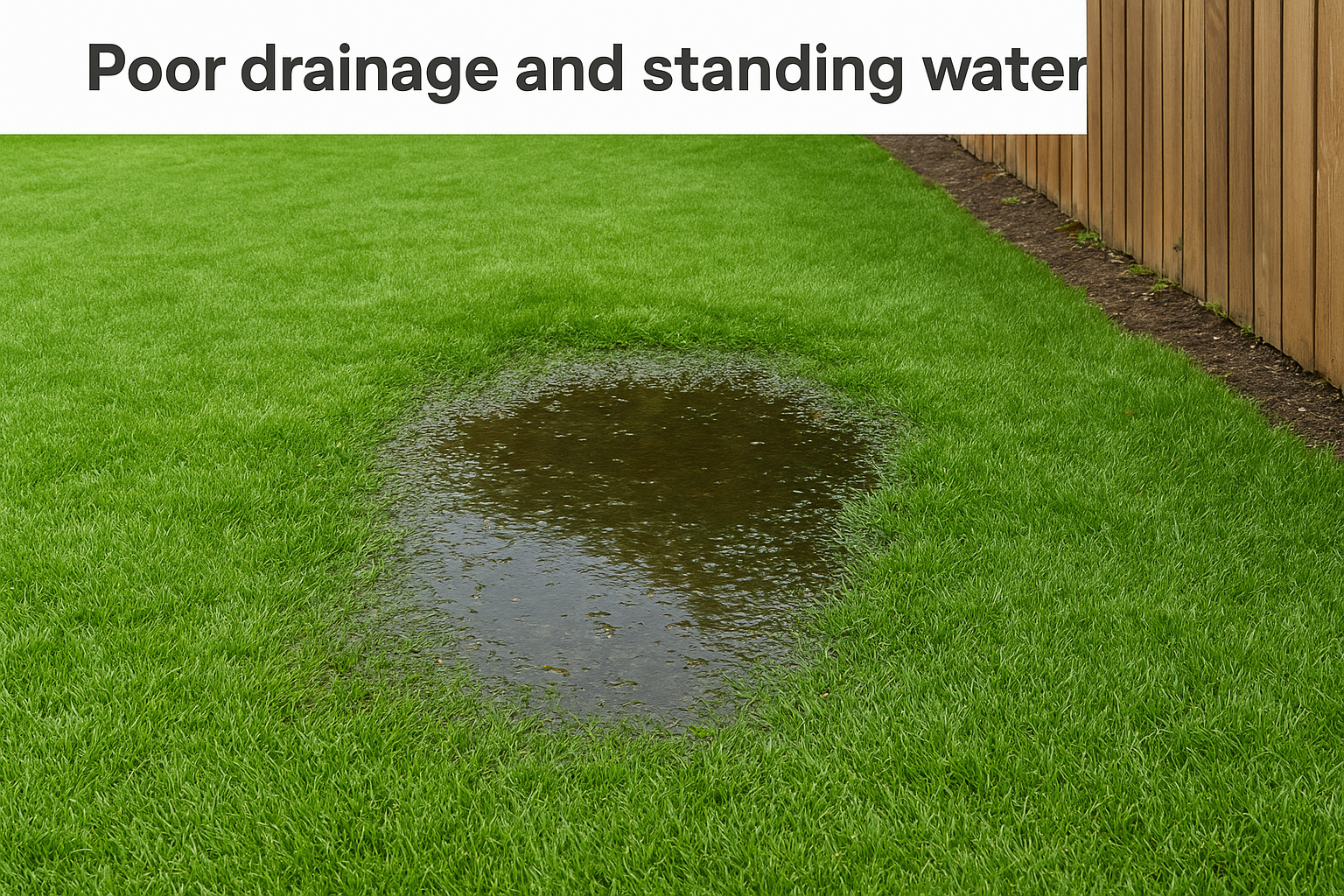
If your artificial grass installation skips a proper drainage layer, you're shortening its lifespan from the start, regardless of fiber quality.
Improper cleaning habits
Using harsh chemical cleaners or high-pressure water jets breaks down fiber integrity faster than normal wear does. Bleach-based products strip UV stabilizers from the fibers, leaving them brittle and prone to cracking under sunlight. Stick to pH-neutral cleaners and gentle rinsing when removing dirt, stains, or pet waste from the surface.
Physical damage from sharp tools, heavy furniture without base pads, and consistent foot traffic concentrated in one spot also accelerates visible deterioration. Spreading activity across the turf and using furniture pads reduces localized wear significantly. When you think about how long does artificial grass last, maintenance habits carry as much weight as product quality.
How to maintain artificial grass in Malaysia
Malaysia's combination of heavy rainfall, intense heat, and year-round humidity means your maintenance routine needs to account for conditions that most generic care guides ignore. The good news is that artificial turf in Malaysia doesn't demand much time, but the specific steps you follow matter more than the effort you put in. Consistent, correct maintenance is one of the clearest answers to how long does artificial grass last in tropical climates.
Regular brushing and rinsing
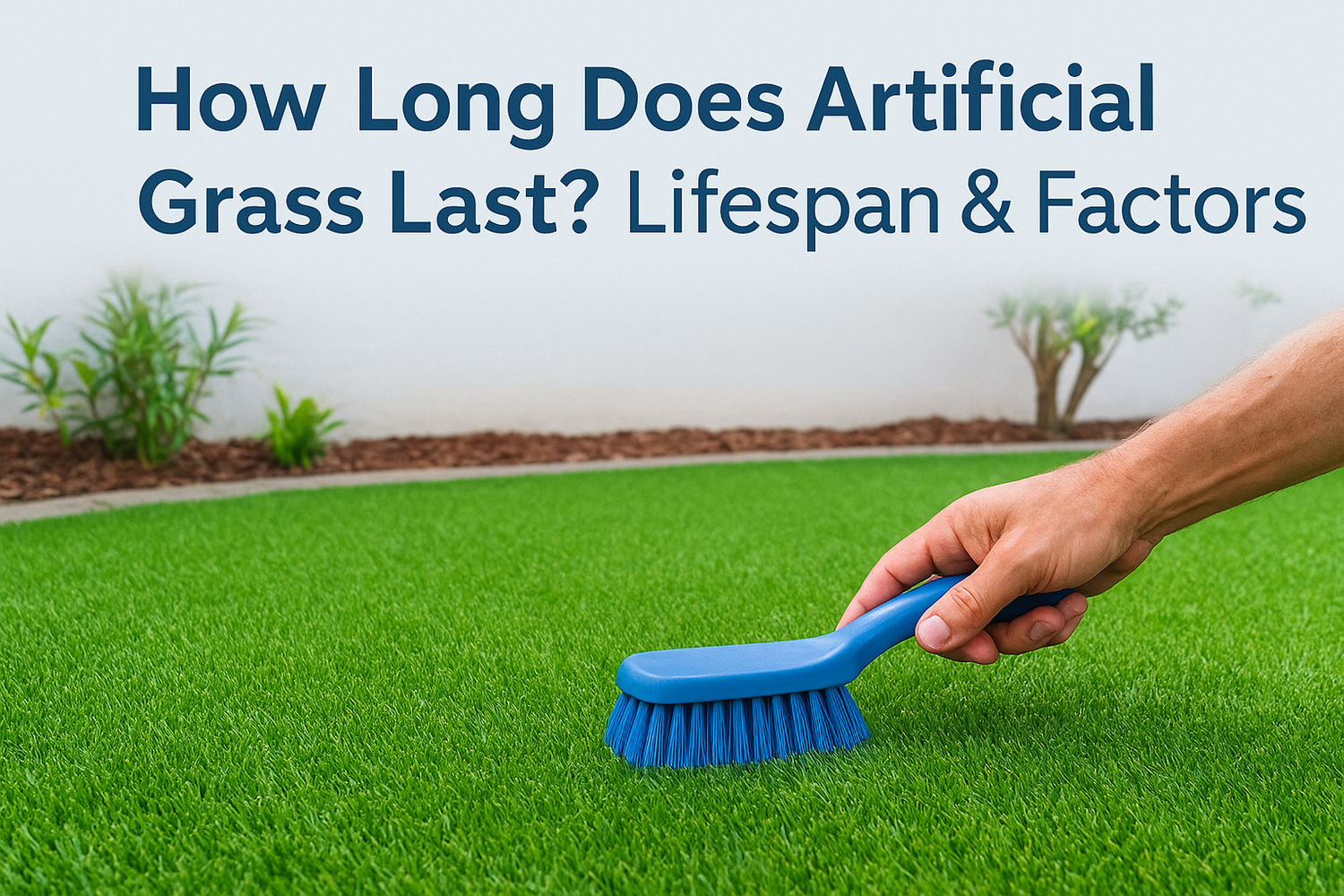
Brushing your turf with a stiff-bristled, non-metal brush every two to four weeks keeps fibers upright and prevents compaction from foot traffic. Rinse the surface monthly with a garden hose to wash away dust, fallen leaves, and organic debris before they decompose and attract insects or mold.
During the wet season, check that your drainage channels are clear after heavy downpours, as blocked drainage causes waterlogging that damages the backing material over time.
Managing heat, debris, and pet waste
Leaf litter and organic matter break down quickly in Malaysia's heat and humidity, so remove debris promptly rather than letting it sit. For pet waste, scoop solids immediately and rinse the area with a diluted pH-neutral cleaner to neutralize odors and prevent bacterial buildup.
Avoid placing heat-retaining objects like dark metal furniture directly on the turf for extended periods, as concentrated heat accelerates fiber degradation in exposed spots.
When to repair vs replace artificial grass
Not every problem with synthetic turf means you need to start over. Knowing the difference between a fixable issue and a sign of end-of-life deterioration saves you money and helps you make a clear-headed decision rather than an expensive one based on guesswork.
Signs that repair is enough
Small sections of lifted seams, localized infill displacement, or isolated patches of flattened fiber are all repairable without replacing the entire lawn. These issues typically result from heavy furniture placement, concentrated foot traffic in one spot, or a blocked drainage channel that caused temporary waterlogging. A professional can re-secure seams, top up infill, and brush affected areas back into shape without touching the rest of the installation.
If the damage covers less than 10 to 15 percent of your total turf area, repair is almost always the more cost-effective path.
Signs it's time for full replacement
Widespread fiber brittleness, significant color fading across the surface, and backing that has cracked or separated in multiple areas all point toward replacement rather than repair. These symptoms indicate that the turf has reached the end of its functional lifespan. When you factor in how long does artificial grass last on average, a product showing these signs after 15 or more years has delivered its value. Continuing to patch deteriorating turf at that stage costs more over time than investing in a fresh, high-quality installation.
Your next steps
How long does artificial grass last comes down to three things: the quality of the product you choose, how well the installation is done, and how consistently you maintain it. Cut corners on any one of those, and you'll see the consequences within a few years rather than two decades.
You now have a clear picture of what drives lifespan, what shortens it, and how to recognize when repair or replacement makes more sense. That puts you in a much stronger position than most homeowners who buy based on price alone.
If you're ready to move forward with artificial turf that's built for Malaysia's climate and backed by real installation experience, the next step is a straightforward one. Reach out to the Konzept Garden team to discuss your space, your usage needs, and which product fits your situation. Talk to our team today and get a free quotation for your project.