
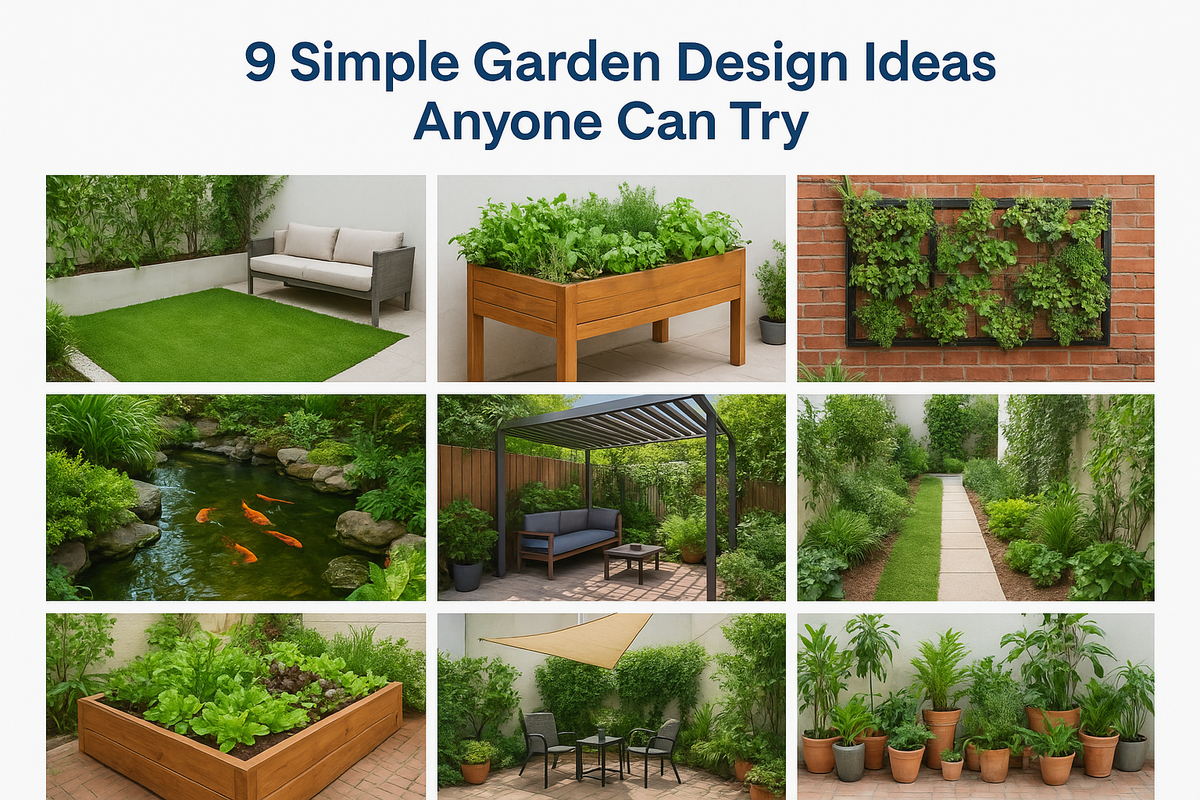
You don't need a huge budget or a design degree to make your garden look good. Most homeowners in Malaysia get stuck staring at a bare patch of grass or a cluttered patio, unsure where to start. That's exactly why simple garden design ideas matter more than complicated landscaping plans that need a full renovation team.
This article gives you practical, low-maintenance layouts you can try this weekend, whether you're working with a narrow terrace house strip or a small condo balcony. No jargon, no need for a full simple garden design overhaul, just clear steps that fit real spaces and real schedules.
We've pulled together 9 ideas from projects we've handled at Konzept Garden, covering everything from smart plant groupings to artificial turf solutions like Noble Grass for spaces where real lawn struggles, and simple water features that add character without heavy upkeep. Each idea is easy to picture and easy to start, so by the end you'll have a shortlist of changes worth making, whether you tackle them yourself or bring in a professional design team with a landscape design package and instant quotation to finish the job right.
1. Install low-maintenance artificial grass
Malaysia's climate is brutal on real lawns. Heavy rain one week, blazing heat the next, and most natural grass ends up patchy, muddy, or overrun with weeds within months. Artificial turf solves this problem outright, giving you a green, even surface all year round without the mowing, fertilizing, or endless watering that real grass demands. It's one of the fastest ways to turn a tired patch of dirt into something that actually looks intentional, and it's often the first upgrade we recommend to clients who want a simple garden design that doesn't fight the weather.
How it works
Installation starts with clearing the existing ground, leveling it, and laying a compacted base layer (usually crushed granite or sand) for drainage. The turf itself is rolled out over this base, cut to fit the space, and secured at the edges with pins or adhesive. Good synthetic grass, like our Noble Grass Valu 30 rolls, uses UV-stabilized fibers so the color doesn't fade under direct sun, and a perforated backing that lets rainwater drain through instead of pooling on top. A professional crew can usually finish a standard residential lawn in a single day.
Artificial grass turns a maintenance headache into a one-time installation you barely think about again.
Who it's best for
This works well for homeowners with small or awkwardly shaped lawns where real grass struggles to establish, and for anyone tired of patchy growth under shaded trees or along narrow side yards. Families with young kids or dogs benefit too, since synthetic turf holds up to daily foot traffic without turning to mud. Commercial properties and condo common areas also use it heavily, because it keeps a uniform, tidy appearance without needing a regular gardening crew on-site.
Cost and maintenance tips
Expect pricing to vary based on turf quality and the size of the area, with higher-density synthetic grass like the Premium 35 turf costing more upfront but lasting longer under sun and foot traffic. Maintenance is minimal, but a few habits keep it looking sharp for years:
- Rinse the surface every few weeks to clear dust and debris
- Brush the fibers occasionally with a stiff broom to keep them upright
- Flush pet waste areas promptly to avoid odor buildup
- Check drainage points after heavy storms to prevent pooling
Done right, a quality artificial lawn can last well over a decade with almost no ongoing cost beyond occasional cleaning.
2. Add self-watering raised planters for effortless greenery
Forgetting to water is the number one reason plants die in home gardens, especially when you're juggling work and travel. Self-watering raised planters fix this by holding a reservoir of water at the base that plants draw from as needed, so you're not stuck checking on them every single day. It's a small change that makes effortless greenery possible even for people who've never kept a plant alive past a month.
How it works
Each planter box has a built-in water reservoir separated from the soil by a wicking layer or fabric barrier. Roots pull moisture upward as the soil dries out, so plants get a steady supply instead of the feast-and-famine cycle of manual watering. Our Ziant Hydro Planter range includes an overflow outlet to prevent waterlogging and a fill indicator so you know exactly when to top up, usually once every one to two weeks depending on heat and plant type.
A self-watering planter turns "I forgot to water again" into a problem you simply don't have anymore.
Who it's best for
These suit busy homeowners, frequent travelers, and anyone renting a property where digging into the ground isn't an option. They also work well on balconies and patios where soil beds aren't practical, letting you grow herbs, flowers, or small shrubs without a full landscaping project.
Cost and maintenance tips
Pricing depends on planter size and material, with UV-resistant composite boxes lasting longer outdoors than basic plastic ones. Keep maintenance simple:
- Refill the reservoir when the indicator shows empty
- Flush the reservoir every few months to prevent algae buildup
- Use well-draining potting mix suited for wicking systems
Done correctly, these planters need attention every couple of weeks instead of daily.
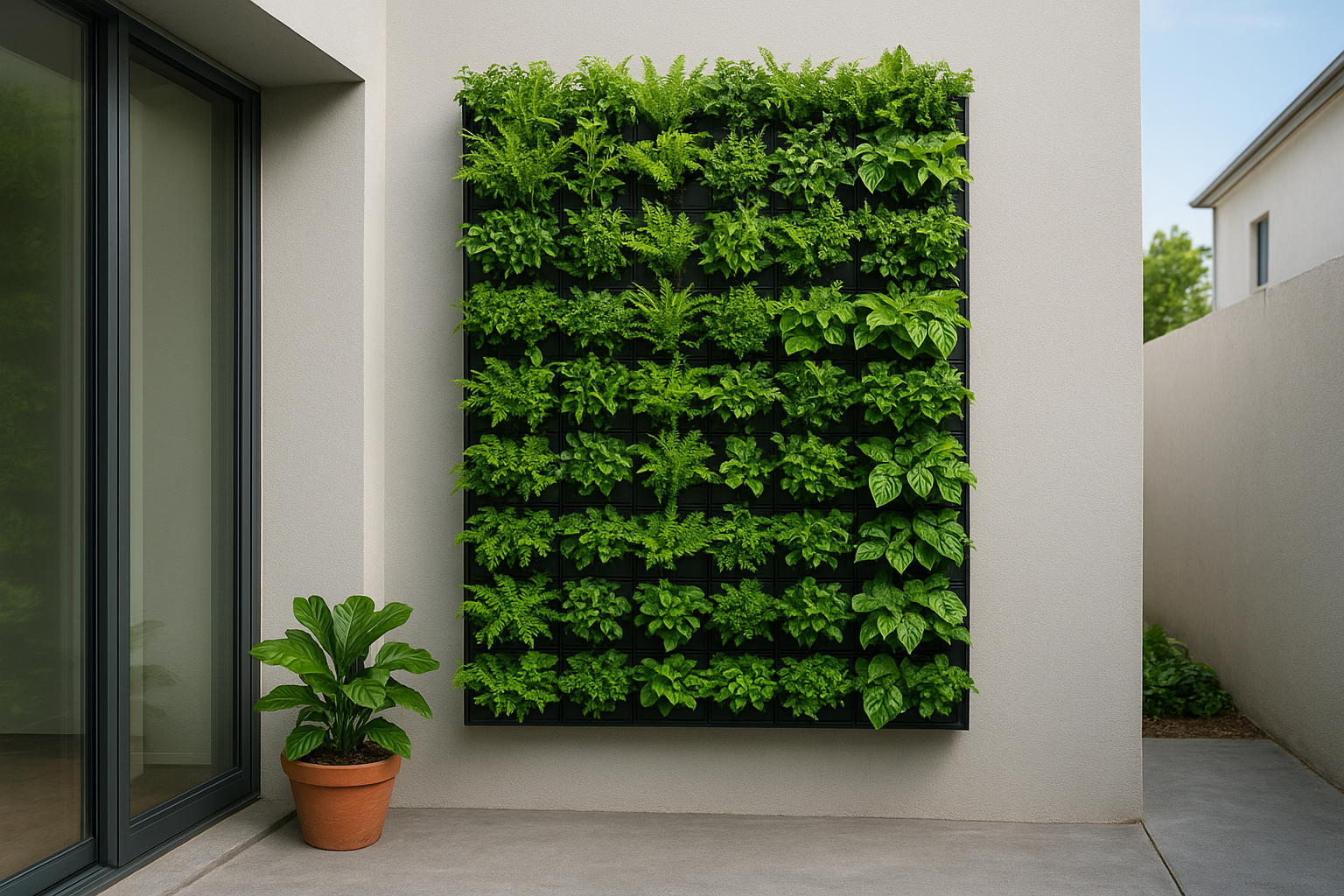
3. Build a vertical garden wall to maximize small spaces
Terrace houses and condo units in Malaysia rarely have room to spare, and a flat patch of soil often isn't an option. A vertical garden wall solves that by shifting greenery off the ground and onto a structure, giving you a lush backdrop without eating into your floor space. It's one of the smartest space-saving garden ideas for anyone stuck with a narrow courtyard, a bare boundary wall, or a balcony that feels too tight to plant anything at all.
How it works
A vertical garden system usually starts with a modular frame or panel mounted to an existing wall, fitted with individual planting pockets or cells that hold soil and root systems in place. Irrigation runs through a drip line at the top, so water trickles down through each row instead of requiring you to water every pocket by hand. Our EcoWall vertical garden system uses this drip-fed layout with UV-treated panels, so the structure holds up under direct sun without warping or fading over time.
A vertical garden wall gives you a full garden's worth of greenery without asking for a single extra square foot of ground.
Who it's best for
This suits condo owners, terrace house residents, and anyone with a small courtyard or side alley that gets little use. It also works well for commercial spaces like cafes and offices that want a green feature wall without giving up floor area for planting beds.
Cost and maintenance tips
Costs scale with wall size and the density of planting pockets used, and a full package with plants and irrigation included is priced per square foot. Keep it running smoothly with these habits:
- Check the drip irrigation line monthly for clogs
- Trim overgrown foliage to keep airflow even across panels
- Swap out struggling plants for hardier species suited to your wall's sun exposure
4. Create a calming water feature with a koi or fish pond
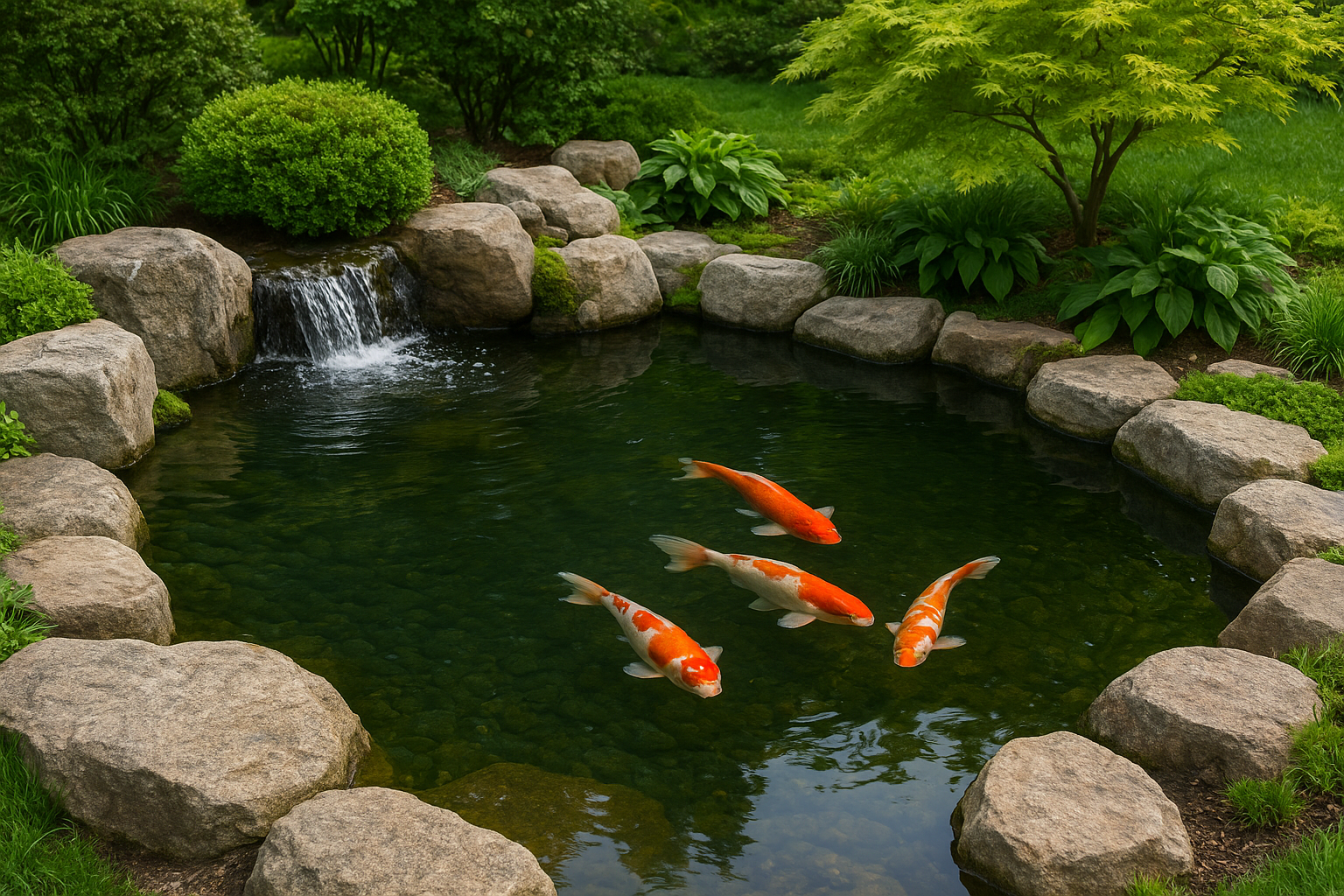
Nothing changes the mood of a garden faster than moving water. A koi or fish pond gives you that gentle background sound that masks traffic noise and turns a corner of your garden into somewhere you actually want to sit. This idea sits a step above the other simple garden design ideas on this list in terms of effort, but the payoff in calm, everyday enjoyment is hard to match with plants or lighting alone.
How it works
A pond needs a excavated basin lined with either a rigid pre-formed shell or a flexible liner, connected to a filtration system that keeps water clear and oxygenated for the fish inside. Circulation pumps push water through mechanical and biological filters, stripping out debris and breaking down waste before it builds up. Our Zen Bio Koi Pond design leans on a biological filtration setup that keeps the ecosystem stable without constant manual cleaning, while the Himalaya Rock koi pond with natural stone edging gives a more rugged, textured look.
Moving water does more for a garden's atmosphere than almost any plant or structure can.
Who it's best for
This suits homeowners with a fixed budget for a standout feature and enough space to give a pond proper placement, ideally somewhere it gets partial shade rather than baking under full sun all day. It's popular with anyone who wants a garden that feels alive, not just decorated, and it sits naturally within a Japanese garden layout.
Cost and maintenance tips
Pricing depends heavily on size, filtration complexity, and whether you're stocking koi versus hardier ornamental fish. Keep it running well with:
- Testing water quality monthly
- Cleaning filter media every few weeks
- Trimming nearby plants so leaf litter doesn't clog the system
A properly filtered pond needs far less fuss than most people expect.
5. Define a cozy seating area with a pergola or shade sail
Malaysia's sun doesn't let up, and a garden without shade often sits unused for most of the day. A pergola or shade sail fixes that by carving out a dedicated seating area where you can actually enjoy the outdoors instead of retreating indoors by 11am. It's one of the easiest ways to give your simple garden design a clear focal point without adding a single new plant.
How it works
A pergola is a fixed structure, usually timber or aluminum posts topped with beams, that casts partial shade while still letting air move through. A shade sail is a stretched fabric canopy anchored between posts or existing walls, angled to block the harshest midday sun. Both options define a space visually, signaling to anyone in the garden that this spot is for sitting, not just walking through.
A well-placed pergola turns an empty corner into the spot everyone gravitates toward.
Who it's best for
Homeowners who entertain outdoors, or families who want a spot for kids to play without direct sun exposure, get the most use from this idea. It also suits smaller gardens where one well-defined area does more visual work than scattered furniture.
Cost and maintenance tips
Timber pergolas cost more upfront but age gracefully with occasional sealing, while aluminum frames need almost no upkeep beyond a wipe-down. Shade sails run cheaper but need retensioning every year or two:
- Reseal timber posts every 12 to 18 months
- Retighten sail anchors before monsoon season
- Clean fabric sails with mild soap to prevent mildew
6. Layer plants for depth, privacy, and year-round color
A garden that relies on one type of plant at one height looks flat no matter how well it's kept. Layering fixes that by stacking tall shrubs, mid-height perennials, and low ground cover together, so your eye moves through the space instead of skimming across it. This is one of the cheapest simple garden design ideas on this list, since it works with plants you likely already have and just needs a bit of rearranging.
How it works
Start with taller shrubs or small trees along the back or boundary line to build privacy and block unwanted views. Fill the middle layer with flowering perennials or ornamental grasses that shift in color across the seasons. Finish with ground cover or low border plants at the front, so nothing looks abrupt at the edges.
Good layering does more for a garden's depth than any single showpiece plant ever will.
Who it's best for
This suits homeowners on tight budgets who want visual impact without buying expensive statement pieces. It also works well for anyone dealing with nosy neighbors or a road-facing garden, since taller layers double as a natural privacy screen without needing a fence.
Cost and maintenance tips
Costs stay low if you choose hardy, local species suited to Malaysia's climate rather than fussy imports, and an English garden layout idea shows how those layers come together. Keep the layers looking sharp with these habits:
- Prune taller shrubs twice a year to control height
- Deadhead flowering perennials to extend blooming
- Divide overcrowded ground cover every year or two
Done well, layered planting needs less water and less fuss than a single dense lawn.
7. Grow herbs and vegetables in simple raised beds
Growing your own food sounds like a bigger commitment than it actually is. Raised beds make it simple by giving you a contained, elevated space to plant herbs and vegetables without fighting poor soil quality or drainage issues in the ground below. It's one of the most rewarding simple garden design ideas on this list, since you get fresh basil or chili on your own patio instead of buying it wilted from the store.
How it works
A raised bed is a framed box, usually timber or galvanized metal, filled with a mix of topsoil, compost, and perlite for drainage. You place it directly on a patio, driveway, or bare patch of ground, so there's no need to dig up existing turf. Because the bed sits above ground level, water drains faster and pests like snails have a harder time reaching your crops.
A raised bed gives you control over soil quality that in-ground planting almost never offers.
Who it's best for
This suits homeowners who want fresh herbs and vegetables but don't have decent garden soil to work with, plus anyone dealing with a back that doesn't love bending over weeded ground beds. It also works for renters, since a raised bed can move with you if you leave the property.
Cost and maintenance tips
Costs stay low if you build the frame yourself from untreated timber, though pre-made kits save time. Keep production steady with a few habits:
- Rotate crops each season to avoid depleting the same nutrients
- Top up compost every few months as soil compacts
- Water early morning to reduce evaporation loss in Malaysia's heat
8. Use outdoor lighting to extend your garden into the evening
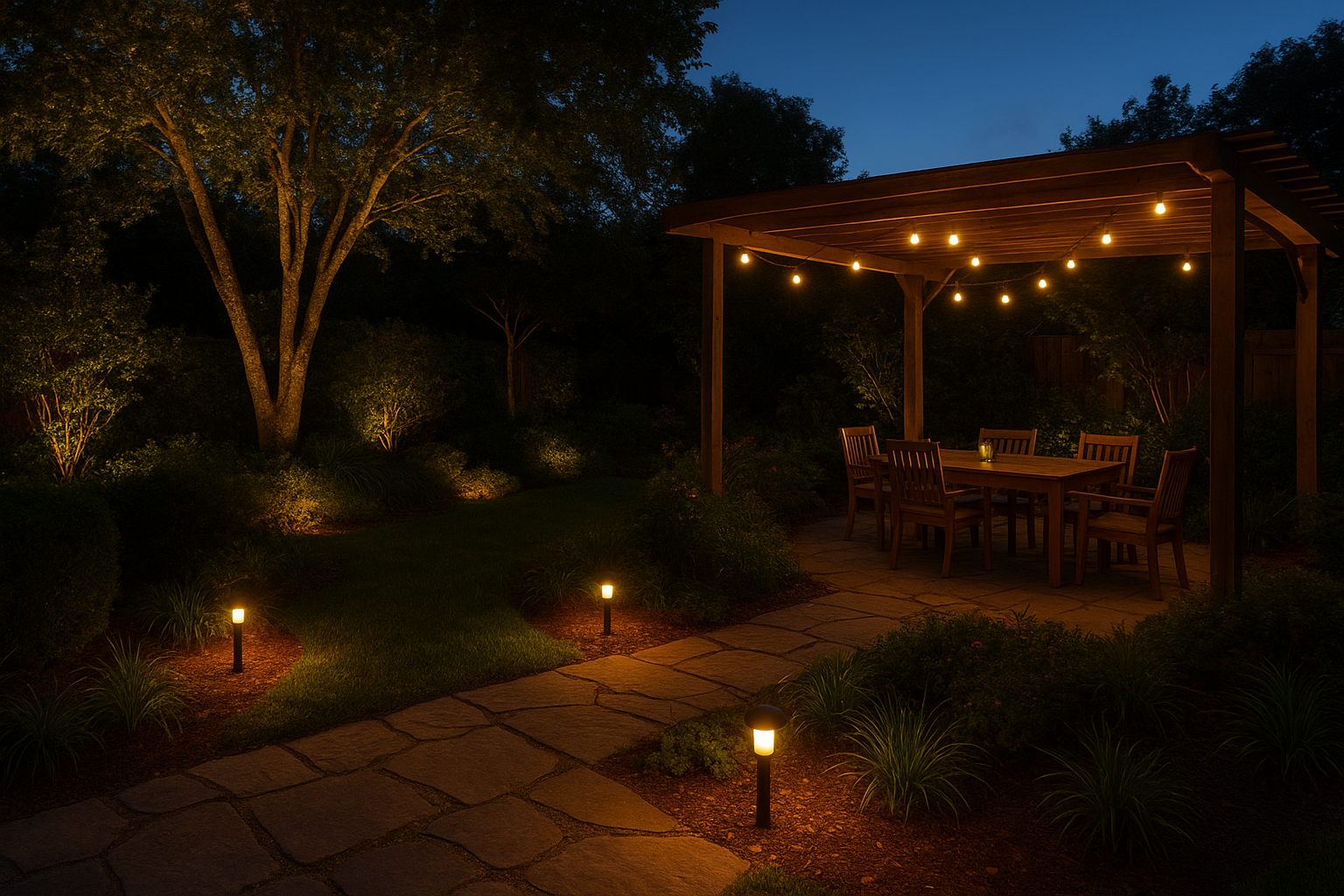
Most gardens go dark the moment the sun sets, which means you're only using the space for half the day. Outdoor lighting fixes that by pulling your garden into the evening hours, turning a spot you'd normally ignore after dinner into somewhere you actually want to linger. It's one of the quickest simple garden design ideas to add, since it doesn't touch your existing layout at all, just the way you experience it after dark.
How it works
Good garden lighting layers three types of fixtures rather than relying on one bright bulb. Path lights mark walkways at ankle height, uplights aim into tree canopies or against walls to create depth, and string lights or lanterns over a seating area add warmth without glare. Solar-powered fixtures skip the wiring entirely, while low-voltage LED systems run off a transformer and give you more control over brightness and placement.
The right lighting doesn't just illuminate a garden, it reshapes how the space feels after sunset.
Who it's best for
Homeowners who entertain in the evening, or anyone who wants their pergola or seating area to actually get used past sunset, benefit most from this upgrade. It also suits properties where security matters, since a well-lit path or driveway discourages anyone from lingering where they shouldn't.
Cost and maintenance tips
Solar fixtures cost less upfront and need zero wiring, though they perform poorly under heavy tree cover with limited direct sun. Low-voltage LED systems cost more to install but give brighter, more reliable light year-round:
- Wipe solar panels monthly to keep them charging efficiently
- Check LED transformer connections after heavy rain
- Replace weak batteries in solar units every year or two
A modest lighting setup pays for itself in extra hours spent outdoors.
9. Mix and match container gardens for patios and balconies
Container gardens let you skip the commitment of permanent beds altogether, and mixing pot sizes, plant heights, and textures gives even a bare balcony a finished look in an afternoon. This is one of the most flexible simple garden design ideas because you can rearrange the whole layout whenever you get bored of it, without touching a single inch of ground.
How it works
Group pots in odd numbers, since three or five reads better visually than pairs, and vary the heights using stands, upturned crates, or simple risers so the arrangement doesn't sit flat. Mix trailing plants that spill over the rim with upright ones that draw the eye upward, and repeat one or two colors across different pots to tie the whole grouping together. Terracotta, fiber-cement, and glazed ceramic all handle Malaysia's humidity fine, so material choice comes down to weight and budget rather than durability.
A handful of well-arranged pots can do more for a balcony than a full landscaping budget ever would.
Who it's best for
Renters, condo owners, and anyone without access to real soil get the most value here, since every pot is fully portable and moves with you if you relocate. It also suits homeowners testing plant combinations before committing to a permanent bed elsewhere in the garden.
Cost and maintenance tips
Expenses stay low since you can start with just a few pots and expand gradually:
- Group pots with similar watering needs together
- Rotate pots occasionally so all sides get even sun
- Repot root-bound plants once a year into slightly larger containers
Keeping the groupings small and flexible means you can refresh the whole look for the cost of a single new pot.
Finding the right idea for your garden
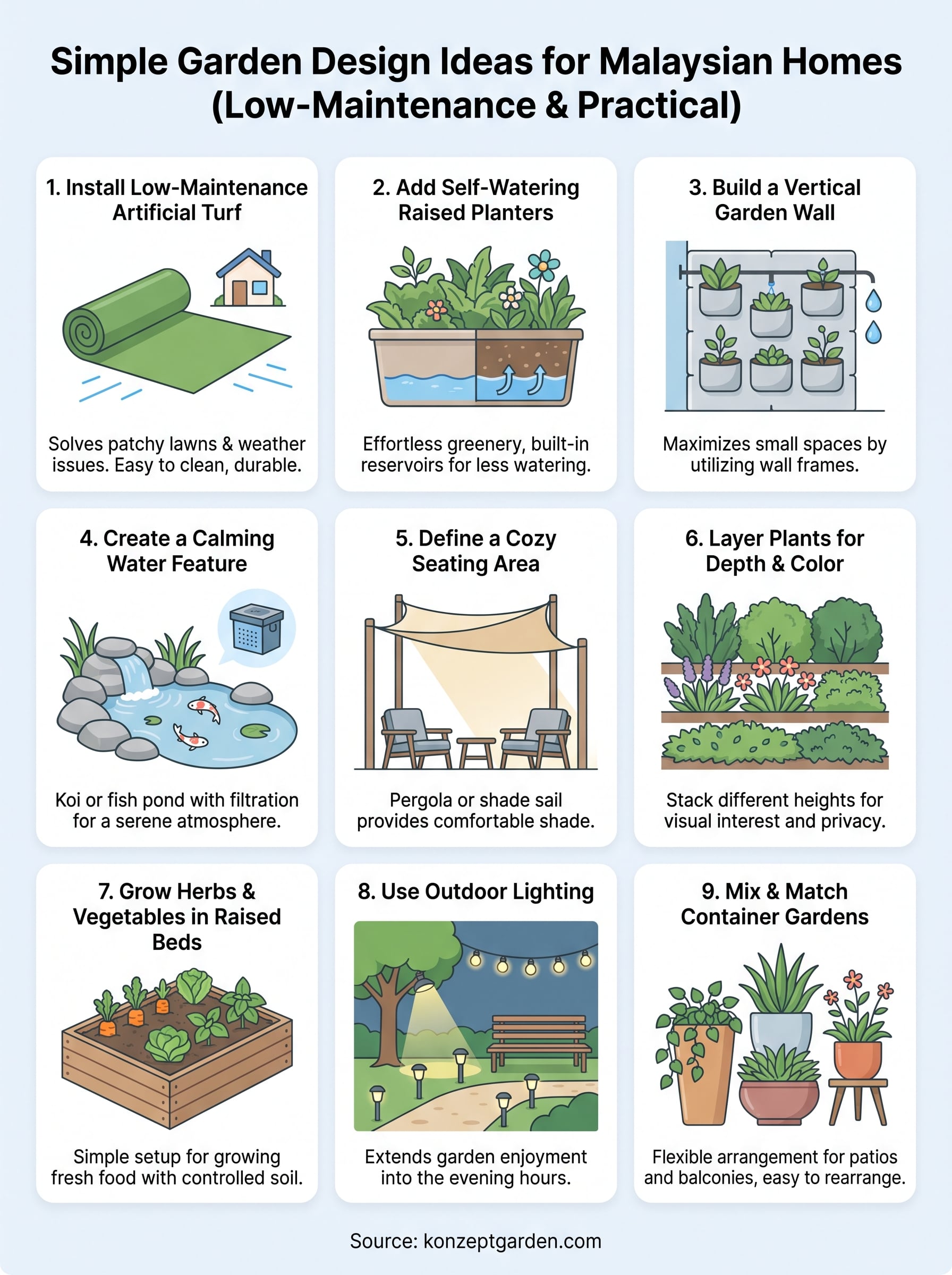
None of these nine ideas need a full renovation budget or a landscaping crew camping out on your lawn for weeks. Pick one that matches your actual space and schedule, whether that's swapping patchy grass for Noble Grass, adding a self-watering planter, or finally giving your seating area some shade. Small changes compound fast, and a simple garden design built from a few solid choices usually beats an ambitious plan that stalls halfway through.
Gardens that mix texture, movement, and a bit of quiet luxury tend to get used the most, which is why a water feature often outperforms every other item on this list for everyday enjoyment. If a koi pond or fish pond feels like the right anchor for your space, explore our Zen Bio koi pond designs and see what fits your layout best.