
Staring at a bare patch of lawn or a garden that never quite came together is a familiar problem for many Malaysian homeowners. You know the space has potential, but turning it into something you actually enjoy sitting in takes more than buying a few plants from the nursery. Landscape garden design is really about planning first and planting second, matching layout, materials, and greenery to how you actually use your outdoor space and the climate you're working with.
If you're searching for landscape design ideas that fit a typical Malaysian home, whether that's a narrow terrace garden, a bungalow compound, or a small courtyard, the goal is to find concepts that balance looks, upkeep, and budget. That's what this list is built for.
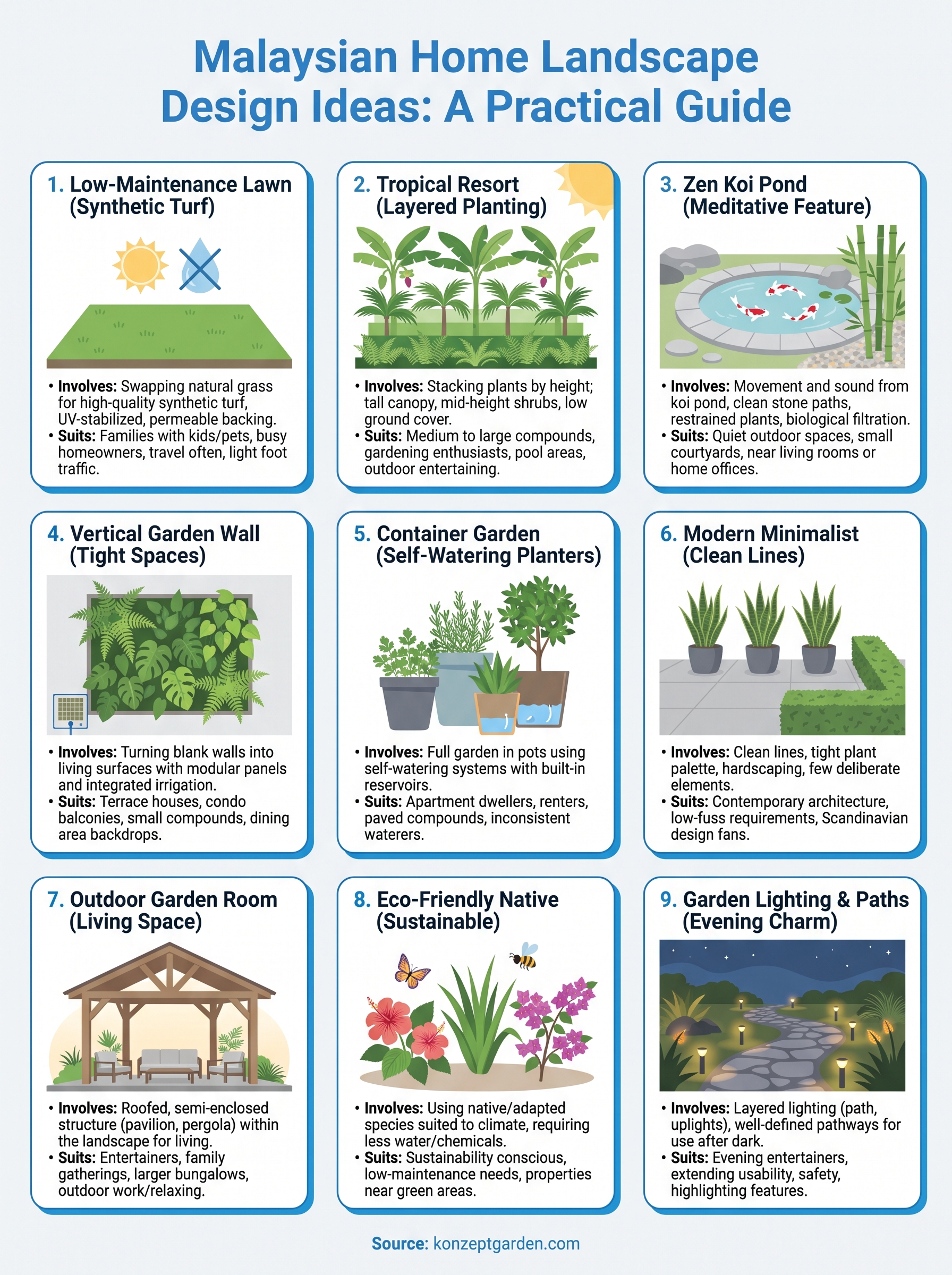
Below, we've pulled together nine practical design directions, from simple landscape design ideas for tight spaces to bolder features like koi ponds and vertical gardens, drawn from projects we've designed and built across the country. Each idea includes what makes it work, what it costs to maintain, and who it suits best, so you can pick a direction and start planning your own garden with confidence.
1. A low-maintenance lawn with premium synthetic turf
What it involves
Swapping a real lawn for high-quality synthetic turf is one of the fastest ways to fix a patchy, muddy, or sun-scorched yard. This is one of the most requested landscape design ideas we get from Malaysian homeowners, because natural grass struggles with our heat, heavy rain, and humidity, and it demands constant mowing, fertilizing, and pest control just to look decent. A product like Noble Grass artificial turf rolls solves that by using UV-stabilized fibers and proper drainage backing, so the lawn stays green year-round without turning into a swamp during monsoon season. It's not the flimsy artificial grass you might remember from decades ago. Modern synthetic turf has realistic blade shapes, varied color tones, and enough density to feel soft underfoot.
A synthetic lawn trades a weekend chore for a permanently green yard, with almost no maintenance in between.
Who it's best suited for
Families with young kids or pets get the most value here, since the surface stays clean, doesn't turn muddy, and won't need pesticides that you'd otherwise worry about around children. Homeowners who travel often or simply don't have time for weekly garden upkeep also lean toward this option, because there's no watering schedule to maintain and no dead patches to worry about while you're away. This works especially well for residential landscape design ideas on properties where the lawn is mostly decorative or used for light foot traffic rather than heavy outdoor entertaining.
Tips for getting it right
Getting a synthetic lawn to look and perform well long-term comes down to a few details that are easy to overlook:
- Check the drainage base first. Poor sub-base preparation is the number one reason synthetic lawns pool water or shift over time.
- Choose turf density in GSM, not just price. Cheaper turf often uses thinner fibers that flatten within a year.
- Mix in real planting beds around the edges. A lawn surrounded by actual shrubs or trees looks far more natural than turf edge to edge.
- Ask about heat performance. Malaysia's direct sun can make some synthetic grass hot underfoot by midafternoon, so look for turf rated for tropical climates.
- Get a proper site visit before buying. Slope, drainage points, and existing soil all affect installation cost and outcome, and our common questions on grass installation and upkeep cover what to expect.
2. A tropical resort-style garden with layered planting
What it involves
Think of the pool villas you've stayed at in Bali or Langkawi, where the greenery feels dense but never messy. That effect comes from layered planting, stacking tall canopy trees, mid-height shrubs, and low ground cover so the eye moves through different heights instead of hitting a flat wall of green. Palms, heliconias, bird of paradise, and travelers' palms form the upper and middle layers, while ferns, bromeliads, and creeping ground cover fill in the base. This is one of the more visually rich landscape design ideas for homeowners who want their garden to feel like an escape rather than just a patch of grass beside the house.
Layering height and texture is what separates a lush resort garden from a random collection of plants.
Who it's best suited for
Homeowners with a medium to large compound suit this style best, since layered planting needs room to breathe between plant groupings. It also appeals to anyone who genuinely enjoys gardening, since tropical layered beds need more attention than turf or gravel. If you're planning outdoor entertaining, a bungalow garden, or a resort-style pool area, this direction delivers real visual payoff.
Tips for getting it right
Before planting, map sun and shade patterns across your garden through the day, since many tropical layers, like ferns and bromeliads, scorch under direct afternoon sun. Group plants by water needs so you're not overwatering drought-tolerant species to keep thirsty ones alive nearby. Leave clear sightlines from your main windows or patio so the layering feels intentional, not overgrown.
3. A zen garden centered around a koi pond
What it involves
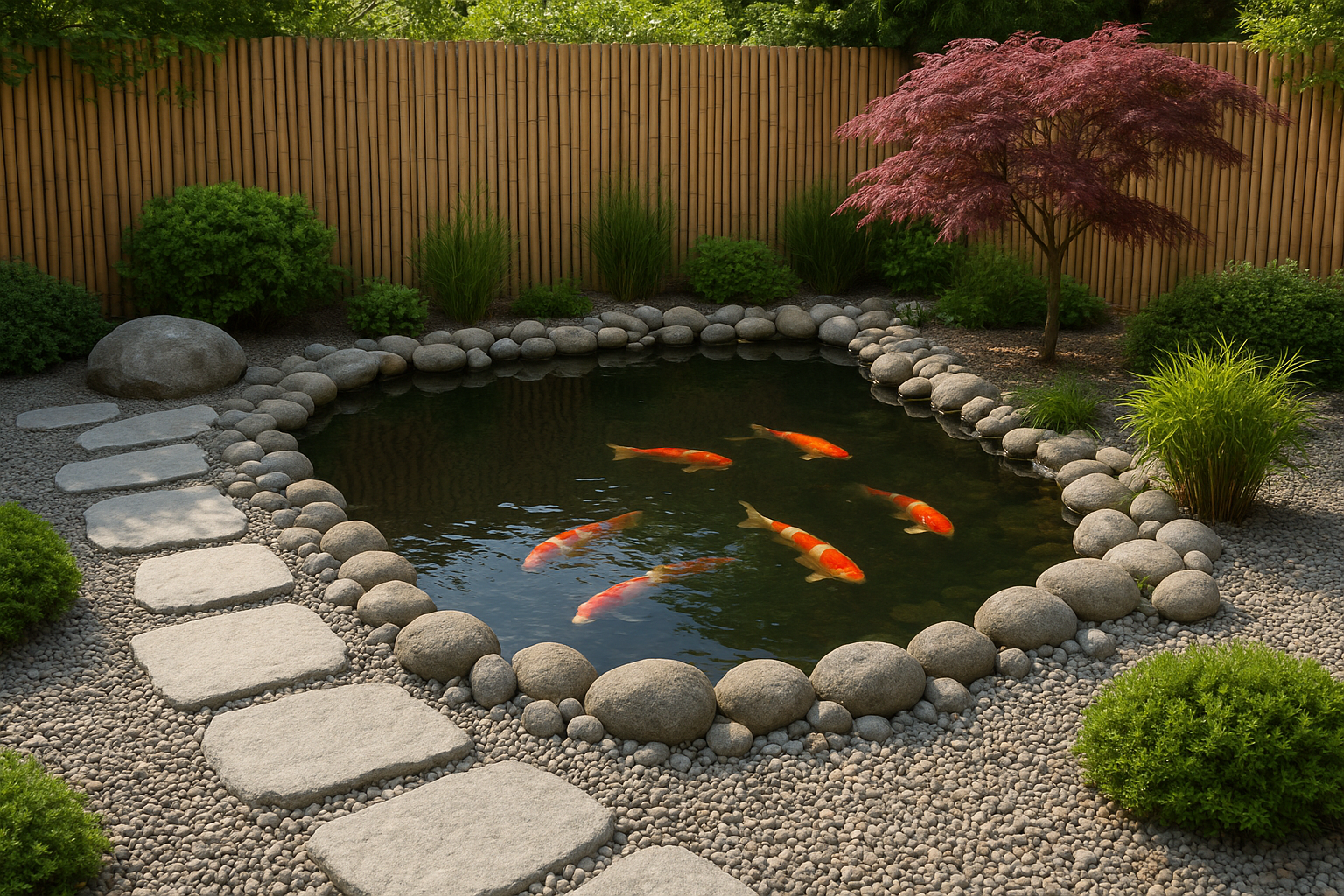
A koi pond brings movement and sound into a garden that flat planting beds can't match. Pair it with clean stone paths, bamboo screening, and a restrained plant palette, and you get a zen garden that feels calm rather than cluttered. Konzept Garden's biological filtration koi pond range and Himalaya Rock Fish Pond ranges use built-in biological filtration, so the water stays clear without you running a pump and dosing chemicals every week. Gravel, smooth river stones, and a few sculptural plants like Japanese maple substitutes or dwarf bamboo round out the look without competing with the water feature itself.
Moving water does more for a garden's atmosphere than almost any amount of planting.
Who it's best suited for
Homeowners drawn to a quieter, more meditative outdoor space tend to gravitate here, especially if the garden sits near a living room or home office where you'll actually hear the water daily. It also suits smaller courtyards, since a koi pond doesn't need much floor area to make an impact, unlike a sprawling tropical border, and a compact rock-edged fish pond fits neatly into one.
Tips for getting it right
A few decisions matter more than the pond size itself:
- Size the filtration to fish load, not just pond volume, or the water clouds up fast.
- Position the pond out of full afternoon sun to limit algae growth.
- Keep planting minimal around the edges so the water stays the visual focus.
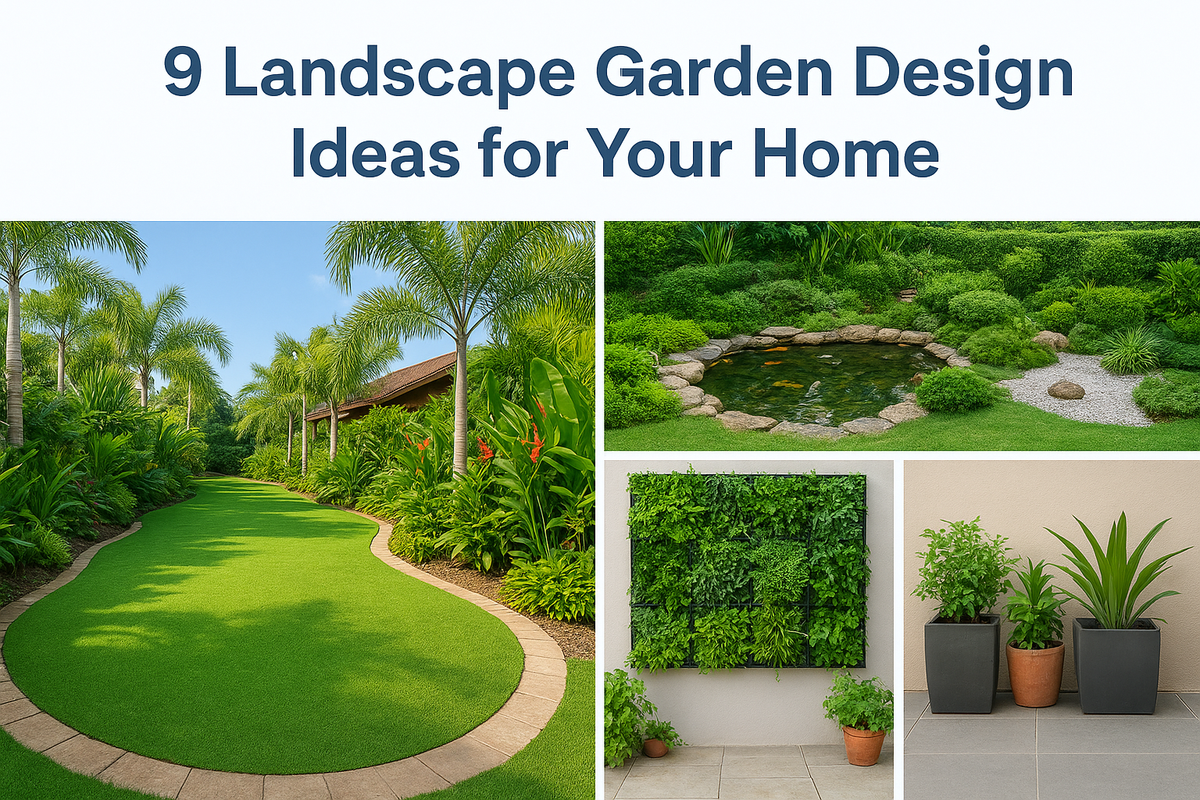
4. A vertical garden wall for tight spaces
What it involves
When the ground floor runs out of room, the wall becomes your garden. A vertical garden wall system turns a bare fence, boundary wall, or blank exterior into a living surface planted with ferns, pothos, philodendrons, and trailing succulents. Konzept Garden's EcoWall package with plants and irrigation uses modular planting panels with an integrated irrigation grid, so water reaches every pocket evenly instead of pooling at the bottom and starving the top rows. This is one of the more compact landscape design ideas on this list, since it adds greenery without touching your usable floor space at all.
A vertical wall gives you a full garden's worth of green using none of your garden's footprint.
Who it's best suited for
Terrace house owners and condo dwellers with a small compound or balcony get the most out of this idea, since it solves the exact problem a narrow lot creates. It also suits homeowners who want a striking backdrop for an outdoor dining area or a bare carport wall that otherwise does nothing for the property's look.
Tips for getting it right
Stick to plants with similar light and water needs across the whole panel, or some sections will die back while others thrive, which is why some homeowners choose a synthetic green wall instead. Check the wall's structural load and waterproofing before installation, since a saturated planting system is heavier than most homeowners expect. Finally, route the irrigation line to a timer, since hand-watering a vertical wall evenly is nearly impossible to keep consistent.
5. A container garden with self-watering planters
What it involves
Container gardening lets you build a full garden without touching the soil underneath, which matters if you're renting, dealing with poor native soil, or working on a balcony or paved courtyard. A self-watering planter solves the biggest failure point of pot gardening: inconsistent watering. Konzept Garden's Ziant Hydro Planter uses a built-in water reservoir with a wicking system, so plant roots draw up moisture as needed instead of drying out between waterings or drowning after a heavy pour. You can mix herbs, flowering shrubs, small ornamental trees, and even dwarf fruit trees in the same layout, then rearrange the whole thing whenever you want a fresh look.
Self-watering planters remove the single biggest reason potted gardens fail: forgetting to water them.
Who it's best suited for
Apartment dwellers, renters, and homeowners with paved compounds or minimal soil access get the most out of this approach, since it needs zero ground digging. It also suits busy households that want greenery without a watering routine, and anyone testing out plant combinations before committing to permanent landscaping elsewhere on the property.
Tips for getting it right
Match planter size to root depth, since shallow reservoirs dry out fast under Malaysia's heat. Group planters by sun exposure so you're not shifting pots around constantly. Check the reservoir's overflow drainage before heavy rain season, since a blocked outlet can waterlog roots just as badly as no watering at all. Refill reservoirs weekly rather than assuming they last indefinitely.
6. A modern minimalist landscape design
What it involves
A modern minimalist landscape strips a garden down to its essentials: clean lines, a tight plant palette, and hardscaping that does most of the visual work. Instead of dense borders, you get geometric planting beds, poured concrete or large-format paving, and a handful of architectural plants like sculptural palms, a potted snake plant, or clipped hedges repeated for rhythm. This is a simple landscape garden design approach in the truest sense, fewer elements, but each one chosen deliberately so nothing looks accidental. Color stays muted too, usually greens, grays, and whites, so the design feels calm rather than busy.
Minimalist landscaping works because every element earns its place, not because there's less to look at.
Who it's best suited for
Homeowners with contemporary or boxy architecture tend to gravitate here, since a minimalist garden matches clean building lines instead of fighting them. It also suits people who want a low-fuss garden without going full synthetic turf, since the plant count stays small enough to manage without a gardener on retainer, though a garden care subscription can handle the trimming for you. Anyone drawn to Japanese or Scandinavian design influences will likely find this direction familiar.
Tips for getting it right
Repetition matters more than variety here, so pick three or four plant species at most and repeat them across the space rather than introducing something new in every bed. Keep hardscape material consistent throughout the garden, since mixing paving types breaks the clean look fast. Finally, budget for good lighting, since minimalist gardens rely on shadow and form after dark far more than planted gardens do.
7. An outdoor living space with a garden room
What it involves
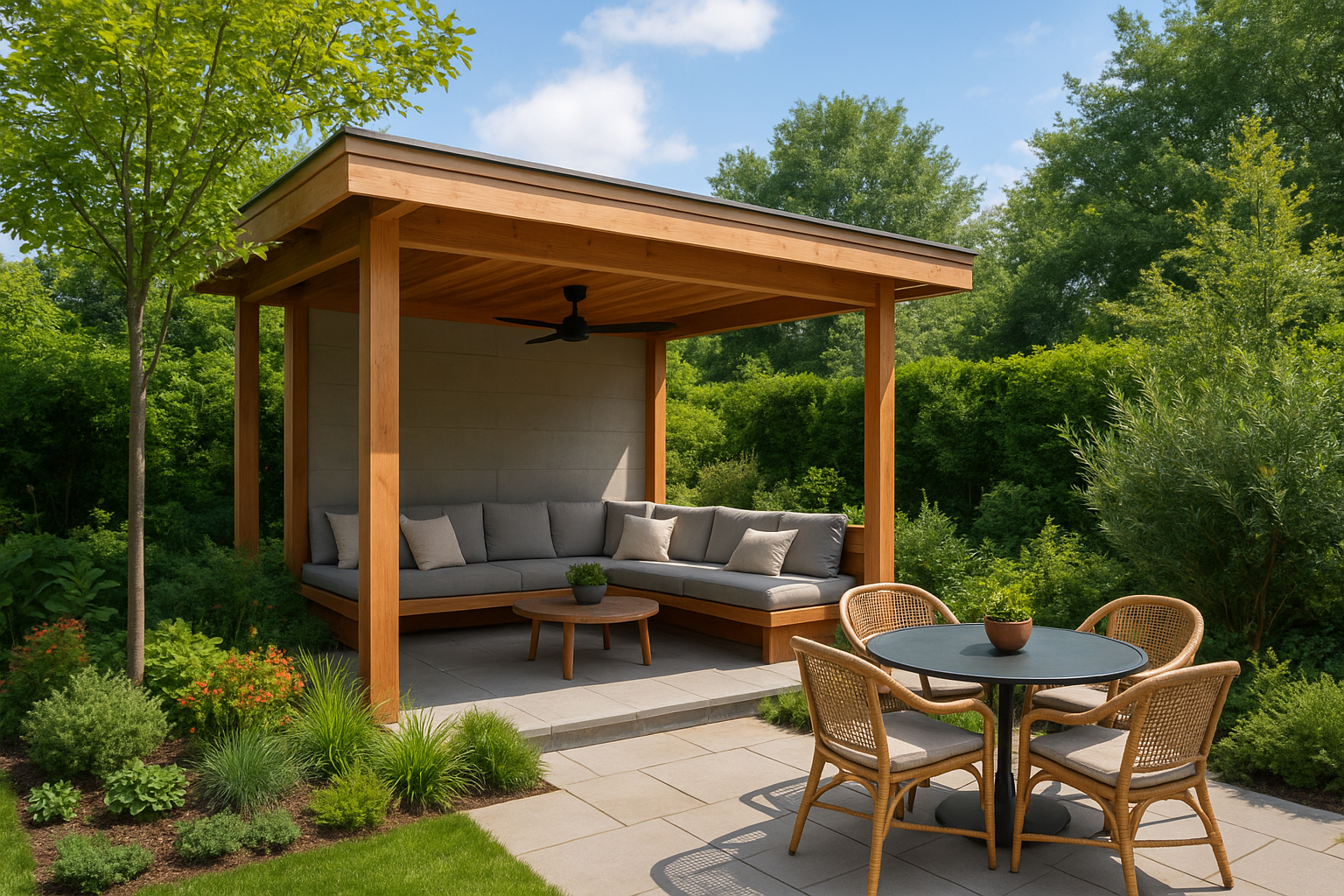
A garden room extends your living space outdoors with a roofed, semi-enclosed structure that sits within the landscape rather than attached to the house. Think a timber-framed pavilion, a pergola with retractable shading, or a fully walled outdoor lounge with a ceiling fan and built-in seating. This idea works alongside almost any planting style since the structure becomes the anchor and the garden fills in around it. Among landscape design ideas, this one delivers the most day-to-day use, since you're not just looking at the garden, you're living in it.
A garden room turns a garden from something you view into something you actually use.
Who it's best suited for
Homeowners who entertain often, host family gatherings, or simply want a spot to work and unwind outside the main house suit this direction well. It also fits larger bungalow compounds where there's enough room to separate the structure from the main house without crowding the garden. Families who cook outdoors regularly often pair this with a small kitchenette or bar counter built into the structure.
Tips for getting it right
Orient the structure to catch prevailing breezes and afternoon shade rather than facing it purely for aesthetics. Use weather-resistant materials suited to Malaysia's humidity, since untreated timber warps and mildews quickly here. Plan electrical and water points before construction, not after, since retrofitting them into a finished structure costs far more. Finally, keep planting around the room low enough that it doesn't block airflow or trap moisture against the walls.
8. An eco-friendly garden with native plants
What it involves
An eco-friendly garden built around native and adapted species cuts down on water, fertilizer, and pesticide use because the plants are already suited to Malaysia's rainfall and soil. Bougainvillea, hibiscus, pandan, and local ferns thrive here without the constant babying that imported ornamentals need. This approach also supports local pollinators and birds, since native flowering plants attract the insects and wildlife your garden's ecosystem actually depends on. Among landscape design ideas aimed at long-term sustainability, this one asks the least from you once the plants settle in.
A garden built from native plants looks after itself because it's already built for the climate it sits in.
Who it's best suited for
Homeowners who care about sustainability, or simply want a garden that survives neglect during busy months, get the most from this direction. It also suits properties near green corridors or wooded boundaries, where native planting blends naturally into the surrounding landscape instead of looking out of place. Anyone tired of replacing dead imported plants every dry season should take this seriously.
Tips for getting it right
Research which species are truly native to your region rather than just tropical, since not every tropical plant handles local soil the same way. Group plants by drought tolerance so watering stays simple. Add mulch around root zones to retain moisture without overwatering. Finally, resist the urge to overplant early. Native gardens fill in over time, and crowding them from day one causes competition that stunts growth.
9. Garden lighting and pathways for evening charm
What it involves
A garden that looks great at noon can feel flat and unsafe after dark, which is why garden lighting deserves its own spot on this list. Layered lighting means combining path lights along walkways, uplights aimed at tree canopies or feature palms, and soft wash lighting against walls or water features, rather than relying on one bright floodlight that flattens everything. Pair this with a well-defined pathway, whether it's stepping stones, gravel, or paved stone, and the garden becomes usable and inviting well into the evening instead of shutting down once the sun sets.
Good garden lighting doesn't brighten a space, it shapes how the space feels after dark.
Who it's best suited for
Households that entertain in the evenings or simply enjoy sitting outside after dinner get the most value here. It also suits homeowners who want their landscape garden design to look considered at night, not just during the day, and anyone concerned about safe footing along uneven ground or steps.
Tips for getting it right
A few practical points make the difference between a lit garden and a genuinely well-lit one:
- Use warm white LEDs, not cool white, since warm tones flatter foliage and feel more welcoming.
- Light the path, not the eyes. Downward-facing fixtures prevent glare when walking toward the light source.
- Add a timer or smart switch so lights turn on automatically at dusk without you remembering.
- Weatherproof every fixture, since Malaysia's rain and humidity wear down cheap outdoor lighting fast.
Finding the right design for your home
None of these nine directions require you to pick just one. A low-maintenance lawn can sit alongside a layered tropical border, and a vertical garden wall works just as well next to a koi pond as it does on its own. What matters most is matching the design to how you actually live in the space, your climate, your maintenance capacity, and your budget, rather than copying a look you saw somewhere online. Good landscape garden design always starts with those honest constraints, not the other way around.
If a water feature caught your attention, take a closer look at the Zen Bio Koi Pond range, or browse the Himalaya Rock Fish Pond collection for a bolder centerpiece. Ready to talk through your own garden? Speak to our landscape design team and we'll help you turn these ideas into a real plan for your home.