You've seen a green wall on Instagram or outside a swanky KL café and thought, could this work on my own patio or office wall? Then you started searching and found conflicting answers: some sites treat it like a DIY weekend project, others make it sound like you need an engineering degree and a five figure budget. Neither extreme is accurate, and that confusion usually stops people before they even get a quote.
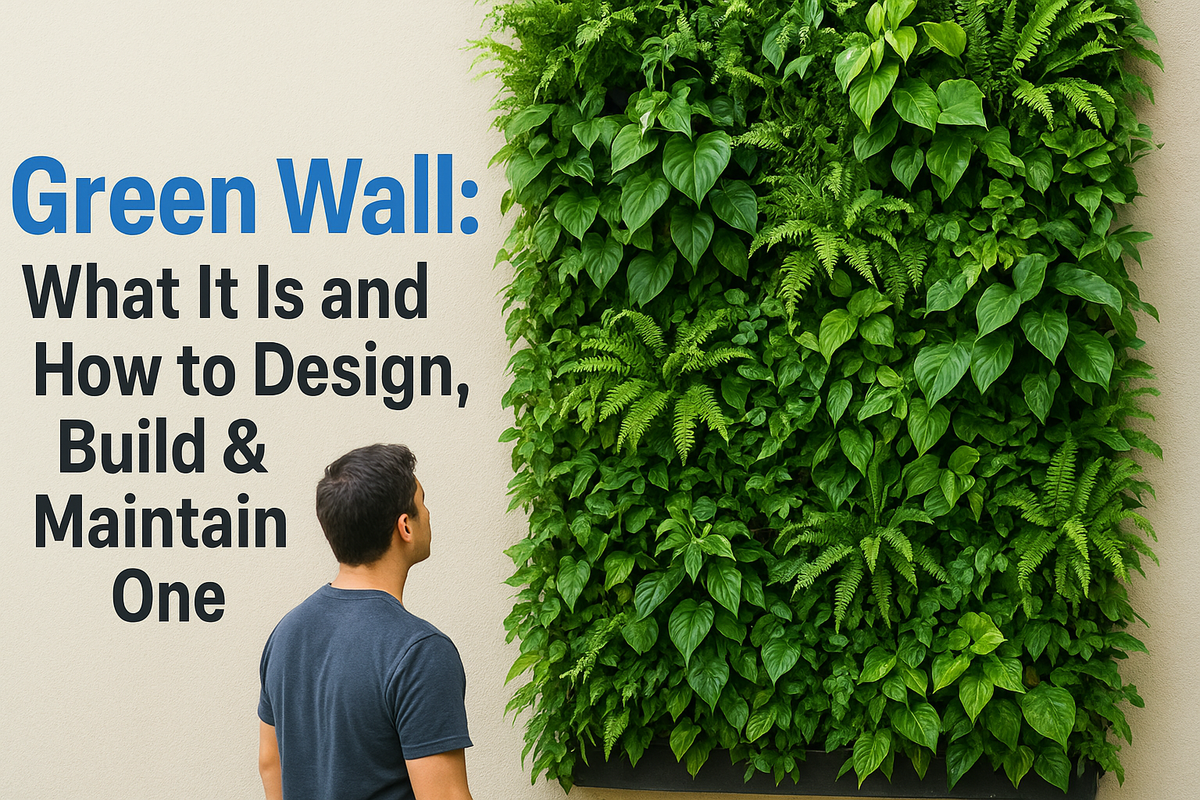
A green wall, also called a living wall or vertical garden, is a structured system that lets plants grow vertically against or away from a wall, using a planting medium and irrigation setup instead of open soil. Understanding this distinction matters because it determines everything from the watering system you'll need to how much maintenance you're signing up for long term.
In this guide, we'll walk through what actually separates a green wall from a trellis with climbers, the main system types used in Malaysia's climate, and what design, build, and upkeep involve at each stage. Whether you're planning a small residential feature like a mini vertical garden set with frame holder and smart pots or a full commercial installation, you'll leave with a clear picture of what's realistic for your space and budget.
Why green walls are worth adding to your space
Malaysia's climate makes a strong case for vertical greenery in ways that cooler countries don't experience. Between the heat, the humidity, and the shrinking size of urban plots, a green wall solves several problems at once instead of just looking nice. The rest of this section breaks down exactly what you gain, so you can decide if the investment fits your goals before you get into design details.
Cooling effect and lower energy bills
Plants on a vertical surface block direct sun from hitting the wall itself, which cuts down on heat absorption into the building. Studies from institutions like NASA on urban heat islands consistently show that vegetated surfaces run several degrees cooler than bare concrete or brick exposed to full sun. For a Malaysian home or office facing west, where afternoon sun hits hardest, that difference translates into a noticeably cooler indoor space and a lighter load on your air conditioning.
A well-planted green wall can shave several degrees off surface temperature, which means your air conditioner works less and your electricity bill drops.
Air quality and everyday wellbeing
Leaves filter dust and airborne particles out of the air passing over them, and the planting medium underneath supports microbial activity that breaks down some pollutants. This matters more in built-up areas near traffic or construction, where air quality tends to sit lower than in green suburbs. Beyond the measurable air benefits, having living plants at eye level, on a balcony, patio, or office wall, gives people a calmer space to work or unwind in, something plenty of clients tell us they notice within the first week of installation.
Making the most of tight urban plots
Space is the real constraint for most homeowners and developers here. A vertical garden lets you grow a genuinely large volume of plants on a footprint that would otherwise fit almost nothing. Terrace houses, condo balconies, and narrow commercial frontages all benefit from this because you're building up instead of out, without needing extra land you don't have.
- Turns an unused blank wall into usable green space
- Works on balconies too narrow for planter beds
- Adds privacy screening between neighboring units or lots
- Softens hard architectural lines on commercial buildings
Boosting property appeal and commercial value
Commercial clients ask us about green walls almost as often for the visual statement as for the environmental case. A lobby, café facade, or office reception with a living wall reads as a premium space, and that impression sticks with visitors and customers in a way a potted plant in the corner never quite manages. For residential properties, a well-executed green wall is also one of the few landscape features that photographs well for listings and adds a distinct character buyers remember.
Together, these benefits explain why green walls have moved from a novelty feature to a standard request in both residential and commercial projects across Malaysia. The next question is what it actually takes to design and build one that delivers on all of this, which is where the practical decisions start.
How to design and build a green wall
Every green wall project should start with a site assessment, not a trip to the nursery. Check how many hours of direct sun the wall gets, whether it faces west into Malaysia's harshest afternoon heat, and how much weight the existing structure can safely carry once soil, plants, and a soaked planting medium are added. Skipping this step is the most common reason DIY green walls fail within the first year, usually because the frame wasn't rated for the wet weight or the plants chosen couldn't handle the light conditions.
Get the structural assessment and light audit right first, because no plant selection can fix a wall that was never built to hold the load.
Choosing the right system for your wall
Systems fall into three broad categories, and picking the wrong one for your budget or wall type causes most of the regret we hear about later.
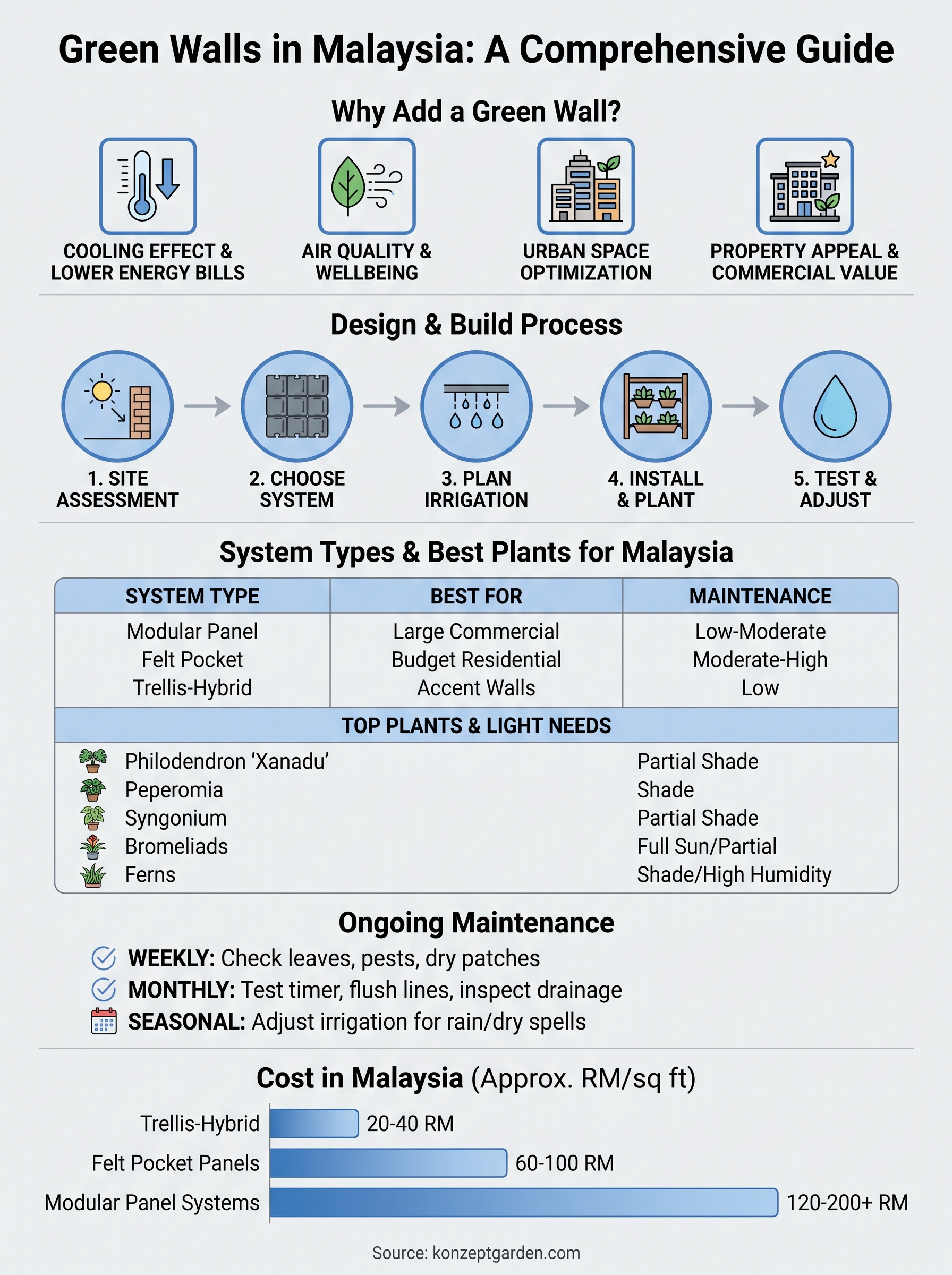
| System type | Best for | Maintenance level |
|---|---|---|
| Modular panel systems | Commercial facades, large feature walls | Low to moderate |
| Felt pocket panels | Budget residential walls, quick installs | Moderate to high |
| Trellis-hybrid with climbers | Slow-growing, low-cost accents | Low |
Konzept Garden's Eco Wall vertical garden system falls into the modular category, designed specifically for Malaysia's humidity and rainfall patterns so panels don't warp or trap excess moisture against the building.
Planning irrigation before installation day
Water is where most self-built green walls run into trouble. A proper drip irrigation system with a timer delivers consistent moisture without soaking the wall behind it, and a drainage layer at the base directs runoff away from flooring or foundations. Skimping here to save money almost always costs more later in plant replacement and water damage repair.
Putting it all together
Once the site is assessed and the system chosen, the build usually follows this sequence:
- Confirm structural capacity and waterproof the wall surface
- Install the frame or panel system
- Fit irrigation lines, timer, and drainage
- Add planting medium and plant according to the design plan
- Test irrigation cycles for two weeks before final planting adjustments
Getting a 3D visualization beforehand, something we offer clients during the design stage, helps confirm plant density and layout before a single panel goes up, which avoids costly mid-project changes.
Green wall types and best plants for Malaysia's climate
The system you pick determines which plants will actually survive on it, so the two decisions have to be made together rather than one after the other. A modular panel system holds a deeper root zone than a felt pocket panel, which means it can support larger shrubs and even small flowering species that a thin felt pocket would starve of root space within months. Getting this pairing wrong is why some living walls look lush in the showroom photo and patchy six months later.
Matching plants to sun and airflow
Malaysia's climate splits a wall into two very different growing zones, and treating them the same is a common mistake. A west-facing wall bakes in direct afternoon sun and needs plants that tolerate heat stress and quick moisture loss, while a shaded courtyard wall needs species that thrive on filtered light and higher humidity instead. Airflow matters too. Walls tucked into narrow alleys or against a neighboring building trap moisture, which raises the risk of fungal issues if you plant species that prefer drier conditions.
Match the plant to the exact light and airflow the wall receives, not to what looks good in a catalog photo.
Best performing plants for local conditions
Certain species consistently outperform others on Malaysian green walls, based on what we see holding up across residential and commercial installations. Foliage plants generally beat flowering ones for long-term reliability, since blooms demand more consistent feeding and are less forgiving of irrigation gaps.
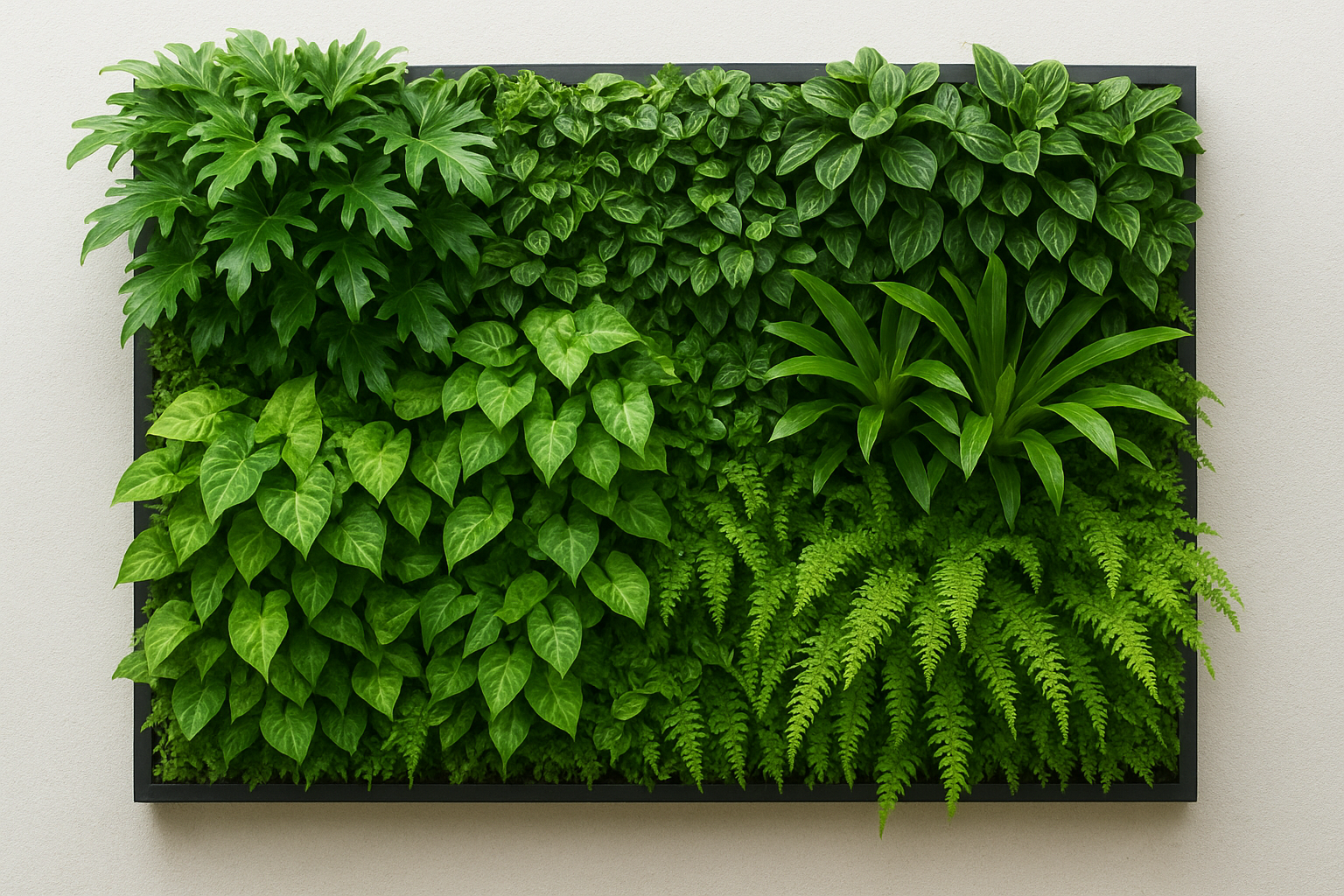
| Plant | Best light condition | Notes |
|---|---|---|
| Philodendron 'Xanadu' | Partial shade | Dense coverage, low pest issues |
| Peperomia varieties | Shade to filtered light | Compact, good for tight pocket systems |
| Syngonium | Partial shade to shade | Fast spreading, easy propagation |
| Bromeliads | Full sun to partial sun | Handles heat well, low water needs |
| Ferns (Boston, bird's nest) | Shade, high humidity | Needs consistent moisture |
Combining a few of these across a single wall, rather than planting one species throughout, also protects you against total loss if one type struggles. Diversifying root depth and water needs slightly gives the drip irrigation system more room to serve the whole wall evenly instead of overwatering some plants to keep others alive. This kind of planting plan is exactly what a proper site assessment and design consultation should map out before installation day, so the wall performs the way it looked in the 3D visualization.
How to maintain a green wall long-term
Maintenance is where most green wall owners either save their investment or watch it slowly fail. Building a wall well gets you through year one, but a maintenance schedule is what keeps it looking good in year five. Konzept Garden builds this expectation into every project from day one, because a client who knows what upkeep involves rarely ends up disappointed six months later.
Weekly and monthly checks
Set aside time each week to look for yellowing leaves, pest activity, and any dry patches where the drip irrigation system might be clogging or misaligned. Monthly checks should go deeper: test the irrigation timer, flush the lines to clear mineral buildup common with Malaysia's water supply, and inspect the drainage layer for blockages that could send water back into the wall structure instead of away from it.
- Check for yellowing or wilting leaves weekly
- Flush irrigation lines monthly to prevent clogging
- Inspect drainage outlets for blockages
- Rotate or replace struggling plants before they die back fully
- Fertilize on a schedule suited to your plant mix, not a fixed calendar date
Pruning and replanting on a schedule
Growth needs active management, not just watching. Overgrown foliage blocks light from reaching lower sections of the wall, and left unchecked, this creates bare patches that are harder to fix later than to prevent early. Plan a proper pruning schedule every six to eight weeks during Malaysia's growing season, and treat replanting as routine rather than a sign something went wrong. Even the best-designed wall loses a few plants naturally, and swapping them out quickly keeps the whole surface looking full.
A green wall left unpruned for months doesn't just look messy, it starts losing plants that could have been saved with a five-minute trim.
Seasonal adjustments for humidity and rain
Rainy season brings its own risks. Excess moisture combined with poor airflow raises the chance of fungal problems, so this is the period to check drainage most carefully and reduce irrigation frequency to compensate for natural rainfall. Dry spells do the opposite, demanding closer attention to the irrigation timer so plants don't dry out between cycles.
Taking on maintenance yourself is possible, and our frequently asked questions on maintenance cover most of the day-to-day issues, but many clients choose a professional maintenance plan instead, especially for commercial installations where a patchy wall reflects directly on the business. Konzept Garden offers this as a standing service for both our EcoWall systems and other green wall installs, which takes the guesswork out of keeping a living wall alive for the long run.
How much does a green wall cost in Malaysia
Pricing for a green wall installation in Malaysia varies more than most homeowners expect, and the range depends heavily on system type, wall size, and plant selection rather than any fixed per-square-foot rate you'll find quoted online. Felt pocket systems sit at the affordable end because the materials cost less and installation is quicker, while modular panel systems like EcoWall cost more upfront but hold up far longer against local humidity and require less frequent panel replacement. Getting a free quotation based on your actual wall, rather than a generic estimate, is the only way to know where your project lands.
Typical price ranges by system
Below is a rough guide based on projects we've quoted across residential and commercial clients in Malaysia, and you can compare it against a bare panel and frame build such as our EcoWall frame-only package. Treat these as starting points, not fixed quotes, since site conditions always shift the final number, and a fully fitted option like our EcoWall package with plants and irrigation will sit higher than a frame-only build.
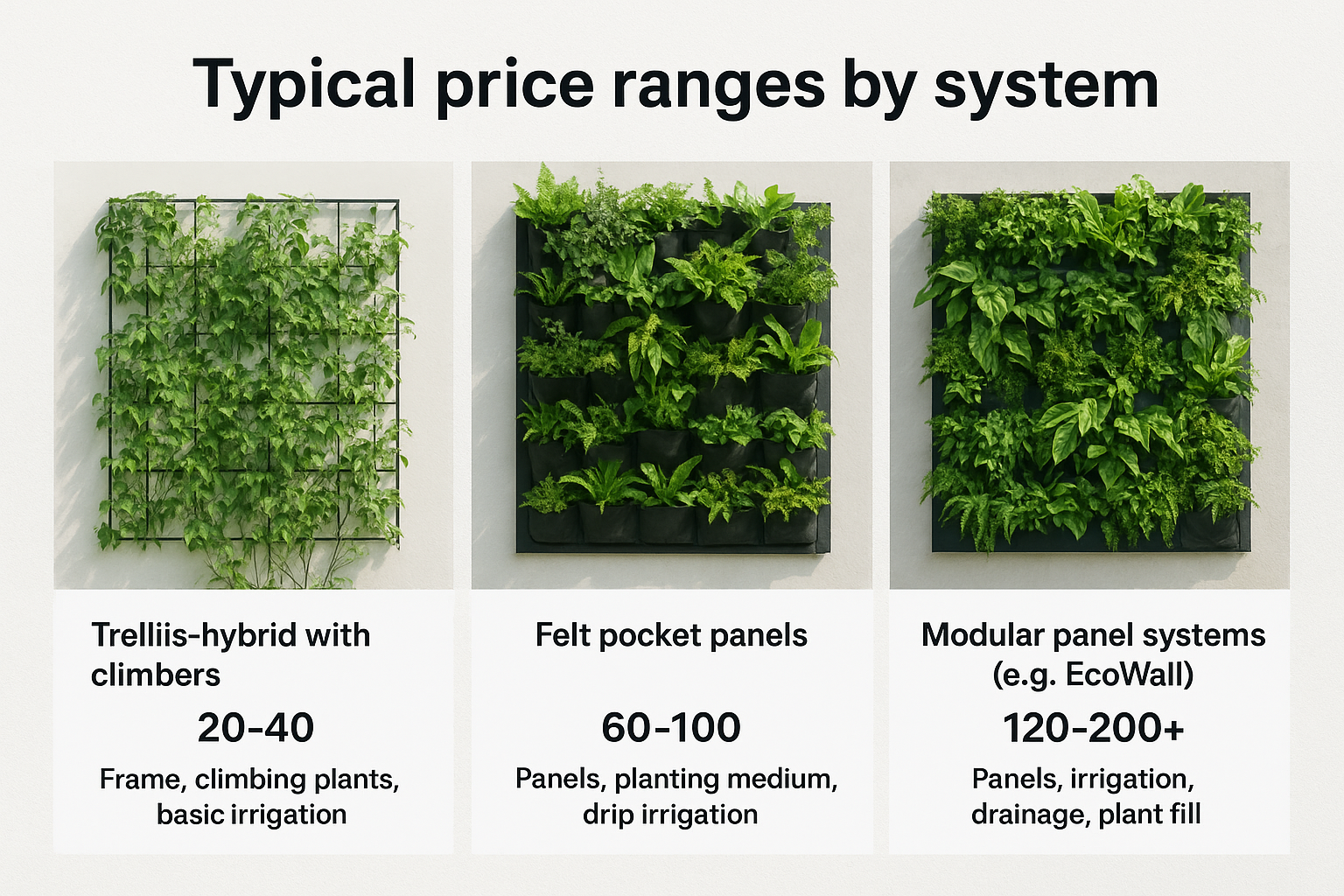
| System type | Approx. cost per sq ft (RM) | What's included |
|---|---|---|
| Trellis-hybrid with climbers | 20-40 | Frame, climbing plants, basic irrigation |
| Felt pocket panels | 60-100 | Panels, planting medium, drip irrigation |
| Modular panel systems (e.g. EcoWall) | 120-200+ | Panels, irrigation, drainage, plant fill |
Cheaper systems save money upfront but often cost more over time in plant replacement, so weigh installation cost against maintenance cost before deciding.
Factors that push the price up or down
Several variables move these numbers beyond the base range, and knowing them helps you budget realistically before requesting quotes.
- Wall height and access: taller walls need scaffolding or lift access, adding labor cost
- Plant density and species: mature specimens and flowering plants cost more than young foliage plants
- Irrigation complexity: automated timers and moisture sensors add to the base price
- Structural reinforcement: older walls sometimes need extra bracing before installation
- Ongoing maintenance plan: monthly upkeep is usually quoted separately from the build
Ongoing maintenance typically runs as a separate monthly fee once the wall is installed, and this is worth budgeting for from the start rather than treating it as an afterthought. Requesting a site visit before committing to a system lets a designer confirm which factors apply to your specific wall, which is exactly why we walk every client through a proper assessment before quoting a final figure through Konzept Garden's quotation service.
Bringing your green wall to life
A green wall rewards planning far more than it rewards enthusiasm. Get the structural assessment right, match your plants to the actual light and airflow your wall receives, and budget for maintenance from day one, and you end up with a feature that still looks sharp five years in rather than patchy after six months. Skip those steps and you're rebuilding sooner than you'd like, which costs more than doing it properly the first time.
Every wall we've discussed here, whether it's a modular panel system, a felt pocket setup, or a trellis with climbers, comes down to the same principle: design for your specific site, not for a photo you saw online. If you're ready to figure out what actually works for your wall, speak to our green wall team and we'll walk you through the assessment, system choice, and quotation properly.