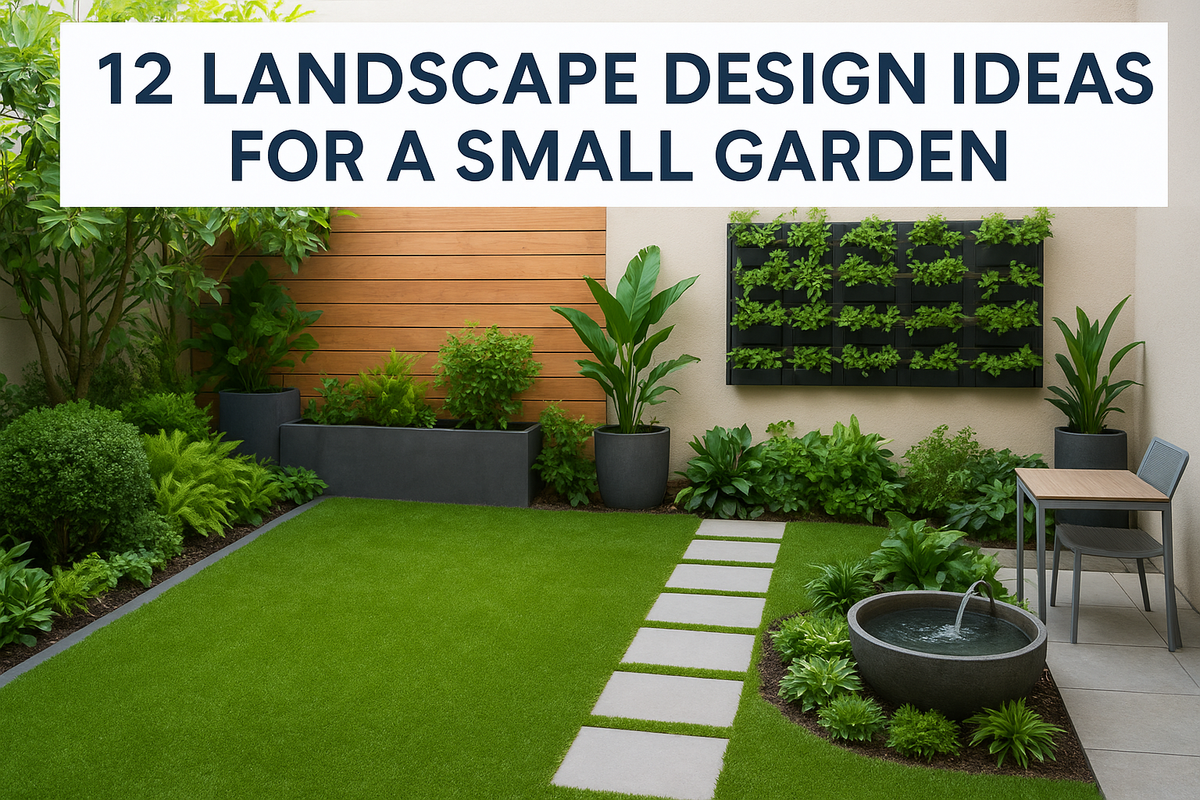
A small garden in a Malaysian terrace house or condo doesn't have to feel cramped or like an afterthought. Most homeowners look at a narrow side yard or a tiny courtyard and assume there's nothing much to do with it besides potted plants and a bit of grass. That's where a good landscape design small garden approach changes the outcome, turning tight corners into spaces you actually want to sit in.
If you're searching for ways to make a compact plot feel bigger, greener, and more usable, you're in the right place. This article walks through practical, small garden landscape design ideas that work with limited square footage rather than against it, from smart layering and vertical planting to water features sized for tight spaces.
We've put together 12 ideas drawn from real projects, the kind of space-saving solutions and layout tricks our designers at Konzept Garden use when clients bring us awkward, undersized plots in Malaysia's climate. Whether you're planning a full redesign or just want to refresh an existing corner, these ideas will give you a solid starting point before you pick up a spade or call in the professionals.
1. Work with a professional landscape designer
Before you buy a single plant or slab of paving, get a professional landscape designer to walk your plot with you. Small spaces punish mistakes more than large ones do. A single badly placed tree or an oversized patio can eat up the only usable corner you had, and undoing that costs far more than getting it right the first time. Designers who work with tight urban plots every day, like our team at Konzept Garden, know how to read a small garden's quirks before a spade ever goes into the ground.
A small garden forgives fewer mistakes than a large one, so get the layout right before you plant anything.
What it involves
Working with a designer typically starts with a site visit, where they measure the plot, check drainage, note sun and shade patterns, and ask how you actually plan to use the space. From there, you'll usually get a concept design, a planting plan, and often a 3D visualization so you can see how the finished garden will look before committing money to it. This step catches problems early, things like poor soil, awkward boundary walls, or utility access points that would otherwise derail a DIY plan halfway through.
How to apply it in your garden
Book a free quotation and consultation if the company offers one, and come prepared with photos of gardens you like, a rough budget, and a list of must-haves like a play area for kids or space for a dog. Ask to see a 3D landscape visualization before approving anything; it's the easiest way to spot a design that looks good on paper but won't work in real life. A good designer will also flag maintenance needs upfront, so you're not surprised later by how much upkeep a design actually demands, and a garden care subscription can cover that upkeep for you.
Plants and materials to use
A designer will usually recommend plant lists suited to your specific microclimate, factoring in sun exposure, wind, and soil type rather than guessing. They'll also match materials like decking, gravel, and paving to your home's architecture so the garden feels connected to the house rather than bolted on.
Who it suits best
This approach suits homeowners who've tried arranging pots and furniture themselves and still feel the space isn't working, as well as anyone renovating a small garden landscape design as part of a larger home upgrade. It's also the right call for busy professionals who want a polished result without spending weekends experimenting with layouts that might not pan out.
2. Start with a simple, zoned garden layout
Before you add a single plant, decide what each part of your small garden needs to do. A zoned garden layout breaks your plot into two or three clear purposes instead of trying to cram in a lounge area, a herb patch, a play corner, and a water feature all at once. In a tight terrace backyard, that usually means picking your priorities and letting the rest go.
Trying to fit everything into a small garden usually means fitting nothing in well.
What it involves
Zoning means mapping your garden on paper first, marking where you'll sit, where you'll cook or dine, and where plants will do most of the work. Even a plot as small as 3 by 6 meters can hold a dining zone, a green buffer, and a utility corner if you plan the boundaries before you build anything.
How to apply it in your garden
Use a change in material, level, or planting to signal a shift from one zone to the next rather than fences or walls that eat up space. A raised deck for seating next to a lower gravel bed for planting reads as two zones without a single physical divider. Keep pathways between zones no wider than 60 to 75 centimeters; anything more starts to feel like wasted footprint in a small garden landscape design.
Plants and materials to use
Stick to two or three hard materials total, such as timber decking, gravel, and one paving type, so the eye isn't pulled in too many directions. Compact hedging or ornamental grasses work well as soft dividers between zones without blocking sightlines.
Who it suits best
This works best for families juggling multiple needs from one small plot, and for anyone who's inherited a garden that feels cluttered and directionless.
3. Maximize vertical space with a vertical garden
When floor space runs out, look up. A vertical garden turns a bare wall or fence into growing space without taking a single square foot from the ground, which matters enormously in a small garden landscaping design where every meter counts. Terrace houses in Malaysia often have long, blank side walls that do nothing but reflect heat; planting them instead cools the space and adds greenery you'd otherwise have no room for.
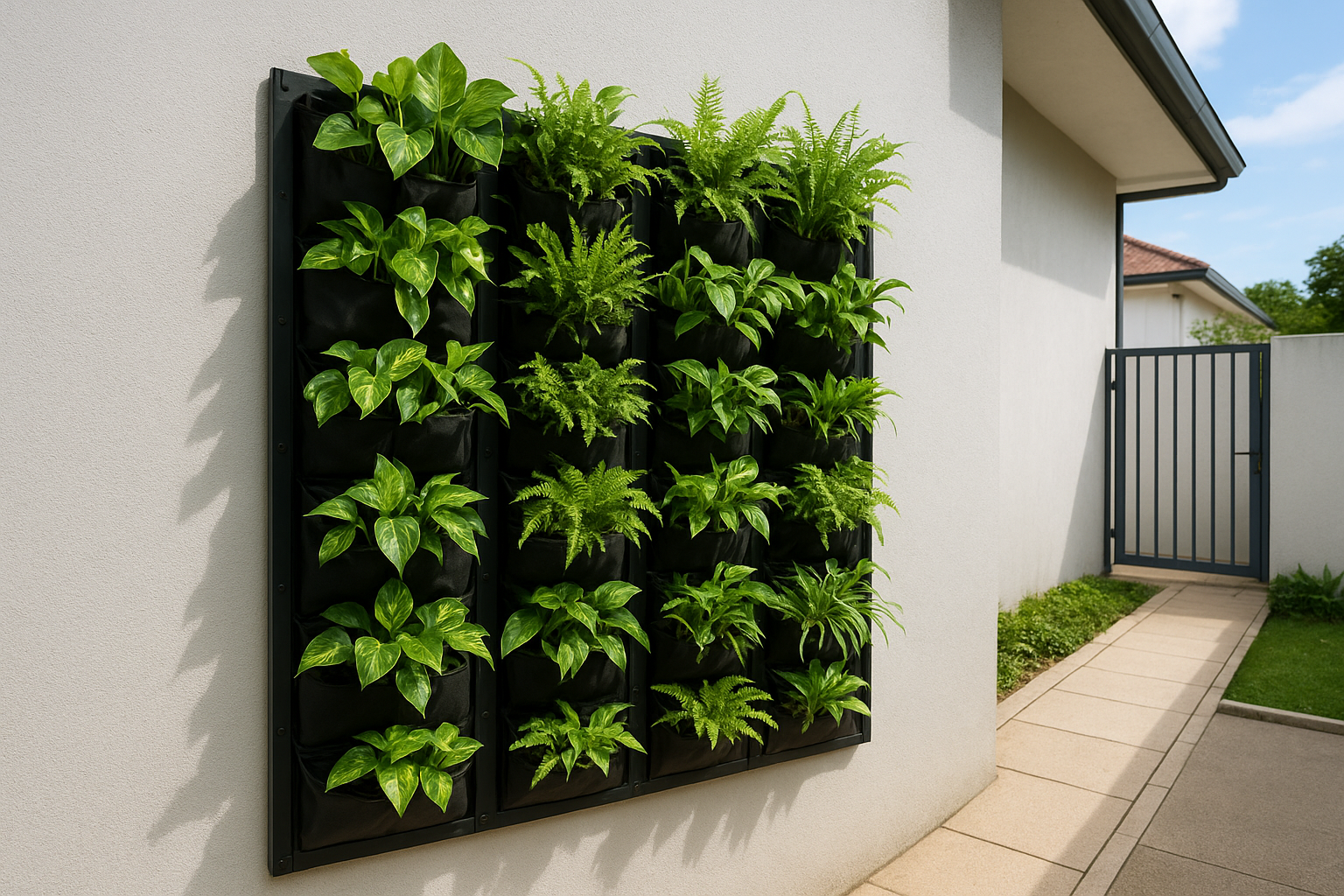
If the ground is full, the walls are still empty.
What it involves
Vertical gardening covers everything from simple trellises with climbing vines to modular planting systems bolted onto a wall, like our EcoWall frame system that holds multiple plant pockets in a single frame. Irrigation usually gets built in from the start, since watering a wall by hand every day gets old fast, so a complete green wall package with plants and irrigation saves you the retrofit.
How to apply it in your garden
Pick a wall that gets at least four hours of sun if you want flowering or fruiting plants, and less if you're going for ferns and foliage. Install a drip line at the top of the frame so gravity does the watering for you, and leave a small gap between the wall and the planting system to stop moisture damage to your house.
Plants and materials to use
Go for shallow-rooted species like pothos, philodendron, or bromeliads that thrive in modular pockets. Modular metal or PVC frames outlast timber trellises in Malaysia's humidity and rain.
Who it suits best
This suits owners of narrow terrace plots and anyone with a bare boundary wall who wants greenery without losing floor space.
4. Use large containers and self-watering planters
Containers solve a problem small gardens create constantly: soil that's either too shallow, too poor, or nonexistent because everything's paved over. Go big rather than scattering small pots everywhere. A handful of large containers grouped together reads as intentional design, while a dozen small pots just looks cluttered and multiplies your watering chores in a landscape design small garden project.
Fewer, bigger pots always look more deliberate than many small ones scattered around.
What it involves
Self-watering planters hold a reservoir at the base that wicks moisture up to the roots, so you're not out there with a hose every evening during Malaysia's dry spells. Our Ziant Hydro Planter range works this way, cutting watering down to once or twice a week instead of daily.
How to apply it in your garden
Group three to five containers of varying heights near a doorway, corner, or seating area to anchor the space without needing a garden bed at all. Check the reservoir every few days during the first month to learn how fast your specific plants drink, then adjust your refill schedule from there.
Plants and materials to use
Fiberglass and UV-stable resin containers hold up better than terracotta under direct tropical sun, since terracotta cracks and fades faster. For plants, dwarf palms, heliconias, and compact ornamental shrubs handle container life well and don't outgrow the pot within a year.
Who it suits best
This suits renters, condo dwellers with paved balconies, and anyone who travels often and can't commit to daily watering.
5. Swap grass for low-maintenance artificial turf
Real lawns struggle in small, shaded terrace gardens. Between tall boundary walls blocking sun and constant foot traffic wearing down the same patches, grass in a tight plot often ends up patchy and brown within months. Switching to artificial turf solves this without giving up the look of a green lawn, and it's one of the fastest wins in any small garden landscaping design where maintenance time matters more than authenticity.
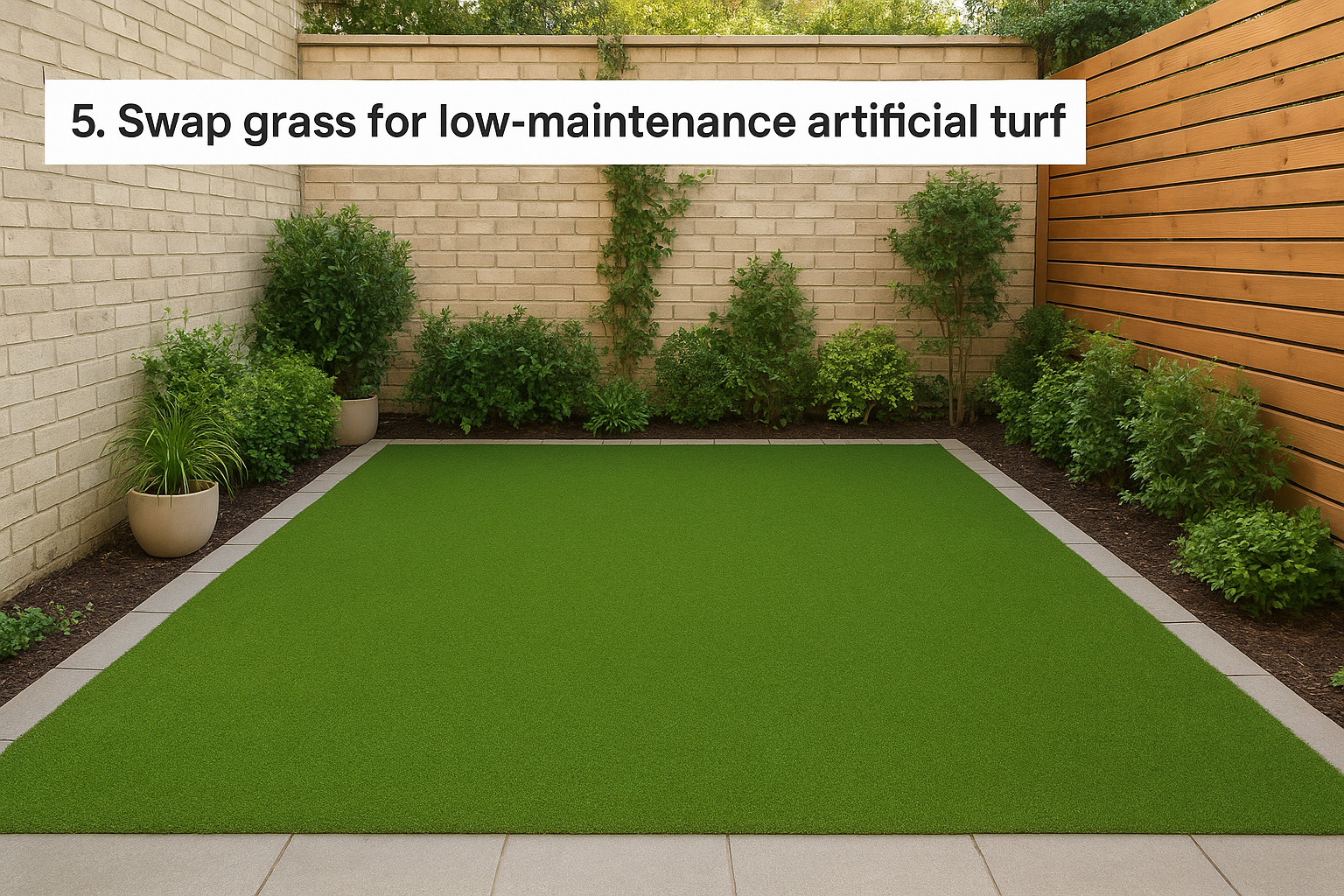
A lawn that stays green with zero mowing beats a real one that struggles for light.
What it involves
Artificial turf replaces natural grass with a synthetic surface built from UV-stabilized fibers, backed by a drainage layer that lets rain pass straight through. Good turf, like our Premium 35 synthetic grass rolls, is designed specifically for tropical heat and heavy rain, so it doesn't fade or trap water the way cheaper imports do.
How to apply it in your garden
Prepare the base properly before laying anything. That means compacting the soil, adding a layer of crushed aggregate for drainage, then rolling out the turf and securing the edges. Skip this step and you'll end up with puddles or an uneven surface within a year.
Plants and materials to use
Border the turf with a strip of paving or timber edging to stop soil from washing onto the surface during downpours. Pair it with potted shrubs or a vertical garden along the boundary wall so the space still feels planted, not just synthetic.
Who it suits best
This suits households with young kids or pets who need a durable play surface, and anyone who's tired of mowing a lawn that never really thrived in the shade anyway.
6. Define zones with slim paving and pathways
A narrow strip of paving does more work in a small garden than a wide patio ever could. Slim pathways guide movement through the plot without swallowing up planting space, which matters when every square foot is already spoken for in a small garden landscape design. Instead of one large slab of hardscape, a thin path lets greenery grow right up to its edge on both sides, so the garden still reads as mostly plant, not mostly paving.
A path only needs to be wide enough for feet, not for a car.
What it involves
Slim paving usually means a walkway between 40 and 60 centimeters wide, laid in a single line or gentle curve between zones like a seating area and a planting bed. It replaces the instinct to pave a wide, straight path simply because that's what larger gardens do.
How to apply it in your garden
Lay stepping pavers with small gaps between them rather than one continuous slab, and fill the gaps with gravel or low groundcover so the path breathes instead of sealing the soil underneath. Curve the path slightly if space allows; a straight line through a tiny plot makes the garden feel like a corridor, while a curve makes it feel bigger than it is.
Plants and materials to use
Natural stone or textured concrete pavers grip better underfoot when wet, which matters through Malaysia's frequent downpours. Line the edges with mondo grass, dwarf agapanthus, or creeping thyme to soften the hard edge without narrowing the walkway itself.
Who it suits best
This suits anyone connecting two or more zones, like a back door to a sitting area, without wanting the path to dominate the garden's overall footprint.
7. Layer plants for depth, shade, and privacy
A flat row of shrubs along the fence line does little to make a small garden feel bigger. Layering plants at different heights, from ground cover up through mid-height shrubs to a small tree or tall screening plant, tricks the eye into reading depth where there isn't much actual distance. This trick matters most in a small garden design for home projects where the boundary wall sits just a few meters from the house.
Height variation makes a shallow garden read as a deep one.
What it involves
Layering means grouping plants in at least three tiers: low ground cover at the front, mid-sized shrubs in the middle, and taller screening plants or a single small tree at the back near the boundary. Done well, it also blocks sightlines from neighboring windows without needing a taller fence.
How to apply it in your garden
Build the tallest layer first against the boundary wall, then work forward with progressively shorter plants so nothing blocks the view of what's behind it. Leave gaps of 30 to 40 centimeters between tiers so each layer gets enough light and air to stay healthy rather than competing for the same patch of sun.
Plants and materials to use
Bamboo or areca palms work well as the tall screening layer, ixora or duranta suit the mid tier, and creeping fig or peace lily fill the ground layer in shaded corners. Mulch between tiers holds moisture and cuts down weeding.
Who it suits best
This suits gardens overlooked by neighbors or facing a busy street, and anyone wanting shade without losing the whole plot to a single large tree.
8. Choose compact plants suited to Malaysia's climate
Not every plant that looks good in a magazine survives Malaysia's heat, humidity, and monsoon rain. Compact plants suited to the local climate matter more in a small garden than a large one, because you don't have the room to replace a dead shrub with something bigger to hide the gap. Picking species that actually thrive here from the start saves you money and keeps your small garden landscape design ideas looking sharp year-round instead of patchy after the first rainy season.
Choose plants for the climate you actually have, not the one in the photo you copied.
What it involves
This means researching which species handle full tropical sun, heavy rain, and short dry spells without constant intervention. It also means checking a plant's mature size before buying, since a shrub labeled "compact" overseas can still grow far larger in Malaysia's warmth and humidity.
How to apply it in your garden
Group plants by water needs so you're not overwatering drought-tolerant species to keep thirstier neighbors alive. Test drainage in your beds before planting; standing water after rain kills more tropical shrubs than the heat ever does.
Plants and materials to use
Dwarf hibiscus, heliconia, and bromeliads handle full sun well, while calathea and peace lily suit shaded corners. Use raised beds with well-draining soil mix to avoid root rot during heavy downpours.
Who it suits best
This fits homeowners who've lost plants before and want a garden that survives without constant replanting, plus anyone building a small garden landscaping design meant to last with minimal fuss.
9. Add a small water feature or koi pond
Sound changes how a garden feels more than most homeowners expect. A small water feature masks traffic noise from the street and gives even a tiny courtyard a focal point that draws the eye away from boundary walls. You don't need the space of a bungalow garden to fit one in; a well-planned koi pond or wall-mounted water feature can sit comfortably in a corner as small as one square meter.
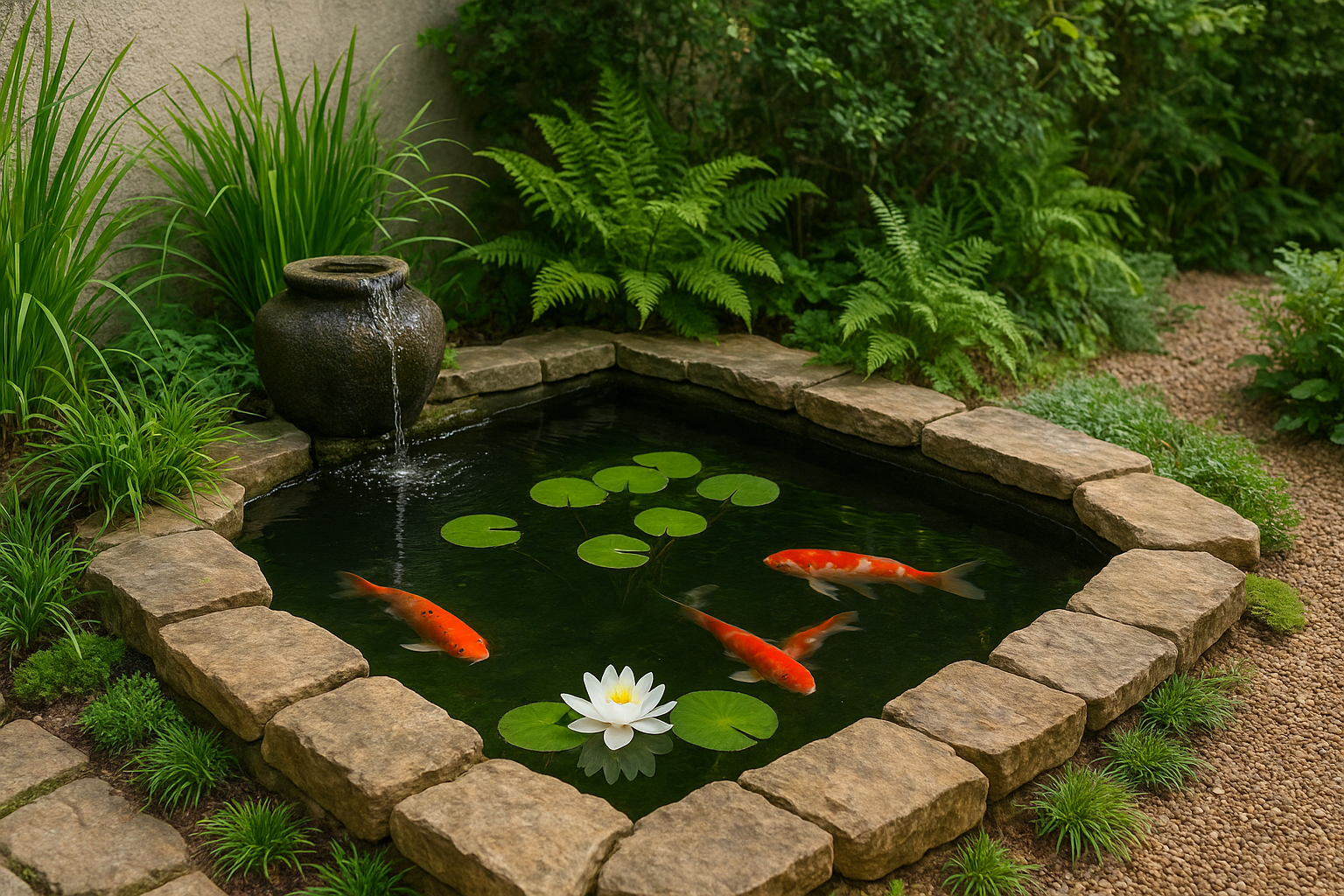
Moving water does more to calm a small garden than another flower bed ever could.
What it involves
Water features range from a simple bubbling urn to a full custom pond with fish and filtration. A koi pond, like our biofiltered koi pond system or Himalaya Rock Fish Pond designs, needs a biofilter to keep water clear and healthy for fish, while a basic recirculating fountain just needs a pump and a power point.
How to apply it in your garden
Position the feature where you'll actually hear and see it, near a seating area or window rather than tucked behind a hedge, which is why a compact rock-edged koi pond for tight corners often suits a courtyard best. Keep depth and footprint proportional to the plot; a raised pond built into a low wall often works better in tight spaces than a sunken one that eats into planting beds.
Plants and materials to use
Water lilies and lotus suit sunny ponds, while ferns and mondo grass soften the edges in shade. Natural stone edging blends the pond into the rest of the garden better than sharp concrete borders.
Who it suits best
This suits homeowners wanting a calming focal point, and anyone screening out street or neighbor noise without adding more walls.
10. Choose furniture that doubles as storage
Small gardens rarely have a shed, so garden tools, cushions, and pool toys end up cluttering the one seating area you actually use. Multi-functional furniture solves this by hiding storage inside the pieces you already need, which keeps a tight small garden landscape design looking tidy instead of like a dumping ground for hoses and gardening gloves.
Storage built into your furniture beats a shed you don't have room for.
What it involves
This means picking benches, ottomans, and deck boxes with hollow interiors instead of solid ones. A bench seat that lifts to reveal a storage cavity does the job of two separate purchases while taking up the footprint of one.
How to apply it in your garden
Place storage furniture along a boundary wall where it can double as a backrest for planting behind it. Some options worth considering:
- A hinged-lid bench for cushions and tools
- A weatherproof deck box tucked under a raised planter
- Built-in bench seating with under-seat drawers along a deck edge
- A low ottoman with a removable lid for pool floats or kids' toys
Measure the space before buying; a bench that's too deep can eat into a path width you need for movement.
Plants and materials to use
Stick to marine-grade timber, powder-coated aluminum, or UV-stable resin, since these hold up against Malaysia's rain and humidity far better than untreated wood. Position a trailing plant like pothos or a compact fern beside the furniture to soften its edges without blocking the lid.
Who it suits best
This suits households without a shed or utility room, and anyone hosting guests who wants seating to appear instantly rather than dragging chairs out from storage elsewhere.
11. Use mirrors and a simple palette to expand space
A small garden can trick the eye into feeling larger without adding a single meter of real estate. Outdoor mirrors reflect greenery back at you, doubling the sense of depth in a courtyard or narrow side yard. Pair that with a simple color palette across your walls, furniture, and pots, and the whole space reads as bigger and calmer than it actually is. Too many colors and textures fight for attention in a tight small garden landscape design, while restraint makes the plot feel intentional.
A mirror doesn't just reflect light, it reflects space you don't actually have.
What it involves
This idea combines two tricks: placing weatherproof mirrors to bounce light and greenery deeper into the garden, and limiting your color choices to two or three tones that repeat across hard and soft surfaces.
How to apply it in your garden
Mount a mirror on a boundary wall behind planting, angled slightly so it reflects foliage rather than your neighbor's window. Keep hardscape colors neutral, like grey stone or timber tones, then let plant foliage supply the color variation instead of painted fences or bright pots.
Plants and materials to use
Rust-proof aluminum or acrylic mirror panels handle Malaysia's humidity better than glass over time. Frame the mirror with climbing plants like creeping fig so the edges blend in rather than looking like an obvious trick.
Who it suits best
This suits owners of narrow courtyards or side passages who want the space to feel open, and anyone whose current garden feels visually cluttered despite its small footprint.
12. Install layered lighting for evening use
Nightfall changes everything about how a small garden gets used. Without good lighting, most compact plots go dark the moment the sun sets and sit empty for half the day, even though evenings are often the only time working households actually get outside. Layered lighting solves this by lighting the garden at different levels, so it stays inviting after dark instead of turning into a shadowy gap behind the house. This is one of the simplest wins in any landscape design small garden project, since it costs far less than hardscaping but changes how much the space actually gets used.
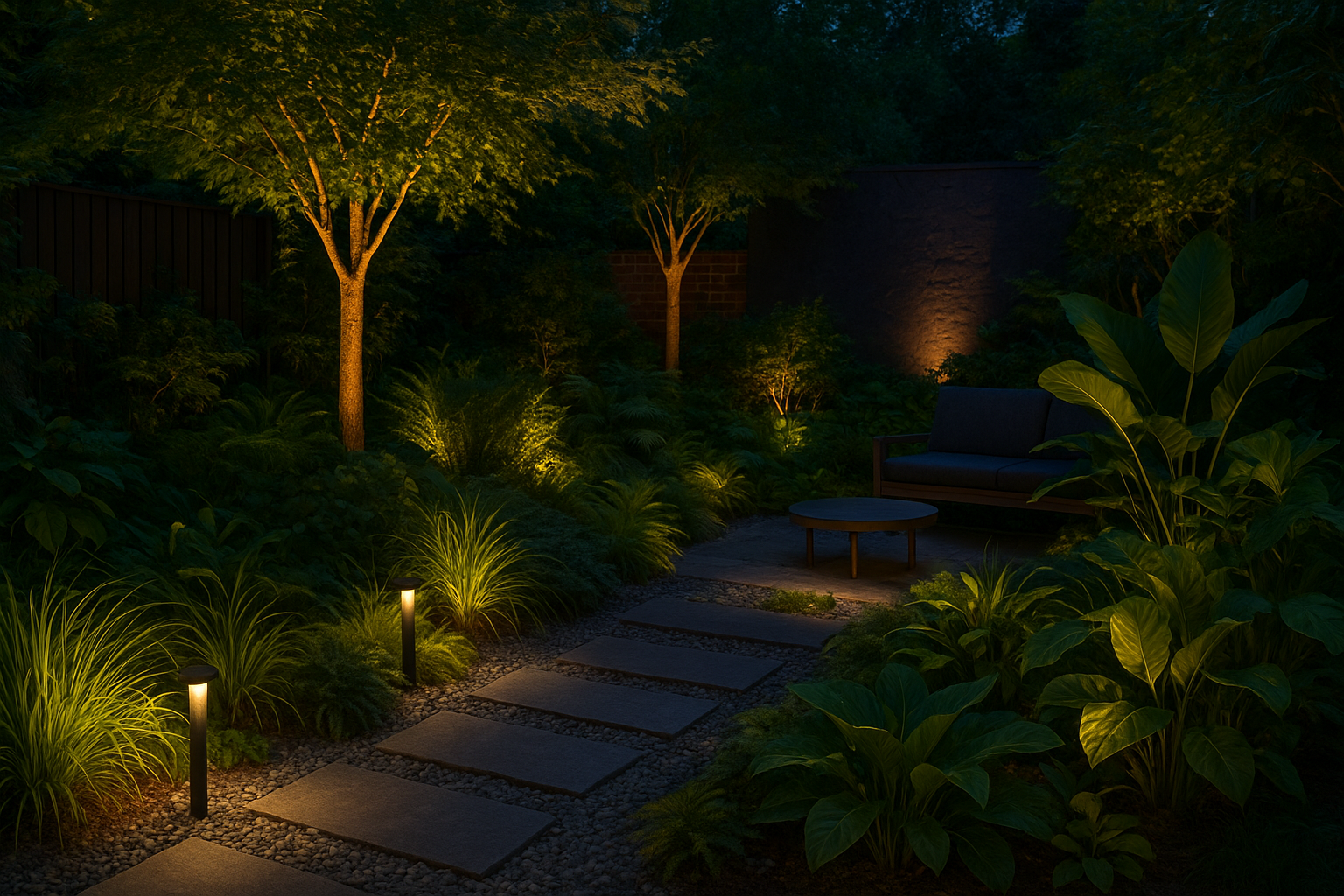
A garden with good lighting gets used twice as often as one that goes dark at sunset.
What it involves
Layering means combining at least three light sources: low path lights for safety, uplights aimed at trees or a feature wall, and softer ambient lighting near seating. Each layer does a different job, so no single fixture has to light the whole plot on its own.
How to apply it in your garden
Run a low-voltage system rather than mains wiring wherever possible; it's safer around damp soil and far easier to reposition as planting matures. Point uplights at your tallest layered plants or a water feature to create a focal point, and keep path lights dim enough that they guide feet without washing out the rest of the garden.
Plants and materials to use
Warm white LEDs suit tropical foliage better than cool white, which can flatten greenery. Choose IP65-rated fixtures at minimum, since Malaysia's rain will find any gap in a cheaper housing.
Who it suits best
This suits anyone finishing a small landscape garden design who wants to actually use it after work hours, and households that entertain outdoors after dark.
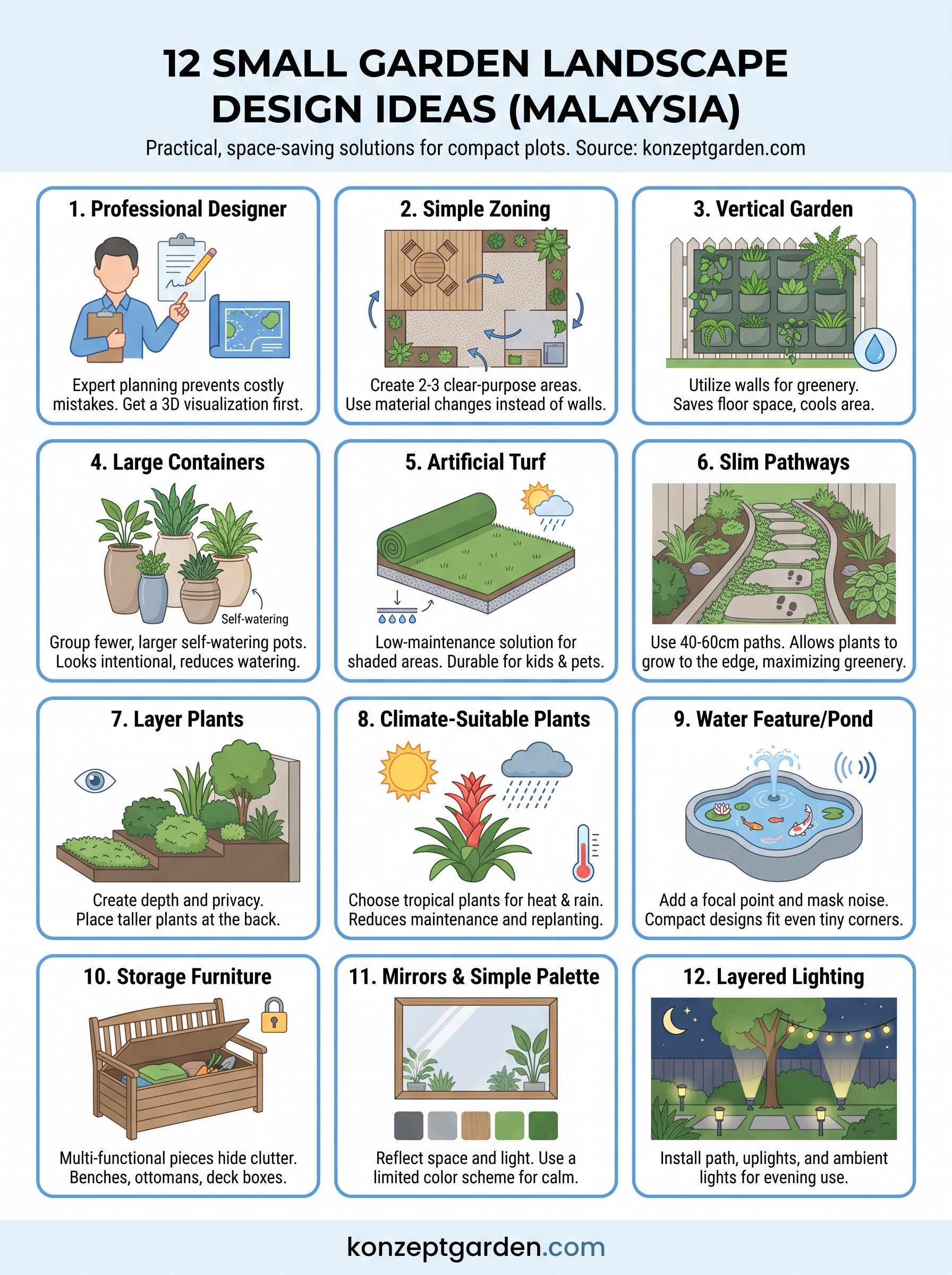
Making the most of your small garden
None of these 12 ideas need a huge budget or a huge plot to work. What they need is a plan that respects how small your space actually is, instead of borrowing tricks meant for bigger gardens and hoping they fit. Start with zoning and layered planting if you're on a tight budget, then add a water feature or lighting once the bones of the garden are right. Small changes, done in the right order, add up to a garden that feels considered rather than crowded.
Getting the layout right the first time matters more in a compact plot than anywhere else, since there's rarely room to undo a mistake later. If you'd rather skip the trial and error, our team has spent years turning awkward Malaysian plots into gardens people actually use. Talk to our landscape team at Konzept Garden and let's work through what your space could become.