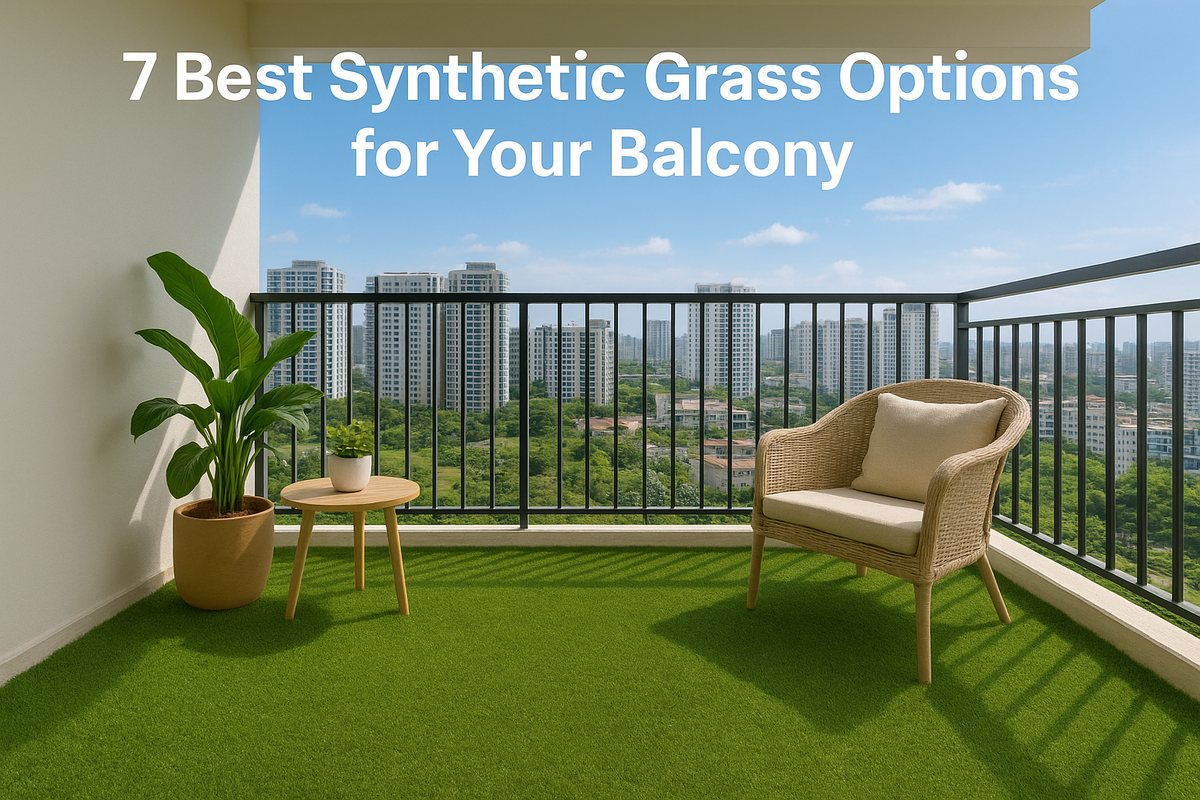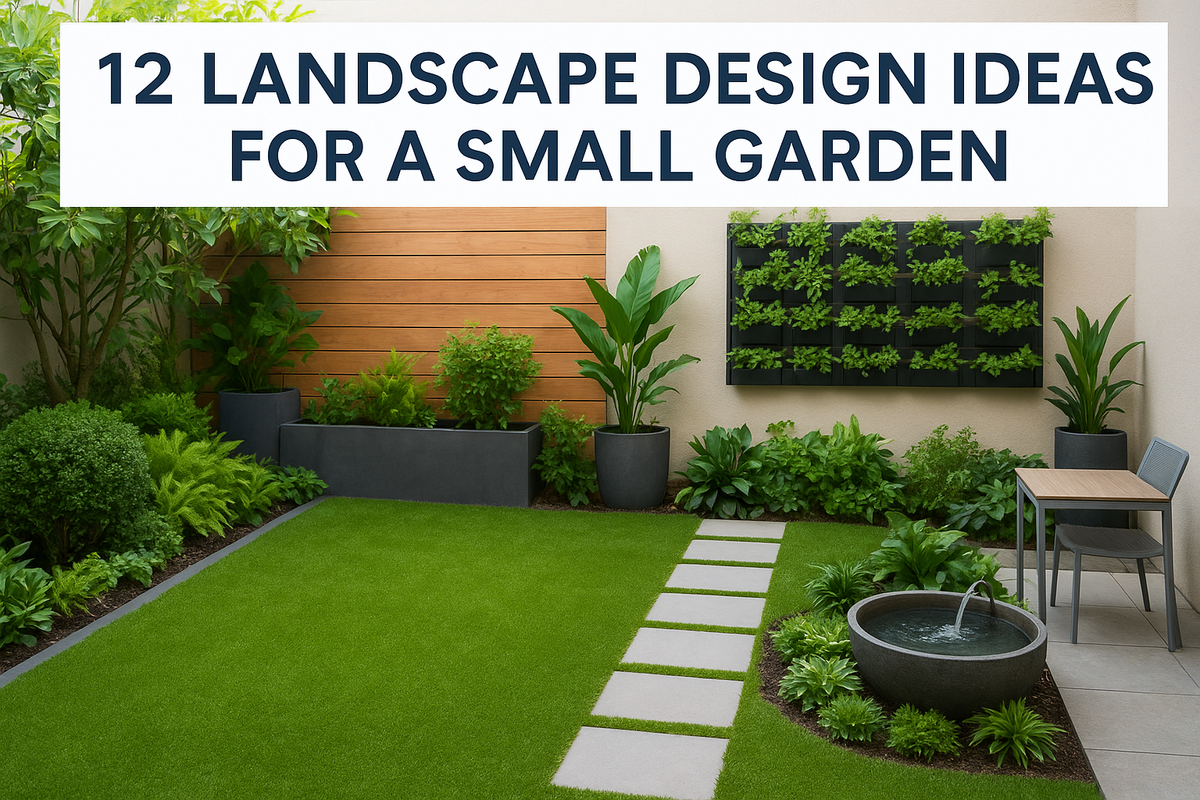
If you have started asking landscapers or online sellers about the price for artificial grass, you already know the quotes swing wildly. One supplier tells you RM8 per square foot, another tells you RM25, and you are left wondering what actually explains the gap. That confusion makes budgeting for a new lawn or rooftop garden harder than it needs to be, especially when you are comparing several quotations side by side.
In Malaysia, artificial grass cost typically runs between RM8 and RM25 per square foot depending on pile height, backing material, and whether installation is included. The synthetic grass price per square foot you get quoted also depends heavily on ground preparation, drainage work, and the size of the area, so a small balcony job and a large commercial rooftop will never land on the same number.
This article breaks down exactly what drives those numbers, from raw material grade to labor and site prep, so you can read any quote and know whether it is fair. We also walk through a real cost breakdown using Konzept Garden's own Noble Grass range, so you can see how pricing works in practice before you request your own free quotation.
Why artificial grass prices vary so much in Malaysia
Ask five suppliers for the price for artificial grass and you will get five different answers, and none of them are necessarily wrong. The final number depends on a stack of variables that most homeowners never think to ask about until the quote lands in their inbox. Understanding these factors before you shop around means you can spot a genuinely good deal instead of just picking the cheapest number on the page.
Pile height and density drive the base cost
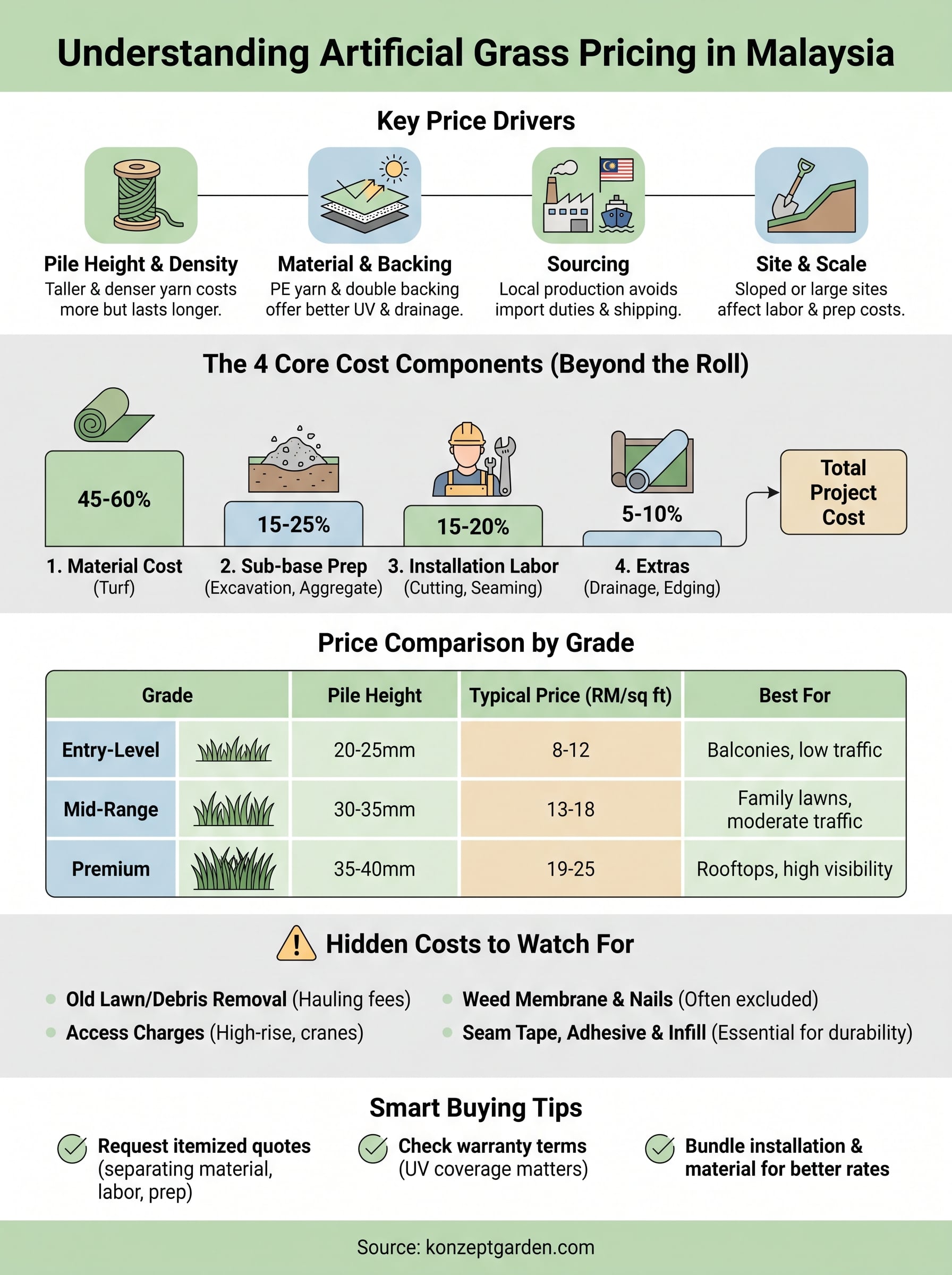
Grass with a shorter pile height, around 20mm to 25mm, costs less because it uses less yarn per square meter. Taller pile heights of 35mm to 40mm feel more luxurious underfoot and look denser, but they also cost more to manufacture and ship. Yarn density, measured in stitches per square meter, matters just as much as height. A thin, sparse product might use the same pile height as a premium one but look flat and patchy within a year because there simply is not enough material packed into the backing.
The height and density of the yarn, not the marketing name on the roll, is what actually determines how long your lawn looks good.
Material grade and backing quality
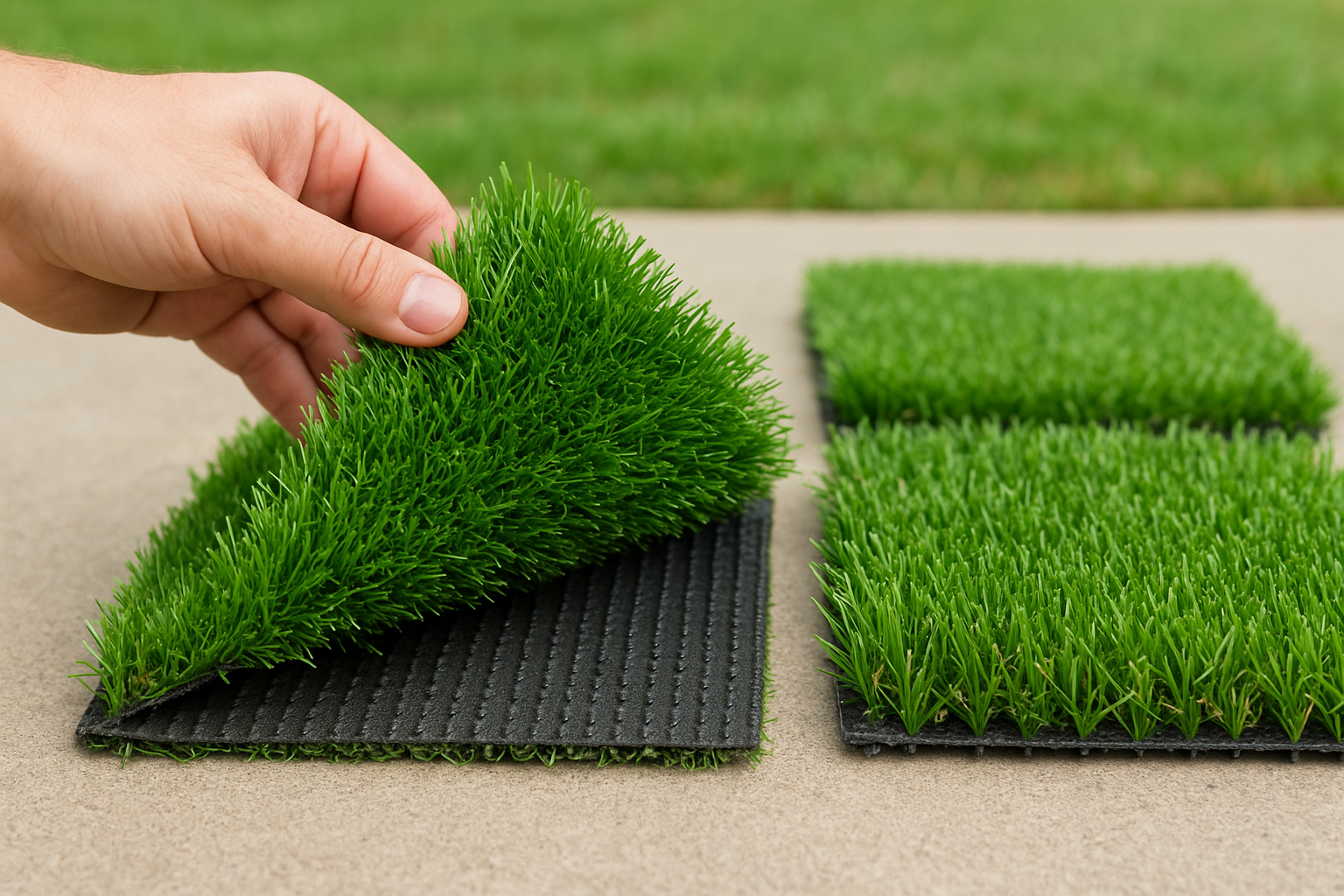
Most synthetic grass sold in Malaysia uses either polyethylene or polypropylene yarn, sometimes blended with nylon for stiffness. Polyethylene tends to feel softer and holds up better against Malaysia's intense UV exposure, which is why it usually commands a higher synthetic grass price per square foot than polypropylene. The backing matters too. A double backed product with proper drainage holes, or a tile system like artificial grass with a drain cell base, will outlast a single backed, glued product by years, especially with the heavy rainfall we get here. Cheaper rolls often skip UV stabilizers entirely, and while they look fine on day one, they fade and turn brittle within 12 to 18 months under direct sun.
Local manufacturing versus imported turf
Imported artificial grass, often from China or Europe, tends to carry higher shipping and duty costs that get passed straight to you. Locally produced or regionally sourced turf, like Konzept Garden's own Noble Grass range, can offer the same or better quality at a more competitive price because it skips several layers of import markup. This is one reason it pays to ask a supplier directly where their product is made rather than assuming imported automatically means better.
Installation, site conditions, and project scale
Beyond the roll of grass itself, labor and garden design and installation services swing the total cost more than most buyers expect. A flat, already-paved balcony needs minimal prep, while a sloped garden with poor drainage might need excavation, a sub-base of crushed aggregate, and proper leveling before a single blade of grass goes down. Larger commercial projects, like rooftop gardens or condominium common areas, often get a better rate per square foot simply because fixed costs like delivery and crew mobilization get spread across more area.
| Factor | Lower cost driver | Higher cost driver |
|---|---|---|
| Pile height | 20-25mm | 35-40mm |
| Yarn material | Polypropylene | Polyethylene blend |
| Backing | Single backed, glued | Double backed, drainage holes |
| Sourcing | Locally manufactured | Imported, high duty |
| Site condition | Flat, paved surface | Sloped, poor drainage |
| Project size | Large scale, single site | Small, fragmented areas |
Why quotes rarely match without context
Once you line these variables up side by side, it becomes obvious why two quotes for the same square footage can differ by RM10 or more per square foot. A supplier quoting RM8 might be using thin, single backed turf on a flat surface with no drainage work. Another quoting RM25 might be installing premium double backed grass on a sloped garden that needs a full sub-base rebuild. Neither number tells you much on its own. What matters is asking each supplier to break down exactly what pile height, material, and prep work is included, so you are comparing the same job rather than two entirely different projects wearing the same price tag.
How to calculate the true cost of your artificial grass project
Getting a realistic number for your project means going beyond the headline synthetic grass price per square foot and building your own estimate from the ground up. Most homeowners multiply length by width and stop there, then get surprised when the final invoice is 30% higher because nobody accounted for waste, edging, or a drainage layer. A proper calculation walks through four separate cost components before you land on a total.
Measure the actual usable area first
Start by measuring the exact area you want covered, in square feet or square meters, including any awkward corners or curved edges around planters and pathways. Add a waste allowance of 5% to 10% on top of that raw measurement, since artificial grass rolls come in fixed widths and irregular shapes almost always leave offcuts. Skipping this step is the single biggest reason DIY buyers underorder material and end up paying a rush delivery fee for a small extra roll later.
Add up the four cost components
Once you have your area, break the total cost into these four line items rather than accepting one lump sum figure:
- Material cost: the turf itself, priced per square foot based on grade and pile height
- Sub-base preparation: excavation, crushed aggregate, and compaction if the ground is not already flat and stable
- Installation labor: cutting, seaming, securing edges, and infill application
- Extras: drainage pipes, weed membrane, or decorative borders if your site needs them
A quote that only lists one number per square foot is hiding at least three of these components inside it.
Run a sample calculation
Here is how a typical 500 square foot residential lawn might break down using mid-grade turf with straightforward site conditions:
Area: 500 sq ft (+ 8% waste allowance = 540 sq ft)
Material (RM14/sq ft): RM7,560
Sub-base prep: RM2,200
Installation labor: RM1,800
Drainage & edging: RM900
----------------------------------
Total project cost: RM12,460
Effective rate per sq ft: RM24.92
Notice how the effective rate per sq ft ends up nearly double the raw material cost once prep and labor are folded in. This is the number you should actually compare against other quotes, not the material price alone.
Get itemized quotes before you commit
Before signing off on any supplier, ask for a written breakdown that separates material, prep, and labor exactly like the calculation above. This makes it far easier to spot where one company is cutting corners or padding the bill. Konzept Garden provides a free quotation with this level of detail for every Noble Grass project, so you know precisely what you are paying for before work begins on site.
Artificial grass price comparison by grade and thickness
Comparing artificial grass side by side only makes sense once you group products by grade, since a 20mm entry-level roll and a 40mm premium roll are not competing for the same buyer. Konzept Garden's Noble Grass range spans several tiers, and looking at how price for artificial grass shifts across these tiers gives you a realistic benchmark before you request your own quote. Below is a snapshot of what you can typically expect across the Malaysian market, including Noble Grass, when you line up grade against thickness.
Entry-level, mid-range, and premium grades side by side
Each grade trades off durability, softness, and appearance in a fairly predictable way, and the table below shows how that plays out in practice.
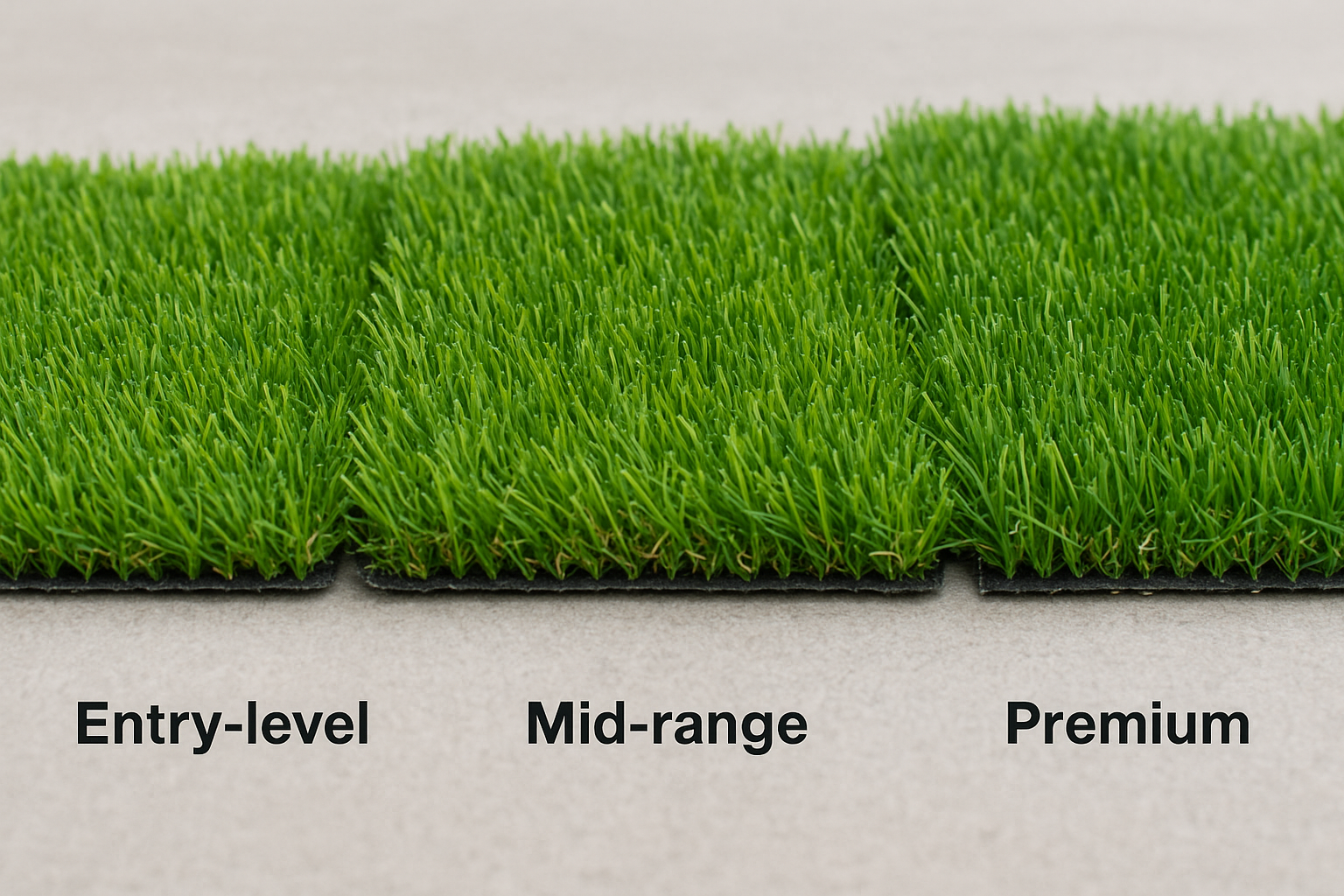
| Grade | Pile height | Typical price per sq ft (RM) | Best suited for |
|---|---|---|---|
| Entry-level | 20-25mm | 8-12 | Balconies, low-traffic display areas |
| Mid-range | 30-35mm | 13-18 | Family lawns, moderate foot traffic |
| Premium | 35-40mm | 19-25 | Rooftop gardens, commercial landscaping, high visibility spaces |
Pile height alone does not guarantee quality; a taller pile with weak yarn density still wears out faster than a shorter, denser premium roll.
Why thickness alone doesn't tell the whole story
Thickness gets all the attention in marketing, but two rolls at the same 35mm height can differ wildly in real-world lifespan. Density and yarn shape (whether it's a flat blade, curled, or diamond-cut fiber) affect how the grass springs back after being walked on. Konzept Garden's mid-range Cruz 30 turf rolls and premium Noble Grass options use a denser stitch count specifically because Malaysia's heat and rainfall punish thin, sparse turf within a year or two. Buyers who fixate only on the millimeter number often end up disappointed when a
Extra costs and tips to get the best artificial grass price
Even with a solid grade comparison in hand, most buyers still get caught off guard by charges that never appear on the initial quote sheet. These extras rarely show up until the installer is already on site measuring your garden, and they can quietly add 15% to 20% onto the number you budgeted for. Knowing what to ask about upfront keeps your final invoice close to your original estimate.
Hidden costs that catch buyers off guard
Several line items get left off basic quotes simply because suppliers assume you already know to ask. Watch for these before you sign anything:
- Old lawn or turf removal: disposing of existing grass, soil, or debris often carries a separate hauling fee
- Access charges: rooftop or high-rise installations may need cranes or extra labor hours to move material up
- Weed membrane and pinning nails: sometimes bundled, sometimes billed as an extra depending on the supplier
- Seam tape and adhesive: larger areas need multiple rolls joined, and low-quality seaming shows within months
- Infill material: silica sand or rubber granules that keep blades upright and add weight against wind
Ask what is excluded from a quote before asking what is included; the exclusions are where the real cost surprises hide.
Timing and negotiation tactics that actually work
Requesting quotes during Malaysia's quieter renovation months, typically outside the pre-Chinese New Year and pre-Raya rush, often gets you a better rate simply because installers have more open slots to fill. Negotiating a bundled installation and material rate rather than pricing each separately also tends to save money, since suppliers prefer locking in the full job instead of just supplying rolls for someone else's crew. Bulk area projects, such as covering an entire compound rather than a single patch near the porch, almost always bring the per square foot rate down because setup and delivery costs get spread further.
Comparing warranties, not just price tags
Before choosing a supplier on price alone, check the warranty length and what it actually covers. A five year warranty against fading and fraying is worth more than a rock-bottom quote with a one year warranty that excludes UV damage, which is the most common failure point under Malaysian sun. Reputable suppliers, including Konzept Garden, back their Noble Grass installations with clear warranty terms spelled out in the quotation itself and customer testimonials from past installations you can read for yourself, so you are not guessing what happens if the turf starts thinning in year two. Reading that fine print carefully protects you far more than shaving another ringgit off the price for artificial grass upfront.
Choosing the right grass for your budget and garden
Settling on the right price for artificial grass always comes down to matching grade, thickness, and site prep to how the space actually gets used, not just picking the lowest number on a quote sheet. A balcony that sees light foot traffic can get by with entry-level turf, while a rooftop or family lawn under constant Malaysian sun deserves the denser, UV-stable yarn that holds its color for years instead of months. Getting itemized quotes, checking warranty terms, and asking what's excluded before you sign protects you far more than chasing a cheap rate that falls apart within a year.
Once you know what grade fits your garden and budget, the fastest way forward is a real conversation with people who install this turf every day. Talk to the Konzept Garden team for a free, itemized quotation and let them walk you through the Noble Grass option that suits your space best.