
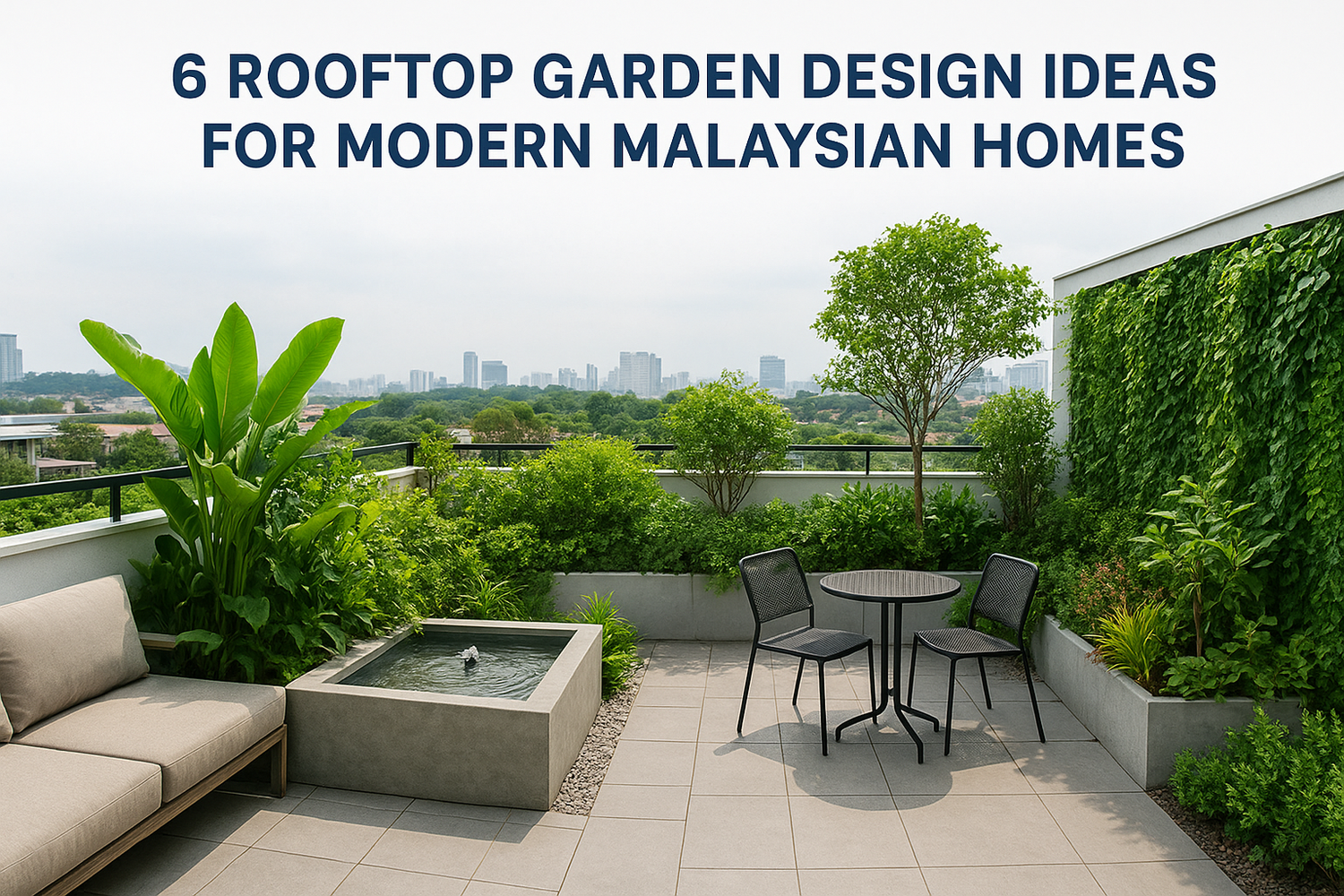
Malaysian cities are growing upward, and so are our gardens. With limited ground-level space in urban areas like KL, Penang, and Johor Bahru, more homeowners are turning to rooftop garden design ideas that transform underused flat roofs and terraces into lush, functional outdoor rooms. It's a smart move, but it comes with real design challenges that a ground-level garden simply doesn't have.
Weight limits, wind exposure, waterproofing, drainage, and intense tropical sun all shape what you can (and can't) do up there. The best rooftop gardens aren't just pretty, they're engineered to work within these constraints while still feeling like a genuine escape. That balance between creativity and practicality is exactly what good design solves.
At Konzept Garden, we've designed rooftop and terrace gardens across Malaysia for homeowners who want more from their property without expanding their footprint. In this guide, we're sharing six proven design ideas that suit modern Malaysian homes, each one grounded in what actually works in our climate and built on our experience delivering these projects. Whether you're starting from a bare concrete slab or rethinking an existing setup, you'll walk away with clear direction on how to make your rooftop worth spending time on.
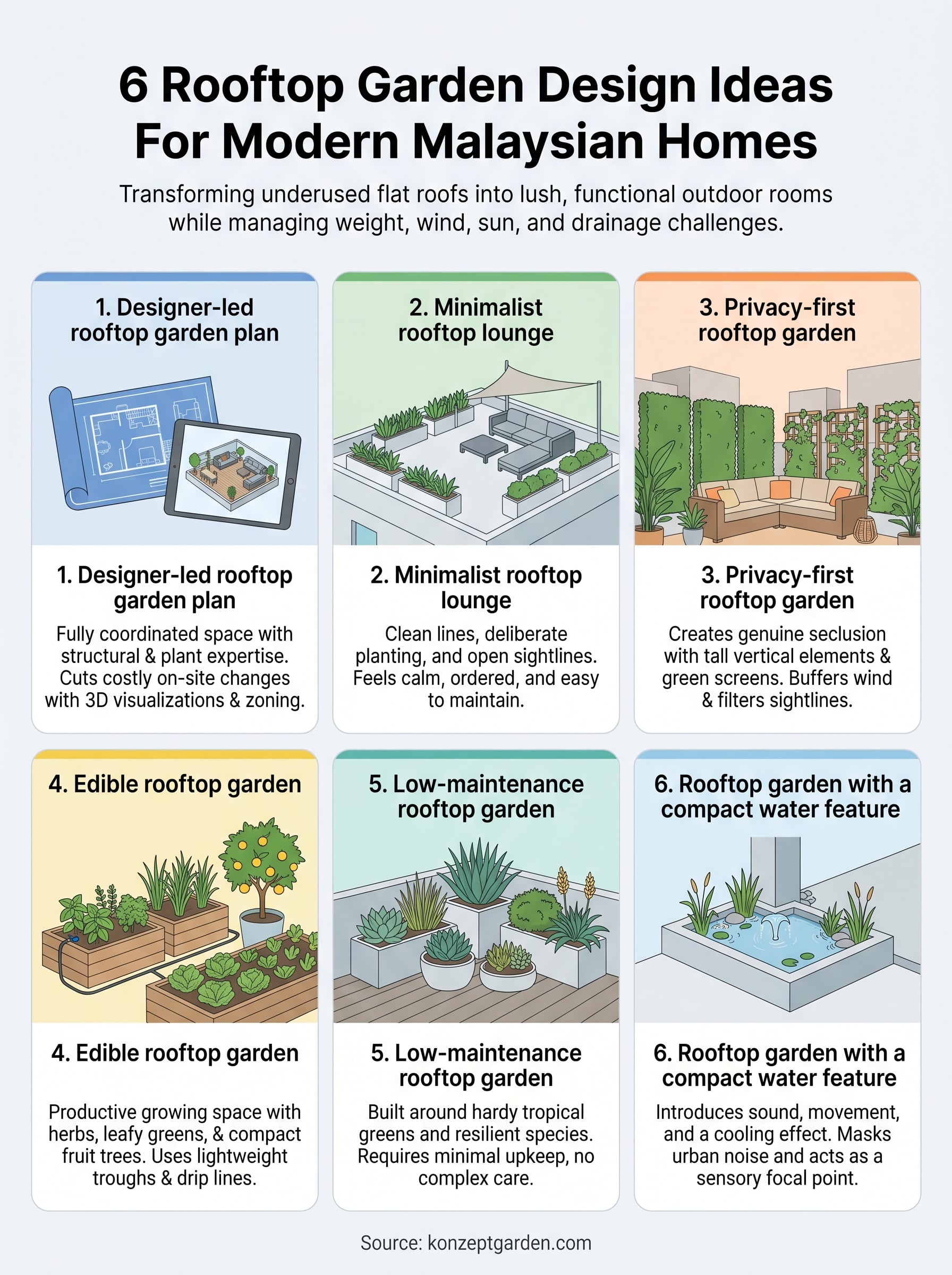
1. Designer-led rooftop garden plan with Konzept Garden
Starting a rooftop project without professional input is one of the fastest ways to spend money on something you'll want to redo in two years. A designer-led rooftop garden plan brings structural knowledge, plant expertise, and a spatial eye together before a single pot is placed. At Konzept Garden, we handle this from the first site visit through to final planting, giving you a result that holds up to Malaysian weather and actually fits the way you live.
What this design delivers
This approach gives you a fully coordinated outdoor space where every element, from the furniture placement to the planting scheme, works as a single plan rather than a collection of separate decisions. You get 3D visualizations before anything is built, so you can review the finished space early and request changes without construction costs.
Key deliverables from a Konzept Garden design project include:
- A site-specific concept plan with zoning for seating, planting, and circulation
- 3D renderings and a full material and plant specification
- End-to-end implementation managed by our team
A professionally designed rooftop garden resolves structural and aesthetic decisions before construction begins, which cuts costly on-site changes significantly.
Layout approach for modern Malaysian homes
Malaysian rooftops typically arrive as flat, open concrete slabs with strong afternoon sun from the west and limited natural windbreaks. Konzept Garden works with your roof's actual dimensions and orientation to create defined zones for seating, planting, and movement rather than scattering elements without a plan.
Layering tall planters or vertical screens on the western edge blocks the harshest sun, while lower plantings and open walkways keep airflow circulating through the space so it stays comfortable even in the afternoon heat.
Technical checks: load, waterproofing, drainage, wind
Before any rooftop garden design ideas move to construction, a structural assessment comes first. Load limits on Malaysian residential rooftops typically range from 150 to 300 kg per square meter, which shapes planter sizing, paving choices, and overall layout. Konzept Garden coordinates waterproofing reviews, drainage channel placement, and wind exposure analysis so your garden never creates problems for the building beneath it.
Typical budget range and timeline in Malaysia
A professionally designed and implemented rooftop garden in Malaysia generally starts around RM 30,000 for a mid-size terrace and scales upward based on materials, water features, and structural works required.
Most projects run eight to sixteen weeks from initial consultation to final planting, with timeline variations driven mainly by structural remediation needs and product lead times.
2. Minimalist rooftop lounge with structured planters
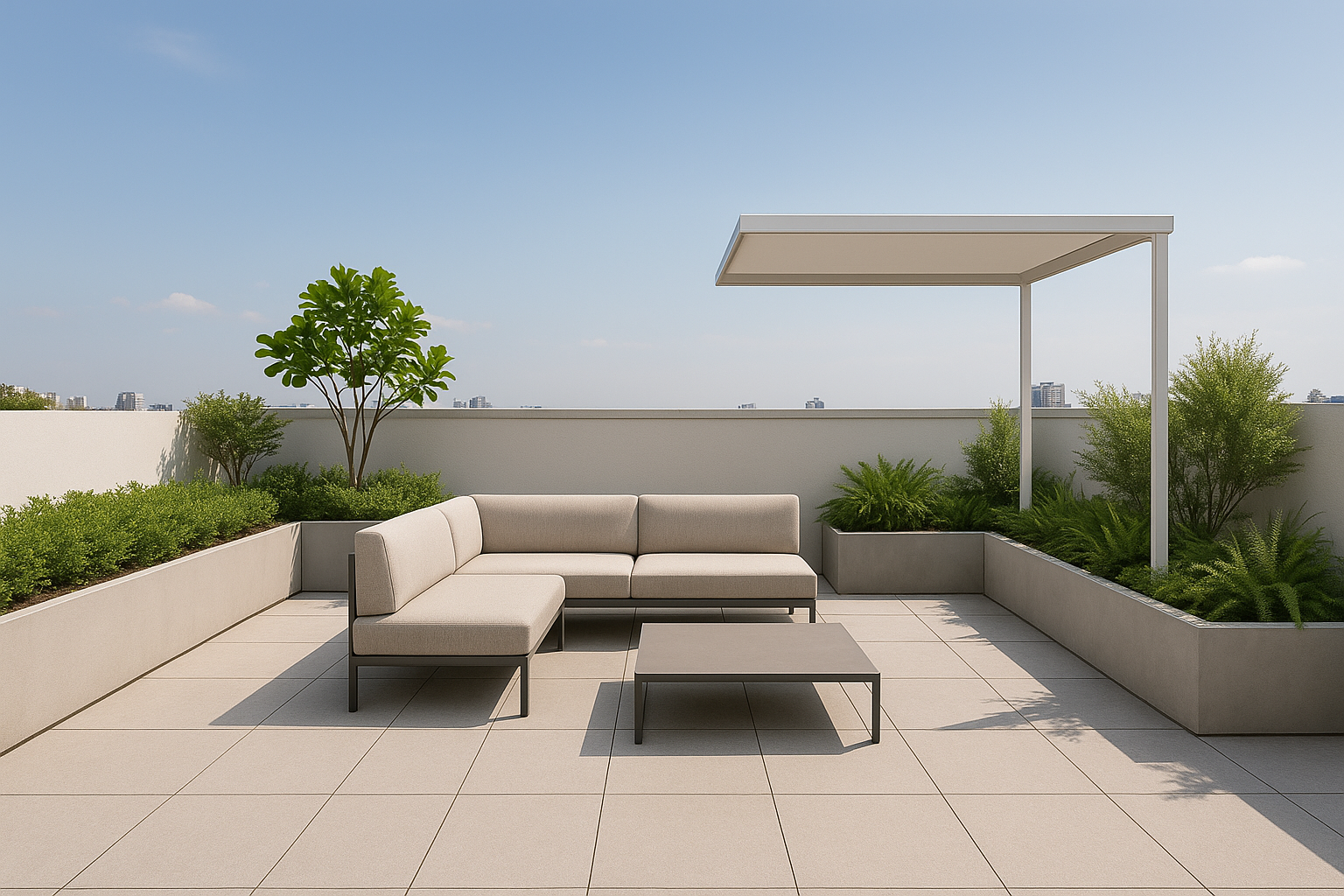
A minimalist rooftop lounge strips the space down to clean lines, deliberate planting, and open sightlines rather than layering in too much. For Malaysian homeowners who want an outdoor room that feels calm and ordered, this low-clutter approach works well on compact terraces where overcrowding would make the space feel smaller than it is.
What this design delivers
This concept pairs low-profile seating and a simple material palette with structured planters positioned to frame the space rather than fill it. You get a rooftop that feels intentional and easy to maintain, with plants selected to complement the geometry rather than compete with it.
- Defined seating zone anchored by clean paving
- Perimeter planters that frame rather than crowd
- A cohesive material palette tied across furniture and surfaces
Layout approach for modern Malaysian homes
Place rectangular raised planters along perimeter walls to anchor the edges and create a natural boundary between your lounge area and the drop. A neutral paving tone and a compact shade structure give the space enough visual interest without feeling busy.
Fewer, well-chosen elements on a rooftop always read stronger than many small ones competing for attention.
Technical checks: load, waterproofing, drainage, wind
These minimalist rooftop garden design ideas work well structurally because open layouts reduce wind resistance and lightweight fiber-reinforced planters with low-density growing media keep load demands manageable. Drainage channels along the planter bases prevent waterlogging during heavy monsoon rain.
Typical budget range and upkeep
Expect to budget from RM 15,000 to RM 25,000 for a well-executed minimalist lounge setup. Ongoing upkeep stays low, mainly watering, occasional pruning, and surface cleaning two to three times per year.
3. Privacy-first rooftop garden with green screens
Rooftops in dense Malaysian neighborhoods sit exposed on all sides, leaving you visible to neighboring buildings and upper-floor windows. A privacy-first garden solves this with green screens, living walls, and dense vertical planting that block sightlines without making the space feel enclosed or uncomfortable to spend time in.
What this design delivers
This concept centers on tall vertical elements placed strategically around the perimeter to create a sheltered outdoor room. You gain genuine seclusion on a rooftop that would otherwise feel too open to relax in, while the greenery softens the hard edges of walls and railings at the same time.
- Perimeter screens that filter direct sightlines from neighboring floors
- A layered planting scheme that adds depth without bulk
- Wind-buffering effect from dense foliage along exposed edges
Layout approach for modern Malaysian homes
Position your tallest screens on the north and east faces where neighboring buildings most often overlook the space. Keep the center of the rooftop open to maintain airflow and allow natural light to reach lower planting zones.
Vertical planting on rooftop edges also reduces wind speed across the space, making it noticeably more comfortable during monsoon season.
Planting strategy for tropical sun, heat, and wind
Among the most practical rooftop garden design ideas for privacy, dense vertical planting performs best when you choose species proven in high-heat, exposed conditions. Bougainvillea, Ficus pumila, and Heliconia all handle full sun and intermittent strong wind without collapsing or dropping leaves through the dry season.
Typical budget range and upkeep
A privacy-focused rooftop setup typically runs from RM 12,000 to RM 22,000, depending on screen height, structure type, and plant selection. Pruning every six to eight weeks keeps the screens dense and prevents overgrowth from adding unnecessary load to the structure below.
4. Edible rooftop garden with herbs and compact fruit
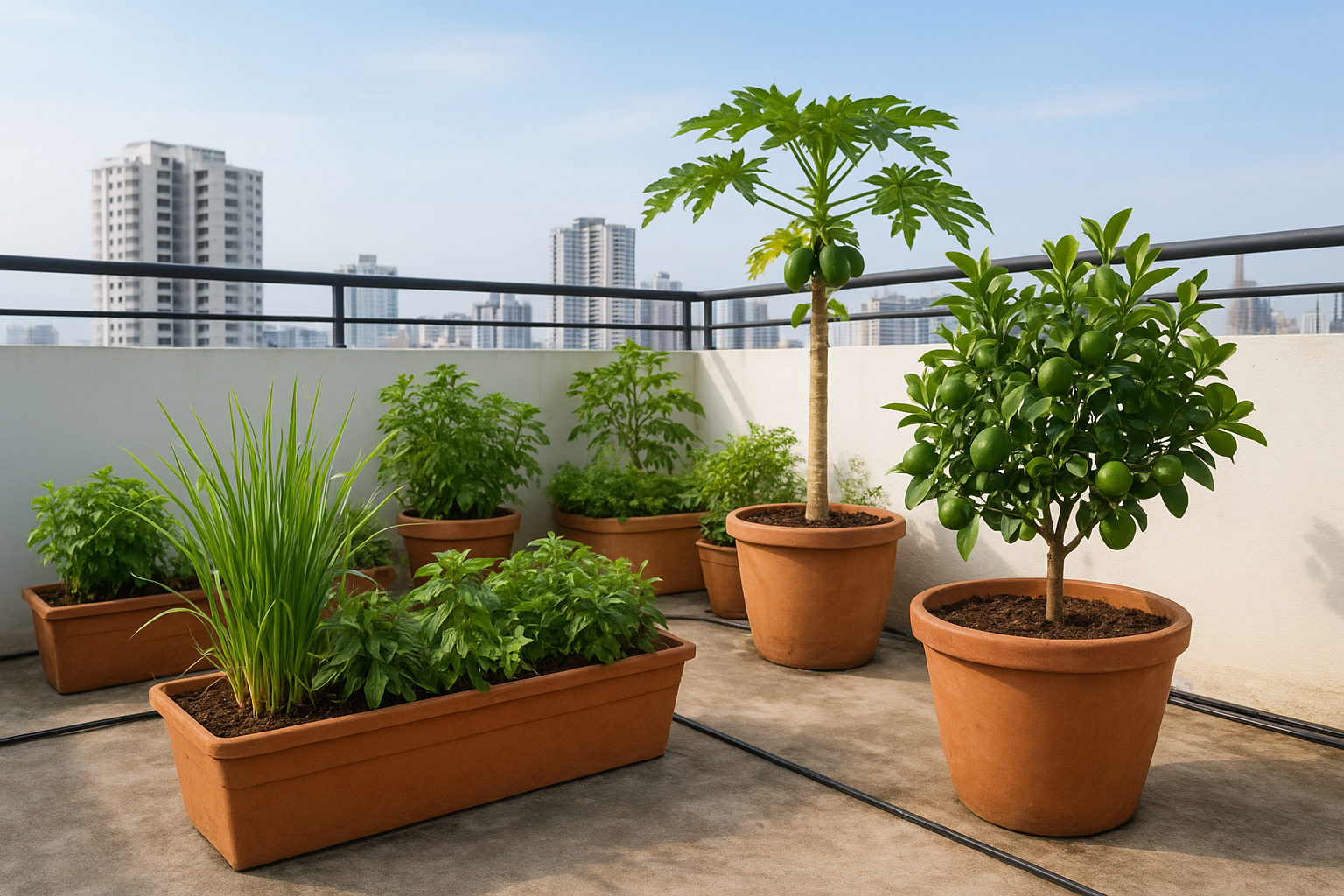
Growing food on a rooftop isn't just practical. Malaysian homeowners are increasingly choosing edible gardens over purely ornamental setups because they deliver daily, tangible value alongside the greenery. Herbs, leafy vegetables, and compact fruit trees like calamansi and dwarf papaya all perform well in the heat and direct light that most urban rooftops provide in abundance.
What this design delivers
This concept gives you a productive growing space that earns its footprint every week. Key features include:
- Culinary herbs such as pandan, lemongrass, and Thai basil in lightweight troughs
- Compact fruit trees like calamansi and dwarf papaya in large containers
- A layout that separates heavy planters from lighter herb zones to manage load distribution
Layout approach for modern Malaysian homes
Place heavier containers near structural columns where the load transfers most safely, and keep herb troughs along railings and secondary edges. These rooftop garden design ideas work best when you cluster plants by water needs, which cuts irrigation time and reduces the risk of overwatering your more sensitive herbs.
Grouping plants with similar water requirements is one of the simplest ways to keep an edible rooftop garden manageable long-term.
Watering and drainage: drip lines, runoff control
Install a basic drip irrigation line connected to a timer to remove the daily watering burden. Runoff from planters needs to reach drainage outlets without pooling, so slight planter tilts and drainage matting beneath containers both help manage heavy rainfall during monsoon months.
Typical budget range and upkeep
An edible rooftop setup typically costs RM 10,000 to RM 18,000. Monthly upkeep involves harvesting, fertilizing, and checking irrigation lines to keep production consistent through both wet and dry seasons.
5. Low-maintenance rooftop garden with hardy greens
Not every homeowner wants to spend weekends pruning and watering. A low-maintenance rooftop garden built around hardy tropical greens gives you a living space that stays healthy without demanding constant attention, which makes it one of the most practical rooftop garden design ideas for busy urban households.
What this design delivers
This concept centers on drought-tolerant and heat-resistant plants paired with surfaces and containers that reduce upkeep to a minimum. You get consistent greenery year-round without complex care routines or expensive irrigation systems keeping you on a tight schedule.
Choosing plants rated for full tropical sun from the start eliminates most of the failure you'd see from forcing unsuitable species into a rooftop environment.
Layout approach for modern Malaysian homes
Group hardy groundcovers and slow-growing shrubs along the perimeter, and keep the central area open as a seating or movement zone. Your plant selection does most of the design work when the species are chosen for form as well as resilience, so the space looks considered without requiring ongoing intervention to maintain that appearance.
Material choices: lightweight soil, containers, surfaces
Use perlite-blended growing media to cut planter weight significantly compared to standard garden soil. Fiberglass and resin containers resist UV degradation better than terracotta under Malaysia's direct sun, and composite decking on the floor surface requires only occasional cleaning to stay presentable through the wet and dry seasons.
Typical budget range and upkeep
Expect to spend RM 10,000 to RM 16,000 for a well-planted low-maintenance setup. Your ongoing time commitment drops to monthly watering checks and light fertilizing two to three times per year.
6. Rooftop garden with a compact water feature
Adding a water feature to a rooftop garden introduces sound, movement, and a cooling effect that no plant alone can replicate. A small fountain, raised pond, or wall-mounted water wall transforms an ordinary terrace into a space that genuinely feels like a retreat, and it remains one of the more impactful rooftop garden design ideas for homeowners who want atmosphere as much as greenery.
What this design delivers
A compact water feature anchors the sensory experience of your rooftop by adding the sound of moving water that masks urban noise from below. It draws attention to a focal point and gives the overall layout a natural centerpiece that furniture and planting can be arranged around.
A well-placed water feature on a rooftop reduces ambient noise from traffic and neighboring buildings more effectively than solid screens alone.
Layout approach for modern Malaysian homes
Position your water feature close to a structural column or load-bearing wall where the concentrated weight transfers safely. Keep it away from prevailing wind paths to prevent water loss from spray, and surround it with low-profile planting to integrate it into the broader garden scheme without overpowering the space.
Safety and structure: water weight, leak prevention, mosquitos
Water weighs one kilogram per liter, so even a modest 500-liter raised pond adds significant point load. Use a fully sealed, self-contained unit with a recirculating pump to eliminate stagnant water and prevent mosquito breeding. Confirm your waterproofing membrane extends beneath the feature's base before installation.
Typical budget range and upkeep
A compact rooftop water feature typically adds RM 8,000 to RM 15,000 to your project cost depending on size and materials. Monthly upkeep involves cleaning the pump filter and topping up water lost to evaporation, which in Malaysia's heat runs higher than most homeowners expect.
Bringing it all together
The six rooftop garden design ideas covered here show the full range of what a Malaysian rooftop can become, whether that's a minimalist lounge, a productive edible garden, or a serene retreat built around a water feature. Each concept works within the real constraints of urban rooftops: load limits, tropical heat, drainage, and wind exposure. Your starting point is deciding how you want to use the space and how much ongoing maintenance you're genuinely willing to commit to each month.
Picking the right concept before construction saves you significant money and avoids costly redesigns later. Good design doesn't just make a rooftop look better; it makes the space structurally sound, comfortable to use year-round, and easier to maintain through Malaysia's wet and dry seasons. If you're ready to move forward with a professional rooftop design, get in touch with our team at Konzept Garden to book your initial site consultation.