

A well-designed backyard should do more than look good, it should make you want to stay outside. That's exactly what a thoughtful outdoor spa design ideas approach can achieve: a private retreat steps away from your living room. Whether you have a compact courtyard in a Kuala Lumpur townhouse or a sprawling garden in the suburbs, there's a way to integrate a spa area that fits your space and lifestyle.
At Konzept Garden, we've designed outdoor spaces across Malaysia that blend relaxation features with functional landscaping. From sunken hot tubs framed by tropical planting to minimalist soaking pools on timber decks, we've seen firsthand how the right design turns an underused backyard into the most-visited spot in the house. It comes down to smart layout, the right materials, and plants that complement rather than compete with the space.
Below, we break down eight practical and inspiring spa design ideas, covering everything from small-space solutions to full luxury setups, so you can start planning a backyard that actually invites you to unwind.
1. Start with a full spa zone plan and 3D layout
Before you buy a single tile or pick a hot tub model, planning the full spa zone on paper (and in 3D) saves you from the most expensive mistakes. Skipping this step is how homeowners end up with a spa that blocks drainage, sits in full afternoon sun, or leaves no room to walk around it comfortably.
What this design idea is
This approach treats your outdoor spa as a dedicated zone within your garden, not just a tub dropped into a corner. A full plan maps out the spa position, circulation paths, utility runs, privacy screening, and planting before any ground is broken. A 3D layout lets you visualize the finished space and catch layout problems early, when changes cost nothing but time.
Best for
It suits any backyard where you plan to invest seriously in the result. This works especially well for residential properties in Malaysia with irregular plot shapes, existing trees, or drainage challenges. If your garden has more than one feature (pool, deck, garden beds), a full plan ensures they connect logically rather than competing for space.
Key layout moves that prevent costly changes later
Position your spa close to the house to keep plumbing and electrical runs short and affordable. Leave at least 900mm of clear walkway on every accessible side. Plan your utility access panel location before you finalize any decking or paving, because retrofitting access into finished hardscape is one of the most avoidable renovation costs.
Getting the drainage slope and electrical conduit placement right in the planning stage costs far less than cutting open finished work later.
Planting and materials that handle Malaysia's heat and rain
Malaysia's humidity, heavy rain, and intense UV exposure narrow your material choices fast. Stick to porcelain pavers, fiber cement decking, or treated hardwood for wet zones. For planting, low-shedding species like Heliconia, Dwarf Ixora, and ornamental palms hold up well around spa areas without dropping excessive leaf litter into the water.
Budget and timeline expectations
A full design and 3D layout typically takes two to four weeks before construction begins. Budget RM 1,500 to RM 5,000 for professional design fees depending on scope. Skipping this phase to cut costs almost always results in more spending on rework than the original design fee would have been.
2. Build a small corner spa with a vertical garden screen
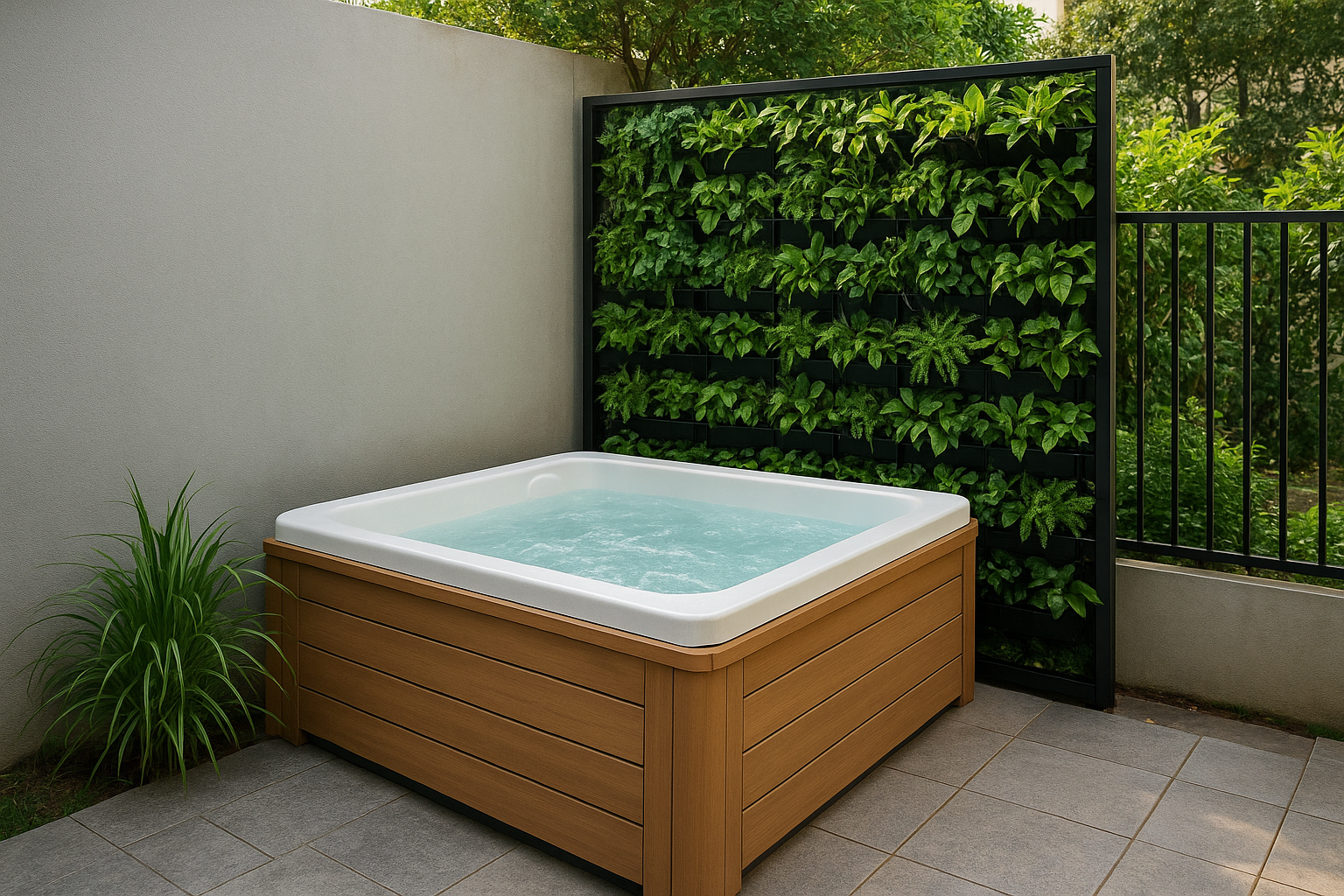
A corner spa setup is one of the most practical outdoor spa design ideas for homeowners who want a relaxation zone without sacrificing most of their backyard. By working with an L-shaped or triangular footprint, you can fit a compact spa into an otherwise unused corner while keeping the rest of the garden open and functional.
What this design idea is
This design places a compact spa or soaking tub into a garden corner and uses a vertical garden screen as a backdrop. The screen doubles as a privacy barrier and a living feature, replacing the need for a fence extension or solid wall.
Best for
This works well for terrace houses and smaller suburban plots in Malaysia, particularly where direct sight lines from neighbors or the street make an exposed spa feel uncomfortable.
Privacy, airflow, and mosquito control in tight spaces
Tight corners need deliberate airflow planning to avoid heat buildup. Position your vertical screen on the boundary side rather than wrapping it fully around the spa, which keeps air moving through the zone. Plant lemongrass or citronella basil at the base to reduce mosquito pressure without spraying chemicals near the water.
A screen that blocks wind on all sides will make the space feel stuffy fast, especially in Malaysia's humidity.
Vertical garden and screening options that stay tidy
Choose self-watering vertical planters to cut daily maintenance significantly. Pair them with compact, slow-growing species like Dwarf Screw Pine or Pothos that won't overwhelm the frame or drop excessive leaf litter into the spa water.
Budget and maintenance trade-offs
A vertical screen with planters typically adds RM 2,000 to RM 6,000 depending on system size and plant selection. Plan to trim growth and top up water reservoirs monthly to keep the wall looking sharp without turning it into a time-consuming task.
3. Create a deck-level spa with hidden storage and services
A deck-level spa integrates flush with the surrounding timber or composite deck, creating a seamless, resort-style finish that looks intentional rather than added on. Among outdoor spa design ideas that balance aesthetics and practicality, this one ranks high because it hides the infrastructure you'd rather not look at while keeping the relaxation zone clean and spacious.
What this design idea is
This design embeds the spa into the deck platform so the rim sits level with the surrounding boards. Built-in bench storage and concealed service panels sit beneath the deck structure, keeping pumps, filters, and cleaning supplies completely out of sight.
Best for
It suits bungalows and larger landed properties in Malaysia where an elevated deck already exists or is planned. This approach works especially well for clients who want a high-end finish without a separate cabana or enclosure taking up additional garden space.
How to hide pumps, filters, and access panels without regrets
Plan your access panel locations before the deck frame goes up. Hatches should open fully without obstruction and be large enough for a person to reach in and service the equipment comfortably. Mark all panel positions on your construction drawings and share them with every contractor on site.
Getting access panel placement wrong at the framing stage means cutting into finished decking later, which damages the boards and the waterproofing underneath.
Decking, fasteners, and slip resistance for wet zones
Use composite decking with a grooved, slip-resistant surface in wet zones around the spa. Stainless steel or coated fasteners prevent rust staining on the board surface over time.
Budget and long-term upkeep
Expect a 15 to 25 percent cost increase over a standard freestanding spa setup due to the custom deck framing and concealed services work. Inspect access panels and waterproof seals every six months to catch moisture issues before they reach the substructure.
4. Go sunken for a sleek courtyard spa look
A sunken spa sits below the surrounding grade, making it feel like a permanent architectural feature rather than a product sitting on the ground. Among the more striking outdoor spa design ideas available, this approach gives a courtyard a polished, resort-level finish that holds up visually from every angle.
What this design idea is
This design excavates a defined area in your courtyard so the spa rim sits flush or slightly above the finished floor level. The surrounding hardscape continues uninterrupted to the spa edge, creating a clean, minimalist visual line that makes the space feel intentional and considered.
Best for
Sunken spas work well for landed properties and bungalows in Malaysia with courtyard layouts where a defined focal point adds character. This suits clients who want a permanent installation that reads as part of the architecture rather than a landscaping add-on.
Drainage, waterproofing, and service access essentials
Excavation means you must plan drainage and waterproofing before any concrete work begins. A perimeter channel drain around the spa prevents water pooling during heavy Malaysian rain. Your service access point needs to sit at the lowest accessible point of the structure, not buried under finished paving, so equipment stays reachable without demolition.
Getting waterproofing layers wrong at the base stage is the single costliest mistake in a sunken spa build.
Hardscape finishes that look luxe but stay safe underfoot
Choose honed or brushed porcelain tiles rather than polished finishes around the spa rim. Anti-slip ratings of R11 or higher suit wet courtyard zones consistently.
Budget and renovation complexity
Sunken installations typically cost RM 15,000 to RM 35,000 more than above-ground equivalents due to excavation, waterproofing membranes, and structural work. Allow eight to twelve weeks for a well-executed build.
5. Add a pergola spa cabana for shade and rain cover
Malaysia's afternoon downpours and direct sun make an uncovered spa zone uncomfortable for most of the day. A pergola spa cabana solves both problems at once by giving you shade, rain protection, and a defined outdoor room that makes the space feel intentional rather than exposed.
What this design idea is
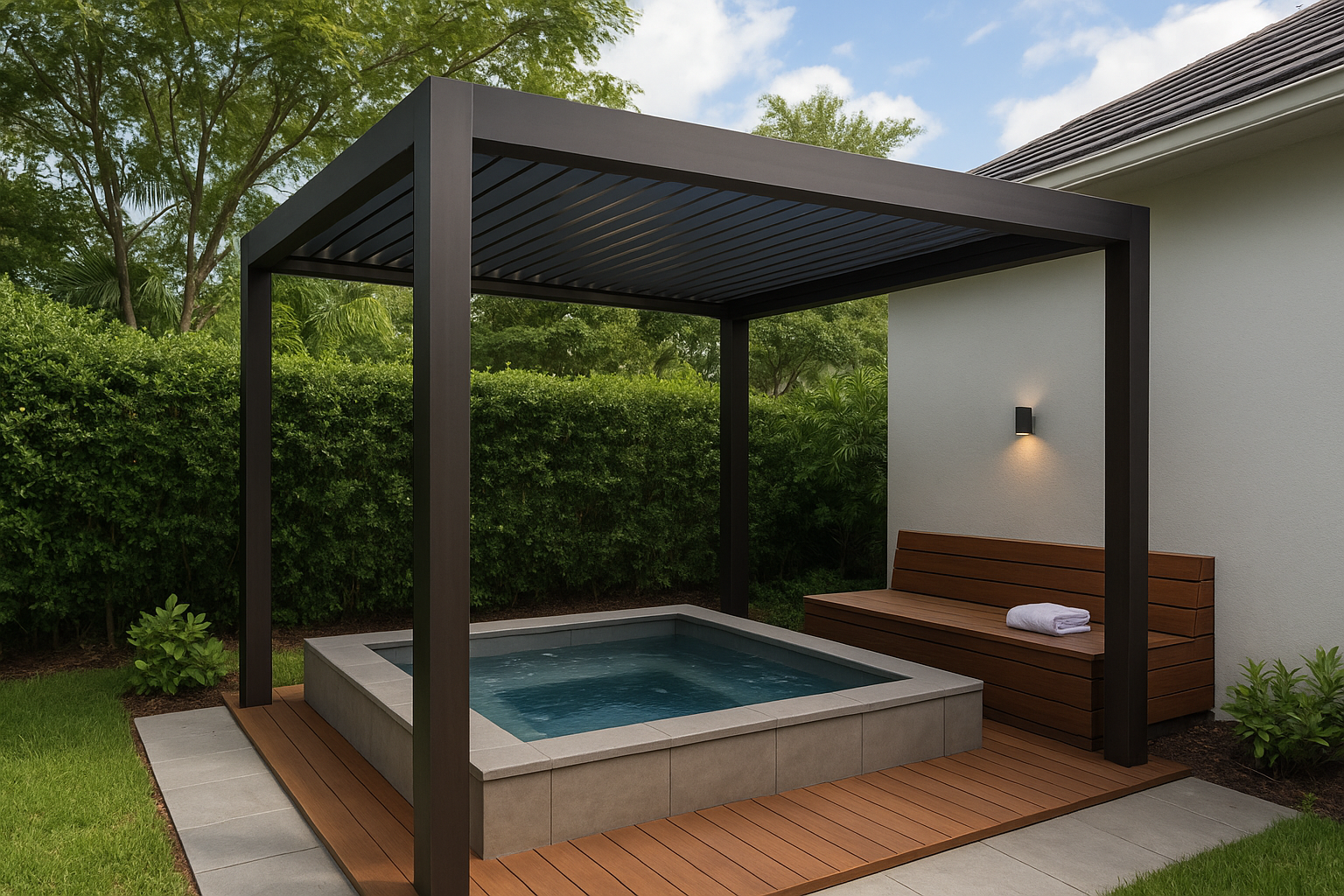
A spa cabana places a freestanding or house-attached pergola structure directly over the spa area, typically with a solid or louvered roof panel at the center and open sides to keep airflow moving. This creates a covered zone that functions year-round in Malaysia's climate without fully enclosing the space.
Best for
This suits bungalows, semi-detached homes, and any property where the spa sits away from the main roof line and needs its own weather cover. It works especially well for clients who want outdoor spa design ideas that feel like a dedicated retreat rather than just a tub in the garden.
How to design shade that still feels open and breezy
Use adjustable louvered roofing rather than a fixed solid panel so you control light and airflow throughout the day. Keep at least two sides fully open to prevent heat from trapping inside the structure.
A fully enclosed cabana turns into a sauna in Malaysian humidity, so open sides are not optional.
Lighting, seating, and towel storage that make it feel like a spa
Install recessed downlights and waterproof wall sconces at low levels to create a relaxed evening atmosphere. Add a built-in bench with a lift-top storage compartment for towels and accessories to keep the zone tidy.
Budget and maintenance notes
A well-built pergola cabana typically costs RM 8,000 to RM 20,000 depending on size and roofing material. Inspect roof panel seals and timber or aluminum joints annually to prevent water ingress at the connection points.
6. Pair the spa with a calming water feature or koi pond
Adding a water feature or koi pond alongside your spa creates a sensory environment that makes the space feel more immersive than any single installation can on its own. This is one of the outdoor spa design ideas that genuinely changes how long you stay outside.
What this design idea is
This design positions a koi pond, rill, or wall fountain within visible and audible distance of the spa. The moving water adds ambient sound that masks street noise and creates a layered, resort-like atmosphere without requiring a full enclosure.
Best for
Homeowners with landed properties and at least 40 square meters of usable garden space in Malaysia will get the most from this combination. It works best for clients who prioritize a calm, contemplative outdoor environment over a purely functional spa setup.
How to place water features so the spa feels quieter and cooler
Position the water feature upwind of the spa to carry the cooling effect of evaporation across the zone naturally. Keep the pond or rill within three to five meters of the spa edge so the sound carries clearly without forcing pumps to run at disruptive volumes.
A feature placed too far away forces you to run the pump louder, which often defeats the calming effect you're trying to create.
Planting palette for a clean, zen look without constant leaf drop
Use Dwarf Papyrus, Blue Dianella, and compact Heliconia around the pond perimeter. These species stay tidy and hold up in wet soil without shedding heavily into either the pond or the spa water.
Budget, filtration, and upkeep planning
A koi pond with full filtration typically adds RM 8,000 to RM 18,000 to your project. Plan to clean filters monthly and test water quality weekly to keep fish healthy and the water clear year-round.
7. Use low-maintenance finishes for an always-ready spa zone
The biggest reason people stop using their outdoor spa is maintenance, not cost. When your spa zone requires constant scrubbing, replanting, or resealing, it stops feeling like a retreat and starts feeling like another chore. This approach to outdoor spa design ideas focuses on choosing materials and plants upfront that stay presentable week after week with minimal effort.
Material swaps that cut weekly upkeep fast
Replacing natural stone with large-format porcelain pavers eliminates the resealing and staining problems that come with porous surfaces in Malaysia's wet climate. Swap timber decking for composite boards with a textured, slip-resistant finish that won't rot, fade, or need annual oiling. These materials cost slightly more upfront but remove recurring maintenance tasks that add up over years.
The right material choice at the start saves more time long-term than any cleaning product or schedule ever will.
Planting strategies for people who travel or stay busy
Choose slow-growing, drought-tolerant species like Dwarf Ixora, Aglaonema, and compact ornamental palms that stay tidy between visits. Pair them with self-watering planter systems to cut daily watering requirements without letting plants dry out during busy weeks or short trips.
Budget and what you still need to maintain
Low-maintenance finishes typically add 10 to 20 percent to your initial material costs. Even with durable choices, you should still inspect water chemistry weekly and clear debris from drains after heavy rain to keep the zone functioning properly throughout the year.
8. Design a rooftop or balcony spa that feels private
Rooftop and balcony spas represent some of the most striking outdoor spa design ideas available to urban homeowners in Malaysia, but they also require the most careful pre-construction checks. Getting the fundamentals right before installation protects your investment and prevents structural or waterproofing failures that are expensive to fix.
Structural, waterproofing, and access checks to do first
Before anything else, commission a structural engineer to assess your slab load capacity. A filled spa can weigh well over 1,500kg, and most standard balconies in Malaysian condominiums and landed homes are not built to handle that load without reinforcement. Pair the structural check with a full waterproofing membrane inspection of the slab and any penetrations for plumbing or electrical conduits.
Skipping the structural assessment is the single most common and costly mistake in rooftop spa installations.
Wind, sun, and neighbor privacy solutions that look intentional
High-exposure locations bring wind, direct sun, and direct sight lines from neighboring properties that ground-level spas rarely face. Use frosted tempered glass panels or louvered aluminum screens to block sightlines without visually closing the space down. Position the screen angles to deflect wind rather than block it fully, which reduces turbulence without trapping heat on the deck.
Budget and operating costs in high-exposure locations
Rooftop installations typically cost 20 to 40 percent more than equivalent ground-level builds once you factor in structural work, waterproofing upgrades, and materials rated for UV and wind exposure. Expect higher pump and heating running costs due to wind chill and direct sun evaporation, so factor those into your monthly operating budget before committing to the build.
Next steps for your outdoor spa zone
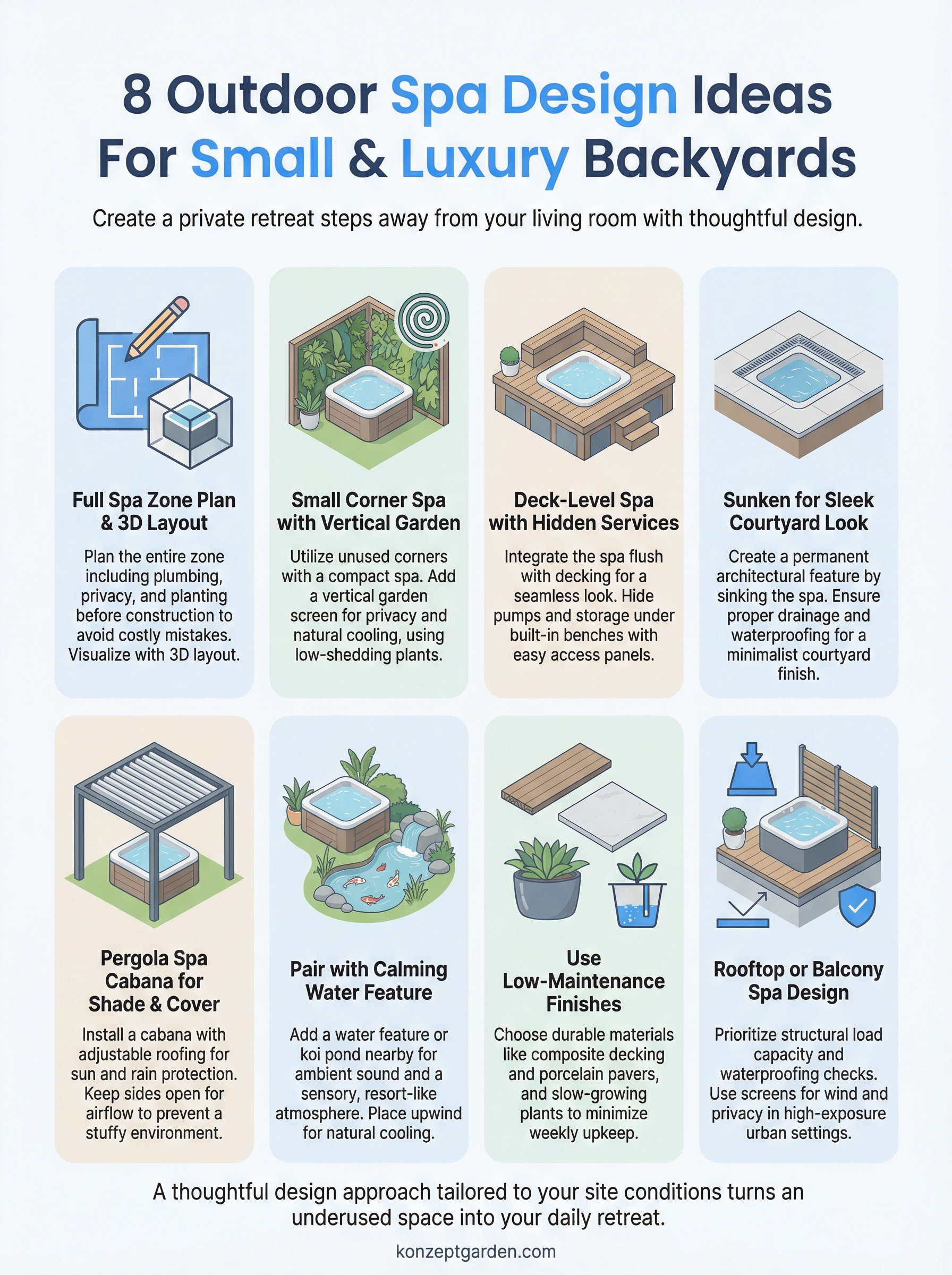
Every outdoor spa design idea in this list works best when it starts with a clear plan tailored to your specific plot, lifestyle, and budget. Whether you have a compact corner to work with or a full bungalow garden ready for a complete transformation, the right design approach makes the difference between a space you use daily and one that sits underused. The eight ideas here give you a strong foundation, but the details that matter most, drainage, materials, planting, and utility placement, depend on your exact site conditions.
Bringing a professional in early saves you from the costly rework that comes from making those decisions without proper assessments. If a koi pond or water feature appeals to you as part of your spa zone, explore the Zen Bio Koi Pond to see what a considered water feature design can look like. Contact Konzept Garden to get your project started.


