
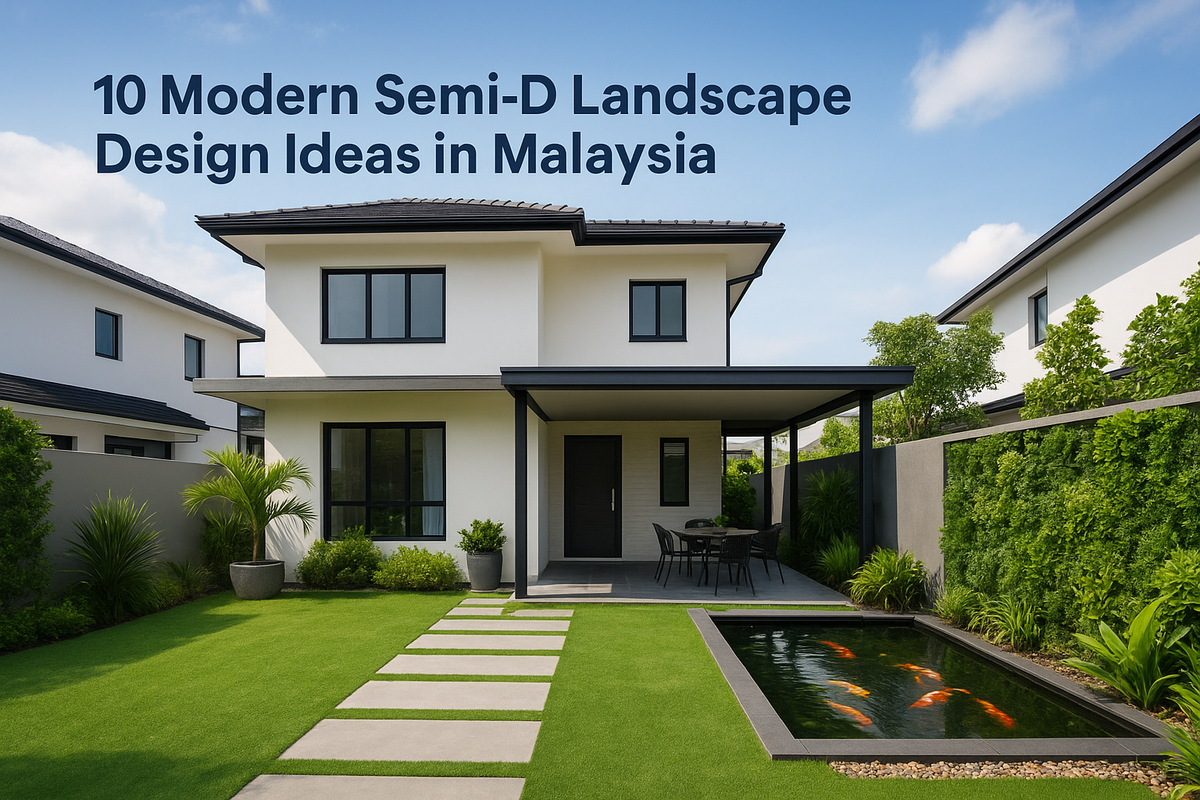
A semi-detached house gives you two open sides most terrace owners never get, yet plenty of homeowners still end up with a flat lawn, a random cluster of potted plants, and a driveway that looks like an afterthought. If you're planning a modern semi d landscape design malaysia homeowners actually admire when they drive past, you need a layout that uses those side gardens instead of ignoring them.
This article gives you real, workable landscape design for semi d house malaysia projects can copy, not vague mood board inspiration. We cover front yard layouts that boost curb appeal, side garden ideas that turn wasted space into a koi pond or dining nook, and planting choices that actually survive Malaysia's heat and rain without constant upkeep.
Each idea includes practical notes on materials, plant selection, and maintenance requirements, so you can judge what fits your budget and your household before calling a designer. We've built these concepts from years of hands-on garden design projects across Malaysian semi-D properties, so every suggestion here is grounded in what actually works on the ground, not just what looks good in a render.
1. Start with a master plan and 3D visualization
Before you buy a single plant or lay a single paver, get a master plan drawn up for the whole property, front, side, and back, as one connected system. Most semi-D owners renovate in pieces: a new gate this year, a patio next year, turf whenever the old grass dies. The result rarely feels cohesive because each decision was made in isolation. A master plan forces you to decide early how water drains, where the sun hits hardest, and which zones handle parking, entertaining, and quiet time.
How it works
A designer walks the site, measures both side setbacks, checks sun and wind direction, and maps existing drains and utility lines. From there, they build a scaled layout showing every zone, then convert it into a 3D landscape visualization so you can see the finished garden before construction starts. Konzept Garden runs this process through a free quotation and design consultation, which is worth using even if you only plan to renovate one section this year, since it stops you from boxing yourself into a layout you'll regret later.
A garden planned as one system always outperforms one built zone by zone.
Best for your semi-D
This step matters most if your semi-D has an irregular side garden width or a corner lot with two street-facing boundaries. Those extra angles create planning headaches that a flat rendering on paper won't reveal, but a 3D walkthrough will. It also suits households planning to phase construction over two or three years, since the master plan keeps every later addition, a koi pond, a covered patio, new turf, aligned to one vision instead of feeling bolted on.
Materials and plant choices
At this stage you're choosing a material palette, not final products. Typical Malaysian semi-D palettes include:
- Light-toned porcelain or granite pavers for driveways and patios
- Timber-look composite decking for covered areas
- A mix of structural shrubs (heliconia, cordyline) and low groundcover for year-round color
- One or two feature trees, such as a frangipani or a dwarf palm, positioned as focal points
Cost and maintenance
A full master plan with 3D visualization typically runs a few thousand ringgit depending on lot size and how many revisions you need, though many designers, Konzept Garden included, fold this into the overall project quote rather than charging separately. There's no ongoing maintenance for the plan itself, but budget time to revisit it every few years as your family's needs or the plants themselves mature and change the space.
2. Design a modern minimalist front garden facade
Your front garden is the first thing anyone sees, and a minimalist facade does more to boost curb appeal than another row of potted plants ever will. Malaysian semi-D front yards often suffer from clutter, a jumble of driveway tiles, mismatched planters, and a gate that doesn't match the house at all. Stripping that back to clean lines and a tight plant palette instantly makes the property look more expensive than it did before.
How it works
Start by treating the facade as one visual line: gate, wall cladding, driveway surface, and planting bed should share a consistent tone, whether that's charcoal grey, warm timber, or off-white render. Drop the plant count and let a few well-placed specimens, a sculptural palm, a hedge of clipped ficus, do the work that a dozen mismatched pots used to do.
A minimalist front garden reads as expensive precisely because it holds back.
Best for your semi-D
Houses with a narrow front setback benefit most, since a crowded planting scheme in a tight space looks messy fast. It also suits owners who want strong visual impact without a long-term maintenance commitment.
Materials and plant choices
Common picks for this look:
- Large-format porcelain or concrete pavers in neutral tones
- Black or charcoal aluminum gates and fencing
- Structural plants like the sansevieria snake plant, ponytail palm, or clipped hedges
- A single feature tree, such as a frangipani, near the entrance
Cost and maintenance
Budget for paving, gate, and planting together, since replacing one element without the others usually looks disjointed. Maintenance stays low if you choose slow-growing structural plants, needing only occasional pruning rather than weekly upkeep.
3. Add a landscaped side garden pathway
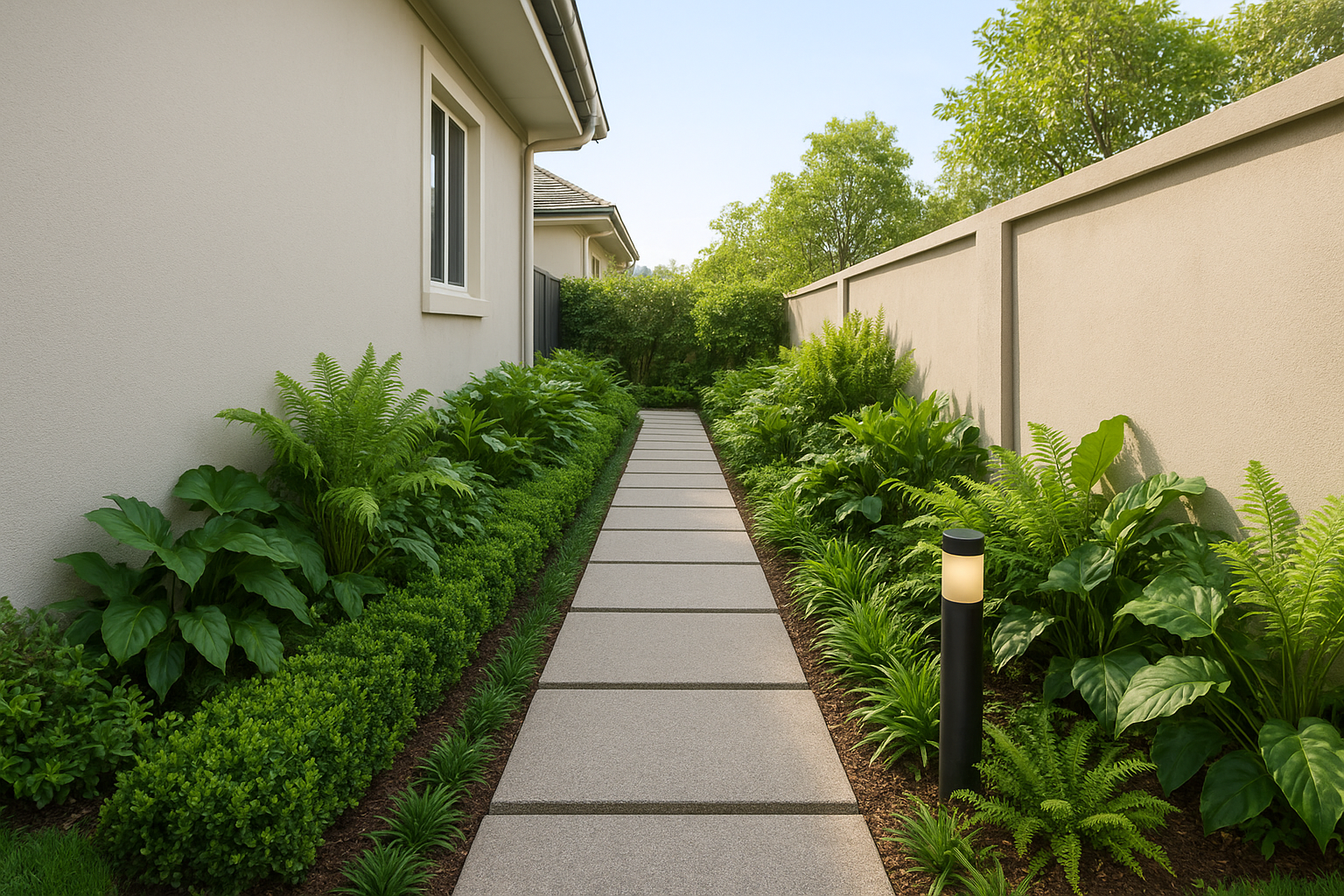
That narrow strip running along one side of your semi-D usually ends up as a dumping ground for bins, spare tiles, and the air-cond compressor. A landscaped side pathway turns that dead zone into a usable link between your front and back garden, and it's one of the biggest wins available in any landscape design for semi d house malaysia homeowners actually use daily.
How it works
You lay a continuous walking surface, stepping stones, brick pavers, or poured concrete, down the length of the side setback, then soften both edges with low planting so the corridor doesn't feel like a service lane. Good drainage matters here more than anywhere else on the property, since side gardens sit close to the boundary wall and collect runoff from both roofs.
A side garden stops being wasted space the moment you give it a proper floor and a purpose.
Best for your semi-D
This works best on standard 1.2 to 1.5 meter side setbacks, where a full garden bed isn't practical but a clean walkway is. It also suits households that use the side access daily for bins, gardening tools, or a shortcut to the back garden, since a proper path stops that route from turning muddy every rainy season.
Materials and plant choices
Keep the palette simple and shade-tolerant, since most side gardens get limited direct sun:
- Textured concrete or clay brick pavers with slip resistance
- Low box hedges or mondo grass along the edges
- Shade-loving ferns or philodendron in narrow planting strips
- Discreet bollard lighting along the path
Cost and maintenance
A side pathway is one of the more affordable upgrades on this list, since it covers a small area with basic materials. Maintenance stays minimal too, mostly occasional weeding and a hedge trim every few months to keep the edges tidy.
4. Build a covered outdoor patio for entertaining
Malaysian weather swings between blazing sun and sudden downpours, so an open patio without cover sits unused half the year. A covered outdoor patio gives you a shaded, rain-proof zone that turns your back or side garden into an actual extension of your living room, not just a strip of grass you look at from indoors.
How it works
A patio roof, whether a pitched metal frame, a glass canopy, or a timber pergola with polycarbonate sheeting, sits over a paved or decked platform attached to the house. The structure needs proper drainage falls and downpipes tied into your existing plumbing, since a poorly angled roof just redirects rainwater straight into your living room wall.
A patio without a roof is just a driveway you happen to sit on.
Best for your semi-D
This suits households that host regularly, whether that's weekend barbecues or Raya open houses, since a covered patio gives guests a shaded spot regardless of the forecast. It also works well if your back garden gets strong afternoon sun, where an uncovered seating area would sit empty from noon until early evening.
Materials and plant choices
Common combinations for a modern semi-D patio include:
- Powder-coated steel or aluminum frames with polycarbonate or glass roofing
- Timber-look composite decking or non-slip porcelain tiles underfoot
- Retractable awnings for extra sun control on the open edges
- Potted heliconia or bird of paradise around the perimeter for a tropical frame without blocking airflow
Cost and maintenance
A covered patio is a bigger investment than paving or planting alone, since it involves structural work and roofing materials, so pricing varies widely with size and roof type. Maintenance is light, mainly clearing leaves from gutters and rinsing the roof sheeting twice a year to keep it from staining.
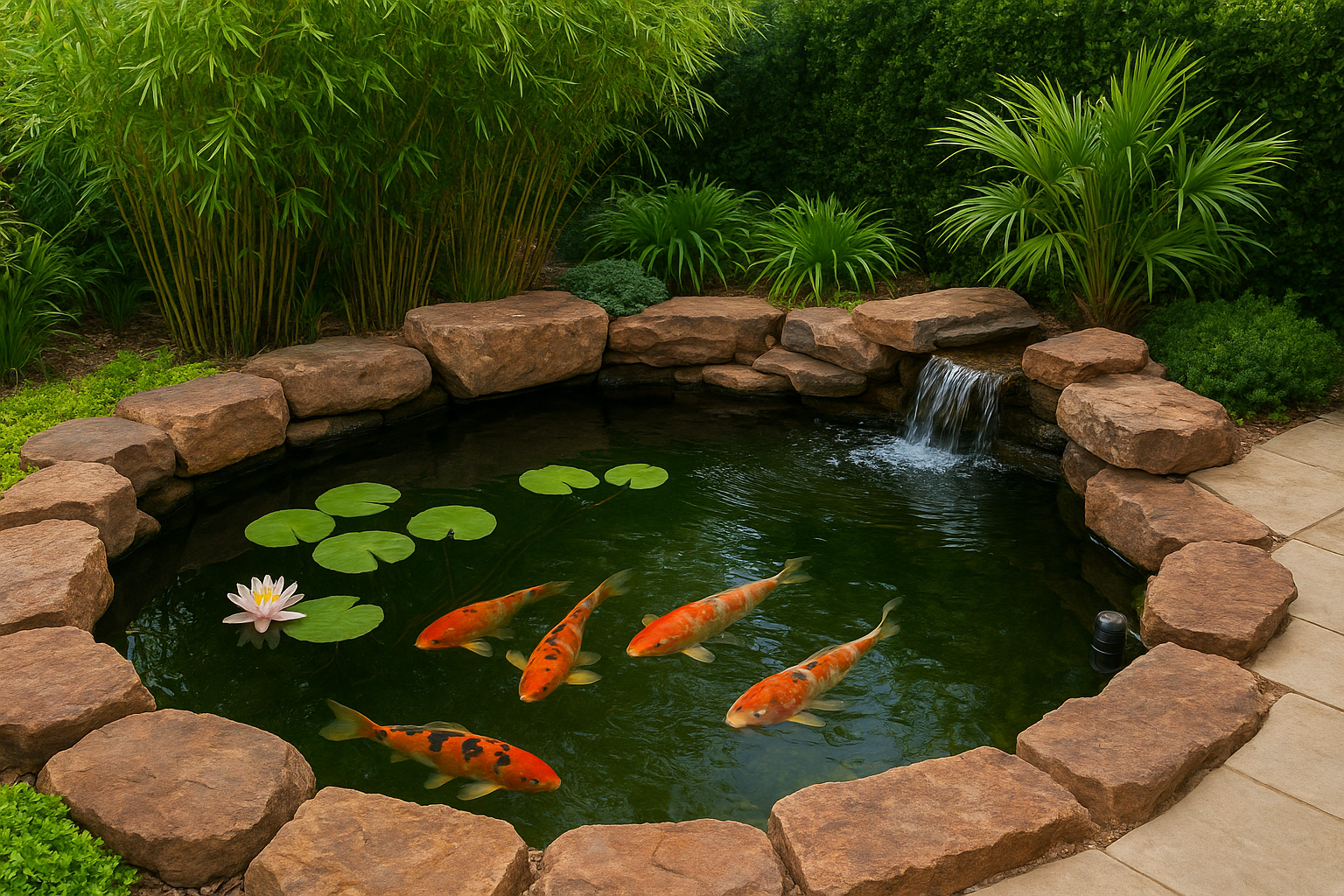
5. Install a koi pond as a garden focal point
A koi pond gives your garden a still, reflective centerpiece that no amount of paving or planting can replicate. It also carries strong feng shui appeal for many Malaysian homeowners, since moving water near the entrance is believed to draw good energy through the home. Beyond symbolism, the sound of trickling water genuinely changes how a garden feels in the evening.
How it works
Builders excavate a pond basin, line it with reinforced concrete or a fiberglass shell, then install a filtration and aeration system to keep the water clear and the fish healthy. Konzept Garden's bio-filtration koi pond system uses a biological filtration setup specifically, which cuts down on the algae buildup that plagues poorly filtered ponds within months. Positioning matters too, since a pond near a window or seating area lets you actually enjoy it rather than tucking it into a corner nobody visits.
A pond without proper filtration turns from a feature into a chore within a season.
Best for your semi-D
This suits homeowners with a side or back garden wide enough for a basin plus walking clearance, roughly a meter and a half at minimum, which is about the footprint of a mini koi pond for small gardens. It also fits households that want a low-noise, visually calming feature rather than an active entertaining space, since a pond doesn't compete well with heavy foot traffic nearby.
Materials and plant choices
Typical pairings include:
- Reinforced concrete or fiberglass pond shells
- Natural stone or Himalaya rock pond edging for a textured border
- Water lilies or lotus for surface cover and shade
- Bamboo or clumping palms planted nearby for a screened backdrop
Cost and maintenance
A koi pond costs more upfront than most garden features on this list, since it involves excavation, waterproofing, and equipment. Ongoing upkeep includes monthly water testing, seasonal cleaning, and feeding the fish daily, so factor in real time commitment before installing one.
6. Add a vertical garden for privacy and cooling
Semi-D homes often sit close enough to their neighbors that side windows and outdoor seating areas lose all privacy. A vertical garden solves that without building a solid wall that blocks airflow and light. It also drops the surface temperature of a boundary wall noticeably, since foliage absorbs heat that bare render or brick would otherwise radiate straight back at you.
How it works
EcoWall-style systems mount modular planting panels onto a boundary wall or fence, each cell holding its own growing medium and drip irrigation line. Water feeds from the top and trickles down through the panels, so you skip manual watering entirely once the system is set up. Konzept Garden's EcoWall green wall system uses this modular approach, which also makes replacing a dead plant simple, since you swap one cell instead of redoing the whole wall.
A green wall cools a courtyard the way a solid fence never can.
Best for your semi-D
This fits narrow side gardens where you need privacy but can't spare floor space for shrubs or trees. It also works well facing west-facing walls that catch brutal afternoon sun, since the greenery shields the wall and the room behind it.
Materials and plant choices
Common vertical garden combinations include:
- Modular planter panels with built-in drip irrigation
- Trailing plants like philodendron or pothos for dense coverage
- Compact ferns or peperomia for shaded, low-light sections, or a synthetic green wall where nothing will grow
- A drip timer connected to your existing irrigation line
Cost and maintenance
Pricing scales with wall area, since you're paying per panel plus the irrigation setup. Maintenance stays low once installed, mostly checking the drip system monthly and trimming overgrown trailers a few times a year.
7. Switch to synthetic turf for an easy-care lawn
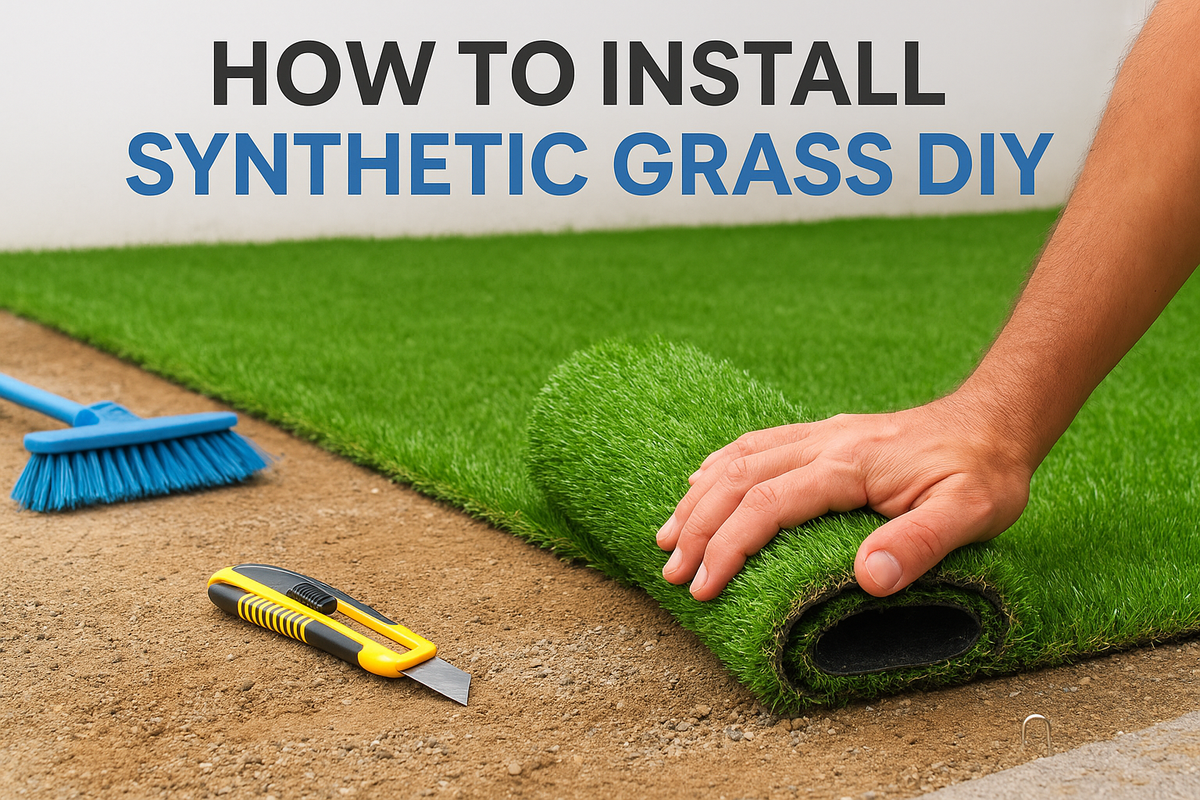
Real grass struggles under Malaysia's heat and rain cycle, patchy in the dry stretches, muddy after every storm, and it never fully recovers once kids or dogs wear a track across it. Synthetic turf gives you a lawn that stays green year round without a mower, a sprinkler, or a single bag of fertilizer.
How it works
Installers strip the existing soil, lay a compacted base for drainage, then roll out turf backed with a perforated membrane that lets rainwater pass straight through into the ground below. Konzept Garden's premium 35mm artificial grass is built with UV-stabilized fibers specifically for tropical exposure, so the color doesn't bleach out after a year of direct sun the way cheaper imports often do.
Synthetic turf trades a weekend of mowing for a lawn that never needs it.
Best for your semi-D
This suits front lawns and side strips that get heavy foot traffic, since real grass thins out fast under repeated use while turf holds its shape. It also fits households without time for weekly mowing, or anyone tired of patchy, yellowing grass during dry spells.
Materials and plant choices
A turf installation usually pairs with a few living elements to avoid a flat, artificial look:
- UV-stabilized synthetic turf rolls with a drainage backing
- Border edging in aluminum or timber to define the lawn's shape
- Potted structural plants, like sansevieria or dracaena, placed at the edges
- A single feature tree left in real soil for shade and texture
Cost and maintenance
Synthetic turf costs more upfront than seeding real grass, but it removes ongoing costs like mowing, fertilizer, and reseeding entirely. Maintenance drops to occasional rinsing and brushing the fibers upright every few months, far less than any real lawn demands.
8. Use self-watering planters for modern greenery
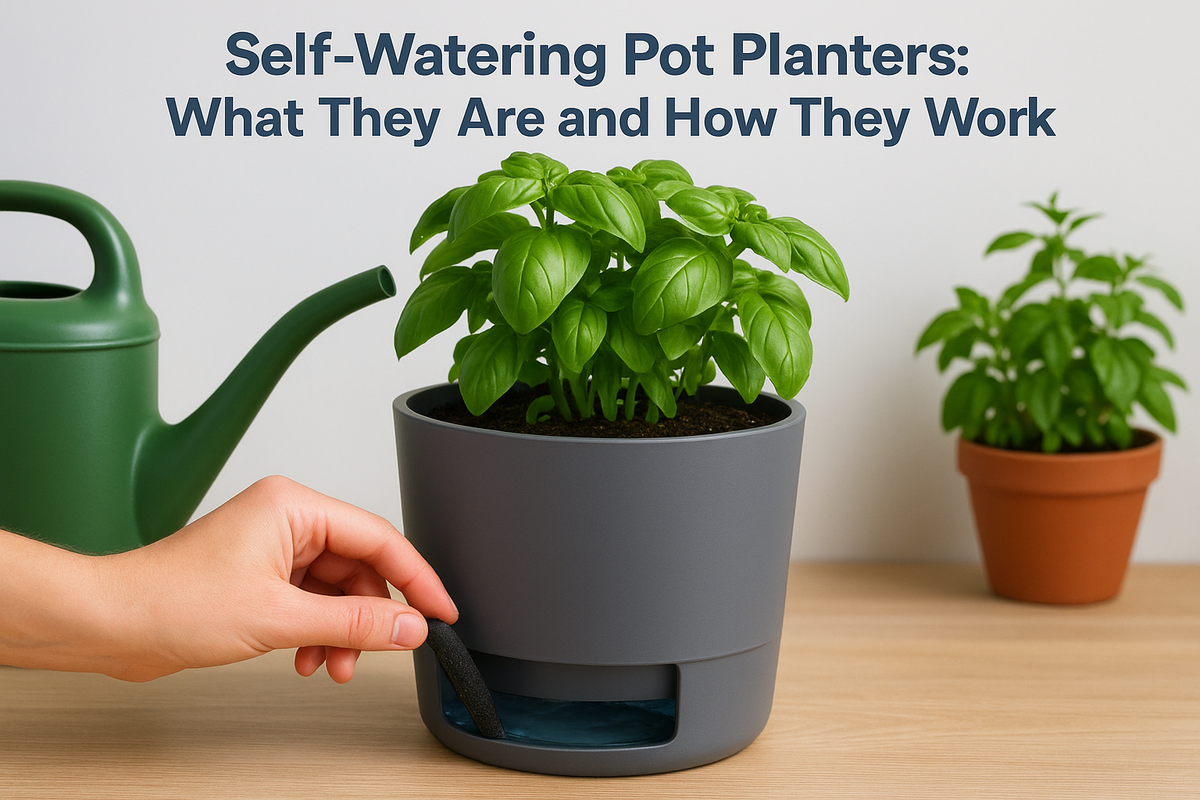
Potted plants dry out fast under direct Malaysian sun, and most homeowners either overwater trying to compensate or lose the plant within weeks of a busy travel schedule. Self-watering planters solve that by holding a reservoir underneath the soil, so the roots pull moisture as needed instead of relying on someone remembering to water daily.
How it works
A self-watering planter box has a built-in water tank beneath the growing medium, connected by a wicking system or capillary tube that draws water upward as the soil dries out. Konzept Garden's Ziant Hydro Planter uses this reservoir design, so you fill the tank once every week or two instead of watering by hand every single day. Most models include an overflow outlet too, which stops the roots from sitting in waterlogged soil during Malaysia's heavier rain spells.
A self-watering planter turns weekly watering into a chore you barely notice.
Best for your semi-D
This suits balconies, entrances, and paved courtyards where you want greenery but have no planting bed to work with. It also fits households that travel often or simply forget to water, since the reservoir buys you a week or two of buffer without any plant stress.
Materials and plant choices
Common pairings for self-watering planter setups include:
- UV-resistant polymer or fiberglass planter boxes in matte black or white
- Compact shrubs like croton or dracaena for structure
- Trailing plants such as pothos for softer edges
- Herbs or small edibles for kitchen-adjacent placements
Cost and maintenance
Self-watering planters cost more than a basic terracotta pot, but they save real money over time by cutting plant losses from underwatering. Upkeep drops to refilling the reservoir occasionally and trimming growth every few months, well below what a traditional pot demands.
9. Layer outdoor lighting for evening ambiance
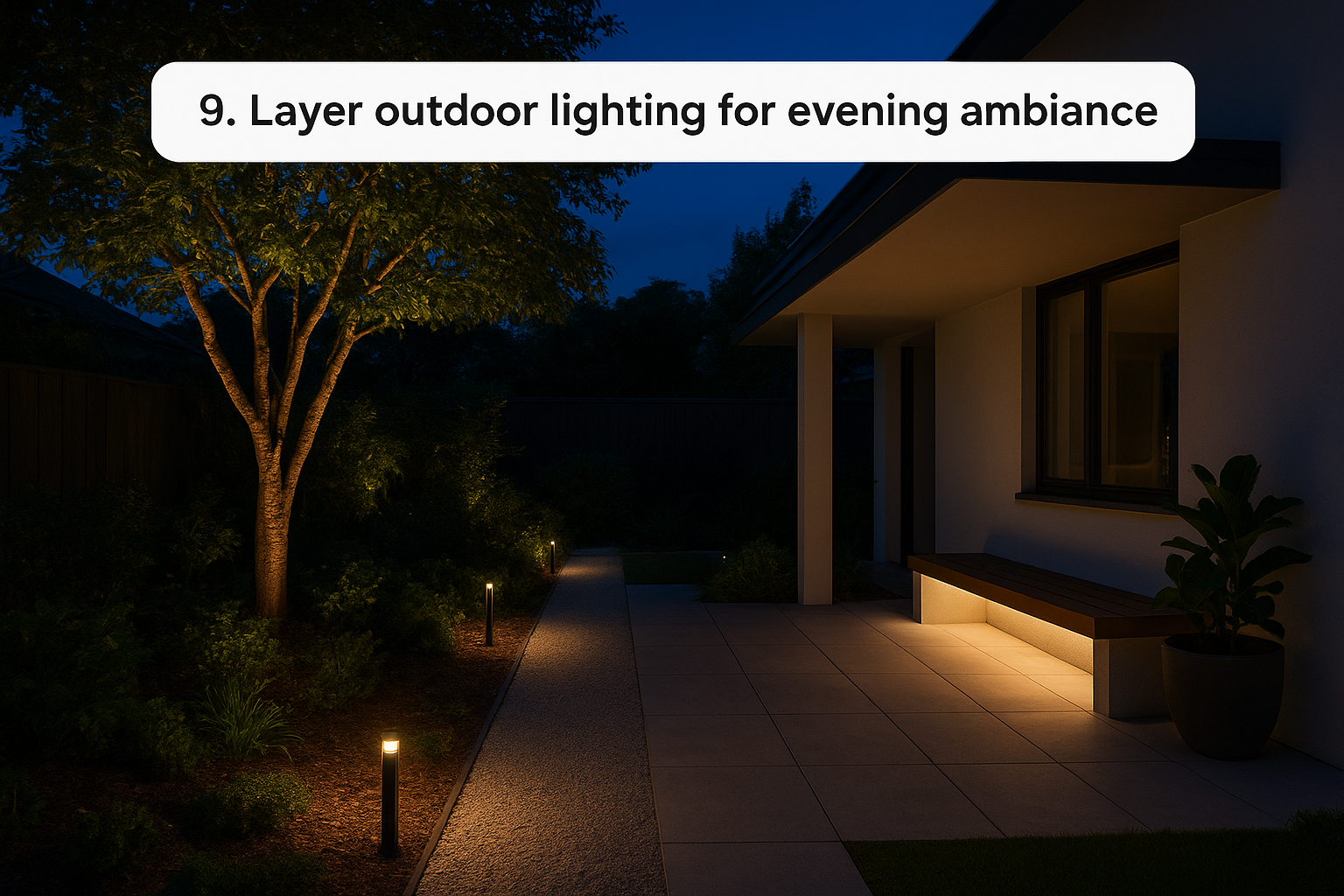
A garden that looks great at noon often disappears completely once the sun sets, and Malaysia's early evenings mean you lose half your usable outdoor hours to darkness if you skip lighting altogether. Layered outdoor lighting brings the garden back to life after dark, turning your front facade, side pathway, and patio into spaces you actually use in the evening instead of just walking past.
How it works
Good lighting design works in layers rather than one bright floodlight: uplights wash a feature tree or wall texture, downlights or bollards mark the pathway edges, and warm strip lighting under a bench or step adds a soft glow without glare. Konzept Garden usually wires these zones onto separate circuits during the master plan stage, so you can switch on just the patio lights for dinner or the full garden for a gathering.
A garden without lighting stops existing the moment the sun goes down.
Best for your semi-D
This suits homes with a covered patio or side pathway that already gets evening use, since lighting extends those hours rather than just decorating an empty lawn. It also works well for corner-lot semi-Ds where the facade faces the street on two sides, since good lighting boosts curb appeal after dark too.
Materials and plant choices
A typical layered lighting setup includes:
- LED uplights aimed at feature trees or textured walls
- Low-voltage bollard lights along pathways and driveways
- Warm-white strip lighting under steps or seating edges
- Weatherproof, IP65-rated fittings suited to outdoor exposure
Cost and maintenance
Lighting costs scale with the number of fittings and whether you run new wiring or tap an existing circuit. Maintenance stays minimal since LED fittings last years, though you'll want to check waterproof seals annually before the monsoon season sets in.
10. Create a small wellness or alfresco dining corner
Every semi-D has one leftover patch, a side nook, a corner behind the kitchen, that never gets used because nobody planned a purpose for it. A wellness or alfresco dining corner turns that dead space into a small retreat, whether that's a yoga mat spot with a water feature nearby or a two-seater table for morning coffee before the heat sets in.
How it works
You start by picking the quietest, most sheltered spot on the property, usually a side garden segment or a shaded corner near the back wall, then define its edges with planting, screening, or a low pergola so it feels separate from the main garden. A small built-in bench or platform anchors the space, paired with a side table or planter that doubles as a plant stand. Konzept Garden often folds this corner into the wider master plan so it connects visually with the rest of the garden rather than sitting as an afterthought.
A wellness corner works because it's small enough to actually finish, not another half-built project.
Best for your semi-D
This fits narrow side gardens or back corners too small for a full patio, giving that leftover space a real function instead of collecting clutter. It also suits households wanting a quiet retreat separate from the main entertaining area, somewhere for solo coffee, reading, or a short stretch session.
Materials and plant choices
Common picks for this kind of corner include:
- A timber-look composite bench or built-in seating ledge
- Bamboo or clumping palm screening for privacy
- A small water bowl or trickling feature for ambiance
- Fragrant plants like jasmine or frangipani positioned nearby
Cost and maintenance
This is one of the cheaper items on the list, since it covers a small footprint with modest materials. Upkeep stays light too, occasional pruning and a wipe-down of the seating surface every few months.
Finding the right design for your semi-D home
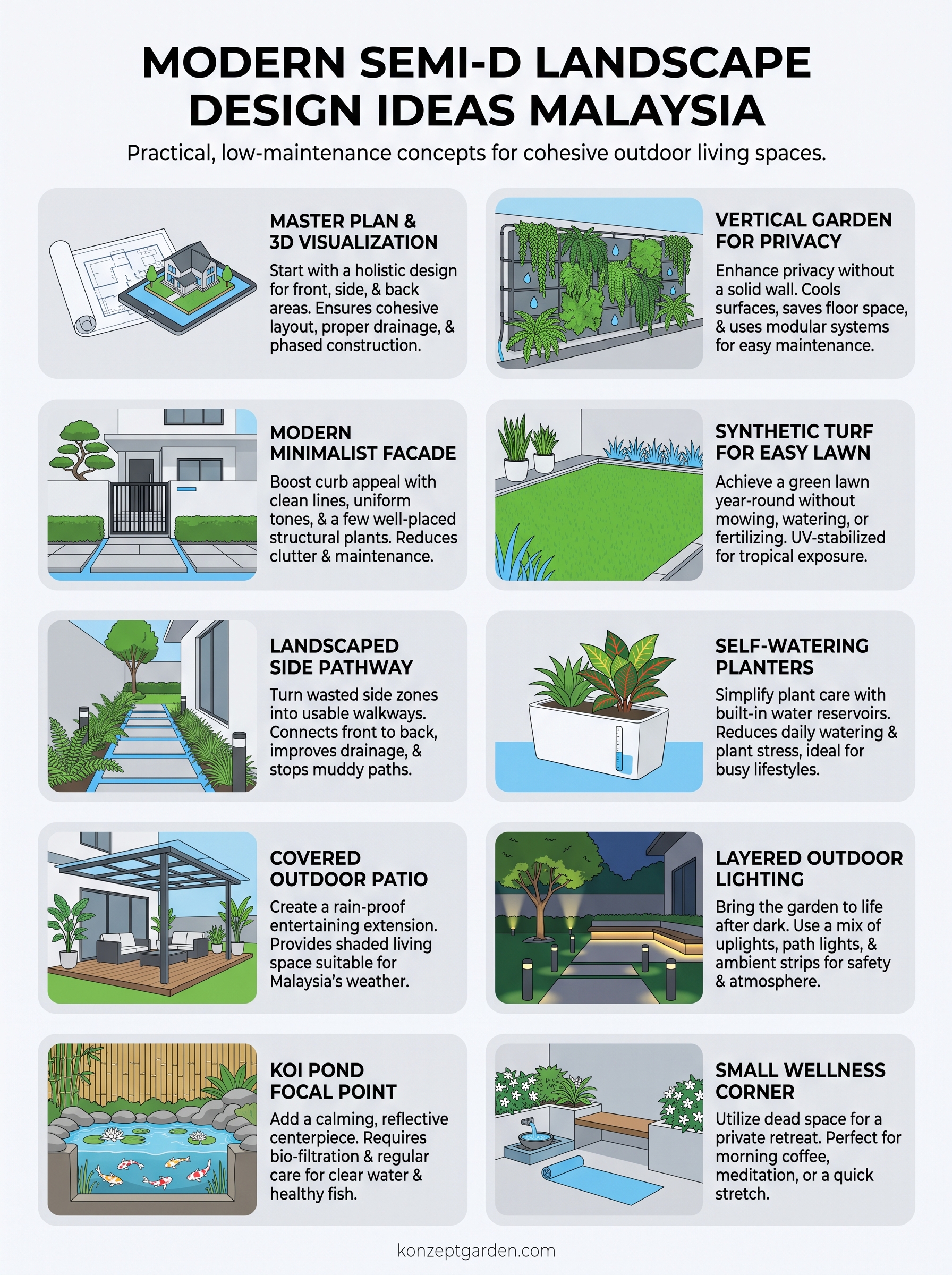
None of these ten ideas work well as a random mix. Pick two or three that match your household's actual habits, a covered patio if you host often, a vertical garden if privacy is your real problem, and build outward from there rather than chasing every trend at once. The strongest semi d landscape design projects we've built started with a master plan that tied the front facade, side pathway, and back garden into one layout, so later additions like a koi pond or lighting never felt bolted on.
Your semi-D already has two open sides most terrace homes never get. Use that advantage instead of leaving it as dead space collecting bins and spare tiles. If you're ready to turn these ideas into a real layout for your property, talk to our landscape design team for a free consultation and quote.