You forget to water your plants for three days in a row, and the leaves already look tired. In Malaysia's heat and humidity, soil dries out fast, and even a diligent gardener struggles to keep pots consistently moist. That's the exact problem a self watering pot planter solves, and it's why more homeowners and businesses are switching to them for balconies, patios, and full gardens.
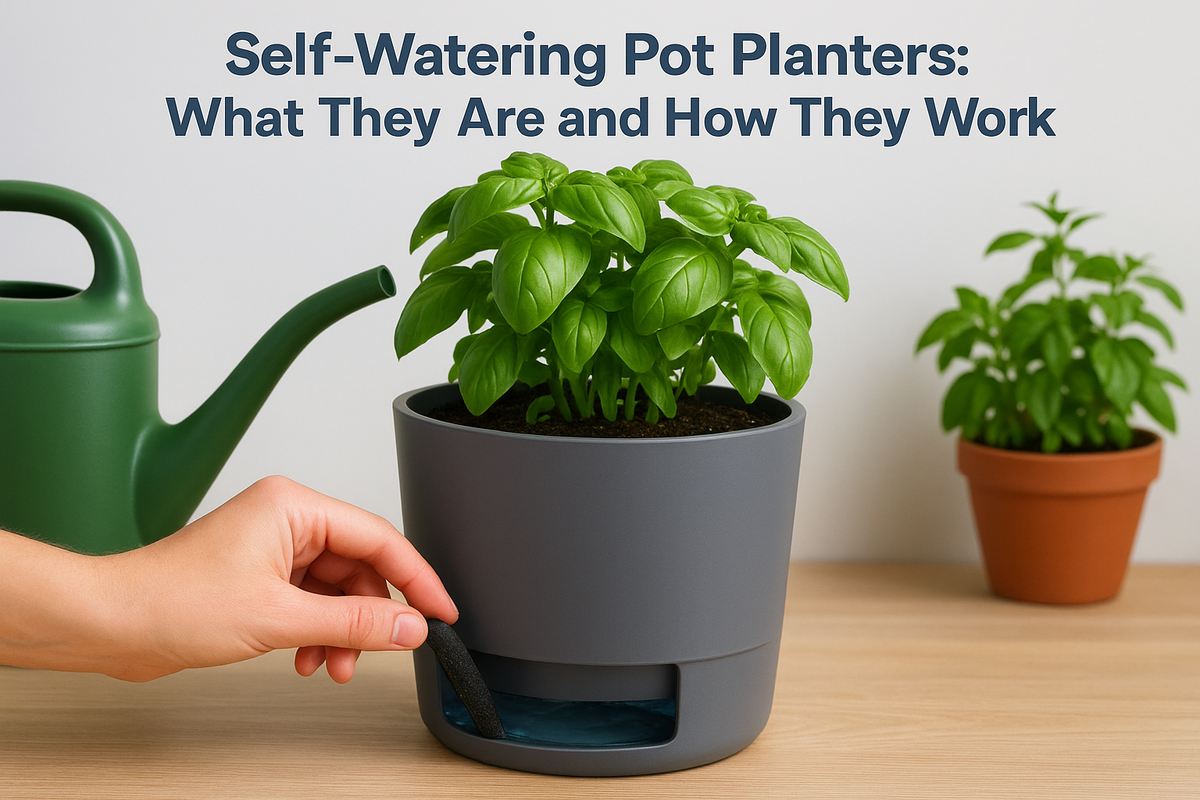
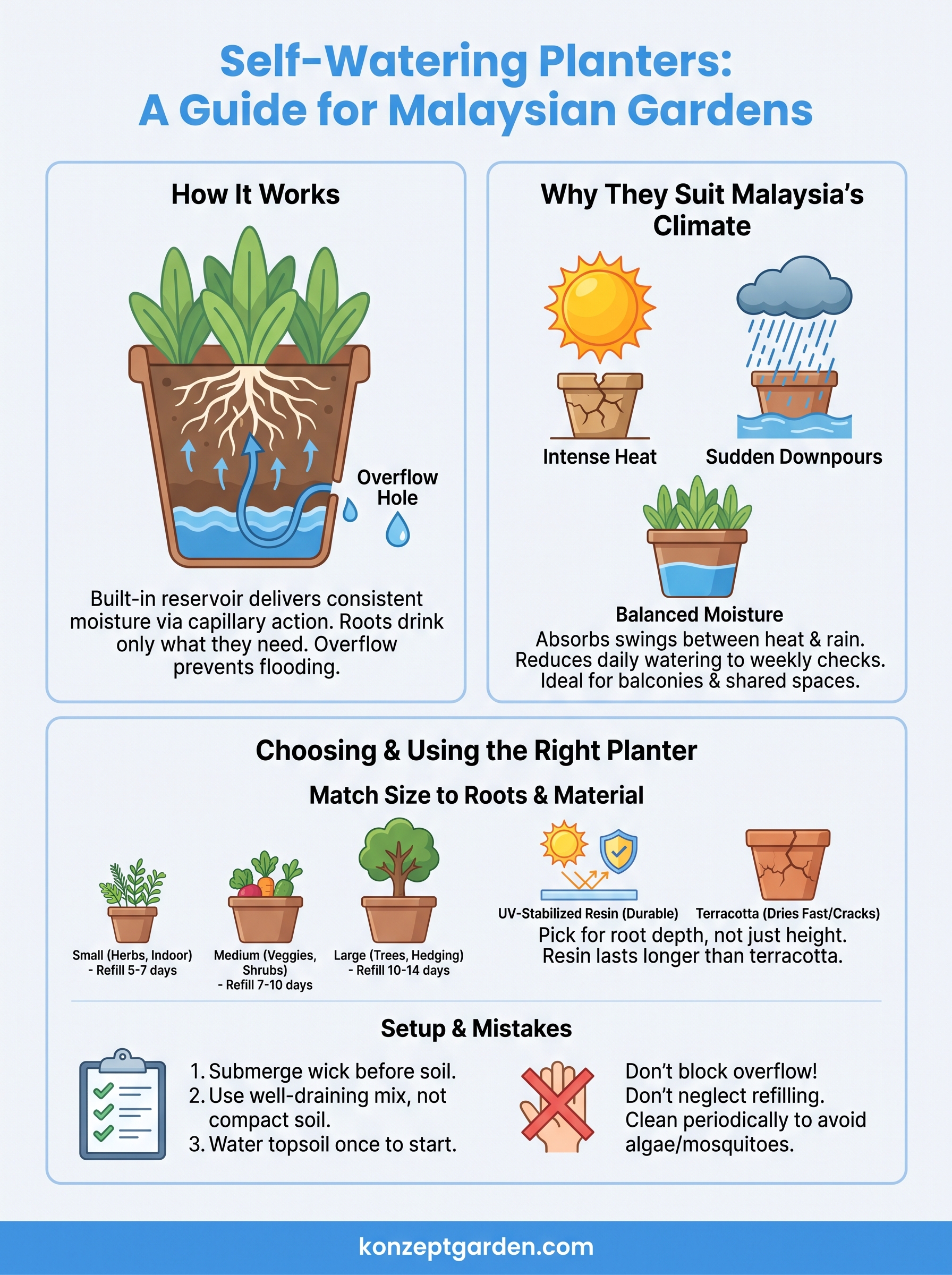
A self-watering planter works through a built-in reservoir beneath the soil that feeds water to the roots through wicking or capillary action, so plants drink only what they need, when they need it. This applies whether you're growing herbs indoors, running self-watering planters for vegetables on a terrace, or managing self-watering planters outdoor across a commercial property.
In this article, we'll break down exactly how these systems work, the different types available including self-watering planters large enough for trees and shrubs, and how to choose the right one for your space. We'll also show you how Konzept Garden's own Ziant Hydro Planter fits into this picture, built for Malaysian conditions and low-maintenance living.
Why self-watering planters suit Malaysian gardens
Malaysia's weather makes manual watering unpredictable
Malaysia swings between blistering afternoon sun and sudden monsoon downpours, sometimes within the same day. A pot that looked perfectly moist at 9am can be bone dry by 3pm, then flooded an hour later when the rain hits. A self watering pot planter absorbs these swings because its built-in reservoir stores excess water during heavy rain and releases it slowly during dry spells, keeping the root zone at a steady moisture level instead of lurching between extremes.
A self-watering pot planter doesn't fight Malaysia's climate, it works with it.
Fewer trips outside, less risk of neglect
High humidity accelerates evaporation from open soil, so manual watering in Malaysia often means watering twice a day just to keep tropical plants alive. That's not realistic for working professionals, condo residents, or anyone who travels often. With a reservoir system, you check the water level every few days instead of every few hours, and the wicking mechanism prevents the overwatering and root rot that come from well-meaning but inconsistent watering schedules. This matters most for anyone running self-watering planters outdoor, where wind and heat dry out exposed soil far faster than indoor pots.
Built for balconies, rooftops, and full landscapes
Commercial properties, condo balconies, and rooftop gardens across Malaysia face an extra challenge: limited access for daily maintenance staff and strict water runoff rules in shared buildings. Self-watering systems solve both. They cut down on the labor cost of manual irrigation rounds, and because water stays contained in the reservoir rather than draining onto tiles below, they suit shared or elevated spaces where mess isn't an option. This is also where self-watering planters large enough for shrubs and small trees come in, like the Ziant Hydro Planter ZP001 XXL fiberglass planter, letting developers and facilities managers landscape bigger areas without installing a full irrigation network.
Konzept Garden built the Ziant Hydro Planter ZP001 M self-watering planter box specifically with these conditions in mind, using a design tested against Malaysia's heat and rainfall patterns rather than a generic import. For homeowners and property managers alike, that local calibration is the difference between a planter that survives one dry season and one that keeps plants thriving year-round.
How to set up and use a self-watering planter
Getting a self watering pot planter running takes ten minutes, but doing it right the first time saves you months of guessing. The setup differs slightly by brand, but the core steps stay the same whether you're filling a small herb pot or one of the self-watering planters large enough for a patio tree.
First-time setup
Start with a clean reservoir and check that the wicking material, usually a cord, fabric strip, or capillary mat, sits fully submerged in the water chamber before you add soil.
- Fill the base reservoir with water through the fill tube or overflow hole.
- Add a well-draining potting mix on top of the wicking layer, not compacted soil from the garden.
- Plant as usual, watering the topsoil once to help roots make contact with the wick.
- Check the water level indicator or fill tube after 24 hours to confirm the system is drawing water.
Get the wicking layer right on day one, and the rest of the system takes care of itself.
Ongoing maintenance
Refilling is the only regular task, and even that shrinks to once every one to two weeks depending on plant size and weather. Overflow holes matter here too: they stop the reservoir from flooding during Malaysia's heavier downpours, so never block them when repositioning a pot. Periodically flush the reservoir with clean water every few months to prevent algae buildup, especially in humid, shaded corners where stagnant water breeds mosquitoes.
Understanding this rhythm makes self-watering planters outdoor genuinely low-maintenance rather than another chore disguised as convenience, which is exactly the standard Konzept Garden built into the Ziant Hydro Planter.
Choosing the right self-watering planter for your needs
Size and setting decide almost everything about which self watering pot planter works for you. A single herb pot on a kitchen windowsill has completely different needs than a row of self-watering planters outdoor lining a commercial driveway, and buying the wrong scale means either an oversized reservoir wasting water or an undersized one that dries out before your next check.
Match the planter to the plant and space
Consider root depth first, since shallow-rooted herbs need less reservoir capacity, which an extra small planter box like the ZP001 XS covers easily, than deep-rooted vegetables or shrubs. Self-watering planters large enough for small trees or hedging need a wider wicking surface so water reaches every root, not just the center of the pot.
| Planter type | Best for | Reservoir refill frequency |
|---|---|---|
| Small (under 30cm) | Herbs, succulents, indoor pots | Every 5-7 days |
| Medium (30-60cm) | Vegetables, flowering shrubs | Every 7-10 days |
| Large (60cm+) | Small trees, hedging, patio features | Every 10-14 days |
Pick the planter size for the plant's roots, not just the plant's height.
Material matters as much as size
Material affects durability under Malaysian sun and rain more than most buyers expect. Plastic composites resist UV fading better than untreated wood, and UV-stabilized resin, the material behind PE plastic planters such as the ZP001 L, holds up against years of monsoon exposure without cracking. Terracotta looks good but dries faster and cracks under heat cycling, making it a poor match for a true self-watering planter.
Overflow design deserves a final check before you buy. Look for a visible drainage hole positioned above the reservoir line, since that single feature prevents root rot during Malaysia's sudden downpours and separates a well-engineered planter from a bucket with a false bottom.
Best plants and common mistakes to avoid
Getting the plant selection right matters just as much as the hardware, since not every species benefits equally from a self watering pot planter. Vegetables and leafy greens respond best because they need consistent moisture to avoid the bitter taste and splitting that comes from irregular watering, while succulents and cacti generally do worse since they prefer their soil to dry out completely between waterings.
Plants that thrive in self-watering systems
Tropical and subtropical species suit Malaysian conditions particularly well when paired with a reservoir system:
- Tomatoes, chilies, and leafy greens for self-watering planters for vegetables, such as a wide trough planter like the ZP003 M
- Basil, mint, and lemongrass for kitchen herb pots, where a compact ZP001 XXS pot fits a windowsill
- Hibiscus, heliconia, and other flowering shrubs for self-watering planters outdoor
- Small ornamental trees like frangipani in self-watering planters large enough to support deep root systems
Match the plant to the moisture it actually wants, not the moisture the planter provides by default.
Mistakes that shorten a planter's lifespan
Most failures trace back to a handful of avoidable habits rather than a faulty design. Blocking the overflow hole to "save water" causes flooding during heavy rain and rots roots within days. Compacting garden soil into the pot instead of using a well-draining mix chokes the wicking action, so water never reaches the roots at all. Ignoring the reservoir for weeks at a time defeats the entire purpose, since even the best system needs a refill eventually.
Skipping algae maintenance in shaded, humid corners invites mosquito breeding, a real concern in Malaysia's climate. Konzept Garden's Ziant Hydro Planter is engineered to reduce these risks, but no design replaces basic upkeep.
Less watering, more growing
A self watering pot planter solves a real problem, not a gimmick one. It gives your plants steady moisture through Malaysia's heat and sudden rain, cuts the daily watering routine down to a quick check every week or two, and protects roots from the neglect and rot that come from an inconsistent schedule. Whether you're growing herbs on a windowsill, vegetables on a terrace, or shrubs across a commercial property, the right size, material, and plant pairing make the difference between a planter that thrives and one that struggles by month two.
Getting those details right on your own takes trial and error. Skip that part and talk to people who've already tested these systems against local conditions. If you're ready to fit self-watering planters into your garden or property, talk to the Konzept Garden team for advice tailored to your space.