
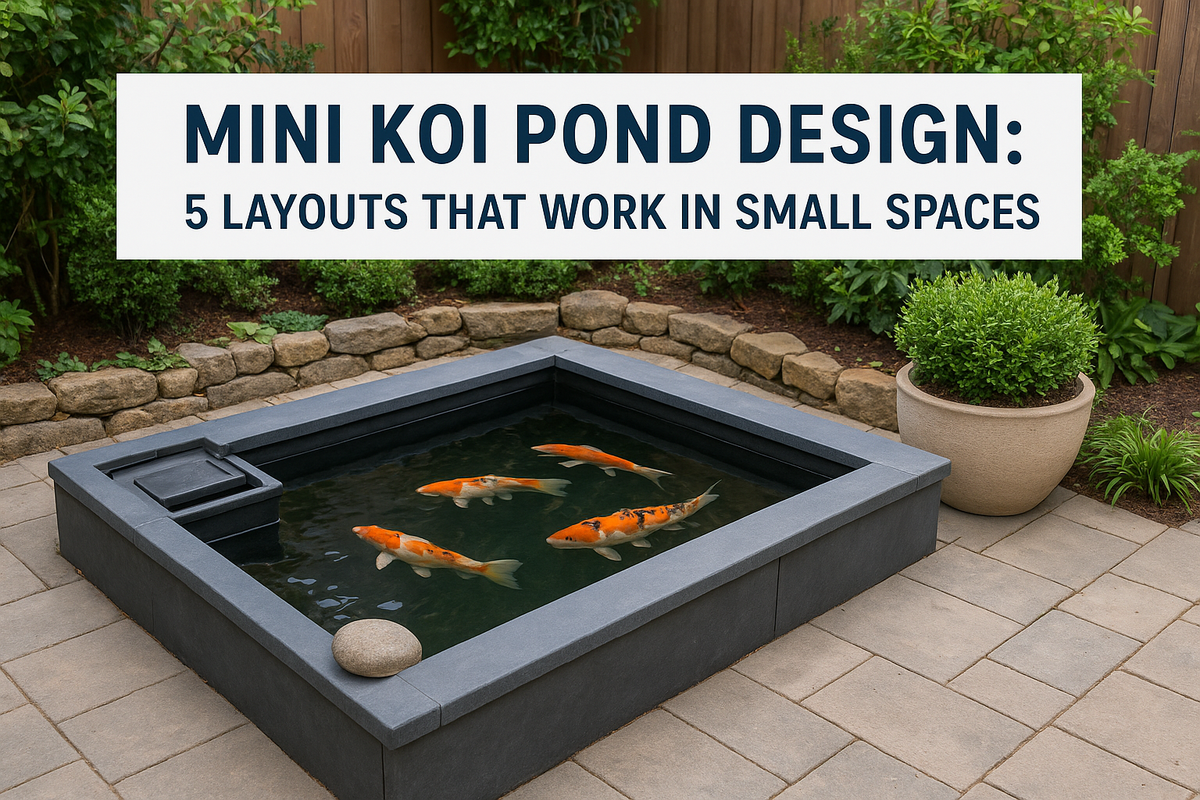
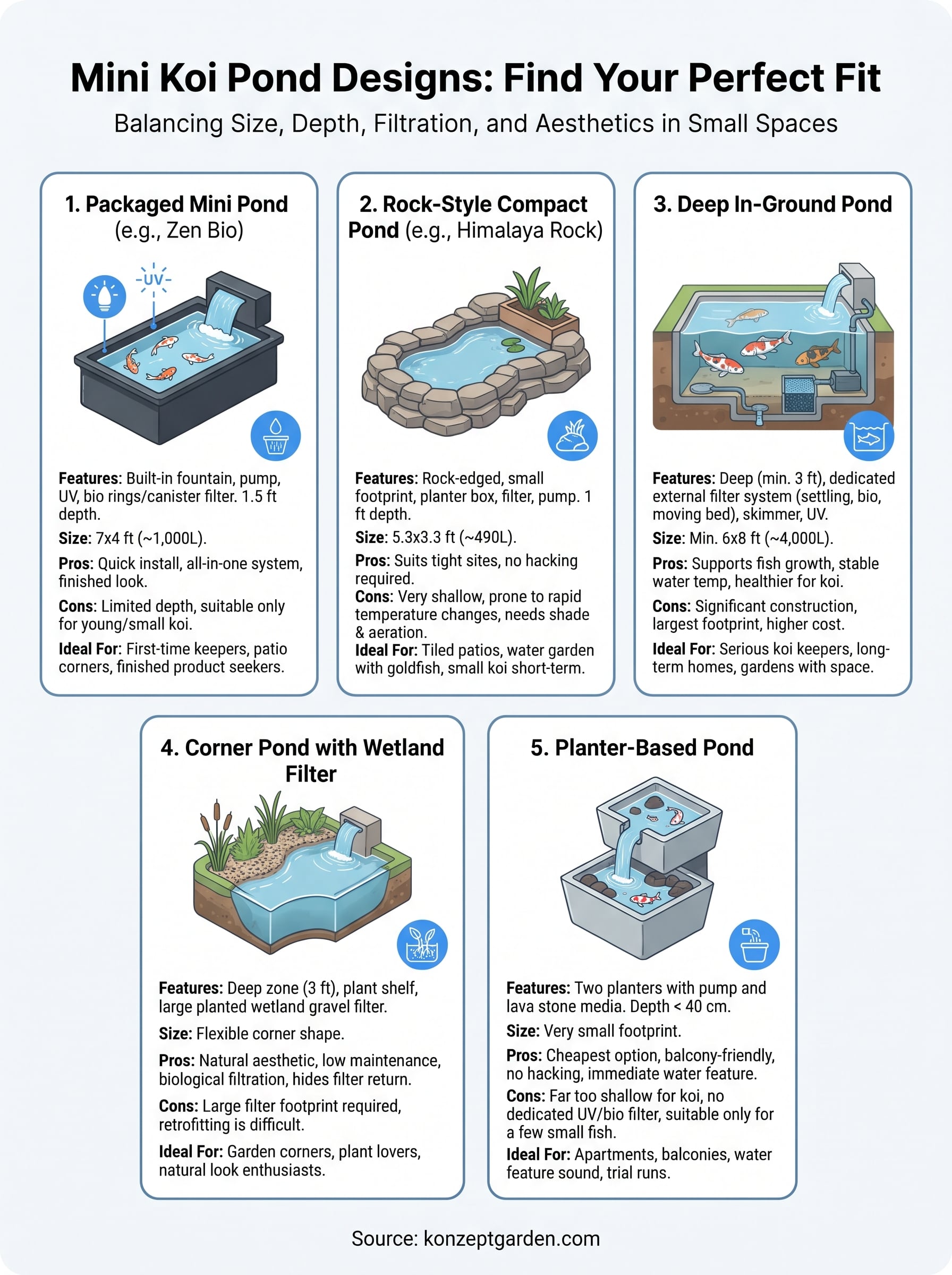
A good mini koi pond design puts water volume and depth first, then spends what is left on filtration and looks. Aim for at least 1.5 ft (46 cm) of depth, ideally 3 ft, and filtration that can handle the waste of big, messy fish. Buy a packaged pond if you want it installed and running quickly (ideas 1 and 2). Dig a deep in-ground pond if you want your koi to grow (idea 3). Choose a corner pond with a planted filter for a natural garden look (idea 4), or a planter pond if you only want a few small fish (idea 5).
The problem is that koi can pass a metre in length in the right conditions, and they produce far more waste than goldfish. Small ponds therefore fail on water quality long before they fail on looks. Most guides also assume you have a large garden. This article walks through five layouts for small spaces and gives each one the same checks: footprint, depth, filtration, stocking and who it suits.
Konzept Garden designs and builds koi ponds across Malaysia, so three of the five ideas use sizes and equipment from its mini pond range. The rest of the advice comes from standard koi-keeping practice. Treat every figure as a starting point, and measure your own space before you commit.
1. Packaged mini pond with built-in filtration
Size, depth and layout
The simplest mini koi pond design is a finished rectangle that you place in a patio corner. Konzept Garden's Zen Bio Mini Koi Pond measures 7 ft x 4 ft x 1.5 ft (213 x 122 x 46 cm). That is about 1,200 litres to the brim and roughly 1,000 litres at normal water level. Plan the space around the pond, not just the pond itself:
- Minimum space with landscape: 10 ft x 7 ft
- Minimum space without landscape: 9 ft x 6 ft
- Power: two plug points
- Hacking tiles and concrete may carry extra charges, and transportation is not included
Filtration, cost and who it suits
Installation and equipment are included in the RM6,650 price: a layer fountain, pump, UV light, bio rings, netting and starter good bacteria, plus a stepping stone, pebbles and plants on the ground. The two Zen Bio Mini Natural Koi Pond versions share the same footprint and cost RM5,950. They carry a canister filter in place of the bio rings and netting.
Depth is the compromise. At 1.5 ft, this pond is half the 3 ft that koi specialists recommend, and its volume is about a quarter of the roughly 4,000 litres in idea 3. Keep two or three young koi and expect to rehome them as they grow. It suits first-time keepers who want a finished pond rather than a building project and who accept a limit on fish size.
A packaged pond removes the engineering, but it does not remove the koi's need for water volume.
2. Rock-style compact pond
Size, depth and layout
Rock-edged ponds suit the tightest sites. The Himalaya Rock Fish Pond Mini measures 5.3 ft x 3.3 ft x 1 ft (162 x 101 x 30 cm), which is around 490 litres of nominal volume. It is the smallest pond in this list that still uses a filter. The package includes a planter box.
- Minimum space with landscape: 10 ft x 7.5 ft
- Minimum space without landscape: 9 ft x 6.5 ft
- Power: two plug points
- Installation requires no hacking
Filtration, cost and who it suits
At RM5,350, the package includes a filter, pump, layer fountain, planter box, stepping stone, pebbles, starter good bacteria and installation. Because it needs no hacking, it suits a tiled patio or porch where you cannot break the floor.
Shallow water is the catch. At 1 ft deep, the water warms quickly in Malaysian sun and the fish have little room to retreat. Shade the pond for most of the day and keep the fountain or an air pump running, because warm water holds less oxygen. Keep goldfish or other small pond fish here, or small koi as a short-term home. Think of it as a water garden with a few fish, not a koi showcase.
The smaller and shallower the pond, the more shade and oxygen you have to supply yourself.
3. Deep in-ground rectangle for growing koi
Size, depth and layout
If you want koi to grow, dig deep. One experienced koi pond designer gives 6 ft x 8 ft x 3 ft (2 m x 2.5 m x 90 cm) as the smallest starter pond, which holds about 4,000 litres. That is a 48 sq ft footprint, still small by koi standards. Build it in-ground, because koi are strong jumpers and a raised wall lets them leave and not find their way back. Use these checks before you dig:
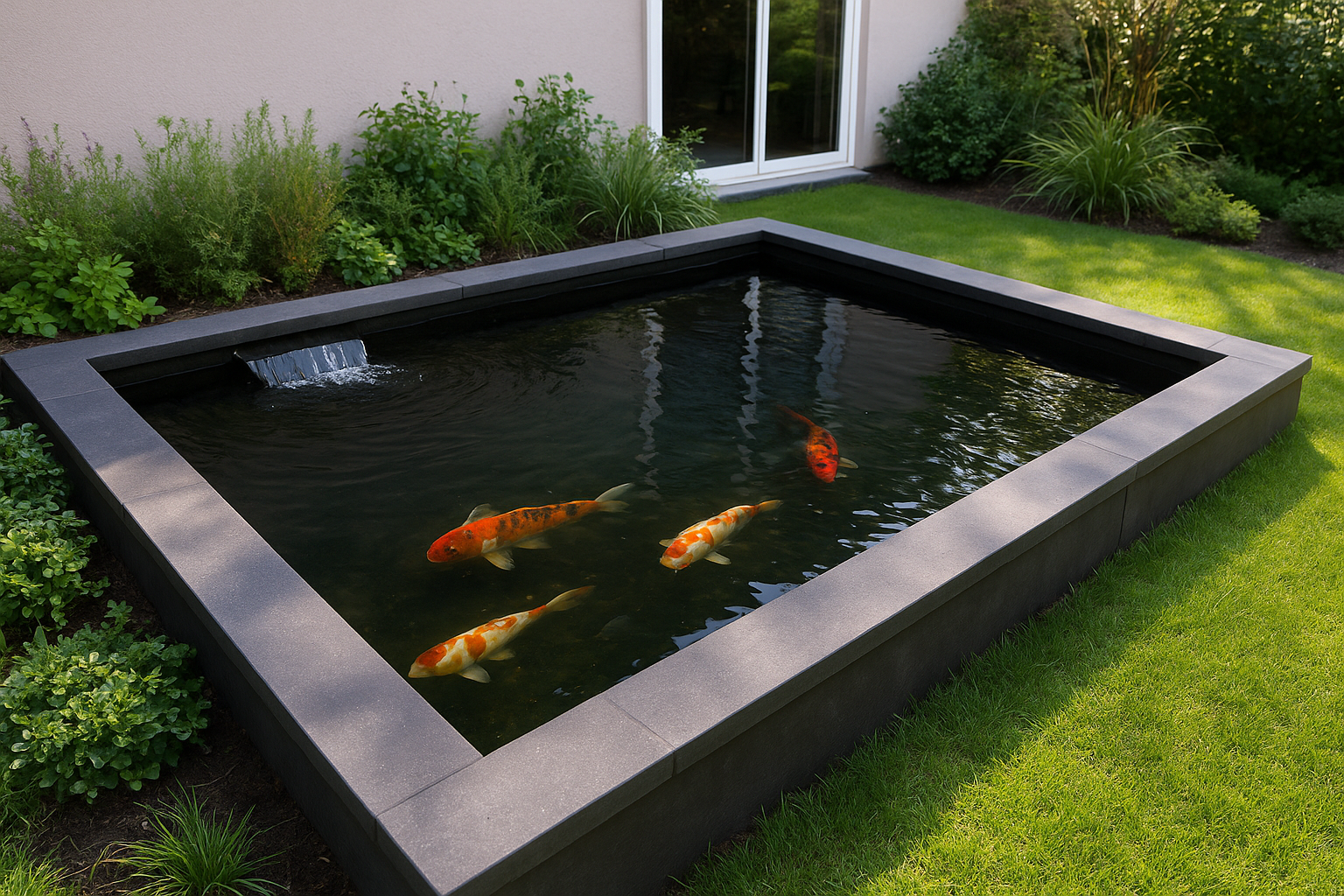
- Lay a hosepipe on the ground to test the outline before any digging
- Place the pond near a window or seating area, so you actually watch it
- Keep it clear of overhanging trees, because fallen leaves rot into sludge
- Pick level ground and leave room for a filter pit and maintenance access
- Choose a dark liner or sides, which show off the koi's colours
Filtration, cost and who it suits
A proven filter chain has three stages. A settling chamber fed by a bottom drain removes solids, a static bed catches fine particles, and a moving bed with air stones grows bacteria and adds oxygen. Add a skimmer for surface debris and a UV unit after the filter. Size the pump so the whole pond turns over every 15 to 20 minutes.
This is the most work of the five ideas, and it suits people who plan to keep koi for years. If you would rather not build it yourself, Konzept Garden charges a RM200 site visit fee, which is deducted from the final quotation if the project proceeds. Send photos and measurements of your site beforehand. A proposal typically follows within 4 to 5 days of the visit.
Three feet of depth does more for koi health than any gadget you can add later.
4. Corner pond with a planted wetland filter
Size, depth and layout
A corner pond uses the dead space between two walls and leaves the rest of the garden open. Shape it as a quarter circle or an L, and keep a deep zone of 3 ft. Add one shallow step as a plant shelf, where small plants give koi somewhere to hide and spawn. Put the waterfall at the back, so it hides the filter return.
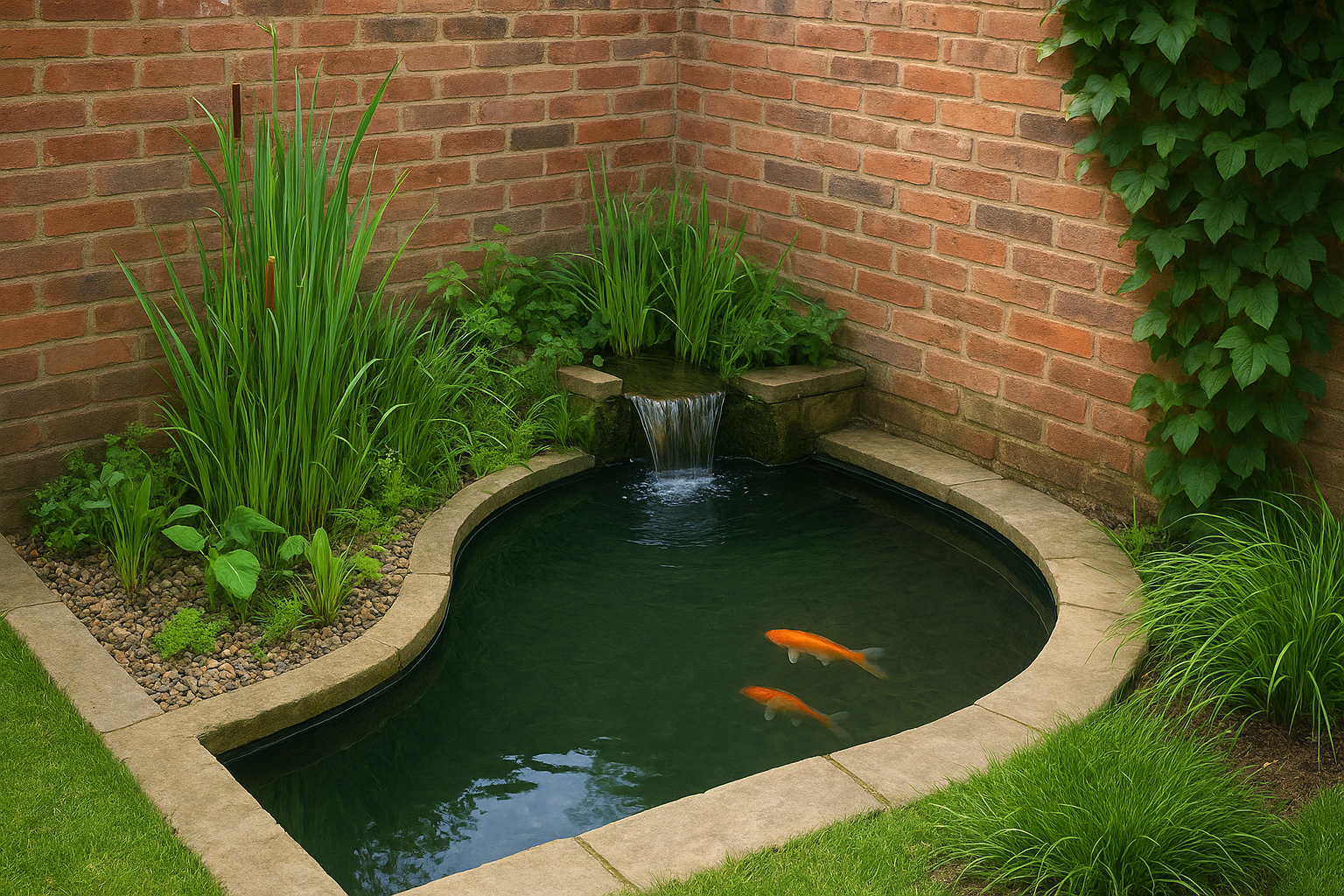
Size the filter as part of the layout. A wetland filter is a gravel bed full of plants, and it should cover roughly half to the same area as the pond's surface. For a corner pond with 20 sq ft of surface, plan for 10 to 20 sq ft of gravel bed.
Filtration, cost and who it suits
The pump sends water into the base of the gravel. The water rises slowly through the gravel and roots, where plants strip out nutrients and bacteria break down waste. It then returns to the pond through a waterfall. A wetland filter needs cleaning only once or twice a year, depending on fish load, and it has few parts that can fail.
The price you pay is footprint. Plan the gravel bed from day one, even if you build it later, because retrofitting means lifting the surrounds. This layout suits gardens with a free corner and owners who prefer plants to equipment. It does not suit a tiled balcony.
A bigger planted filter beats a smaller mechanical one in a small pond, because it buffers swings in water quality.
5. Planter-based pond for small fish
Size, depth and layout
Planter ponds fit balconies and small courtyards, but they are not koi ponds. Konzept Garden's Magic Garden Fish Pond 1 combines two Ziant Hydro planters with lava stone and a pump. The two planters are ZP003-M (70 x 70 x 40 cm) and ZP002-S (71 x 30 x 28 cm). Even the deepest planter is only 40 cm, so the water depth is far below what koi need.
- Installation is included
- Plants are not included
- No hacking is required
Filtration, cost and who it suits
At RM880, this is the cheapest way to add moving water. The lava stone gives beneficial bacteria a surface to colonise, and the pump keeps the water circulating. No UV light or dedicated filter is listed, so ask the Konzept Garden team which fish suit the setup before you buy.
Adult koi do not belong in a planter. It suits apartment dwellers who want the sound and look of water on a small budget. It also works as a trial run if you are unsure you will enjoy a pond before you commit to ideas 1 to 4.
A planter pond is a water feature that can hold a few small fish, not a home for koi.
Picking the right mini koi pond
Every layout here comes down to the same trade. Water volume and depth keep koi healthy, and filtration has to match what the fish produce. Packaged ponds give you a working system quickly but cap the size of your fish. A deep in-ground pond gives koi room to grow. A corner pond with a wetland filter gives you a natural look and low upkeep. A planter pond is a water feature, not a koi home.
Measure your space, count your plug points, and decide how big you expect your koi to get before you pick. If you want a ready-built pond, see the Zen Bio koi pond range. You can also send Konzept Garden photos and measurements of your site so the team can prepare a quotation.