
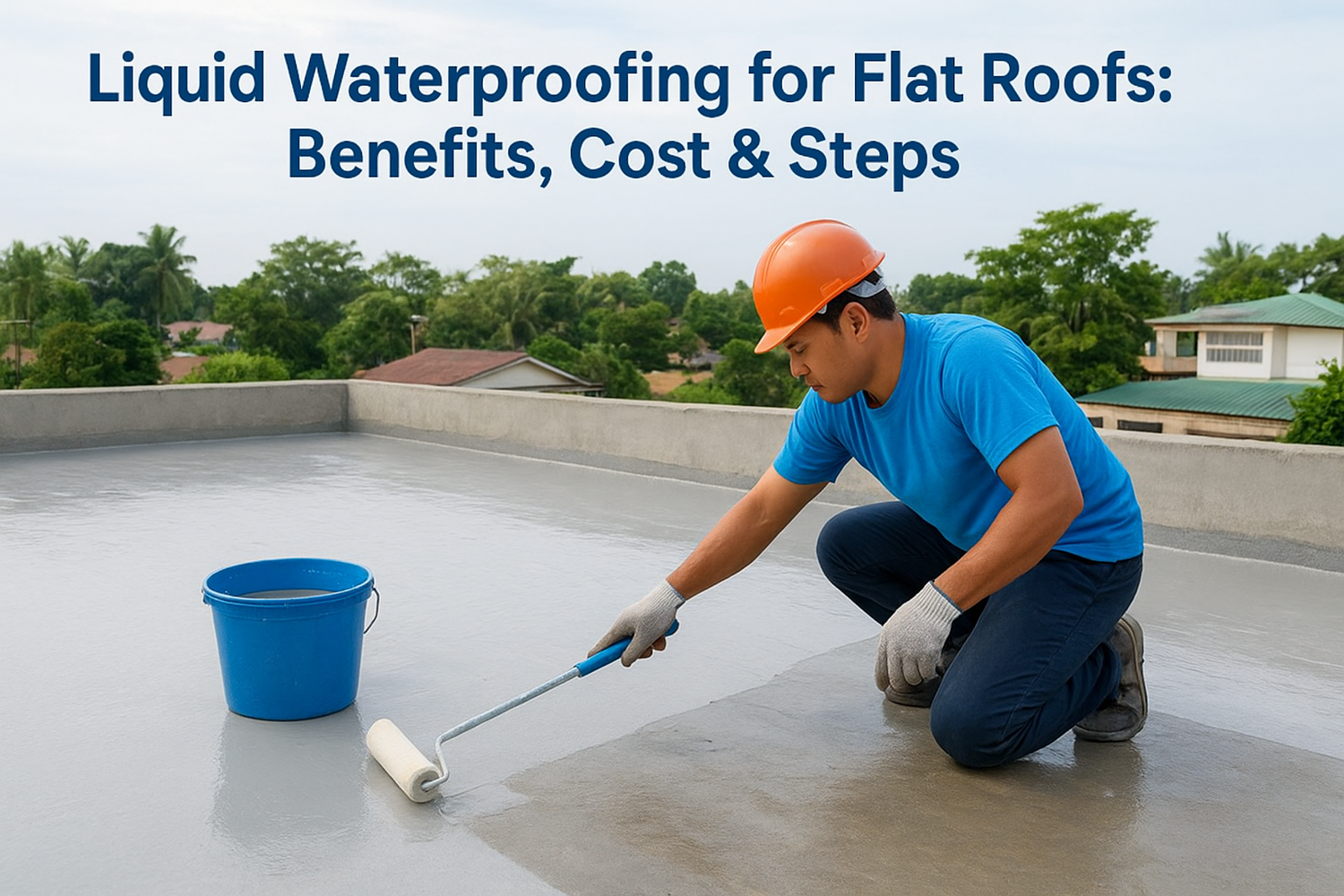
Flat roofs are common across Malaysian homes and commercial buildings, and they're notorious for one thing: water pooling. Without proper protection, trapped moisture leads to leaks, structural damage, and costly repairs that no property owner wants to deal with. That's where liquid waterproofing for flat roofs comes in, a seamless, flexible coating system that forms a continuous barrier against water ingress, even on complex roof surfaces with multiple penetrations and details.
At Konzept Garden, we work closely with outdoor spaces, from garden landscapes to rooftop greenery installations. Before any rooftop garden or planter system goes in, waterproofing has to be right. We've seen firsthand what happens when it isn't: damaged structures, failed plantings, and budgets blown on remediation. That experience gives us a practical perspective on what works in Malaysia's tropical climate.
This article breaks down how liquid waterproofing systems work on flat roofs, what they cost, the step-by-step application process, and which products perform best for Malaysian conditions. Whether you're prepping a roof for a garden project or simply protecting your property, you'll find clear, actionable information to help you make a confident decision.
Why liquid waterproofing works for flat roofs
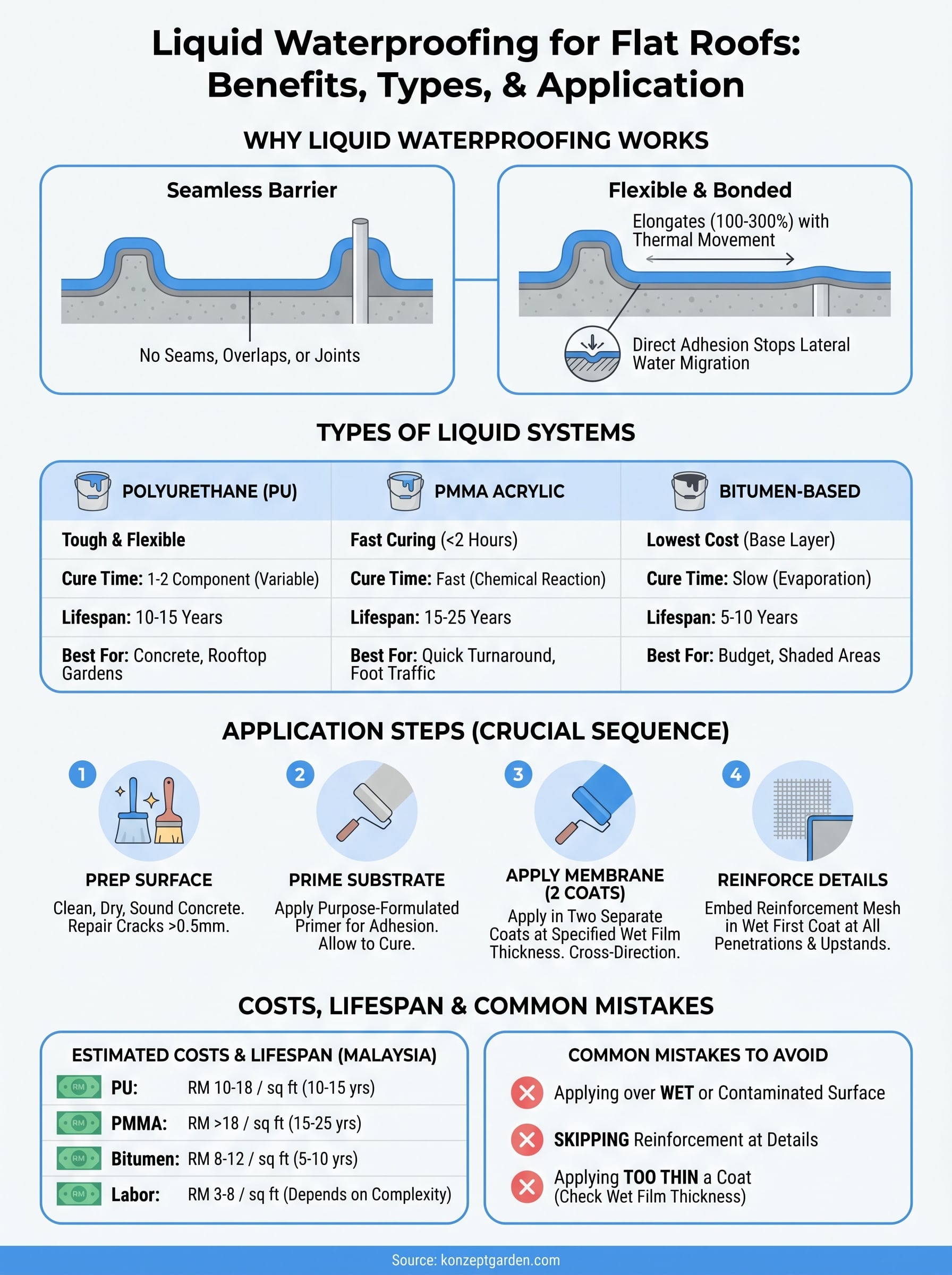
Flat roofs create a waterproofing challenge that traditional sheet membranes struggle to solve. Unlike pitched roofs where water runs off quickly, flat roofs hold standing water for extended periods, which increases hydrostatic pressure against any membrane. Liquid waterproofing for flat roofs addresses this by forming a fully bonded, monolithic coating that contains no seams, overlaps, or joints where water can find a path through.
The seamless advantage
Sheet membranes rely on laps and seams to cover a roof surface, and those joints are almost always where failures start. A liquid system eliminates that problem entirely. When you apply it correctly, the coating cures into a single continuous membrane that wraps around upstands, pipes, drainage outlets, and any other roof detail without interruption. This matters significantly in Malaysia's climate, where heavy monsoon rains dump large volumes of water onto a roof surface in a short period.
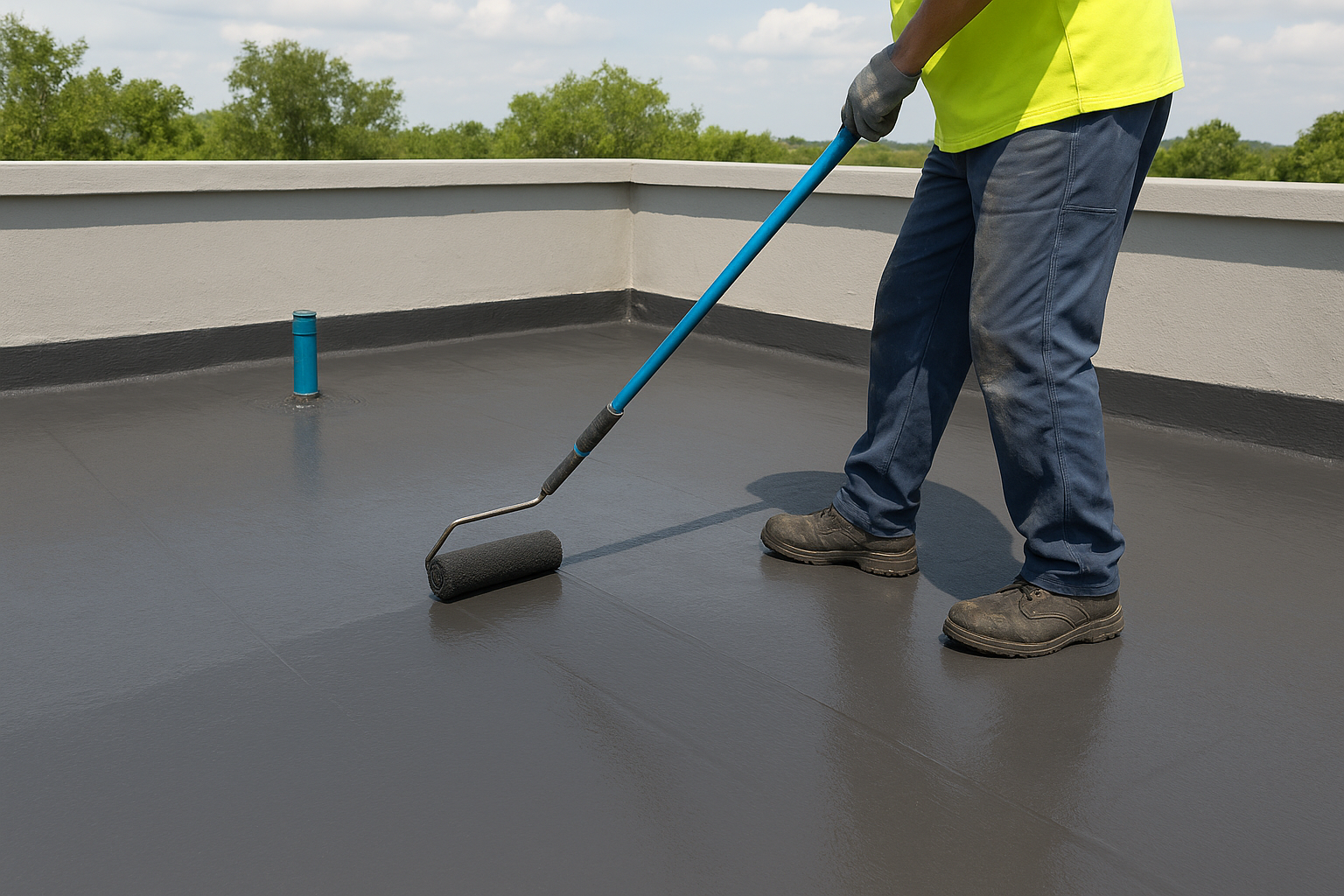
A seamless membrane leaves no mechanical joints for water to exploit, which is the single most common failure point in flat roof waterproofing systems.
Every penetration, every corner, and every upstand is a potential weak point with sheet systems. With a liquid-applied membrane, you coat all of those details in the same application pass, and the result is one uniform film from the field of the roof to the edge of every pipe flashing.
How flexibility prevents cracking
Roofs move. Thermal expansion and contraction, structural settlement, and vibration all put stress on whatever waterproofing layer sits on top. Many rigid coatings crack under that movement, and once a crack forms, water gets in immediately. Liquid waterproofing membranes are formulated to elongate, typically achieving elongation rates of 100 to 300 percent depending on the product, which means they stretch with roof movement rather than fracture.
In tropical conditions like Malaysia's, daily temperature swings cause repeated thermal cycling in roof substrates. A concrete flat roof heats up sharply during the day and cools overnight, and that cycling stresses any coating applied to it. A flexible liquid membrane absorbs that stress without damage, giving you protection that holds up across years of repeated movement.
Adhesion on complex roof surfaces
Liquid waterproofing bonds directly to the substrate, whether that's concrete, screed, metal, or an existing coating. That direct adhesion stops water from tracking laterally under the membrane if a surface nick or minor damage occurs. With mechanically fixed or loose-laid sheet systems, water that gets past a single point can migrate underneath the entire membrane before appearing as a leak inside the building.
For rooftop garden installations especially, where planters, irrigation lines, and drainage layers add multiple penetrations to a roof, a liquid system gives you far better control over long-term waterproof integrity. You also get a practical advantage on roofs that aren't perfectly flat: puddles and low spots don't compromise a liquid-applied system the same way they undermine sheet membranes, because the coating follows the substrate contour and maintains full adhesion throughout its surface area.
Types of liquid waterproofing systems
Not all liquid waterproofing products work the same way, and choosing the right system matters as much as applying it correctly. The main categories differ in cure time, flexibility, and chemical resistance, so your choice should match your roof's substrate, exposure level, and project budget.
Polyurethane liquid membranes
Polyurethane (PU) membranes are the most widely used liquid waterproofing for flat roofs in Malaysia, and for good reason. They cure to a tough, flexible film with elongation rates up to 300 percent, which handles thermal movement well on concrete and screed substrates. Most PU systems come in single-component or two-component formulations: single-component products cure by reacting with atmospheric moisture, making site application straightforward, while two-component systems offer faster cure times and better chemical resistance. That second option suits rooftop areas exposed to fertilizer runoff from garden beds or planters.
Two-component polyurethane systems are worth the extra mixing step if your flat roof will carry a planted garden, because root exudates and fertilizers degrade simpler coatings over time.
Best suited for:
- Concrete and screed substrates with active thermal movement
- Rooftop gardens and planted installations
- Roofs requiring a balance of cost and long-term performance
PMMA acrylic systems
PMMA (polymethyl methacrylate) systems are fast-curing liquid membranes that can fully cure in under two hours, even in high humidity conditions. That speed makes them practical when you need to waterproof a roof and return it to use quickly. PMMA products bond strongly to concrete, metal, and timber, and they handle foot traffic better than most PU systems once cured. The main trade-off is cost, as PMMA products sit at the higher end of the price range and require precise surface preparation to achieve reliable adhesion.
Best suited for:
- Occupied buildings where downtime is limited
- Roofs with metal or mixed substrates
- Areas with regular pedestrian access
Bitumen-based liquid coatings
Bitumen emulsion and rubberized bitumen coatings sit at the lowest-cost entry point in liquid waterproofing. Contractors commonly use them as a primer or base layer beneath more durable systems rather than as standalone membranes. Bitumen liquid coatings carry limited UV resistance on their own and typically need a reflective topcoat or protective overburden to survive direct sun exposure, which is a significant factor on any exposed flat roof in Malaysia's climate.
Best suited for:
- Budget-constrained projects with covered or shaded roof areas
- Base coat applications under more durable systems
- Below-grade or concealed waterproofing details
How to apply liquid waterproofing to a flat roof
Applying liquid waterproofing for flat roofs breaks down into a clear sequence of steps, and skipping any stage compromises the final result. The process isn't complicated, but it demands thorough preparation and correct product application at every stage to produce a membrane that holds up under Malaysian monsoon conditions.
Surface preparation
Surface prep determines whether the coating bonds or fails. Clean the entire roof surface by removing dirt, oil, loose material, and any existing failing coatings before you open a single container of waterproofing product. Concrete substrates must be structurally sound, dry, and free from laitance, which is the weak surface layer that forms as concrete cures. Grind or scarify any contaminated areas, and fill cracks wider than 0.5mm with a compatible repair mortar before proceeding.
Surface preparation accounts for the majority of liquid membrane failures: a well-prepared substrate is what separates a coating that lasts 15 years from one that peels within two.
Priming the substrate
Once the surface is clean and dry, apply a purpose-formulated primer suited to your specific liquid membrane system. Primer improves adhesion, reduces pinholing, and consolidates porous substrates that would otherwise absorb your topcoat unevenly. Allow the primer to cure fully before applying any waterproofing layer, and check the manufacturer's recoat window, because applying the membrane too early or too late affects bond strength directly.
Common primer types by substrate:
- Concrete and screed: epoxy or polyurethane-based primer
- Metal: zinc phosphate or rust-inhibiting primer
- Existing bitumen: bitumen-compatible bonding primer
Applying the membrane
Apply the liquid membrane in two separate coats at the manufacturer's specified wet film thickness, using a roller, brush, or squeegee depending on product viscosity. Work the first coat uniformly across the field, then treat all details, including pipe penetrations, upstands, and drainage outlets, with additional reinforcement mesh bedded into the wet coat. Let the first coat reach the specified cure stage, then apply the second coat in a perpendicular direction to ensure consistent coverage across the entire surface.
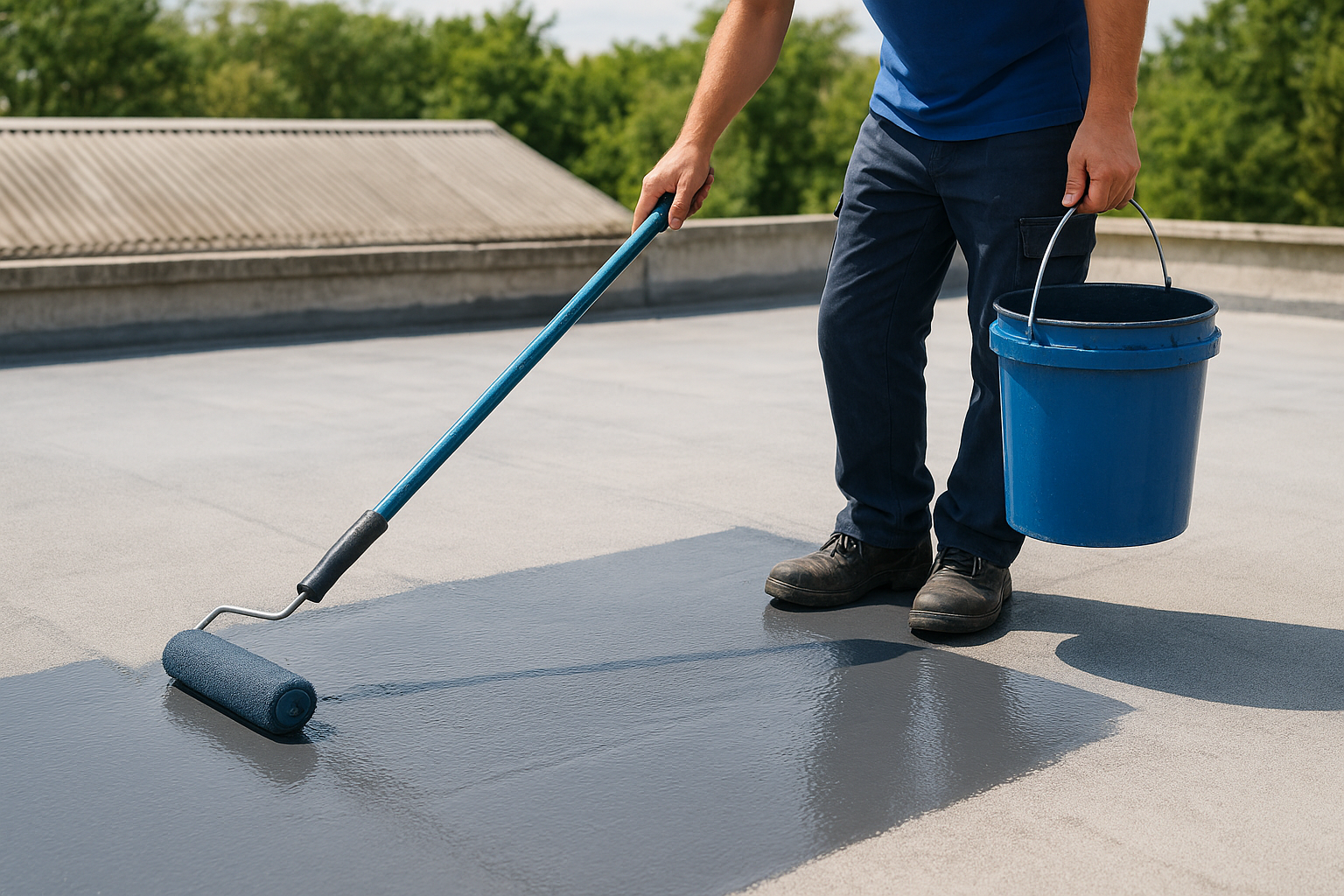
Each coat needs adequate curing time before foot traffic or overburden installation, so check weather forecasts before you start and avoid application during rain or high humidity periods.
Costs, lifespan, and maintenance
Understanding what you'll spend and what you'll get in return helps you choose the right system from the start. Liquid waterproofing for flat roofs sits in a broad price range depending on product type, roof size, and substrate condition. Budgeting accurately means accounting for surface preparation, primer, membrane material, and labor as separate line items rather than treating the job as a single lump cost.
What liquid waterproofing costs in Malaysia
Material costs in Malaysia generally run between RM 8 to RM 25 per square foot for the complete system, including primer and two membrane coats. Polyurethane systems sit in the mid-range at roughly RM 10 to RM 18 per square foot, while PMMA acrylic products push toward the higher end due to material cost and faster cure chemistry. Bitumen-based systems occupy the lower end but often require a UV-resistant topcoat, which adds back some of the apparent savings.
Factor in the cost of remediation if the system fails early: a quality membrane applied correctly costs far less over ten years than a cheap coating replaced every three.
Labor adds RM 3 to RM 8 per square foot depending on roof complexity and the number of penetrations that need detailing. Rooftop garden installations with dense planter layouts and irrigation penetrations sit at the higher end of that labor range.
Lifespan by system type
The system you choose directly determines how long your roof stays dry without major intervention. Below is a realistic lifespan range for each product category under Malaysian tropical conditions:
| System | Expected Lifespan |
|---|---|
| Polyurethane (PU) | 10 to 15 years |
| PMMA acrylic | 15 to 25 years |
| Bitumen-based | 5 to 10 years |
Maintenance routine
Annual inspections keep your membrane performing at its best. Walk the roof surface after each monsoon season and check upstands, pipe penetrations, and drainage outlets for any signs of cracking, debonding, or standing water that isn't draining. Clear debris from drainage points regularly to prevent water backing up against the membrane edge, which accelerates deterioration. Most systems accept a compatible topcoat refresh at the halfway point of their lifespan, extending protection without a full strip-out.
Common mistakes and how to avoid leaks
Even a high-quality liquid waterproofing product fails when applied incorrectly, and the mistakes that cause most flat roof leaks are predictable and preventable. Understanding where applicators go wrong gives you the knowledge to avoid those errors yourself or verify that your hired team is following the correct process from start to finish.
Applying over a wet or contaminated surface
Moisture trapped beneath a liquid membrane breaks the adhesive bond between the coating and the substrate, and the result shows up as blistering, peeling, and early leak points. Before you apply any liquid waterproofing for flat roofs, test the surface moisture content with a moisture meter and confirm it falls within the product manufacturer's acceptable range. Contamination from oil, dust, or old coatings is equally damaging: the coating may appear to bond initially but loses adhesion under thermal stress within months.
Moisture-related adhesion failures account for a significant portion of premature membrane failures, most of which are entirely avoidable with a basic surface check before application begins.
Run through this pre-application checklist to catch problems before they become expensive:
- Surface moisture content within manufacturer's stated limit
- No oil stains, algae, or loose material present
- All cracks wider than 0.5mm filled and cured
- Primer fully dry before membrane application begins
Skipping reinforcement at details
Penetrations, upstands, and internal corners concentrate stress in ways the open field of the roof doesn't experience, and applying the membrane without embedding reinforcement fabric at these points sets up early failure. The fix is straightforward: cut reinforcement fleece or mesh to fit each detail and bed it into the first wet coat before that coat cures, so the second coat locks the fabric in place with double membrane thickness.
Missing this step is one of the most common errors on self-managed projects. If you're overseeing a contractor, physically inspect each penetration and confirm reinforcement fabric is visibly embedded before the second coat goes down. Don't accept a verbal assurance.
Applying too thin a coat
Wet film thickness directly controls the cured membrane's performance: a coat applied too thin cures below the specified dry film thickness, which reduces elongation capacity and shortens lifespan. Always verify coverage during application using a wet film thickness comb gauge to confirm each coat meets the manufacturer's stated requirement before you move to the next stage.
Thin application is often the result of trying to stretch material further than the coverage rate allows. Buy the correct quantity for your roof area, apply at the specified rate, and treat any temptation to dilute the product as a false economy that costs more in early repairs.
Next steps for a leak-free flat roof
You now have everything you need to make a sound decision on liquid waterproofing for flat roofs: the right system type for your substrate, a clear application process, realistic cost expectations, and the common mistakes to avoid. The most important next step is assessing your roof's current condition before committing to any product or contractor. Walk the surface, note any cracks, standing water zones, or deteriorating details, and use that information to brief whoever applies your waterproofing.
Getting the specification right from the start saves you far more than any corner-cutting will during application. If your flat roof is part of a broader outdoor or garden project, waterproofing is always the first layer to confirm before anything else goes on top. Reach out to the Konzept Garden team through our rooftop and garden project consultation page to discuss your project and get expert guidance specific to your property.