

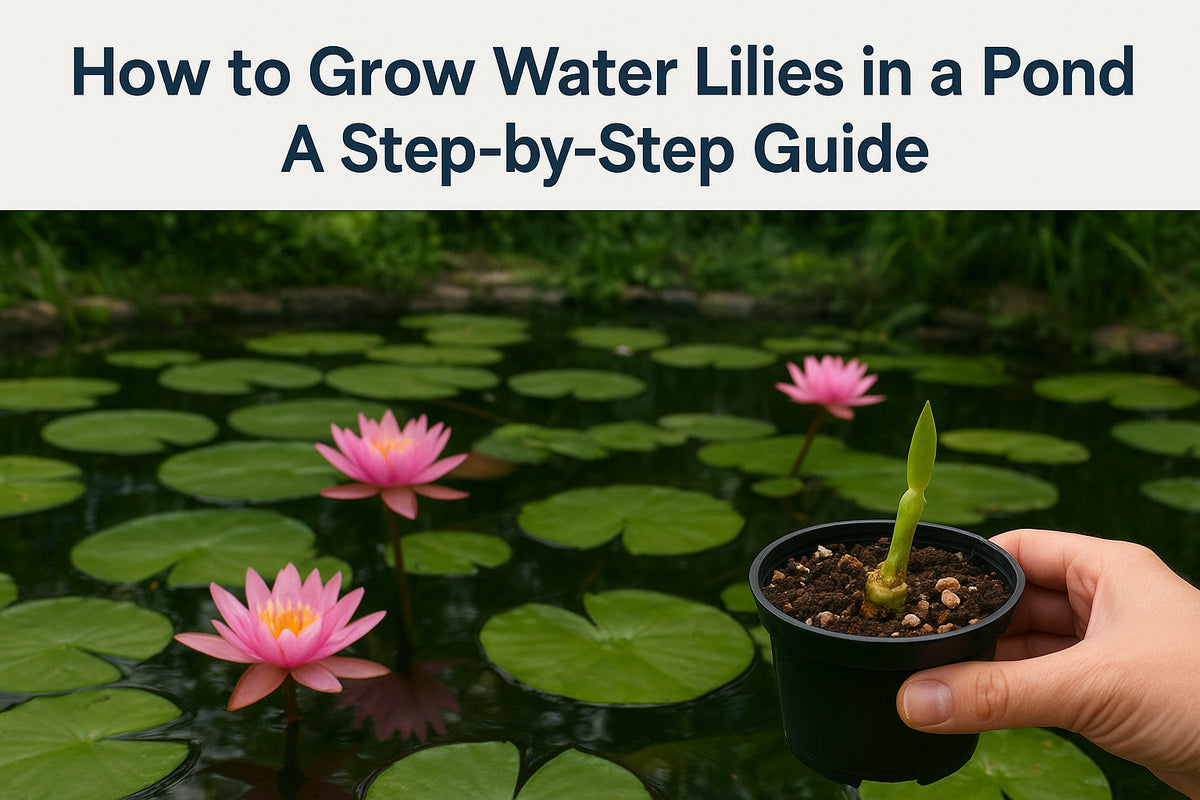
Learning how to grow water lilies in a pond comes down to four moves. Plant the lily in a perforated pot of heavy aquatic soil and cover the soil with gravel. Lower the pot so the growing tip sits under about 15 cm (6 in) of water. Feed it every few weeks, and lower the pot in stages as the leaves reach the surface. Give the plant at least six hours of sun and still water, and it will do the rest.
Most failures happen before the plant touches the water. Light potting mix floats out and clouds the pond. Deep water starves a young lily of light. An oversized variety can swamp a small pond within two seasons. Lilies are forgiving once the setup is right, but a poor start leaves you with yellow leaves and no flowers.
This guide covers what to know before you buy, then four steps: potting, placing, feeding and dividing. The advice suits Malaysian backyards, where the water stays warm all year. Konzept Garden designs garden ponds, so the focus is on setups that hold up in a real garden.
What to know before you plant
Choose a lily that matches your climate and your pond depth, then gather the right supplies before the plant arrives. A lily that sits in a pot out of water for a day or two will recover, but one that waits a week will not.
Tropical or hardy lilies in a warm climate
Tropical lilies are the safer pick in Malaysia. They need water of at least 21°C (70°F) in summer, which Malaysian ponds usually exceed all year. Hardy lilies are bred for cool climates and rest through winter. With no cold season, they often grow weakly and flower poorly. Tropical types also come in day-blooming and night-blooming forms, so check the label for when the flowers open.
Match lily size to pond depth
Pond depth decides which lily you can grow. Check the plant label before you buy, because vigorous types can spread over several square metres.
| Lily size | Spread | Water depth | Pot size |
|---|---|---|---|
| Dwarf | 30–60 cm (1–2 ft) | 30–45 cm (12–18 in) | About 2 litres |
| Medium | 60–120 cm (2–4 ft) | 45–75 cm (18–30 in) | 5–10 litres |
| Large | Up to 2.4 m (8 ft) | 75–120 cm (30 in-4 ft) | 5–10 litres, the bigger end |
A pond that is 60 cm deep suits a medium lily. If you have no pond, a dwarf lily grows in a large container of water at least 30 cm deep.
Gather your supplies
You need only a few items:
- A pot with holes or mesh sides, sized from the table.
- Heavy loam or soil sold for aquatic plants. Never use light potting mix.
- Washed pea gravel to cover the soil.
- Aquatic fertilizer tablets.
- Bricks or blocks to raise the pot at first.
Pick the lily for your pond's depth and climate first, because every later step depends on that choice.
Step 1. Pot the lily
Plant the lily in its own pot, with the growing tip exposed and the soil sealed under gravel. A pot keeps the roots in check and lets you lift the plant out later.
Fill the pot with the right soil
Fill the pot with wet, heavy loam or aquatic planting soil to within about 5 cm (2 in) of the rim. Skip light potting mixes and compost blends, because their fibres and bark float out of the pot and foul the water. If the loam is dry, soak it first so the pot does not shed muddy water when you lower it.
Plant the rhizome
Follow these steps:
- Trim any long, trailing roots and cut off old or damaged leaves.
- Lay the rhizome against one side of the pot at a shallow angle, with the growing tip pointing up.
- Keep the growing tip level with the soil surface and never bury it.
- Push two to four fertilizer tablets into the soil beside the roots, depending on the plant's size.
- Cover the soil with a layer of washed pea gravel until none shows.
- Water the pot thoroughly before it goes near the pond.
Why not plant it loose?
Some gardeners drop a tuber into the pond or weigh it down with a stone. It can grow, but the roots wander, the mud clouds the water, and you cannot lift the plant to divide it. Fish such as koi also uproot unprotected plants. A potted lily under a gravel layer avoids all of these problems.
Never bury the growing tip, and never use potting mix.
Step 2. Set the planting depth in the pond
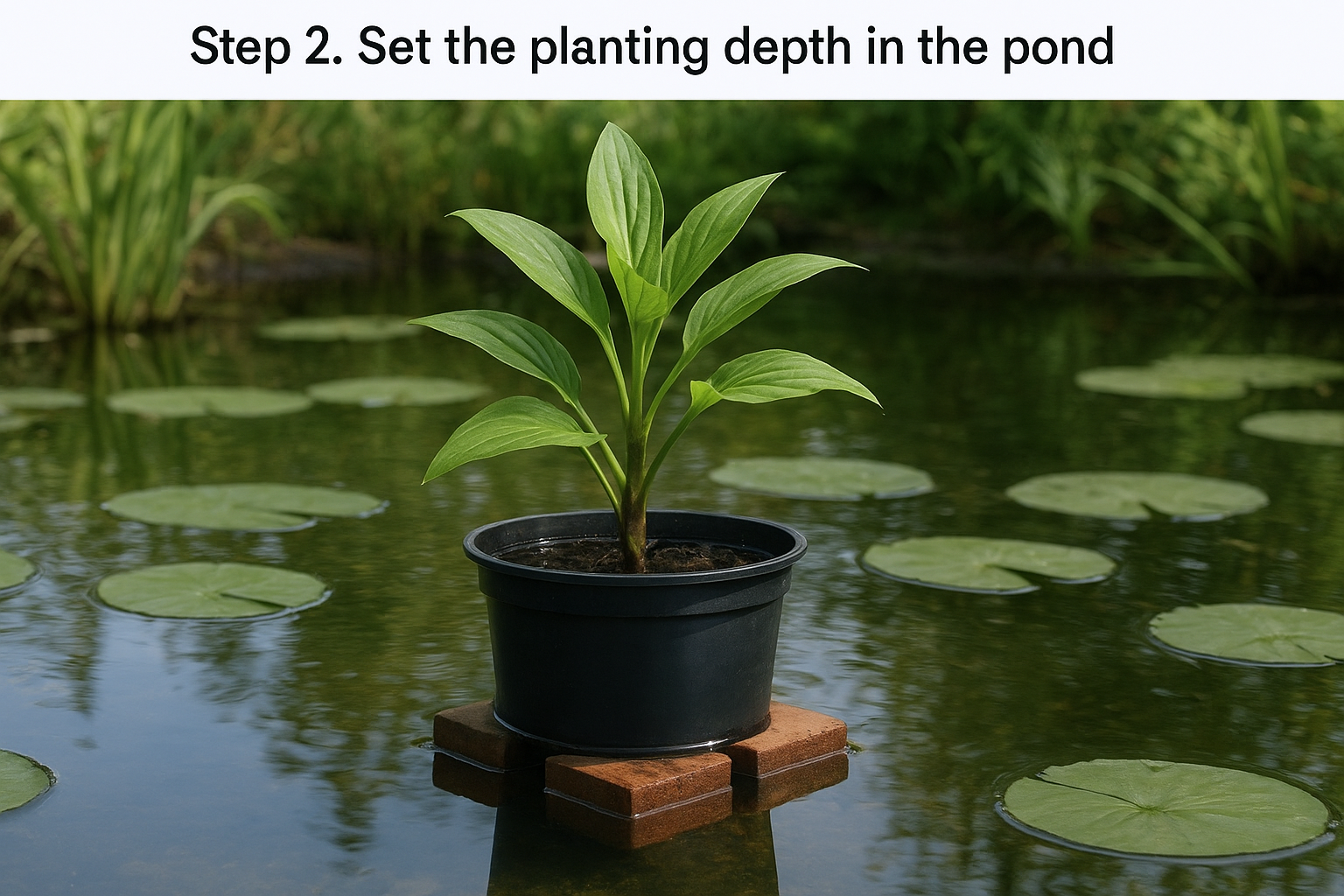
Position the pot in a sunny, still spot with about 15 cm (6 in) of water over the growing tip, then lower it in stages. Tropical lilies grow fast, so they can go straight to their permanent depth.
Choose the right spot
Lilies flower best in full sun, with at least six hours of direct light a day. Keep them away from fountains, waterfalls and pumps, because splashing water slows growth. Aim to cover no more than half the pond surface with leaves, so that oxygen exchange and light for other plants and fish stay healthy.
Lower the pot in stages
Stand the pot on bricks so the growing tip sits about 15 cm below the surface. As the stems lengthen and the leaves float, remove a brick at a time until the pot rests on the pond floor.
Here is a worked example. Your pond is 60 cm deep and your pot is 25 cm tall, with the soil surface about 22 cm above its base. For 15 cm of water over the tip, the base must sit 37 cm below the surface. Stack blocks 23 cm high on the floor (60 − 37). Later, remove the blocks and the pot rests on the floor, with the tip about 38 cm down.
Start shallow so young leaves reach the light, then go deeper as the plant grows.
Step 3. Feed and tend the plant
Feed the lily with tablets pushed into the soil, and clear dead leaves and spent flowers often. Lilies are hungry plants, and the feeding method matters as much as the schedule.
Feed on a schedule
During active growth, push one or two aquatic fertilizer tablets into the soil of the pot every two to four weeks. In Malaysia the plant keeps growing all year, so there is no winter break from feeding. Always push tablets deep into the pot so that they feed the plant and not the water. Nutrients loose in the pond feed algae instead.
Remove old growth
Cut yellowing leaves and fading flowers off as low down on the stem as you safely can. Rotting leaves release nutrients that fuel algae, and they can use up oxygen that your fish need. Leave the cut foliage on the pond edge for a few hours so any small creatures can crawl back into the water, then compost it.
Feed the pot, not the pond, and take dead growth out before it rots.
Step 4. Divide the clump and fix problems
Divide a lily when it outgrows its pot, and diagnose trouble by looking at the leaves first. Most lilies need dividing every two to five years, and tropical types in warm ponds tend toward the short end of that range.
Divide when the plant is crowded
Watch for leaves pushed up above the surface, fewer flowers, or a pot starting to split. Then divide the clump:
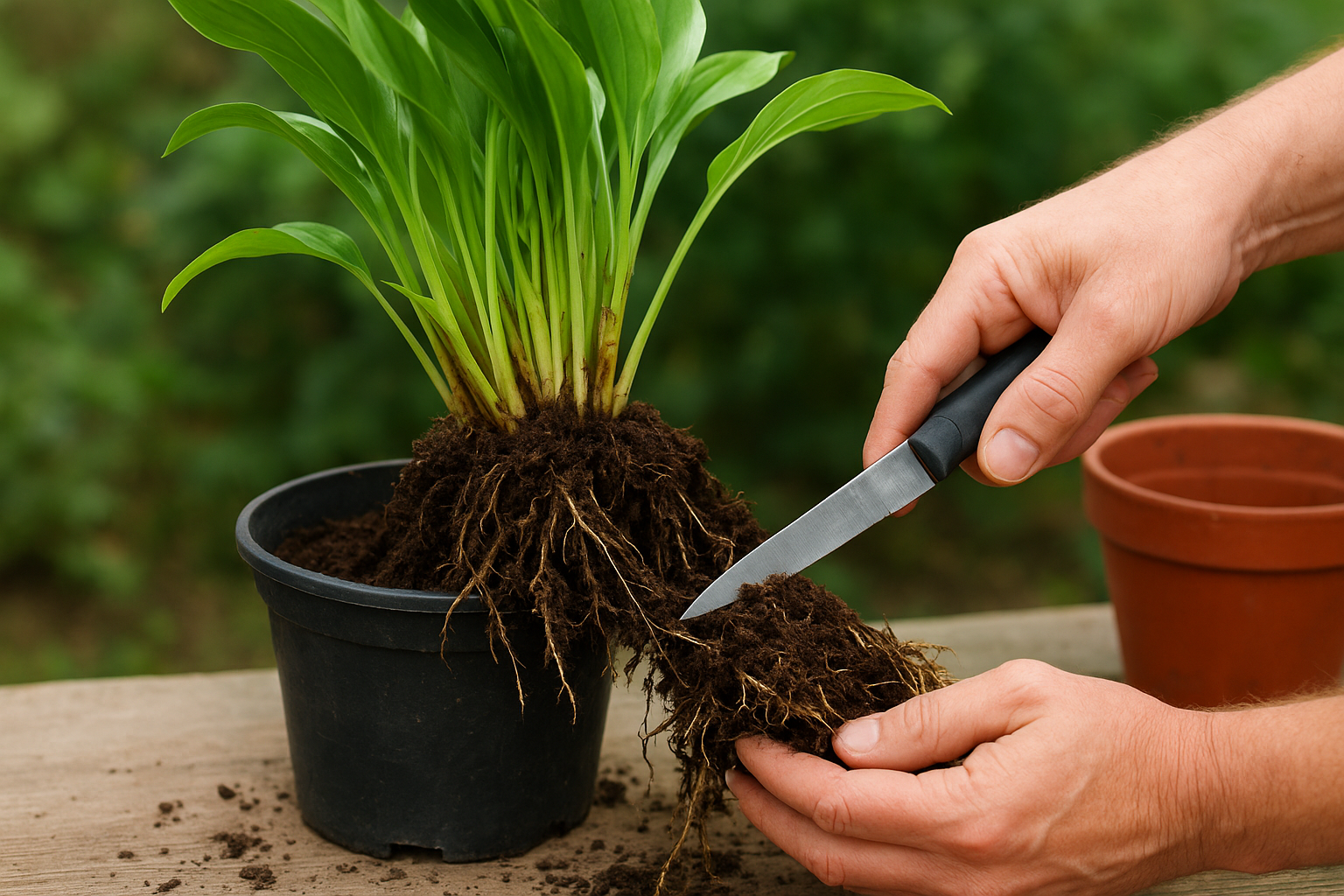
- Lift the pot out and slide the tuber free.
- Rinse off the soil and trim old roots and dead leaves.
- Cut the tuber with a sharp knife into pieces 7–10 cm (3–4 in) long. Each piece needs at least one young shoot and plenty of fibrous roots.
- Replant each piece in fresh soil in a new pot, as in Step 1.
- Put the pots back at shallow depth and lower them again as they grow.
Divide when the plant is in active growth, so the pieces recover quickly.
Troubleshoot what you see
| What you see | Likely cause | What to do |
|---|---|---|
| Leaves rising above the surface | Water too shallow or pot crowded | Lower the pot, divide or repot |
| Yellow leaves, few flowers | Hunger or under six hours of sun | Add a tablet, move to a sunnier spot |
| Reddish or grey-brown spots | Waterlily leaf spot | Remove and destroy affected leaves |
| Holes in leaves | Beetles or moth caterpillars | Hose off, hand-pick, cut off bad leaves |
| Green water | Excess nutrients, rotting leaves | Clear debris, shade the water, add bacteria |
Insect damage is usually superficial and short-lived, so tolerate it unless it spreads. For green water, a beneficial bacteria treatment such as EZ Clean Natural Pond Cleaner helps. It works best alongside a biological filter. Dilute 1ml in 1000ml of water, then pour it into the pond. A 100ml bottle treats up to 100L of pond water.
Read the leaves first, because they show lack of light, hunger or crowding before the flowers stop.
Keep your lilies thriving
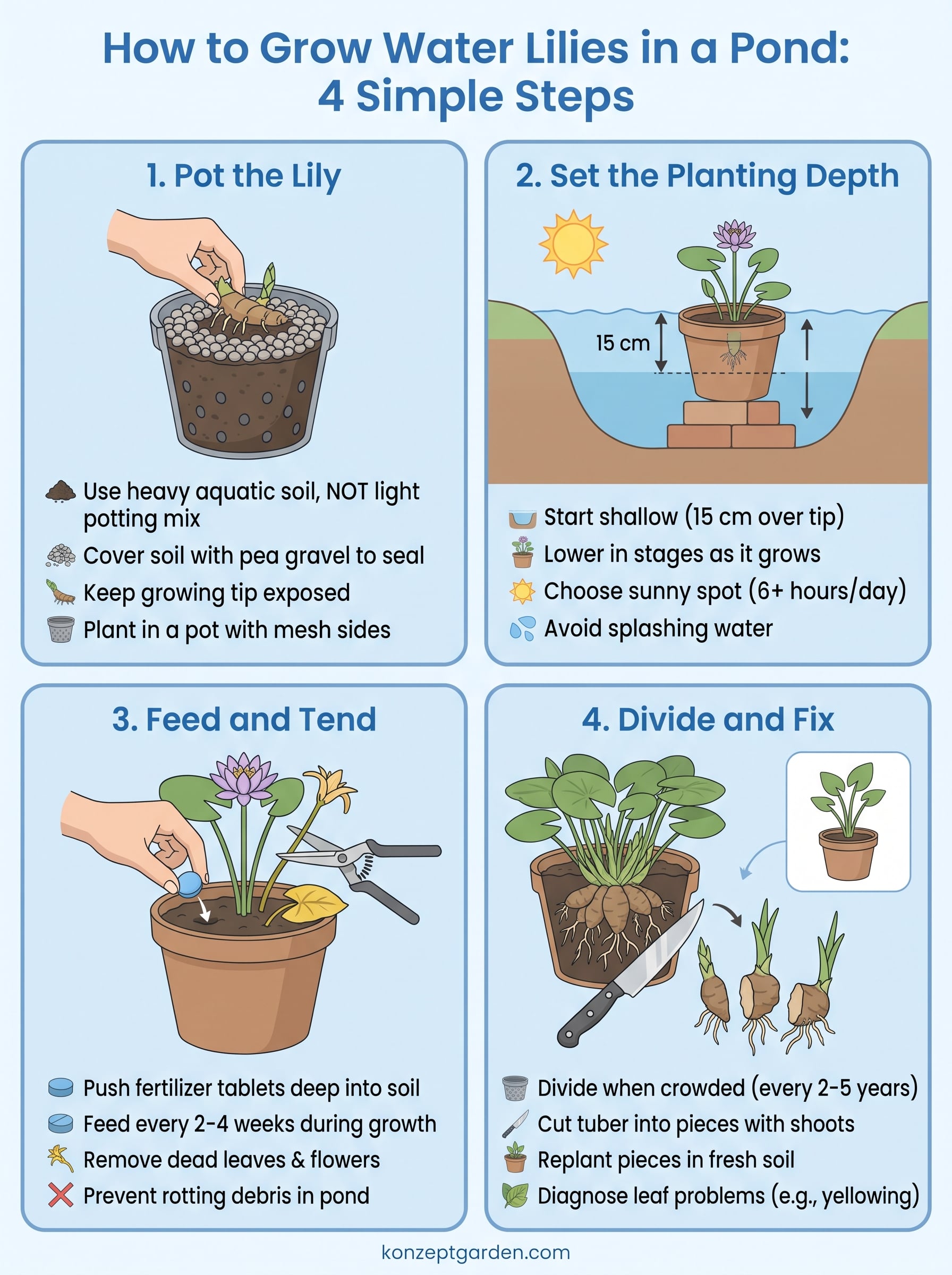
A healthy water lily comes from four habits. Pick a lily suited to your climate and depth, pot it in heavy soil under gravel, lower it in stages into a sunny, still spot, and feed it from inside the pot. After that, remove dead growth and divide the clump when it crowds the pot.
Most problems trace back to a shortcut, such as potting mix, deep water too early or loose fertilizer. Get those right and lilies need little attention.
If you do not have a pond yet, or want one designed so lilies and fish can share it, ask our team about pond design. We can help you plan the size, depth and planting before any digging starts.