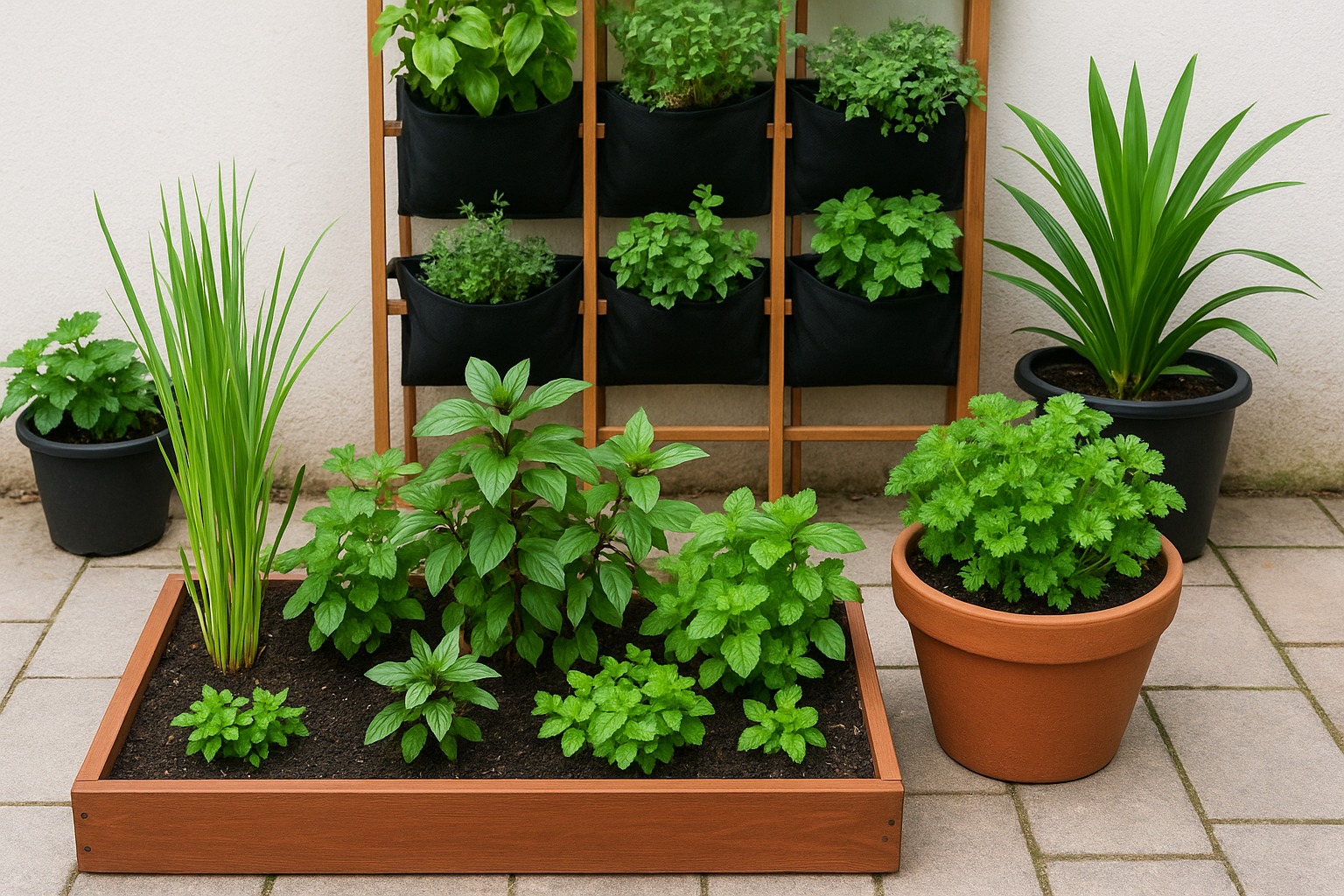


Growing your own plants sounds simple enough, until you're standing in a nursery aisle surrounded by soil bags, fertilizers, and seed packets with no idea where to start. If you've been searching for a solid guide on horticulture for beginners, you're not alone. Most aspiring gardeners want to grow something green but feel stuck by conflicting advice and unfamiliar terminology.
Here's the good news: horticulture doesn't require a degree or decades of trial and error. It starts with understanding a few core principles, healthy soil, adequate light, and consistent watering, then building on those fundamentals over time. Once you get the basics right, growing vegetables, herbs, or ornamental plants in Malaysia's tropical climate becomes far less intimidating than it seems.
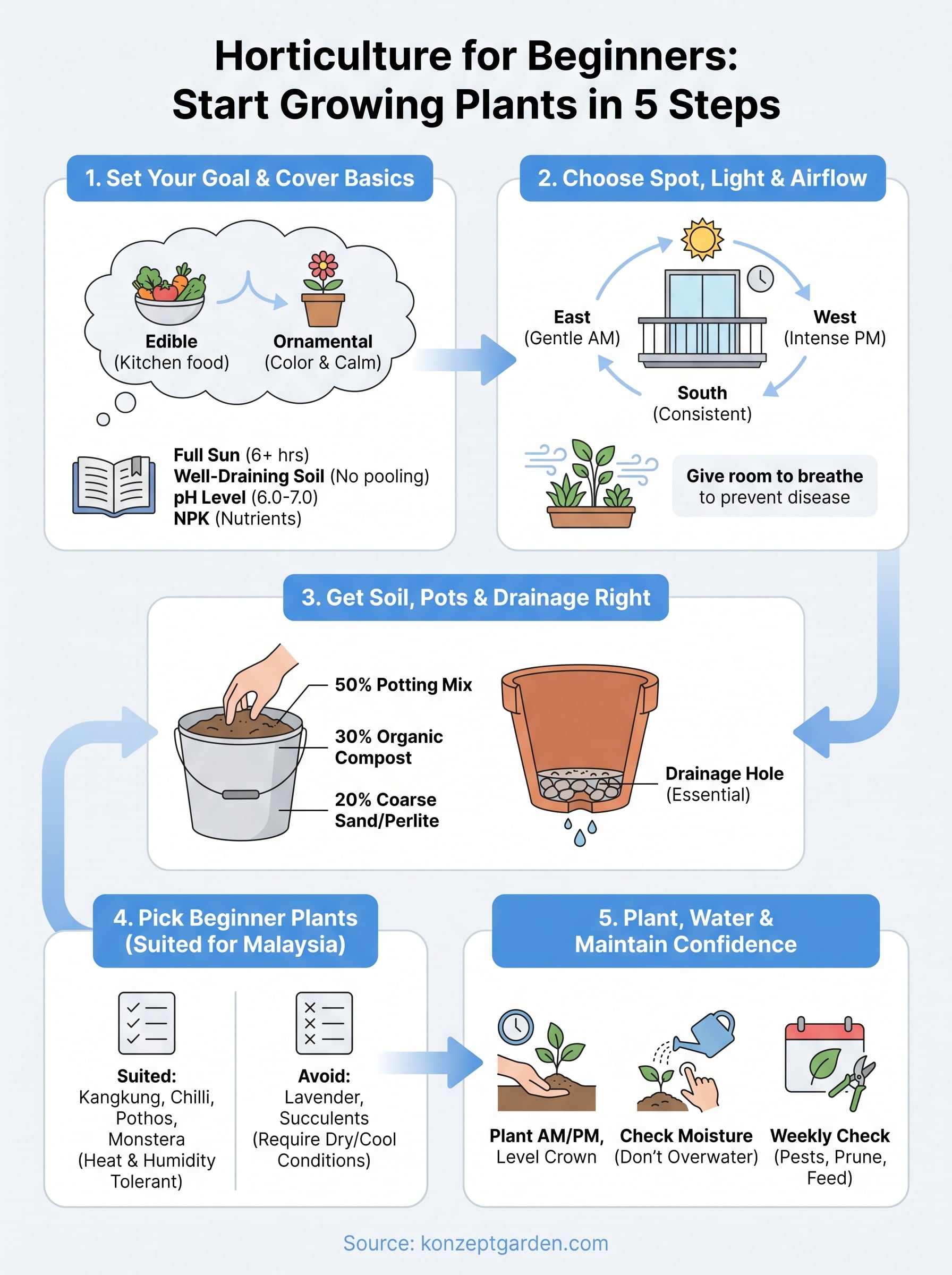
At Konzept Garden, we've spent years designing and implementing gardens across Malaysia, working closely with homeowners and commercial clients on everything from full landscape projects to compact planter setups. That hands-on experience has shown us exactly where beginners get tripped up and what actually makes a difference. In this guide, we break the entire process into 5 practical steps that walk you from square one to your first thriving garden.
Step 1. Set your goal and cover the basics
Before you buy a single bag of soil or tool, you need to decide what you actually want from your garden. Beginners often skip this step and end up with a cluttered mix of plants that don't thrive together or suit their space. A clear goal, whether it's growing food for your kitchen, adding color to your balcony, or creating a calming outdoor corner, shapes every decision you make after it, from plant selection to watering schedules.
Define what you want to grow
Your goal determines everything. Edible gardens (vegetables, herbs, and fruit trees) demand more consistent attention and specific soil nutrition, while ornamental gardens (flowering plants and foliage) tend to be more forgiving for first-timers. In Malaysia's climate, you have year-round growing conditions that most gardeners in temperate countries envy, so the real question isn't whether your plants can grow; it's whether they suit your available space and your lifestyle.
Here's a simple breakdown to help you choose a starting direction:
- Food garden: Grow vegetables like kangkung, chilli, or pandan. Good for small plots or planters.
- Herb garden: Start with lemongrass, curry leaf, or Thai basil. Low maintenance and useful daily.
- Flower or foliage garden: Try ixora, heliconias, or ornamental gingers for color with low upkeep.
- Mixed garden: Combine edibles and ornamentals for variety, best once you've grown one type successfully.
Learn the key terms before you dig in
One of the biggest obstacles in horticulture for beginners is the vocabulary. Terms like "well-draining soil," "full sun," and "pH level" get thrown around constantly, but nobody explains what they mean in practice. Getting comfortable with a handful of core concepts stops confusion before it starts.
Once you understand the language of horticulture, reading any plant label or care guide becomes straightforward instead of overwhelming.
Here are the essential terms every beginner should know:
| Term | What it means |
|---|---|
| Full sun | 6+ hours of direct sunlight per day |
| Partial shade | 3 to 6 hours of direct sun, with shade the rest |
| Well-draining soil | Soil that lets water pass through without pooling |
| pH level | A measure of soil acidity (6.0 to 7.0 suits most plants) |
| Propagation | Growing new plants from seeds, cuttings, or division |
| NPK (fertilizer) | Nitrogen (leaves), Phosphorus (roots), Potassium (fruit and flowers) |
Step 2. Choose the right spot, light, and airflow
Location is one of the most overlooked decisions in horticulture for beginners. The spot you choose directly determines how much light your plants receive, how well air circulates around their leaves, and ultimately whether they thrive or stall. Before you plant anything, spend two to three days observing how sunlight moves across your intended space from morning to late afternoon.
Read your light conditions before you plant
In Malaysia, the sun is intense, but that doesn't mean every corner of your garden or balcony receives equal exposure. Spots facing east get gentler morning sun, while west-facing areas absorb the full heat of the afternoon. South-facing locations typically offer the most consistent light throughout the day. Walk through your space at different times of day and note where shadows fall before you commit to a layout.
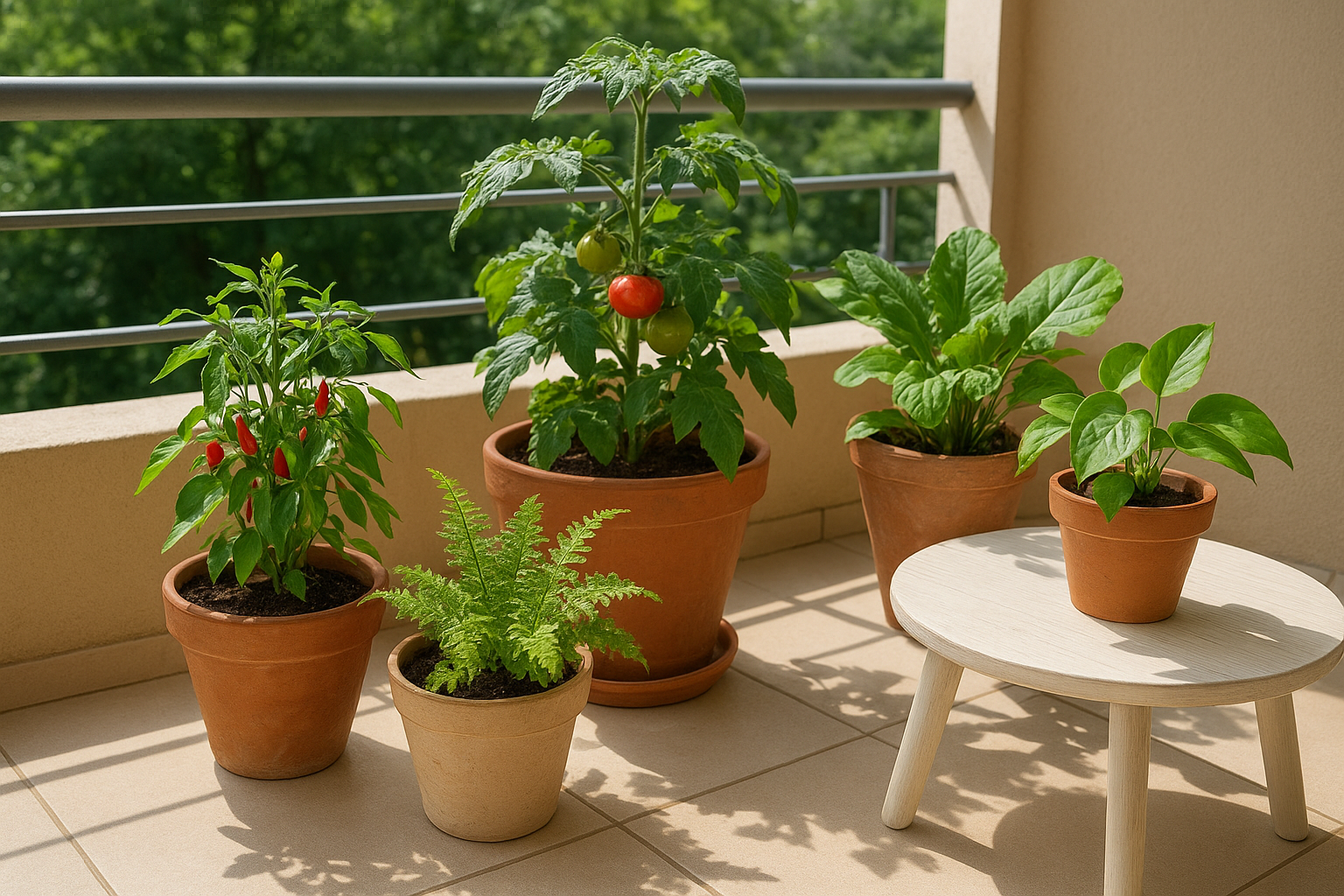
| Light condition | Hours of direct sun | Best for |
|---|---|---|
| Full sun | 6+ hours | Chilli, tomatoes, sunflowers |
| Partial shade | 3 to 6 hours | Herbs, ferns, leafy greens |
| Full shade | Under 3 hours | Pothos, peace lily, prayer plant |
Give your plants room to breathe
Airflow matters more than most beginners expect. Crowded plants trap humidity between their leaves, which encourages fungal diseases that spread fast in Malaysia's wet climate. Space your plants according to their mature size, not how small they look when you first put them in the ground.
Poor airflow is one of the top causes of plant disease for beginners, and it's entirely preventable with good placement from the start.
If you garden on a balcony or enclosed courtyard, position plants where natural breezes can reach them rather than tucking them into corners where air sits still.
Step 3. Get soil, pots, and drainage right
Soil is the foundation of everything you grow, and in horticulture for beginners, it's also the most commonly overlooked variable. In Malaysia, the red laterite soil found in many gardens is dense and nutrient-poor, which means most plants struggle without amendment. Before you plant anything directly into the ground or a container, assess and improve what you're working with.
Build your soil mix from the ground up
Most nurseries in Malaysia sell general-purpose potting mix, which works as a solid base but benefits from a few additions. Mix in organic compost at roughly a 30% ratio to boost nutrients and improve moisture retention. For vegetables and herbs, combining potting soil, compost, and coarse sand gives roots the structure and nutrition they need to establish quickly.
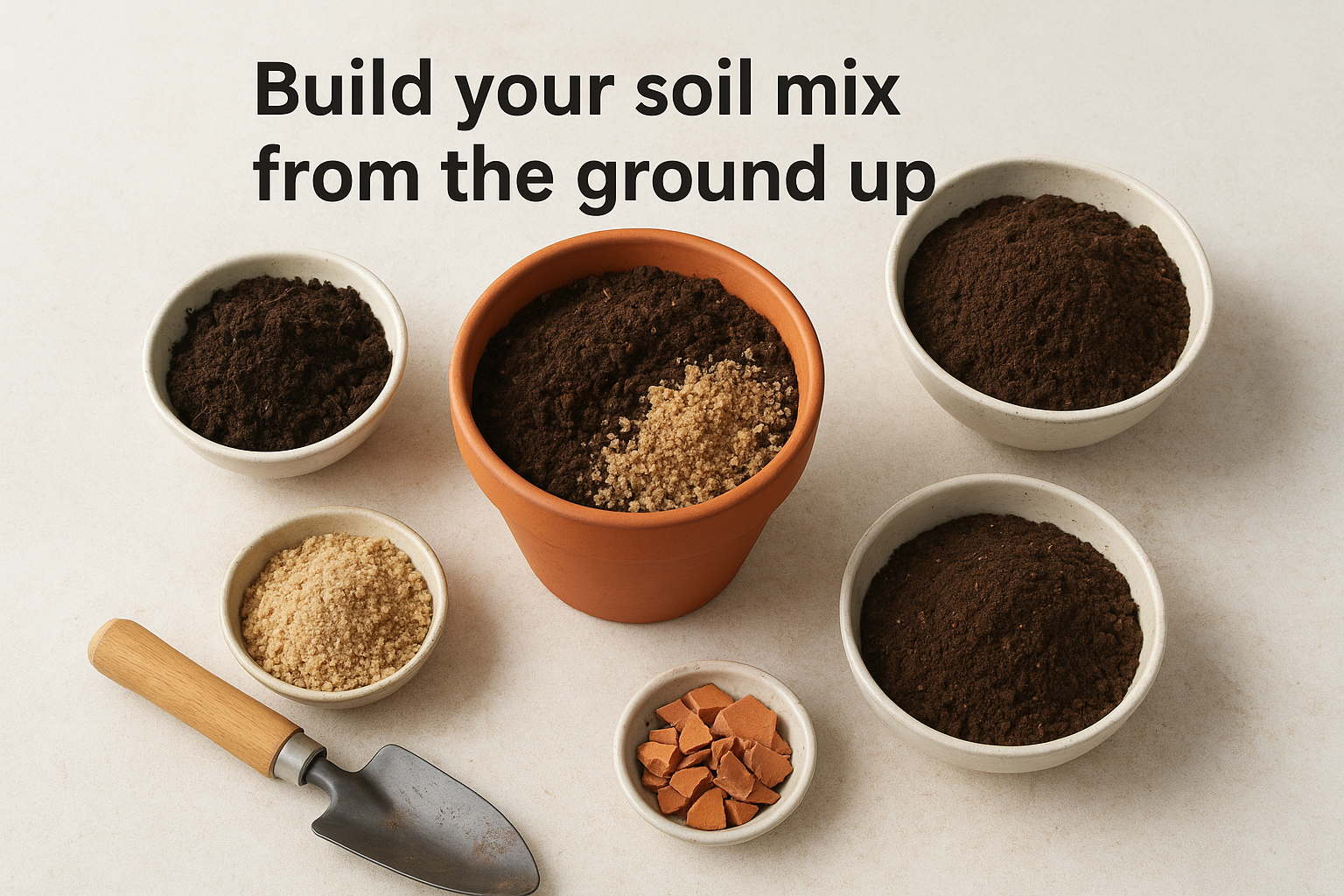
The right soil mix does more for your plants in the first month than any fertilizer you apply later.
Here's a reliable starting mix for most beginner plants in Malaysia:
| Component | Ratio | Purpose |
|---|---|---|
| Potting mix | 50% | Base structure |
| Organic compost | 30% | Nutrients and moisture retention |
| Coarse sand or perlite | 20% | Drainage and aeration |
Choose pots with drainage in mind
Container choice matters as much as soil composition, particularly if you garden on a balcony or paved surface. Always select pots with drainage holes at the base, because waterlogged roots rot fast in Malaysia's humidity and heavy rainfall. A terracotta pot with two drainage holes outperforms a decorative ceramic pot with no outlet every time.
Place a thin layer of gravel or broken pottery shards at the bottom of each container before adding your soil mix. This keeps the drainage hole clear and ensures water moves through freely rather than sitting at the root zone.
Step 4. Pick beginner plants that suit Malaysia
Plant selection is where many beginners either set themselves up for success or frustration. In horticulture for beginners, the single most effective strategy is to start with plants already adapted to Malaysia's heat and humidity, rather than chasing varieties that need coaxing through conditions they weren't built for.
Match your plant to your goal and space
Your plant choices should connect directly back to the goal you set in Step 1. Food growers will get the fastest results from fast-cycling crops like kangkung, chilli, and long beans, all of which germinate quickly and produce within weeks. Ornamental gardeners do well starting with hardy tropical foliage plants that tolerate Malaysia's rain patterns without special treatment.
Choosing plants suited to your climate from day one removes most of the trial and error that discourages beginners before they build any real experience.
Here's a practical starting list organized by garden type:
| Garden type | Recommended plants | Why they work |
|---|---|---|
| Edible | Kangkung, chilli, pandan, curry leaf | Fast growth, low input, heat-tolerant |
| Herbs | Lemongrass, Thai basil, ulam raja | Thrive in full sun, useful daily |
| Flowering | Ixora, bougainvillea, heliconia | Hardy, drought-tolerant once established |
| Foliage | Pothos, caladium, monstera | Tolerate shade and high humidity |
Avoid plants that fight your climate
Some plants commonly sold at nurseries in Malaysia, like lavender or succulents, require dry conditions and cool nights that don't exist in a tropical environment. Skip anything labeled as a Mediterranean or desert plant until you have enough experience to manage their specific needs with shade cloth or controlled indoor conditions.
Step 5. Plant, water, and maintain with confidence
With your space, soil, and plants selected, the final step is execution. This is where horticulture for beginners moves from theory into practice, and small, consistent actions matter more than any single large effort.
Plant at the right time and depth
Planting time in Malaysia is less about seasons and more about weather windows. Avoid planting during peak afternoon heat; early morning or late afternoon gives roots time to settle before the sun stresses young plants. Follow these steps each time you put a new plant in the ground:
- Dig a hole twice the width of the root ball.
- Place the plant so the crown sits level with the soil surface, not buried below it.
- Backfill firmly and water immediately after planting.
- Add a thin layer of mulch around the base to slow moisture loss.
Water consistently without overwatering
Overwatering kills more beginner plants than drought does. In Malaysia's humidity, soil stays moist far longer than you expect. Check moisture by pressing your finger 2 cm into the soil before each watering session. If it still feels damp, wait another day.
Watering on a fixed schedule regardless of soil condition is the fastest way to lose healthy plants to root rot.
| Plant type | Watering frequency |
|---|---|
| Vegetables | Every 1 to 2 days |
| Herbs | Every 2 days |
| Tropical foliage | Every 3 to 4 days |
Keep a simple weekly maintenance routine
Consistency beats intensity when it comes to plant care. Dedicate 15 minutes each week to checking for pests, removing dead leaves, and applying diluted liquid fertilizer to actively growing plants. Catching problems early stops them from spreading across your entire garden.
Next steps for your first season
You now have everything you need to get started. The five steps in this guide cover the full foundation of horticulture for beginners: setting clear goals, reading your light conditions, building the right soil mix, choosing plants suited to Malaysia's climate, and maintaining them with a simple weekly routine. Your first season won't be perfect, and that's completely fine. Every plant you lose teaches you something a written guide cannot replicate on its own.
Once you build real confidence with basic planting and care, consider expanding your outdoor space with a more ambitious project. A water feature or koi pond, for example, adds a completely different dimension to a garden and turns a functional green space into a genuine retreat. If you're ready to take your garden beyond the basics, explore our Zen Bio Koi Pond to see what a custom water feature could look like in your space.