
Most homeowners in Malaysia think garden design and landscaping means picking a few plants and laying some pavers on a weekend. Then the rainy season hits, the soil drains badly, and the "garden" turns into a muddy patch within months. That gap between what people expect and what actually happens is exactly why this topic needs a proper explanation, not another list of pretty photos.
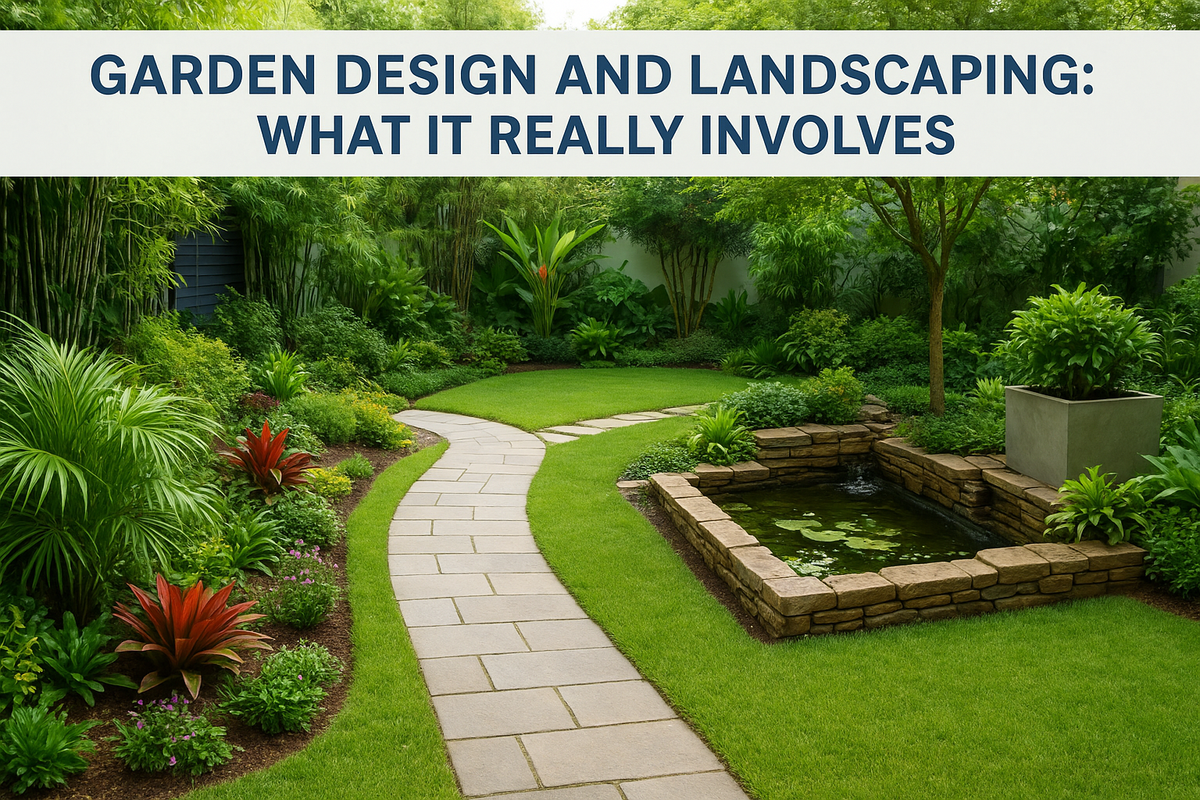
Garden design and landscaping is a structured process that moves from site analysis and concept sketches through planting plans, drainage and irrigation planning, hardscaping, and finally implementation. It covers everything from a small courtyard to a full commercial landscape, and each stage requires decisions about soil, climate, materials, and long-term maintenance that most DIY projects skip entirely.
In this article, we break down what the process really involves, stage by stage, so you know what to expect whether you're hiring a professional team or planning your own project. We'll walk through design consultations, 3D visualization, plant selection suited to Malaysia's tropical climate, and the construction phase, drawing on what we've seen work and fail on real projects at Konzept Garden.
Why garden design and landscaping matter for your home
A well-planned garden does more than look nice in photos. It changes how you actually live in your house, whether that means having somewhere to eat dinner outside, a play area that survives monsoon season, or a front yard that makes visitors slow down. Landscape design isn't decoration bolted onto a finished house. It's an extension of the home itself, and treating it that way changes the return you get from it.
Property value and first impressions
Buyers and appraisers in Malaysia routinely factor outdoor space into their assessment of a property, especially for landed homes and bungalows. A garden with proper drainage planning, mature planting, and defined hardscaping reads as a maintained asset, which is why it pays to know what to consider when designing a front yard landscape. A patchy lawn with random pots reads as neglect, even if the house itself is in good shape. Developers know this too, which is why show units almost always feature a fully landscaped garden rather than bare turf.
A garden that's designed properly adds value; a garden that's just planted usually costs you more to fix later.
Daily livability and climate comfort
Malaysia's heat and humidity make shade, airflow, and material choice genuinely functional decisions, not aesthetic ones. Strategic tree placement can drop the temperature on a patio by several degrees, while the wrong paving material turns into an unusable hotplate by early afternoon. Good garden landscaping accounts for sun path, prevailing wind, and rainfall patterns from day one, which is exactly what separates a garden you use every evening from one you only look at through the window.
Long-term maintenance and cost
Here's what most people underestimate: a poorly planned garden costs more over five years than a well-designed one, even if the upfront price looks cheaper.
- Bad drainage leads to soil erosion, root rot, and repeated replanting.
- Wrong plant selection for the microclimate means constant replacement.
- Missing irrigation planning means higher water bills and dead patches during dry spells.
- Poor hardscaping layout leads to cracking and costly redoing within a few years.
Getting the fundamentals right at the planning stage, rather than patching problems as they appear, is the difference between a garden that matures well and one that's a constant maintenance headache.
How to plan a garden design and landscaping project
Planning starts long before anyone touches a shovel. A proper site assessment looks at soil type, drainage patterns, sun exposure, and existing structures before a single design idea gets sketched. Skip this step and you're guessing, which is how half-dead hedges and waterlogged lawns happen in the first place, and it's also where starting your first garden landscape design usually goes wrong.
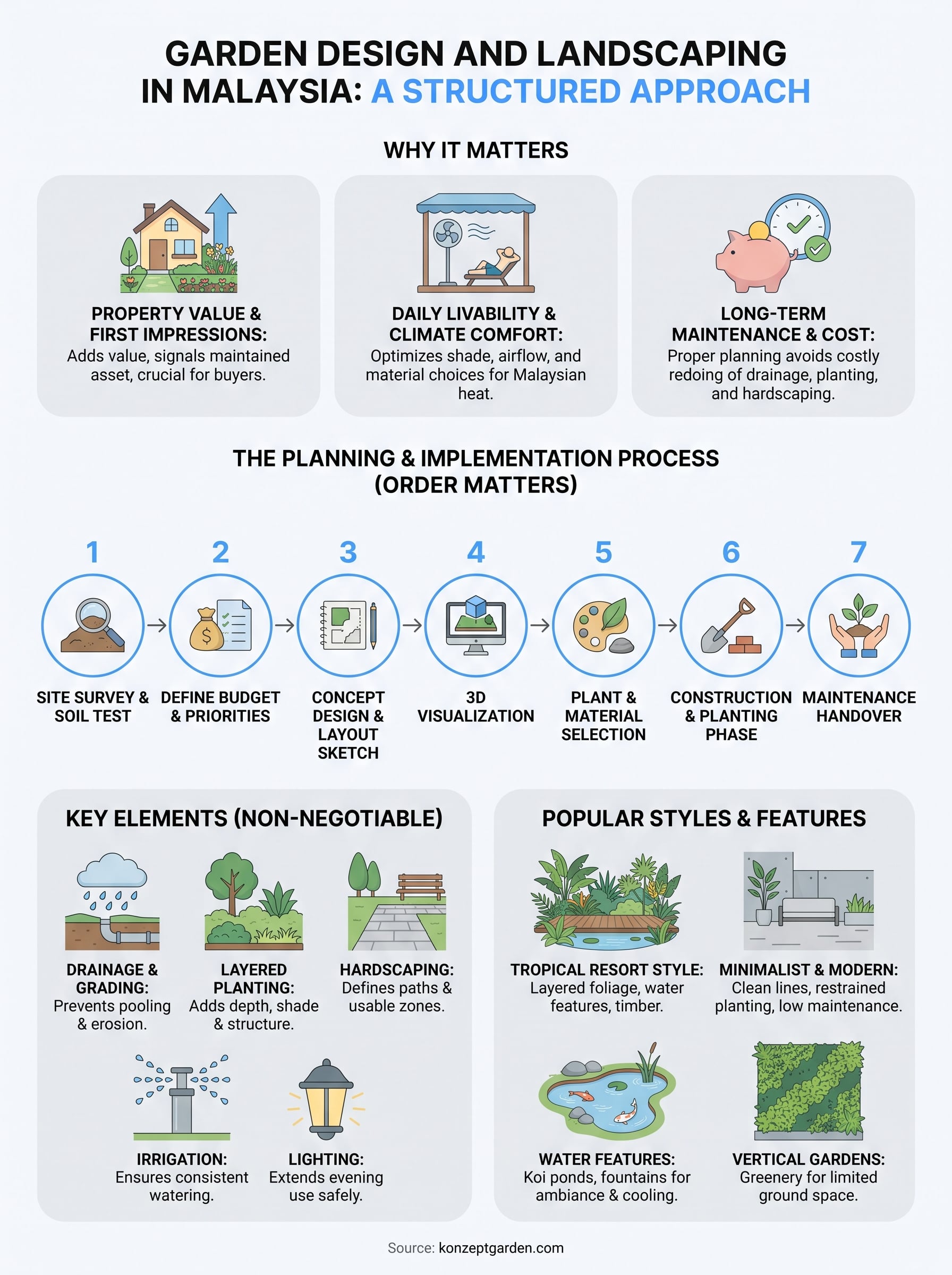
Getting the sequence right matters more than getting every detail perfect on the first try. Here's the order that actually works for most residential projects in Malaysia:
- Site survey and soil test
- Define budget and priorities (entertaining space, kids' area, low maintenance)
- Concept design and layout sketch
- 3D visualization to confirm scale and materials
- Plant and material selection
- Construction and planting phase
- Maintenance handover
Skipping straight to plant shopping is the single biggest reason garden projects fail within a year.
Set a realistic budget early
Budget shapes everything downstream, from the size of your patio to whether you can afford mature trees instead of saplings. Deciding this upfront, rather than mid-project, avoids the redesigns that eat time and money. Most homeowners underestimate hardscaping costs and overestimate what a small planting budget can achieve.
Work with a designer instead of guessing
Homeowners without landscaping experience usually save money by getting a professional design consultation early rather than fixing mistakes later. Konzept Garden offers landscape design packages and a free quotation to walk through the site, budget, and design direction before any commitment, which removes most of the guesswork from this stage.
Key elements every well-designed garden includes
Every garden that actually holds up over time shares the same core components, regardless of size or style. Skip one of these and you'll notice the gap within a year, whether it's a lawn that never quite drains or a layout that feels awkward the moment you add furniture. Understanding these building blocks helps you evaluate any garden design and landscaping proposal, whether it comes from a contractor or your own sketch.
The non-negotiables
Below are the basic elements of landscape you need to know, the ones we treat as mandatory on every project, from a small townhouse courtyard to a full bungalow landscape.
| Element | Why it matters |
|---|---|
| Drainage and grading | Prevents pooling, root rot, and erosion during monsoon rains |
| Layered planting | Mixes canopy, shrub, and ground cover for depth and shade |
| Hardscaping | Defines paths, seating, and usable zones year-round |
| Irrigation | Keeps plants alive without daily manual watering |
| Lighting | Extends usable hours into the evening safely |
A garden without proper drainage isn't a design problem waiting to happen, it's already broken.
Planting layers and structure
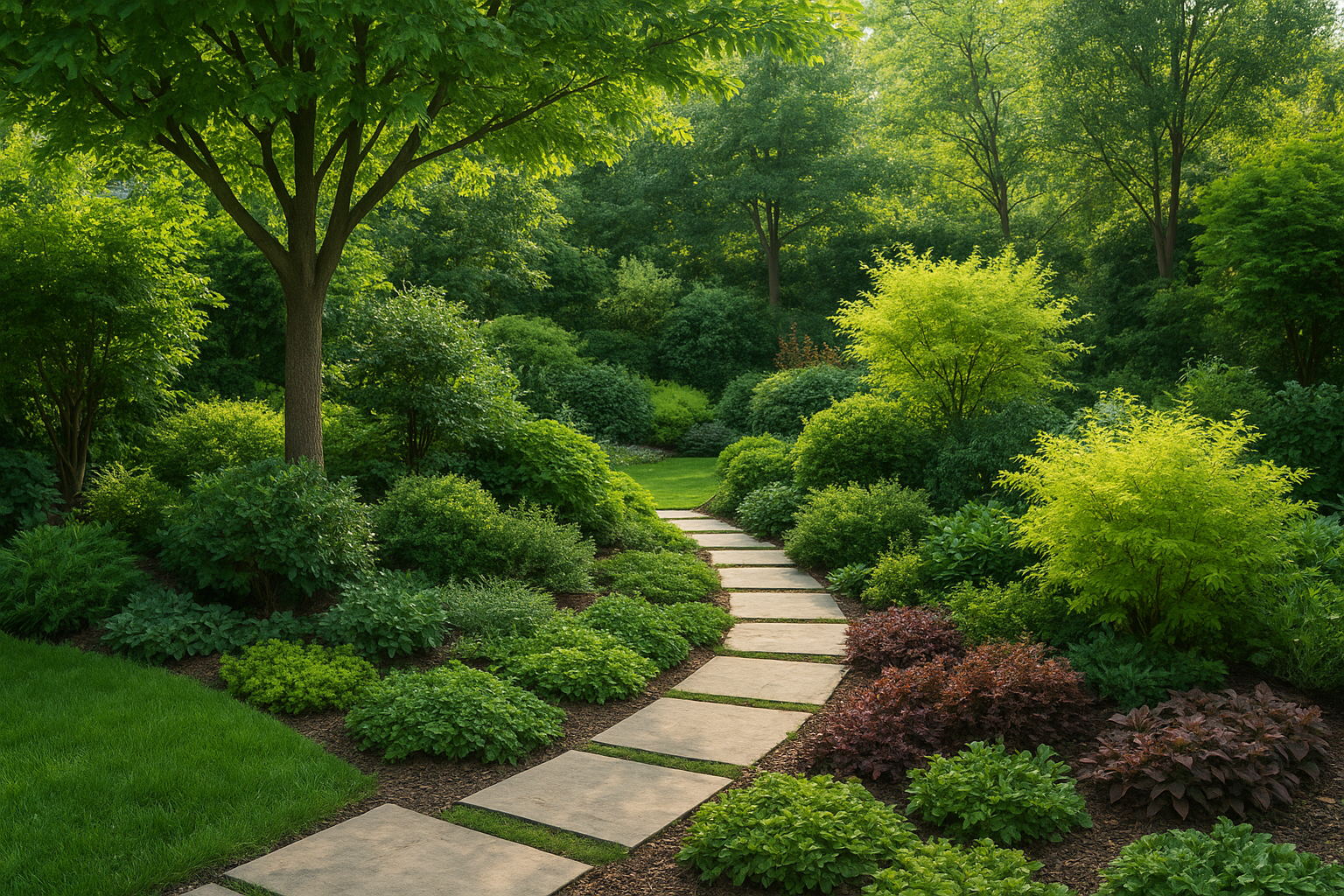
Good planting plans work in layers: tall trees for shade, mid-height shrubs for structure, and ground cover to suppress weeds and hold soil, which is easier once you know which tropical garden plants Malaysian homes thrive with. Relying on a single layer, usually just lawn and a few pots, is why so many gardens look flat and require constant upkeep. Layering also gives you privacy screening and visual interest without needing walls or fences everywhere.
Circulation and usable space
Finally, a garden needs clear circulation, meaning paths and zones that guide movement without cutting through planting beds. Without this, people trample lawns and beds shrink over time regardless of how carefully they were designed.
Popular styles and features shaping Malaysian gardens
Trends shift, but a few styles dominate residential projects across Malaysia right now, driven by climate, plot size, and how families actually want to use their outdoor space. Tropical resort style, with layered foliage, water features, and timber accents, remains the most requested look for landed homes. Minimalist and modern designs, built around clean lines and restrained planting palettes, suit smaller urban plots where maintenance time is limited.
Low-maintenance materials gaining ground
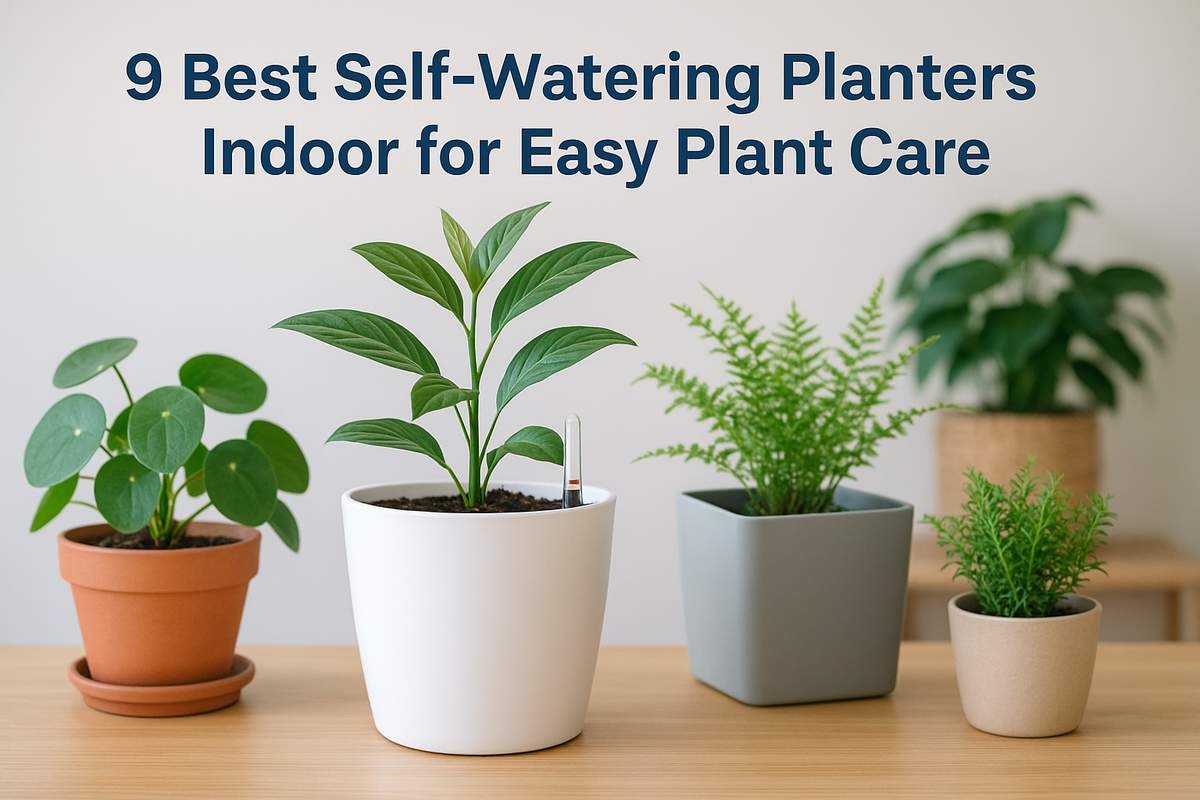
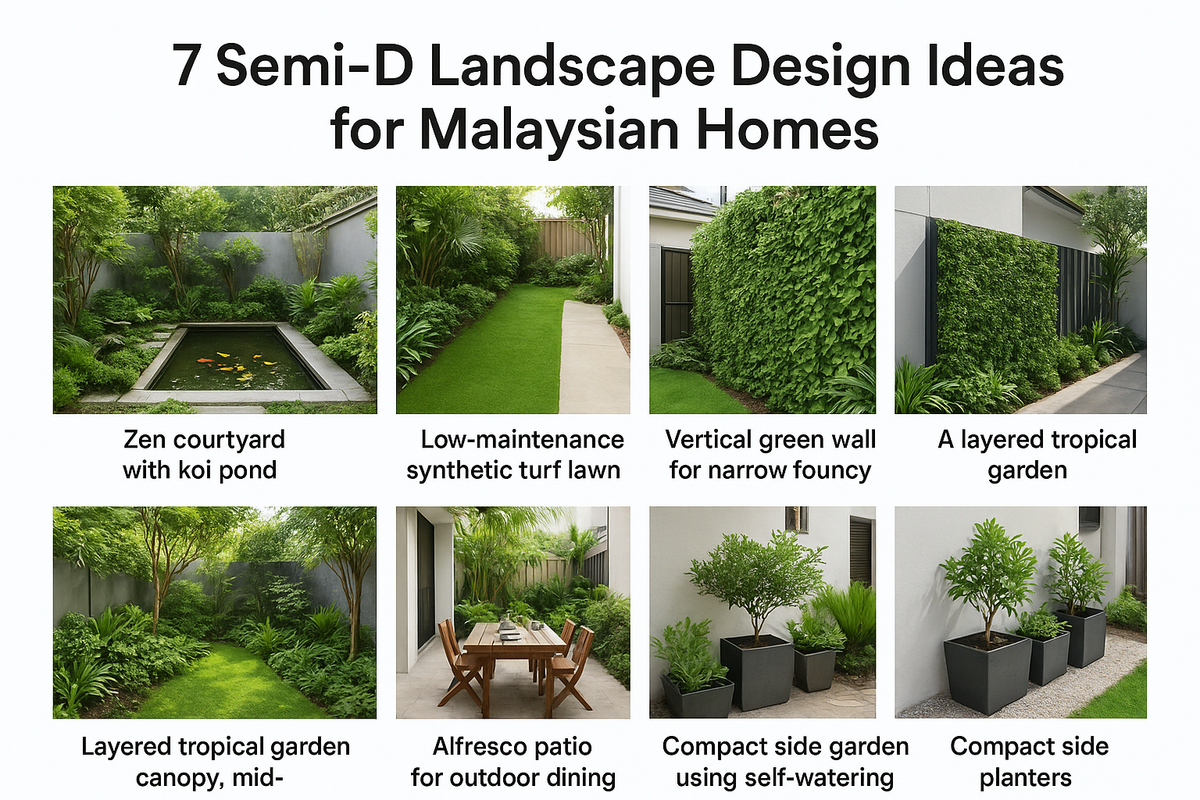
Homeowners increasingly ask for materials that cut upkeep without sacrificing looks. Synthetic turf, like our Noble Grass, solves the year-round lawn problem in shaded or high-traffic areas where real grass struggles. Self-watering systems such as the Ziant Hydro Planter address the same concern for planting beds, cutting daily watering to almost nothing.
The biggest shift in Malaysian gardens isn't a new plant trend, it's homeowners choosing durability over daily upkeep.
Water features and vertical greenery
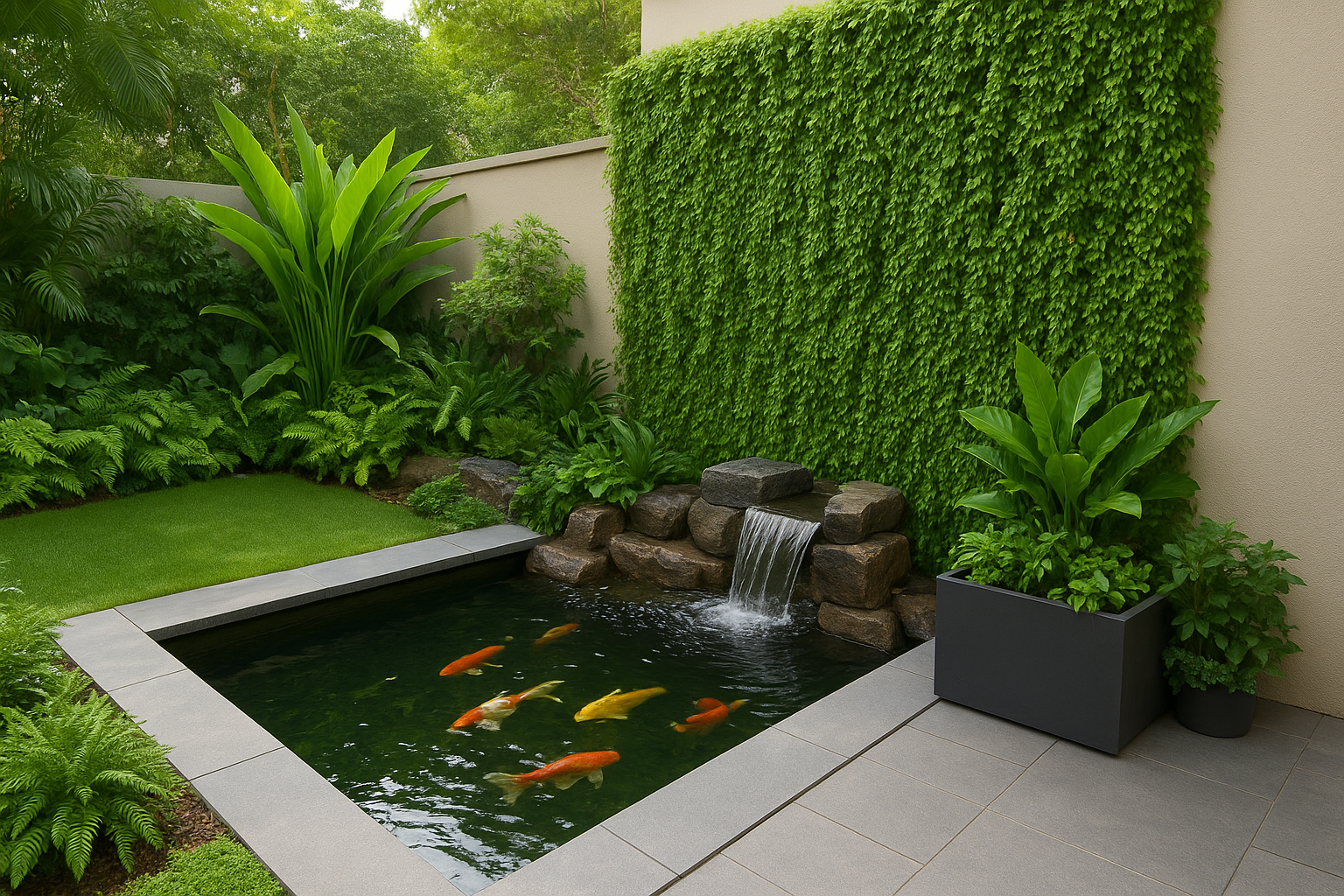
Water remains central to Malaysian landscape design, from ornamental koi ponds like our Zen Bio Koi Pond and Himalaya Rock Fish Pond to smaller courtyard fountains that add ambient sound and cooling effect. Vertical garden systems in Malaysia, such as our EcoWall range, are also gaining traction on terrace houses and commercial fronts where ground space is limited but greenery is still wanted.
| Feature | Best for |
|---|---|
| Synthetic turf | Shaded or high-traffic lawns |
| Self-watering planters | Balconies, courtyards |
| Koi ponds | Feature focal points |
| Vertical gardens | Narrow plots, walls |
These features aren't just cosmetic choices; they solve real climate and space constraints specific to Malaysian homes.
Growing a garden that works for you
Getting garden design and landscaping right isn't about following a trend or copying a neighbor's front yard. It's about matching drainage, planting, and materials to how you actually use your outdoor space, then building it in the right order so nothing needs redoing within a year. Skip the planning stage and you'll pay for it later, either in dead plants, cracked paving, or a lawn that never quite recovers from monsoon season.
What separates a garden that matures well from one that's a constant chore usually comes down to the decisions made before construction even starts. If you're weighing up features like a koi pond as a centerpiece for your outdoor space, it helps to see what's actually involved before committing to a design. Take a look at the Zen Bio Koi Pond and get a feel for what fits your garden.