
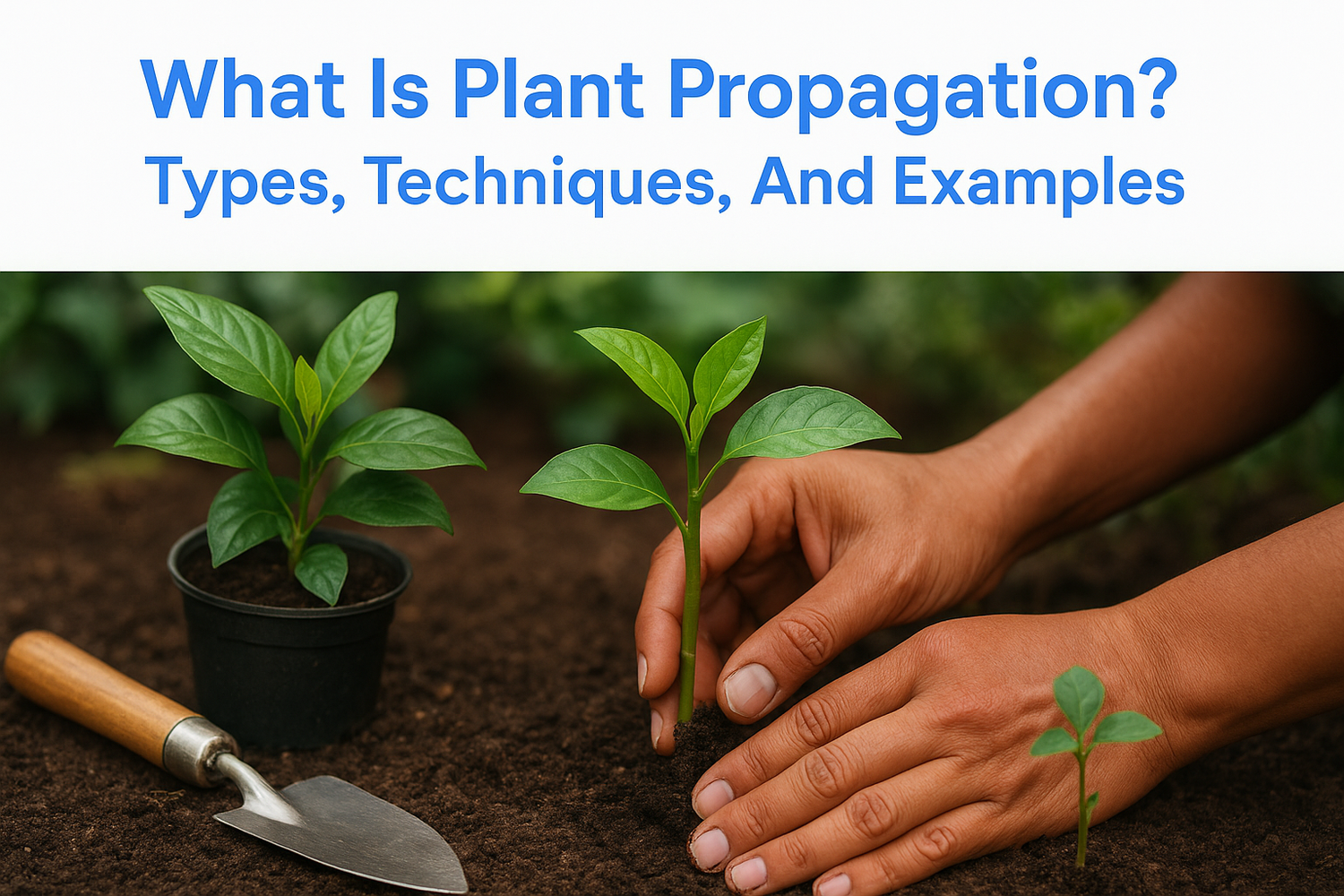
Every garden you admire, from a lush tropical backyard in Kuala Lumpur to a manicured commercial courtyard, started with someone multiplying plants. So, what is plant propagation? At its core, it's the process of creating new plants from existing ones, whether through seeds, cuttings, division, or grafting. It's one of the most fundamental skills in horticulture, and it shapes how gardens are designed, built, and sustained over time.
Understanding propagation matters whether you're a homeowner starting a small herb garden or a developer greening an entire residential project. It affects plant selection, project timelines, costs, and long-term maintenance. At Konzept Garden, propagation knowledge directly informs how we approach garden design and planting plans for our clients across Malaysia, it helps us recommend species that establish well, fill space efficiently, and thrive in local conditions without constant replanting.
This article breaks down the two primary categories of plant propagation, sexual and asexual, along with the specific techniques under each. You'll learn how seeds differ from cuttings, when grafting makes sense, and which methods work best for common tropical and subtropical species found in Malaysian gardens. By the end, you'll have a solid foundation to start propagating plants yourself or make more informed decisions when working with a landscape professional.
What plant propagation is
Plant propagation is the process of creating new plants from existing ones. When you ask what is plant propagation, the simplest answer is this: it's any method used to multiply a plant, whether through seeds, cuttings, divisions, layers, or grafts. Gardeners, horticulturists, and landscape designers use these techniques to grow more plants from stock they already have, scale up planting for large projects, and preserve specific plant characteristics that matter for design or function. Every planting plan you've ever seen, whether a dense tropical garden or a clean commercial landscape, relied on propagation to produce the plants that fill it.
The biological basis of propagation
All plants have a built-in drive to reproduce. Propagation works because plant cells carry the genetic instructions needed to generate roots, stems, leaves, and eventually an entirely new organism. Some of this happens sexually, when pollen fertilizes an ovule and produces a seed. Some of it happens asexually, when a stem, leaf, or root segment generates new growth without fertilization. Understanding which pathway a given plant uses, or prefers, is the foundation of any successful propagation effort.
A plant's ability to regenerate from a single part comes down to a group of undifferentiated cells called meristematic tissue, the same cells responsible for active growth in roots and shoot tips.
Different species vary significantly in how readily they propagate. Some plants, like pothos or spider plants, produce offsets and runners on their own, making propagation almost effortless. Others, like fruit trees, require specific grafting techniques to reliably reproduce the traits you want. Knowing your plant's biology before you attempt any method saves time and reduces failure rates considerably.
Sexual vs. asexual: the two main categories
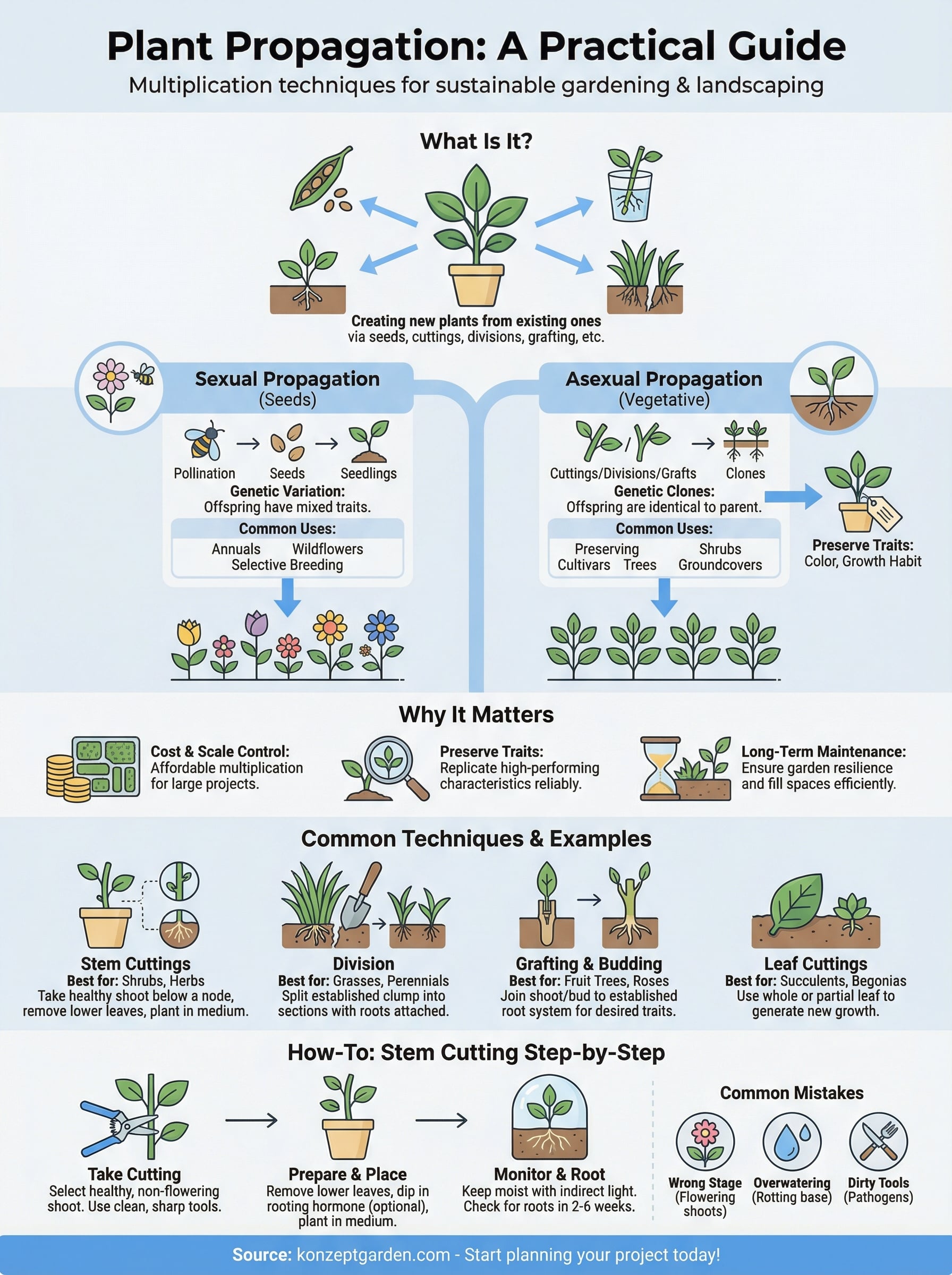
Every propagation method falls into one of two categories: sexual or asexual. Sexual propagation involves seeds, which form after pollination and carry genetic material from two parent plants. Asexual propagation, also called vegetative propagation, uses plant parts like stems, leaves, or roots, and produces offspring that are genetically identical to the parent. Both categories have practical uses in garden design and horticulture, and the right choice depends on your goals, your timeline, and the plant species you're working with.
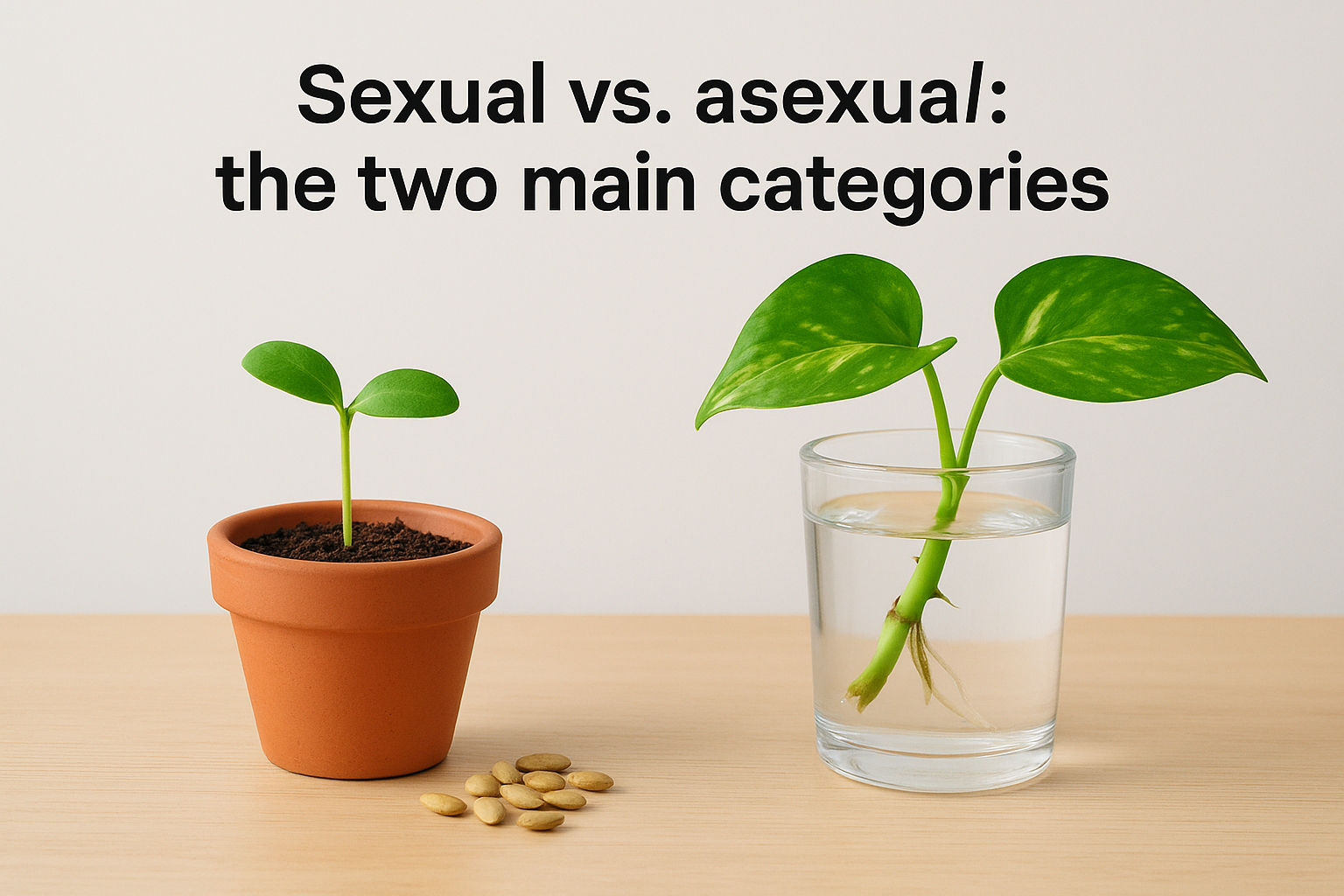
Here's a breakdown of the two categories to help you compare them at a glance:
| Category | Source material | Genetic outcome | Common uses |
|---|---|---|---|
| Sexual | Seeds | Variable (mix of parent traits) | Annuals, wildflower planting, selective breeding |
| Asexual | Cuttings, divisions, grafts | Identical to parent (clone) | Preserving cultivars, shrubs, trees, groundcovers |
This distinction matters in practice. If you're trying to reproduce a specific cultivar with a particular flower color or compact growth habit, seeds won't reliably give you what you want because the offspring may not inherit both parent traits equally. Vegetative methods will. On the other hand, growing from seed gives you natural genetic variation, which can support better disease resistance and long-term adaptation in the right context.
Where propagation fits in the plant life cycle
Plants move through a predictable life cycle: germination, vegetative growth, flowering, seed production, and dormancy or death. Propagation can interrupt or extend that cycle at multiple points. When you take a cutting from a mature shrub, you're essentially resetting part of that plant back to a vegetative state, prompting it to produce roots and begin the cycle again. When you collect seeds after flowering, you're capturing the plant's natural reproductive output and using it deliberately rather than leaving it to chance.
Knowing where in the life cycle you're intervening helps you choose the right technique at the right time. Cuttings taken from a plant that's actively flowering, for example, root less reliably than those taken during a phase of strong vegetative growth. Timing, plant condition, and growth stage all influence propagation success, which is why understanding the biology behind the process gives you a real advantage when you're planning a garden or trying to multiply a plant you already love.
Why plant propagation matters
Once you understand what is plant propagation, the next question is why it matters beyond academic curiosity. Propagation is a practical tool that affects everything from how much a planting project costs to how reliably a garden performs over a decade. Whether you're managing a single backyard or overseeing a large commercial landscape in Malaysia, the way plants are multiplied and sourced has real consequences for your budget, your timeline, and the long-term health of your outdoor space.
It controls cost and scale
Buying fully mature plants from a nursery every time you want to fill a bed or replace a struggling specimen adds up quickly. Propagating plants from cuttings or divisions lets you multiply your stock at a fraction of that cost. If you already have a healthy hedge shrub or a groundcover that's thriving in your garden, you can produce dozens of new plants from it rather than purchasing each one individually. For large residential or commercial projects, this difference is significant, and landscape designers factor propagation costs into their planning from the start.
Scaling a planting plan from 20 specimens to 200 becomes far more feasible when propagation is part of the process rather than an afterthought.
It preserves plant traits you actually want
When a plant performs exceptionally well in a specific location, whether due to its compact growth habit, drought tolerance, or particular flower color, you want to reproduce that exact plant, not a genetic approximation of it. Asexual propagation methods like cuttings and divisions give you that precision. The new plants are genetically identical to the parent, so you can replicate the traits that made the original worth keeping without gambling on seed variation. This is especially important when working with cultivated varieties that don't breed true from seed.
It shapes how gardens perform over time
A garden isn't static. Plants die, get damaged, outgrow their space, or simply need replacement. Having propagation knowledge means you can maintain visual consistency across a garden over years without scrambling to find the exact same plant at a nursery, which may no longer stock it. You can keep a source plant healthy, take cuttings when needed, and replace specimens without disrupting the overall design. For Malaysian gardens dealing with intense heat, humidity, and seasonal storms, this kind of ongoing adaptability is not a luxury. It's a practical necessity that keeps your outdoor space looking intentional rather than patchy.
Propagation also lets you experiment. Testing a new species in your garden by growing a small batch from seed costs almost nothing, and it gives you real data on how that plant behaves in your specific conditions before you commit to using it at scale.
Sexual propagation using seeds
Sexual propagation is the method most people encounter first. You collect a seed, place it in soil, water it, and wait. But understanding what is plant propagation through seeds means looking at what's actually happening inside that seed and why the outcome isn't always predictable. Unlike vegetative methods, seeds carry genetic material from two parent plants, which means every seedling is a new genetic individual, not a copy.
How seeds form and what they contain
Seeds develop after a flower is pollinated. Pollen from one plant fertilizes the ovule of another, and the resulting structure contains an embryo with all the genetic instructions needed to grow into a new plant. Wrapped around that embryo is stored food, called the endosperm, along with a protective seed coat that shields it from drying out prematurely or germinating at the wrong time.
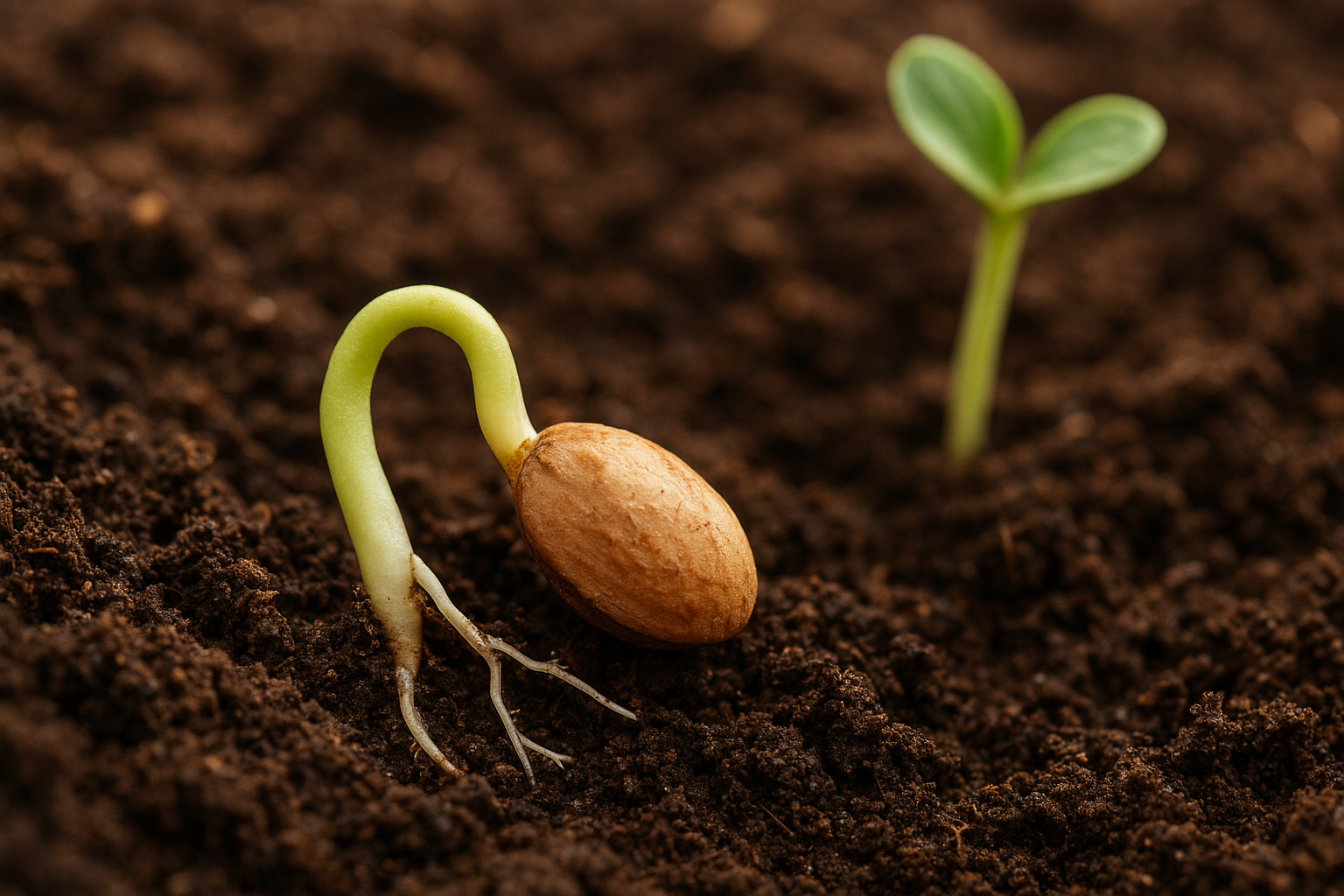
Because seeds combine traits from two parent plants, offspring can vary meaningfully in size, color, growth rate, and environmental tolerance, even within the same species.
That genetic variation is both a strength and a limitation. For wildflower beds and naturalistic plantings, it works in your favor because diversity helps the population adapt to changing conditions over time. For cultivated varieties with specific traits you want to preserve, seeds are less reliable. A compact shrub with vivid blooms may produce seedlings that grow tall and produce pale flowers, because offspring inherit traits randomly from both parents and there's no guarantee the combination you wanted will appear.
What seeds need to germinate
Germination requires the right combination of moisture, temperature, oxygen, and sometimes light. Most seeds won't sprout if any one of these factors falls outside the acceptable range for that species. Tropical species common in Malaysian gardens, like torch ginger or heliconias, need warm, consistently moist conditions to germinate well. Temperate species may require a cold period first, a process called stratification, before they'll sprout at all.
Here's a quick reference for the core germination requirements:
| Factor | What it does | Common issue |
|---|---|---|
| Moisture | Activates enzymes inside the seed | Overwatering causes rot |
| Temperature | Triggers metabolic processes | Too cold slows or prevents germination |
| Oxygen | Supports cellular respiration | Compacted or waterlogged soil blocks it |
| Light (some species) | Signals safe growing conditions | Burying light-dependent seeds too deep |
Once germination begins, the seedling draws on stored food reserves until its first true leaves develop and it can start photosynthesizing independently. This transition period is when seedlings are most vulnerable, and consistent care during the first few weeks after germination matters more than almost anything else you do throughout the process.
Asexual propagation using plant parts
Asexual propagation, also called vegetative propagation, skips pollination entirely. Instead of seeds, you use plant parts like stems, leaves, roots, or entire sections of a mature plant to generate new individuals. Understanding this side of what is plant propagation gives you access to methods that are faster, more predictable, and better suited to preserving the exact traits you want from a parent plant.
The genetics of clonal reproduction
When you propagate a plant asexually, the offspring carries an exact genetic copy of the parent. There's no second parent involved, no shuffling of traits, and no unpredictable variation in the results. Every cutting you take from a compact, disease-resistant shrub will produce a plant with those same characteristics. This consistency makes asexual propagation the preferred approach when you're working with named cultivars or high-performing specimens that you want to reproduce reliably across a planting design.
This is why most commercial plant production, including the groundcovers and hedging plants used in Malaysian landscape projects, relies heavily on cuttings and divisions rather than seeds.
Common vegetative methods
Several distinct techniques fall under the asexual propagation category, and each works best for a specific set of plants or growing conditions. Stem cuttings are the most widely used method: you remove a healthy shoot, trim it to the right length, and encourage it to root in a growing medium. Leaf cuttings work well for succulents and some tropical foliage plants where a single leaf can produce an entirely new plant at its base. Division involves physically splitting a clump-forming plant into sections, each carrying its own roots, making it one of the fastest ways to multiply grasses, ferns, and established perennials already growing in your garden.
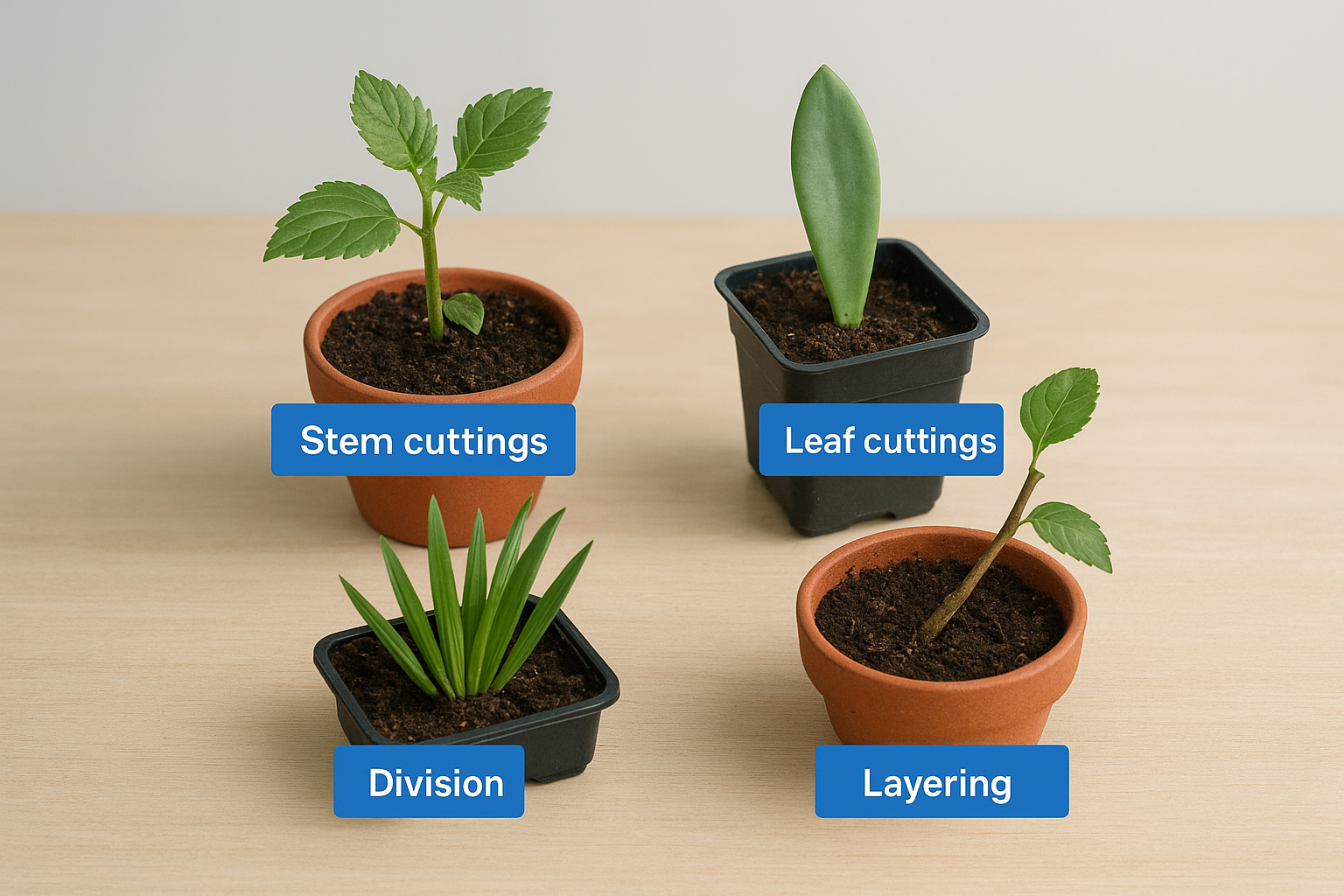
Here's a quick comparison of the most common asexual methods:
| Method | Plant parts used | Best for |
|---|---|---|
| Stem cuttings | Shoot segments with nodes | Shrubs, groundcovers, herbs |
| Leaf cuttings | Whole or partial leaves | Succulents, begonias, sansevierias |
| Division | Root clumps with shoots | Grasses, ferns, clumping perennials |
| Layering | Attached stems | Woody shrubs, climbing plants |
| Grafting | Bud or shoot joined to rootstock | Fruit trees, roses |
When asexual propagation is the better choice
Choosing asexual propagation makes the most sense when genetic consistency matters and when speed is a priority. A stem cutting taken from a healthy parent plant can root within weeks, while seeds from the same species might take months to produce a plant of comparable size. For large-scale planting plans in residential or commercial projects across Malaysia, where visual uniformity and timeline efficiency both matter, vegetative methods give you far more control over the outcome than seed propagation can.
Popular propagation techniques and examples
Knowing what is plant propagation in theory is useful, but seeing how specific techniques apply to real plants makes the knowledge practical. Each method has a clear application tied to a plant type, a growth stage, or a desired outcome, and choosing the right one for your situation is what separates successful propagation from frustrating trial and error. The following techniques are the most widely used in home gardens and professional landscape projects alike.
Stem cuttings: the most widely used technique
Stem cuttings work across a wide range of plant types, from soft-stemmed herbs like basil and mint to woody shrubs like bougainvillea and ixora. You cut a healthy shoot just below a node, remove the lower leaves, and place the cutting in a rooting medium like perlite, coarse sand, or a quality potting mix. Within two to six weeks, depending on the species and conditions, roots begin developing at the cut end, and you have a new plant ready to pot or transplant.
Taking cuttings in the morning, when stems are fully hydrated, consistently improves rooting success compared to cuttings taken later in the day.
Softwood cuttings, taken from young, actively growing shoots, root faster but wilt more easily. Semi-hardwood cuttings, taken from slightly older growth, are tougher to handle but more forgiving in variable humidity conditions, which matters in outdoor propagation setups across Malaysia.
Division and layering for established plants
Division is one of the fastest propagation methods available. You dig up a clump-forming plant, split it into sections using a clean spade or knife, and replant each section with its roots intact. Lemongrass, heliconia, bird of paradise, and most ornamental grasses respond extremely well to this technique. The divisions establish quickly because they already carry a functioning root system, so there's no waiting for roots to develop from scratch.
Layering takes a different approach. Instead of separating plant material first, you encourage a still-attached stem to develop roots before cutting it free. Air layering is particularly useful for woody plants like ficus or croton that are difficult to root from cuttings. You wound a section of stem, wrap it with damp sphagnum moss, and seal it with plastic wrap. Once roots fill the moss ball, you cut the stem below the root mass and pot the new plant independently.
Grafting and budding for trees and shrubs
Grafting joins a shoot or bud from one plant onto the established root system of another. You use this method when you want the growth characteristics of one variety combined with the root vigor or disease resistance of another. Mango and citrus trees in Malaysian gardens are commonly produced this way, allowing growers to combine productive fruiting varieties with rootstocks that handle local soil conditions more reliably.
Key terms that make propagation easier
When you first dig into what is plant propagation, the terminology can slow you down before you even get started. Words like "node," "callus," and "rootstock" appear constantly in propagation guides, and without a clear understanding of what they mean, following instructions accurately becomes harder than it needs to be. Getting these terms straight early saves you from making avoidable mistakes and helps you read any propagation resource, from a seed packet to a botany guide, with confidence.
Terms tied to plant biology
Several terms describe specific structures or biological processes that propagation methods depend on. Knowing what each one refers to, rather than guessing from context, gives you a real advantage when you're working hands-on with plants.
Understanding what a node actually is, and why cuttings need to include one, is the single piece of knowledge that prevents most beginner stem-cutting failures.
Here are the core biological terms you'll encounter most often:
- Node: The point on a stem where a leaf, bud, or branch attaches. Roots on stem cuttings almost always develop at or near a node, so every cutting you take should include at least one.
- Internode: The section of stem between two nodes. This part doesn't produce roots, so it's the section you typically trim away when preparing a cutting.
- Meristematic tissue: A group of undifferentiated cells capable of generating new growth. These cells are what make vegetative propagation biologically possible because they can differentiate into roots, shoots, or leaves depending on the signals they receive.
- Callus: A mass of undifferentiated cells that forms over a wound or cut surface. In cuttings and grafts, callus tissue usually develops before visible roots appear, and its presence is a sign the plant is actively responding to the propagation process.
- Dormancy: A period of reduced metabolic activity in seeds or plants. Some seeds require a dormancy break before they'll germinate, which is why stratification or scarification techniques exist.
Terms tied to technique and process
The second set of terms you'll run into describes specific propagation procedures rather than plant structures. These come up most often in step-by-step guides and nursery contexts.
Rootstock refers to the rooted base plant used in grafting, the one that supplies the root system. The scion is the shoot or bud grafted onto it to supply the above-ground growth. Together they form a single plant that combines the strengths of both. Stratification means exposing seeds to cold, moist conditions to simulate winter and break dormancy, while scarification involves physically scratching or soaking a hard seed coat to allow water to penetrate and trigger germination.
How to propagate a plant step by step
Understanding what is plant propagation becomes most useful the moment you actually do it. The process looks different depending on the method you choose, but stem cuttings are the best starting point for most beginners because they work across a wide range of species, require minimal equipment, and produce results quickly enough to give you useful feedback on what's working and what isn't.
Prepare your materials before you start
Before you touch the plant, gather what you need. Working with clean, sharp tools is not optional. A contaminated blade introduces fungal or bacterial pathogens directly into the cut surface, which is often why cuttings fail even when everything else looks right. Sterilize your pruning shears or knife with rubbing alcohol before each cut, and have your growing medium ready so the cutting spends as little time out of the soil as possible.
Here's what you need for a basic stem cutting setup:
- Sharp, sterilized pruning shears or knife
- A small pot or propagation tray with drainage holes
- A rooting medium such as perlite, coarse sand, or a 50/50 mix of both
- Rooting hormone powder or gel (optional but improves success rates for woody plants)
- A clear plastic bag or humidity dome to retain moisture
Take and prepare your cutting
Select a healthy, non-flowering shoot with at least two or three nodes. Cut the stem just below a node at a clean 45-degree angle, which increases the surface area available for rooting. Aim for a cutting that is 8 to 12 centimeters long for most shrubs and herbaceous plants. Remove the leaves from the bottom half of the cutting to prevent rot where the stem contacts the growing medium, but leave two or three leaves at the top so the cutting can still photosynthesize.
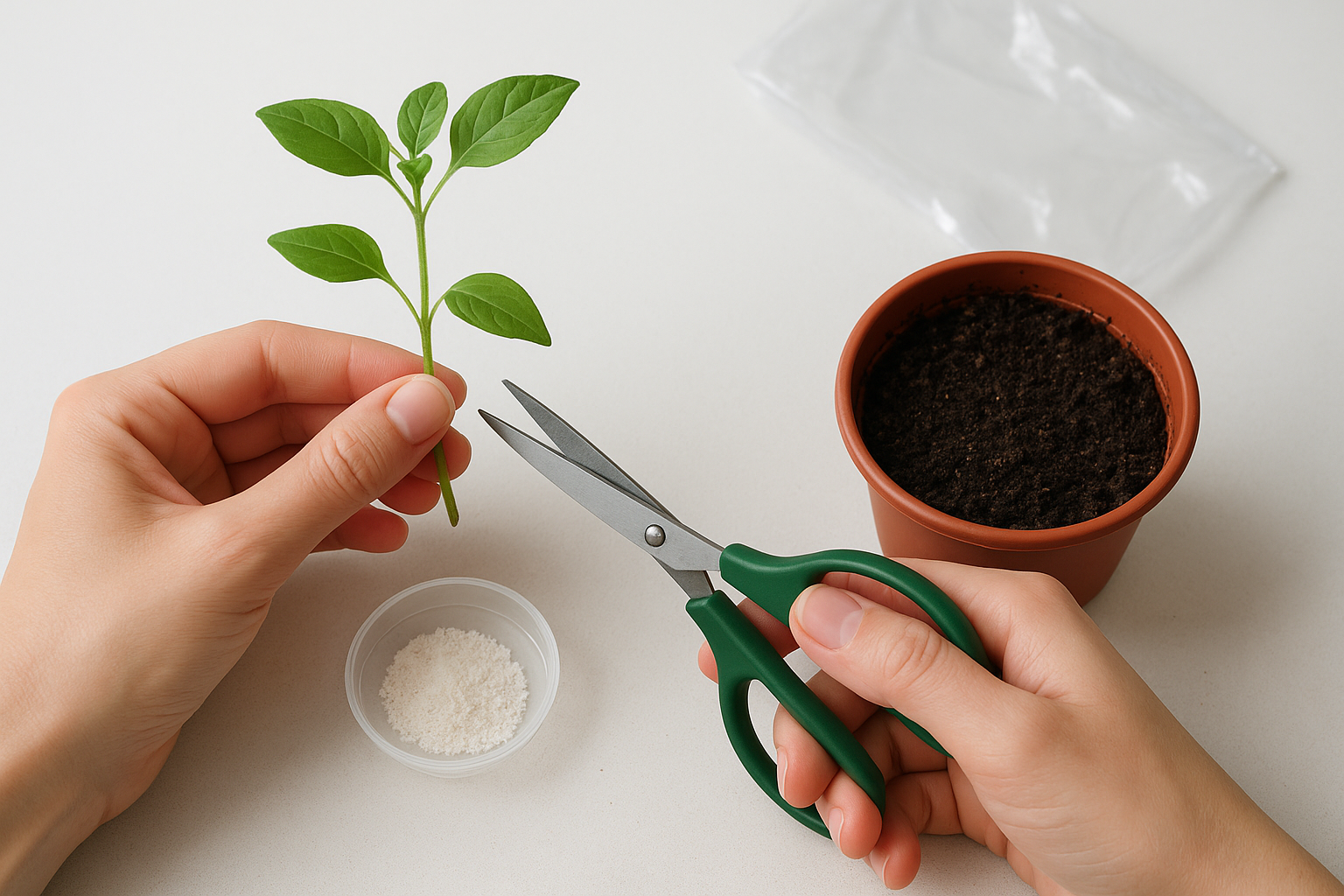
Dipping the cut end in rooting hormone immediately after cutting, before the wound surface dries out, gives the best chance of strong root development within the first two weeks.
Place the cutting and monitor it
Push the lower node of the cutting into your pre-moistened rooting medium about a third of its length. Firm the medium around the stem so it holds upright without gaps. Place the pot in bright, indirect light and keep the humidity high by covering it loosely with a plastic bag or dome. Check moisture levels every two days and mist lightly if the medium feels dry. Avoid direct sun at this stage since the cutting has no roots yet and cannot replace water lost through its leaves. After two to four weeks, tug gently on the stem. If it resists, roots have formed and you can begin transitioning it to normal growing conditions.
Choosing the right method for your plant
Once you understand what is plant propagation through hands-on practice, the real decision-making begins. No single method works equally well for every plant, and choosing the wrong one wastes time, growing medium, and healthy parent material you can't always replace. The right choice depends on three things: the biology of the plant you're working with, the specific traits you want the new plant to carry, and the time and resources you realistically have available before you need results.
Match the method to the plant's biology
Every plant species has a natural preference for how it reproduces, and working with that biology instead of against it makes a significant difference in your success rate. Soft-stemmed plants like coleus, impatiens, and most herbs root easily from stem cuttings with minimal intervention. Clump-forming species like lemongrass, bird of paradise, and ornamental grasses respond best to division because they already produce separate shoots with their own functioning root mass attached. Woody trees and named fruit varieties, like the mangoes and citrus trees common across Malaysian gardens, almost always require grafting to reproduce both the desired fruiting traits and the root vigor needed for reliable establishment in local soil conditions.
Trying to grow a named mango variety from seed is one of the most common propagation mistakes in home gardens because the seedlings rarely produce fruit that matches the parent.
Here's a quick reference to match plant type to propagation method:
| Plant type | Recommended method |
|---|---|
| Soft-stemmed herbs and shrubs | Stem cuttings |
| Clump-forming grasses and perennials | Division |
| Succulents and foliage plants | Leaf cuttings |
| Woody fruit trees and roses | Grafting or budding |
| Climbing or difficult-to-root shrubs | Air layering |
| Annuals and wildflowers | Seeds |
Factor in your timeline and resources
Your timeline matters just as much as the plant's biology when you make this decision. Division and stem cuttings produce usable plants in weeks, while seeds from the same species can take months to reach a comparable size. If you're working toward a planting deadline, whether for a new garden installation or a seasonal refresh, vegetative methods give you far more control over when your plants are ready to go in the ground.
Resources factor in too. Seeds cost very little upfront but demand more consistent attention during germination and the early seedling stage, where small lapses in moisture or temperature can wipe out an entire tray. Cuttings and divisions cost nothing if you have a healthy parent plant already growing, and they establish with less daily monitoring once roots form. For most Malaysian homeowners and garden designers working with established tropical species, starting with vegetative propagation gives you faster results and more predictable outcomes than relying on seeds.
Common mistakes and troubleshooting
Even when you understand what is plant propagation at a conceptual level, the gap between knowing the theory and executing it correctly is where most beginners lose plants. The most common propagation failures share a handful of root causes, and recognizing them early lets you correct course before you lose healthy parent material or miss a critical planting window.
Taking cuttings from the wrong growth stage
One of the most consistent mistakes is selecting flowering or stressed shoots for cuttings instead of healthy vegetative growth. A stem that's putting its energy into flower production has very little left to invest in root development, which is why cuttings from flowering branches root poorly or fail entirely. Always select stems that are actively growing but haven't yet started to flower, with firm tissue and healthy leaf color free from signs of pest damage or disease.
Timing within the day also matters more than most guides acknowledge. Stems cut in the early morning, when the plant is fully hydrated, root more reliably than those cut during afternoon heat, particularly in Malaysia's warm outdoor conditions where a severed cutting can wilt within minutes of losing contact with the parent plant.
Overwatering during the rooting phase
Overwatering is the most frequent reason cuttings rot before they root. Waterlogged growing medium cuts off oxygen to the base of the cutting, creating the exact conditions that fungal pathogens need to take hold. The goal during rooting is consistent moisture, not saturation. If you press your finger into the medium and it feels wet rather than just damp, hold off on watering for another day and check again before adding more moisture.
A cutting that wilts slightly is often recoverable, but one that rots at the base almost never is, so err toward drier conditions rather than wetter ones during the first two weeks.
Switching from standard potting mix to a well-draining rooting medium like perlite or coarse sand eliminates most moisture-related failures before they start. It costs very little and removes one of the most common variables that undermines otherwise solid technique.
Ignoring tool and container hygiene
Using unsterilized blades or reusing unwashed containers introduces bacteria and fungal spores directly into your propagation setup. The damage isn't visible immediately, but contamination at the cutting stage often surfaces weeks later as collapsed seedlings or blackened stem bases that seem to fail for no clear reason.
Wipe your cutting tool with rubbing alcohol before each use. Wash pots and trays with a diluted bleach solution, rinse them thoroughly, and fill them with fresh growing medium each time. This step takes under five minutes and prevents most pathogen-related failures that discourage beginners from trying again.
Wrap-up
Understanding what is plant propagation gives you a practical advantage whether you're managing a small home garden or planning a large landscape project in Malaysia. You now know the difference between sexual and asexual methods, how to take a stem cutting correctly, when to use division versus grafting, and what common mistakes to avoid. Each method serves a specific purpose, and matching it to the right plant and situation is what produces consistent, reliable results rather than guesswork.
Propagation knowledge directly shapes how good gardens are built and sustained. The more plants you can grow from existing stock, the more control you have over your design, your timeline, and your costs. If you want help turning that knowledge into a garden that actually works for your space and lifestyle in Malaysia, the team at Konzept Garden is ready to help. Get in touch with us to start planning your project.


