
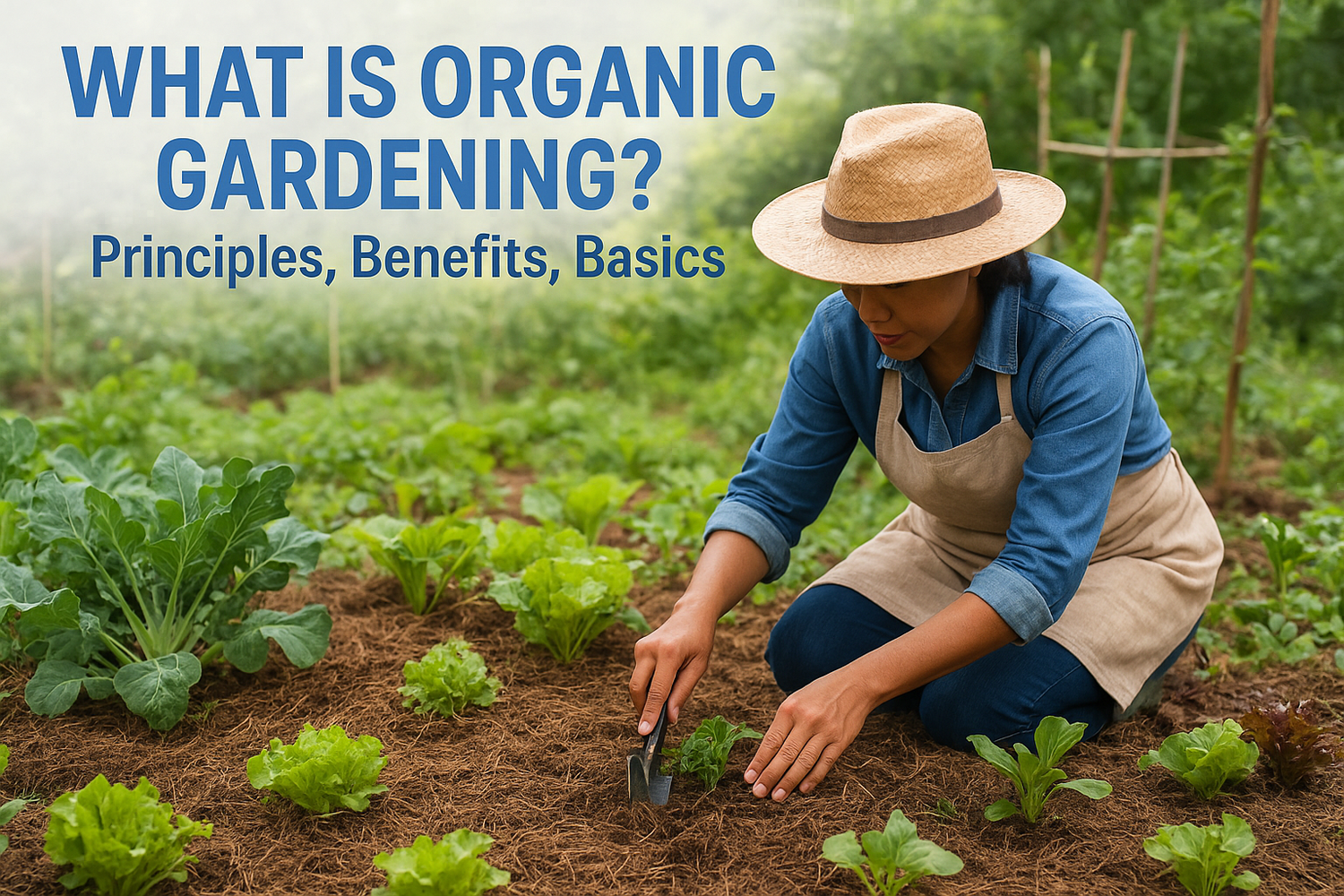
So, what is organic gardening? At its core, it's a method of growing plants without synthetic chemicals, no artificial fertilizers, no chemical pesticides, no lab-made herbicides. Instead, organic gardening relies on natural processes and materials to build healthy soil, manage pests, and produce thriving plants.
It sounds simple, but there's real depth to it. Organic gardening isn't just about swapping one product for another. It's a fundamentally different approach, one that works with natural ecosystems rather than against them. Understanding these principles matters whether you're tending a small herb bed on your balcony or planning a full garden landscape for your Malaysian home.
At Konzept Garden, we design outdoor spaces that respect and harness natural systems. That philosophy aligns closely with organic gardening principles, which is why we put this guide together. Below, we'll break down the core principles of organic gardening, how it differs from conventional methods, its practical benefits, and how to get started, even if you've never composted a day in your life.
What organic gardening really means
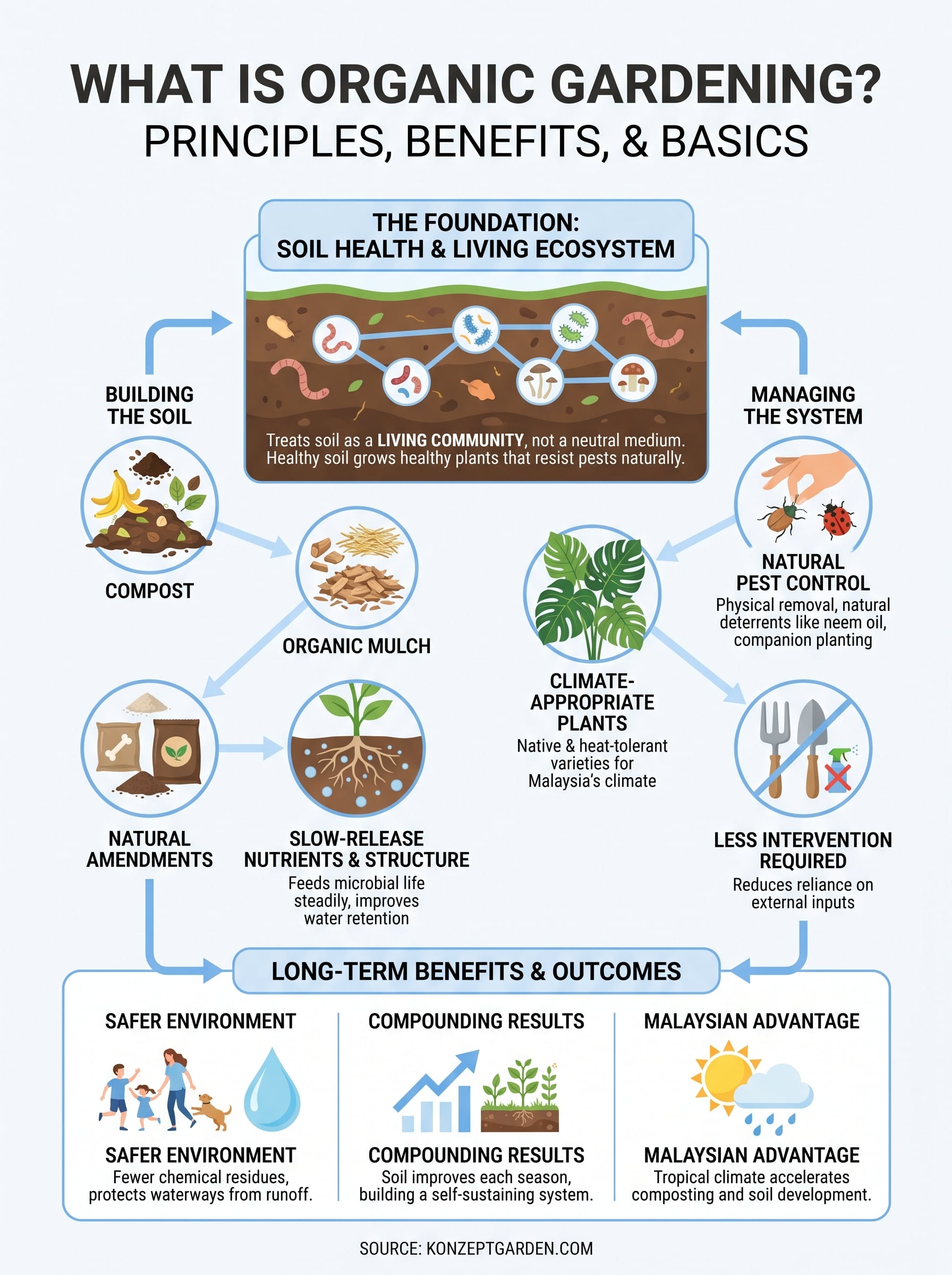
When you ask what is organic gardening, the honest answer goes beyond "no chemicals." It's a system built on soil health: the idea that healthy soil grows healthy plants, which in turn resist pests and disease naturally. You're not just feeding plants; you're feeding the living ecosystem beneath your feet.
The foundation: soil over shortcuts
Conventional gardening often treats soil as a neutral medium and relies on synthetic fertilizers to deliver nutrients directly to plant roots. Organic gardening treats soil as a living community of bacteria, fungi, worms, and microorganisms that do much of the work for you. When you build that community up instead of bypassing it, plants get nutrients in a form they can use steadily, rather than in concentrated chemical spikes.
Healthy soil is the single biggest factor separating a thriving organic garden from one that consistently struggles.
Building that soil means using compost, organic mulch, and natural amendments like bone meal or vermicast. These materials break down slowly, improving soil structure and drainage while feeding microbial life at the same time. You're creating conditions where plants can thrive long-term, not just for a single growing season.
What organic gardening is not
A common misconception is that organic gardening simply means buying "organic" labeled products at the garden center. That's part of it, but a label alone doesn't define the practice. Organic gardening is really about how you manage the whole system: the soil, water, plant selection, and pest management all work together. Swapping one synthetic product for a natural one while ignoring everything else misses the point entirely.
Your garden's design matters here too. Choosing plants suited to your local climate cuts down your need for intervention from the start. In Malaysia's humid tropical environment, that means selecting species that handle heat, heavy rainfall, and high humidity without needing chemical support to survive.
Why people choose organic gardening
People come to organic gardening for different reasons, but most share a common thread: they want more control over what goes into their soil, food, and surrounding environment. Once you understand what is organic gardening at a practical level, the reasons to adopt it become straightforward and compelling.
The shift to organic methods isn't just about what you remove from your garden routine; it's about what you build in its place.
Health, environment, and long-term results
Growing plants without synthetic pesticides means fewer chemical residues in your immediate environment. For families with children or pets who spend time outdoors, that reduction matters directly. Your garden becomes a space you can use freely, without concern about contact with recently treated soil or freshly sprayed plants. Runoff from synthetic fertilizers also affects local waterways, so going organic reduces your environmental footprint beyond your own property line.
Organic methods deliver compounding long-term benefits that conventional approaches simply cannot match. Synthetic fertilizers tend to deplete microbial soil life over time, locking you into heavier chemical inputs each season just to maintain the same results. Organic gardening builds a self-sustaining system instead, one that improves year after year rather than degrading under repeated chemical use.
Key practices that make a garden organic
Understanding what is organic gardening is one thing; putting it into practice is another. A handful of core habits separate an organic garden from a conventional one, and you don't need to implement everything at once.
Build your soil with compost
Composting kitchen scraps and garden waste turns organic matter into nutrient-dense material that feeds your soil's microbial life. Add compost regularly to your beds, and you'll see improved soil texture and water retention within a single growing season.
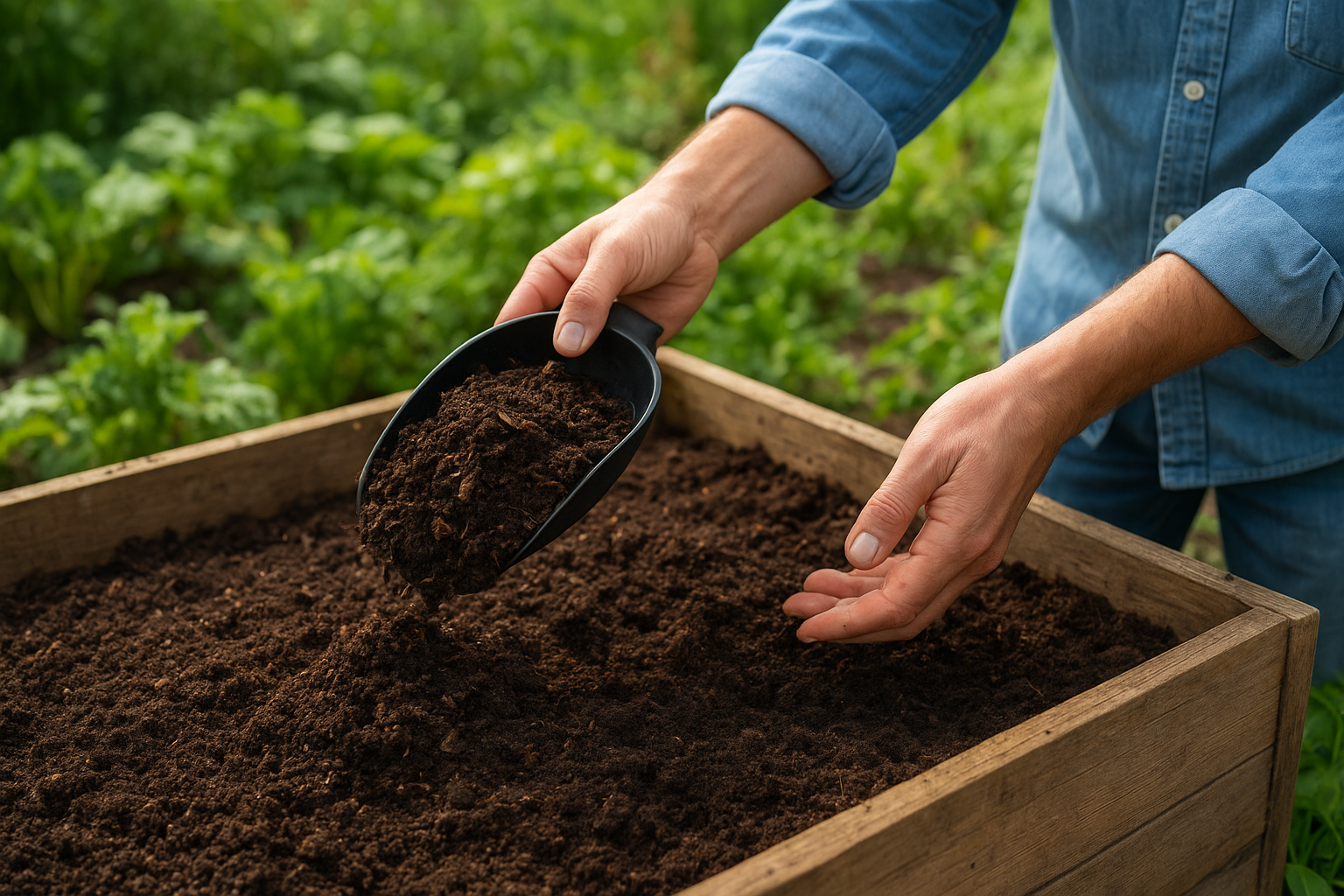
Compost is the single most impactful addition you can make to an organic garden.
You can also supplement compost with natural soil amendments like vermicast, bone meal, or organic mulch. These break down slowly, feeding your soil's ecosystem over time rather than delivering a short chemical spike.
Manage pests and select the right plants
When pests appear, rely on physical removal or natural deterrents like neem oil or companion planting instead of synthetic pesticides. These approaches protect the soil ecosystem you've worked to build.
Selecting climate-appropriate plant species also reduces your need for intervention from the start. In Malaysia's tropical conditions, native and heat-tolerant varieties naturally resist pests and disease, keeping your workload manageable.
How to start organic gardening in Malaysia
Malaysia's tropical climate gives you a real head start with organic gardening. The warm temperatures and consistent rainfall accelerate composting and soil development faster than in cooler climates, which means you'll see results more quickly once you commit to the process.
Understanding what is organic gardening in a local context means working with Malaysia's natural conditions rather than against them.
Start with your soil and water management
Heavy rainfall in Malaysia can strip nutrients from unprotected soil, so your first step is applying organic mulch over your beds. Mulch slows moisture loss between rains and prevents nutrient runoff during downpours, protecting the microbial community you're building.
Adding a simple compost bin using kitchen scraps like vegetable peel, coffee grounds, and garden trimmings gets you going fast. Malaysia's heat speeds up decomposition considerably, so you can have usable compost ready in six to eight weeks.
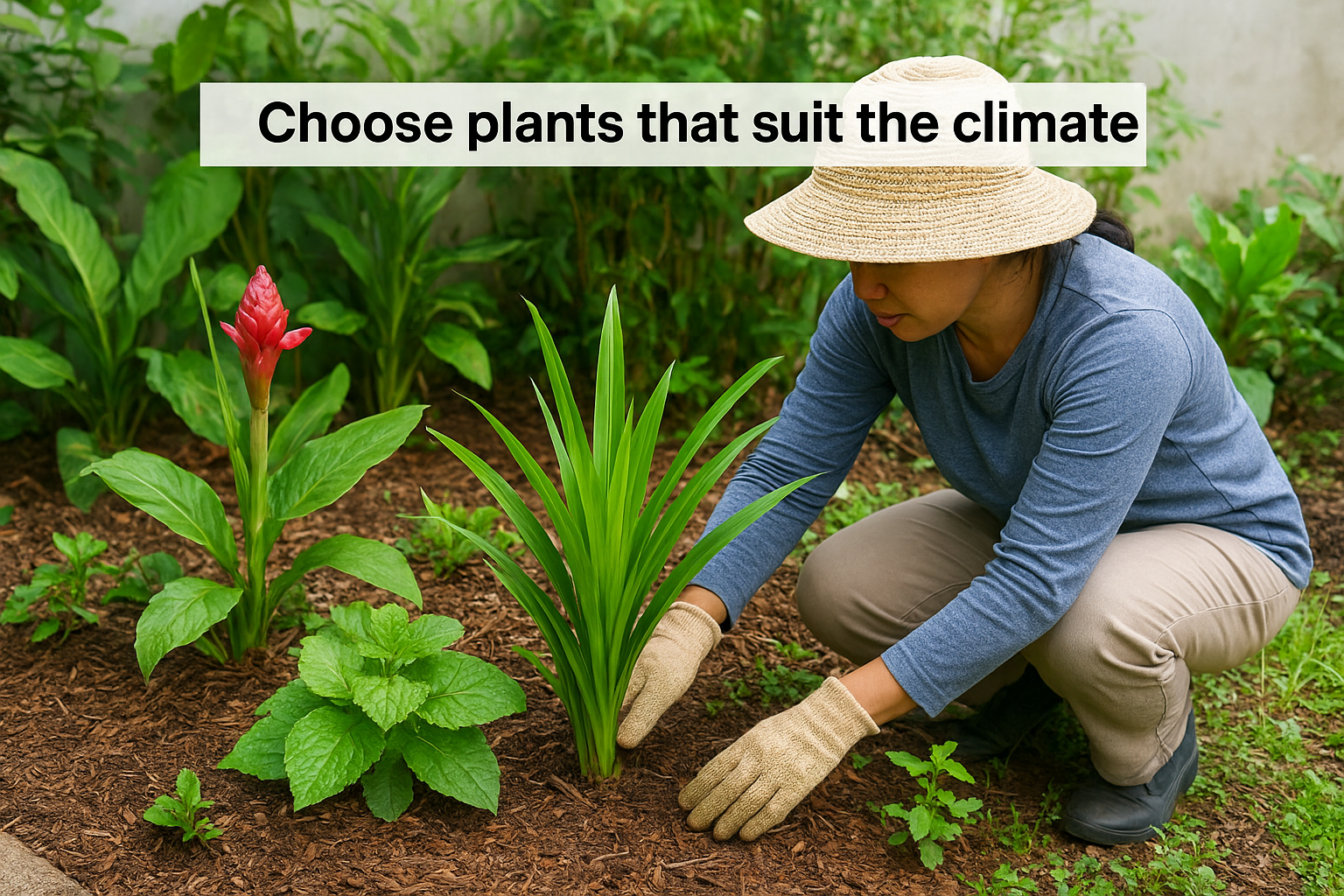
Choose plants that suit the climate
Selecting native or tropical species that already thrive in Malaysia's heat and humidity removes the need for chemical support from day one. Plants like pandan, torch ginger, and local herbs handle the conditions naturally, which keeps your pest management workload low and your soil ecosystem intact from the start.
Common mistakes and quick FAQs
Knowing what is organic gardening in theory doesn't prevent common beginner errors. Most mistakes come from rushing the process or expecting immediate results that organic systems simply aren't designed to deliver.
Mistakes that slow your progress
The biggest error is skipping soil preparation and jumping straight to planting. Without a living, nutrient-rich foundation, even the best plant choices will struggle. A second common mistake is using too little compost and expecting visible improvement within days, when weeks or months is the realistic timeframe.
Patience is the most underrated tool in organic gardening.
- Applying organic products randomly without understanding your soil's actual needs
- Overwatering, which destroys the microbial communities you've worked to build
- Ignoring companion planting, which naturally reduces pest pressure without any inputs
Quick answers you need
Can you start organic gardening in containers? Yes. Use a quality organic potting mix and feed with liquid compost tea or vermicast on a regular schedule.
Is organic gardening more expensive? Your startup cost can be higher, but long-term inputs drop significantly as your soil improves each season.
Does it work in Malaysia's climate? Absolutely. Malaysia's heat and rainfall actively accelerate composting and plant growth, giving organic methods ideal conditions to deliver results.
Wrap-up and next step
Now you have a clear picture of what is organic gardening: a soil-first approach that builds living, self-sustaining outdoor spaces without relying on synthetic chemicals or quick fixes. You've seen the core principles, the practical benefits, the key habits to adopt, and the specific steps that work in Malaysia's climate.
The most important takeaway is that organic gardening rewards consistency over shortcuts. Healthy soil takes time to build, but once it's established, your garden becomes easier to manage every season, not harder.
If you're ready to take your outdoor space further, working with a professional landscape designer helps you get the structure, plant selection, and design right from the beginning, which gives your organic approach the best possible foundation. Konzept Garden's team can help you plan a garden that works with Malaysia's natural conditions from day one. Talk to our team and get started.