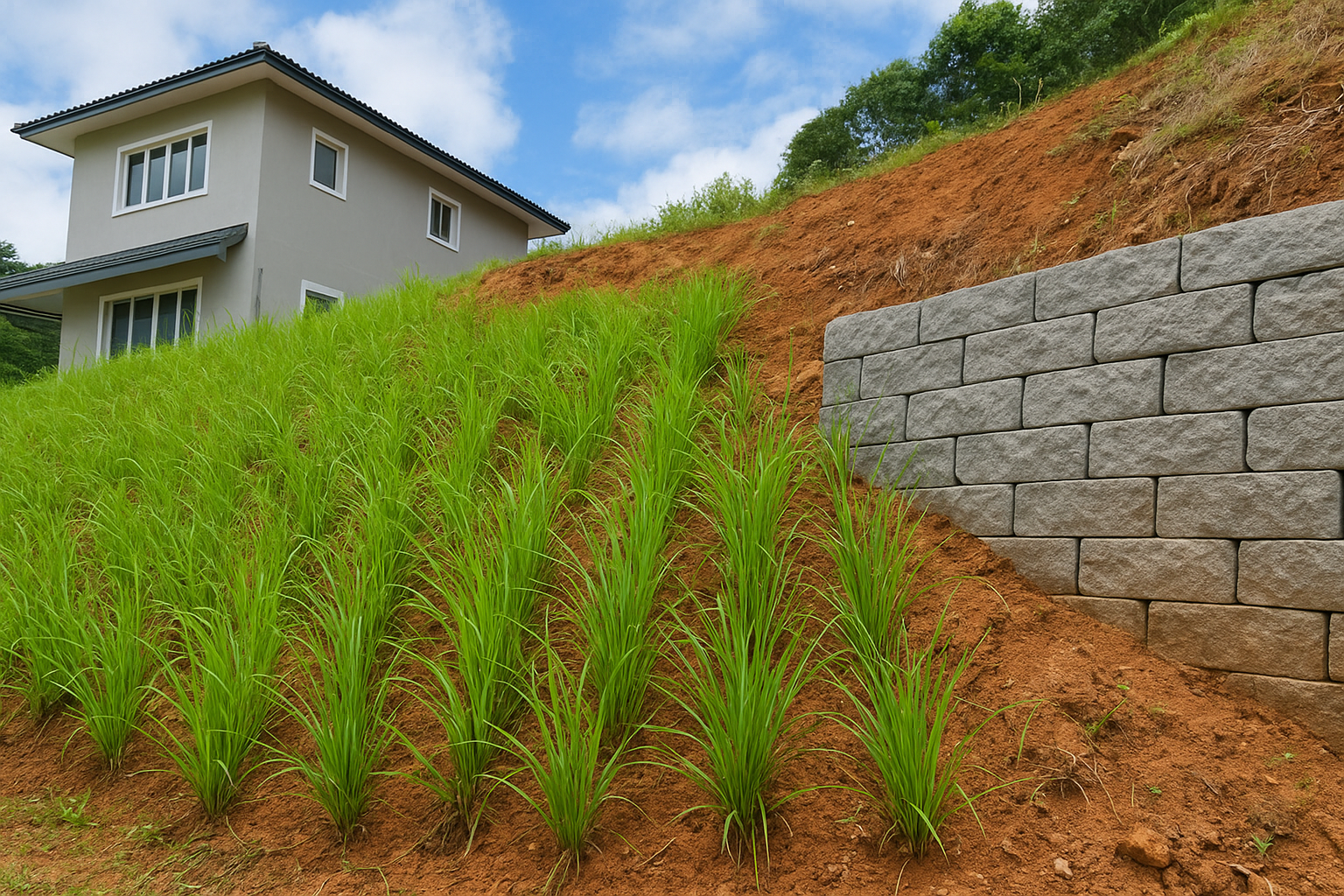


Your front yard is the first thing people see, and first impressions stick. If your current setup feels dated or uninspired, exploring modern front yard landscaping ideas can completely shift how your home presents itself to the street. A well-designed front yard doesn't just look good; it adds real value to your property and makes coming home feel different.
Modern front yard design leans into clean geometry, intentional plant choices, and materials that do more with less. It's not about stripping everything away, it's about giving every element a purpose. The result is a space that feels curated without looking overdone, and one that's far easier to maintain than a traditional garden.
At Konzept Garden, we've designed and built front yards across Malaysia that balance bold aesthetics with practical living. Drawing from that hands-on experience, we've put together 11 ideas that actually work, from structured hardscaping to living walls and statement planters. Whether you're planning a full redesign or just want to refresh what's already there, this list will give you a clear starting point for creating curb appeal that turns heads.
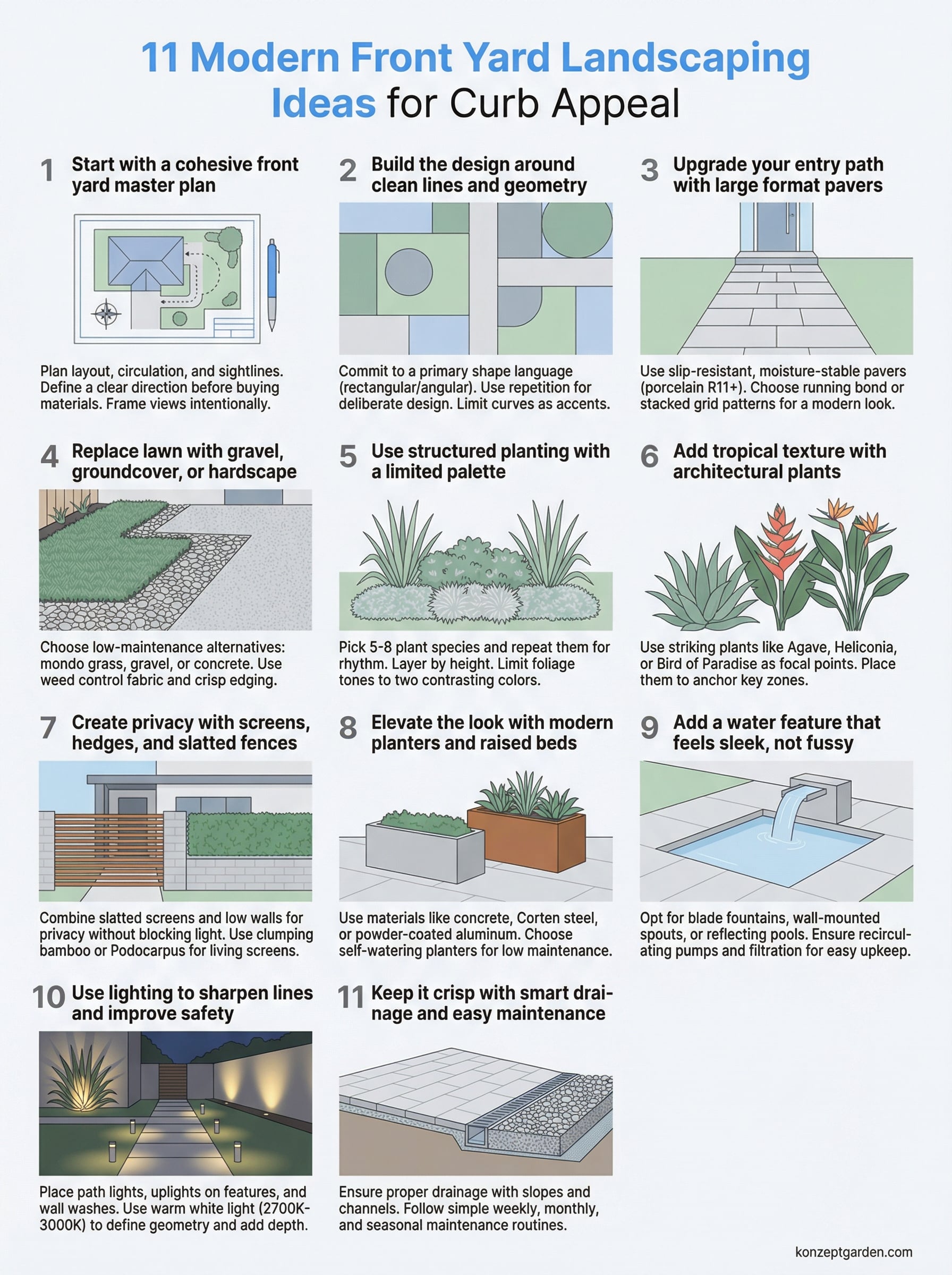
1. Start with a cohesive front yard master plan
Before you buy a single plant or paver, you need a plan that guides every decision. Most front yards that look disjointed didn't start with bad materials; they started without a clear direction. A master plan gives you a framework that ties everything together, from the driveway edge to the front door, so nothing ends up looking like an afterthought.
What makes a front yard feel modern
Modern front yards share a few common traits: restraint, repetition, and intentional contrast. Instead of filling every square meter with different plants and features, modern design picks fewer elements and uses them deliberately across the space. The goal is a yard that reads as one complete composition, not a collection of unrelated pieces accumulated over time.
The most effective modern front yard landscaping ideas aren't the most complicated ones; they're the most considered ones.
How to plan layout, circulation, and sightlines
Start by mapping your yard's key lines: the path to the front door, the driveway edge, the boundary walls, and any existing trees or structures you plan to keep. These lines form the skeleton of your design. Once you know them, you can layer plants, paving, and features that reinforce the overall geometry rather than work against it.
Sightlines matter more than most people expect. Think about what someone sees from the street, from the gate, and from inside the house looking out. A well-planned layout frames those views on purpose. For example, a low clipped hedge along the entry path draws the eye toward the front door rather than letting attention scatter across the yard.
When to hire a landscape designer in Malaysia
If your front yard involves any combination of retaining walls, drainage changes, or structural paving, bring a professional in early. These elements cost far more to fix after the fact than to get right from the start. A landscape designer can also help you navigate local material availability and pick plants that actually perform in Malaysia's heat and humidity.
Even for smaller projects, a single design consultation can prevent costly mistakes during construction. Contractors work faster and more accurately when they have clear plans to follow, rather than interpreting vague instructions on site. That's a small upfront cost that protects the entire project budget.
2. Build the design around clean lines and geometry
Geometry is the backbone of every strong modern front yard. When you commit to a clear shape language from the start, every other decision follows naturally. Without it, even premium materials can end up looking scattered and unresolved once the project is complete.
Picking a primary shape language for the yard
Most modern front yards rely on rectangular or angular geometry as their primary framework. Pick one dominant shape and carry it through your paving cuts, garden bed outlines, and border edges. Repetition across the yard is what makes the geometry read as deliberate design rather than coincidence.
Pick one dominant shape and treat any other geometry as a deliberate exception, not a habit.
Where straight edges work best and where curves help
Straight lines work best along driveways, entry paths, and boundary walls because the architecture already establishes a hard edge in those areas. You can introduce a gentle curve when you need to soften a large planting bed or work around an existing tree. The rule is to keep curves in the minority so they feel like an accent rather than an unresolved decision.
Common layout mistakes that break the modern look
The two most common mistakes in modern front yard landscaping ideas both come down to lack of restraint. Watch out for these:
- Random island beds with no geometric logic connecting them to the rest of the yard
- Mixing too many paving materials in a single small space, which adds visual clutter instead of character
- Curved and straight edges used equally across the same design, creating tension instead of contrast
3. Upgrade your entry path with large format pavers
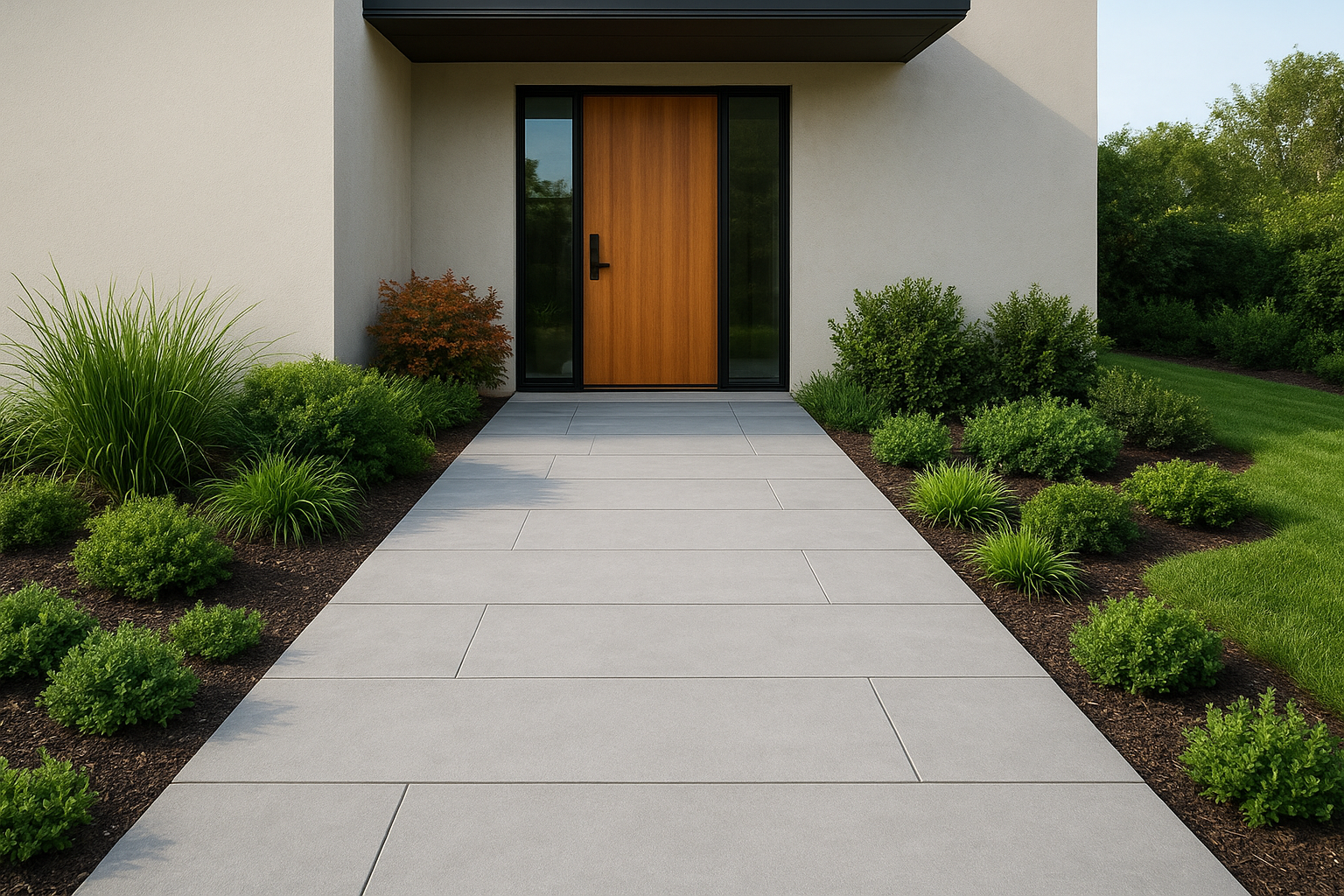
Your entry path is the first surface visitors actually walk on, and large format pavers make it count. Among all modern front yard landscaping ideas, upgrading this path delivers one of the highest visual returns for the investment. A wide, well-laid paver path reads as architectural confidence from the street before anyone reaches your front door.
Choosing pavers that suit Malaysia's rain and heat
Malaysia's tropical climate demands slip-resistant, moisture-stable materials that can handle both heavy rain and sustained UV exposure. Porcelain pavers rated R11 or above handle wet conditions without fading, cracking, or absorbing moisture the way softer stones do. Avoid unsealed sandstone or soft limestone; both deteriorate quickly here and become slippery hazards within a season.
The right material choice saves you from expensive replacement work within just a few years of installation.
Modern path patterns that look intentional
Running bond and stacked grid patterns are the most reliable layout choices for a modern front yard. Both reinforce straight-line geometry and let the scale of the pavers do the visual work without adding decorative complexity. Keep grout joints tight, between 5mm and 10mm, to maintain the clean surface plane that large format pavers are specifically designed to deliver.
Safety and accessibility details to get right
Level transitions and drainage falls determine how safe and functional your path stays over time. Two details to lock in during installation:
- A cross-fall of 1 to 2 percent to direct rainwater off the path surface and prevent pooling
- A flush threshold at the front door to eliminate trip hazards and improve accessibility
Correcting either of these after the pavers are laid costs far more than getting them right from the start.
4. Replace lawn with gravel, groundcover, or hardscape
Lawn looks great in theory but demands constant mowing, watering, and patching, especially in Malaysia's climate where grass grows fast and goes patchy in shade. Replacing it entirely is one of the most practical modern front yard landscaping ideas you can act on, and the result is a front yard that looks sharper with far less upkeep.
Low-maintenance lawn alternatives that still look green
You don't have to choose between a dead-looking yard and a high-maintenance lawn. Groundcovers, gravel, and hardscape all hold their look year-round with minimal intervention. Here are three solid alternatives that suit Malaysia's climate:
- Mondo grass or Liriope: Stays dense and green with almost no trimming, handles shade well
- Decomposed granite or river gravel: Drains fast after heavy rain and pairs cleanly with paving
- Exposed aggregate or brushed concrete: Extends your architectural surfaces into planted areas
How to avoid the "rock desert" look
A gravel-heavy yard fails when there's no contrast or organic element breaking up the surface. Intersperse planting pockets within your gravel beds and use at least one bold architectural plant to anchor the space.
A good gravel design uses plants to bring life to the surface, not as an afterthought scattered on top.
Weed control and edging that actually lasts
The single biggest threat to any gravel or groundcover installation is weed breakthrough from below. Lay a quality geotextile fabric under your gravel before you start, not cheap plastic sheeting that degrades within a year. Pair that with steel or aluminum edging to keep gravel contained and bed outlines crisp through wet and dry seasons.
5. Use structured planting with a limited palette
Plant variety is not a virtue in modern front yard landscaping ideas. The yards that look the most resolved are the ones where five to eight plant species repeat throughout the space, creating rhythm and unity rather than a catalogue effect. More variety means more visual noise, and modern design thrives on the opposite.
How to pick 5 to 8 plants and repeat them
Start by choosing one anchor plant that defines the character of the yard, then build outward with supporting species that share similar textures or growth habits. Repeat each plant in at least two or three locations across the yard so the eye moves through a coherent pattern rather than stopping to inspect each individual plant.
Repetition is what transforms a collection of plants into a designed landscape.
Layering by height without blocking windows and doors
Arrange your plant selection across three height bands: ground-level cover, mid-height mass planting, and a taller accent. Keep everything below window sill height in front of facade openings so you maintain sightlines from inside the house and avoid blocking natural light into the ground floor.
Color rules for a calm, modern front yard
Limit your planting palette to two foliage tones, typically a deep green and either a silver-grey or chartreuse, to create contrast without chaos. Save flowering plants for contained spots like raised beds or entry planters rather than spreading them throughout the yard, where mixed bloom colors will compete with your hardscape and undercut the clean look you're building toward.
6. Add tropical texture with architectural plants
Malaysia's native flora gives you access to some of the most striking architectural plants available anywhere in the world. Using them intentionally is one of the most distinctive modern front yard landscaping ideas available to Malaysian homeowners, because the tropical climate lets you achieve a level of bold texture that temperate gardens simply cannot replicate.
Best bold-leaf and sculptural choices for Malaysia
The most effective architectural plants for Malaysian front yards combine large leaf structure with a compact, manageable growth habit. Strong performers to consider include:
- Agave attenuata: Clean rosette form, low water needs, suits dry gravel beds
- Heliconia: Bold upright leaves with strong vertical presence
- Dracaena varieties: Architectural branching with striking foliage tones
- Strelitzia reginae (Bird of Paradise): Dense clumping habit and graphic leaf shape
Where to place feature plants for maximum impact
Place your boldest architectural specimen at the point where the eye naturally lands first, typically beside the entry path, near the gate, or flanking the front door. Anchor one plant per focal zone rather than grouping multiples of the same species in a single spot.
One well-placed architectural plant does more for curb appeal than five plants arranged without intention.
Scatter feature plants randomly and you lose the visual weight that makes them work. Each specimen should connect to a hardscape edge, a planting bed boundary, or the building line to feel grounded in the overall composition.
How to keep them tidy and proportional
Remove dead or damaged leaves as soon as they appear to preserve the sculptural silhouette that makes these plants read as intentional in a modern setting. Before you plant, verify the mature spread of each species so proportions stay balanced against your facade as the plant fills out over time.
7. Create privacy with screens, hedges, and slatted fences
Privacy and openness don't have to conflict. Among modern front yard landscaping ideas, boundary design is where many homeowners default to solid walls that feel more like fortifications than designed spaces. The goal is to filter views and define your boundary without closing the yard off from the street entirely.
Privacy solutions that still feel open and modern
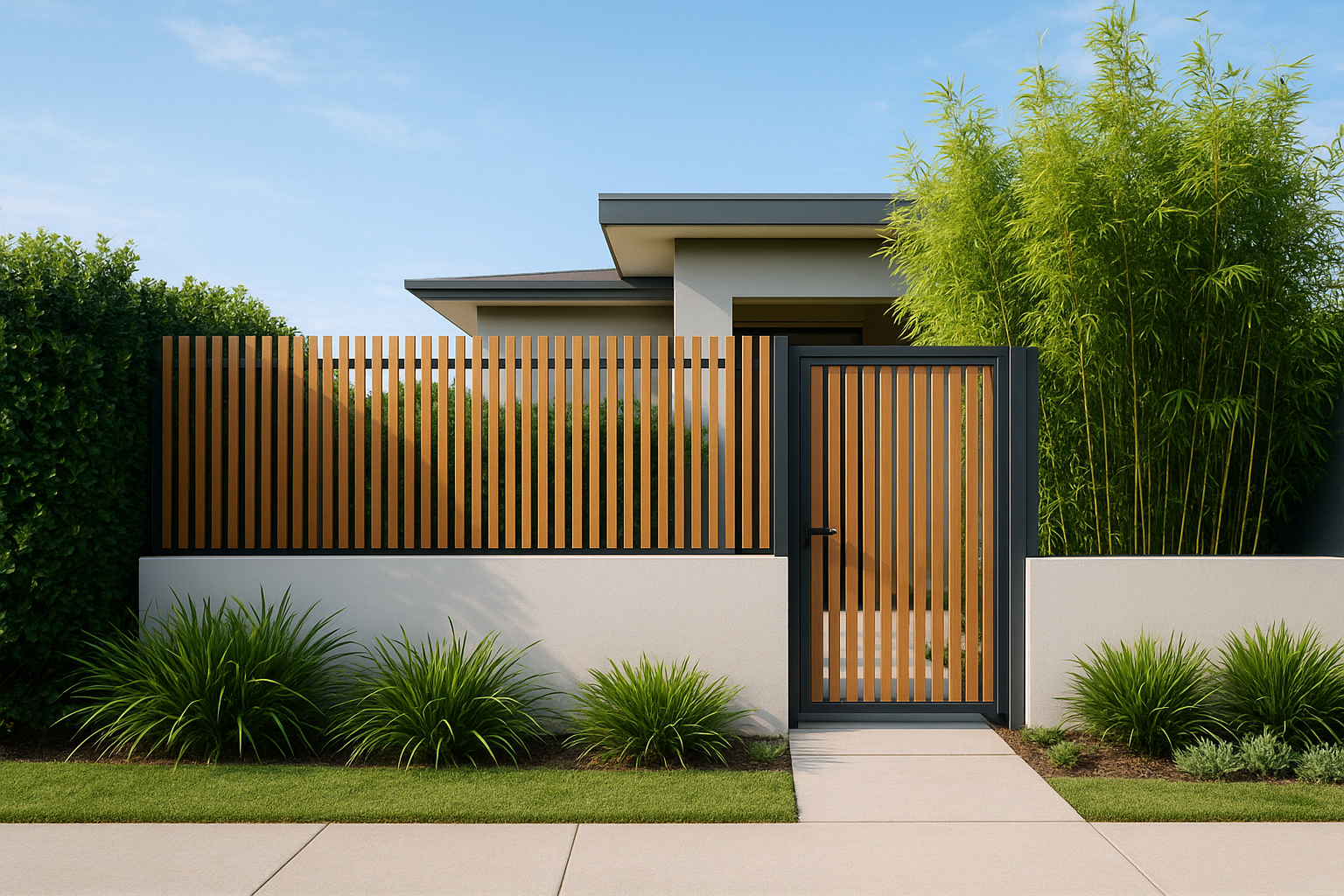
Slatted timber or aluminum screens deliver the best balance between privacy and visual lightness. Vertical slats spaced 50 to 80mm apart block direct sightlines while still allowing air circulation and glimpses of planting behind them.
The most effective privacy screens frame your yard rather than seal it off.
Pair your screen with a low masonry wall at 600mm to 900mm high to anchor it architecturally. This combination gives you a grounded base with a lighter upper layer rather than a single oppressive surface running the full height of the boundary.
Plants that work as living screens in the tropics
Clumping bamboo varieties like Bambusa textilis grow dense and tall without the invasive spread of running species. Podocarpus macrophyllus is another strong choice because it responds well to tight clipping, holds a clean column form, and handles full sun without browning out in Malaysian heat.
Gate and frontage tips to match the architecture
Your gate is the focal point of your boundary, so its material and proportion need to reference the house directly. Match the gate's finish and panel rhythm to your fence or screen so the whole frontage reads as one designed element rather than a series of separate purchases assembled at different times.
8. Elevate the look with modern planters and raised beds
Planters and raised beds do more than hold plants. In modern front yard landscaping ideas, they function as architectural elements that define zones, add height variation, and bring the planting much closer to eye level where it makes the strongest visual impact.
Materials that read modern and handle outdoor exposure
Concrete, Corten steel, and powder-coated aluminum are the three materials that consistently hold up in Malaysia's humidity and UV exposure without looking tired within a few years. Avoid resin or lightweight plastic options; they fade, warp, and flex in ways that undercut the sharp edges a modern yard depends on.
Your raised beds should match or directly reference the hardscape materials already in the yard. If your paving is concrete-toned, a concrete planter reinforces the palette. If your fence is powder-coated aluminum, bring that finish into your planter selection.
How self-watering planters reduce maintenance
Self-watering planters with a built-in reservoir, like the Ziant Hydro Planter, dramatically reduce how often you need to water, particularly during dry spells or when travel keeps you away from home. The reservoir feeds the plant from below, which also encourages deeper root growth and reduces surface evaporation.
A self-watering planter keeps your front yard looking cared for even when your schedule doesn't allow for daily maintenance.
Planting combinations that look sharp year-round
Choose plants that hold consistent foliage density through Malaysia's wet and dry seasons. Pairing a structural plant like a compact Dracaena with a low spreading groundcover at the base gives each planter a clear vertical hierarchy that reads well from the street across every month of the year.
9. Add a water feature that feels sleek, not fussy
A water feature brings movement and sound to a front yard without requiring extra planting or ornamentation. Among modern front yard landscaping ideas, water elements are often avoided because they seem high-maintenance, but the right design is actually straightforward to run and clean.
Modern water feature styles that suit front yards
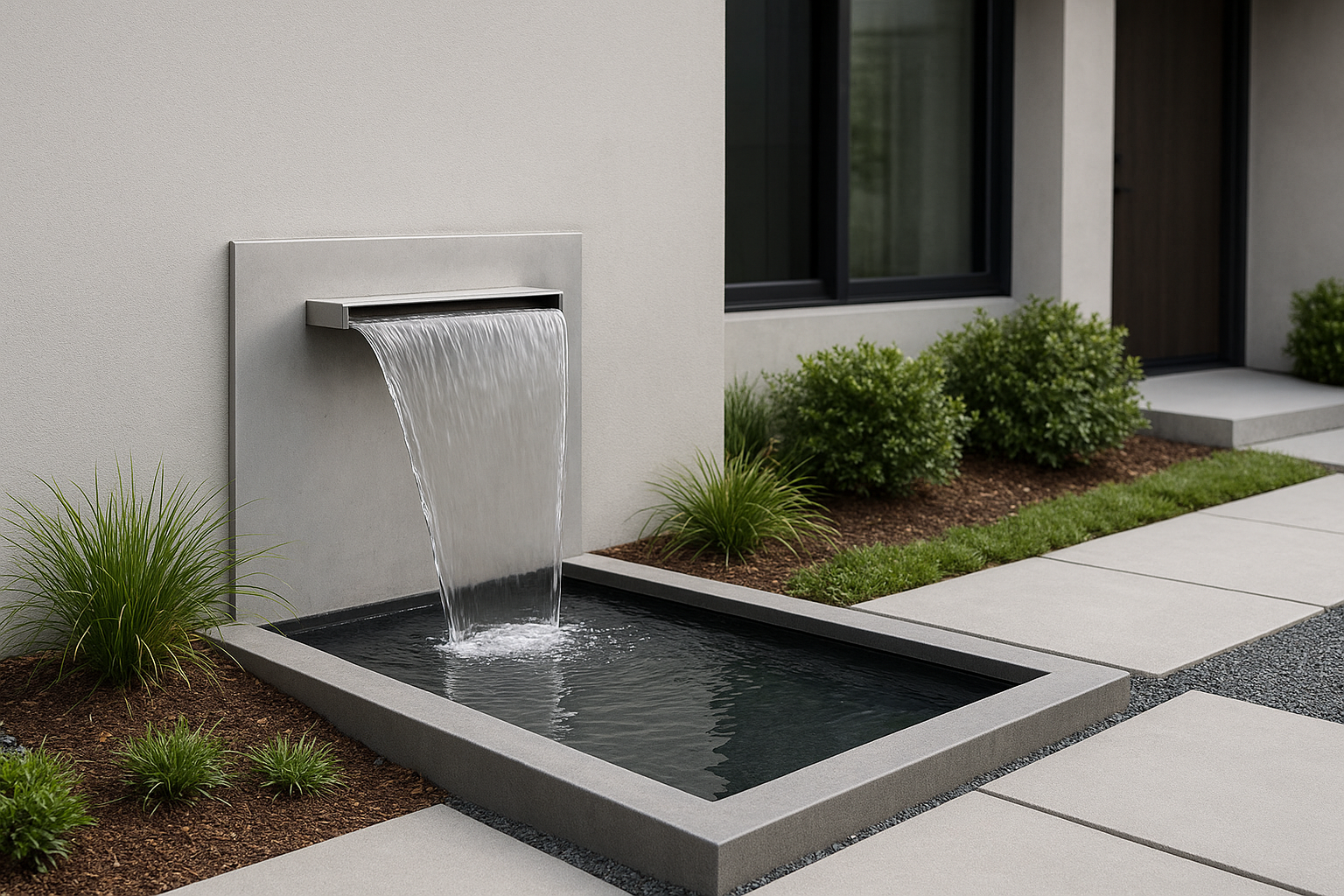
Blade fountains, wall-mounted spouts, and shallow basin bowls suit the clean geometry of a modern front yard far better than tiered fountains or naturalistic rock arrangements. Keep the form minimal and the water movement controlled. A single horizontal channel with a thin sheet of water falling into a narrow trough delivers both sound and visual interest without crowding a compact front yard.
Why filtration, sound, and safety matter
Standing water with no circulation becomes a mosquito breeding ground within days in Malaysia's heat, so a recirculating pump with basic filtration is non-negotiable, not optional. Choose a pump rated for continuous outdoor use and pair it with a fine mesh pre-filter to reduce cleaning frequency.
A well-filtered water feature runs quietly and cleanly for years; a neglected one becomes a liability within weeks.
Sound level also matters. A low, consistent water sound softens traffic noise, but a feature that splashes too loudly feels disruptive from inside the house.
Koi ponds versus reflecting pools for curb appeal
Reflecting pools work best in tight front yards because they add visual depth without the biological load of fish. Koi ponds deliver stronger character but require dedicated filtration, regular water testing, and enough surface area for the fish to thrive long-term.
10. Use lighting to sharpen lines and improve safety
Lighting is one of the most underused tools in modern front yard landscaping ideas, yet it transforms the same yard into two completely different spaces, one for daylight and one for after dark. Well-placed fixtures define your geometry at night, improve safety along the entry path, and make the investment you've put into your landscaping visible long after the sun goes down.
Where to place path lights, uplights, and wall washes
Path lights belong along your entry route, spaced evenly to mark the walkway without creating a runway effect. Use uplights at the base of architectural plants or feature trees to cast dramatic shadows up the facade, which sharpens vertical elements and adds depth. Wall wash fixtures mounted low on boundary walls graze the surface with light and emphasize texture in concrete or rendered finishes.
Consistent fixture spacing along your path signals intent; uneven placement makes the whole yard look improvised.
Warm versus cool light for modern exteriors
Warm white light in the 2700K to 3000K range suits planted areas and timber surfaces because it brings out natural tones without washing them out. Cool white at 4000K works better on concrete, stone, or painted render where you want crisp definition rather than warmth. Mixing both temperatures in a single yard creates visual incoherence, so commit to one range across the whole scheme.
Glare, spill, and neighbor-friendly lighting rules
Shielded or directional fixtures keep light on your property and off neighboring windows. Aim every uplight inward toward the facade or planting, and cap path light output at levels that illuminate the ground safely without creating glare at eye level for anyone walking past.
11. Keep it crisp with smart drainage and easy maintenance
The sharpest modern front yard landscaping ideas fall apart quickly without two things working in the background: water going where it should and a maintenance routine you'll actually follow. Both are far easier to lock in during construction than to retrofit after the fact.
Rain management essentials for Malaysian homes
Malaysia's rainfall is intense and unpredictable, so drainage design is not optional in any front yard. Grade all paved surfaces away from your foundation at a minimum 1 to 2 percent slope, and install a linear drain channel at the base of steps or along the driveway edge to capture runoff before it pools.
Getting drainage right during construction costs a fraction of what water damage repairs will cost later.
Low-effort maintenance routines that protect the design
Weekly checks take under 15 minutes and prevent the slow deterioration that makes a front yard look neglected. Clear debris from drainage channels, wipe down planter surfaces, and trim any plant growth that has started to break your bed outlines.
Monthly tasks should include checking your irrigation emitters for blockages, flushing your water feature pre-filter, and inspecting gravel beds for weed emergence along edges where fabric coverage is thinnest.
A simple seasonal checklist for a modern front yard
Running through this list every three months keeps your front yard in top condition year-round:
- Inspect edging strips for movement or lift after heavy rain
- Trim architectural plants back to their intended silhouette
- Test all lighting fixtures and replace any failed lamps
- Top up gravel beds where settling has exposed the geotextile layer below
Next steps for a front yard that looks modern
Every modern front yard landscaping idea covered in this guide works because it starts with intention. You now have a clear framework: plan the layout first, commit to geometry, choose materials that hold up in Malaysia's climate, and keep your plant palette tight. None of these steps require a massive budget to execute well, but they all require doing things in the right order.
Pick two or three ideas from this list that address your biggest current problem, whether that's a dated entry path, an overgrown boundary, or a front yard that simply has no clear structure. Starting with a focused scope keeps costs manageable and lets you see results quickly before expanding the project. If you want expert guidance on bringing these ideas together into a complete design, speak with a Konzept Garden landscape specialist and get a clear plan built around your specific property.