
Japanese gardens are some of the most intentional outdoor spaces ever created. Each rock, path, and plant placement carries meaning, nothing is accidental. But not all Japanese gardens look or function the same way. There are distinct types of Japanese gardens, each shaped by centuries of cultural, spiritual, and artistic tradition. Understanding these differences is the first step toward deciding which style resonates with your own space.
At Konzept Garden, we design outdoor environments across Malaysia that draw from proven design principles, including those rooted in Japanese garden philosophy. Whether you're drawn to the stillness of a dry rock garden or the lush layers of a strolling garden, knowing what defines each type helps you make informed choices before breaking ground.
This article walks you through eight recognized Japanese garden styles, their origins, core design features, and what makes each one worth considering for your next landscape project.
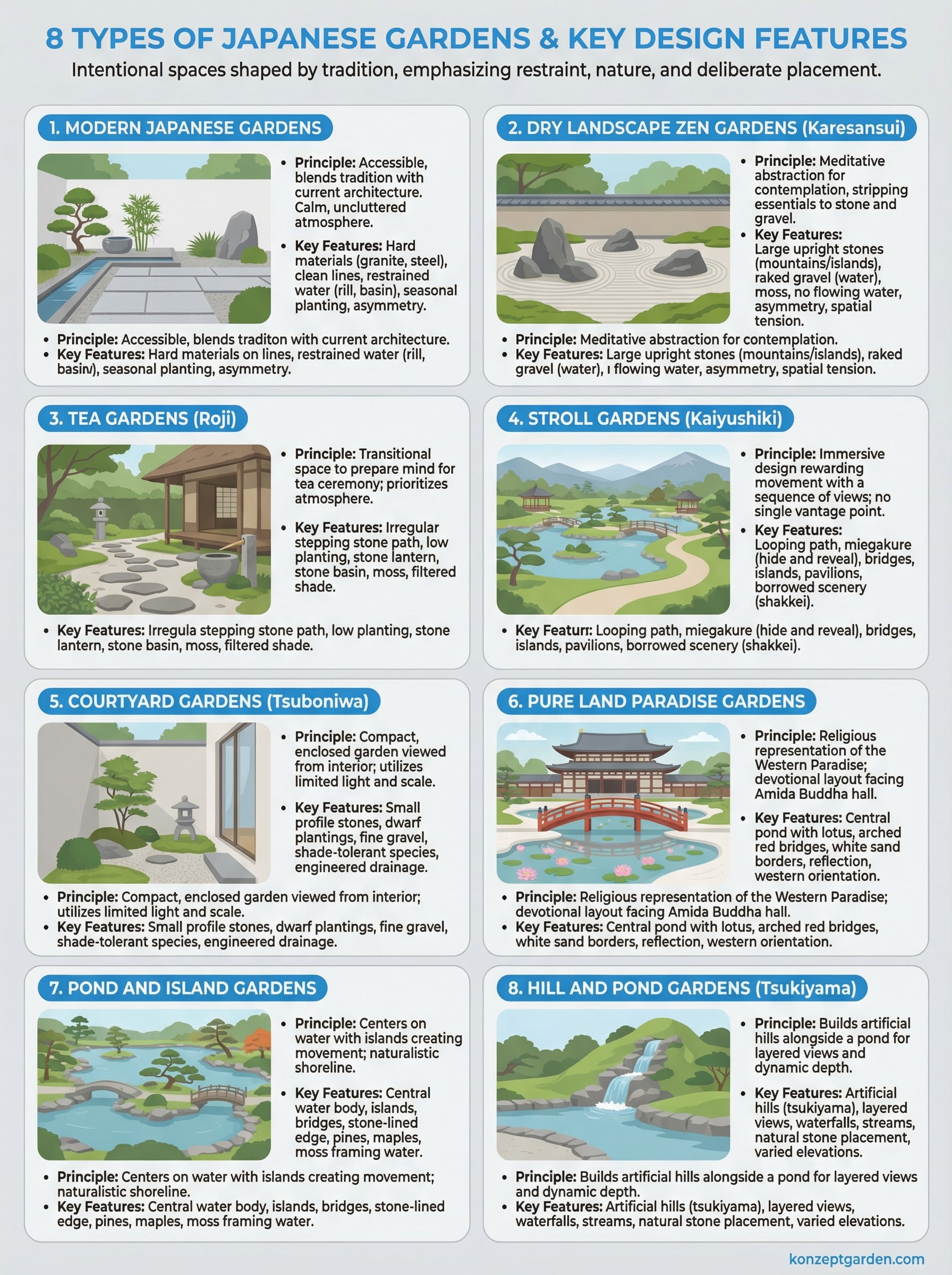
1. Modern Japanese gardens
Modern Japanese gardens didn't emerge in isolation. They evolved from classical traditions but shed the strict spiritual frameworks of older styles, making them one of the most accessible types of Japanese gardens for contemporary homeowners and designers to work with today. This style blends traditional Japanese sensibility with current architectural thinking, producing spaces that feel clean, grounded, and intentional without being rigid or museum-like.
What defines a modern Japanese garden
A modern Japanese garden keeps the core principles of its predecessors: asymmetry, restraint, and a deliberate connection to nature. What changes is the execution. Instead of recreating historical scenes or Buddhist symbolism, this style responds to the space it occupies. The goal is a calm, uncluttered atmosphere that works alongside the architecture of the home rather than existing separately from it.
Key design features and materials
Structure comes from hard materials such as granite, slate, steel edging, and sealed timber. Clean lines and low horizontal planes are common throughout the layout, and gravel or decomposed granite often covers ground areas. Large specimen stones anchor focal points without crowding the space. Water features, when included, stay restrained: a narrow rill, a still basin, or a simple bamboo spout rather than an elaborate waterfall.
Simplicity in a modern Japanese garden is a deliberate design decision, not a sign of minimal effort.
Planting approach and seasonality
Plants are chosen for their form and seasonal behavior rather than for abundance. You might see Japanese maples for autumn color, clipped azaleas for structural mass, or ornamental grasses for movement. Layering is minimal but purposeful, with most planting done in odd numbers and spaced to avoid crowding. Ground covers like moss or low sedges fill in without competing with the key specimens.
Best places to see this style in Japan
If you visit Japan, the Adachi Museum of Art in Shimane Prefecture maintains one of the finest examples of a modern Japanese garden, consistently ranked among the best in the country. The Isamu Noguchi Garden Museum in Takamatsu also shows how a contemporary design approach can honor Japanese aesthetic tradition without mimicking it.
How to adapt the style in Malaysia
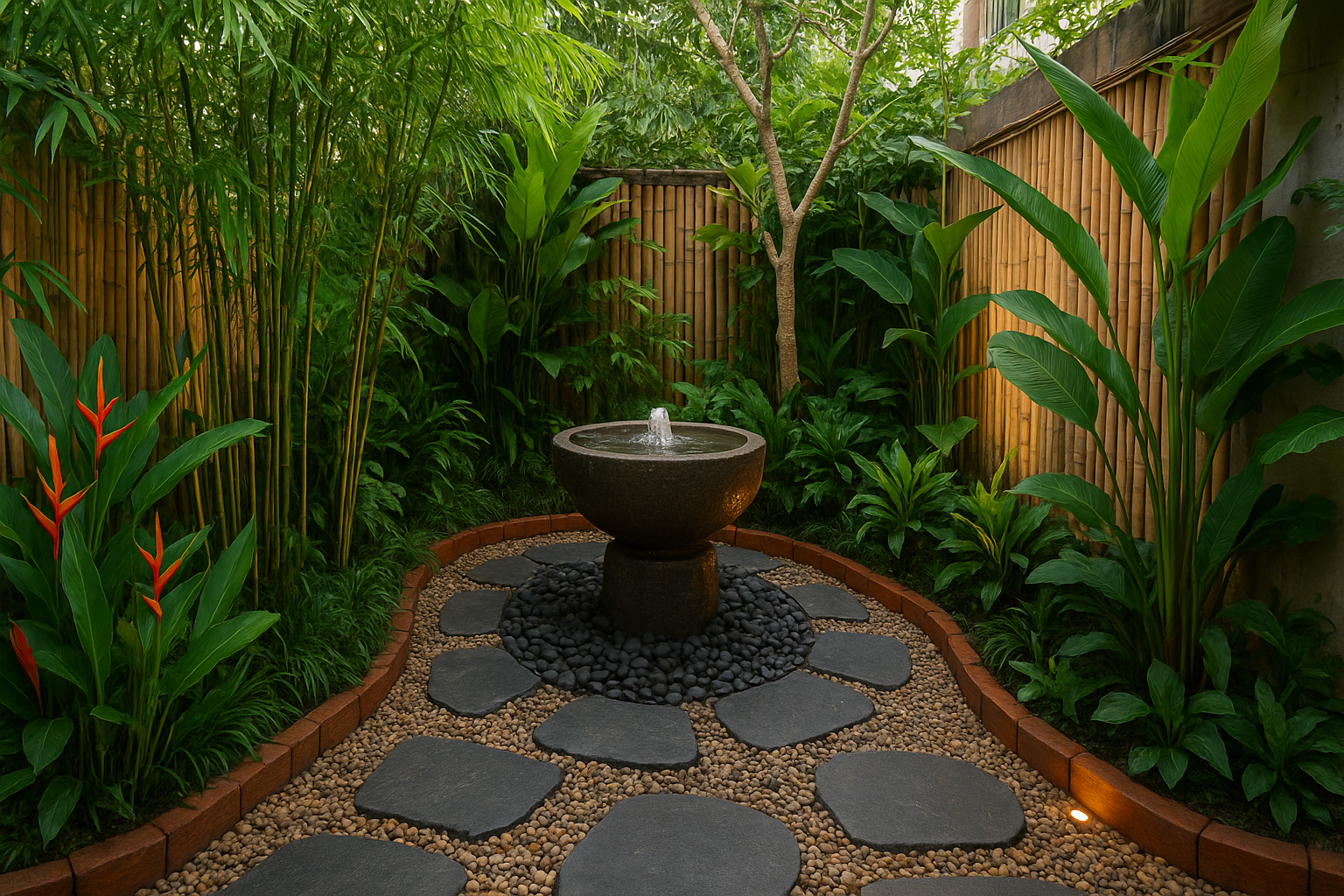
Malaysia's tropical climate suits this style well because lush greenery is already in abundance, which means restraint becomes a powerful tool. Swap Japanese maples for compact specimens like dwarf Heliconia or sculptural Agave, and source local granite or river stones to maintain authenticity. The principle is editing: fewer plants, clearly defined spaces, and materials that breathe.
2. Dry landscape Zen gardens
Dry landscape gardens, known in Japanese as karesansui, rank among the most recognized types of Japanese gardens worldwide. They strip the garden down to its most essential components: stone, gravel, and occasionally moss, with no flowing water in sight despite often representing rivers, seas, and mountains.
What a karesansui garden represents
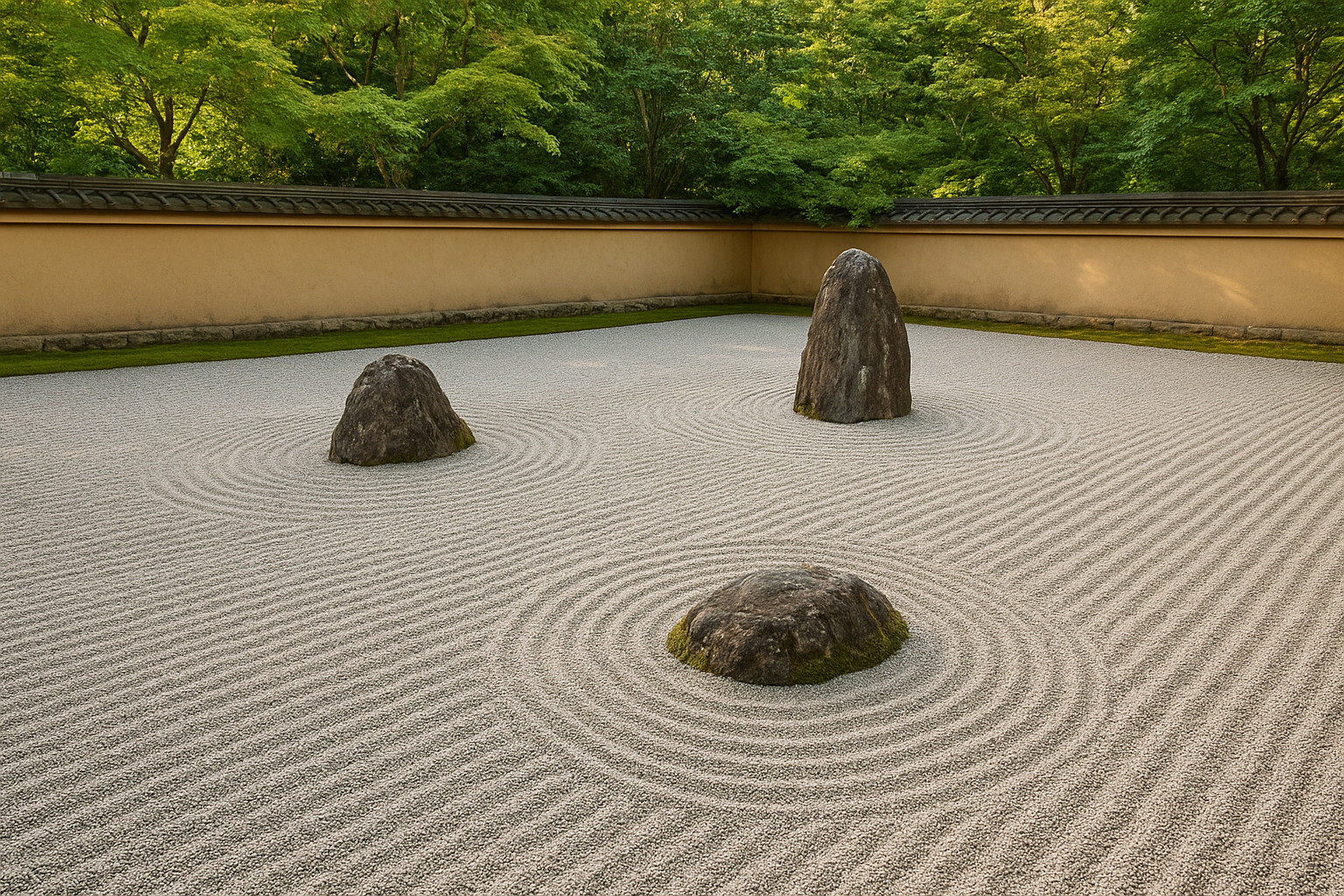
A karesansui garden is a meditative exercise in abstraction. Monks at Zen Buddhist temples built these spaces as tools for contemplation, not recreation. Large upright stones symbolize mountains or islands, while raked gravel evokes flowing water. The composition asks you to slow down and look more carefully at what is actually there.
Key design features and layout rules
The layout follows strict principles of asymmetry and spatial tension. Stones sit in odd-numbered groupings of three, five, or seven, and each placement creates a deliberate relationship with the others. Enclosing walls or low hedges define the boundary and hold your eye inside the composition rather than letting it drift outward.
How raked gravel patterns work
Raked gravel serves a dual purpose: it suggests movement and requires regular maintenance that itself becomes a meditative act. Straight lines indicate open water, while circular patterns around stones suggest ripples or waves. Consistent rake depth and spacing are what separate a polished karesansui from a rough imitation.
The raking is not decoration. It is a daily practice that keeps the garden alive.
Best places to see this style in Japan
Ryoanji Temple in Kyoto holds the most studied dry landscape garden in existence. The temple's main garden contains fifteen stones arranged so that no single viewpoint reveals all of them simultaneously.
How to adapt the style in Malaysia
Malaysia's humidity makes pure karesansui challenging to maintain since moss and algae colonize gravel quickly. Choose coarser crushed granite or locally sourced river pebbles instead of fine Japanese gravel, and treat the surface periodically. Keep stone groupings tight and surrounding planting minimal.
3. Tea gardens
Tea gardens, called roji in Japanese, developed alongside the formal tea ceremony tradition and represent one of the most purposeful types of Japanese gardens ever designed. Unlike garden styles built primarily for visual spectacle, a tea garden exists entirely to prepare the visitor's mind before they enter the tea house.
What a tea garden is designed to do
The roji functions as a transitional space between the outside world and the tea ceremony. Every step along the path slows you down and shifts your attention inward. The physical journey through the garden is inseparable from the mental preparation the ceremony requires, which means the design prioritizes atmosphere over appearance.
Key design features of a roji path
The path uses irregular stepping stones set at a deliberate pace that forces you to look down and move carefully. Low planting on either side keeps distractions minimal. Moss-covered ground and worn stone create a sense of age and quiet that shapes your mood well before you reach the door.
The roji is not a walkway. It is the first act of the tea ceremony itself.
Tea garden elements and what they mean
A stone lantern, called a toro, provides soft light for evening gatherings without disrupting the meditative mood. A stone basin, or tsukubai, requires you to crouch low to wash your hands, a gesture that signals humility and readiness before entering the tea house.
Best places to see this style in Japan
Urasenke in Kyoto preserves one of the most authentic roji gardens still in active use. The garden remains a working teaching space where students experience the roji as a functional ceremonial element rather than a historical display.
How to adapt the style in Malaysia
You can recreate the roji spirit by using local river stones as stepping elements and planting low ferns or Selaginella along the path edges. Keep the route slightly winding and limit overhead planting to filtered shade rather than a full canopy.
4. Stroll gardens
Stroll gardens, known as kaiyushiki, are among the most immersive types of Japanese gardens you can experience. Unlike static styles that frame a single fixed composition, stroll gardens reward movement, continuously revealing new scenes as you follow the path through the space.
What makes a garden a stroll garden
A stroll garden organizes its layout around a looping path that circuits the entire property, typically encircling a central pond. The design assumes you are walking, and your experience shifts with every step you take. No single vantage point captures the whole garden, which makes exploration the core intention rather than passive observation.
Key design features and the "sequence of views"
Stroll gardens use a principle called miegakure, meaning "hide and reveal", where curved paths and deliberate plantings block sightlines so each turn delivers a fresh composition. Bridges, islands, and pavilions mark the route at regular intervals, giving you moments of pause before the next view opens.
The sequence of views is the garden's real architecture, not the individual features within it.
Borrowed scenery and viewpoint design
Shakkei, or borrowed scenery, incorporates distant landscapes beyond the garden boundary into the visual experience. Designers position framing elements such as gates, low hedges, or stone clusters so that mountains or tree canopies outside the boundary become part of what you see from inside.
Best places to see this style in Japan
Kenrokuen in Kanazawa is one of Japan's three celebrated gardens and a clear example of the stroll format, combining ponds, streams, and seasonal plantings across a large site. Korakuen in Okayama offers equally varied terrain, including rice paddies and tea fields alongside its central pond.
How to adapt the style in Malaysia
Applying the hide-and-reveal principle works even in smaller Malaysian plots by curving paths and using tall plants to break direct sightlines. Position local palms or Heliconia clusters as natural screens and place a seating area at the path's end to give the walk a clear destination.
5. Courtyard gardens
Courtyard gardens, known as tsuboniwa, are among the smallest types of Japanese gardens you will encounter. Designers developed them to fit within the tight internal courtyards of traditional machiya townhouses, creating complete miniature landscapes between walls.
What a tsuboniwa garden is
A tsuboniwa is a compact enclosed garden designed to be viewed from surrounding interior rooms rather than entered and walked through. Its boundaries are fixed on all sides, so every stone, plant, and layer of gravel carries deliberate visual weight within the composition.
Key design features for tiny spaces
Scale defines everything here. Designers work with small-profile stones, dwarf plantings, and fine gravel to suggest a complete landscape within just a few square meters. A single specimen plant paired with one well-placed stone and a spread of moss can carry the entire composition without feeling sparse.
Every element earns its place in a tsuboniwa; nothing survives simply because it looks nice in isolation.
Light, drainage, and privacy considerations
Tsuboniwa sit between walls, so light is limited and drainage must be engineered deliberately. Designers raise planting beds slightly and select shade-tolerant species like ferns, bamboo, or moss that thrive without direct sun. The enclosed setting naturally creates privacy, turning the garden into a calm interior view.
Best places to see this style in Japan
Nishiki Tenmangu Shrine in Kyoto includes a tsuboniwa that demonstrates how a small enclosed garden achieves a fully resolved composition. The historic machiya townhouses along Kyoto's Nishiki district offer additional examples integrated into working domestic architecture.
How to adapt the style in Malaysia
Malaysian shophouses and modern terrace homes often include narrow side passages or internal light wells that suit this format directly. Swap Japanese mosses for local shade-tolerant plants like Asplenium ferns or compact Dracaena, and keep stone placement minimal to maintain openness.
6. Pure land paradise gardens
Pure land paradise gardens stand apart from other types of Japanese gardens because their origins lie entirely in religious belief rather than aesthetics or ceremony. Aristocratic patrons commissioned these gardens during the Heian period (794-1185) to recreate the Western Paradise described in Pure Land Buddhist scripture, making them the most literally symbolic garden tradition in Japan.
The origin of Pure Land gardens
Pure Land Buddhism taught that the faithful would be reborn in Amida Buddha's paradise after death, a realm defined by jeweled ponds, lotus flowers, and radiant light. Garden designers translated this vision into physical spaces on estate grounds, creating living representations of an afterlife that patrons could walk through and experience while still alive.
These gardens were acts of devotion first, and design second.
Key design features and symbolic layout
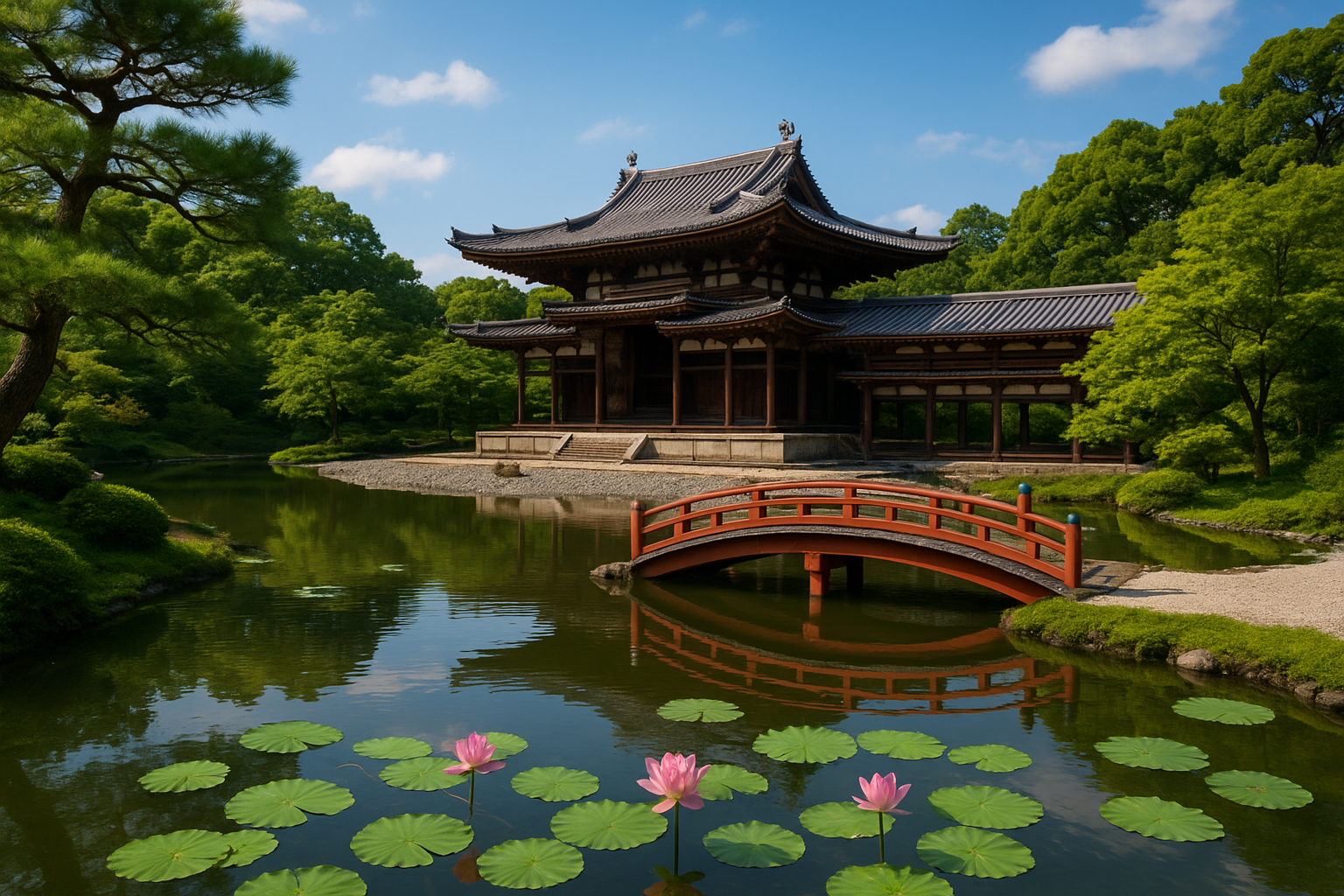
The layout places a central pond directly in front of a hall dedicated to Amida Buddha, so the building reflects across the water and mirrors the appearance of the heavenly palace described in scripture. Pathways curve around the pond's edge, and the garden is oriented to face west, the direction from which Amida is said to arrive.
Typical elements like lotus ponds and bridges
Lotus plants fill the pond because they represent purity rising from murky water, a central Buddhist metaphor. Arched bridges in red lacquer connect islands within the pond, and white sand or gravel borders the water's edge to intensify the reflection of light and sky.
Best places to see this style in Japan
Byodoin Temple in Uji, Kyoto Prefecture provides the clearest surviving example, with its Phoenix Hall reflected across a lotus pond in exactly the way original designers intended. The Motsuji Temple garden in Hiraizumi, Iwate Prefecture preserves the earthwork foundations of another Heian-period Pure Land garden.
How to adapt the style in Malaysia
You can capture the spirit of this style by positioning a still water feature directly in front of a focal structure such as a pavilion or garden wall. Plant local lotus varieties or water lilies and keep the surrounding ground material pale to maximize reflection. The symbolic framework doesn't require religious intent to produce a deeply calm and purposeful garden space.
7. Pond and island plus hill and pond gardens
Pond and island gardens, called shinden-zukuri in their earliest form, and hill and pond gardens, known as tsukiyama, represent two of the most visually rich types of Japanese gardens in the classical tradition. Both styles center on water as the primary organizing element, but they approach the relationship between land and water differently.
How pond and island gardens differ from tsukiyama
Pond and island gardens place the water body at the center of the composition, with islands and bridges creating movement across the surface.
Tsukiyama gardens build artificial hills alongside the pond, using the elevation change to create layered views and a more dynamic sense of depth than a flat layout can achieve.
Key design features shared by both styles
Both styles rely on careful stone placement along the water's edge to create a naturalistic shoreline. Plantings of pine, maple, and moss anchor the surrounding ground and frame the water from multiple angles without blocking the view across it.
The pond is not a feature within the garden; it is the foundation the entire composition grows around.
Water design options: ponds, streams, waterfalls
Your water element can range from a still reflective pond to a moving stream or tiered waterfall. Each option shifts the atmosphere: still water produces calm and reflection, while moving water adds sound and energy to the experience.
Best places to see these styles in Japan
Kinkakuji Temple in Kyoto demonstrates the pond and island format with its gold pavilion reflected across Kyoko-chi pond.
Kokedera, the Moss Temple in Kyoto, shows a quieter version of the tsukiyama approach, where low hills and layered moss plantings surround a still central pond.
How to adapt the styles in Malaysia
Malaysia's natural rainfall makes pond maintenance straightforward, and locally sourced river stones suit the shoreline aesthetic well.
Pair a small raised landform with a compact water feature to capture the tsukiyama dynamic even within a residential plot.
Next steps
Each of the types of Japanese gardens covered here operates on a clear set of principles: restraint, intentional placement, and a deliberate relationship between materials, plants, and space. Whether you're drawn to the meditative stillness of a karesansui or the immersive route of a stroll garden, the style you choose should reflect both your property's layout and how you actually want to use your outdoor space.
Water sits at the center of several of these styles, and Malaysia's climate supports aquatic elements particularly well. A well-designed koi pond can anchor an entire Japanese-influenced garden composition, providing a clear focal point from nearly every angle and bringing genuine calm to the space around it. Explore the Zen Bio Koi Pond to see how Konzept Garden handles custom pond design for Malaysian properties, or contact the team directly to talk through what a Japanese-inspired garden could look like for your site.