
A room can feel flat even when the furniture is right. In Malaysia's humid, busy cities, many homeowners fix that with moving water. The right indoor water fountain ideas add soft sound, a focal point, and a sense of calm, without a full garden renovation.
Here is the short answer. If you like hands-on projects, a DIY tabletop fountain costs little and takes an afternoon. If you want something finished and reliable, a ready-made fountain gives you a tested pump, a sealed basin, and a clean look. Both work well. Your choice depends on space, budget, and how much upkeep you want.
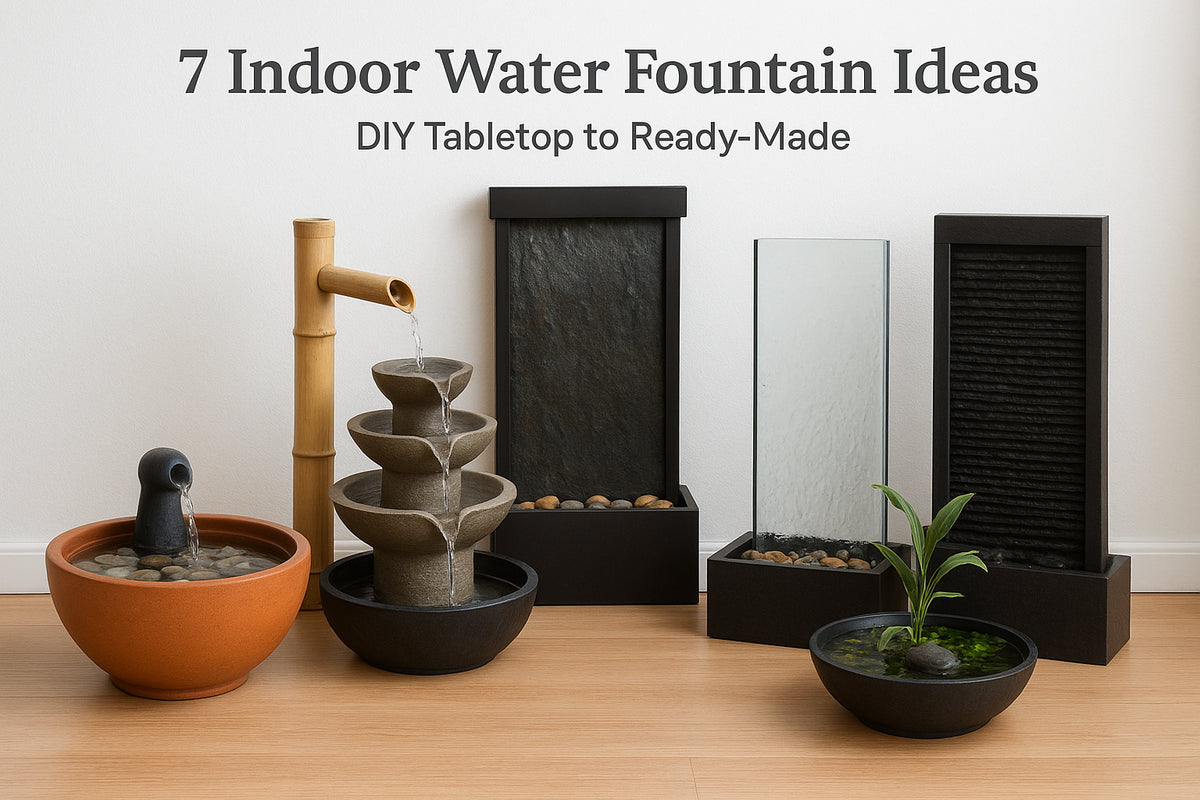
This article walks you through seven ideas, from a ceramic bowl and pebble setup to sleek wall-mounted designs. We are Konzept Garden, an award-winning landscape design company, and we build water features for homes every day. So each idea includes practical notes on pump size, placement, and maintenance, so you can pick one and get it running with confidence.
1. Tabletop bowl and pebble fountain
What it looks like
Picture a wide, shallow ceramic bowl filled with smooth river pebbles. A thin stream of water bubbles up from the center and slides over the stones. The result is a soft, steady trickle that you notice when the room goes quiet.
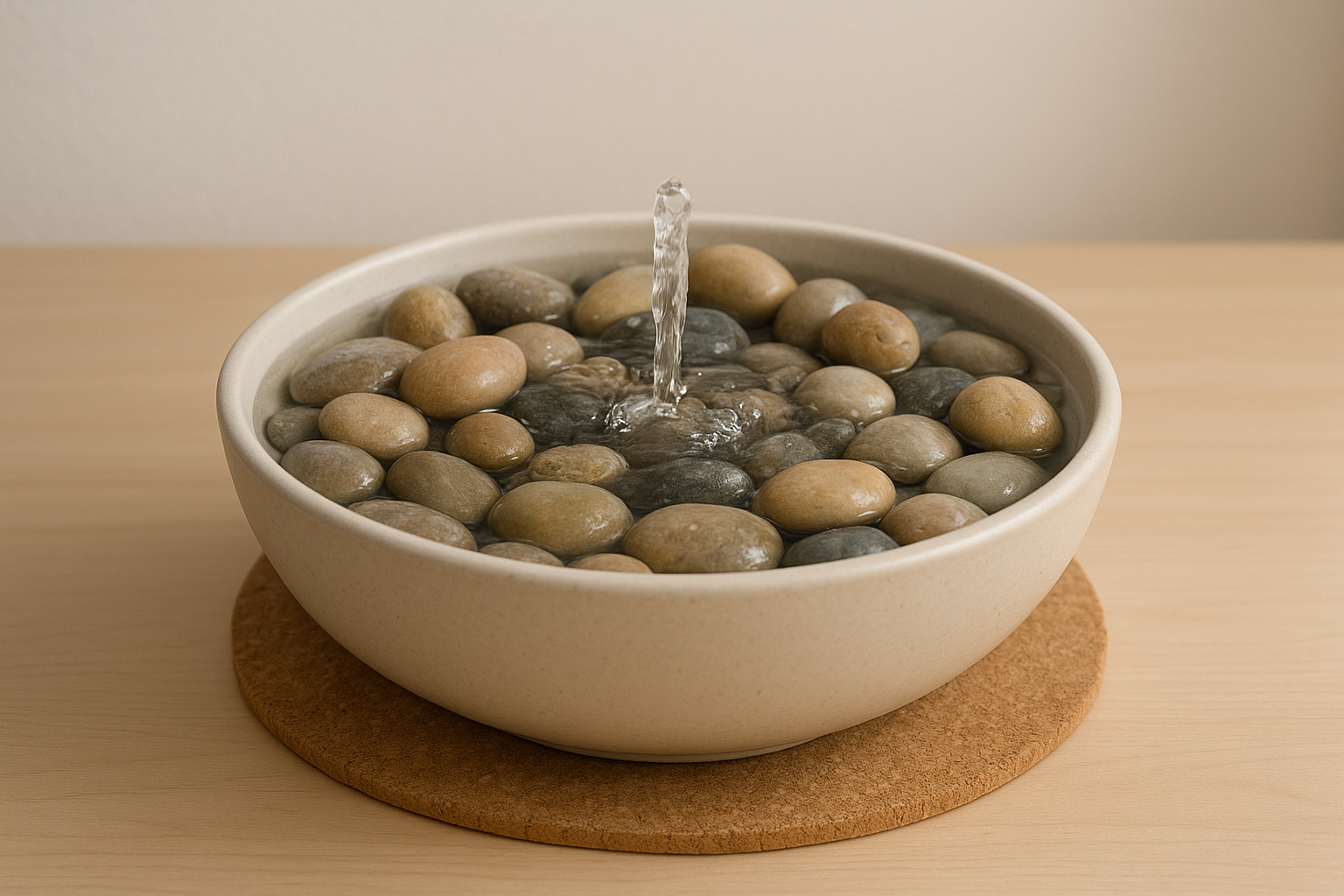
Because the pump hides under the pebbles, the whole piece reads as a calm still life. It sits well on a console, coffee table, or desk. It suits Japanese, Scandinavian, and modern tropical interiors alike, and it is the easiest DIY tabletop fountain to start with.
What you need or what it costs
Most builds need five items, and the total usually lands between RM80 and RM250. The submersible pump is the one part you should not cheap out on.
| Item | What to look for | Approx. cost |
|---|---|---|
| Watertight bowl | 25 to 35 cm wide, glazed or sealed, no drainage hole | RM30 to RM120 |
| Submersible pump | 200 to 400 L/h, adjustable flow, short tube | RM25 to RM60 |
| Pebbles | Washed river stones in mixed sizes | RM15 to RM40 |
| Platform | Plastic mesh or a small upturned pot to hold the stones | RM5 to RM15 |
If your bowl has a drainage hole, add waterproof sealant. Otherwise, skip it.
Best spots and upkeep
Place it on a stable, level surface away from direct sun, because sunlight feeds algae. Keep it near a power socket, and a meter or so from laptops, TVs, and books in case of splashes. Stand the bowl on a cork mat or tray to protect timber surfaces.
Upkeep takes about five minutes a week. Top up the water weekly, since evaporation in Malaysia's heat can drop a small bowl by a centimeter or two every few days. Rinse the pebbles monthly and wipe the pump intake so the flow stays even.
A pump that runs dry burns out fast, so keep it fully submerged at all times.
Use filtered or boiled-and-cooled water if your tap water leaves white scale on the stones.
2. Bamboo spout fountain
What it looks like
A bamboo spout fountain pairs a tilted bamboo pipe with a stone or ceramic basin. Water pours from the tip in a clean arc and lands with a soft, hollow splash.
Some designs use a see-saw spout that fills, tips, and taps the rim, like a Japanese shishi-odoshi. The look is natural and minimal, and it suits timber furniture, ferns, and low lighting.
What you need or what it costs
Budget RM100 to RM300 for a DIY build. You need four items:
- Bamboo pole, 3 to 5 cm wide, sealed with clear varnish (RM20 to RM60)
- Watertight basin or glazed pot (RM30 to RM120)
- Submersible pump, 300 to 600 L/h, with tubing (RM30 to RM70)
- River pebbles to hide the pump (RM15 to RM40)
Run the tube up inside the bamboo so only the water shows.
Best spots and upkeep
Choose a corner, entryway, or spot beside a sofa, and keep it out of direct sun and the cold air from your air conditioner. Dry airflow splits bamboo quickly.
Seal the bamboo before you fill it, and mold and cracks stay away.
Wipe the pipe monthly, since humid rooms invite black mold on untreated bamboo. Top up the basin weekly, and expect to replace the pole every year or two.
3. Cascading tiered ceramic fountain
What it looks like
Three or four stacked ceramic bowls spill water from one level to the next, each slightly wider than the one above. The sound is fuller than a pebble bubbler, closer to gentle rain on leaves.
Glazed celadon, deep blue, or matte stone finishes suit classic, Peranakan, and resort-style rooms. It makes a strong focal point beside a sofa or staircase.
What you need or what it costs
Buy this one ready-made. Aligning the tiers so water lands in each bowl is fiddly to DIY. Prices run RM250 to RM900, depending on size and glaze.
| Size | Height | Approx. cost |
|---|---|---|
| Small | 40 to 60 cm | RM250 to RM450 |
| Medium | 60 to 90 cm | RM450 to RM900 |
Confirm the pump is included and has an adjustable flow knob.
Best spots and upkeep
Stand it on a sturdy base in a living room corner or entryway, and check it is perfectly level. A slight tilt sends water over one edge and onto your floor.
A tiered fountain that isn't level will splash, waste water, and run its pump dry.
Keep it away from fans and air-conditioner vents, which blow spray off the tiers. Scrub the bowls every two weeks with a soft brush and mild soap, then refill. Top up weekly, because the top tier loses water fastest.
4. Slate or stone wall-mounted waterfall
What it looks like
A slate or stone panel hangs on the wall, and a thin sheet of water slides down its face into a hidden basin below. The natural texture catches light, so the water shimmers even in a dim room.
Among indoor water fountain ideas, this one uses almost no floor space. That makes it a smart pick for narrow hallways, condo living rooms, and spots behind a sofa.
What you need or what it costs
Ready-made panels are the safer route, and most cost RM600 to RM2,500 depending on size and stone. A DIY build is possible, but it needs a waterproof backing and a very secure fixing. A typical kit includes:
- Slate or stone panel, 40 to 90 cm tall
- Sealed reservoir with a pump rated 600 to 1,000 L/h
- Heavy-duty wall plugs and brackets
- Splash guard or catch tray
Best spots and upkeep
Mount it on a solid masonry wall, not plain drywall, and keep it clear of sockets and switches. Slate is heavy, and a loose fixing is a safety risk.
Anchor a stone waterfall to masonry, because a full reservoir and heavy slate will pull weak wall plugs out.
Wipe the face monthly to prevent algae and white mineral scale. Top up the reservoir weekly, and check that the water sheet runs evenly, since a clogged pump intake creates dry streaks.
5. Glass and mirror-backed water feature
What it looks like
A glass water feature sends a thin sheet of water down a clear or frosted panel, often lit from below by soft LEDs. Add a mirror backing and the ripples and light double, which makes a small room feel deeper.
This is the modern pick among indoor water fountain ideas. It suits minimalist and contemporary apartments, where stone or ceramic can feel heavy.
What you need or what it costs
Buy ready-made. Cutting and sealing glass is a job for professionals, and units usually cost RM500 to RM2,000. Custom mirror-backed installs cost more. A typical unit includes:
- Tempered glass panel, 6 to 10 mm thick
- Sealed reservoir with a 500 to 800 L/h pump
- Low-voltage, waterproof LED strip
- Mirror or reflective backing panel
Best spots and upkeep
Place it on a dining area wall or entry hall where light catches the water, and keep it out of direct sun. Check that the glass is tempered, because ordinary glass can crack under a heavy load.
Choose tempered glass, since a standard panel is a safety risk if it fails.
Water spots show quickly on glass. Wipe it weekly with a microfiber cloth and diluted white vinegar. Use filtered water to slow mineral marks, and top up the reservoir weekly.
6. Floor-standing fountain or room divider
What it looks like
This is the statement piece among indoor water fountain ideas. A tall slate column, a framed glass panel, or a freestanding screen sends water down its face, and most stand 120 to 200 cm high.
Placed mid-room, it works as a room divider between a living area and a dining space. The steady flow also softens street and neighbor noise.
What you need or what it costs
Buy ready-made. A freestanding unit needs a stable frame and a large reservoir, so DIY rarely pays off. Expect to spend RM1,500 to RM6,000, and ask whether delivery and setup are included. A good unit has:
- A weighted base or anchored frame
- A reservoir with a 1,000 to 2,000 L/h pump
- A splash guard along the front edge
- A hidden cable route to the socket
Best spots and upkeep
Check your floor first. A full reservoir can weigh 50 kg or more, so use a level, solid surface and keep the unit off timber that flexes.
A floor-standing fountain must sit level on a solid floor, or it will splash, strain the pump, and mark your flooring.
Wipe the panel every two weeks and clear the pump intake monthly. Top up weekly, because a tall surface loses water to evaporation quickly. Leave 30 cm of space behind the unit so air can circulate and you can reach the reservoir.
7. Indoor fountain with plants or fish
What it looks like
A wide, glazed basin holds floating water lilies, pothos, or lucky bamboo, while a small pump ripples the surface. Add a few guppies or small goldfish and it becomes a living mini pond. Pothos roots dangling in the water take up nutrients from fish waste, so the plants stay green and the water stays clearer.
What you need or what it costs
Expect to spend RM250 to RM1,500, depending on basin size and whether you keep fish. A plants-only version sits at the low end.
- Glazed basin, 40 L or more (RM80 to RM400)
- Low-flow pump, 200 to 500 L/h (RM30 to RM80)
- Sponge filter, fish only (RM25 to RM100)
- Plants and net pots (RM20 to RM100)
- Water dechlorinator (RM10 to RM20)
Best spots and upkeep
Place it in bright, indirect light, such as beside a window with sheer curtains. Direct sun overheats the water and feeds algae, while a dark corner starves the plants.
Fish need a stable, shaded basin, so keep this fountain out of direct sun.
Treat tap water with a dechlorinator, or let it sit for 24 hours before use. Change about 20 percent of the water weekly, and feed fish lightly, since leftover food fouls the basin fast. If you travel often, skip the fish and stick to plants only, which is far easier to maintain.
Choosing the right fountain for your home
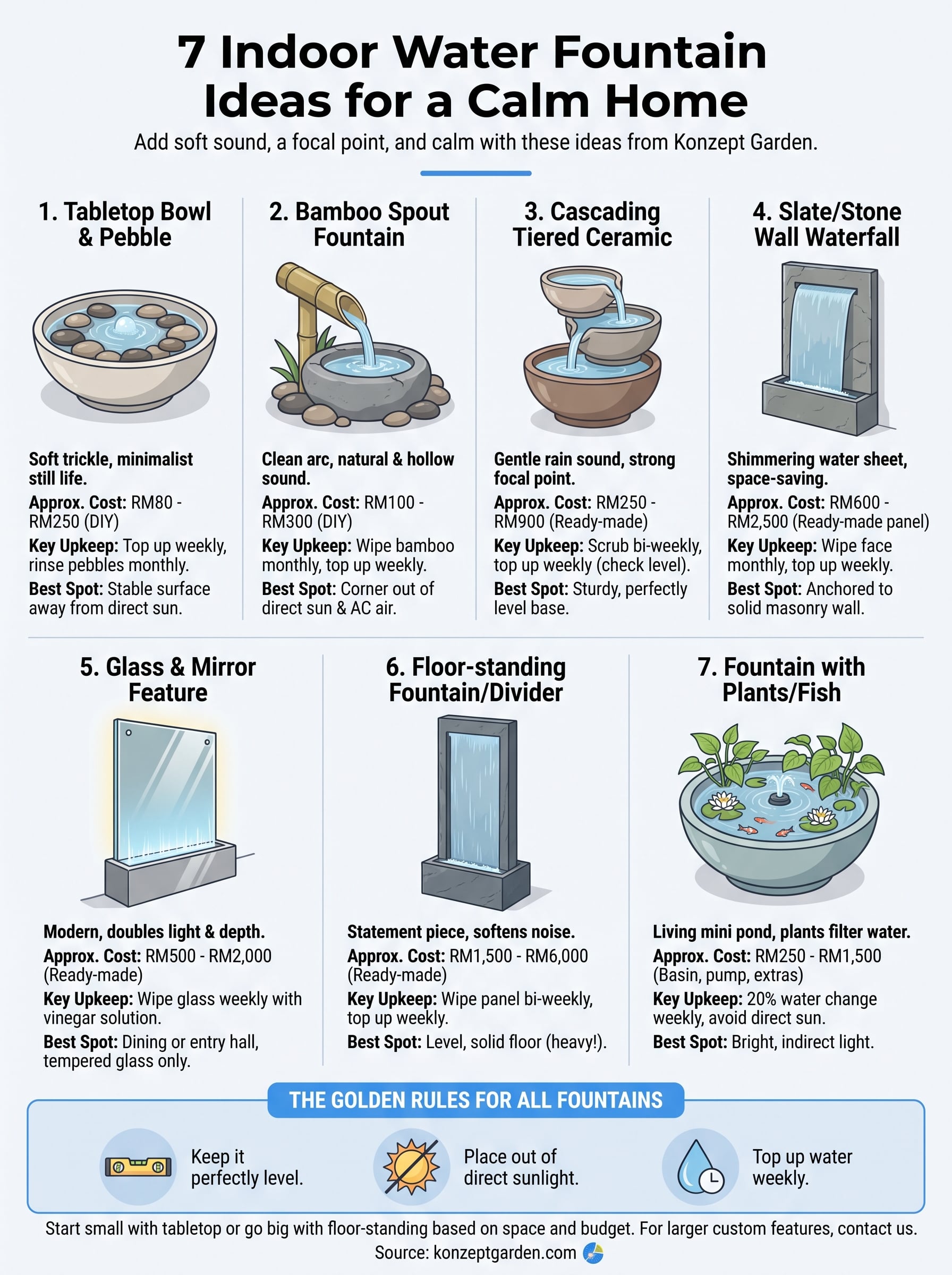
Start with your space and your patience. A tabletop bowl or bamboo spout suits small rooms and tight budgets, while a wall-mounted waterfall or floor-standing unit rewards you if you have a blank wall and a solid floor. Tiered ceramic and plant or fish basins sit in between.
Whatever you pick, three rules hold. Keep the fountain level and out of direct sun, choose a pump with adjustable flow, and top up the water weekly. Do that, and any of these seven ideas will stay quiet, clean, and calm for years.
Not sure which one fits your room, or want a larger water feature designed for your home? Talk to our team at Konzept Garden and we will help you plan it from the first sketch to the final install.