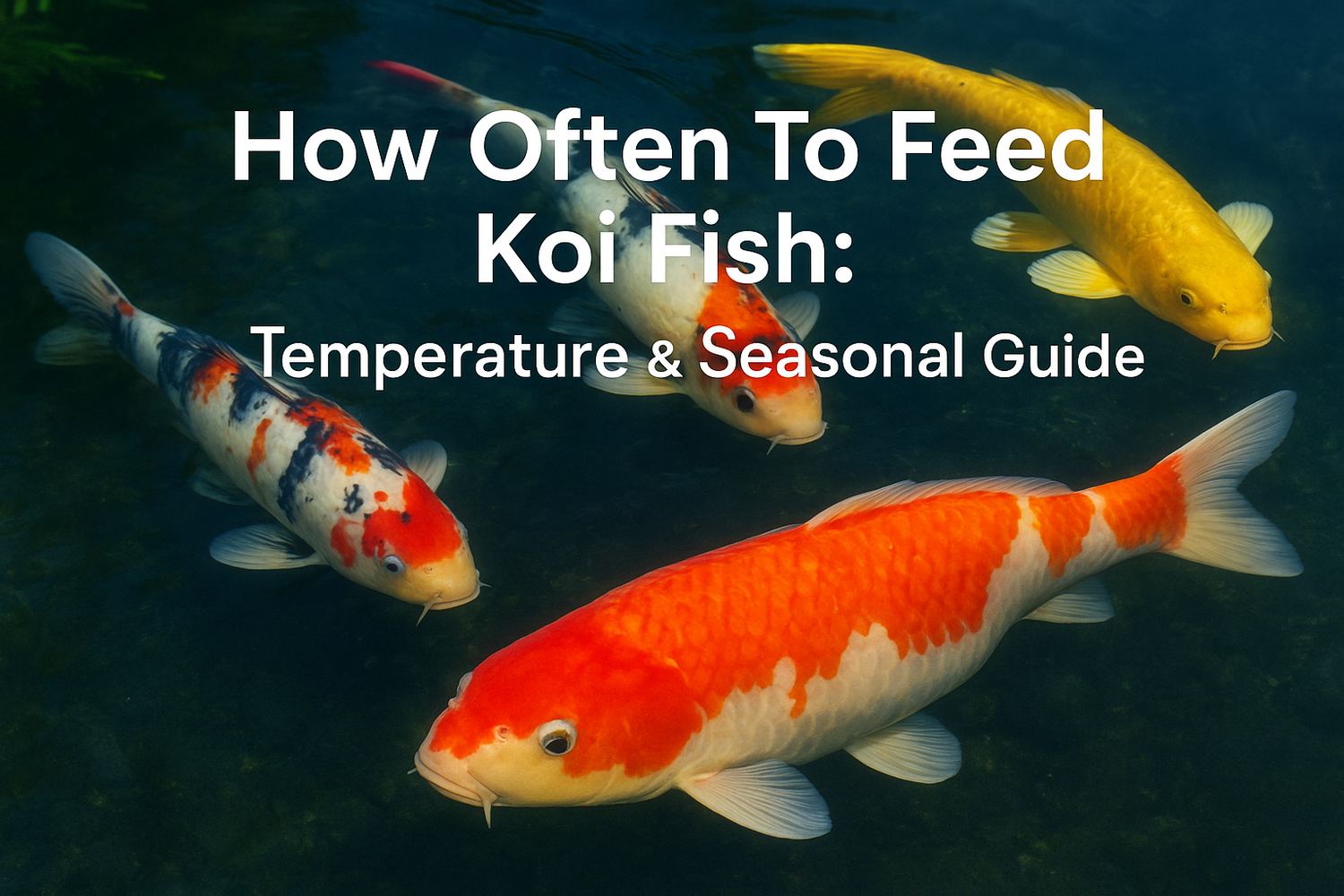
Feeding koi seems straightforward, toss in some pellets and watch them swarm. But knowing how often to feed koi fish actually depends on factors that change throughout the year, and getting it wrong can lead to poor water quality, sluggish growth, or even sick fish.
Water temperature is the single biggest factor controlling your koi's metabolism. In Malaysia's tropical climate, temperatures stay relatively warm year-round, but seasonal rain patterns and shaded pond setups can still shift conditions enough to affect feeding frequency and digestion. At Konzept Garden, we design and build koi ponds, from our Zen Bio Koi Pond to custom Himalaya Rock Fish Pond setups, so we've seen firsthand how pond design and feeding habits work together to keep fish thriving.
This guide breaks down exactly how many times per day to feed your koi based on water temperature, seasonal changes, and your specific growth goals. Whether you're maintaining a mature backyard pond or just getting started, you'll walk away with a clear feeding schedule you can apply right away.
What to know before you set a feeding schedule
Before you lock in a schedule for how often to feed koi fish, you need to understand a few core principles that drive every decision in this guide. Koi are cold-blooded fish, which means their body temperature and metabolism track directly with the water around them. Feed them too much when their digestion is slow, and uneaten food rots in your pond. Feed them too little when they're actively growing, and you'll see stunted development and dull color.
Koi metabolism changes with their environment
Koi don't process food the same way throughout the year. Their digestive enzymes slow down significantly when water temperature drops, and they speed back up when water warms. In Malaysia, you won't deal with the extreme winters that freeze ponds in other countries, but cooler periods during monsoon season and heavily shaded pond setups can still drop water temperatures enough to slow digestion.
When water temperature falls below 15°C (59°F), koi can barely digest food at all, so feeding during those conditions causes more harm than good.
At temperatures between 20°C and 28°C, which covers most of Malaysia's typical range, koi are in their active feeding window and can handle multiple meals per day. Above 30°C, their metabolism stays high but dissolved oxygen in the water drops, so you'll need to watch both feeding amounts and pond aeration closely.
The type of food matters before you set frequency
You can't separate feeding frequency from food type. High-protein growth pellets digest faster than wheat-germ-based pellets, which are gentler on the digestive system during cooler or transitional conditions. If you're using a high-protein formula, you can feed more often during warm periods because koi process it efficiently. Switch to a low-protein, easily digestible formula when temperatures dip or when fish seem less active.
Here's a quick reference for matching food type to conditions:
| Condition | Recommended Food Type | Why |
|---|---|---|
| Warm water (above 20°C) | High-protein growth pellets | Fast digestion, supports growth |
| Cooler water (15-20°C) | Wheat-germ-based pellets | Easier on slow digestion |
| Below 15°C | Stop feeding or minimal wheat-germ | Gut bacteria slow down sharply |
| Post-illness recovery | Wheat-germ or medicated food | Reduces digestive stress |
Your pond size and stocking density matter too
Overcrowded ponds with high fish density produce more waste, which means water quality degrades faster when you overfeed. A larger, well-filtered pond like the Zen Bio Koi Pond setups we build at Konzept Garden can buffer small overfeeding mistakes better than a compact backyard setup with minimal filtration.
Knowing your pond's volume and fish-to-water ratio helps you decide not just how often to feed, but how much your system can safely handle before water quality suffers. As a general rule, one koi needs at least 250 liters of water to stay healthy, and your feeding schedule should reflect how many fish are sharing that space.
Step 1. Feed based on water temperature
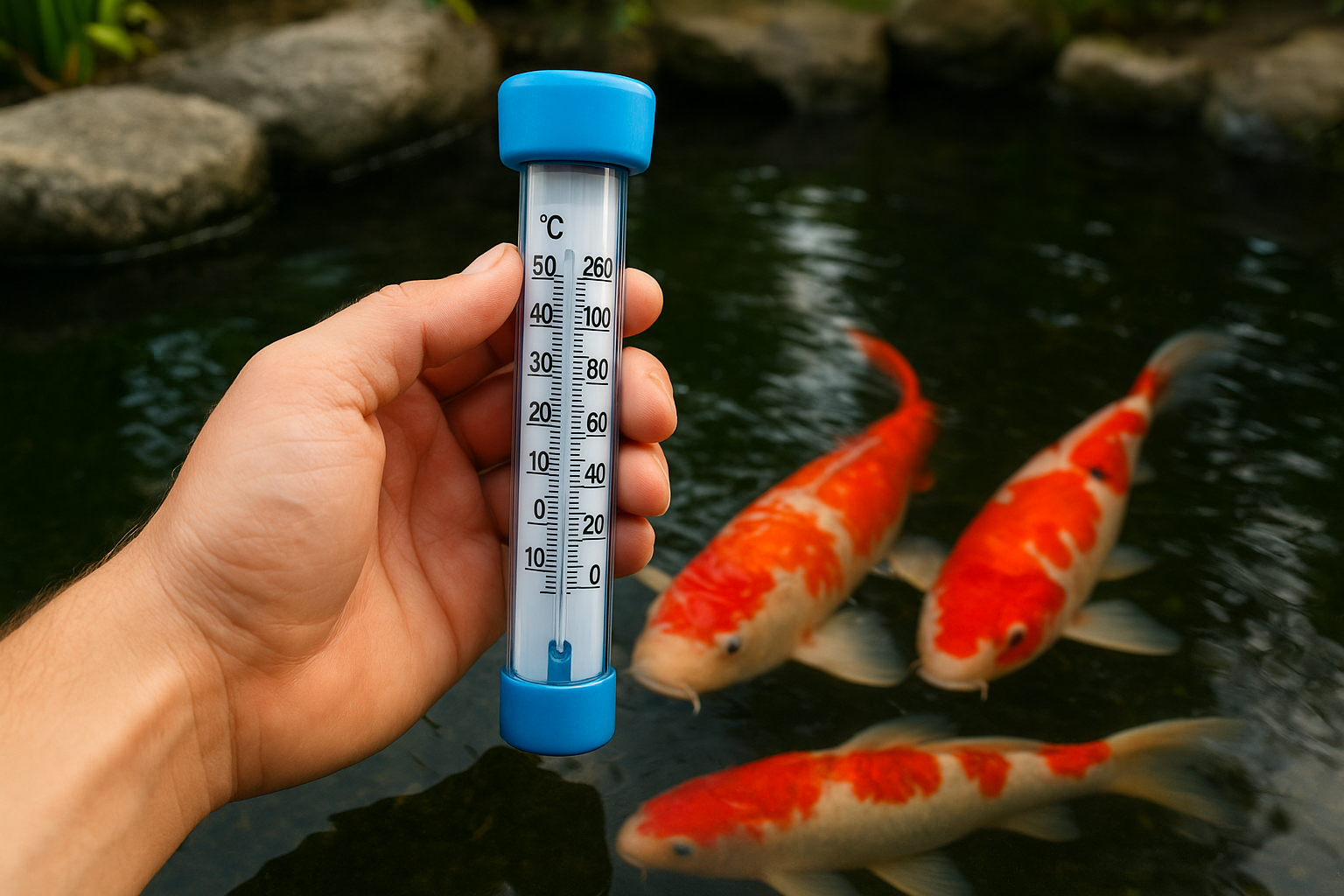
Water temperature is the most reliable indicator of how often to feed koi fish on any given day. Before you open the food container, check your pond thermometer. Your koi's digestive system runs in sync with water temperature, so feeding at the wrong temperature means uneaten food sinks, decomposes, and spikes ammonia levels across your entire pond.
Use a thermometer before every feeding session
Making temperature checks a daily habit takes less than 30 seconds and protects both your fish and your water quality. Get a reliable pond thermometer and check it at the same time each morning before your first feeding. In Malaysia, most ponds stay in the active feeding range throughout the year, but heavy rain, shade structures, and cooler nights can pull temperatures down enough to slow digestion significantly.
A single degree of difference at the lower end of the range can mean the difference between a koi digesting a meal cleanly and fermenting it in its gut.
Use this temperature guide to set your daily feeding frequency:
| Water Temperature | Feeding Frequency | Notes |
|---|---|---|
| Above 28°C | 3-4 times per day | Monitor oxygen levels; avoid overfeeding |
| 22°C - 28°C | 2-3 times per day | Ideal active feeding range |
| 15°C - 21°C | Once per day | Switch to wheat-germ pellets |
| Below 15°C | Stop feeding | Digestive system too slow to process food |
Stick to small, consistent portions at each temperature range
Feeding smaller portions more frequently produces better results than one large daily feeding at warmer temperatures. Each portion should be what your koi can finish in five minutes or less. If pellets are still floating after five minutes, remove them and reduce the next portion size. This approach keeps your water clean while letting your fish eat at a pace that matches their current metabolism.
Step 2. Adjust for season and weather swings
Malaysia doesn't have four distinct seasons, but the northeast and southwest monsoon periods create real shifts in weather patterns that affect your pond. Heavy rainfall drops water temperature, reduces sunlight penetration, and dilutes pond chemistry, all of which slow your koi's digestion and directly change how often to feed koi fish during those stretches.
Plan for monsoon season feeding changes
During the northeast monsoon (roughly November to March), extended cloud cover and steady rain can drop pond temperatures by several degrees over just a few days. When that happens, step down your feeding frequency using the temperature table from Step 1. If your pond normally sits at 26°C and drops to 19°C after a rainy stretch, shift from two to three daily feedings down to one per day, and switch to wheat-germ pellets until temperatures recover.
Checking your thermometer after any significant rainfall is just as important as your morning check, because water temperature can shift faster than you expect.
Your koi will also eat less enthusiastically during overcast periods even when temperature hasn't changed much. If fish are hanging near the surface or ignoring food after 3 to 4 minutes, take that as a signal to reduce the next portion and reassess conditions before feeding again.
Adjust for hot, dry weather spikes
The dry season months bring the opposite challenge. When temperatures climb above 30°C under full sun, your koi stay active but your dissolved oxygen levels drop, which stresses fish and affects how well they absorb nutrients. During heat spikes, maintain three feedings per day but reduce the portion size at each session to avoid excess waste building up in already oxygen-depleted water.
Use this weather-based reference to guide your adjustments:
| Weather Condition | Adjustment to Make |
|---|---|
| Extended rainfall or cloud cover | Step down frequency; check temperature first |
| Post-rain temperature recovery | Gradually increase back to normal schedule |
| Heat spike above 30°C | Maintain frequency, reduce portion size |
| Strong winds with surface disruption | Feed during calmer morning hours |
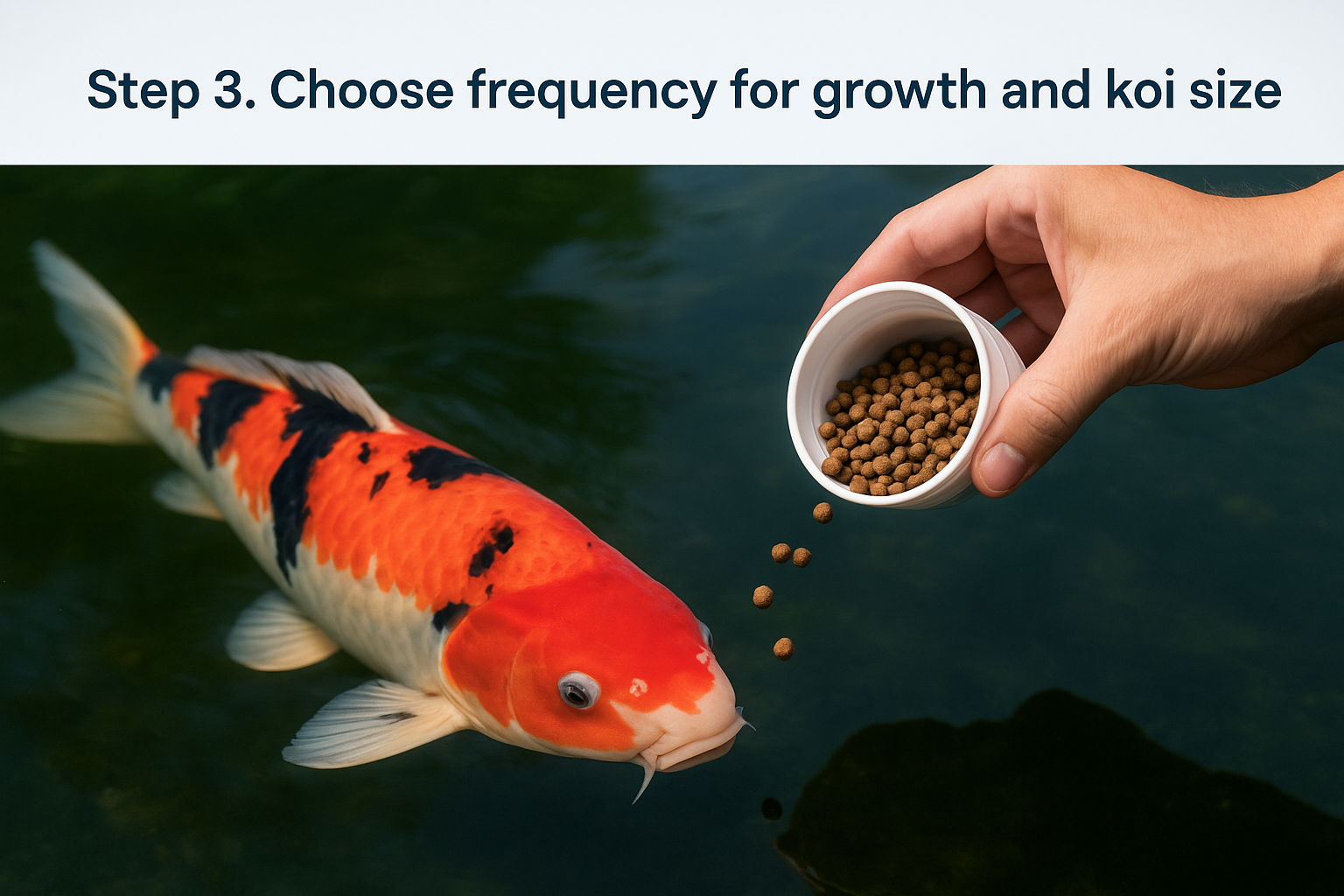
Step 3. Choose frequency for growth and koi size
Not all koi have the same feeding needs. Juvenile koi growing rapidly require more frequent meals than large, mature fish that have already reached their target size. Understanding where your fish are in their development helps you answer how often to feed koi fish in a way that matches their actual nutritional demands rather than following a single fixed rule.
Feed young koi more frequently to support growth
Young koi under 20 cm burn through nutrients quickly because their bodies are actively building muscle, bone, and color pigmentation at the same time. During warm months, feed juvenile koi three to four small meals per day using a high-protein growth formula. Keep each portion small enough that they finish it within four minutes. More frequent, smaller feedings let young fish absorb protein efficiently without loading your filtration system with excess waste from uneaten pellets sinking to the bottom.
Juvenile koi fed three times daily during warm months can grow 5 to 8 cm per year faster than those fed once daily on the same diet.
Use this size-based guide to set your starting frequency:
| Koi Size | Recommended Daily Feedings | Food Type |
|---|---|---|
| Under 20 cm (juvenile) | 3-4 times | High-protein growth pellets |
| 20-40 cm (sub-adult) | 2-3 times | Balanced growth or color-enhancing pellets |
| Above 40 cm (mature) | 1-2 times | Maintenance or color-enhancing formula |
Match portions to mature koi maintenance needs
Large, mature koi above 40 cm have slower growth rates and lower protein requirements compared to juveniles. At this stage, your primary goal shifts from growth to maintaining body condition and vibrant color. Feed mature fish once or twice daily with a color-enhancing or maintenance formula, and keep each portion to what they consume within five minutes. Overfeeding large koi does not accelerate growth at this stage; it raises ammonia levels and reduces water clarity across your entire pond.
Step 4. Feed the right amount and avoid overfeeding
Knowing how often to feed koi fish is only half the equation. The amount you drop in at each session matters just as much as the timing. Overfeeding is the most common mistake pond owners make, and its effects reach further than just wasted food. Uneaten pellets decompose rapidly, releasing ammonia and driving up nitrite levels, which puts your fish under constant low-grade stress even when you can't see visible symptoms.
A well-fed koi pond is not one where fish are always eating; it's one where every pellet gets consumed before it hits the bottom.
Use the five-minute rule every feeding session
The five-minute rule is the simplest and most reliable portion control method for koi. Drop in a small handful of pellets, then watch your fish closely and stop adding food the moment their feeding pace slows down. If any pellets are still floating after five minutes, you've fed too much. Remove what's left with a net and cut back the next portion by about 20 percent. Apply this rule at every single feeding session, regardless of fish size or season.
Here's a quick checklist to run through before and after each feeding:
- Check water temperature before opening the food container
- Start with a smaller portion than you think is needed
- Watch fish actively eating for the full five minutes
- Remove any uneaten food immediately after the five-minute window
- Reduce the next portion if any food was left over
Spot and fix signs of overfeeding early
Your pond will show overfeeding symptoms before your fish do. Green or cloudy water, a thick layer of organic debris on the pond floor, and a foul smell near the surface are all direct signs that too much food is entering your system. If you notice any of these, skip one full feeding cycle, perform a partial water change of 20 to 30 percent, and reset your portion sizes using the five-minute rule before resuming your normal schedule.
Key Takeaways and Next Steps
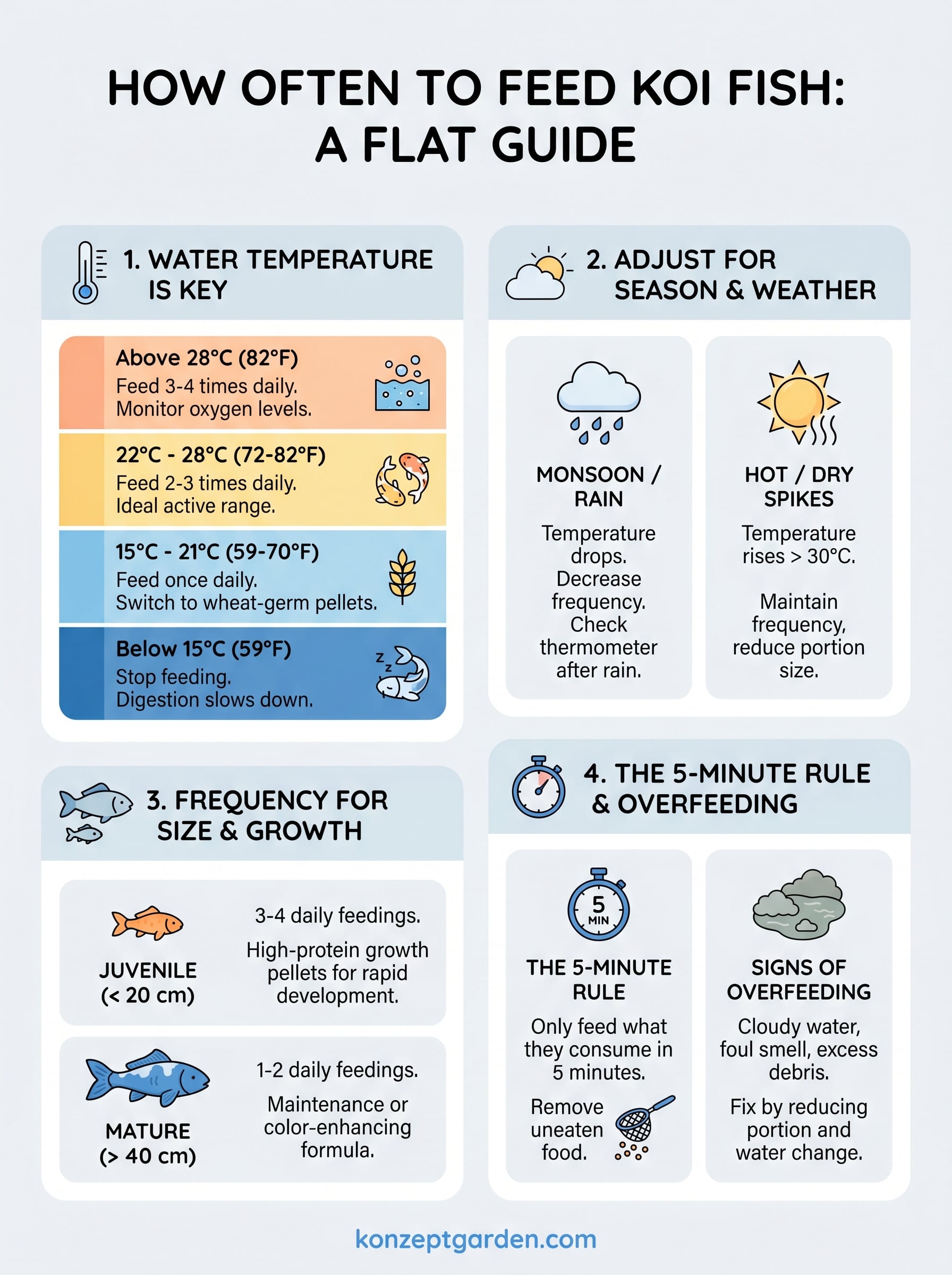
Knowing how often to feed koi fish comes down to four consistent habits: check water temperature before every feeding, adjust your schedule for seasonal and weather shifts, match frequency to your fish's size and growth stage, and never let uneaten food sit in your pond longer than five minutes. These four steps give you a reliable, repeatable system you can apply every single day without guessing or reacting to problems after they've already affected your fish.
Your pond's long-term health depends on getting these fundamentals right from the start. A well-designed koi pond with proper filtration makes every feeding decision easier because your system handles the biological load your fish produce more efficiently. If you're planning a new koi setup or want to upgrade your current pond to support healthier, more vibrant fish, explore our Zen Bio Koi Pond to see what a purpose-built koi environment looks like in practice.