
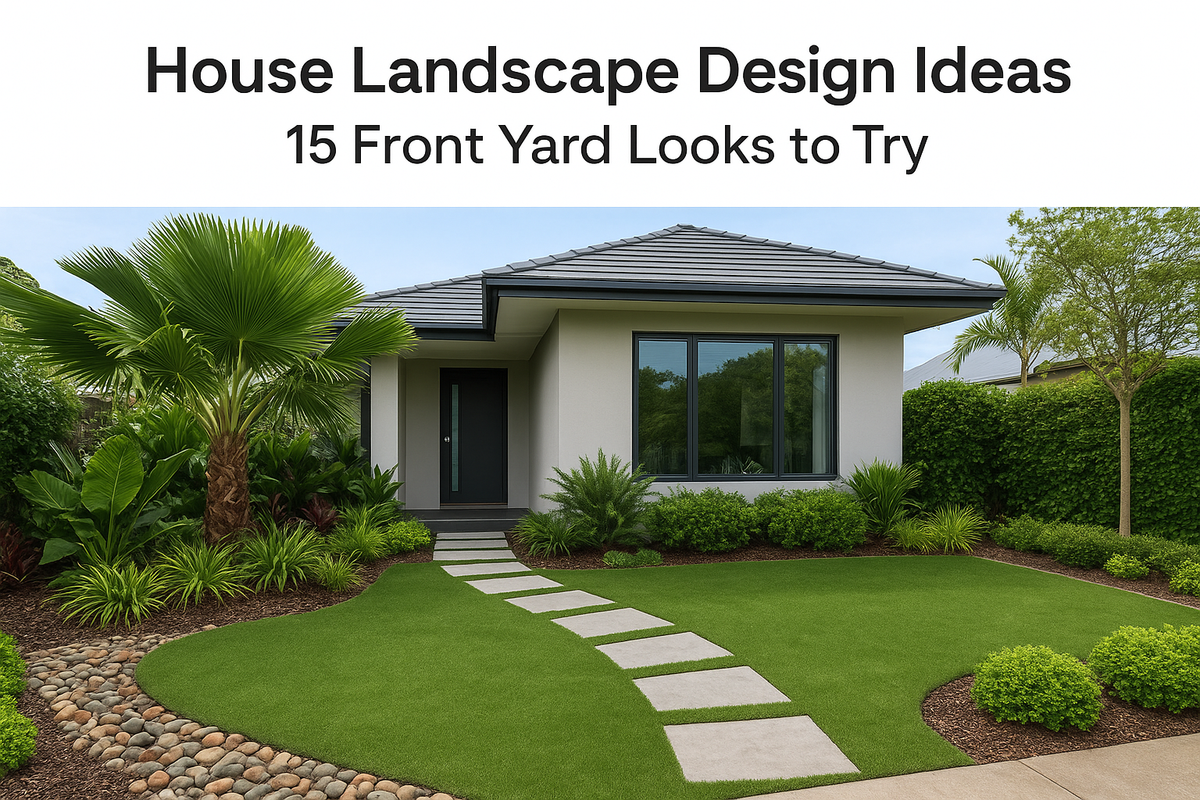
Your front yard is the first thing guests, neighbors, and buyers see. In Malaysia, it also has to handle heavy rain, strong sun, and humidity year-round. Finding house landscape design ideas that look good and survive those conditions takes more than scrolling through photos of cool-climate gardens.
Here is the short answer. The best front yards in Malaysia combine a clear layout, two or three tough plant types, and one strong focal point, such as a feature tree, a stone path, or a water element. Keep the palette simple and the lines clean, and the yard looks designed rather than crowded.
Below, you will find 15 front yard looks, from tropical layered beds to minimal gravel courtyards and low-maintenance turf setups. Each one covers the plants, hardscapes, and layout that make it work, plus what to expect for upkeep. We are Konzept Garden, an ILAM award-winning landscape design company, and these ideas come from projects we have designed and built across Malaysian homes. Pick two or three that suit your plot, then adapt them.
1. Custom tropical front yard design by Konzept Garden
What the look is
This is a front yard designed around your house, not copied from a catalog. We start with your plot's sun path, drainage, and street view. Then we build a tropical layout with one clear focal point and layered planting in front of it. A 3D visualization shows you the result before any soil moves.
Design the yard around your plot, and the plants stop fighting the site.
A botanist on our team also checks that every plant suits your conditions. That is why our ILAM-recognized projects still look good after the first year, not just on handover day.
Key plants and materials
We keep the palette tight, because a few tough species look better than a crowded mix. A typical Konzept Garden front yard for a landscape design for home garden project includes:
- Feature tree: frangipani or a sculpted ficus, placed where it frames the entrance.
- Mid layer: heliconia, bird of paradise, and cycads for height and texture.
- Ground cover: peanut grass and mondo grass to soften edges.
- Hardscape: natural stone paths, timber accents, and river pebbles.
- Optional extras: a Noble Grass patch or a pond, depending on your brief.
Best for which homes
This look suits terrace, semi-detached, and bungalow plots where you want something distinctive. It works on a 15 ft frontage as well as a wide corner lot, because the layout scales to the space.
It also fits owners who want a front yard that matches the house style. Modern facades, resort-inspired homes, and older houses being renovated all take it well.
Maintenance and budget notes
Upkeep depends on the plant list and hardscape we agree on. Because we choose for your sun and drainage, most clients need only routine trimming and occasional feeding. Cost varies with size, stonework, and any water feature, so the free quotation is the honest way to get a number.
| Item | What to expect |
|---|---|
| Watering | Daily for the first 4 to 6 weeks, then reduced |
| Pruning | Every 4 to 8 weeks for shrubs and ground cover |
| Feeding | Slow-release fertilizer every 3 to 4 months |
| Budget drivers | Plot size, stone and paving, water features, lighting |
2. Lush tropical layered planting
What the look is
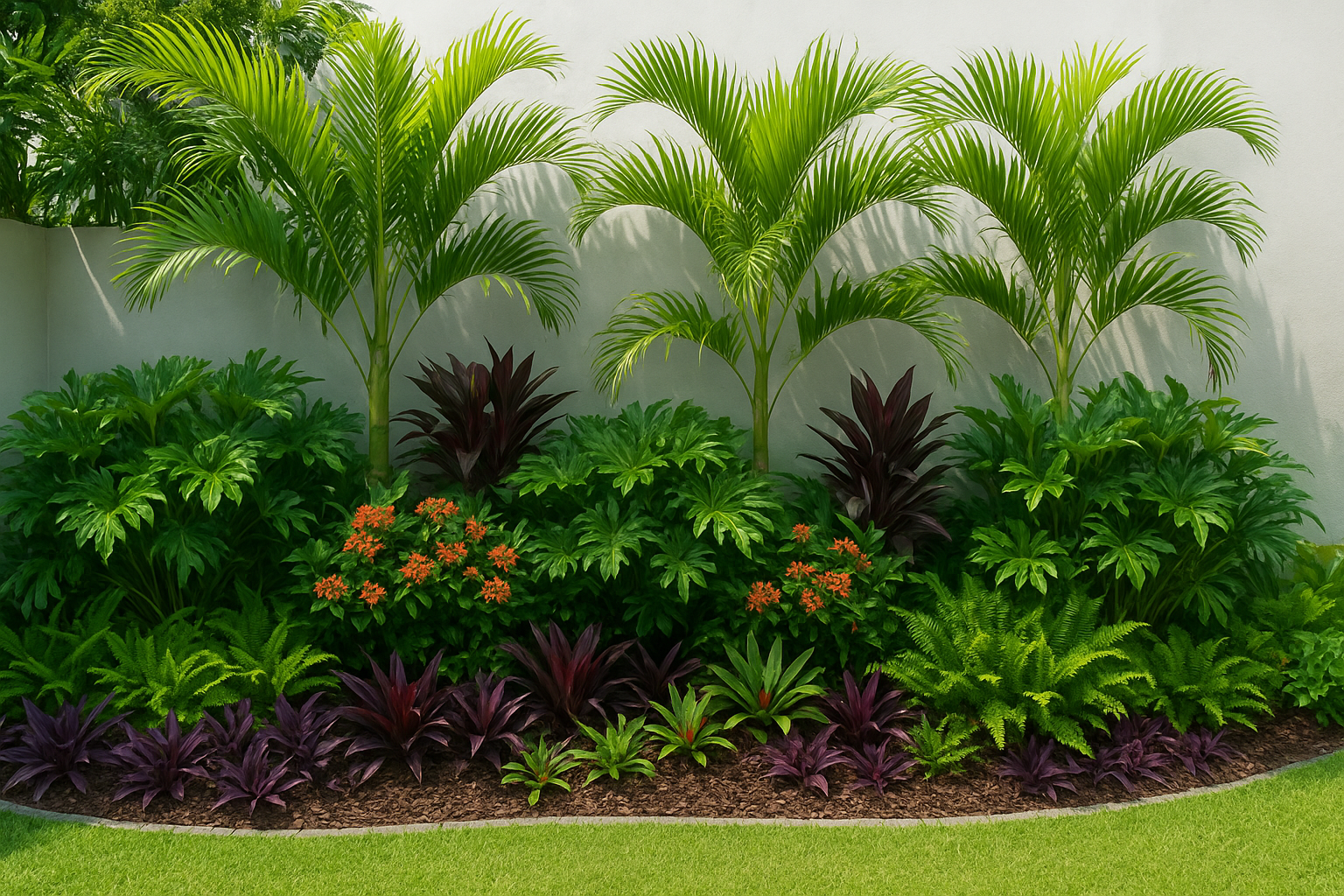
Layered planting builds your yard in three tiers: tall plants at the back, mid-height shrubs in the center, and low cover at the front. The eye moves through the bed instead of stopping at the wall. It is one of the most reliable landscape design ideas for a front yard in Malaysia, because it hides boundary walls and looks full within a year.
Plant in tiers, and even a narrow strip looks deep.
Repeat the same two or three species along the bed to create rhythm. Overlap the edges of each tier slightly so the planting looks natural, not lined up like a parade.
Key plants and materials
Pick tough species that handle sun and heavy rain. This table shows a simple mix you can adapt.
| Layer | Plant options | Typical height |
|---|---|---|
| Back | Areca palm, traveler's palm | 2 to 4 m |
| Middle | Philodendron 'Xanadu', ixora, cordyline | 0.6 to 1.2 m |
| Front | Purple heart, dwarf bromeliads, ferns | Under 30 cm |
Finish with bark mulch to hold moisture. Use stone or steel edging so the soil stays put during monsoon downpours.
Best for which homes
This look suits terrace and link houses with a narrow strip along the fence. It also works for bungalows that need privacy along the gate without building a taller wall. Choose it if you want a green, full look rather than a lot of paving.
Maintenance and budget notes
Expect to prune every 4 to 6 weeks and feed every three months. Dense planting leaves little room for weeds once it fills in, which saves effort later.
Costs stay moderate because plants, not stone, make up most of the bill. Buy larger specimens for the back layer and smaller pots for the front two tiers. They fill in fast in our climate.
3. Modern minimalist front yard
What the look is
A minimalist front yard runs on clean lines, a tight palette, and open space. You use two or three materials and one or two plant types, then stop. Of all the landscape design ideas for a front yard, this one sharpens a modern facade the fastest.
Space does most of the work here. Leave negative space between features so each plant or stone reads as a deliberate choice.
In a minimalist yard, what you leave out matters as much as what you plant.
Key plants and materials
Choose plants with strong shapes, then set them in hard surfaces that drain well in Malaysian downpours. Here is a simple kit:
- Paving: large-format concrete or porcelain slabs with narrow joints.
- Gravel: light grey pea gravel held by steel edging.
- Specimen plants: ponytail palm, cycad, or a single frangipani.
- Texture: clumping dwarf bamboo and mondo grass.
- Accents: a black slat screen or one corten-style planter.
Best for which homes
This look suits modern double-storey houses and link houses with small, rectangular frontages. It also fits owners who want a tidy yard but have little time to look after one. Skip it if you love lush, full planting.
Maintenance and budget notes
Upkeep is light. Expect to trim plants every 6 to 8 weeks and rake the gravel now and then. Lay a weed membrane under the gravel, or weeds will push through within a season.
Budget leans toward materials rather than plants. Slabs, edging, and screens cost more per square foot than shrubs, so spend on quality hardscape and keep the planting list short.
4. Resort-style garden with a water feature
What the look is
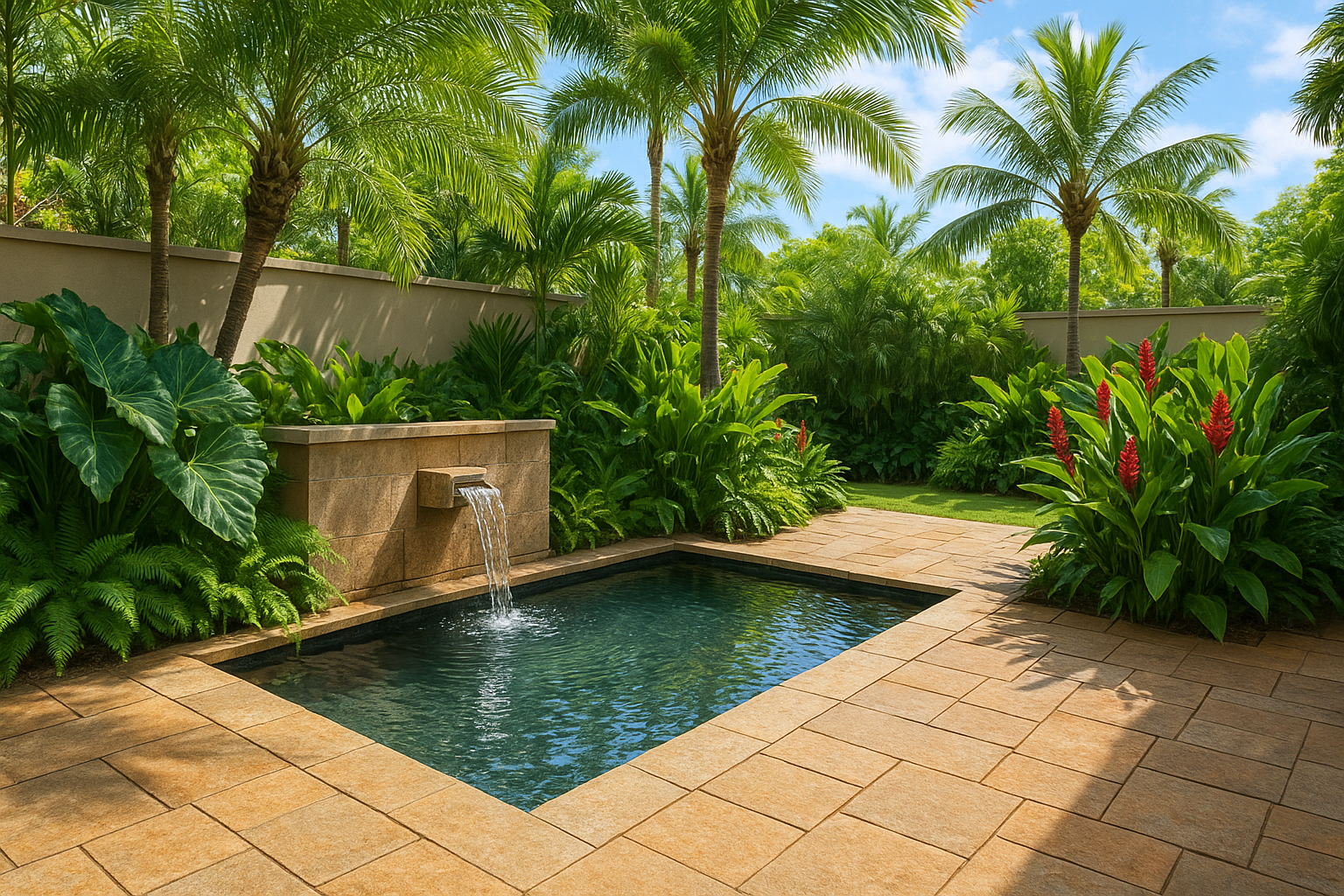
Picture a hotel arrival court at home: lush palms, a water element, and warm stone underfoot. It is one of the most requested house landscape design ideas in Malaysia, because it makes a modest plot feel like a private retreat.
A wall spout, a shallow reflecting pool, or a small cascade all work. Moving water also masks street noise, which matters on busy roads.
A resort-style yard sells a mood, and water is what sets it.
Key plants and materials
Keep the planting soft and green around the water, and choose non-slip stone near the edge, since tropical rain makes smooth tiles dangerous.
- Water: wall spout, bowl fountain, or reflecting pool with a recirculating pump.
- Palms: bottle palm, lady palm, or areca.
- Foliage: alocasia, ferns, and ginger lilies beside the water.
- Stone: sandstone, slate, or textured granite.
Best for which homes
Bungalows and semi-detached houses with 4 to 5 m of frontage suit this look best. The pool and planting need room to breathe.
Terrace owners can still borrow the idea. A wall-mounted spout over a narrow basin gives you the sound and shine in under 1 m of depth.
Maintenance and budget notes
Water features need more care than plants. Keep the water circulating and treat standing areas against mosquitoes, or the pond becomes a neighborhood problem.
| Task | Frequency |
|---|---|
| Clean pump filter | Every 2 to 4 weeks |
| Top up water | Weekly, more in dry spells |
| Scrub algae | Monthly |
| Budget level | Moderate to high: pump, waterproofing, stone |
5. Koi pond front garden
What the look is
A koi pond makes the front yard a living focal point. Fish, water, and rock sit in front of layered planting, and the movement pulls the eye from the gate to the door. Our Zen Bio Koi Pond is clean and Japanese-inspired. The Himalaya Rock Fish Pond is more natural, with stacked stone.
A koi pond only works when you size and filter it for the fish, not just for the view.
Depth matters more than most owners expect. Aim for at least 1 m of depth, and add shade, because Malaysian sun warms shallow water fast and stresses the fish.
Key plants and materials
Plan the equipment first, then dress the edges with plants.
- Water plants: water lilies and potted lotus for shade on the surface.
- Edge planting: bird's nest fern, mondo grass, and dwarf bamboo.
- Stone: river boulders or Himalaya-style rock with non-slip tops.
- Equipment: bottom drain, bio filter, pump, and UV clarifier.
- Shade: a feature tree or slim pergola over one side.
Best for which homes
Bungalows and semi-detached houses with room for a 3 m by 2 m pond suit this look best. Among landscape design ideas for home owners who enjoy a hobby, it rewards you most.
Have young children? Choose a raised pond wall or add safety mesh just under the surface.
Maintenance and budget notes
Budget sits at the moderate to high end, since excavation, waterproofing, and filtration cost more than the plants. Running costs stay modest once the system settles.
| Task | Frequency |
|---|---|
| Feed fish | Once or twice daily |
| Rinse filter media | Every 2 to 4 weeks |
| Partial water change | 10 to 20% monthly |
| Check pump and aeration | Weekly |
6. Low-maintenance artificial grass lawn
What the look is
Synthetic turf gives you a green lawn all year with no mowing. That helps in Malaysia, where natural grass struggles under heavy shade and monsoon rain. Frame it with a shrub border and a stone path so the yard looks designed, not like a carpet.
Installation decides how the lawn ages. Our Noble Grass goes over a compacted, well-drained base, so puddles do not form after storms.
Good turf depends on the base underneath, not the blades on top.
Key plants and materials
Think of the turf as one layer in a mix. Plants and stone around it keep the look natural rather than flat.
- Turf: Noble Grass in a short, dense pile.
- Base: crusher run, sharp sand, and weed membrane.
- Edging: steel, stone, or concrete curbs to lock the edges.
- Borders: dwarf ixora, cordyline, and bromeliads.
- Accents: stepping stones or a small feature tree.
Best for which homes
Families with kids or pets get the most from this look. The surface stays clean and mud-free after rain, and nobody has to fertilize or reseed.
It also suits busy owners and rental landlords. Skip it on west-facing plots with no shade, because turf surfaces get hot in strong afternoon sun.
Maintenance and budget notes
Upkeep is light. Brush the fibers and rinse off dust, leaves, and pet waste every week or two. Your upfront cost is higher than a sod lawn, but you save on mowing, watering, and replacing patches.
| Task | Frequency |
|---|---|
| Sweep leaves and debris | Weekly |
| Rinse surface | Every 2 to 4 weeks |
| Brush fibers upright | Monthly |
| Check edges and seams | Every 6 months |
7. Flower beds and foundation planting
What the look is
Foundation planting is a continuous bed along the front of your house that softens the wall line and ties the facade to the yard. Add flowers in drifts and you get color without redesigning the whole garden. It is one of the easiest landscape design ideas for home exteriors that feel bare.
A planted edge makes a house look settled into its yard.
Keep the bed at least 80 cm deep so you can layer shrubs behind flowers. Plant in groups of three or five of the same variety, because scattered singles look messy.
Key plants and materials
Choose flowering shrubs that take full sun and heavy rain, then add seasonal color at the front.
- Shrubs: ixora, hibiscus, and bougainvillea trained on a low frame.
- Color at the front: pentas, torenia, portulaca, and crossandra.
- Foliage filler: cordyline and dwarf heliconia.
- Materials: bark mulch, steel edging, and a gravel strip along the wall.
Best for which homes
Terrace, link, and semi-detached houses with a plain front wall gain the most. A bed of flowers gives the facade color and depth where a lawn would not.
Older houses being refreshed also suit this look. Leave 30 to 40 cm between plants and the wall, and keep strong-rooted trees such as figs away from the foundation.
Maintenance and budget notes
Flowering beds need more attention than foliage-only beds. Deadhead spent blooms weekly and prune shrubs after each flush, or the display fades.
| Task | Frequency |
|---|---|
| Deadhead flowers | Weekly |
| Prune shrubs | Every 4 to 6 weeks |
| Feed with bloom fertilizer | Every 2 to 3 months |
| Replace annuals | Every 4 to 6 months |
Budget stays low to moderate. Seasonal flowers are cheap, so spend on healthy shrubs and good soil first.
8. Curved borders with river rock
What the look is
A curved border replaces the straight strip along your fence with a flowing bed edge that sweeps from the gate toward the door. River rock fills the bed or lines its edge, so the shape stays clear even while young plants fill in. Of all the house landscape design ideas here, this is one of the cheapest ways to give a flat plot movement.
A curve gives a flat yard direction without adding a single wall.
Keep the curves wide and gentle. Tight wiggles look fussy and are hard to edge cleanly.
Key plants and materials
Choose rounded stone over sharp gravel. It looks natural and feels better underfoot. Lay it 5 cm deep over weed membrane.
- Stone: 20 to 40 mm river pebbles, plus two or three large boulders as anchors.
- Plants: dwarf mondo grass, liriope, cordyline, and bromeliads in clusters.
- Edging: steel strip or a poured concrete kerb to hold the curve.
Best for which homes
This look suits wide, flat frontages on semi-detached houses and bungalows, where straight lines can feel stiff. Terrace owners can still use it on a short stretch near the gate. It also helps on plots with mild drainage problems, since pebbles let surface water spread out and soak away.
Maintenance and budget notes
Rock beds look tidy, but they are not maintenance-free. Rake out fallen leaves weekly, because rotting leaves become soil and weeds follow. Budget stays low to moderate, and most of the cost goes into stone and edging.
| Task | Frequency |
|---|---|
| Remove leaves and weeds | Weekly |
| Trim plants | Every 6 to 8 weeks |
| Top up pebbles | Once a year |
9. Stepping stone and paver pathways
What the look is
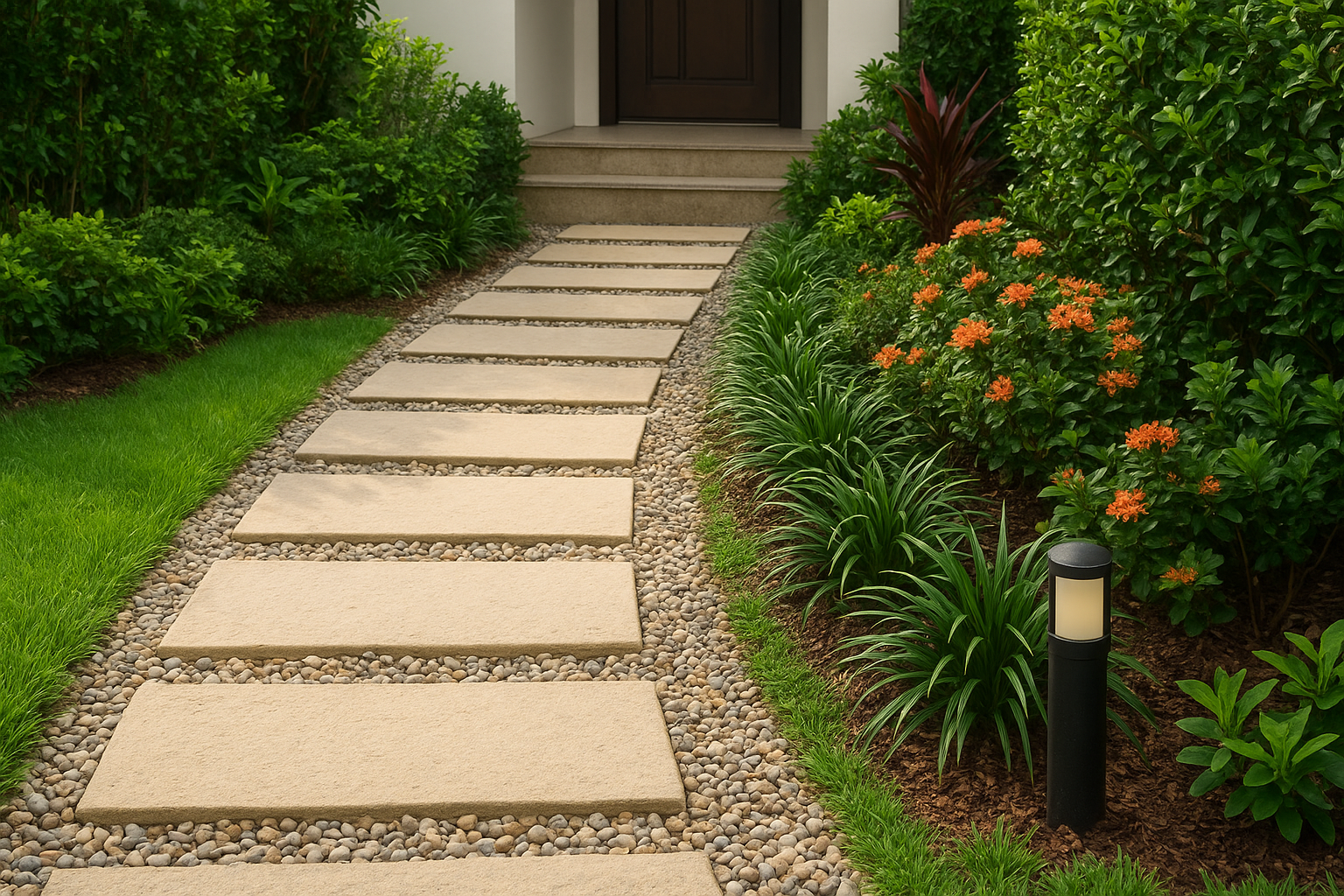
A path gives your front yard a clear route from gate to door and divides the planting into zones. Stepping stones set in turf or gravel feel relaxed. Pavers laid edge to edge feel formal. It is one of the most practical landscape design ideas for a front yard, because it ends muddy shortcuts across the beds.
A good path tells visitors where to walk before they find the doorbell.
Make it at least 90 cm wide so two people can walk side by side. Leave 3 to 5 cm gaps between stones and fill them with mondo grass or gravel.
Key plants and materials
Choose surfaces with real grip, because tropical rain turns polished tiles into a slide. Then soften the edges with plants.
- Stone: sandstone, slate, or granite with a flamed or bush-hammered finish.
- Pavers: concrete or clay, laid on compacted crusher run and sharp sand.
- Gap fillers: mondo grass, dwarf peanut grass, or pea gravel.
- Edge plants: liriope, ixora, and cordyline.
- Lighting: low bollard lights for safe walking at night.
Best for which homes
Terrace and link houses use paths to stretch a short frontage. A gentle diagonal makes a 4 m yard feel longer.
Sloped plots gain too. Build shallow steps with a rise of about 15 cm and a deep tread, so the path stays safe when it is wet.
Maintenance and budget notes
Budget runs low to moderate, and the base is where it counts. Spend on proper compaction, because sinking or rocking stones are the most common failure. Keep an eye on moss in shaded spots, since it makes surfaces slippery.
| Task | Frequency |
|---|---|
| Sweep and pull weeds from joints | Every 2 weeks |
| Pressure wash off moss | Every 6 months |
| Re-level sunken stones | Once a year |
10. Vertical garden feature wall
What the look is
A vertical garden turns a blank wall into a living panel of foliage. You get green without giving up floor space, which makes it one of the smartest landscape design ideas for home frontages that are tight.
A feature wall gives a small yard its height and its focal point.
Place it where you see it from the gate or the living room window. Bright shade or morning sun suits most plants.
Key plants and materials
Choose shallow-rooted plants that cope with a pocket or panel system. Modular walls such as EcoWall keep the planting organized and easy to replace.
- Plants: philodendron, pothos, Boston fern, peperomia, and bromeliads.
- System: modular panels or pockets with drip irrigation on a timer.
- Protection: a waterproof membrane behind the panels, so moisture never reaches your wall.
- Frame: powder-coated aluminum or treated timber.
Best for which homes
Terrace and link houses with a short frontage gain the most, since the wall adds greenery without eating into the yard. It also dresses up a plain boundary wall or carport side wall.
Skip it on walls that sit in deep shade under a roof overhang, or on west-facing walls with no cover from afternoon sun. Plants will struggle in both.
Maintenance and budget notes
Irrigation decides whether the wall thrives. Hand-watering rarely keeps pace, so install drip lines from day one and check them often. Budget runs moderate to high, because the system and waterproofing cost more per square foot than ground planting.
| Task | Frequency |
|---|---|
| Check drip lines and emitters | Monthly |
| Trim and replace weak plants | Every 4 to 6 weeks |
| Feed through the irrigation line | Every 2 to 3 months |
11. Small front yard with container planters
What the look is
When your frontage is only 3 m deep, containers do the work of a garden bed. Group three to five pots of different heights near the door or gate. You get layers, color, and a focal point without digging. Of all the house landscape design ideas here, this one is the most flexible, because you can move or swap pots whenever you like.
In a small yard, one grouped cluster of pots beats a scattered row every time.
Odd numbers and mixed heights look best. Keep the pots in one color family so the group reads as a single feature.
Key plants and materials
Choose pots at least 40 cm wide, because small ones dry out within a day under tropical sun. A self-watering unit such as our Ziant Hydro Planter cuts the daily chore.
- Tall pot: areca palm, bamboo palm, or dwarf frangipani.
- Mid pots: cordyline, ixora, or snake plant.
- Trailing pots: pothos, sweet potato vine, or ferns.
- Containers: glazed ceramic, fiberglass, or concrete, all with drainage holes.
- Extras: pot feet, so water drains and the floor stays clean.
Best for which homes
Terrace and link houses with a paved or tiled forecourt suit this look, since there is no soil to plant in. Renters gain too, because you can take the pots with you when you move.
Maintenance and budget notes
Watering is the main job. Check pots daily in dry spells, or fit a self-watering system. Budget stays low to moderate, so spend on a few large pots rather than many small ones.
| Task | Frequency |
|---|---|
| Water pots | Daily, or weekly with self-watering |
| Feed with slow-release fertilizer | Every 3 months |
| Repot and refresh mix | Every 12 to 18 months |
12. Rock garden with sculptural boulders
What the look is
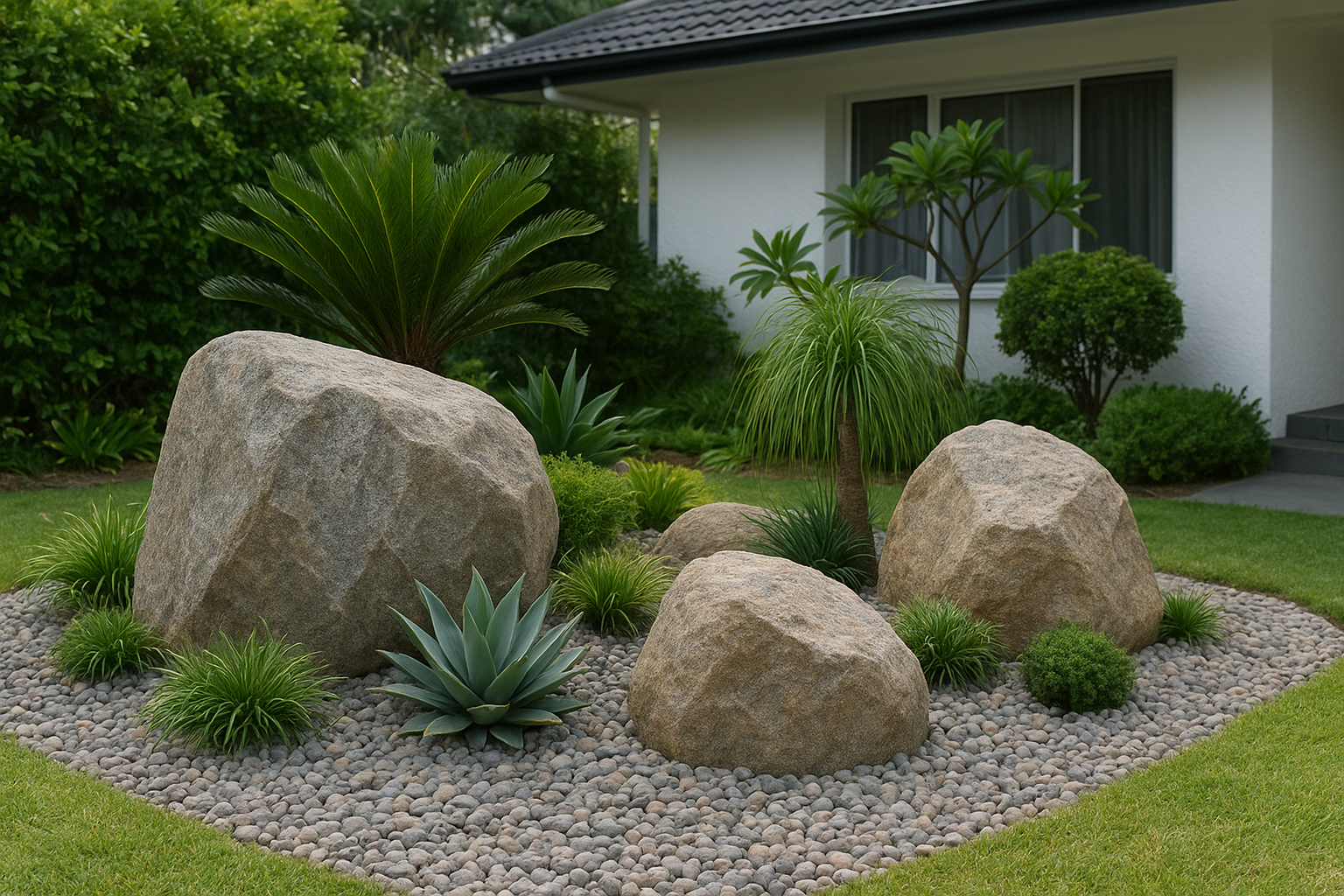
A rock garden builds your front yard around a few large boulders, with low plants tucked between them. The stones work like sculpture, so the yard feels calm and deliberate. Stone also shrugs off heavy rain and strong sun, which suits Malaysia well.
One well-placed boulder does more than ten small rocks scattered around.
Group boulders in threes or fives and bury each one about a third of its height. Vary the sizes so the group looks natural, not dropped in.
Key plants and materials
Choose the boulders first, then plant around them. Drought-tolerant plants cope best, since stone beds drain fast.
- Stone: granite, limestone, or Himalaya-style rock, 40 to 100 cm each.
- Base: river pebbles or gravel over weed membrane.
- Plants: cycad, ponytail palm, aloe, agave, and mondo grass.
- Accent: one frangipani or sculpted shrub as a backdrop.
Best for which homes
Bungalows and semi-detached houses with a wide, open frontage give boulders room to breathe. Sloped plots gain too, because large stones hold soil and form natural steps.
Check lorry or crane access before you commit, since a single boulder can weigh several hundred kilos. It is a strong pick among landscape design ideas for home owners who want little upkeep.
Maintenance and budget notes
Upkeep is light, but not zero. Pull weeds and rake out fallen leaves so they do not rot into soil. Budget runs moderate, because boulders and delivery cost more than the plants.
| Task | Frequency |
|---|---|
| Remove weeds and leaves | Every 2 weeks |
| Trim plants | Every 6 to 8 weeks |
| Top up gravel | Once a year |
13. Cottage-style mixed garden
What the look is
Among house landscape design ideas, cottage style is the loosest. It packs flowers, herbs, and shrubs into one overflowing bed, with plants spilling over the edges and color arriving in waves.
Cottage gardens look wild, but the best ones follow a plan.
Start with a simple frame, such as a low fence and a winding path, then let plants fill the gaps. Skip English favorites like lavender and delphinium, which rot in Malaysian humidity.
Key plants and materials
Pick tropical stand-ins that give the same soft look and keep flowering in heat and rain.
- Flowers: pentas, lantana, zinnia, torenia, and salvia.
- Shrubs: hibiscus, jasmine, and dwarf ixora.
- Herbs: lemongrass, basil, and curry leaf for scent and kitchen use.
- Climbers: bougainvillea or rangoon creeper on a timber trellis.
- Materials: a low picket fence, brick edging, and a gravel path.
Best for which homes
This look suits semi-detached houses and bungalows with a sunny frontage, especially older or traditional facades. It is also a good landscape design for home garden owners who like cutting flowers and picking herbs.
Shaded plots will bloom poorly. If that is your yard, choose a foliage-led look from earlier in this list instead.
Maintenance and budget notes
Of every look here, cottage beds ask for the most hands-on time. Deadhead and trim weekly, and replace tired plants as they fade. Budget stays low to moderate, because plants are cheap, but you pay in time.
| Task | Frequency |
|---|---|
| Deadhead and trim | Weekly |
| Feed with bloom fertilizer | Every 2 to 3 months |
| Replace worn-out annuals | Every 4 to 6 months |
14. Privacy screen with hedges and fences
What the look is
This look pairs a living hedge with a slatted fence, so the yard feels private without looking like a fortress. The fence gives instant cover, and the hedge softens it. Few house landscape design ideas fix street exposure as quickly, and the layered edge still reads as part of the garden.
Put a hedge in front of a fence, and privacy starts to look like landscaping.
Key plants and materials
Choose dense growers that tolerate regular trimming and handle full sun and heavy rain.
- Hedge: clumping bamboo, podocarpus, golden dewdrop (duranta), or murraya.
- Fence: powder-coated aluminum slats, treated timber, or composite boards.
- Base: a concrete footing or planter trough to hold the hedge roots.
- Gate: a matching slat panel, so the screen looks like one piece.
Best for which homes
Corner lots, houses on busy roads, and plots that face a neighbor's windows gain the most. It is also a useful landscape design idea for a front yard where you want a quiet seating area near the door.
Check your local council and housing scheme rules on front fence height before you build. Many cap it, and a hedge often gets you extra cover within those limits.
Maintenance and budget notes
Hedges need steady trimming, or they bulge and go bare at the base. Plan to shape them every 4 to 6 weeks. Budget runs moderate, since fencing and footings cost more than the plants.
| Task | Frequency |
|---|---|
| Trim hedge | Every 4 to 6 weeks |
| Feed hedge | Every 3 months |
| Wipe or oil fence | Once a year |
15. Landscape lighting for evening curb appeal
What the look is
Lighting turns your front yard into a second garden after dark. Of all the house landscape design ideas here, it is the only one that layers onto every other look. Uplight a tree, graze a wall, and mark the path.
Light the few things worth seeing, and let the rest fall into shadow.
Aim for three or four focal points, not a floodlit lawn. Keep the glow low and warm.
Key plants and materials
Humidity and downpours kill cheap fixtures, so buy for tropical conditions. Choose IP65-rated or higher fittings in brass, stainless steel, or marine-grade aluminum.
- Path lights: bollards 40 to 60 cm tall, spaced 2 to 3 m apart.
- Uplights: narrow-beam spots aimed at a palm or frangipani trunk.
- Lamps: warm white LED, 2700 to 3000K.
- Controls: a 12V transformer with a timer or dusk sensor.
Best for which homes
Every home gains, but houses with a feature tree, pond, or textured wall gain most, since the light has something to shape.
Safety counts too. Lit steps cut slips on wet stone, and a bright frontage deters opportunists.
Maintenance and budget notes
Budget stays low to moderate. LED fittings sip power, and 12V systems are safer around wet ground, though you should still hire a licensed electrician for the transformer. Skip solar lights on key paths, because they fade in rainy weeks.
| Task | Frequency |
|---|---|
| Wipe lenses and clear leaves | Monthly |
| Check seals and wiring | Every 6 months |
| Re-aim lights as plants grow | Once a year |
Choosing the look that fits your home
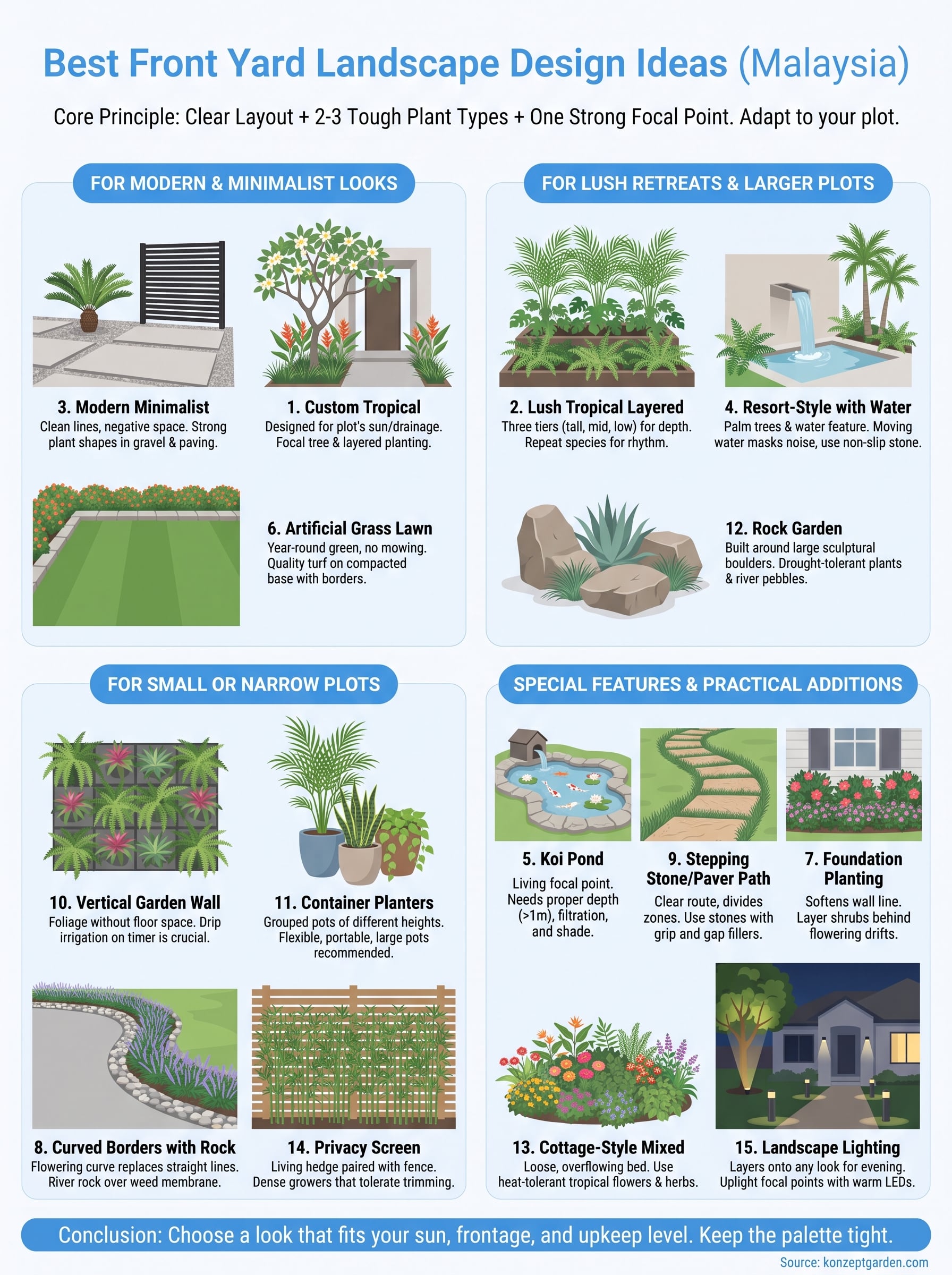
Good house landscape design ideas start with your plot, not with a photo. Match the look to your sun, your frontage, and the upkeep time you will really give it. Shaded terrace yards suit vertical walls and containers. Wide bungalow plots suit ponds and boulders. Busy owners do well with turf or minimalist paving. Pick one focal point and keep the palette tight, then add lighting on top.
Still unsure which of the 15 fits? Our team can walk your plot, check the sun and drainage, and show you a 3D visualization before any soil moves. Talk to our team for a free quotation and we will help you shape a front yard that suits your home and your budget.