
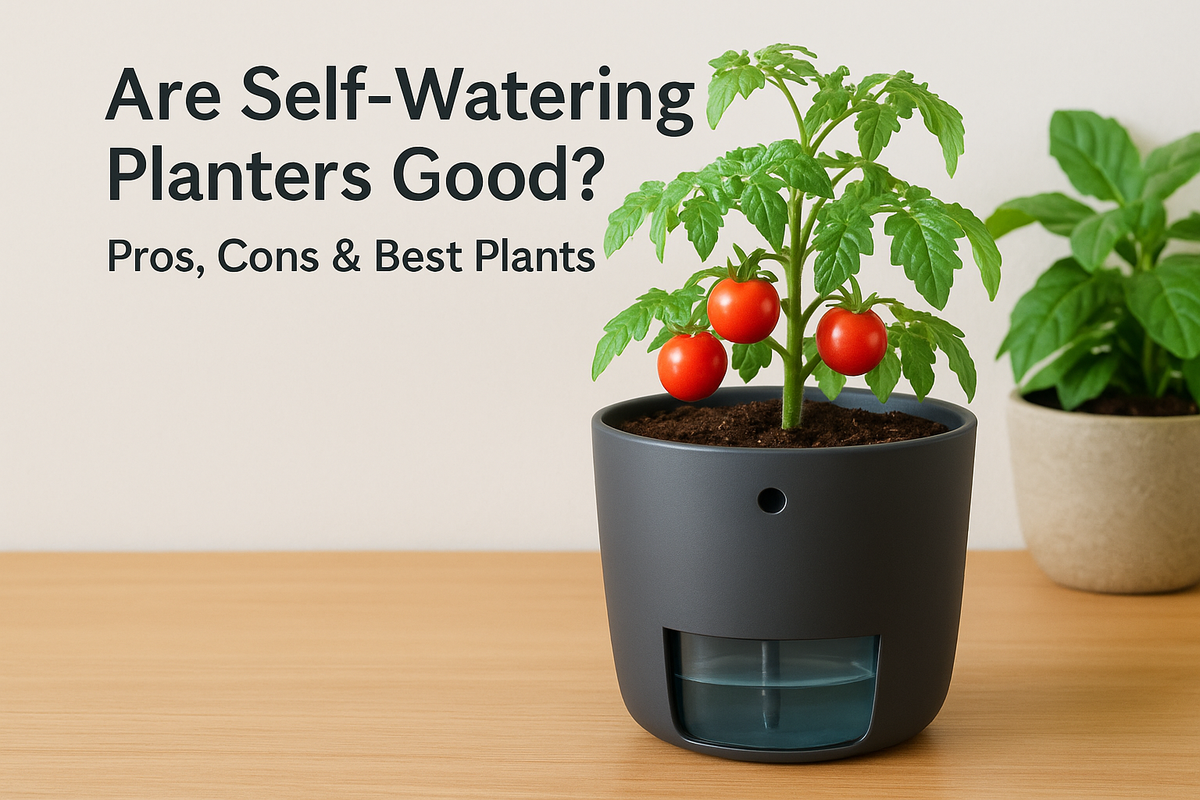
You water your plants on Monday, forget on Tuesday, and by the weekend the leaves are drooping. In Malaysia's heat, a pot can dry out in a day, and a week of heavy rain can drown the same plant. So it makes sense to ask: are self watering planters good, or are they just a pricey pot with a gimmick attached?
Yes, they work, and for most people they are worth it. A reservoir at the base feeds water up to the roots as the soil needs it, so the plant takes only what it needs. They are best for thirsty, shallow-rooted plants and for busy owners. They are a poor fit for succulents, cacti and other plants that hate constantly moist soil.
At Konzept Garden, we design gardens and sell the Ziant Hydro Planter, so we see where these planters shine and where they fail. Below, you will find the real pros and cons, the plants that thrive in them, and the ones you should keep out, so you can decide before you spend a ringgit.
Why self-watering planters are worth a closer look
Gardeners are split on this. Some swear by self-watering planters, and others toss them after one season. The split usually comes down to matching the planter to the plant and to the quality of the design, not to the idea itself.
The watering problem they solve
Water causes more container-plant trouble than almost anything else, and not only when there is too little of it. With daytime highs around 32°C, a small pot on a sunny balcony can dry out in a day. Then a week of monsoon rain arrives and the same soil stays soggy. Inconsistent watering stresses roots either way, and swinging between bone dry and waterlogged is what finishes off many potted plants.
A self-watering planter smooths out those swings. The reservoir sits in a separate chamber below the soil, and the roots draw from it through wicking or capillary action. So do self-watering planters really work? Yes, for the one job they are built for, which is keeping moisture steady. They do not feed, prune, or provide light for your plants.
A self-watering planter does not water for you. It lets the plant water itself at its own pace.
Who gets the most out of them
Some owners gain far more than others. Busy households and frequent travelers see the biggest change, because a full reservoir can cover several days to two weeks, depending on its size and the plant. Here is how common situations compare.
| Situation | What the planter does | Likely result |
|---|---|---|
| Sunny condo balcony | Buffers fast evaporation | Fewer wilted afternoons |
| Away 3 to 10 days | Reservoir covers the gap | No plant sitter needed |
| Herbs and leafy vegetables | Keeps moisture even | Steadier growth |
| Office or shop entrance | Cuts daily watering rounds | Consistent look, less staff time |
| Cacti and succulents | Keeps roots damp | Poor fit, rot risk |
Why the doubt is fair
Skepticism is reasonable. If you are weighing self-watering planters as good or bad, know that cheap models with weak wicking leave soil patchy, with a wet bottom and a dry top. Meanwhile the wrong plant will rot in a constantly damp root zone, no matter how well the planter is made. Whether self-watering planters are worth it depends on those two things, and the sections below cover both.
How self-watering planters work and whether they deliver
The mechanism in four steps
Every self-watering planter runs on the same principle, and once you see it, the product stops looking mysterious. Water sits in a sealed reservoir below the soil, and the soil pulls it up only as it dries. The sequence looks like this:
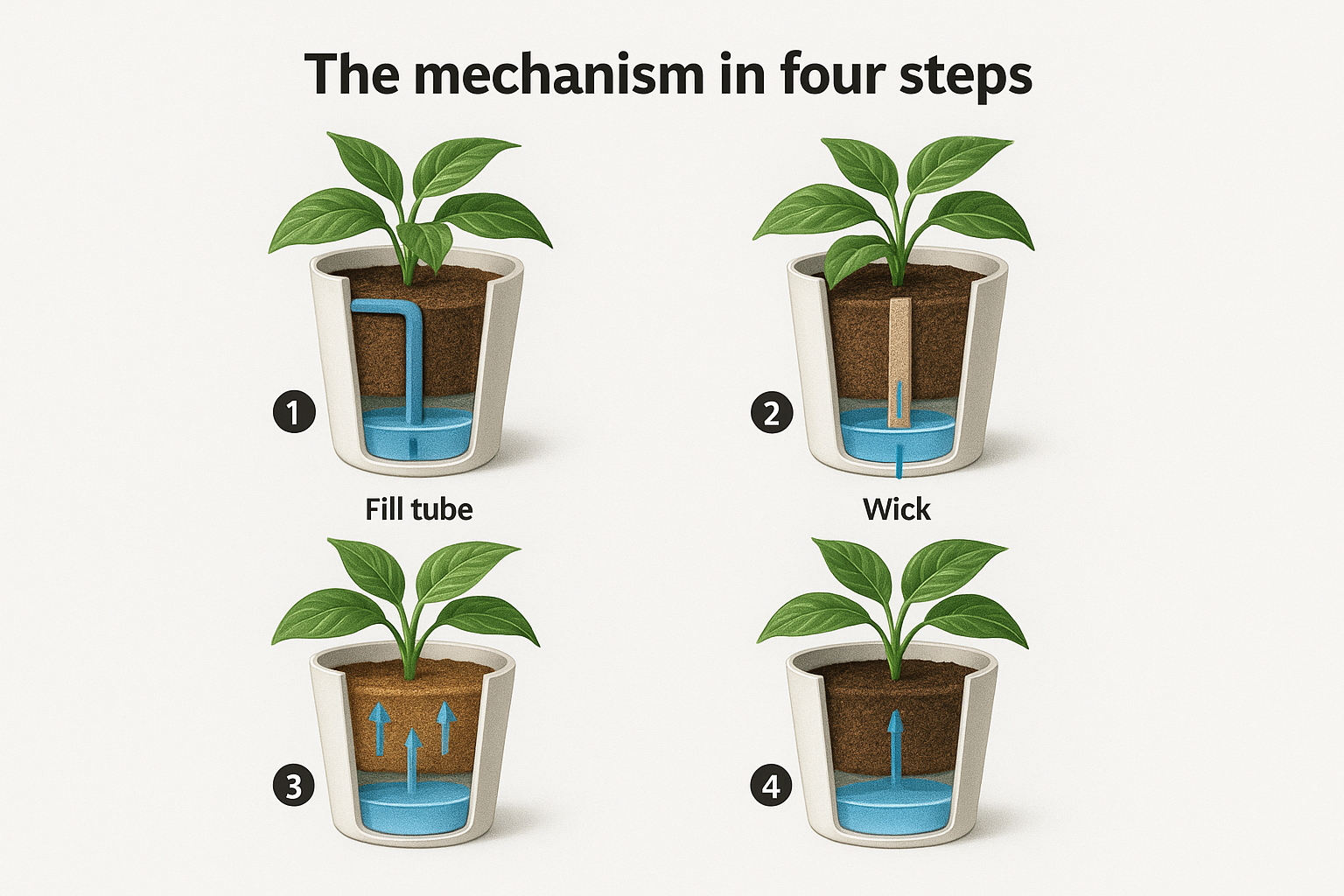
- You fill the reservoir through a fill tube or opening until water reaches the overflow hole.
- A wick, a column of soil, or a porous platform links the water to the root zone.
- Dry soil draws water upward by capillary action, the same way a paper towel soaks up a spill.
- Wet soil stops pulling, so the plant takes in only what it uses.
The overflow hole matters more than most buyers realize. It keeps the water level below the roots, so a monsoon downpour or an overenthusiastic refill cannot flood the pot.
Do they deliver in practice?
Mostly yes, with conditions. Does a self-watering planter work as advertised? When the design is sound, moisture stays far more even than with top watering, and you refill every few days instead of every morning. Our experience with the Ziant Hydro Planter points the same way. Most failures trace back to the wrong plant or the wrong soil, not to a faulty unit.
A self-watering planter delivers on steady moisture, but only if the plant, the soil, and the design all suit it.
Three things decide whether you get the result you paid for:
- Soil: Heavy garden soil compacts and blocks wicking. Use a light, airy potting mix.
- Reservoir size: A small tank empties fast on a hot balcony. Check it every few days at first, then adjust.
- Plant choice: Moisture-loving plants repay the investment. Drought-lovers do not.
So are self-watering planters good at what they promise? Yes. They remove the guesswork from watering, but they do not remove the need to look at your plants. Glance at the leaves weekly and flush the reservoir monthly to stop salts building up.
Pros and cons of self-watering planters
The advantages
Self-watering planters earn their reputation in a few specific ways. The biggest gain is steadier soil moisture, which means fewer stressed roots and less leaf drop. The second is time saved, because you refill a reservoir every few days instead of watering every morning.
- Less water wasted: Water moves up from below, so little is lost to runoff or surface evaporation.
- Lower overwatering risk: The overflow hole caps the water level below the roots.
- Travel-friendly: Most thirsty plants cope with a week away.
- Deeper roots: Roots grow down toward the moisture instead of staying shallow.
- Fewer pests on top: A drier soil surface is less attractive to fungus gnats.
The drawbacks
The downsides are real, and sellers rarely mention them. The first is higher upfront cost, since a self-watering model usually costs more than a plain pot of the same size. The second is mosquito risk. Standing water can breed Aedes mosquitoes, and in Malaysia that is a health issue, not a nuisance. Choose a planter with a sealed reservoir, and cover the fill hole with fine mesh.
- Wrong plants rot: Cacti, succulents and most Mediterranean herbs hate constant dampness.
- Algae and salt buildup: Clear reservoirs grow algae, and fertilizer salts collect over time.
- More weight: A planter with a full tank is harder to move, which matters on balconies.
- Less forgiving of lazy refilling: An empty tank on a hot day leaves the plant with no backup.
Weighing the trade-off
So are self watering planters good overall? For the right plants, yes. The cost, the weight and the mosquito precaution are manageable. A rotting root system is not, and no design fixes it.
Self-watering planters are worth it when your plant wants steady moisture, and a waste when it doesn't.
Match the plant first, and the pros will outweigh the cons. The next section shows you which plants fit.
Which plants thrive in self-watering planters, and which don't
Plants that love steady moisture
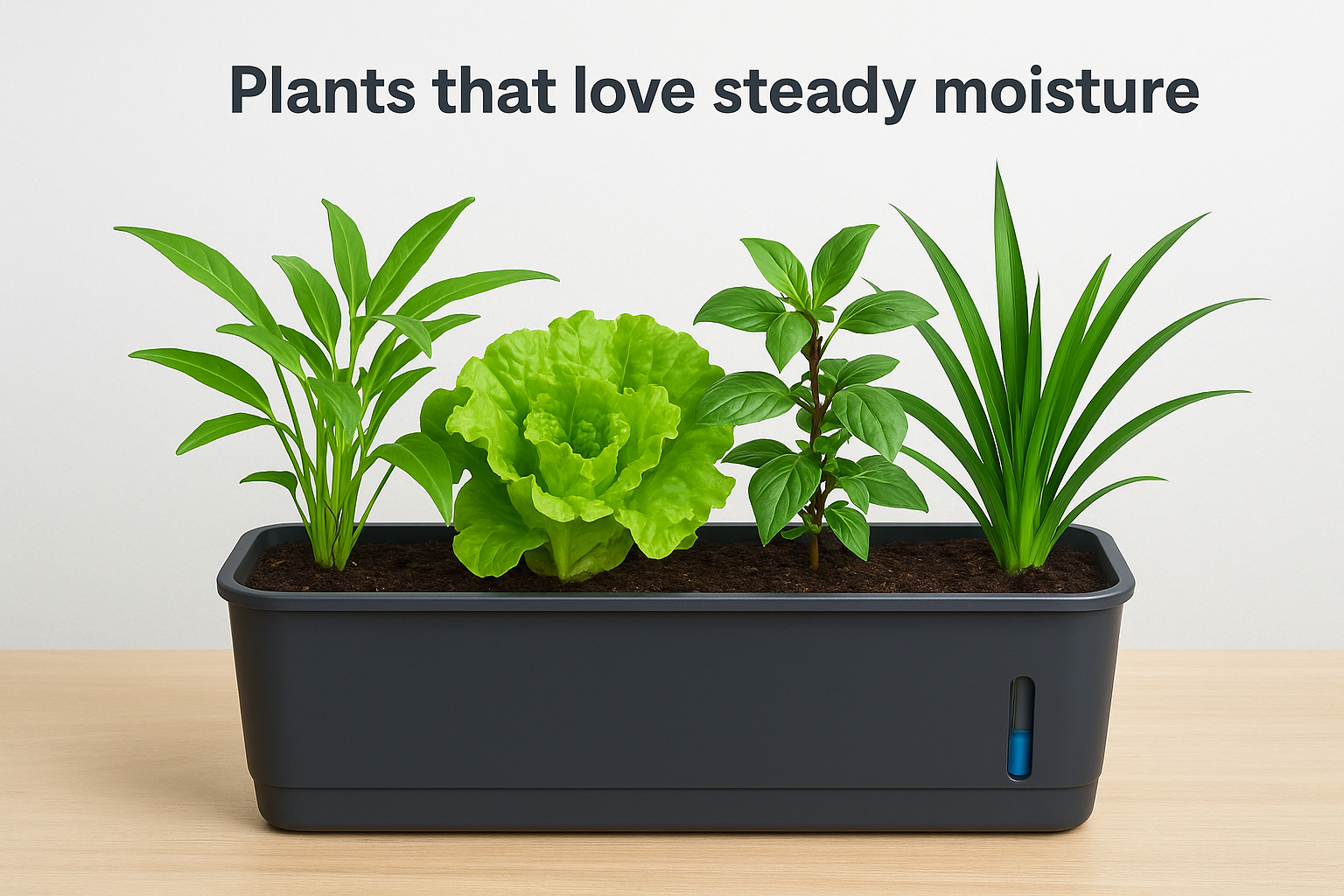
The rule is simple. Plants that like evenly moist soil do well, and plants that store water in their leaves or stems do not. Many tropical favorites fall into the first group, and shallow-rooted, fast-growing crops benefit the most.
| Plant type | Examples | Why it works |
|---|---|---|
| Leafy vegetables | Kangkung, lettuce, pak choy | Shallow roots and constant thirst |
| Herbs | Mint, Thai basil, pandan, lemongrass | Heavy drinkers in tropical heat |
| Fruiting plants | Chilies, tomatoes, eggplant | Uneven watering drops flowers and causes blossom end rot |
| Foliage plants | Peace lily, pothos, Boston fern, calathea | Native to humid forest floors |
Plants to keep out
Cacti, succulents and Mediterranean herbs evolved for long dry spells. Their roots sit in damp soil and rot within weeks, which is the failure we see most often. So are self watering planters good for every plant? No, and this is where the line falls.
- Cacti, aloe, jade plant and echeveria: They store water and want the soil to dry out fully.
- Rosemary, lavender, thyme and oregano: They prefer lean, fast-draining soil.
- Snake plant and ZZ plant: Their thick rhizomes hold water and rot in constant moisture.
- Desert rose (adenium): It needs a dry rest between drinks.
If the plant stores its own water, keep it out of a planter that supplies water for it.
The in-between cases
Some plants sit on the fence, such as ixora, hibiscus and ficus. They can work if you let the reservoir run empty for a day or two before each refill. That short dry spell gives the roots air and still keeps the soil more even than top watering does.
Test an unfamiliar plant before you commit. Check the root zone after two weeks by pressing the soil an inch below the surface. If it feels soggy rather than damp, the plant wants a drier pot.
How to use a self-watering planter in Malaysia's climate
So are self watering planters good in our climate? Yes, if you adjust for intense heat, monsoon rain and mosquitoes. A few habits cover all three.
Placement and refilling
Start with position. In full afternoon sun, a reservoir can empty in three to four days, so check the water level every other day for the first two weeks. If it drains faster than that, move the planter to morning sun or light shade.
Rain is the opposite problem. During monsoon season, an open planter can take on more water than the overflow hole can shed. Keep the planter under an eave or awning, and make sure the overflow hole is clear of soil and debris. Do self-watering planters work in a downpour? Only when that hole can drain.
Keeping mosquitoes out
Standing water is the main risk here. Aedes mosquitoes can lay eggs in a few centimeters of water, and larvae develop in about a week. Cover the fill opening with fine mesh, or use a sealed fill tube. Then empty and refill the reservoir at least weekly, which breaks the breeding cycle.
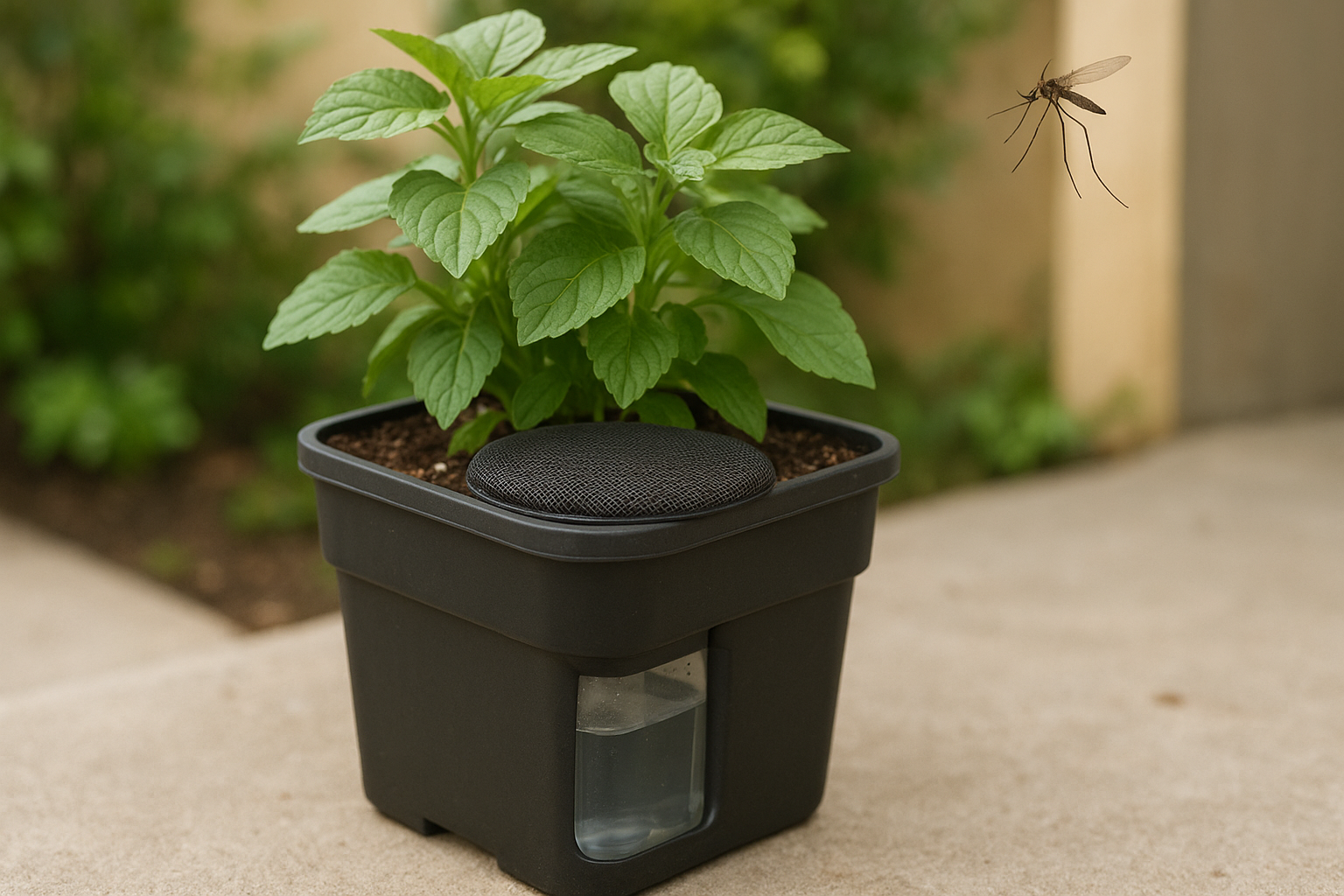
In Malaysia, a self-watering planter is only as safe as its lid and its weekly refill.
A simple weekly routine
The routine is short. Most of it takes under five minutes per planter, and it keeps the system working through dry spells and wet ones.
| Task | How often |
|---|---|
| Check reservoir level | Every 2 to 3 days |
| Flush and refill the reservoir | Weekly |
| Inspect mesh and overflow hole | Weekly |
| Press soil an inch down | Weekly |
| Wipe algae from the reservoir | Monthly |
Are self-watering planters worth it for you?
Whether they are worth it depends on three things: what you grow, how often you are away, and how much sun your spot gets. Run through the checks below and you will have your answer in about two minutes.
Buy one if most of these fit
If three or more of these apply, a self-watering planter is a good buy:
- You grow herbs, chilies, leafy greens or humidity-loving foliage plants.
- You travel or work long hours and miss watering at least twice a week.
- Your spot gets strong sun, such as a west-facing balcony.
- You can cover the fill hole and refill weekly.
- You are tired of losing plants, not just of the chore.
Then do the cost math. A self-watering model costs more than a plain pot, but one saved plant often covers the difference. You also spend less time and water on upkeep, which adds up across a row of chilies or a pandan patch.
Skip it if these sound like you
Collectors of succulents, snake plants and rosemary should pass. A plain terracotta pot with a gritty mix serves them better, and you avoid the mosquito upkeep as well.
Buy a self-watering planter for the plants you actually have, not for the plants you wish were easier.
Forgetful owners should think twice too. A reservoir lowers the workload, but it still needs a refill and a weekly flush. If you know you will ignore it for a month, choose hardy dry-soil plants instead and let them look after themselves.
Our verdict
So, are self watering planters good for you? For most Malaysian homeowners growing thirsty plants, yes. If you decide to buy, look for a sealed reservoir, an overflow hole and a fill tube, which is the design we built into the Ziant Hydro Planter. Get those three right and match the plant to the pot, and the planter will pay for itself.
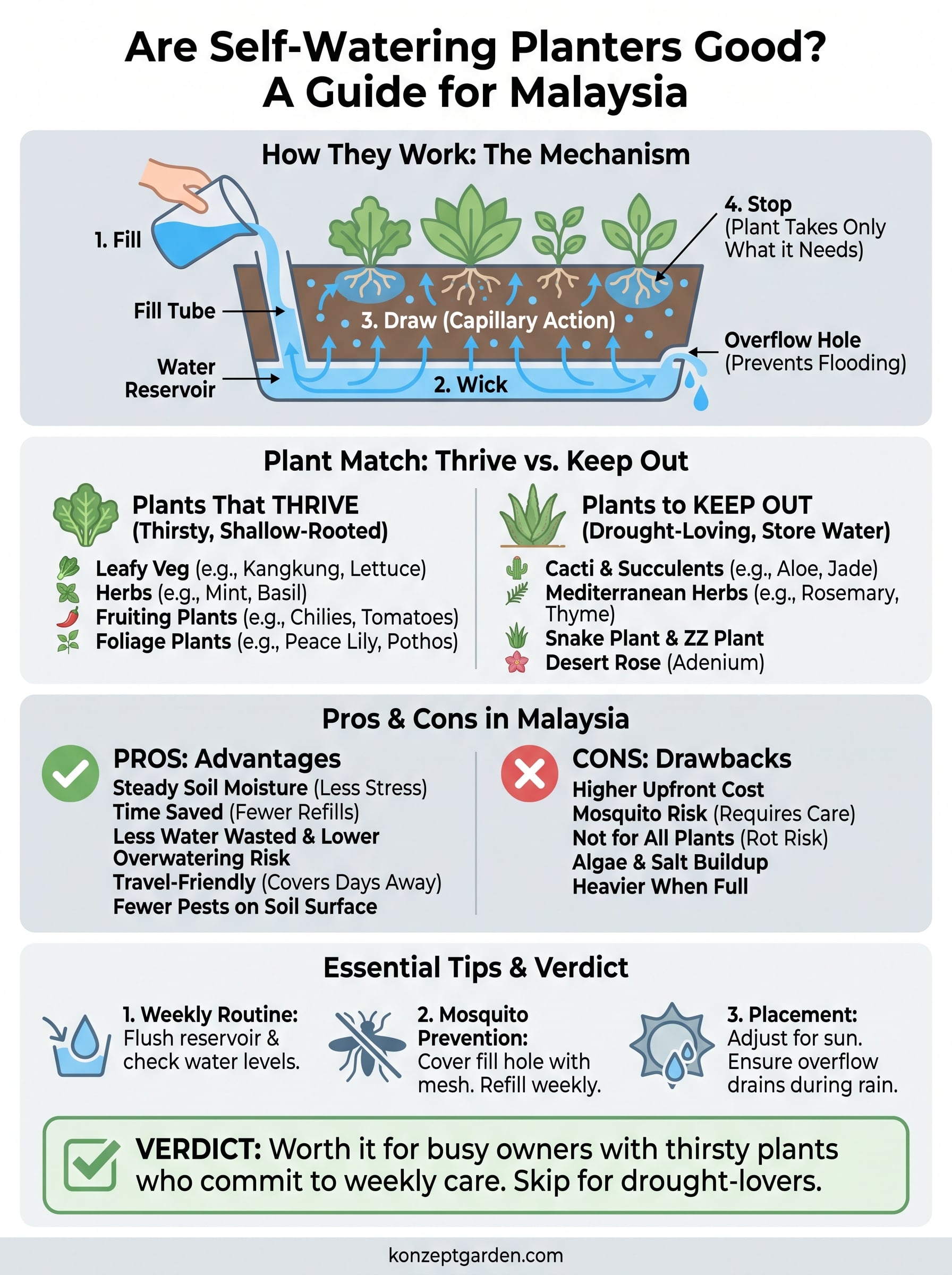
The bottom line on self-watering planters
Self-watering planters are good when you match them to the right plant. They keep soil moisture steady, cut your watering chores, and cope with Malaysia's heat and rain, provided you choose a design with a sealed reservoir and an overflow hole. Thirsty herbs, chilies, leafy greens and tropical foliage thrive in them. Succulents, cacti and snake plants do not.
So, are self watering planters good enough to buy? For most busy homeowners, yes. They are worth it if you cover the fill hole and refill weekly, which keeps mosquitoes out and roots healthy. Skip them for drought-loving plants and save your money.
Ready to put this into practice? Talk to our team at Konzept Garden and we will help you pick the right planter for your balcony or plan a whole garden around it. Ask us about the Ziant Hydro Planter and we will point you to the best fit.