
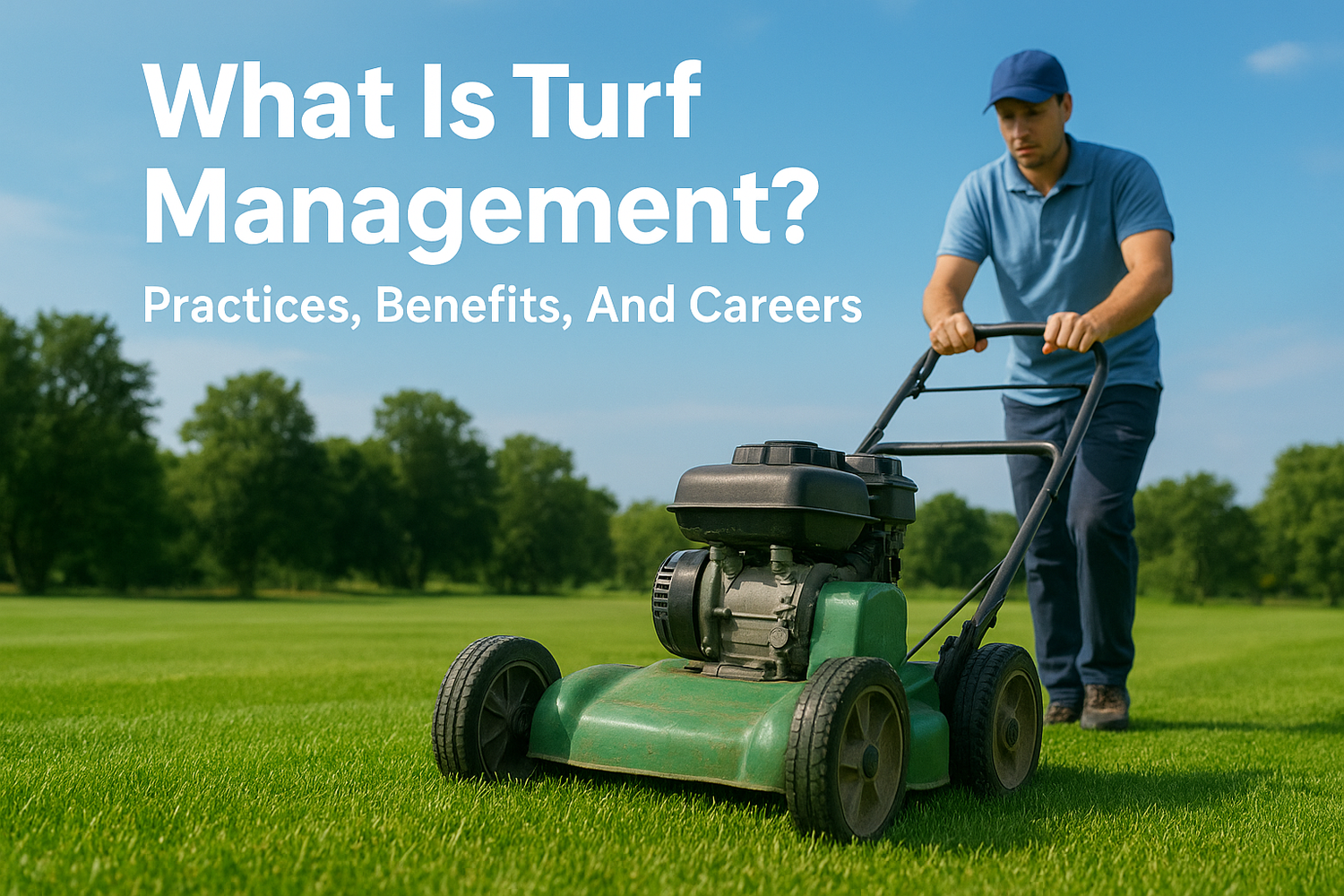
Whether you're maintaining a front lawn, managing a commercial property's green spaces, or keeping a sports field in playing condition, healthy grass doesn't happen by accident. So what is turf management, exactly? It's the combination of science, planning, and hands-on work required to grow and maintain turfgrass that looks good, performs well, and lasts through Malaysia's tropical climate.
At Konzept Garden, we design and build outdoor spaces that our clients actually enjoy using, and that includes getting the groundwork right. Turf selection and maintenance are central to nearly every residential and commercial landscape project we take on. A beautifully designed garden falls apart fast if the grass beneath it isn't properly managed, which is why we take this topic seriously and want our clients to understand it, too.
This article breaks down the core practices behind turf management, explains why it matters for both homeowners and larger properties, and covers the career and education paths available for those interested in the field professionally. By the end, you'll have a clear picture of what turf management involves and how it connects to building outdoor spaces that stay healthy long after installation day.
Why turf management matters
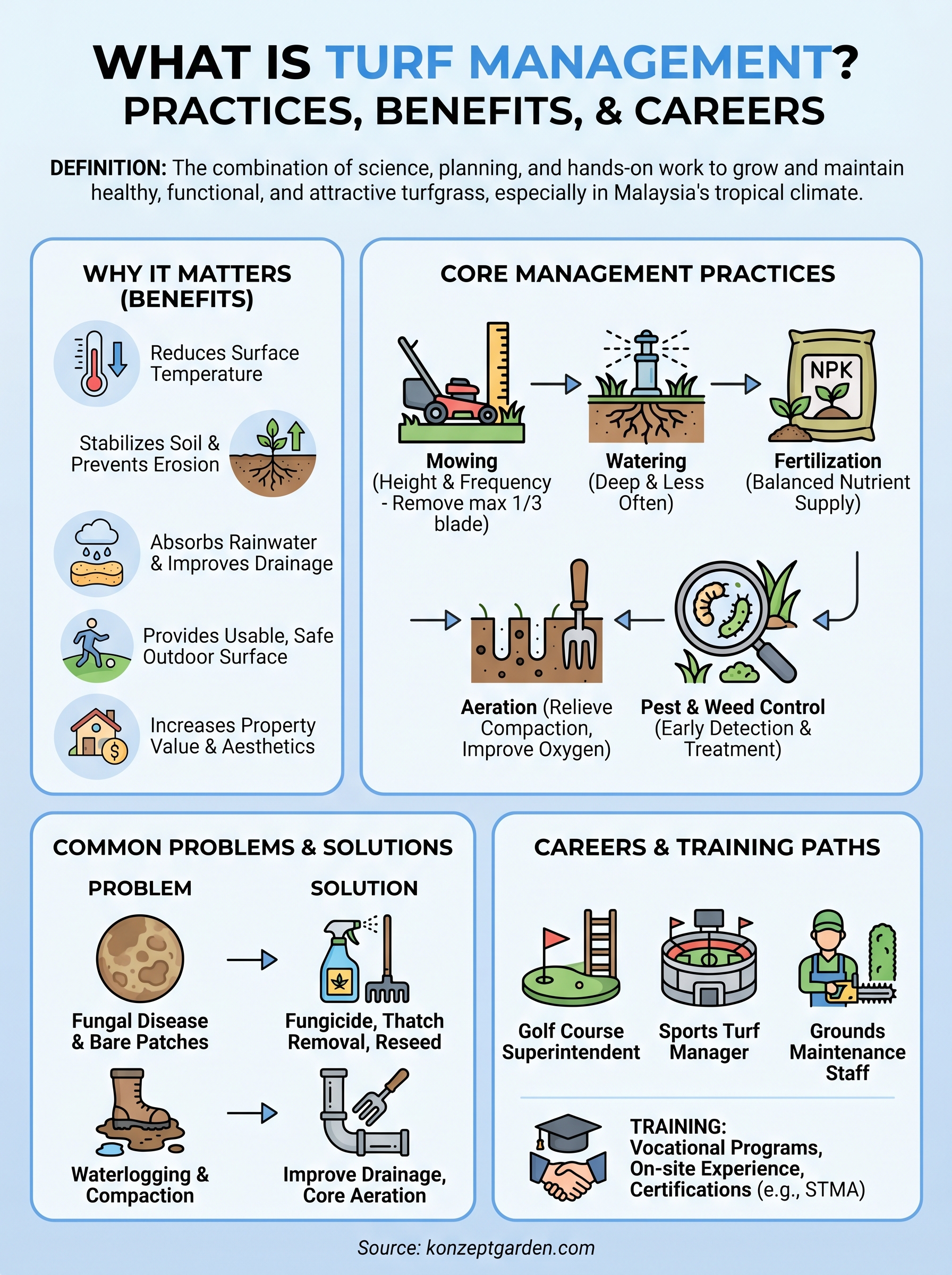
Understanding what is turf management helps clarify why healthy grass is worth investing in. Turfgrass does far more than fill space between your flower beds and pathways. It reduces surface temperature, stabilizes soil, absorbs rainwater, and provides a usable outdoor surface for people and activity. When turf is poorly managed, these benefits disappear quickly, and what's left is patchy, compacted, or weed-choked ground that pulls down the look of an entire property.
Turf as a functional outdoor surface
Well-managed turf holds up under foot traffic, weather, and regular use in ways that poorly maintained grass simply cannot. In a residential setting, that means your lawn stays green and even through the wet and dry seasons. In commercial or sporting contexts, the stakes are higher: a football field with uneven or damaged turf increases injury risk, while a hotel or resort lawn that looks neglected undermines the property's entire image.
Grass that looks healthy signals that the whole property is well cared for, which matters whether you're running a business or selling a home.
Drainage and soil stability are two functional benefits that often go unnoticed until something goes wrong. Healthy turf with deep root systems slows water runoff and prevents erosion on slopes and embankments. Without proper turf management, these systems break down and you're left dealing with muddy patches, flooding, and bare spots that spread over time.
The financial case for proper turf care
Neglected turf costs more to fix than it does to maintain. Replacing a lawn that has been lost to disease, compaction, or persistent weeds requires full removal, soil preparation, and replanting, which is a significantly larger investment than consistent upkeep. Routine turf management, covering watering schedules, fertilization, aeration, and mowing, keeps grass in good condition without requiring expensive interventions later.
Your property's value is also tied to how its outdoor spaces look and function. Real estate research consistently shows that well-maintained landscaping, including healthy turf, adds measurable value to a home or commercial property. For businesses like resorts, schools, or commercial developments, the condition of outdoor spaces shapes how visitors and clients perceive the entire operation.
How to manage turf: core practices
Once you understand what is turf management, the practical side becomes easier to follow. Turf management is built on a set of repeatable practices that work together to keep grass healthy. No single task keeps a lawn in good condition on its own; it takes consistent attention across several areas throughout the year.
Mowing, watering, and fertilization
Mowing height and frequency directly affect how strong your turf grows. Cutting grass too short stresses the plant, reduces root depth, and leaves the surface open to weeds and heat damage. You want to remove no more than one-third of the blade length at a time, and keep your mowing schedule in line with the grass's actual growth rate.
Watering deeply and less often trains grass roots to grow downward rather than staying shallow, which builds drought resistance over time. Fertilization fills in what the soil cannot provide on its own, supplying nitrogen for leaf growth, phosphorus for root development, and potassium for overall plant strength.
The goal is to feed and water your turf based on what the grass actually needs, not on a rigid schedule that ignores weather and soil conditions.
Aeration, weed control, and pest management
Soil compaction is one of the most common reasons turf declines in high-traffic areas. Aeration breaks up compacted layers, improves drainage, and allows oxygen to reach the root zone, giving grass the conditions it needs to recover and grow.
Weed and pest control rounds out the core management process. Weeds compete directly with grass for water and nutrients, while pests like grubs damage roots from below ground before you notice any visible decline on the surface.
Turf management in Malaysia: climate and use cases
Malaysia sits in a tropical zone with high humidity and year-round rainfall, which creates turf management challenges that differ significantly from temperate climates. Understanding what is turf management in this context means accounting for intense sun, frequent downpours, and heat that rarely lets up. These conditions accelerate grass growth in wet months and stress turf during dry spells, so your management schedule needs to adjust throughout the year.
Grass species suited to Malaysia's weather
Not all grass performs well in Malaysia's heat and humidity. The most common choices for residential and commercial lawns here are Cow Grass (Axonopus compressus), Pearl Grass (Zoysia matrella), and Carpet Grass, each with different tolerances for shade, foot traffic, and moisture.
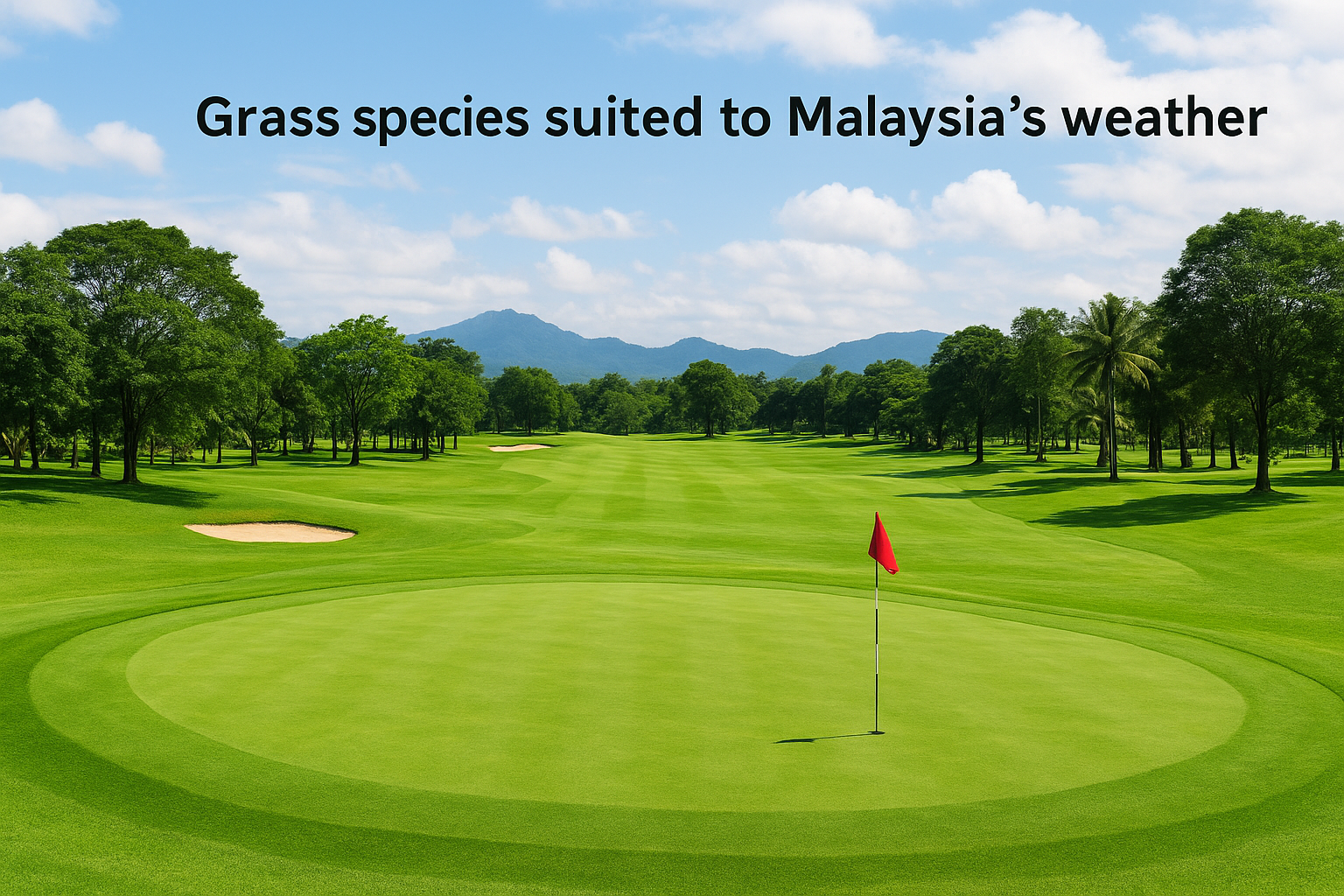
Cow Grass handles heavy rainfall and wear well, making it the go-to choice for most Malaysian properties. Pearl Grass offers a finer, denser surface that suits formal gardens and resort settings, though it requires more careful upkeep to maintain its texture.
Choosing the wrong grass species for your site conditions is one of the most common reasons turf fails within the first year.
Where turf management applies in Malaysia
Residential properties, commercial developments, and sports facilities all rely on consistent turf management, but the demands vary between them. A home garden needs routine mowing, fertilization, and pest control to stay tidy throughout Malaysia's wet and dry cycles.
Sports fields, hotel lawns, and golf courses require more intensive programs that include compaction management, drainage improvements, and surface recovery after heavy use. The same core principles of turf management that apply to a backyard lawn scale up to handle these larger, more demanding environments.
Common turf problems and how to fix them
Even with a solid maintenance routine, turf problems show up. Understanding what is turf management includes knowing how to read your lawn's warning signs early, because most issues become significantly harder and more expensive to fix the longer you leave them. Identifying the root cause of a problem, rather than treating the symptom, is what separates effective turf management from repeated short-term fixes.
Fungal disease and bare patches
Fungal infections spread quickly in Malaysia's humid climate and typically appear as discolored rings, yellowing patches, or thinning grass that doesn't respond to watering or fertilization. The underlying cause is usually poor air circulation, overwatering, or excess thatch buildup that keeps moisture trapped close to the soil surface. To fix it, reduce watering frequency, clear thatch, and apply a fungicide appropriate for the identified disease.
Treating fungal disease without improving the conditions that caused it means the problem will return within weeks.
Bare patches develop from foot traffic, pest damage, or soil compaction rather than disease. Aerate the affected area, amend the soil if needed, and reseed or relay turf before the next wet season arrives.
Waterlogging and compaction
Waterlogged soil suffocates grass roots and creates conditions for both fungal growth and weed invasion. If water pools on your lawn after rain, your drainage system needs attention, whether that means aeration, adding drainage channels, or regrading the surface to improve runoff.
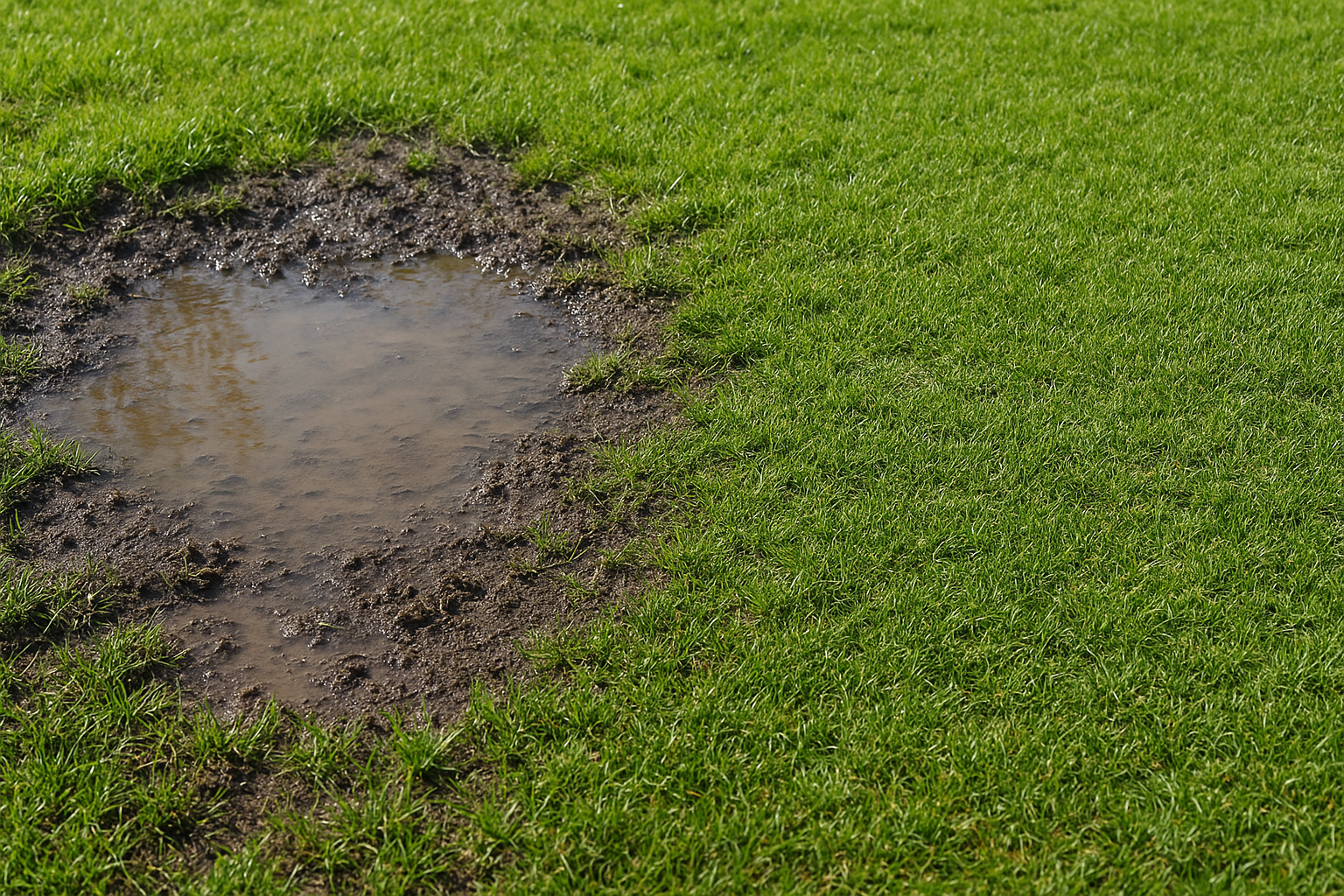
Compaction builds up gradually under regular foot traffic. Core aeration two to three times a year keeps the soil open and allows roots to access the oxygen and nutrients they need to stay strong year-round.
Turf management careers and training paths
If you're asking what is turf management from a professional angle, the field offers more career options than most people expect. Turf management professionals work across golf courses, sports stadiums, hotel properties, municipal parks, and residential landscaping companies. The role combines practical outdoor work with technical knowledge of soil science, plant biology, irrigation systems, and pest control, which makes it a genuinely skilled trade rather than a general labor position.
Roles available in the turf industry
Golf course superintendents sit at the top of the profession, overseeing every aspect of a course's playing surfaces and typically managing large maintenance crews and budgets. Sports turf managers handle the demands of high-use fields for football, rugby, or athletics, where surface quality directly affects player safety and performance. At a smaller scale, landscape technicians and grounds maintenance staff handle turf care for commercial developments, schools, and private properties throughout Malaysia.
The level of responsibility and pay in turf management rises sharply with formal training and hands-on experience.
How to build turf management skills
Malaysia has vocational and agricultural training programs through institutions like the Malaysian Agricultural Research and Development Institute (MARDI) and Universiti Putra Malaysia, which cover horticulture and grounds management subjects relevant to turf care. If you want to move into professional turf management, starting with hands-on site experience alongside formal study gives you the strongest foundation. Internationally, certifications from organizations like the Sports Turf Managers Association are recognized and useful for those working on high-profile venues or seeking to advance into senior roles.
Key takeaways and next steps
Turf management covers everything from choosing the right grass species for Malaysia's climate to fixing compaction, disease, and drainage issues before they escalate. What is turf management at its core? It's consistent, informed care that keeps your outdoor surfaces functional, attractive, and cost-effective over time. Whether you manage a home garden, a commercial property, or a sports facility, the same principles apply: match your grass to your site conditions, build a routine, and address problems early rather than waiting until the damage spreads.
The condition of your turf reflects directly on the quality of your entire outdoor space. If you're planning a new garden or want to improve an existing one, getting professional guidance early saves you time, money, and frustration down the road. Konzept Garden works with homeowners and commercial clients across Malaysia to design and build outdoor spaces that hold up long-term. Contact our team to get started with a free consultation.