
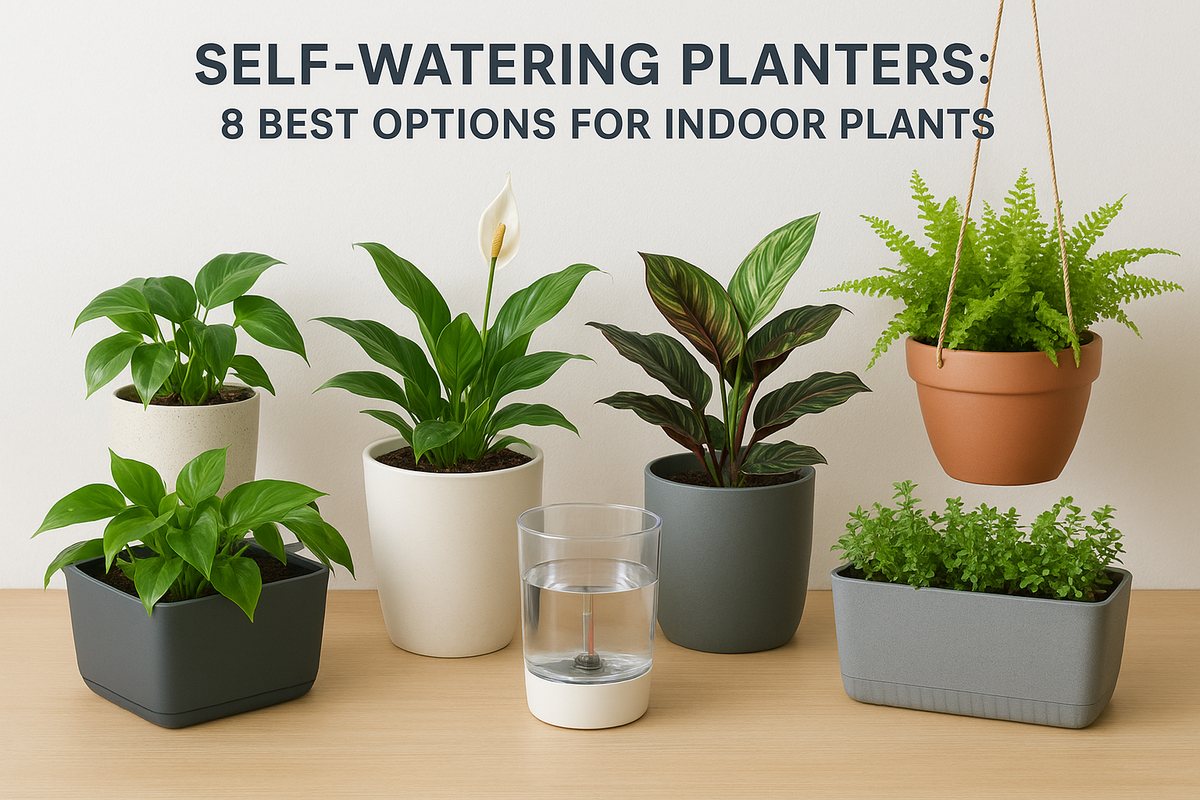
Keeping indoor plants alive in Malaysia is harder than it looks. Humid mornings, air-conditioned afternoons, and weekends away mean plants get soaked one week and bone dry the next. Self-watering planters fix this by giving roots a steady supply of water from a hidden reservoir, so you stop guessing.
The short answer: a good self-watering pot is worth it for most indoor plants, especially herbs, ferns, pothos, and peace lilies. Look for a clear water level indicator, a wicking system that does not clog, and a reservoir big enough for at least a week. The downsides are real, though. Cheap models can cause root rot if you overfill, and succulents usually do better in regular pots.
Below, you will find 8 of the best options we recommend, with notes on size, capacity, and which plants suit each one. We also cover how these pots work, their pros and cons, and a simple DIY version. At Konzept Garden, we design gardens and sell the Ziant Hydro Planter, so we have seen what holds up in Malaysian homes.
1. Ziant Hydro Planter
How it works
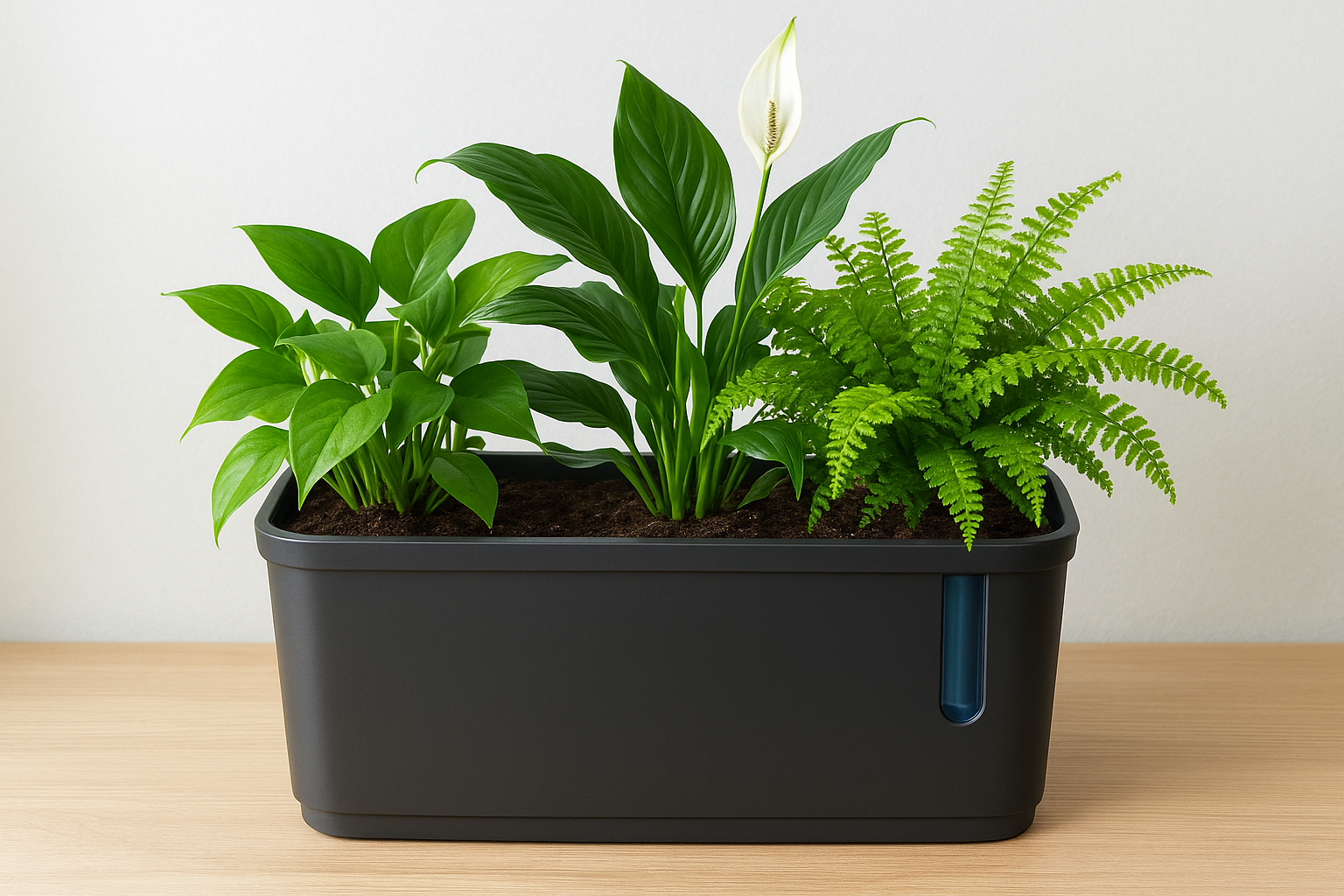
The Ziant Hydro Planter is a self-watering planter box that we sell and use in our own projects. It follows the standard reservoir principle: water sits in a base reservoir, and the potting mix above pulls it upward through capillary action. Roots take what they need and the rest stays below, out of reach.
Filling is simple. You top up the reservoir instead of watering the soil from above. In our experience, a medium-sized indoor setup needs a refill about every one to two weeks, depending on the plant and how hot the room gets.
Best plants for it
This planter suits plants that like evenly moist soil. Think of anything that wilts dramatically when you forget it for a few days.
- Pothos and philodendron
- Peace lily
- Boston fern and other ferns
- Calathea and maranta
- Kitchen herbs such as mint, basil, and lemongrass
These moisture-loving plants are also the ones that struggle most with Malaysia's air-conditioned rooms, where soil dries out faster than you expect. Skip cacti and most succulents. They want a dry spell between waterings, and a constant reservoir works against them.
Pros and limitations
The main benefit is consistency. Plants get a steady supply, so you avoid the soaked-then-parched cycle. Here is how it balances out.
| Pros | Limitations |
|---|---|
| Steady moisture between refills | Not suited to succulents and cacti |
| Fewer watering chores and easier weekend trips | Overfilling the reservoir can cause root rot |
| Box format holds several plants together | Heavier and bulkier than a small pot |
| Backed by a local team that can advise on setup | Needs a free-draining mix, not dense garden soil |
The drainage point matters most. Heavy soil stays wet and suffocates roots, even in a good planter.
A self-watering planter delivers steady moisture, not extra water, so the right potting mix and a disciplined refill routine still decide whether your plants thrive.
Who it is for
Choose it if you want a reliable, low-effort setup for a balcony, living room, or office corner, and you prefer a planter box over a single small pot. It fits homeowners who travel often, busy professionals, and anyone growing herbs or leafy plants together. If you are planning a larger indoor or patio scheme, our design team can also fold the planters into the layout, pair them with an EcoWall vertical garden system, and recommend plants suited to your light. You can also ask for a free quotation to see how they fit your space.
2. Lechuza Classico and Cube planters
How it works
Lechuza is a German brand, and its round Classico and square Cube lines use a sub-irrigation system. A removable plant insert sits above a sealed water reservoir, and a side indicator shows when to refill.
Instead of regular potting soil, these pots are designed around Pon, a mineral substrate that holds water and air together. That is why one fill can last several weeks, depending on pot size, plant, and room temperature.
Best plants for it
These self-watering indoor planters suit larger foliage plants with strong root systems. The deeper insert gives them room to grow.
- Monstera
- Rubber plant and fiddle-leaf fig
- Peace lily
- Dracaena and areca palm
Small herbs and cacti are a poor match. The pots are sized for statement plants, and a constant reservoir is the wrong setup for succulents.
Pros and limitations
Reliability is the draw, and price is the catch.
| Pros | Limitations |
|---|---|
| Long gaps between refills | Premium price compared with basic pots |
| Clear water level indicator | Works best with Pon, an extra cost |
| Clean, modern look in many finishes | Less useful for small or dry-loving plants |
Always check the indicator before topping up. Overfilling is the most common mistake we see with self-watering plant pots at this price level.
A premium self-watering pot only pays off when you use the substrate it was designed for and refill by the indicator, not by habit.
Who it is for
Pick it if you want a polished statement piece for a living room or lobby, and you already own a large plant that keeps drying out. It also suits people who travel for two or three weeks at a time.
Skip it if you are on a tight budget or growing a few small herbs. For that, a planter box like the Ziant Hydro Planter gives you better value per plant.
3. Elho self-watering inserts
How it works
Elho is a Dutch brand, and its insert is a separate reservoir tray that sits inside a decorative pot. Water collects in the tray, and the root ball draws it up as the soil dries. A level indicator tells you when to refill.
Because the system is modular, you can keep a pot you already own if the diameter fits, or swap the outer pot for a new color. You still use ordinary potting mix, so running costs stay low.
Best plants for it
Medium plants that like steady moisture do best in these self watering plant pots. The reservoir is smaller than a full Lechuza base, so skip very large specimens.
- Pothos and syngonium
- Spider plant
- Peperomia
- Small ferns and calathea
Cacti and succulents are still a poor fit, because they want the soil to dry out between drinks.
Pros and limitations
Flexibility is the main strength, and sizing is the main catch.
| Pros | Limitations |
|---|---|
| Works with pots you may already have | Smaller reservoir, so more frequent refills |
| Uses regular potting mix | Insert must match your pot size |
| Lower cost than sealed systems | Less capacity for big, thirsty plants |
Measure the inner diameter and depth of your pot before you buy. Then use a light, airy mix, because dense soil stays soggy above the tray.
An insert turns a good-looking pot into one of the simplest self-watering planters you can own, but only if the size and the soil are right.
Who it is for
Choose it if you already have decorative pots and want to upgrade them without buying new ones. It suits renters, first-time plant owners, and anyone with a few medium plants on a shelf or desk. Skip it if you are away for weeks at a time, since the smaller reservoir needs topping up more often than a larger planter box.
4. Wick-style planters with string reservoirs
How it works
A wick planter uses a cotton or nylon cord to carry water from a separate reservoir up into the soil. One end sits in the water below, the other is buried in the potting mix, and capillary action pulls moisture upward as the soil dries. There is no float and no sealed base, just a string and a jar or tray.
Most kits sit the pot on top of the reservoir, with the cord threaded through the drainage hole. You can buy simple wick pots that are inexpensive, or build one at home. Use a light mix with perlite so the wick draws water evenly.
Best plants for it
Small, thirsty plants do best, because a single wick moves water slowly. These self-watering plant pots suit:
- African violet
- Fittonia (nerve plant)
- Mint and basil
- Small ferns
- Spider plant
Avoid large plants such as monstera or fiddle-leaf fig. One thin cord cannot keep up with a big root system, and the plant will wilt between refills even with a full reservoir.
Pros and limitations
The appeal is low cost and simplicity. The catch is limited water flow and an open reservoir.
| Pros | Limitations |
|---|---|
| Cheapest way to automate watering | Slow water delivery for big plants |
| Easy to build from jars and cord | Wick can clog or dry out over time |
| Works with regular potting mix | Open water can grow algae |
In Malaysia, standing water is the bigger concern. It invites mosquitoes, so cover the reservoir and change the water weekly.
A wick pot is the cheapest way to automate watering, but only if you cover the water and keep the plant small.
Who it is for
Choose it if you want to try self-watering on a tight budget, or you have a few small plants on a windowsill. It also suits hobbyists who like tinkering, since you can adjust the wick thickness to the plant.
Skip it for large floor plants or for trips longer than a week or two. There, a sealed system like Lechuza gives a more dependable supply.
5. Transparent reservoir pots with water indicators
How it works
These self-watering planters use a clear reservoir or a small viewing window, so you can see the water level without lifting the plant. Some use a float gauge instead. A wick or a raised grid inside moves water up into the soil.
Refilling needs no guesswork. When the water drops to the minimum mark, you top up. Clear walls also let you spot algae and root problems early, which opaque pots hide.
Best plants for it
Plants that punish guesswork gain the most from a visible water line. These self-watering indoor planters work well for:
- Pothos and syngonium
- Peace lily
- Spider plant
- African violet
- Mint and basil
Skip cacti and succulents. They still want a dry spell between drinks.
Pros and limitations
The indicator is the selling point. The clear walls are the catch.
| Pros | Limitations |
|---|---|
| Water level visible at a glance | Clear walls grow algae in bright light |
| Teaches beginners a refill rhythm | Plastic can yellow or scratch over time |
| Usually affordable | Reservoir is often small |
| Makes root rot easier to spot | Less stylish than ceramic pots |
Keep the pot out of direct sun, or slip it inside a decorative cover pot. Malaysian window light is strong enough to turn a clear reservoir green within weeks.
An indicator removes the guesswork, and guesswork is the main reason self-watering pots fail.
Who it is for
Choose it if you are new to houseplants and want proof that you are watering correctly. It suits students, renters, and anyone with a few small plants on a desk or shelf.
Skip it if you want a statement piece or a long-absence solution. Small reservoirs need refills every week or so, so a larger planter box fits better for travelers.
6. Self-watering hanging planters
How it works
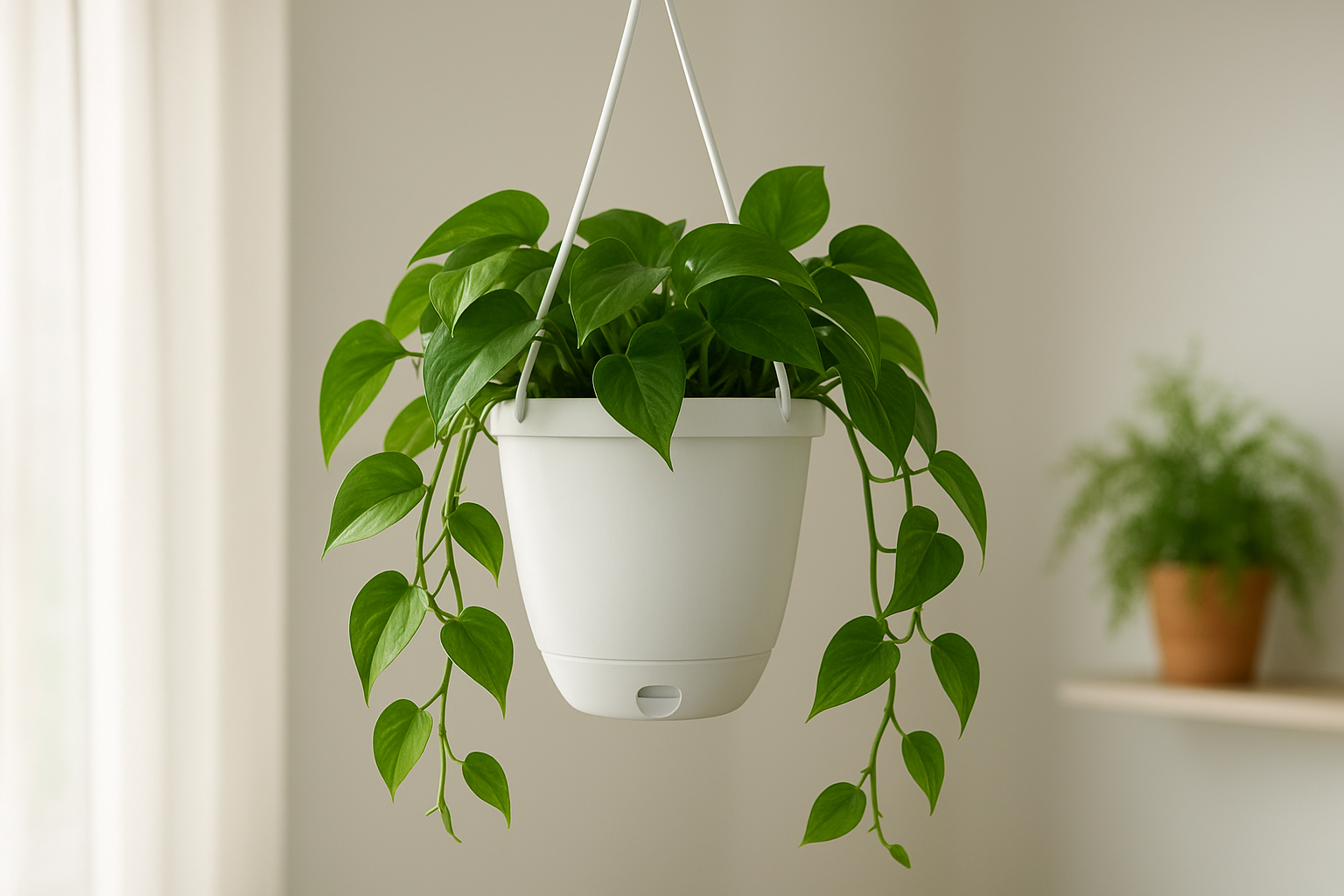
Hanging self-watering planters keep a small reservoir in the base of the pot. A wick or overflow channel feeds the soil above it. Most have a lidded fill spout, so you can refill without unhooking the planter.
Moving air dries hanging pots faster than floor pots, so the reservoir does more work here. A good model also has an overflow hole to stop the roots sitting in water.
Best plants for it
Trailing plants suit this format best, because they spill over the edge and make full use of the space. They also like evenly moist soil, which the reservoir provides.
- Pothos and heartleaf philodendron
- Spider plant
- Boston fern
- Tradescantia
Skip succulents and heavy plants. A constant reservoir suits neither, and the extra weight strains the hanger.
Pros and limitations
| Pros | Limitations |
|---|---|
| Frees up floor and shelf space | Small reservoir, so weekly refills |
| Fewer refills than a standard hanging pot | Hard to check the water level overhead |
| Trailing vines look full and lush | Overflow can drip onto the floor |
Weight is the detail most people miss. A full reservoir plus wet soil can reach several kilograms, so use ceiling anchors rated for the load, not adhesive hooks.
A hanging planter is only as safe as its hook, so anchor it for the wet weight, not the dry weight.
Who it is for
Choose it if you have a bright window or covered balcony but little floor space. It suits apartment dwellers who want greenery at eye level.
Look elsewhere if you travel for weeks at a time. The small reservoir runs dry sooner than a larger planter box would.
7. Self-watering trough and rectangular planters
How it works
Troughs stretch the reservoir idea into a long, shallow box. A water tank runs along the base, and a perforated platform or raised grid holds the soil above it. Wicking channels or soil columns dip into the water, and a fill tube at one end lets you top up without lifting anything.
Because the tank is wide, one fill holds more water than a small round pot of the same height. Most models also have an overflow hole that caps the water level, so the roots never sit submerged.
Best plants for it
Rectangular planters suit plants you want in a row, like a herb strip, a window screen, or a foliage border. Shallow to medium root systems do best.
- Mint, basil, and Thai basil
- Peace lily
- Calathea and maranta
- Boston fern
- Pothos on a small trellis
Skip cacti and succulents, as with every reservoir system. Also skip deep-rooted palms, which outgrow the shallow soil bed quickly.
Pros and limitations
The big draw is capacity and layout flexibility. The catch is weight and space.
| Pros | Limitations |
|---|---|
| Large reservoir for longer gaps between refills | Heavy once filled with wet soil and water |
| Several plants share one fill point | One overwatered plant affects the whole row |
| Works as a room divider or balcony edge | Needs a long, level surface |
Place the trough where you want it before you fill it. A 60 cm trough can weigh well over 15 kg when wet, so check your shelf or ledge can carry the load.
Among self-watering planters, a trough gives you the most water per square foot, but only plants with matching thirst should share it.
Who it is for
Pick it if you want a row of herbs or foliage on a sunny sill, balcony ledge, or office partition. It suits busy households that want several plants on one refill routine. Skip it if you have a flimsy shelf or mix thirsty and dry-loving plants. If you need a length that fits a specific corner, our design team can plan the planter into your layout during a consultation.
8. DIY bucket or storage-bin planter
How it works
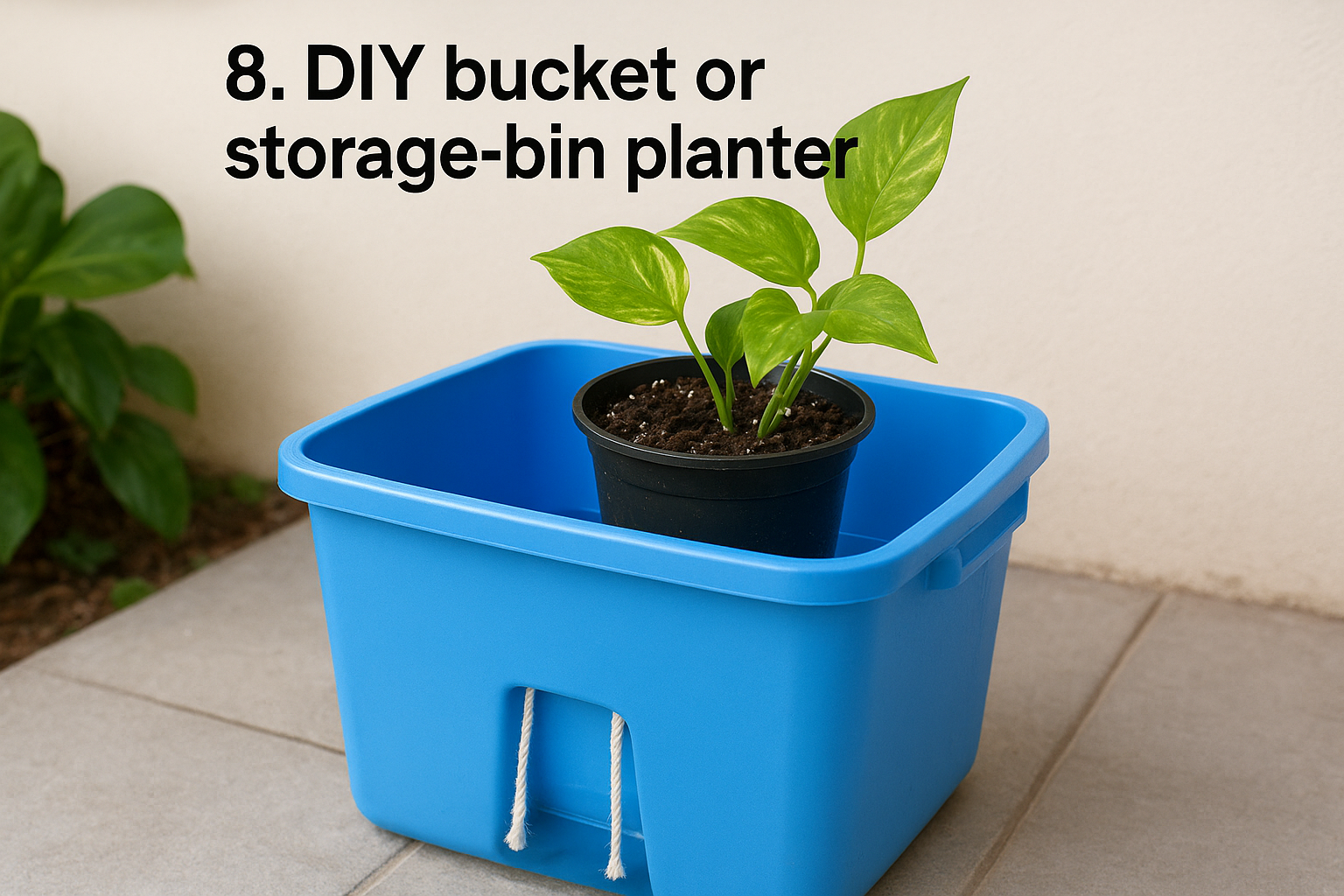
A homemade version uses the same idea as the self-watering planters above: a water reservoir below and soil above, linked by a cotton wick. A 10-liter bucket or a lidded storage bin does the job.
- Drill 6 to 8 small holes in the base of a nursery pot that fits inside the bucket.
- Thread two cotton cords through the holes, leaving about 10 cm hanging below.
- Rest the pot's rim on the bucket lip so the cords dip into a 5 cm water gap.
- Drill an overflow hole in the bucket side, just below the pot base, then fill the pot with light potting mix and perlite.
Best plants for it
Thirsty, fast-growing plants work best in these self watering plant pots made at home. Bigger bins suit balcony edibles such as chilies, kangkong, and pandan, while a small bucket handles mint, basil, or pothos. Skip succulents and cacti. They still want the soil to dry out between drinks.
Pros and limitations
The draw is cost, since most parts are already in your storage cupboard. The catch is the lack of polish and the open water.
| Pros | Limitations |
|---|---|
| Costs a few ringgit | Looks utilitarian |
| Size adjusts to any plant | No built-in level indicator |
| Uses recycled containers | Open water attracts mosquitoes |
Mosquitoes are the real risk in Malaysia. Cover the reservoir with a lid or fine mesh, and leave only a small fill tube that you can plug.
A DIY planter works only when the water is sealed off, because an uncovered reservoir turns into a mosquito nursery within days.
Who it is for
Choose it if you enjoy building things and want a cheap test before buying anything. It suits renters, students, and gardeners with a balcony and a few spare buckets.
Skip it if you want a clean look in a living room, or need a dependable supply while you travel. A ready-made planter such as the Ziant Hydro Planter gives you a tidier finish and a tested design.
Choosing the right planter for your home
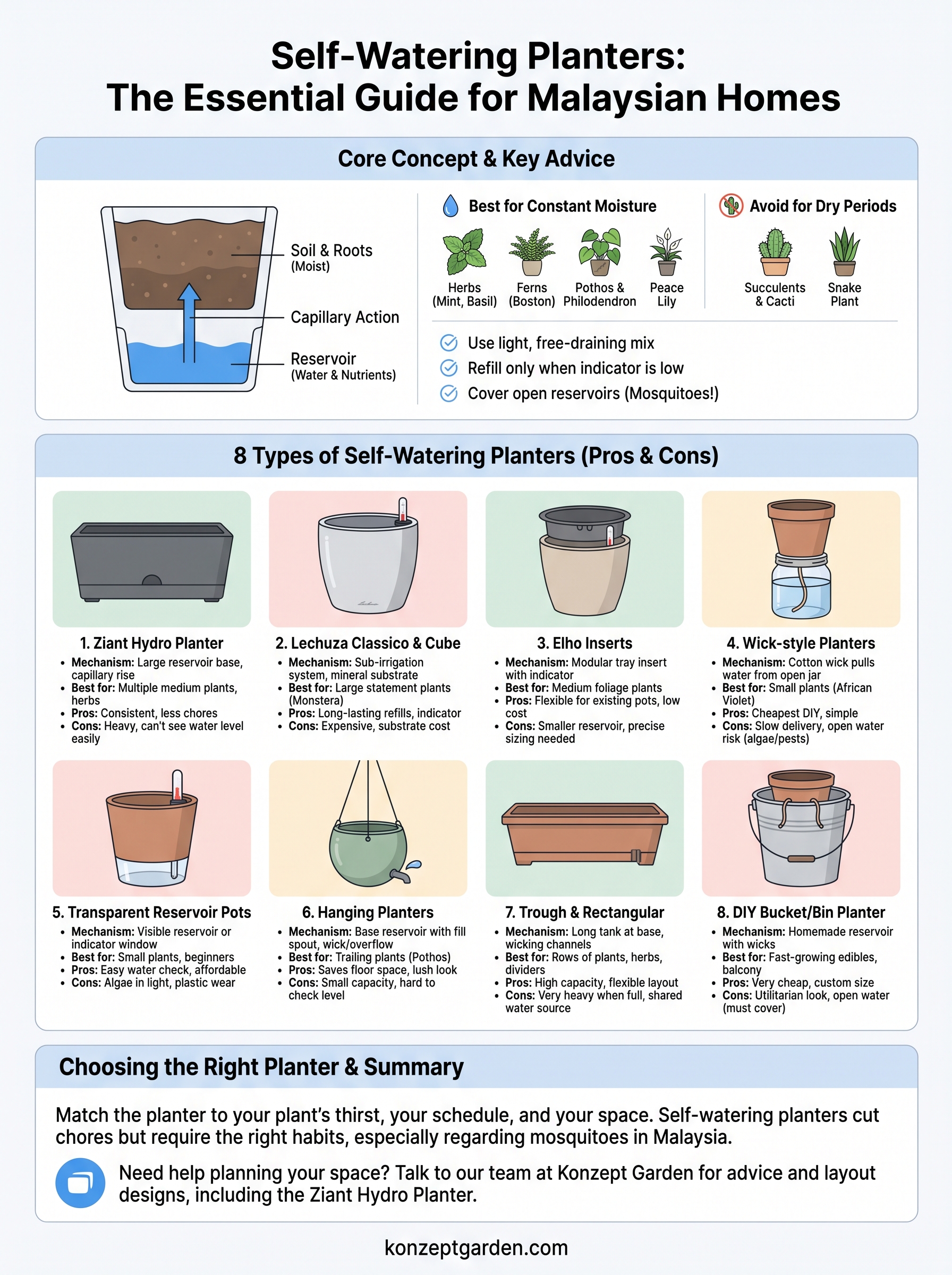
The right pick comes down to three things: your plant, your schedule, and your space. Match the planter to the plant's thirst, and keep succulents and dry-loving plants like the snake plant in regular pots. For long trips, choose a large reservoir such as a planter box or a Lechuza. For small plants on a budget, an insert, wick pot, or DIY bin does the job.
Whatever you choose, habits matter as much as hardware. Use a light, free-draining mix, refill by the indicator, and cover open water so mosquitoes stay away. Do that, and self-watering planters will cut your chores without drowning your roots.
If you want help planning a whole indoor or balcony scheme, talk to our team at Konzept Garden. We can recommend plants, sizes, and planters, including the Ziant Hydro Planter, that suit your light and layout.