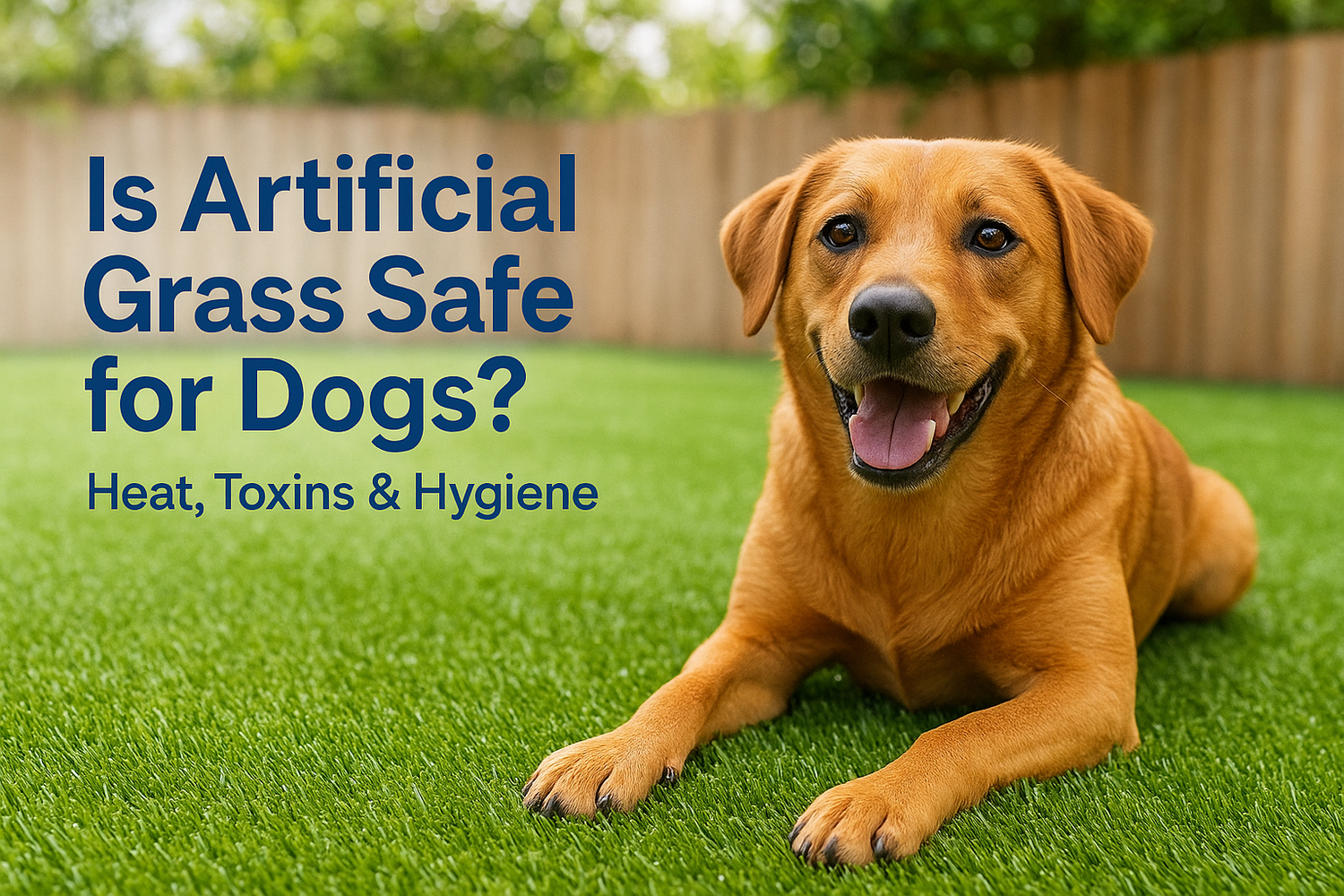
If you're a dog owner considering synthetic turf for your yard, you've probably asked yourself: is artificial grass safe for dogs? It's a fair concern. Your pet spends time rolling, digging, and lounging on that surface, so you need to know what they're actually exposed to. Questions about chemical toxicity, heat buildup, and hygiene come up often, and they deserve straight answers backed by facts, not vague reassurances.
At Konzept Garden, we install and supply Noble Grass synthetic turf across Malaysia, and pet owners make up a significant portion of our clients. We've fielded these safety questions hundreds of times during consultations, so we built this guide from real product knowledge and hands-on experience with turf installations in pet-friendly homes.
This article breaks down the three biggest concerns, heat on paws, chemical safety, and managing dog waste, so you can make a confident decision for your outdoor space. We'll cover what the research says, what to look for in a quality product, and practical steps to keep your turf clean and comfortable for your dog year-round.
Why dog owners worry about artificial grass
Dog owners who ask "is artificial grass safe for dogs" aren't being overly cautious. They're responding to a mix of online horror stories, outdated product information, and genuine gaps in knowledge about what synthetic turf is actually made of. The concerns cluster around three core areas: what chemicals the turf contains, how hot it gets underfoot, and how well it handles the daily reality of a dog using it as their bathroom.
The chemical toxin concern
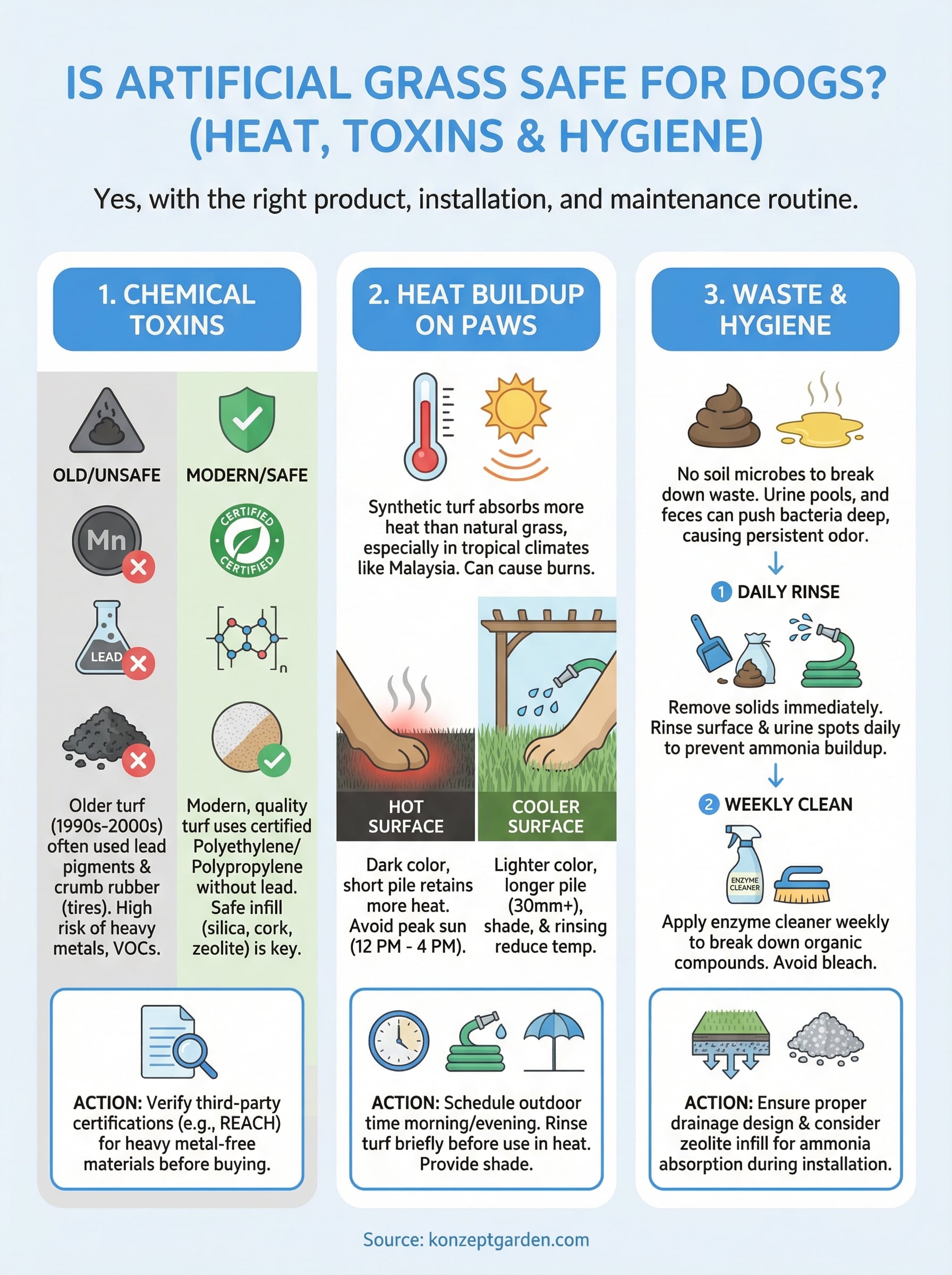
Early generations of artificial turf, particularly those manufactured in the 1990s and early 2000s, used lead-based pigments to hold color under UV exposure. Some products also used crumb rubber infill made from recycled tires, which raised concerns about heavy metals, volatile organic compounds (VOCs), and polycyclic aromatic hydrocarbons (PAHs) being present on the surface. Those concerns were legitimate for those specific products. Many dog owners today still carry that association, and it shapes how they feel about any synthetic surface in their yard.
Modern, quality turf products are manufactured to meet significantly stricter safety standards than older generations of artificial grass.
Your dog chews grass blades, rolls across the turf, and sometimes licks the surface after sniffing it. Direct contact and accidental ingestion are real exposure routes, so understanding what a product is made from is a reasonable starting point before any installation.
Heat buildup on exposed surfaces
Malaysia's climate adds a layer of concern that dog owners in cooler countries don't face as intensely. Artificial turf absorbs and retains heat far more than natural grass does, and on a sunny afternoon, a poorly chosen turf product can reach surface temperatures that cause discomfort or burns on paw pads. Dogs regulate body temperature differently from humans, and they spend a lot of time lying directly on the ground.
If the surface gets hot enough to be uncomfortable for your bare hand after ten seconds, it's too hot for your dog to rest on safely. Turf material, pile height, and infill type all influence how much heat a surface holds, which is why product selection matters more in tropical climates.
Waste, bacteria, and odor buildup
Unlike natural grass, synthetic turf has no soil microbes to break down organic waste. Dog urine pools in the infill layer, and feces left on the surface can push bacteria deep into the pile if not removed promptly. Over time, inadequate drainage and poor maintenance routines lead to persistent odor and bacterial growth that becomes difficult to reverse.
This is one of the most consistent complaints from dog owners who installed budget turf without proper drainage systems or suitable infill. The turf itself isn't always the problem. Installation quality and ongoing care determine whether the surface stays hygienic.
What makes artificial grass safe or unsafe
Whether is artificial grass safe for dogs has a clear answer depends on two things: the materials used to manufacture the turf and how the system gets installed. Not all synthetic turf products are built the same way, and the gap between a quality certified product and a cheap import is significant. Quality turf manufactured today uses polyethylene or polypropylene fibers without lead-based pigments, and these products carry third-party certifications confirming the material meets safety limits for heavy metals and harmful chemicals. Understanding that difference before you purchase saves you from a costly reinstallation later.
Material composition and certifications
The grass fibers carry the most direct risk for your dog because they're what your pet contacts, chews, and rolls across daily. Reputable manufacturers test their products against standards like REACH, a European chemical regulation framework, or equivalent testing that restricts hazardous substances in consumer goods. When you evaluate a turf product, ask the supplier for a material safety data sheet or third-party test certificate confirming the absence of lead, cadmium, and other restricted compounds. A supplier who cannot produce that documentation is not a supplier worth trusting.
Always request independent test documentation before purchasing synthetic turf for any space where your dog spends regular time.
Infill type and drainage design
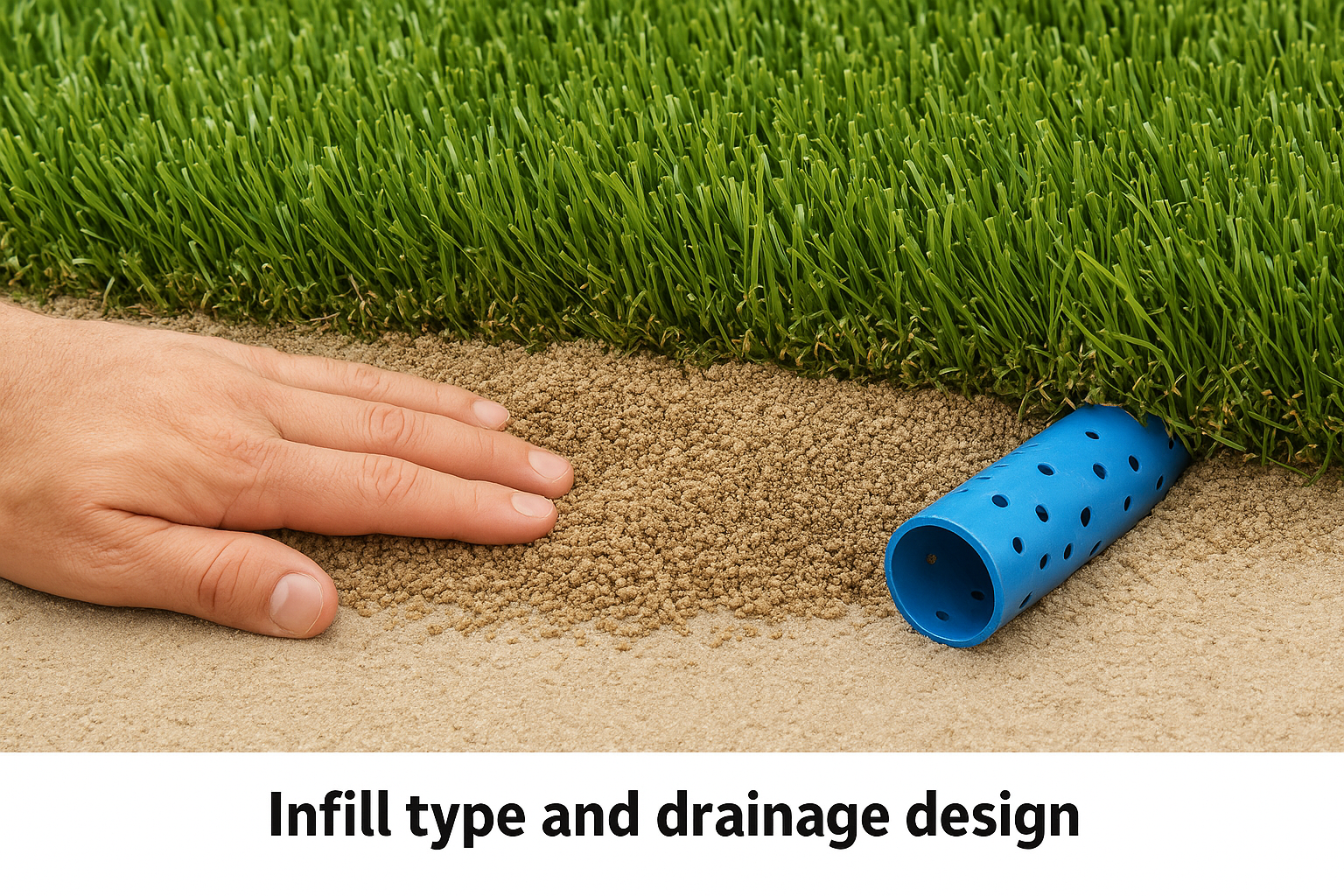
Crumb rubber infill carries the most documented concerns about VOC off-gassing and heavy metal content, particularly in hot climates where sustained heat accelerates chemical release from recycled tire material. Silica sand or organic infill alternatives such as cork or zeolite perform better in pet installations, with zeolite absorbing ammonia from urine as a direct functional benefit. Beyond infill, drainage design plays an equally important role. A perforated turf backing with adequate drainage capacity prevents liquids from pooling inside the pile, which is exactly where bacteria multiply and odors become difficult to reverse.
How to prevent heat issues on paws in Malaysia
Malaysia's heat makes the surface temperature question one of the most critical factors to settle before installation. Natural grass stays cooler because moisture evaporates from the soil beneath it, a process that doesn't happen on a synthetic surface. On a clear afternoon with direct sun exposure, low-quality turf can reach surface temperatures above 60°C, which is genuinely dangerous for your dog's paw pads. Answering whether is artificial grass safe for dogs in a tropical climate depends heavily on the choices you make during product selection and installation planning.
Choose turf with lower heat retention
Not all turf products heat up at the same rate. Lighter-colored grass fibers reflect more solar radiation than dark green alternatives, which keeps surface temperatures measurably lower under direct sun. A longer pile height also traps less radiant heat at the surface level where your dog's paws actually make contact. When you're comparing products, ask specifically about heat performance in tropical conditions rather than relying only on general product descriptions.
Turf with a lighter blade color and pile height of at least 30mm consistently performs better in heat tests than short, dark alternatives in full sun exposure.
Some manufacturers now offer heat-reflective yarn technology built into the fiber itself. This is worth prioritizing if your yard faces direct afternoon sun without shade from structures or trees.
Use water, shade, and timing to manage surface temperature
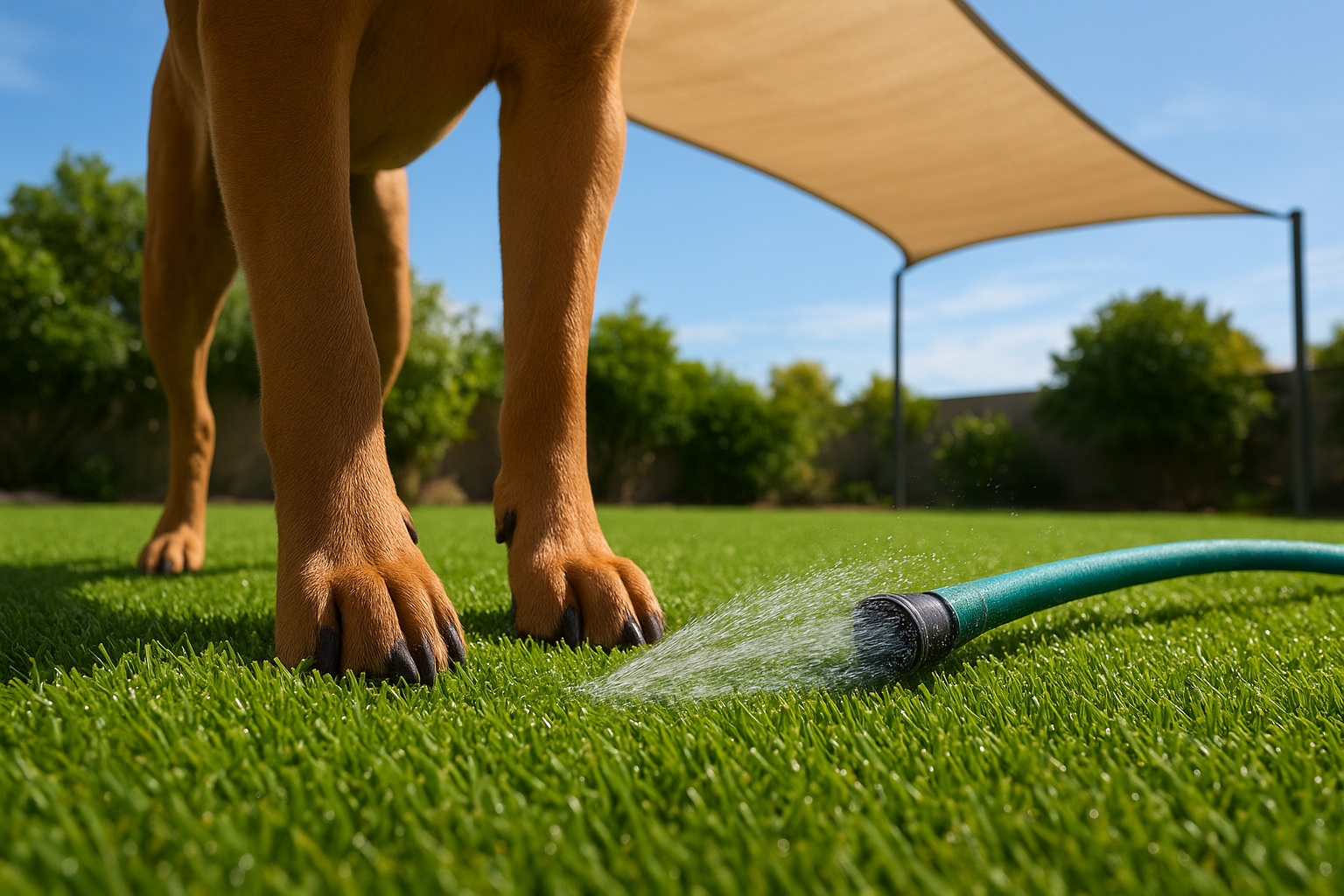
Even with a quality product, you can reduce surface temperature by 10 to 15°C by hosing down the turf for two to three minutes before your dog goes outside during peak heat hours. Afternoon sun between 12pm and 4pm drives the highest surface temperatures, so scheduling outdoor time in the morning or evening significantly reduces paw exposure to heat. Installing shade sails or pergolas over the turf area gives you a permanent solution that protects both your dog and the turf's longevity.
How to keep pet turf clean and odor-free
Whether is artificial grass safe for dogs long-term depends as much on your maintenance routine as on the turf itself. Synthetic turf has no biological system to break down waste, so the task falls entirely on you. A consistent cleaning schedule prevents bacteria from building up inside the infill layer and keeps the surface safe and comfortable for your dog to use daily.
Remove waste and rinse the surface daily
Solid waste should come off the surface within hours, not days. The longer feces sits on the pile, the more likely bacteria are to migrate into the infill material. Pick up solids with a bag or scoop, then rinse the area with a garden hose to flush residual material through the drainage layer. Urine requires the same approach: rinse immediately after you notice your dog has urinated in a spot, because ammonia concentration in the infill is the primary driver of persistent odor in pet turf installations.
A hose rinse after every bathroom use takes under a minute and prevents the majority of odor problems pet turf owners report after the first six months.
Apply enzyme cleaners on a weekly schedule
Rinsing handles surface-level contamination, but enzyme-based biological cleaners go further by breaking down ammonia and organic compounds that bind to infill particles. Apply a diluted enzyme cleaner across the full turf surface once a week, let it dwell for five to ten minutes, then rinse through. These cleaners are widely available at pet supply retailers and work without leaving chemical residue that could irritate your dog's skin or paws.
Avoid bleach-based products entirely. Bleach degrades turf fibers over time and leaves residues that are harsh on sensitive paws, which creates a new set of safety concerns you don't need to introduce into the space.
What to look for when buying and installing pet turf
Knowing is artificial grass safe for dogs comes down to asking the right questions before you spend a dollar. The turf market in Malaysia includes products at wildly different quality levels, and a lower price tag usually signals compromises in material safety, drainage performance, or both. Spending time on product verification upfront prevents the costly reinstallation that happens when cheap turf breaks down or starts holding odors within the first year.
Check the product certifications first
Every turf product you consider should come with documented third-party testing confirming it meets safety standards for restricted substances. Ask your supplier for REACH compliance documentation or equivalent heavy metal test results before committing to any product. A reputable supplier will provide this without hesitation; one who deflects or cannot produce the paperwork is telling you something important about what they're selling.
When reviewing a product, focus on these specific points:
- Fiber material: polyethylene or polypropylene fibers without lead-based pigments
- Infill type: silica sand, cork, or zeolite rather than crumb rubber
- Pile height: 30mm or above for better heat performance in direct sun
- Backing permeability: confirm the drainage rate in mm per hour from the product sheet
Prioritize drainage and infill during installation
Proper base preparation makes or breaks a pet turf installation. A compacted aggregate base with adequate fall toward drainage points keeps liquids moving out of the system rather than pooling inside the pile. Your installer should level the base, compact it, and confirm the drainage gradient before unrolling the turf.
An installation without proper drainage design will develop odor problems regardless of how high-quality the turf product itself is.
Zeolite infill spread at the correct rate across the finished surface adds an extra layer of ammonia absorption that makes daily maintenance significantly easier for any household with dogs.
Conclusion
So, is artificial grass safe for dogs? Yes, with the right product, the right installation, and a consistent maintenance routine. The concerns around chemical toxicity, heat buildup, and waste hygiene are all legitimate, but each one has a clear solution. Choose turf with certified materials and no crumb rubber infill, plan your installation with proper drainage and shade, and commit to rinsing and enzyme cleaning on a regular schedule. Those three steps together make synthetic turf a practical and safe surface for your dog.
The product you choose and the installer you hire make the biggest difference in whether that answer stays yes five years from now. Konzept Garden supplies Noble Grass synthetic turf and handles installations across Malaysia with drainage systems built specifically for pet-friendly use. If you want to talk through the right setup for your yard, get in touch with our team and we'll walk you through the options.