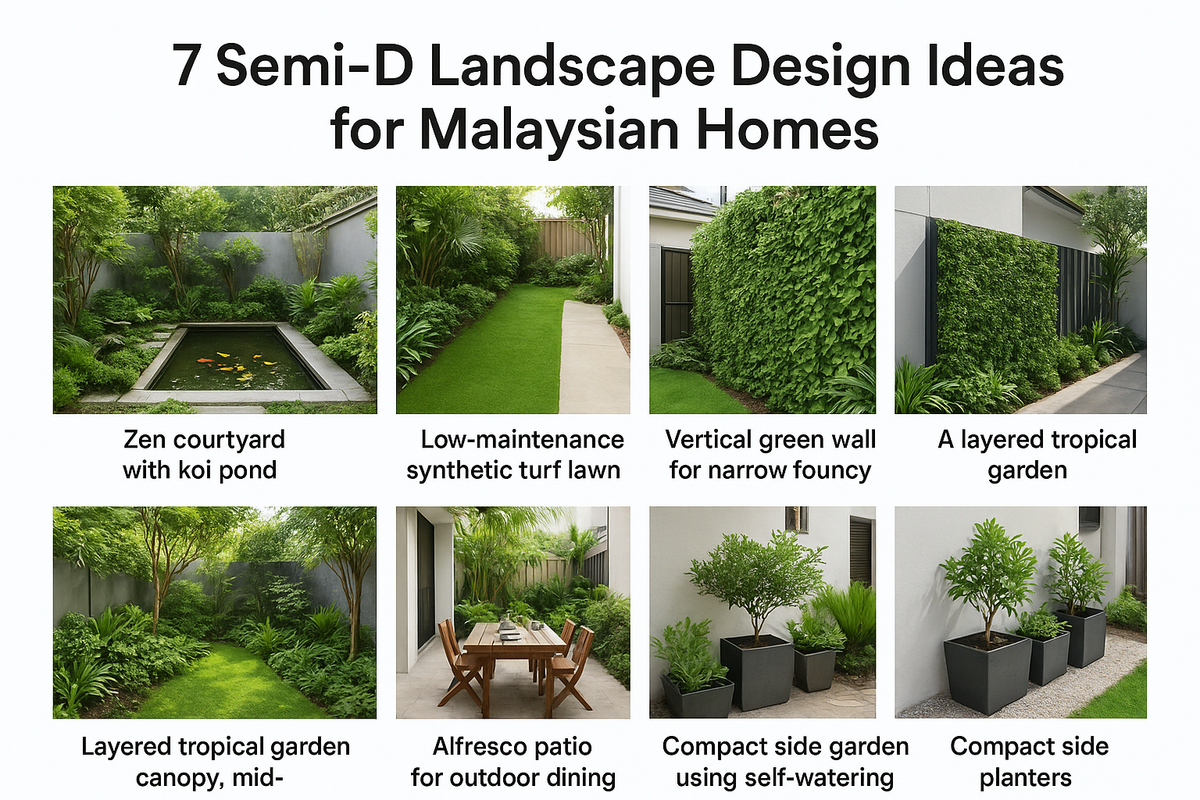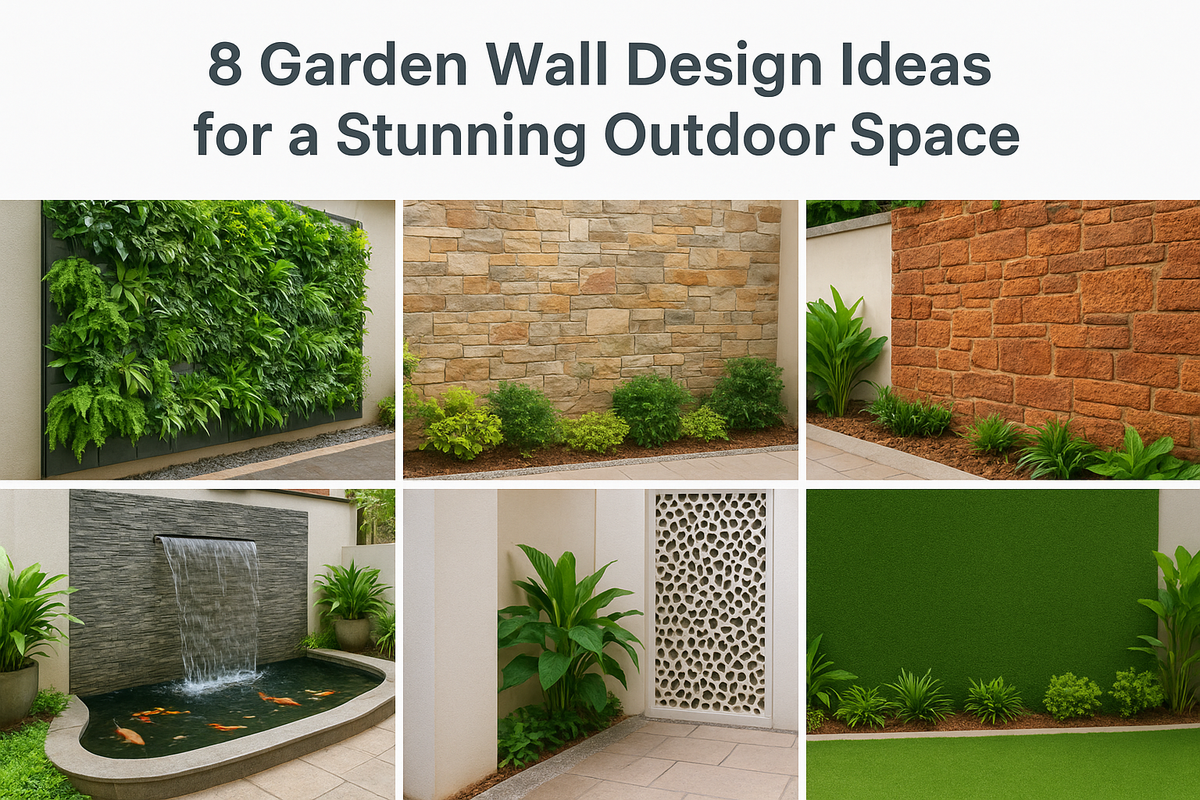

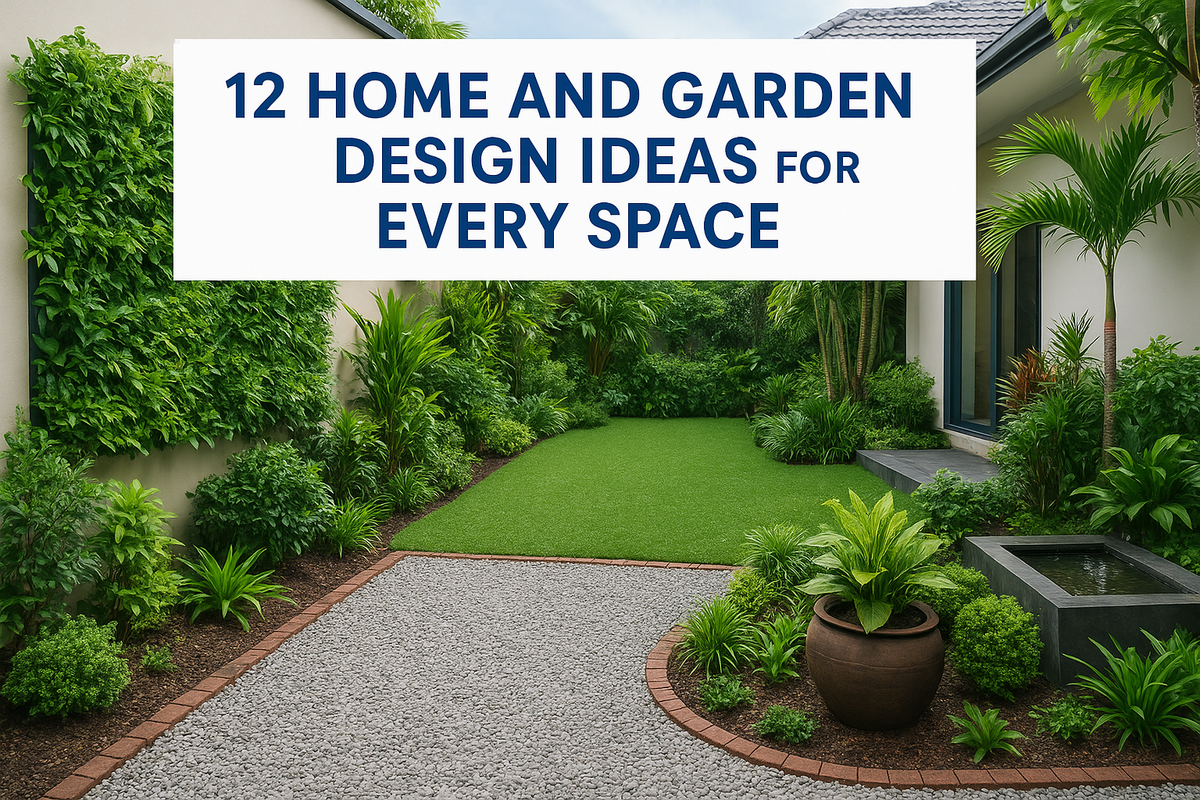
Staring at a bare patch of soil or a concrete backyard and not knowing where to start is one of the most common frustrations homeowners bring to us at Konzept Garden. Good home and garden design isn't about copying a Pinterest board that fits a bungalow in another climate. It's about matching layout, plants, and materials to the space you actually have, whether that's a sprawling compound or a narrow terrace strip in Kuala Lumpur.
If you're searching for practical garden design for home projects, you want ideas that work with Malaysia's tropical weather, humidity, and rain patterns, not generic inspiration photos. This applies just as much to a small home garden design on a tight lot as it does to a larger landscape with room for a koi pond or an outdoor lounge area.
In this list, we've pulled together 12 ideas ranging from simple home garden design layouts using low-maintenance plants and artificial turf, to bolder concepts like vertical gardens and self-watering planters. Each one draws on what we've seen work for our clients, so you can pick what suits your own outdoor space.
1. Get a professional design consultation from Konzept Garden
Before you buy a single plant, sit down with someone who has designed hundreds of gardens across Malaysia's climate zones. A professional design consultation saves you from the trial-and-error phase that eats up money and years, especially if you're working with an awkward lot shape or heavy shade from neighboring buildings. This is the starting point we recommend for almost every client, whether they're planning a small home garden design on a terrace lot or a full landscape overhaul on a bungalow compound.
How it works
At Konzept Garden, the process starts with a site visit where our team assesses soil condition, drainage, sun exposure, and existing structures. From there, we build a garden planting plan paired with 3D landscape visualizations, so you can see how the space will look before any digging starts. You get a free quotation on the landscape design packages that fit your budget, and a botanist reviews the plant selection to make sure everything survives Malaysia's humidity and monsoon rains.
A good consultation costs you an afternoon and saves you years of guessing.
Plants and materials to use
What gets used depends entirely on your site, and that's the point of a consultation rather than a template. A typical package might combine:
- Structural plants like heliconia or bird of paradise for year-round form
- Groundcover such as arachis pintoi to reduce weeding
- Hardscape materials like natural stone paving or timber decking
- Irrigation lines sized to your actual plant density, not guesswork
Our team also flags which materials hold up against tropical downpours versus ones that will warp or stain within a year.
Best for
This approach suits homeowners who want a garden design for home that actually gets built and maintained properly, not just sketched. It's especially worth it if your lot has drainage issues, a slope, or if you're combining several ideas from this list, such as a pond, a vertical garden, and paved paths, and need someone to make sure they work together instead of competing for space and water.
2. Plan a simple layout with clear zones
Most cluttered gardens aren't overplanted, they're just poorly divided. A simple home garden design starts by breaking your yard into two or three functional zones instead of treating it as one open blob of grass and shrubs. Think dining corner, planting bed, and a walkway that connects them without forcing you to cut through the lawn every time.
How it works
Walk your space and mark where you actually spend time versus where you just look at plants from the window. Use low hedges, a change in paving material, or a raised bed edge to signal where one zone ends and another begins, without building full walls that shrink the space visually. Keep sightlines open across the whole garden so it still reads as one connected area, not three separate rooms bolted together.
A garden with clear zones feels bigger, even when the plot size stays exactly the same.
Plants and materials to use
Zoning works best when each area gets its own texture cue rather than a mix of everything everywhere:
- Low box hedges or dwarf ixora to mark bed edges
- Gravel or decking to distinguish a seating zone from a planting zone
- A single accent tree per zone rather than several competing for attention
- Consistent paving material throughout, varied only in pattern or color
Best for
This works well for narrow terrace lots and small compounds where every square meter needs a job. It's also the right starting point if you're planning a garden design for home renovation in stages, since defined zones let you finish one section at a time without the whole yard looking half done.
3. Grow upward with a vertical garden
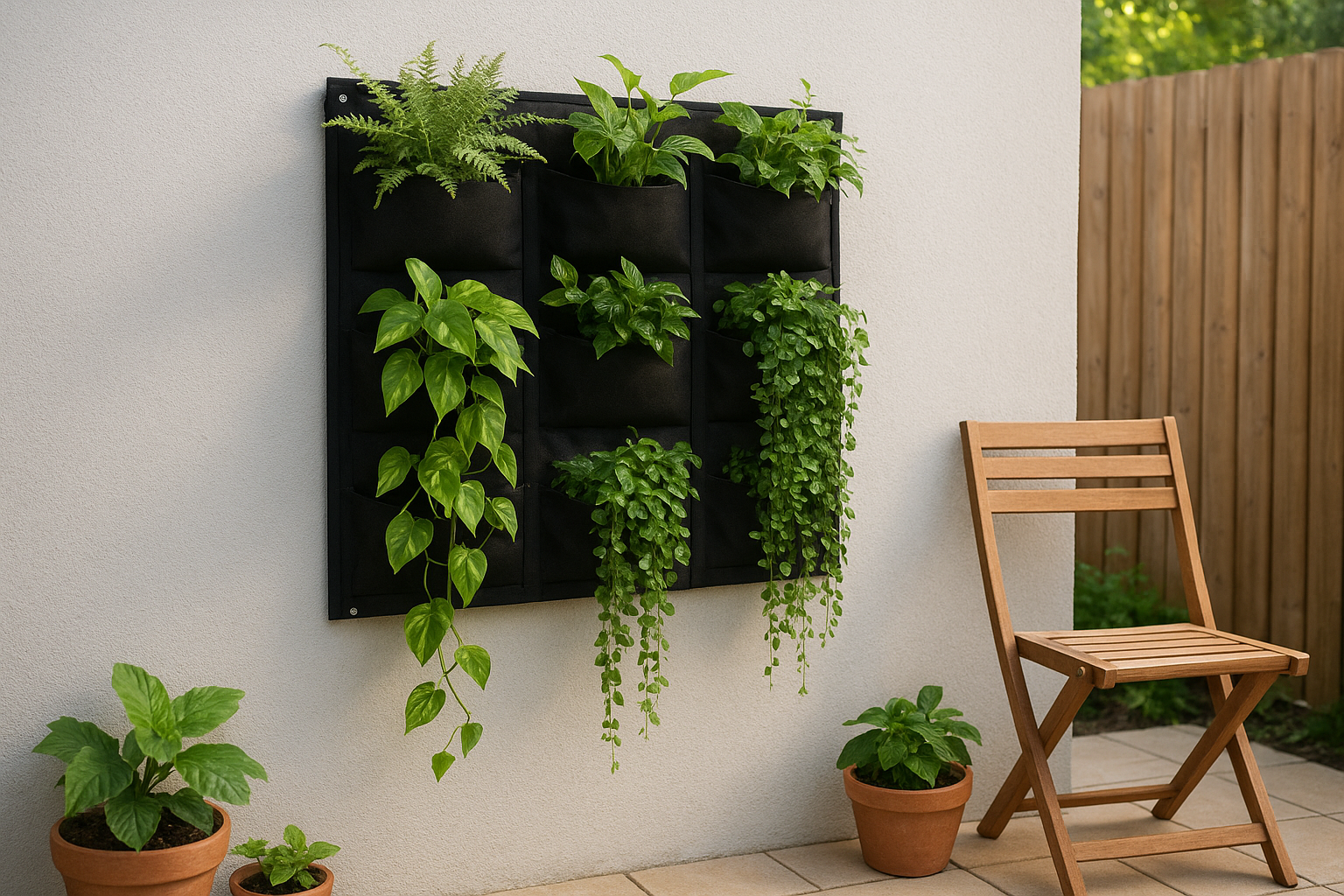
When the ground floor runs out of space, the wall next to it usually hasn't been touched. A vertical garden turns a bare boundary wall, fence, or even a balcony railing into growing space, which matters most on a narrow terrace lot where every horizontal meter already has a job. This is one of the fastest ways to add greenery to a small home garden design without sacrificing the patio or walkway you already rely on.
How it works
Mount a modular planting system, like our EcoWall vertical garden panels, onto a structurally sound wall with good drainage behind it, since trapped moisture will damage render over time. Run a simple drip irrigation line along the top row so water feeds down through the system instead of you hand-watering each pocket. Face the wall away from full afternoon sun if you're using shade-tolerant species, or toward it if you've chosen sun lovers, because mixing the two on one wall guarantees half of them struggle.
A vertical garden gives you a full green wall without giving up a single square meter of floor space.
Plants and materials to use
- Ferns and philodendrons for shaded walls
- Trailing pothos or syngonium for a cascading look
- Modular felt pockets or panel systems with a frame included for easy plant swaps
- Stainless steel brackets that won't corrode in humidity
Best for
Vertical gardens suit apartment balconies, narrow terrace walls, and courtyards where floor space is the real constraint, not the desire for greenery.
4. Use large pots and self-watering planters
Not every garden has soil worth planting into, and that's fine. Concrete courtyards, rooftop terraces, and rented units all work with large pots and self-watering planters instead of digging up anything. Containers also let you rearrange the whole layout in an afternoon if a plant fails or you just want a change, which a dug-in bed never allows.
How it works
Size matters more than most people expect. A pot that's too small dries out within hours under Malaysia's sun, so go bigger than feels necessary and group pots of varying heights to avoid a flat, showroom look. Self-watering planters like our Ziant Hydro Planter use a reservoir at the base that wicks moisture up to the roots, which cuts watering down to once or twice a week even during dry spells and keeps plants healthier through Kuala Lumpur's unpredictable rain patterns.
A self-watering planter forgives the days you forget to water and the trips you take out of town.
Plants and materials to use
- Dwarf frangipani or crown of thorns for sun-heavy spots
- Peace lily or calathea for shaded corners
- Fiberglass or UV-stable resin pots that won't crack under heat
- Reservoir-based planters for anything you can't water daily
Best for
This suits renters, condo owners, and anyone with a paved yard who still wants a proper garden design for home without breaking concrete. It's also a smart fix for busy households that travel often, since the reservoir buys you a week of neglect without losing a single plant.
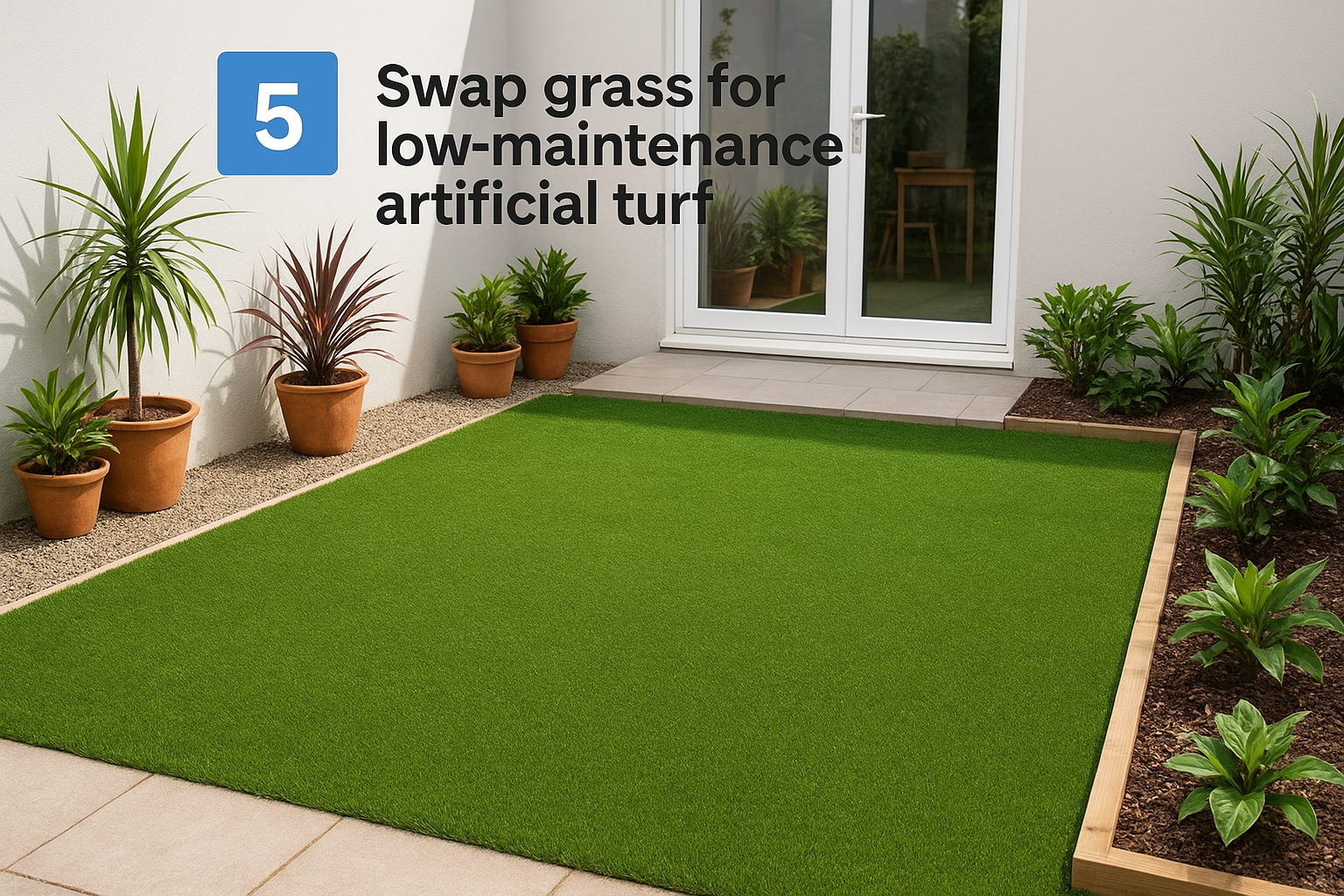
5. Swap grass for low-maintenance artificial turf
Real lawns look great in a brochure and terrible three months into Malaysia's rainy season, once bald patches and mud tracks show up near the door. Artificial turf solves this without giving up the look of a green lawn, and it's one of the fastest upgrades in any simple home garden design because there's no soil prep, no reseeding, and no mower to store.
How it works
Installers strip the existing grass, lay a compacted base for drainage, then roll out synthetic turf pinned and glued at the seams. Our NobleGrass Premium 35 synthetic grass uses UV-stabilized fibers so the color doesn't fade under direct tropical sun, and the backing includes drainage holes that handle heavy downpours without pooling. A quick brush-up every few weeks keeps the fibers standing upright, which is the only real maintenance involved.
Artificial turf trades a weekend of mowing every month for a five-minute brush-up once a season.
Plants and materials to use
- UV-stabilized synthetic turf, ideally 30mm pile height artificial grass rolls or slightly taller for a natural look
- Permeable base layer such as crushed granite for drainage
- Potted accent plants like dracaena or cordyline around the turf edges
- Edging strips in timber or aluminum to keep the turf line clean
Best for
This fits households with kids or pets who need a durable play surface, and it works well for shaded courtyards where real grass never grows thick enough anyway.
6. Divide the space with paths and paving
Grass alone can't tell you where to walk, and that's how muddy shortcuts form across a lawn within a few months. Paths and paving solve that problem while adding structure to any garden design for home, guiding foot traffic to where you actually want people standing instead of wherever the ground stayed driest that week.
How it works
Start by tracing the routes people already take, from the gate to the door, from the patio to the bin area, and pave those first rather than guessing at a layout from a drawing. Lay a compacted gravel base before any paving material to stop shifting and pooling during heavy rain, since Malaysia's downpours will expose a weak base within a single wet season. Curve the path slightly around a planting bed or tree if you want the walk to feel longer and the garden to feel bigger than it is.
A path does more design work than most plants, because it tells your eye exactly where the garden begins and ends.
Plants and materials to use
- Natural stone slabs or textured concrete pavers for main walkways
- Gravel or pebble infill between stepping stones for a softer look
- Low-growing mondo grass along path edges to soften hard lines
- Permeable jointing sand that lets rainwater drain instead of pool
Best for
This suits gardens with awkward shapes or slopes, where a clear path prevents erosion and keeps visitors off wet planting beds. It also works well if you're combining several zones from this list and need one element that ties the whole layout together visually.
7. Layer plants for privacy and shade
A single row of shrubs along the boundary rarely blocks a neighbor's second-floor window or the afternoon sun baking your patio. Layered planting stacks trees, shrubs, and groundcover at different heights so the garden filters light and sightlines the way a wall never could, without turning your yard into a fortress. This works especially well on terrace lots where fences alone can't solve either problem.
How it works
Build the layers from the top down: a canopy tree first, then a mid-height shrub line, then groundcover to fill gaps at the base. Stagger the planting rather than lining everything up in a straight row, since offset plants block sightlines from more angles and create depth instead of a flat green wall. Leave gaps for airflow between layers, because dense, unbroken planting traps humidity and invites fungal problems in Malaysia's climate.
Layered planting blocks a neighbor's view better than a fence, and it cools the patio while it's at it.
Plants and materials to use
- Trumpet trees or yellow flame for a fast-growing upper canopy
- Duranta or ixora hedging for the mid layer
- Bromeliads or ferns as shaded groundcover beneath the canopy
- Trellis panels to support climbers where space for a full tree is tight
Best for
This suits homes facing busy streets or overlooked by neighboring units, plus any patio that turns unbearable by mid-afternoon without extra shade.
8. Choose compact plants suited to Malaysia's climate
Plant choice makes or breaks any small home garden design, especially when a lot only gives you a meter or two of bed space to work with. Compact plants bred for tight footprints let you fit real variety into a narrow strip without any one specimen swallowing the whole bed within a year, which is exactly what happens when you plant a full-size mango tree in a terrace-lot corner.
How it works
Start by checking mature size before you buy, not just what the nursery pot looks like today. Group plants by water and sun needs so you're not fighting to keep a drought-tolerant succulent alive next to a moisture-loving fern. Prune lightly every few months rather than letting growth run wild, since compact varieties still need shaping to stay dense instead of leggy in Malaysia's humidity.
Pick plants for their size at three years old, not the size they arrive in at the nursery.
Plants and materials to use
- Dwarf hibiscus or miniature roses for color without spread
- Compact calathea or aglaonema for shaded corners
- Lemongrass or pandan for edible borders that stay contained
- Root barriers around any tree species to protect nearby paving
Best for
This suits terrace lots, courtyard gardens, and anyone renovating a small home garden design where a single oversized shrub could crowd out three or four smaller ones, giving you more variety without more maintenance.
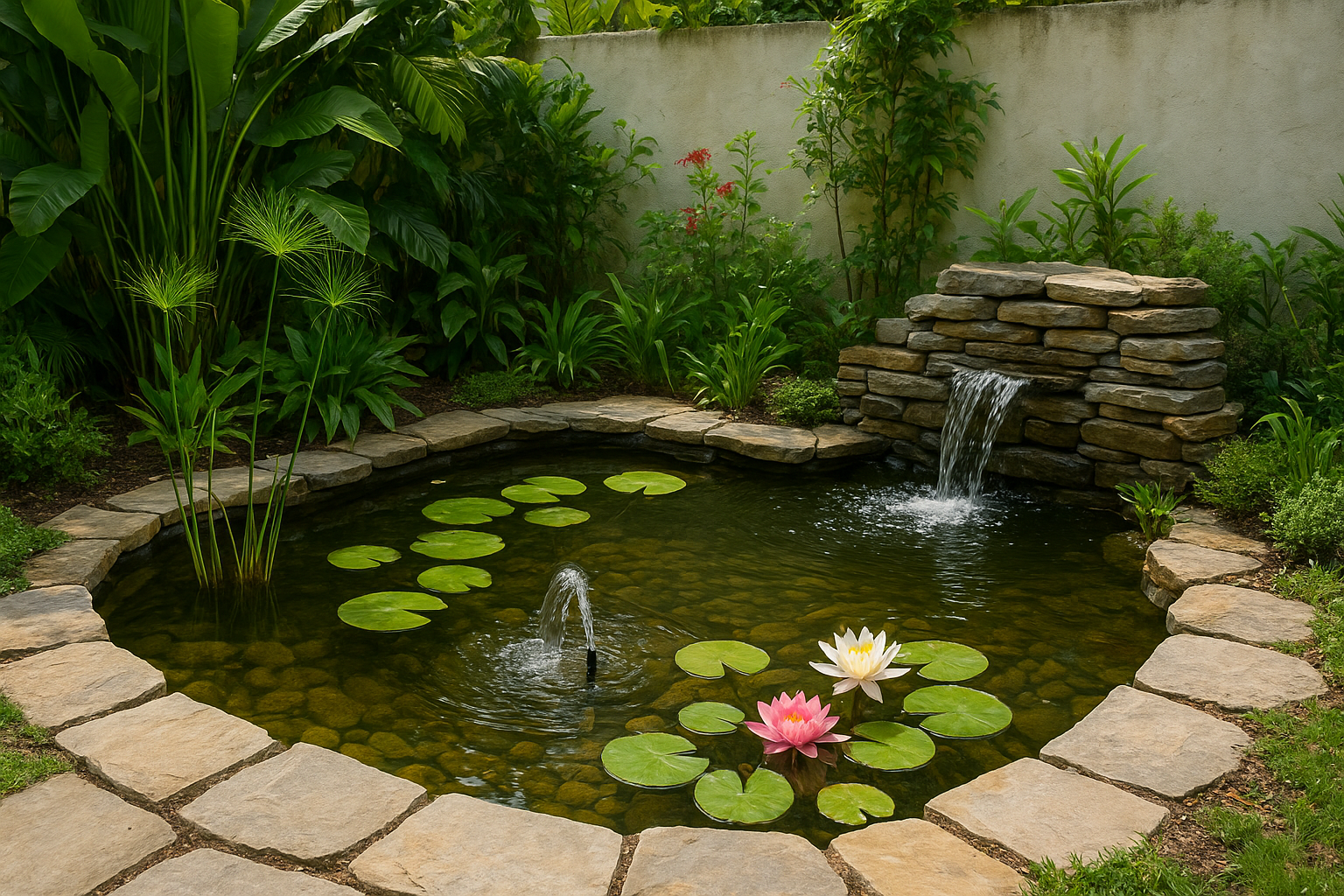
9. Add a small pond or water feature
Nothing cools a garden like the sound of moving water, and a small pond or water feature does more for a tropical outdoor space than another flower bed ever could. Even a compact basin tucked into a corner adds movement, masks traffic noise from the street, and gives you a focal point that draws the eye away from a boundary wall or an unfinished corner of the yard.
How it works
Our team usually starts with a preformed liner or a poured concrete shell, sized to fit the space rather than forcing a standard tank into an awkward corner. A submersible pump keeps water circulating, which matters in Malaysia's climate since still water breeds mosquitoes within days. Options like our biologically filtered koi pond build keep water clear for fish, while the Himalaya Rock Fish Pond leans into a naturalistic stacked-stone look for gardens that want texture over polish.
A moving water feature does the mosquito control that a still one never will.
Plants and materials to use
- Water lilies or lotus for surface coverage and shade
- Horsetail or papyrus planted at the pond edge
- River stones or slate to hide liner edges, or a stacked-rock fish pond design that makes the stone the feature
- A skimmer or biological filter to keep water clear
Best for
This fits gardens with a quiet corner to spare, and it works especially well if you're already building seating nearby, since a pond gives that spot something worth sitting near.
10. Build seating that doubles as storage
A small garden rarely has room to spare for a shed and a bench sitting separately. Seating that doubles as storage solves both problems in one build, giving you a place to sit and a place to stash cushions, tools, or pool floats without eating extra floor space. This matters most on terrace lots where every bench or ledge competes with a planting bed for the same few square meters.
How it works
Built-in benches work best along a boundary wall, where a timber or masonry frame with a hinged lid creates a hollow cavity underneath. Line the interior with a waterproof membrane before anything goes inside, since Malaysia's humidity will rot stored cushions or rust tools within a season otherwise. Add small vents at the base so trapped moisture has somewhere to escape rather than pooling under the lid.
A storage bench earns its space twice, once as seating and once as the shed you didn't have room for.
Plants and materials to use
- Marine-grade plywood or treated timber for the bench frame
- Weatherproof cushions in quick-dry foam rather than standard upholstery
- Potted trailing plants like sweet potato vine along the bench base to soften the edge
- Stainless steel hinges and hardware to resist rust
Best for
This suits compact courtyards and terrace gardens where a separate shed isn't an option, plus any household that needs somewhere dry to keep gardening tools, pool gear, or outdoor cushions between uses.
11. Use lighting to extend evening use
Malaysia's heat pushes most outdoor living into the evening anyway, so a garden that goes dark at 7pm wastes half its usable hours. Garden lighting stretches your patio, path, and dining zone into the night without you needing to add a single new plant or paver, which makes it one of the cheapest upgrades on this list relative to the difference it makes.
How it works
Build lighting in layers rather than one bright floodlight over the whole yard. Path lights along walkways handle safety, uplights aimed at a canopy tree or feature wall add depth, and warm string lights over a seating zone create the atmosphere that actually gets used. Run cabling below grade or through conduit before you finalize any hardscape, since retrofitting wiring under finished paving is a job nobody wants to redo. Choose fixtures rated for outdoor humidity and rain, because standard indoor bulbs corrode within a season out here.
Good garden lighting doesn't light up the whole yard, it points at the three things you actually want people to notice.
Plants and materials to use
- Low-voltage LED path lights spaced along paving edges
- Uplights aimed at trumpet trees or a feature wall
- Warm white string lights over the seating or storage-bench zone
- IP65-rated fixtures and weatherproof cable connectors
Best for
This suits any household that actually uses the garden after work rather than only on weekend afternoons, and it pairs especially well with a pond or water feature, since uplighting the water surface turns a daytime feature into an evening one too.
12. Match your garden to your home's style
A garden that ignores the house behind it always looks like an afterthought, no matter how good the individual plants are. Matching your garden to your home's style ties the whole property together, so a minimalist bungalow doesn't end up with a wild cottage-style bed out front, and a heritage shophouse doesn't get stuck with stark concrete planters that clash with its character. This is the finishing touch in any home and garden design project, the step that makes everything else on this list look intentional instead of assembled piece by piece.
How it works
Start by naming your home's style honestly: modern minimalist, tropical resort, English garden layout, colonial heritage, or something in between. Repeat one or two materials from the facade, such as timber cladding or exposed brick, somewhere in the garden so the eye reads the two as one composition. Keep color palettes restrained if the house is already bold, and let the garden carry more color if the facade is plain and neutral.
A garden that matches the house looks planned, and one that doesn't looks like it was added as an afterthought.
Plants and materials to use
- Clean-lined planters, single-species hedging, or a Japanese garden layout for modern facades
- Heliconia, palms, and timber decking for tropical resort-style homes
- Terracotta pots and climbing bougainvillea for colonial or heritage properties
- Consistent paving tone across both the driveway and garden paths
Best for
This suits homeowners doing a full renovation or building fresh, where the garden and house design happen at the same time rather than years apart.
Where to start with your own garden
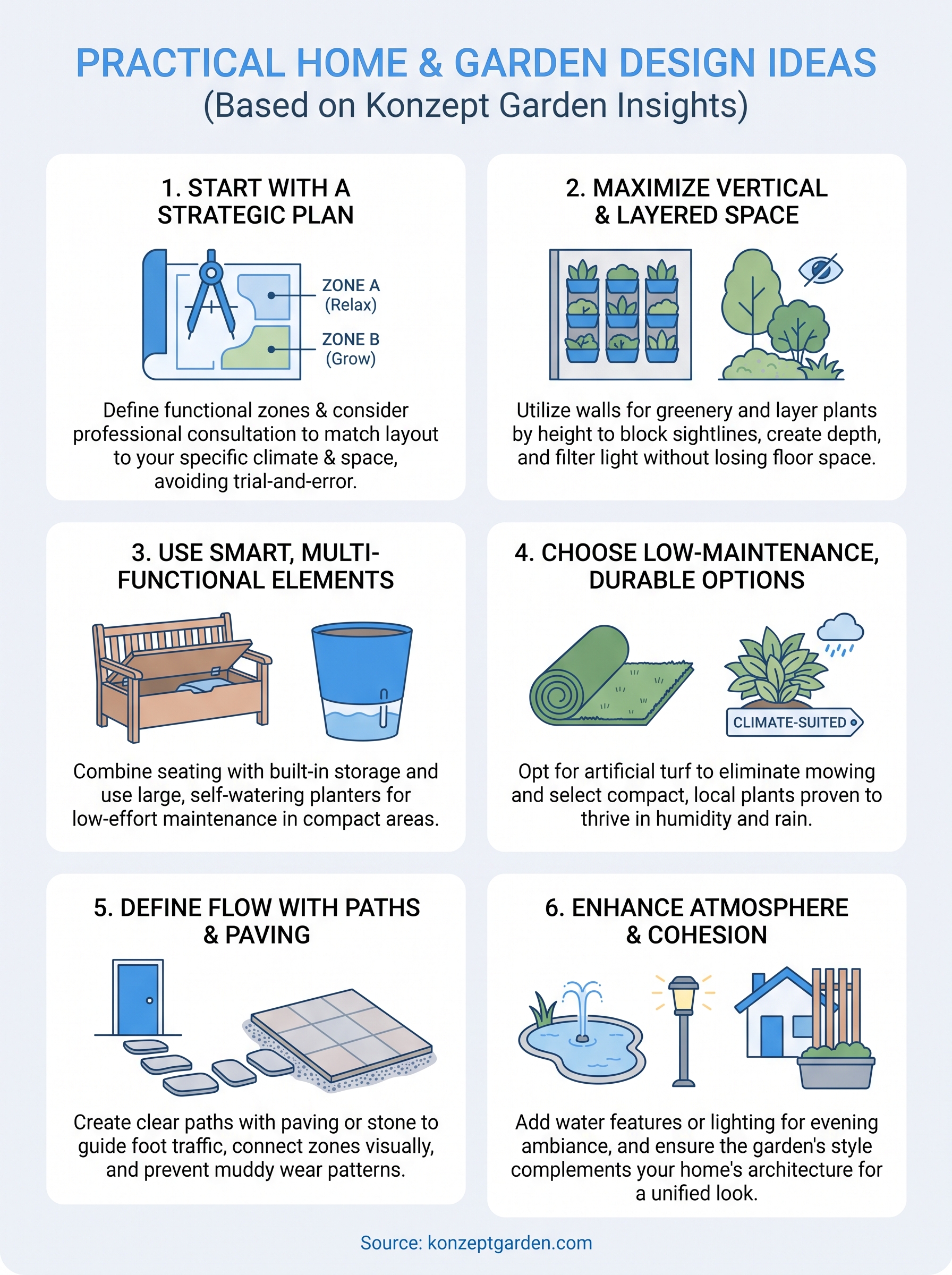
You don't need all 12 ideas at once. Pick the one or two that solve your actual problem, whether that's a muddy patch of grass, a bare wall, or a patio nobody uses after sunset, and build from there. A small home garden design grows just fine in stages, as long as each stage fits into a plan instead of being bolted on randomly. That's the real value of starting with a home and garden design consultation rather than a trip to the nursery: someone maps out how the zones, plants, and hardscape work together before you commit money to any single piece.
If a water feature caught your eye, browse our Zen Bio Koi Pond options to see what fits a small corner versus a full landscape build. Otherwise, talk to our team and we'll walk your site with you, free of charge.